
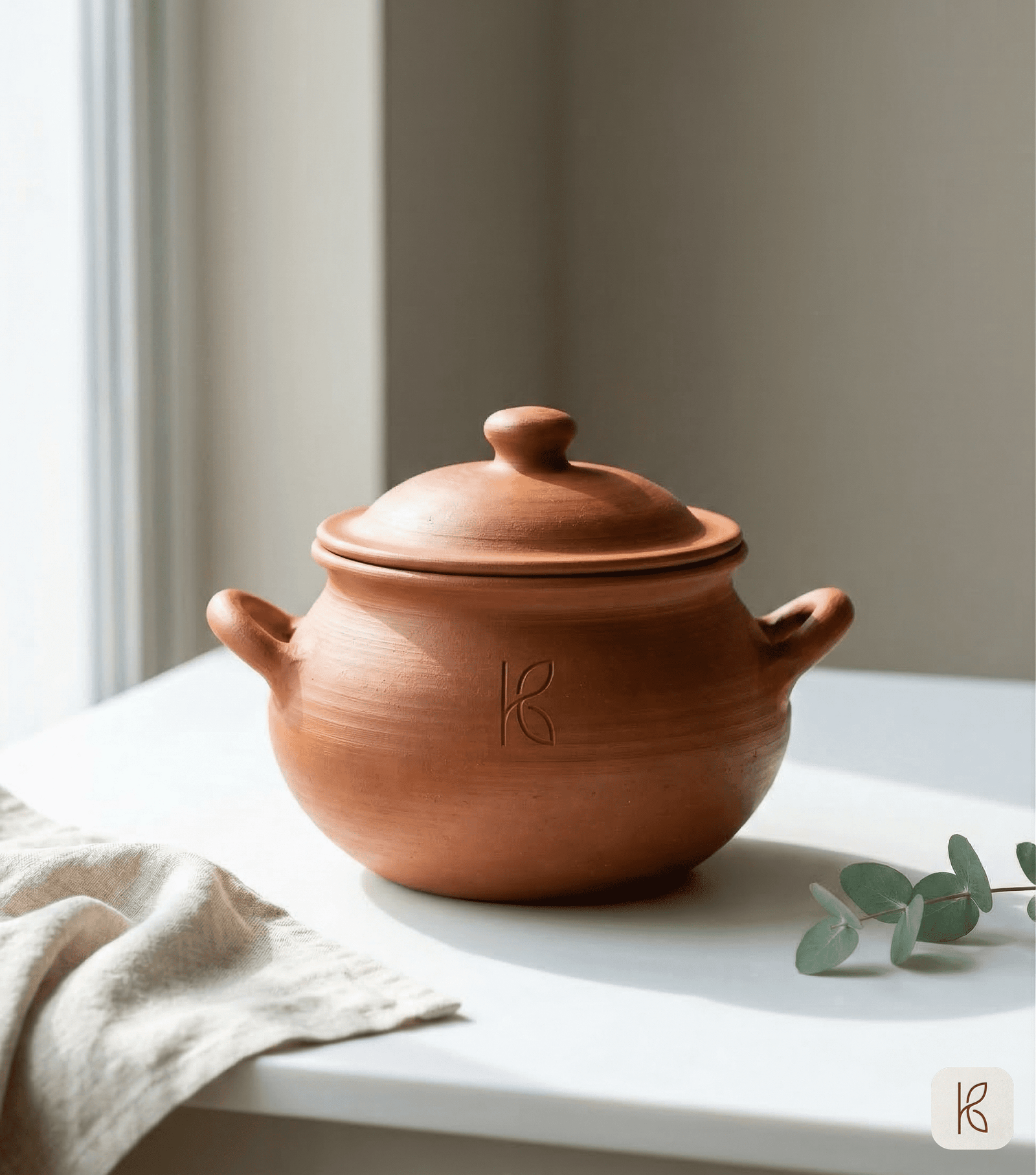
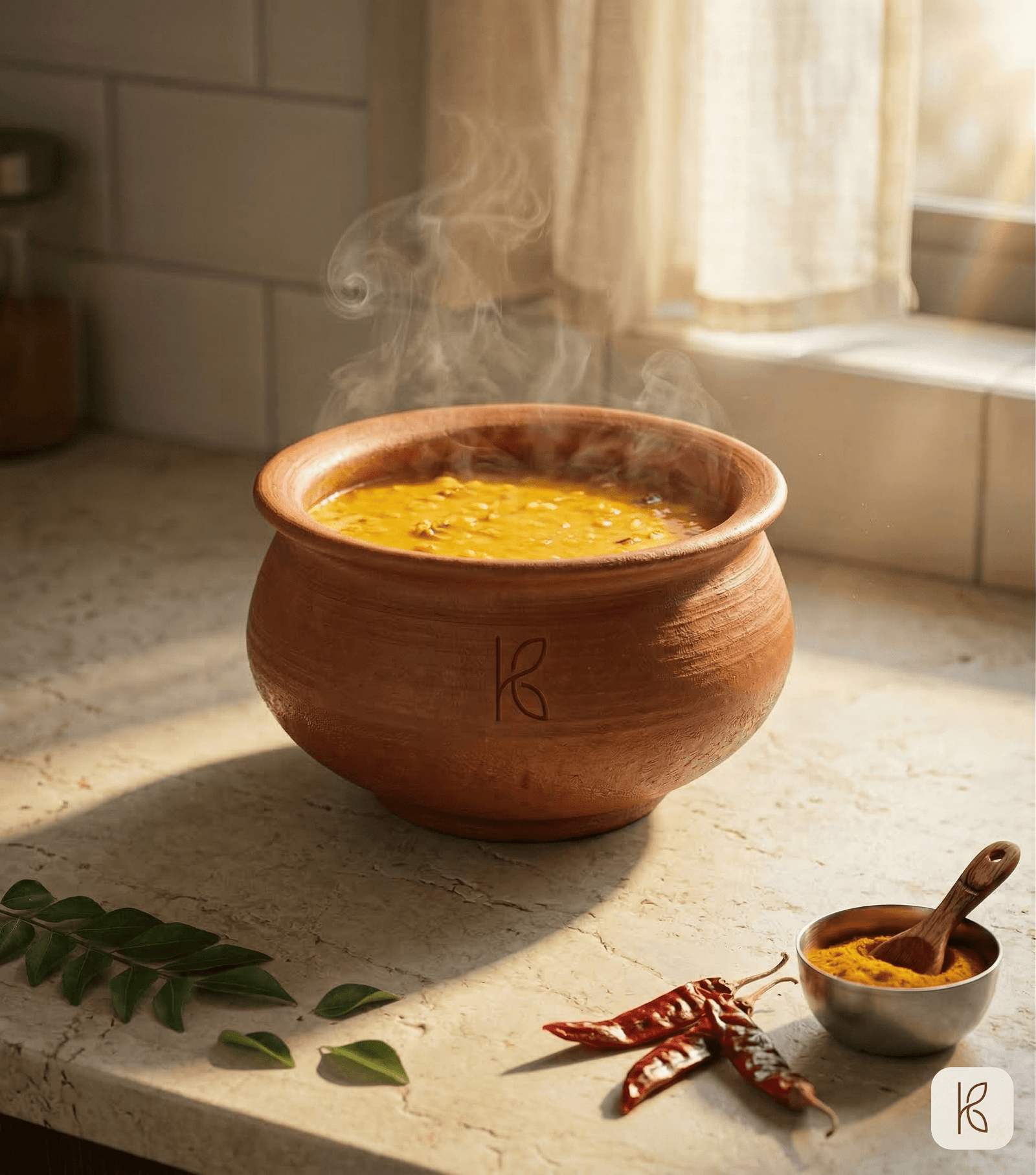
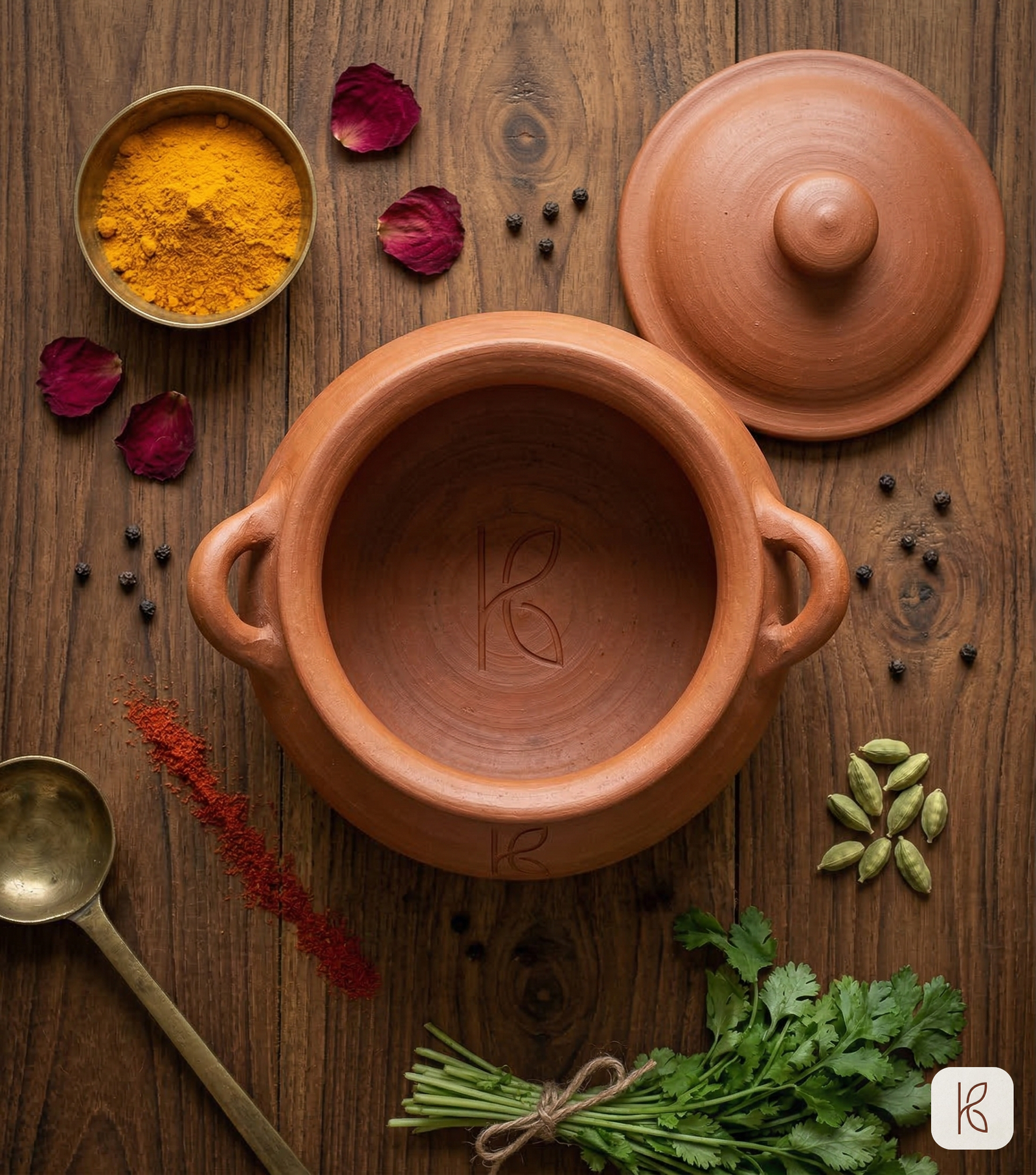
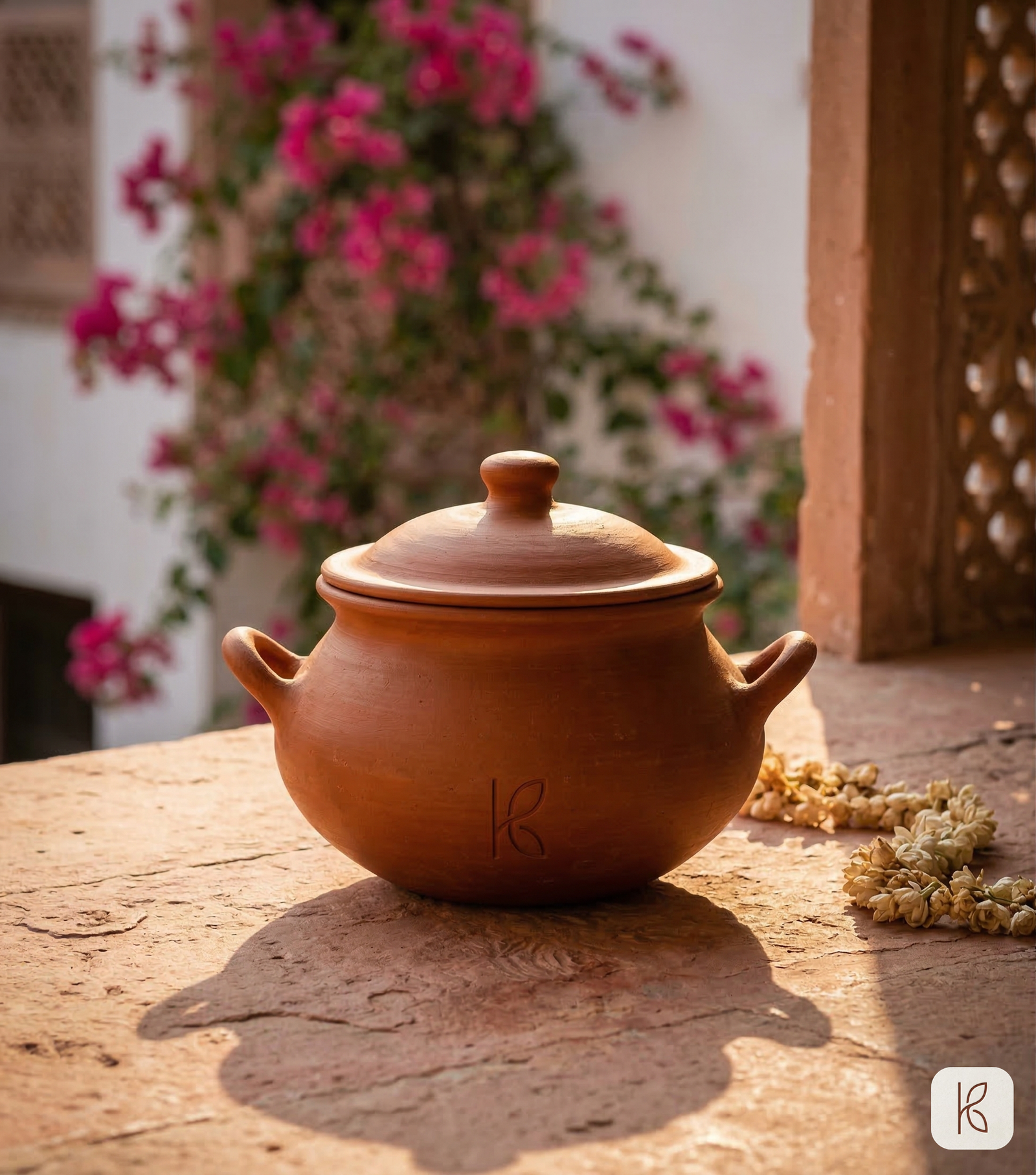
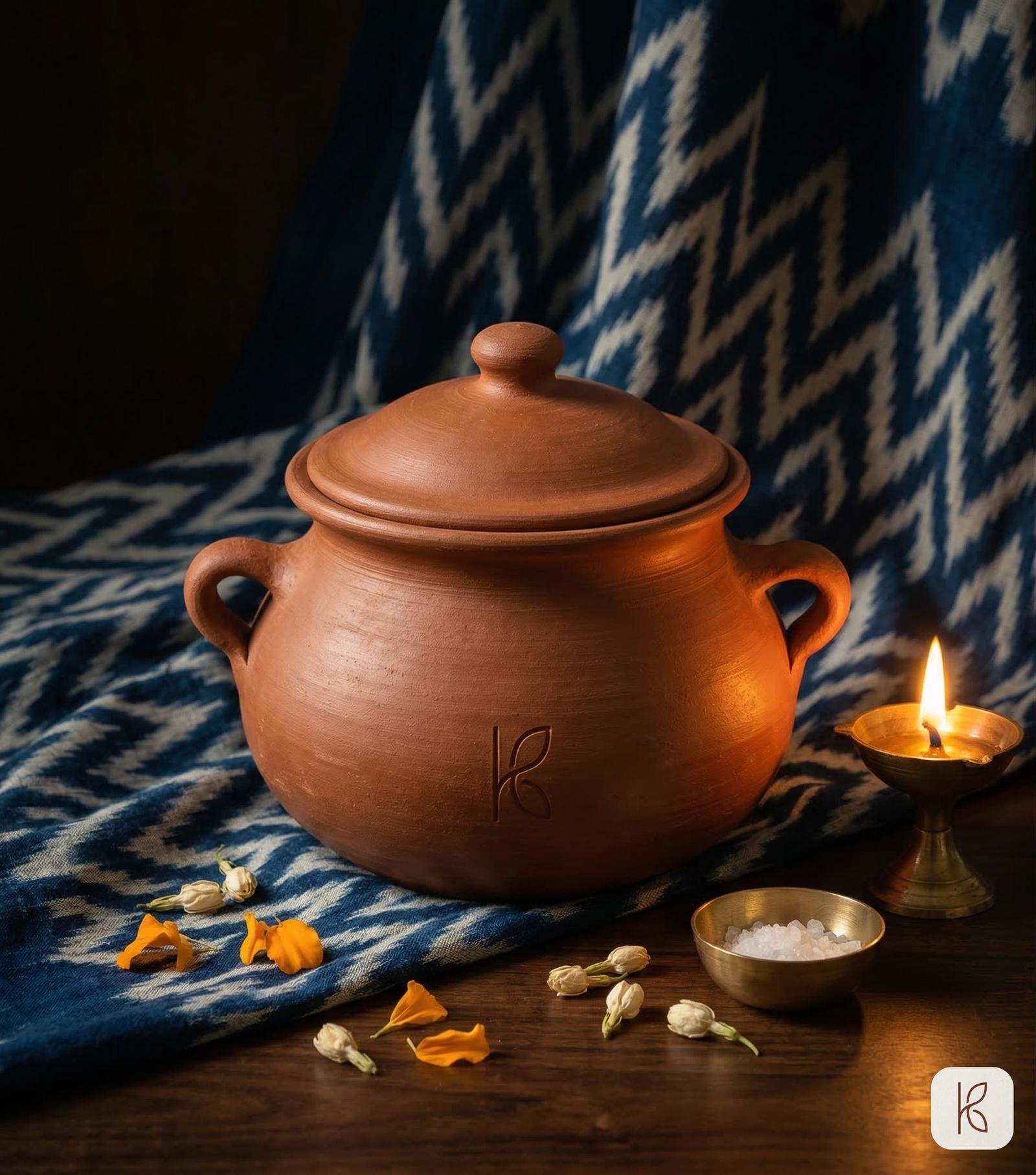
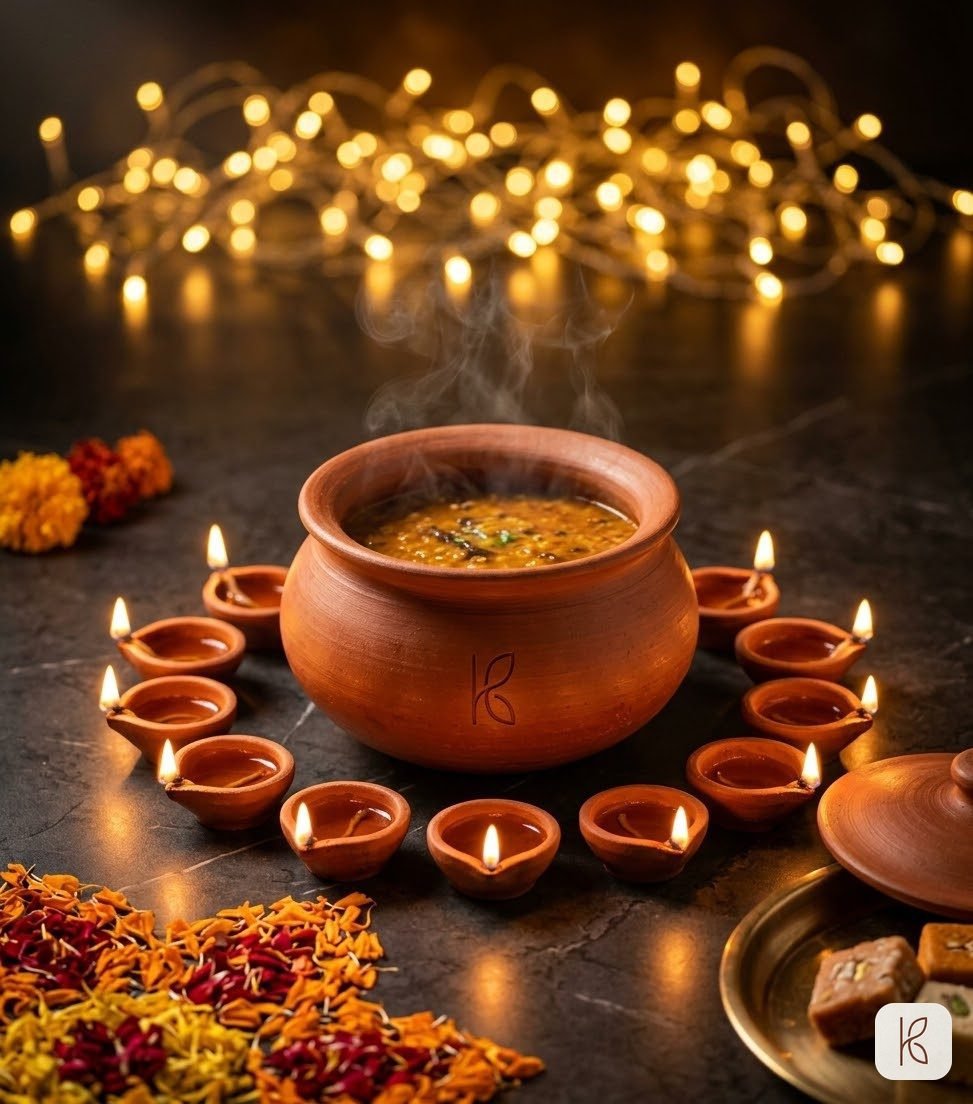
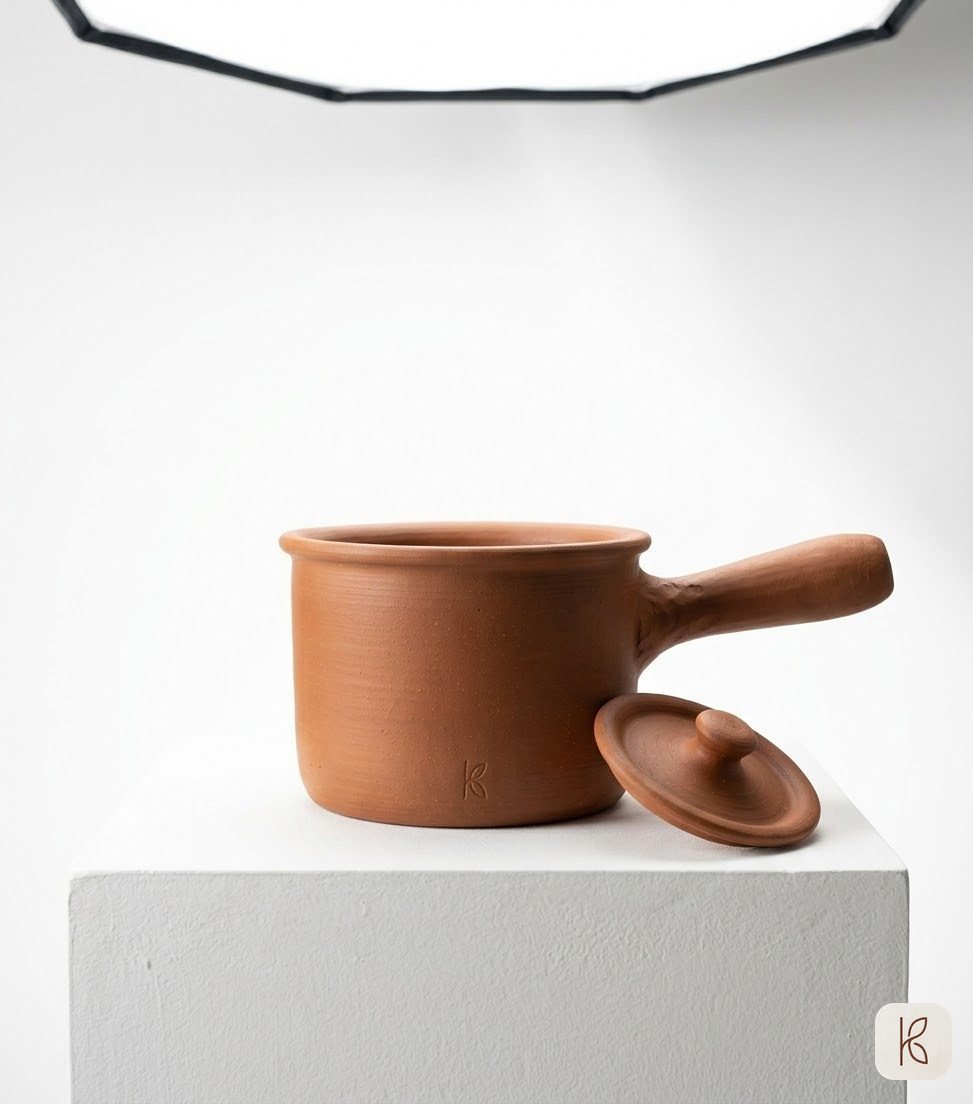
Bio-Active Handi – 600 ml (Lite)
Out of StockThe pot that’s been cooking Indian food for 6,000 years. Just better.
Terracotta Clay · 600 ml · SKU: KL-CK-001
₹499.00
| Material | Terracotta Clay |
|---|---|
| Size / Capacity | 600 ml |
| Induction Ready | YES |
| XRF Tested | YES |
| Sub-Category | Handi |
The pot that’s been cooking Indian food for 6,000 years. Just better.
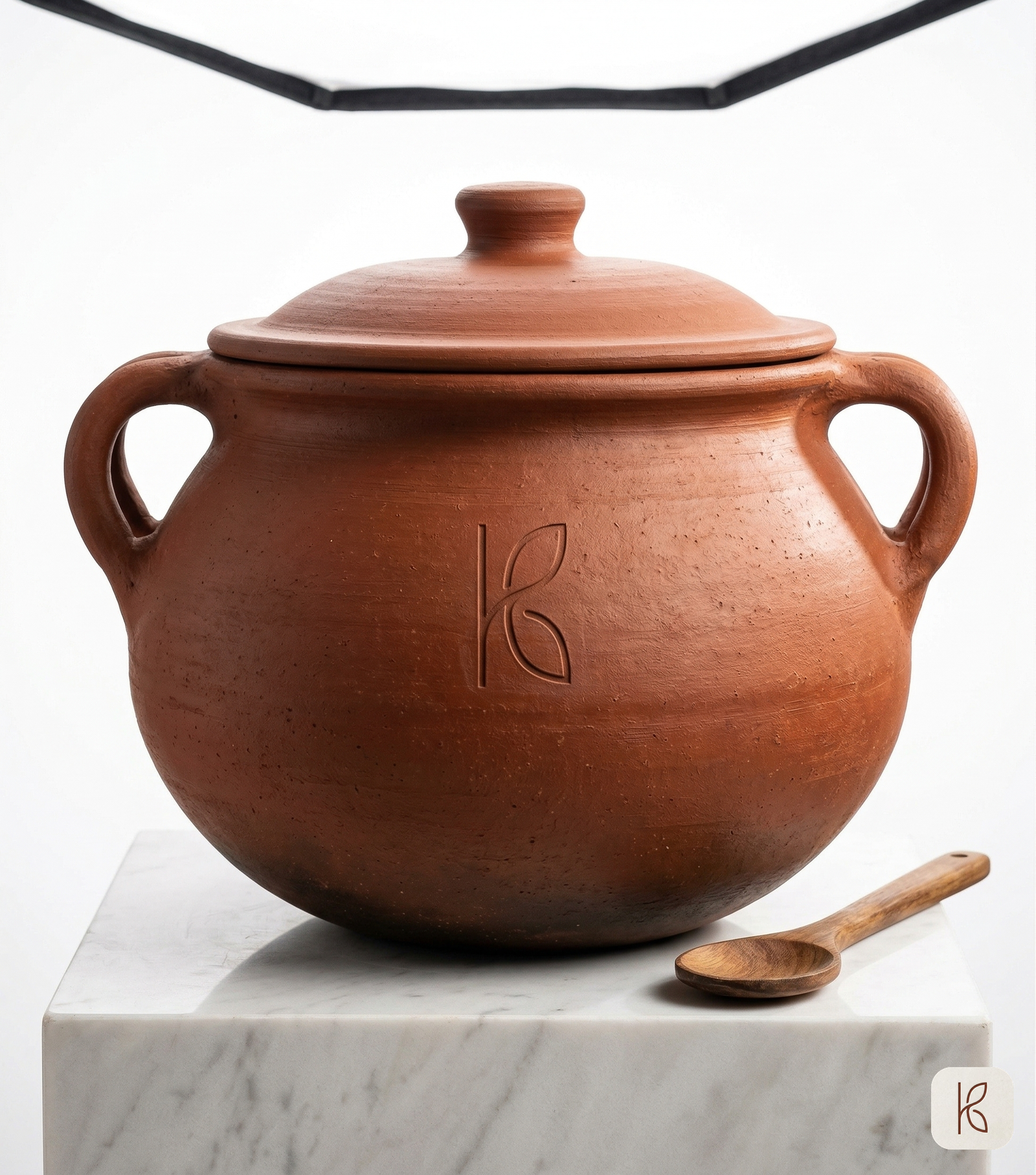
Your solo handi. 600ml of XRF-tested terracotta clay, hand-thrown by a master artisan in Delhi-NCR and fired at 850°C. No PTFE. No PFOA. No PFAS. Nothing between your food and the earth except flame.
Key Features & Benefits
- Zero Toxic Coating: There is no coating here — that is the point. Terracotta heated above 600°C becomes chemically stable. No polymer breaks down. Nothing migrates into your dal except trace minerals your body uses.
- XRF + ICP-OES Batch Certified: Every batch tested for lead, cadmium, arsenic, mercury and 11 other compounds at a NABL-accredited lab. The actual result for your specific batch is live on our website before it ships. Scan the QR on the base. Read the numbers yourself.
- Slow, Even Heat — By Design: Clay conducts heat at roughly 0.8 W/m·K. Stainless steel? 16. Cast iron? 80. That slower conduction means heat distributes across the entire vessel — dal doesn’t scorch at the bottom while the top still simmers.
- Micro-Porous Breathing Walls: Terracotta’s natural 15–25% porosity lets moisture slowly evaporate through the clay walls, creating a low-pressure cooking environment. This is why dum-cooked dishes taste different. The clay breathes.
- Named Artisan — Not a Factory: Your pot was made by a person. Name, village, years of practice — all on the artisan card inside the box. A wheel, two hands, and 30+ years of knowing when the clay is right.
- Ships Pre-Seasoned: Three flaxseed oil cycles at 200°C before dispatch. Wash once with water. Cook. No elaborate ritual required.
About the Material
Indian terracotta clay has been in continuous use as a cooking vessel since at least 4000 BCE — confirmed by Harappan archaeological finds in Gujarat and Rajasthan. It didn’t survive 6,000 years because people were sentimental. It survived because it works. Our clay is chamotte-reinforced: pre-fired clay particles added to the body before throwing dramatically reduce thermal shock failure. The result is a pot that goes from ambient temperature to a medium gas flame without cracking. Interior surface roughness: Ra ≤4µm. Smooth enough that most foods release cleanly after a few uses; porous enough that the clay’s biological activity is preserved. No glazes, no coatings, no chemical sealants. The colour you see is the colour of the clay.
The Science
The ICMR-NIN Dietary Guidelines 2024 — India’s most authoritative nutrition document — explicitly recommend reducing non-stick cookware use, citing coating degradation risks. The US EPA classified PFOA and PFOS as hazardous substances in April 2024. One scratch on Teflon releases an estimated 9,000–10,000 microplastic particles. Not per year. Per scratch. Clay does the opposite: alkaline minerals from the pot ionise slowly into acidic cooking liquids, raising pH slightly and improving mineral bioavailability. A 2019 study in the Journal of Food Science found significantly higher iron, calcium, and phosphorus retention in terracotta-cooked food versus aluminium or steel. Your grandmother’s food tasted different because of the vessel, not just the recipe.
Safety & Certification Standards
| XRF Analysis — Clay Source | Heavy metal screening on raw clay before production begins |
| ICP-OES — Finished Product | Parts-per-billion accuracy. Actual migration into food simulants tested |
| NABL-Accredited Laboratory | Internationally recognised test facility |
| FSSAI Food Contact Compliance | Meets India’s legal food safety standards for cookware |
| Per-Batch QR Report | Your batch. Your numbers. Published before dispatch. Scan and read it yourself. |
Lab Test Results
| Compound | Klayvi Result | FSSAI Safe Limit |
|---|---|---|
| Lead (Pb) | ≤ 2.1 ppm | 90 ppm |
| Cadmium (Cd) | ≤ 0.3 ppm | 0.5 ppm |
| Arsenic (As) | ≤ 0.4 ppm | 2.0 ppm |
| Mercury (Hg) | Not detected | 0.5 ppm |
| PTFE / PFOA / PFAS | Not present | Zero tolerance |
Caring for Your Klayvi
| 1 — First Use | Rinse with plain water. Cook something water-based (dal, rice water) for first 2–3 uses. |
| 2 — Daily Clean | Use Klayvi Wash Care (pH 6–8) or a sisal scrubber with warm water. Never standard dish soap — its pH 9–11 strips the seasoning. |
| 3 — After Wash | Dry completely on low flame for 2 minutes. Never store damp. |
| 4 — Monthly | Apply 4–5 drops of cold-pressed flaxseed oil. Heat on medium-low until it just smokes at the edges (~4 min). Cool. Wipe. |
| 5 — Never | Dishwasher · Microwave · Submerging overnight · Chemical detergents · Cold water on a hot pot |
What’s in the Box
- Bio-Active Handi 600ml (pre-seasoned)
- Artisan provenance card
- Clay Care Passport
- Batch QR card — links to live lab report
- Cotton muslin storage pouch
Frequently Asked Questions
Q: My dal is sticking. Is the pot defective?
No. Every clay pot, including pre-seasoned ones, has a break-in period of 5–7 uses. The flaxseed oil seasoning bonds to clay pores through heat cycling. By the 10th use, most foods release cleanly. By the 30th, you’ll understand what the fuss is about.
Q: Can I use this on induction?
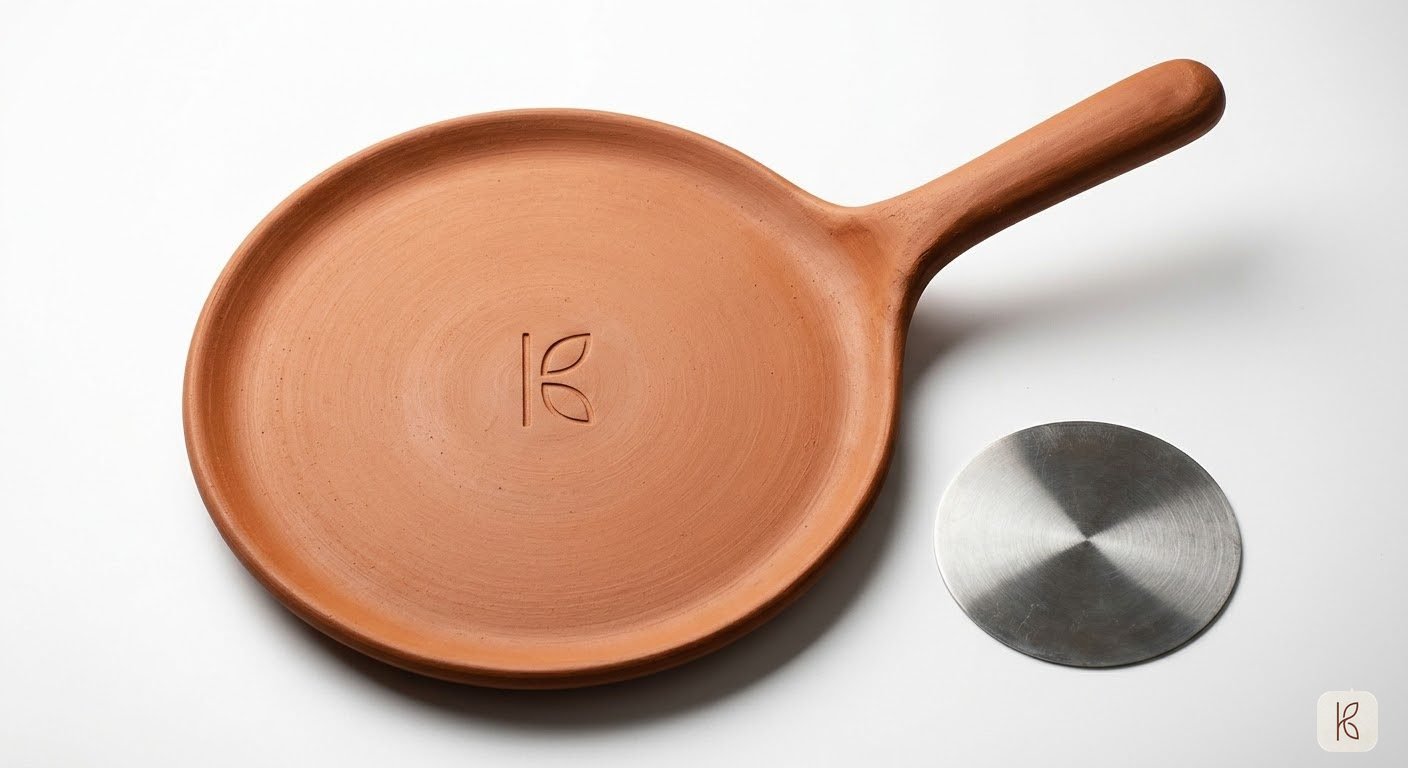
Yes, with the steel adapter disc (included in 1L+ sizes; available as a separate accessory for 600ml). Place the disc on the induction surface, pot on the disc, set 1–2 levels higher than you would for metal cookware.
Q: I washed it with regular dish soap. What now?
Re-season. Apply 4–5 drops of cold-pressed flaxseed oil to the interior. Heat on medium-low until it just smokes at the edges (~4 minutes). Cool. Wipe clean. The soap stripped the seasoning layer — this restores it.
Q: What is the white interior?
That’s the Bone Kaolin glaze on select serving pieces. The cooking handi interior is unglazed — raw, porous clay directly in contact with food. This is intentional; the porosity is part of the cooking mechanism.
Q: How long will it last?
Indefinitely, with care. Clay doesn’t wear out. The seasoning layer needs monthly maintenance. Barring drops or thermal shock from misuse, a well-maintained Klayvi handi can last 20–30 years. Some traditional clay vessels in Indian museum collections have been in active use for over a century.
Q: Can I see the lab report before I buy?
Yes. The latest batch report is always live at klayvi.in/batch-reports. After purchase, the QR on your product’s base links directly to your specific batch results — not a certificate page, the actual measured numbers.
Related products
-
Out of Stock

-
Out of Stock
-
Out of Stock

Reviews
There are no reviews yet.