
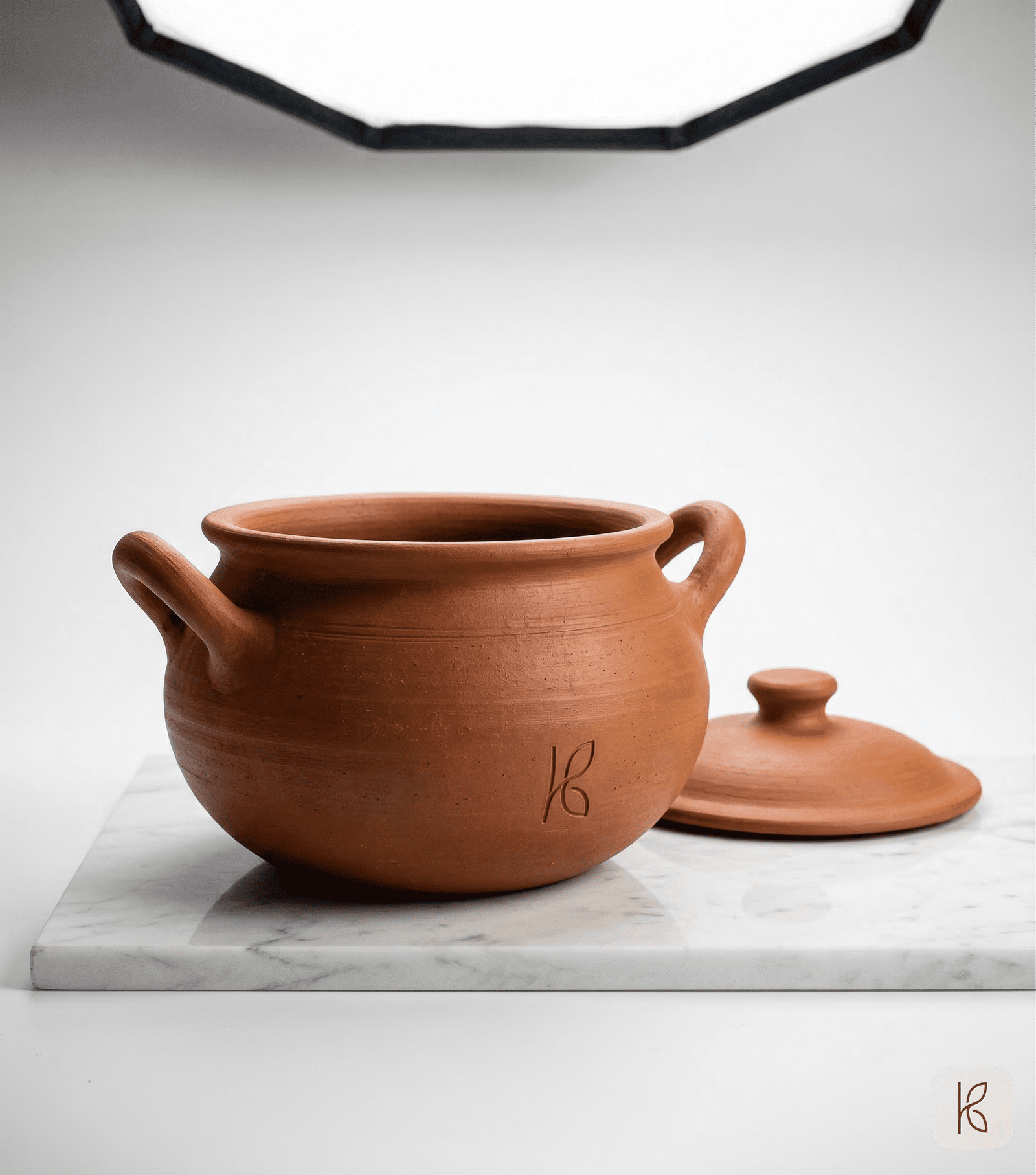
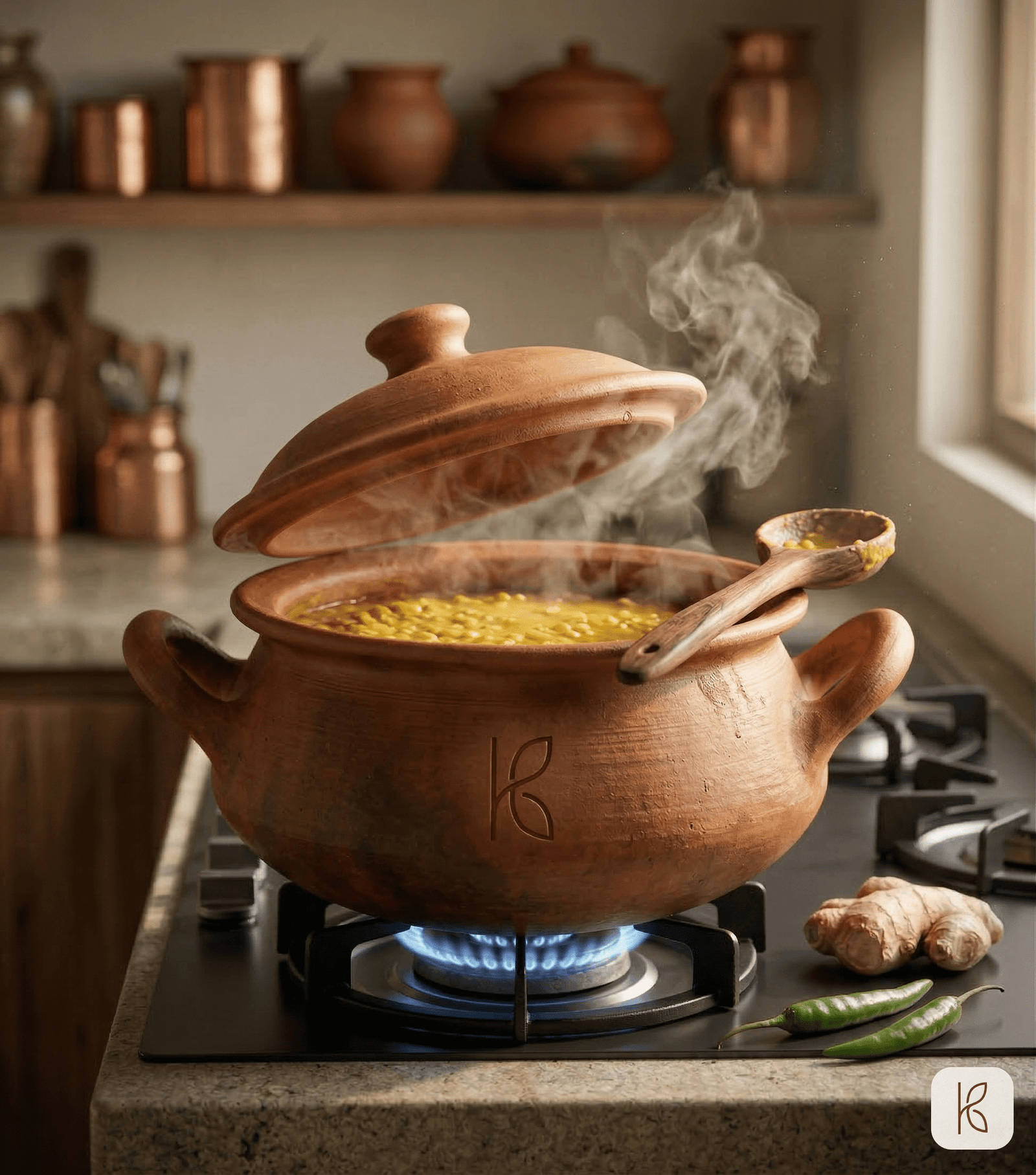
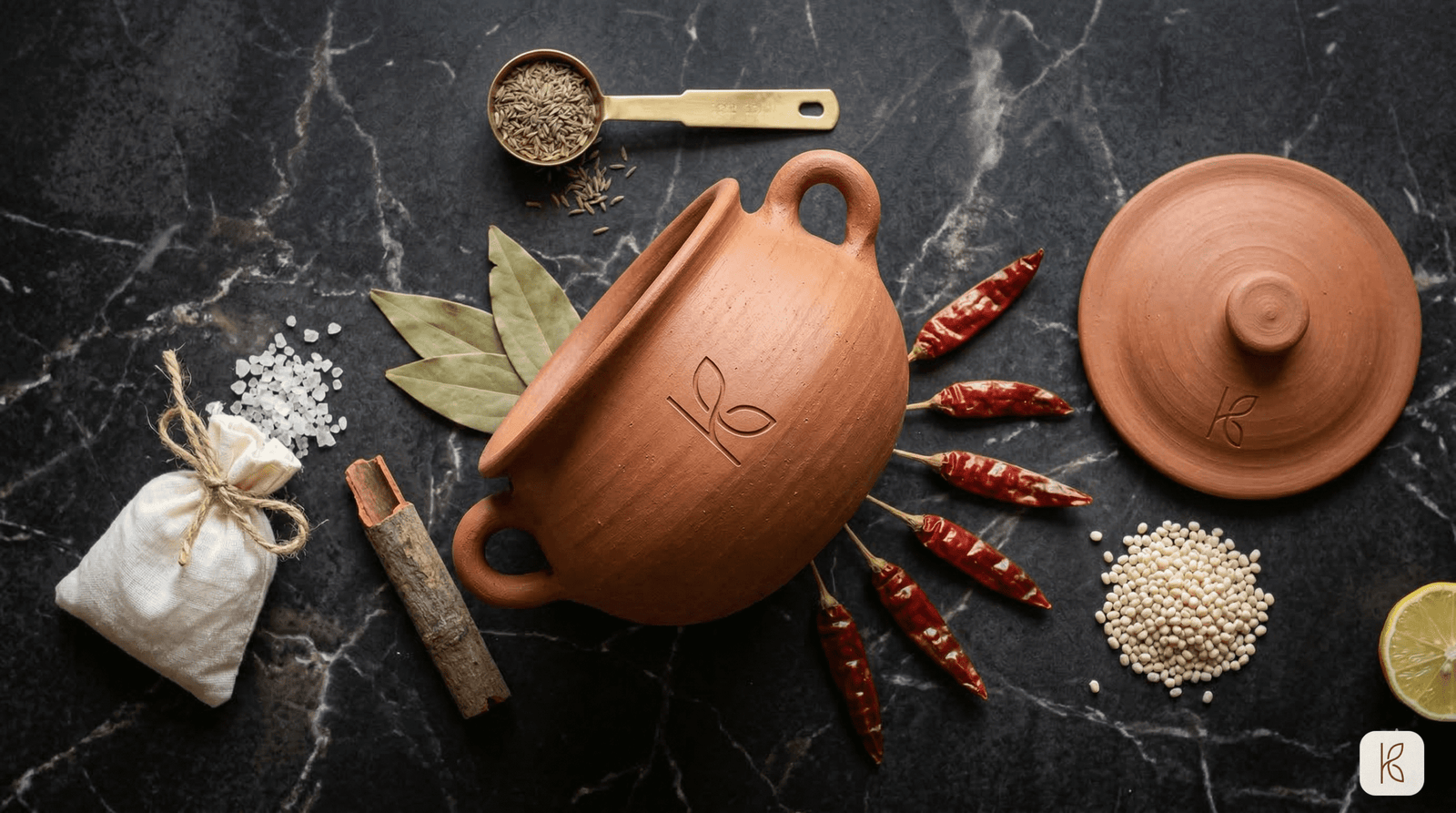
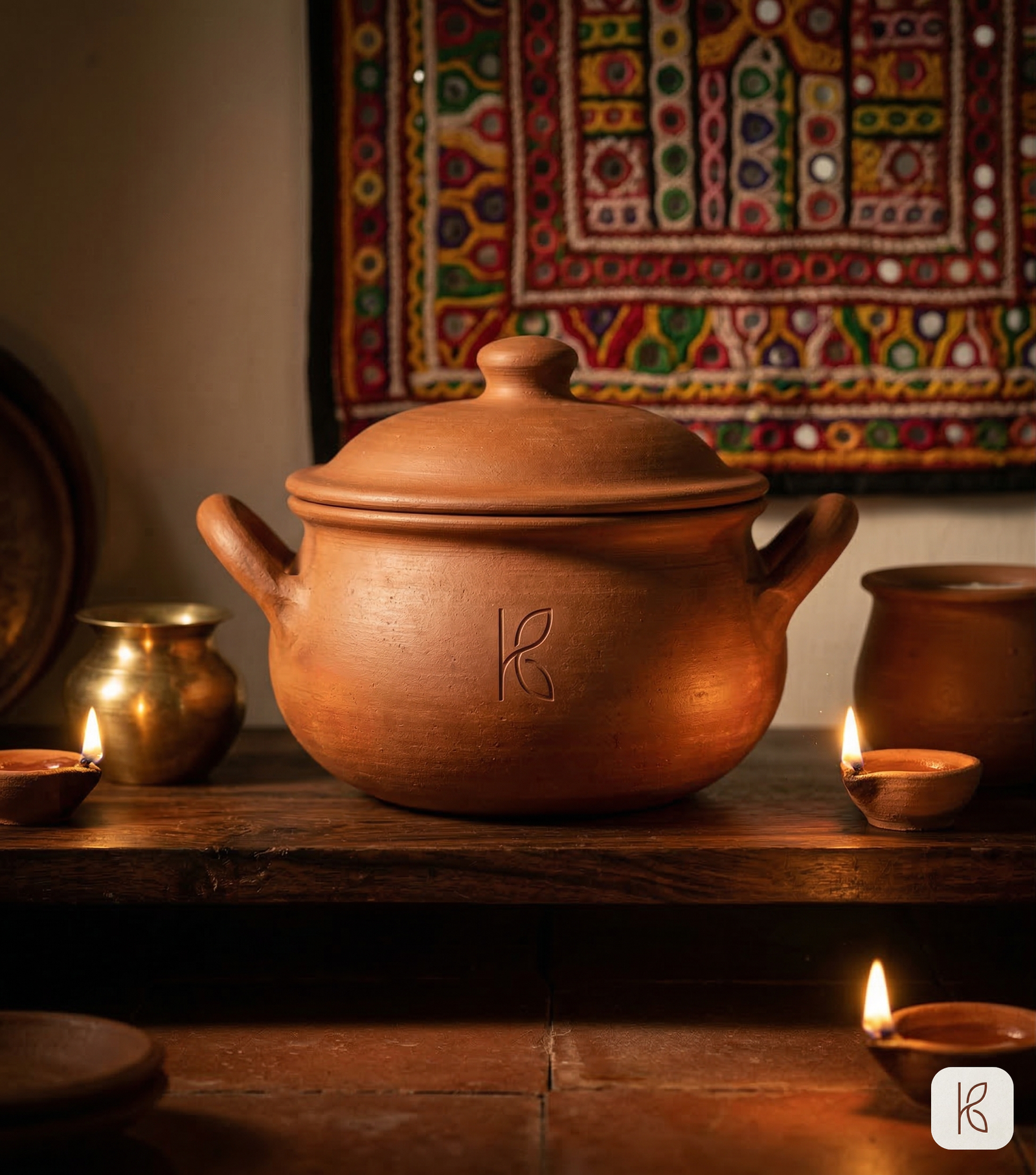
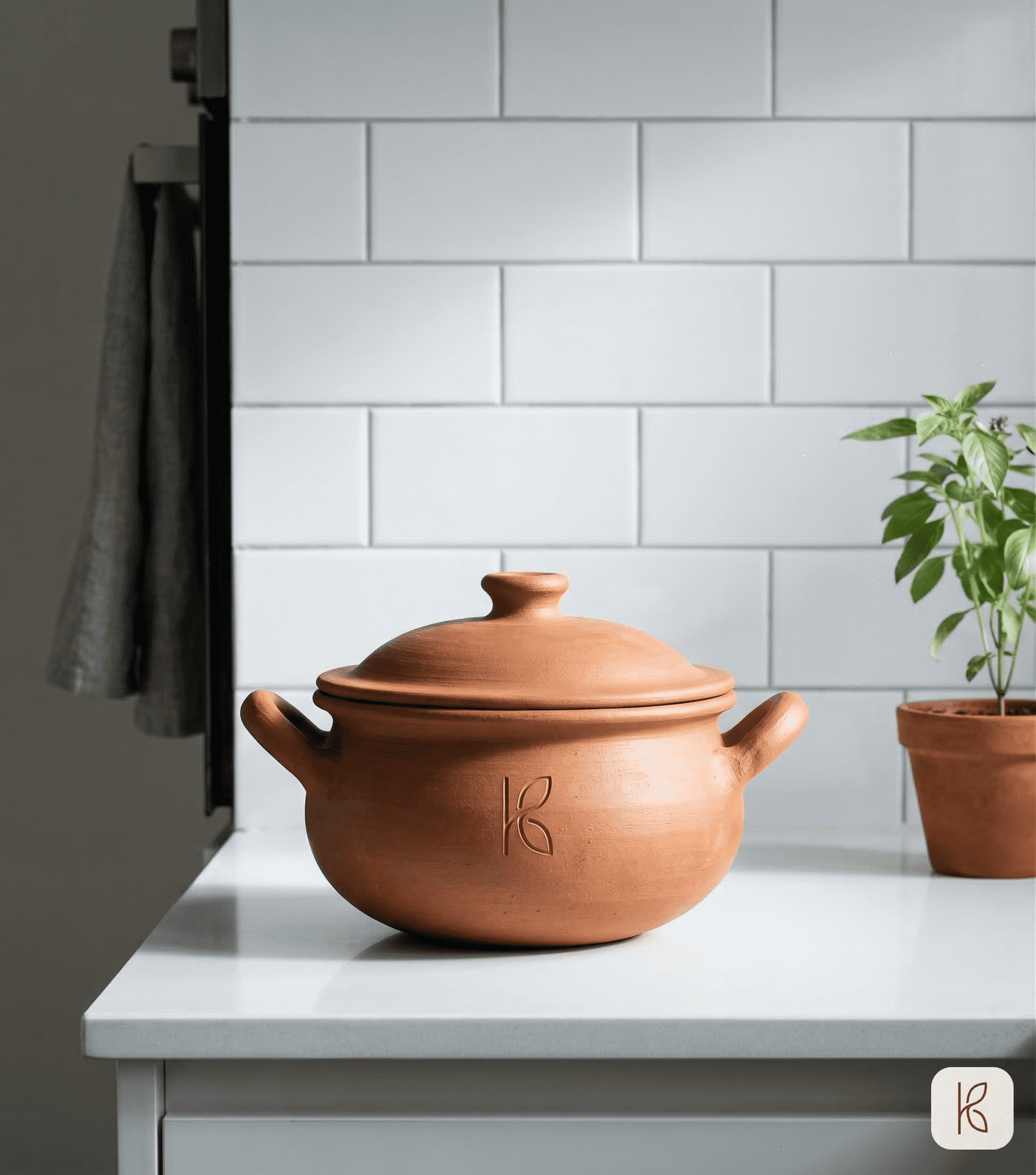
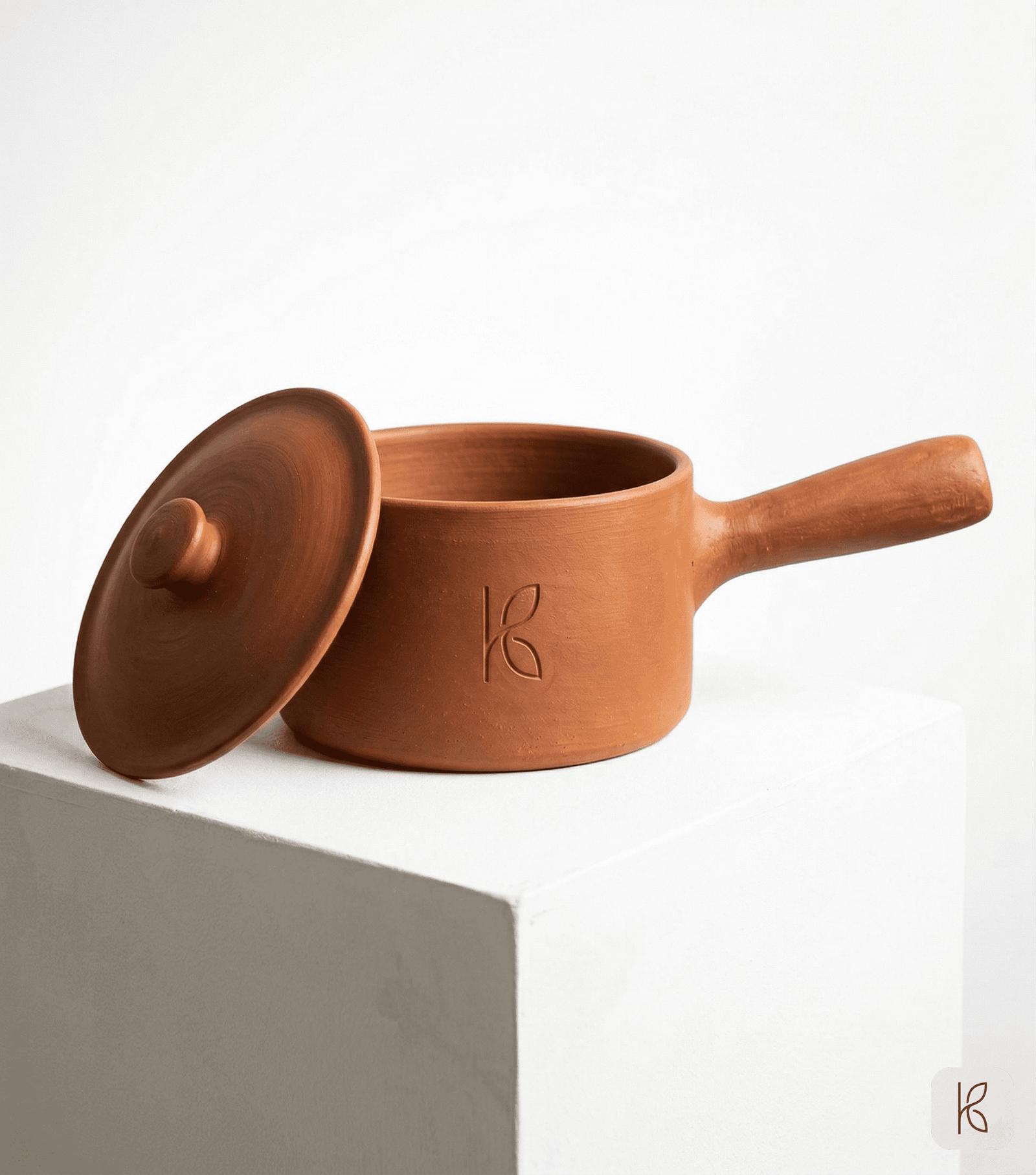
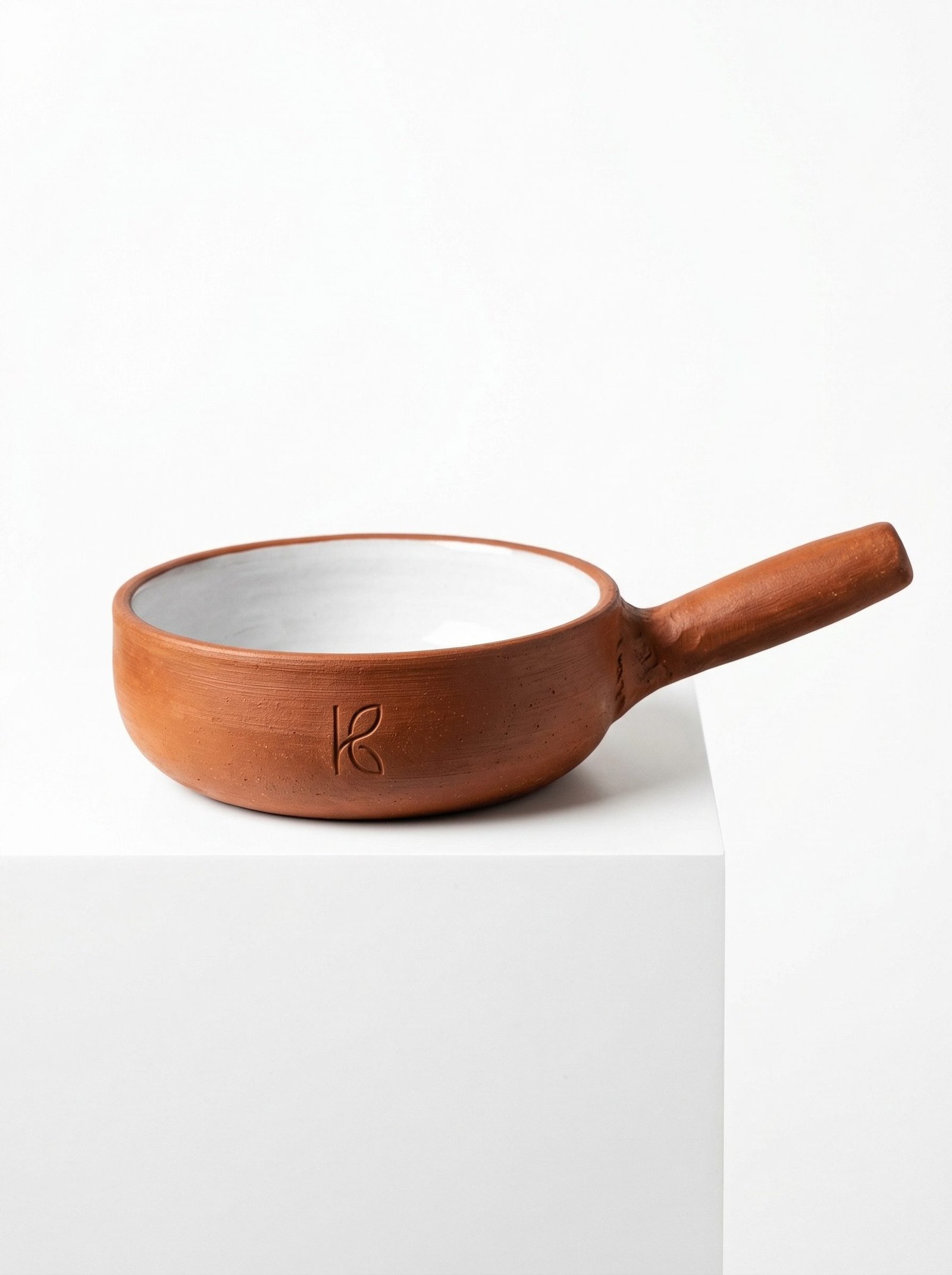
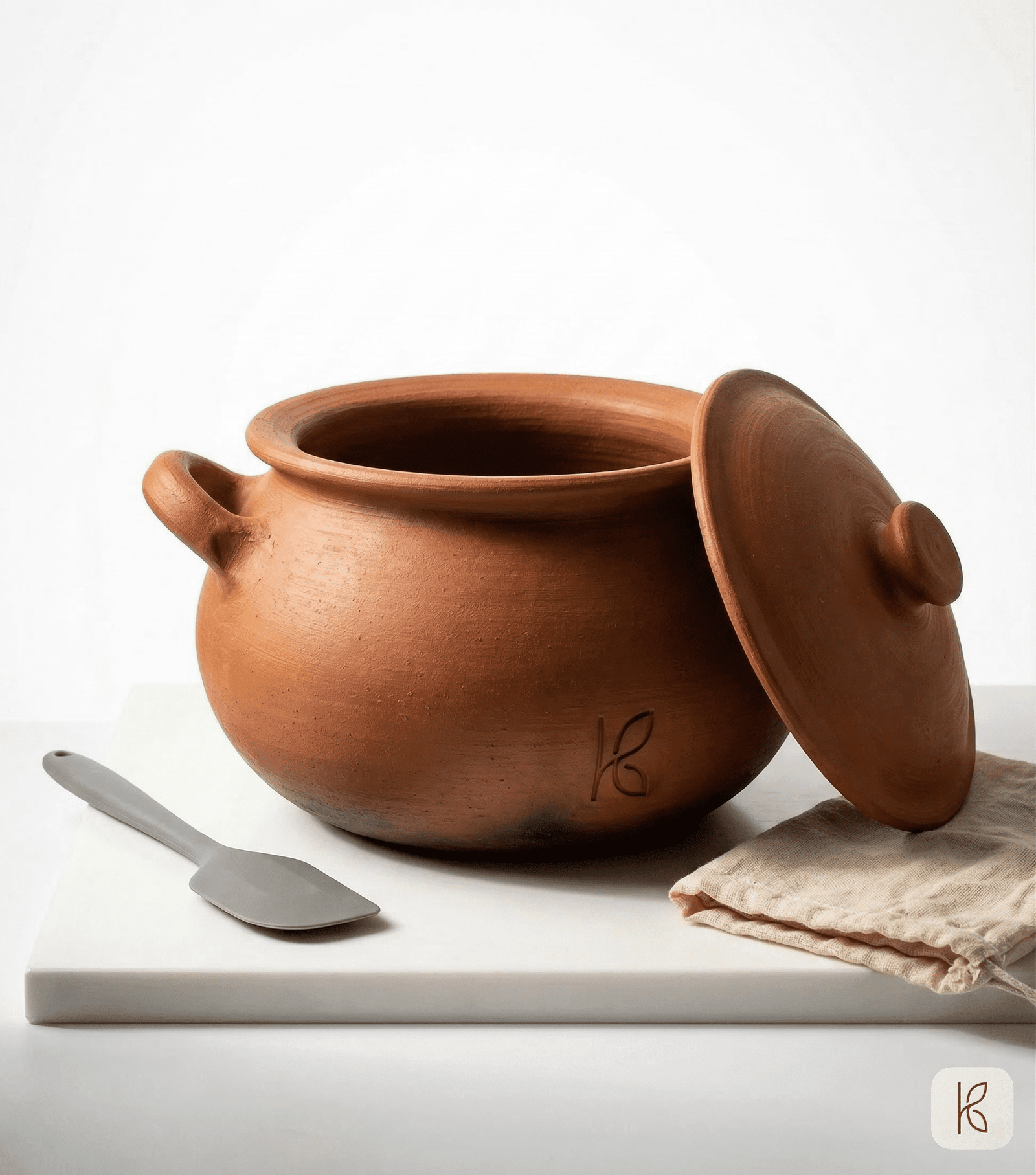
Bio-Active Handi – 1 L
Out of StockThe daily driver. Lab-certified clay for the dal that feeds your household.
Terracotta Clay · 1 Litre · SKU: KL-CK-002
₹799.00
| Material | Terracotta Clay |
|---|---|
| Size / Capacity | 1 Litre |
| Induction Ready | YES |
| XRF Tested | YES |
| Sub-Category | Handi |
The daily driver. Lab-certified clay for the dal that feeds your household.
Our most purchased handi. 1 litre of XRF-tested terracotta for 2–3 people — heats evenly on gas and induction (adapter disc included), and has never contained a molecule of PTFE, PFOA, or PFAS. The science of safe cooking has been around six thousand years. We just added a lab report.
Key Features & Benefits
- Zero Toxic Coating: No PTFE, PFOA, PFAS, or lead-based glazes. The cooking surface is clay. Nothing more.
- Dual Lab Certified: XRF on raw clay source + ICP-OES on the finished product. Two independent tests. Batch-specific report via QR on base.
- Induction Ready: 2mm cold-rolled ferromagnetic steel disc included. Tested on Prestige PIC 16.0, Bajaj ICX 3, Philips HD4938, Pigeon Favourite, and Usha Cook Joy. Achieves ≥80% induction efficiency.
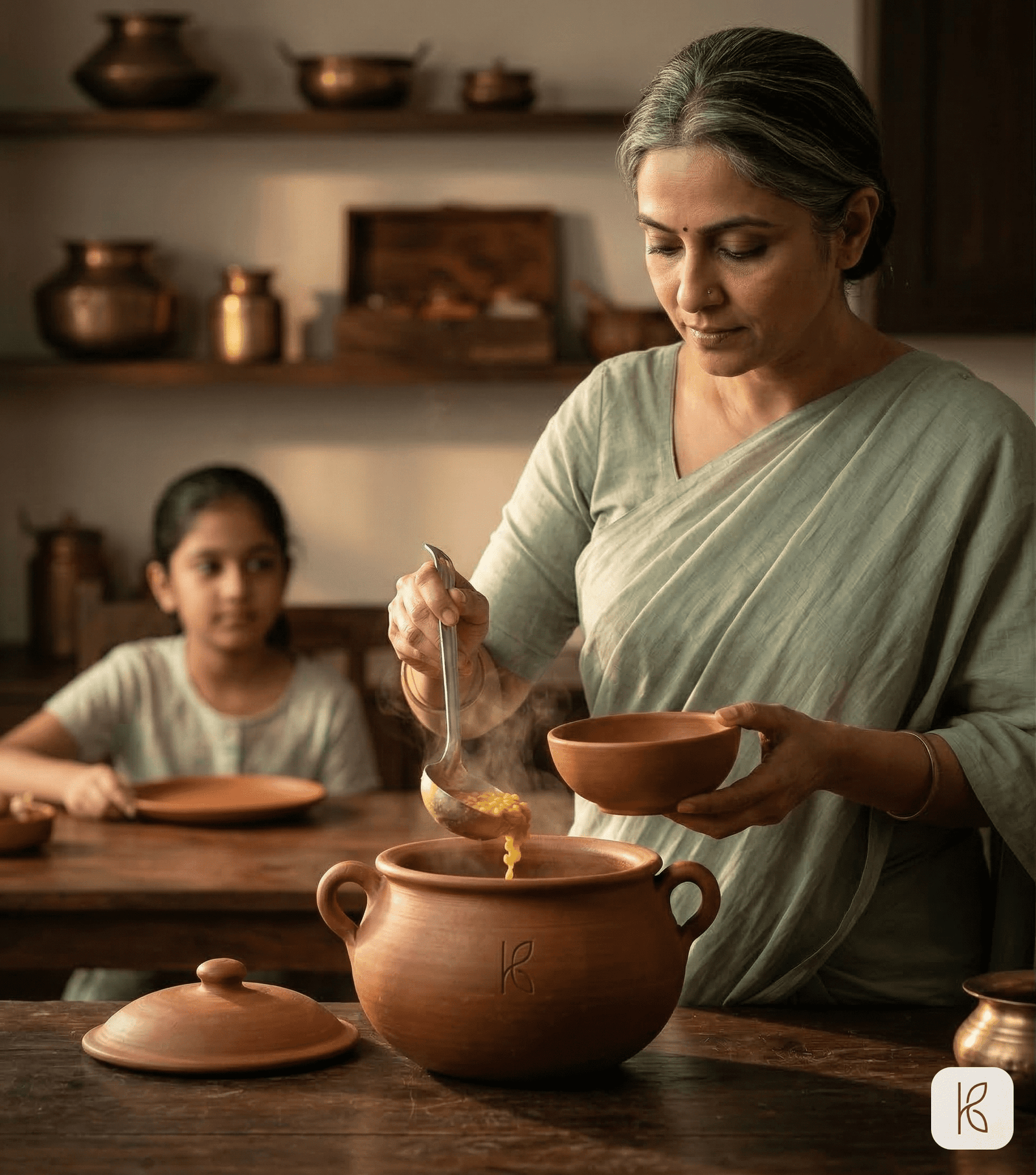
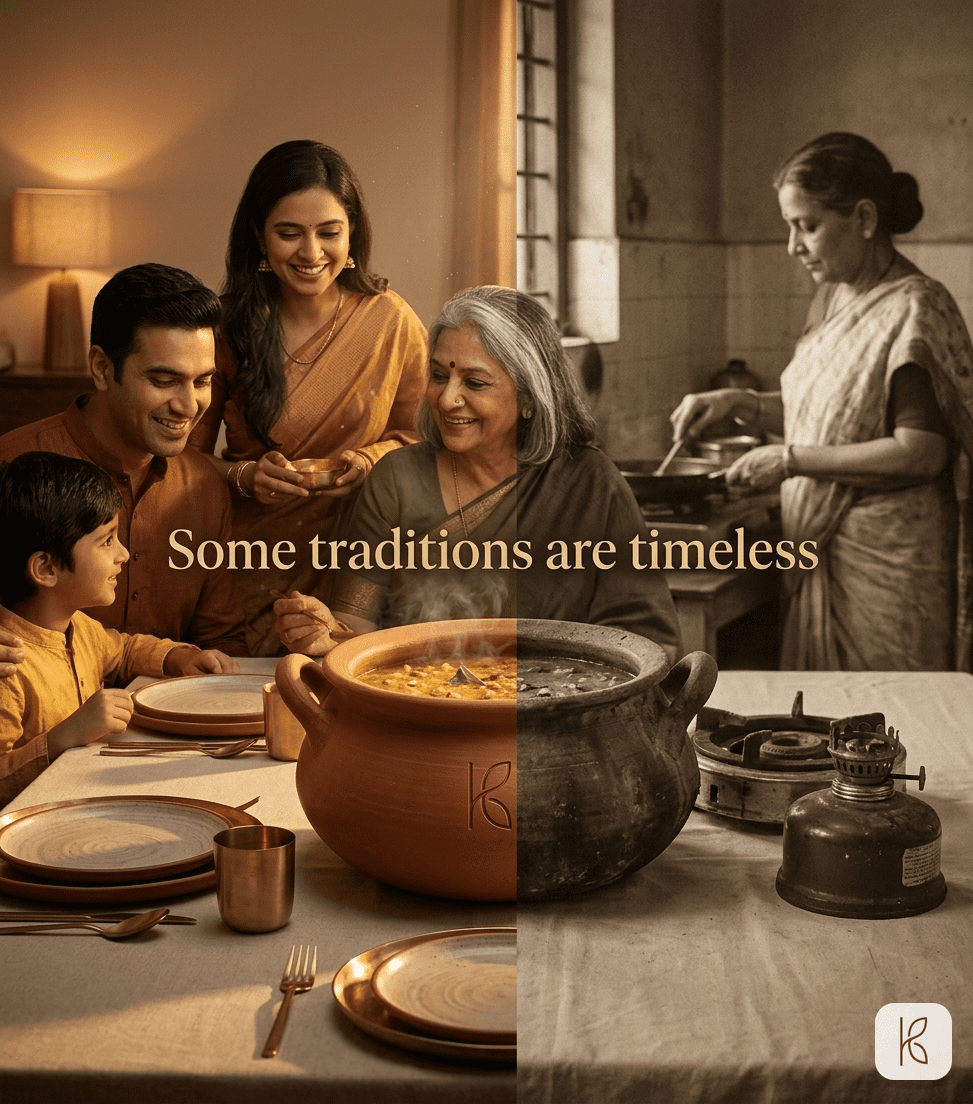
- Mineral Contribution to Food: A 2019 Journal of Food Science study found terracotta-cooked food retains significantly higher levels of iron, calcium, and phosphorus versus aluminium or steel. The clay’s alkaline minerals ionise into acidic cooking liquids. Your grandmother’s dal tasted different. This is why.
- Even, Slow Heat: Clay’s low thermal conductivity (0.8 W/m·K) prevents scorching and distributes heat across the entire vessel. No hot spots. Just steady, even cooking.
- Pre-Seasoned. Ready to Cook.: Three cycles of cold-pressed flaxseed oil at 200°C before dispatch. Rinse once with water. Cook.
About the Material
The 1L handi ships with a steel induction adapter disc and a cast iron heat diffuser. The disc handles the electromagnetic induction; the clay handles the rest — distributing that heat evenly, retaining it longer, and contributing its mineral character to every dish. Wall thickness on the Lite series: 4–5mm. Thin enough to reach cooking temperature in under 5 minutes on a medium flame. Thick enough to hold heat after you turn the burner off — your dal finishes from residual thermal mass rather than staying on flame. Interior finish: Ra ≤4µm surface roughness. This is approximately the smoothness of a well-seasoned cast iron pan. After 5–7 uses, most foods release cleanly.
The Science
Dal cooked in clay is chemically different from dal cooked in aluminium. The alkaline calcium, magnesium, and potassium oxides in the clay body ionise slowly into acidic cooking liquids during heat, raising the pH slightly and improving the bioavailability of the lentils’ natural iron content. This is documented, not claimed. For context: aluminium cookware under acidic conditions can migrate aluminium ions into food. Research published in Environmental Chemistry has measured this migration in tomato-based and tamarind dishes cooked in aluminium at normal cooking temperatures. Clay does the opposite — it buffers the acidity rather than contributing to it.
Safety & Certification Standards
| XRF Analysis — Clay Source | Heavy metal screening on raw clay before production begins |
| ICP-OES — Finished Product | Parts-per-billion accuracy. Actual migration into food simulants tested |
| NABL-Accredited Laboratory | Internationally recognised test facility |
| FSSAI Food Contact Compliance | Meets India’s legal food safety standards for cookware |
| Per-Batch QR Report | Your batch. Your numbers. Published before dispatch. Scan and read it yourself. |
Lab Test Results
| Compound | Klayvi Result | FSSAI Safe Limit |
|---|---|---|
| Lead (Pb) | ≤ 2.1 ppm | 90 ppm |
| Cadmium (Cd) | ≤ 0.3 ppm | 0.5 ppm |
| Arsenic (As) | ≤ 0.4 ppm | 2.0 ppm |
| Mercury (Hg) | Not detected | 0.5 ppm |
| PTFE / PFOA / PFAS | Not present | Zero tolerance |
Caring for Your Klayvi
| 1 — First Use | Rinse with plain water. Cook something water-based (dal, rice water) for first 2–3 uses. |
| 2 — Daily Clean | Use Klayvi Wash Care (pH 6–8) or a sisal scrubber with warm water. Never standard dish soap — its pH 9–11 strips the seasoning. |
| 3 — After Wash | Dry completely on low flame for 2 minutes. Never store damp. |
| 4 — Monthly | Apply 4–5 drops of cold-pressed flaxseed oil. Heat on medium-low until it just smokes at the edges (~4 min). Cool. Wipe. |
| 5 — Never | Dishwasher · Microwave · Submerging overnight · Chemical detergents · Cold water on a hot pot |
What’s in the Box
- Bio-Active Handi 1L (pre-seasoned)
- Steel induction adapter disc (2mm cold-rolled)
- Artisan provenance card
- Clay Care Passport
- Batch QR card
- Cotton muslin storage pouch
Frequently Asked Questions
Q: My handi takes longer to heat than my steel pot. Is that normal?
Yes. Clay heats more slowly than metal — that’s the mechanism, not a flaw. Set the flame to medium-high for the first 3–4 minutes, then reduce to your cooking level. Total heat-up time: 4–6 minutes. After that, the clay holds temperature so well that you can often cook at a lower flame than you’re used to.
Q: Can the adapter disc go into the dishwasher?
Yes. The steel adapter disc is dishwasher-safe. The clay handi is not — use the clay cleaning method (sisal scrubber, warm water, or Klayvi Wash Care at pH 6–8).
Q: Will the clay absorb flavours from previous cooking?
Slightly, yes — especially in the first month. This is actually desirable. A well-used clay handi develops a seasoning layer that incorporates the flavours of everything cooked in it, much like a cast iron pan. Most customers report that this cumulative seasoning improves their cooking over time.
Q: Is there a break-in period?
Yes. 5–7 uses to build the seasoning layer. Some foods may stick lightly in early uses. Cook water-based dishes (plain dal, rice water) for the first 2–3 sessions. By use 7, the surface performs noticeably better.
Q: Can I cook acidic dishes (tamarind, tomato, lemon) in clay?
Yes. In fact, the clay’s alkaline mineral surface neutralises surface acidity rather than reacting with it. Long-simmered tamarind rasam in clay is well-documented in traditional South Indian cooking. The clay does not corrode or degrade with acidic food.
Q: Where are these made?
Delhi-NCR, India. Your pot’s artisan card names the specific person and their workshop cluster. We do not source from factories. Every piece is hand-thrown on a wheel.
Related products
-
Out of Stock

-
Out of Stock
-
Out of Stock

Reviews
There are no reviews yet.