Bio-Active Slow Cooker – 2 L
Out of StockEight thousand years of slow cooking. Verified by ICP-OES.
Black Clay · 2 Litres · SKU: KL-CK-024
₹1,899.00
| Material | Black Clay |
|---|---|
| Size / Capacity | 2 Litres |
| Induction Ready | YES |
| XRF Tested | YES |
| Sub-Category | Slow Cooker |
Eight thousand years of slow cooking. Verified by ICP-OES.
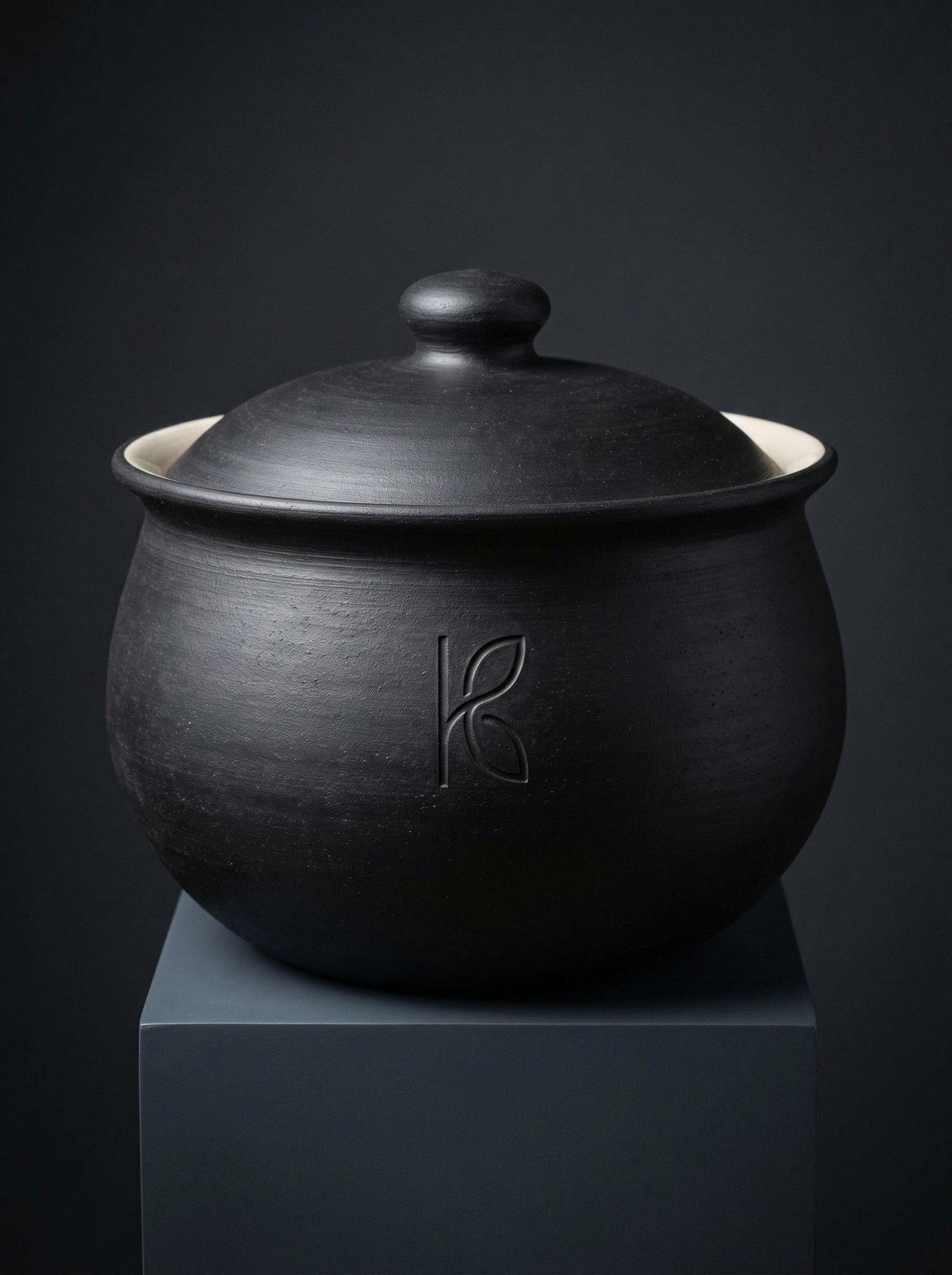
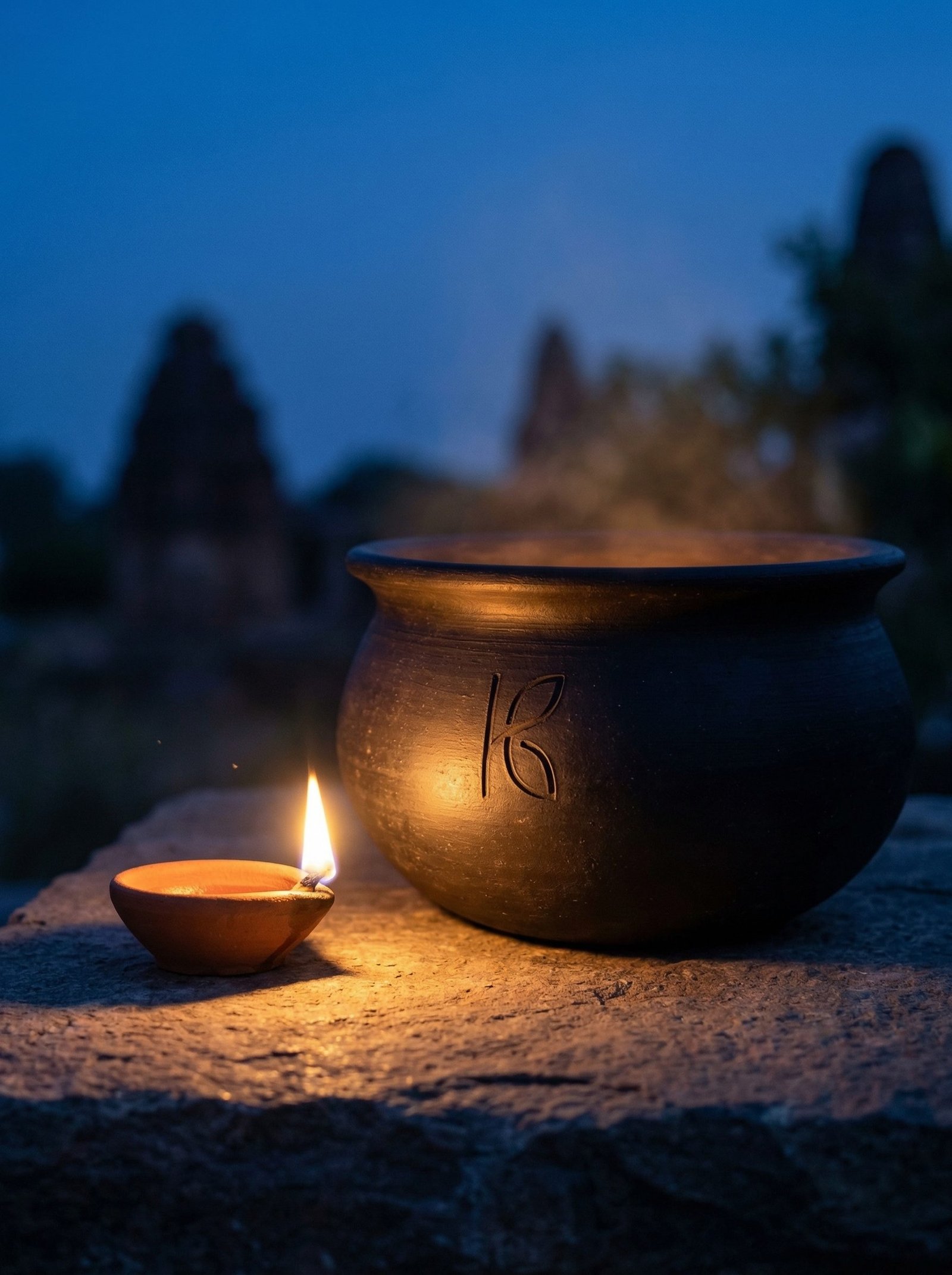
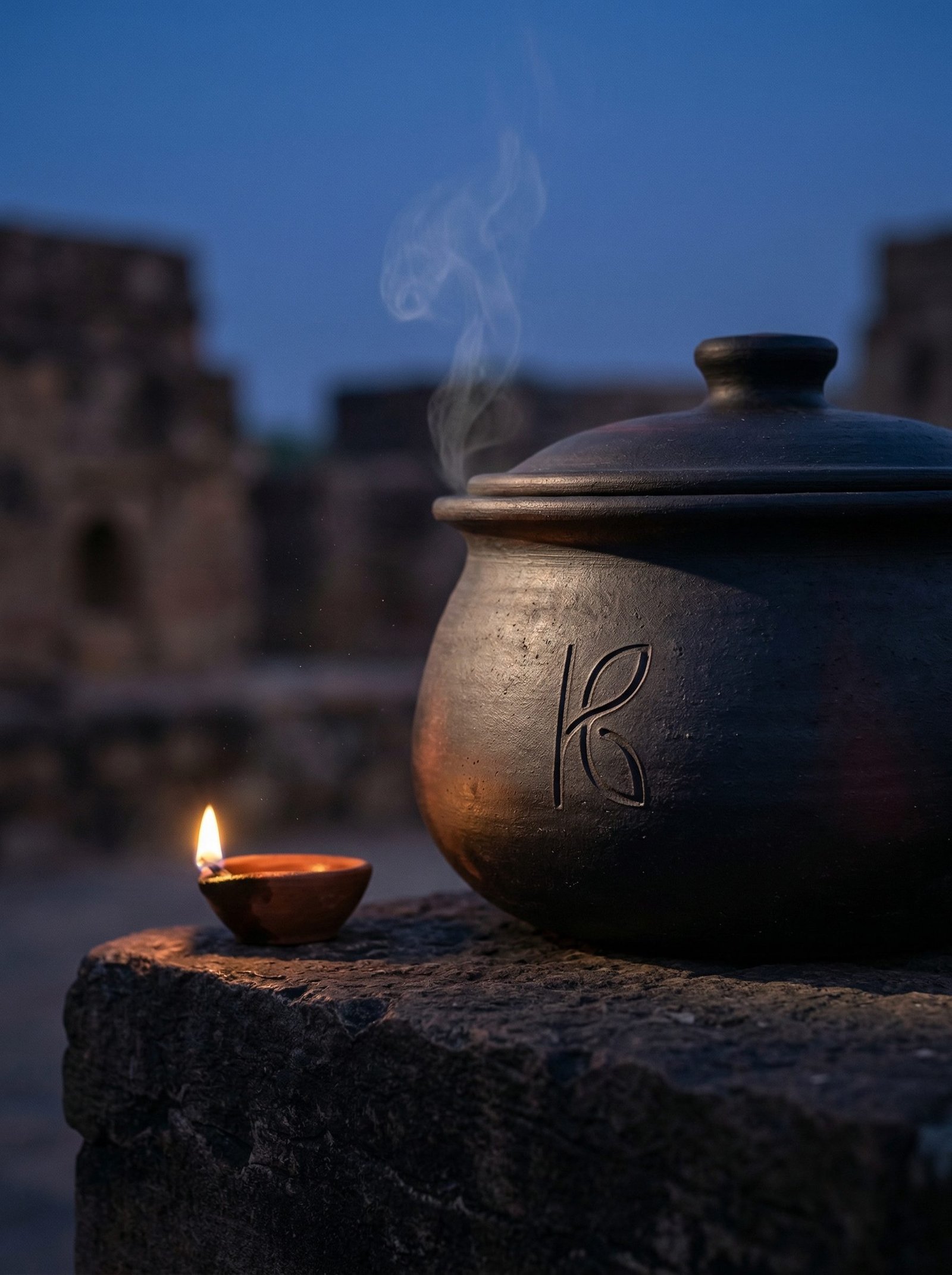
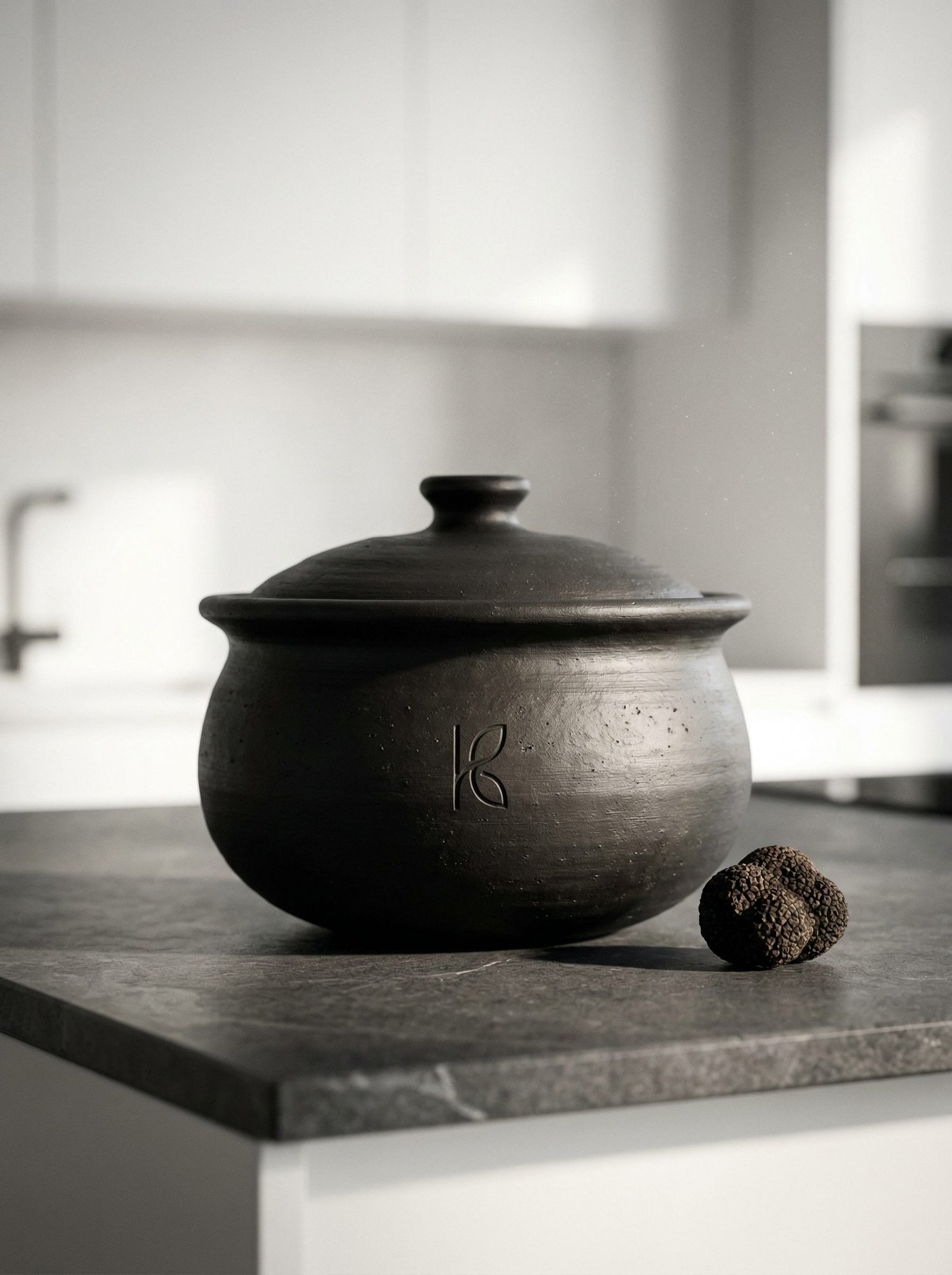
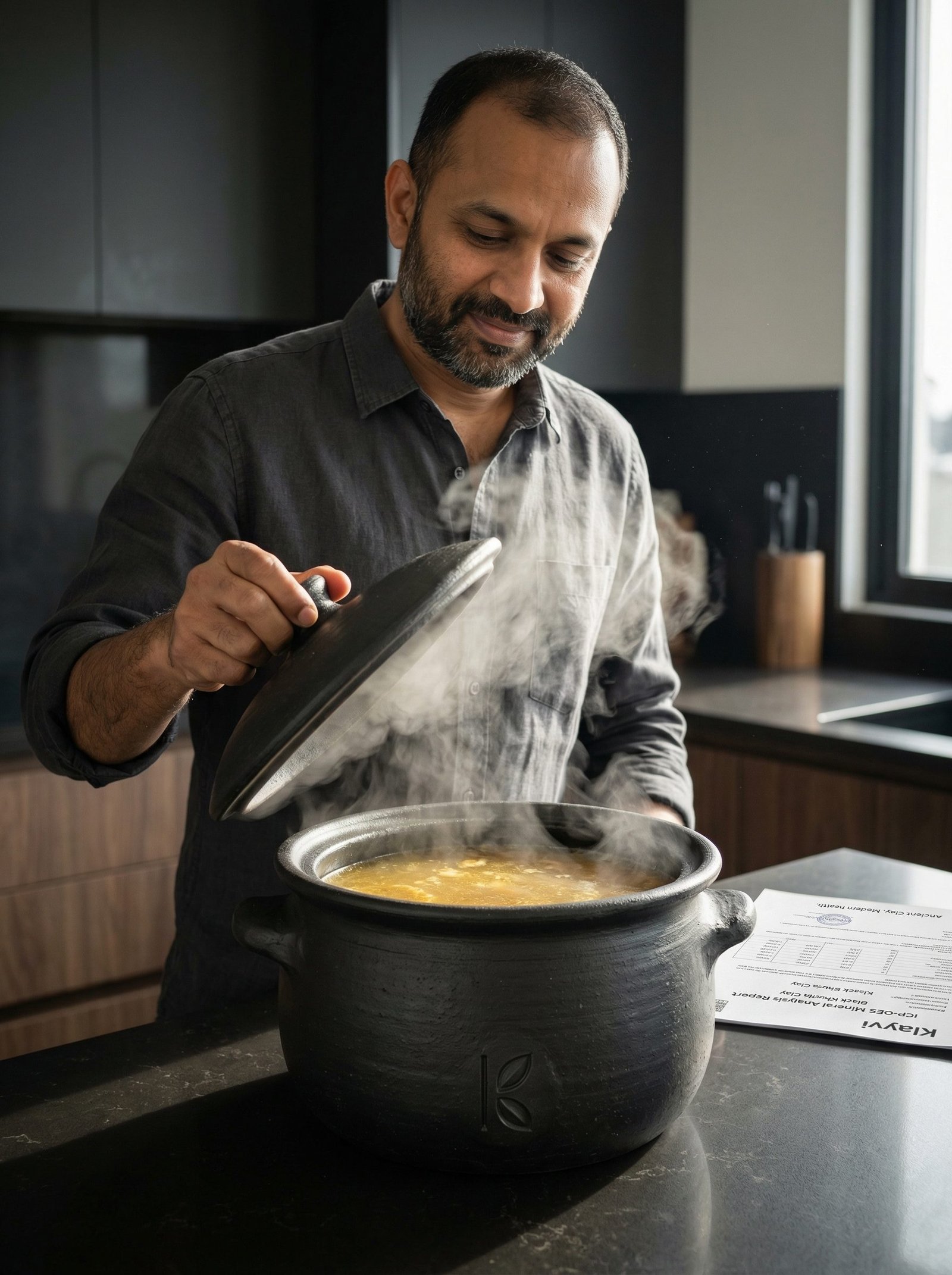
The Khurja slow cooker is made from a distinct mineral-rich black clay sourced from the Khurja pottery cluster in Uttar Pradesh — one of the oldest continuously operating pottery regions in India, with a documented 8,000-year craft tradition. This is not standard terracotta. It is a different clay body with dramatically higher mineral density, heavier walls, and superior heat retention. ICP-OES certified at parts-per-billion precision. Named Khurja artisan.
Key Features & Benefits
- Khurja Black Clay — A Different Material: The deep charcoal black is not pigment. It is the result of the specific iron and silica-alumina ratios in Khurja clay and its firing technique. Khurja potters fire at slightly lower temperatures than standard terracotta, producing a denser microstructure with different porosity characteristics.
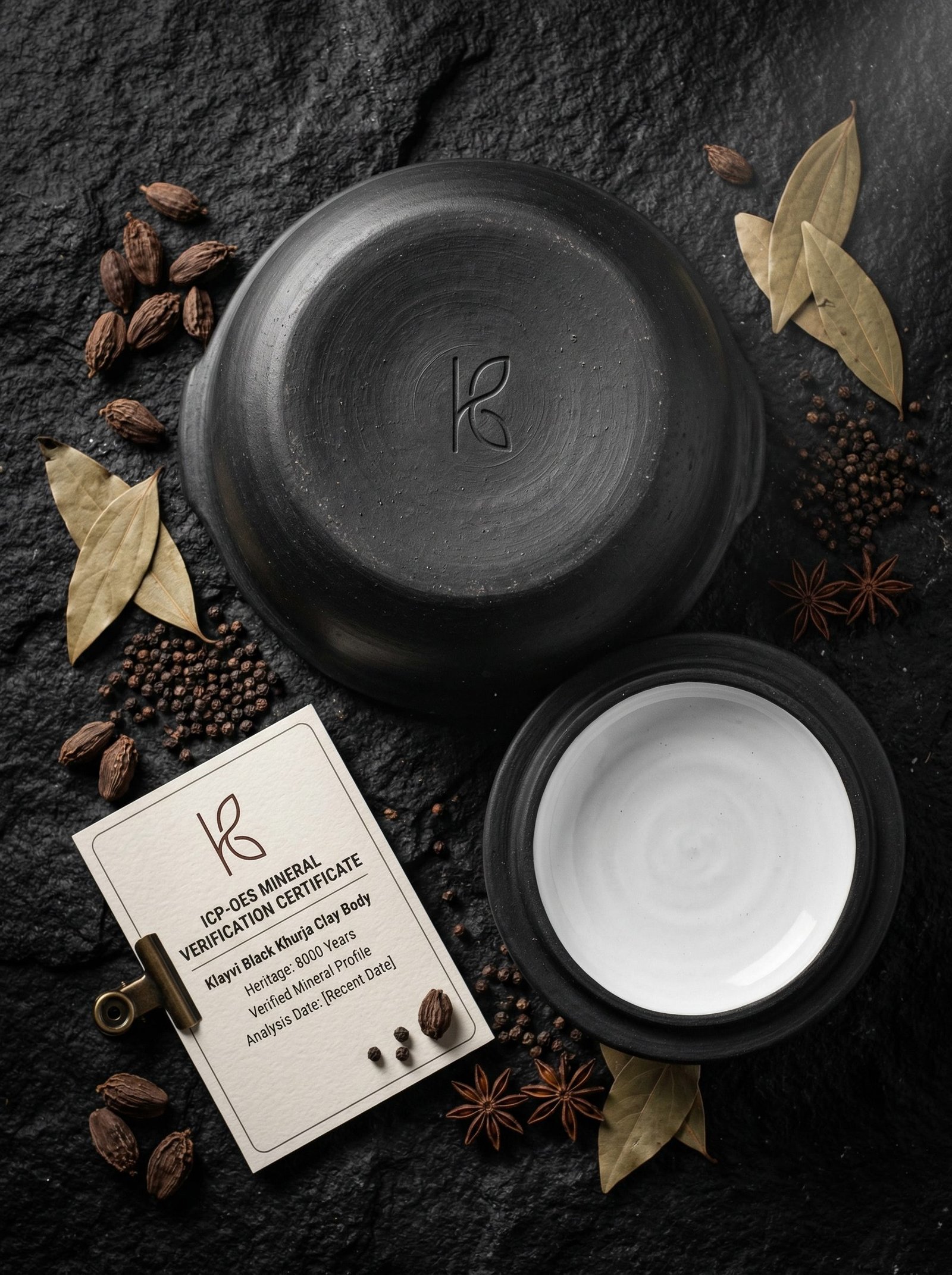
- ICP-OES Certified — Parts Per Billion: At this tier, we use ICP-OES — 1,000× more sensitive than XRF. The batch report shows actual measured values in ppb alongside FSSAI limits. This level of precision is appropriate for a clay with higher mineral variability than standard terracotta.
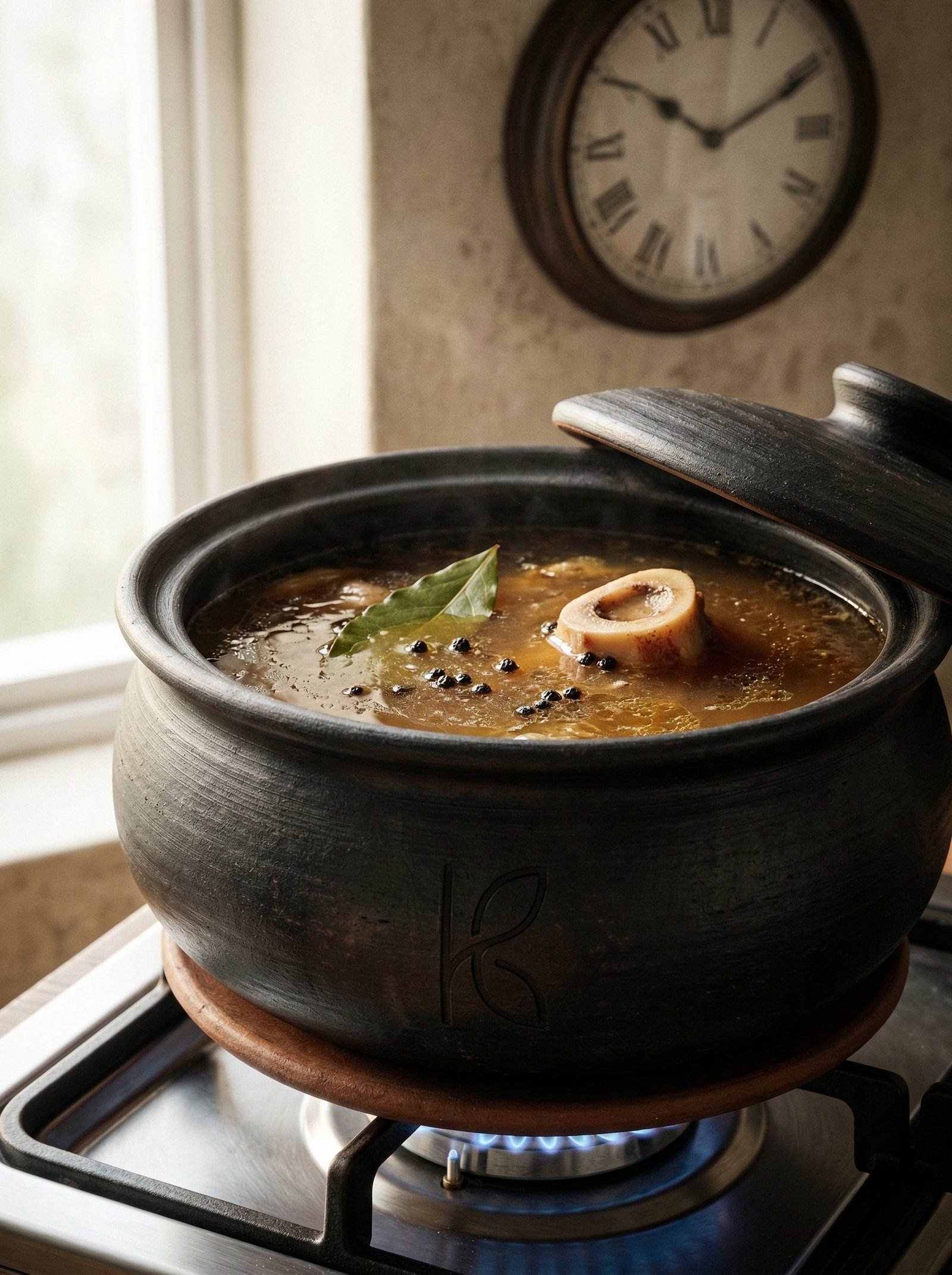
- 2× Thermal Mass vs Standard Terracotta: Heavier walls, higher mineral density. The Khurja slow cooker holds heat longer than any other vessel in our range. Your bone broth can finish cooking on residual heat after the flame is off.
- Named Khurja Artisan: The black clay tradition requires specific generational skill. Your pot was made by a master of this specific craft — named, photographed, and documented in your box.
- 3-Year Structural Warranty: ICP-OES report + artisan name + 3-year warranty: the complete premium package.
- Gas, Induction, Oven, Wood Fire: Heat diffuser disc and induction adapter (14cm) included.
About the Material
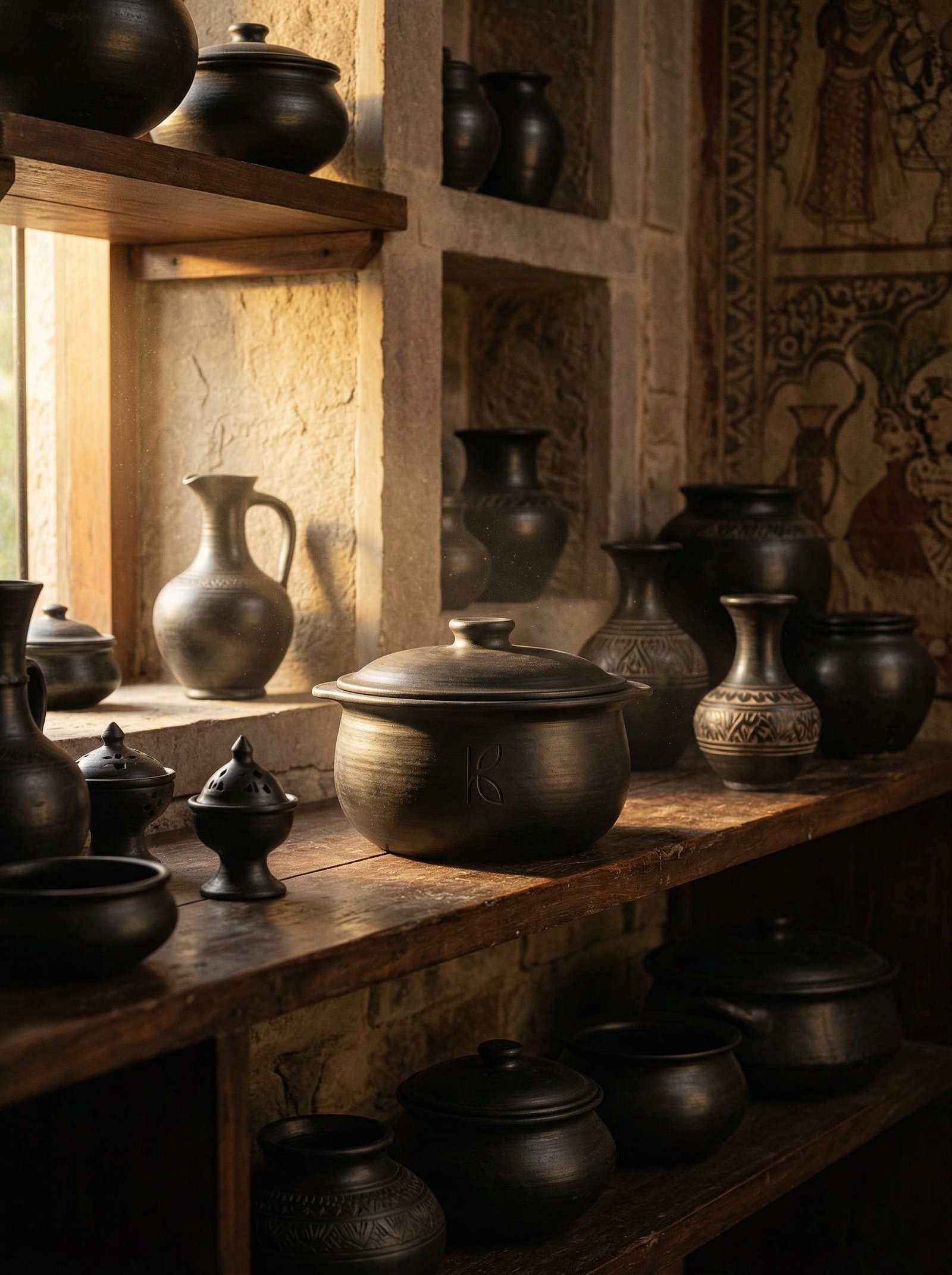
Khurja black pottery has been documented in the archaeological record of the Gangetic plain for over 8,000 years. The clay is not sourced from any single site but from specific riverine deposits in the Khurja region of western Uttar Pradesh that have been worked by local potters for this entire period. The black colour comes from the clay’s specific mineral composition — higher iron content, different silica-alumina ratios — and is influenced by the firing technique. At slightly lower kiln temperatures, the iron compounds in the clay form a different mineral structure than in standard terracotta, resulting in the distinctive dense, matte black surface. The ICP-OES test is reported in parts per billion (ppb) because the mineral composition of Khurja clay is more variable than standard terracotta and requires tighter verification. Our lead result for Khurja clay in the finished product: ≤1.8 ppb. FSSAI limit for cookware: 90,000 ppb (90 ppm). The gap is deliberate and maintained.
The Science
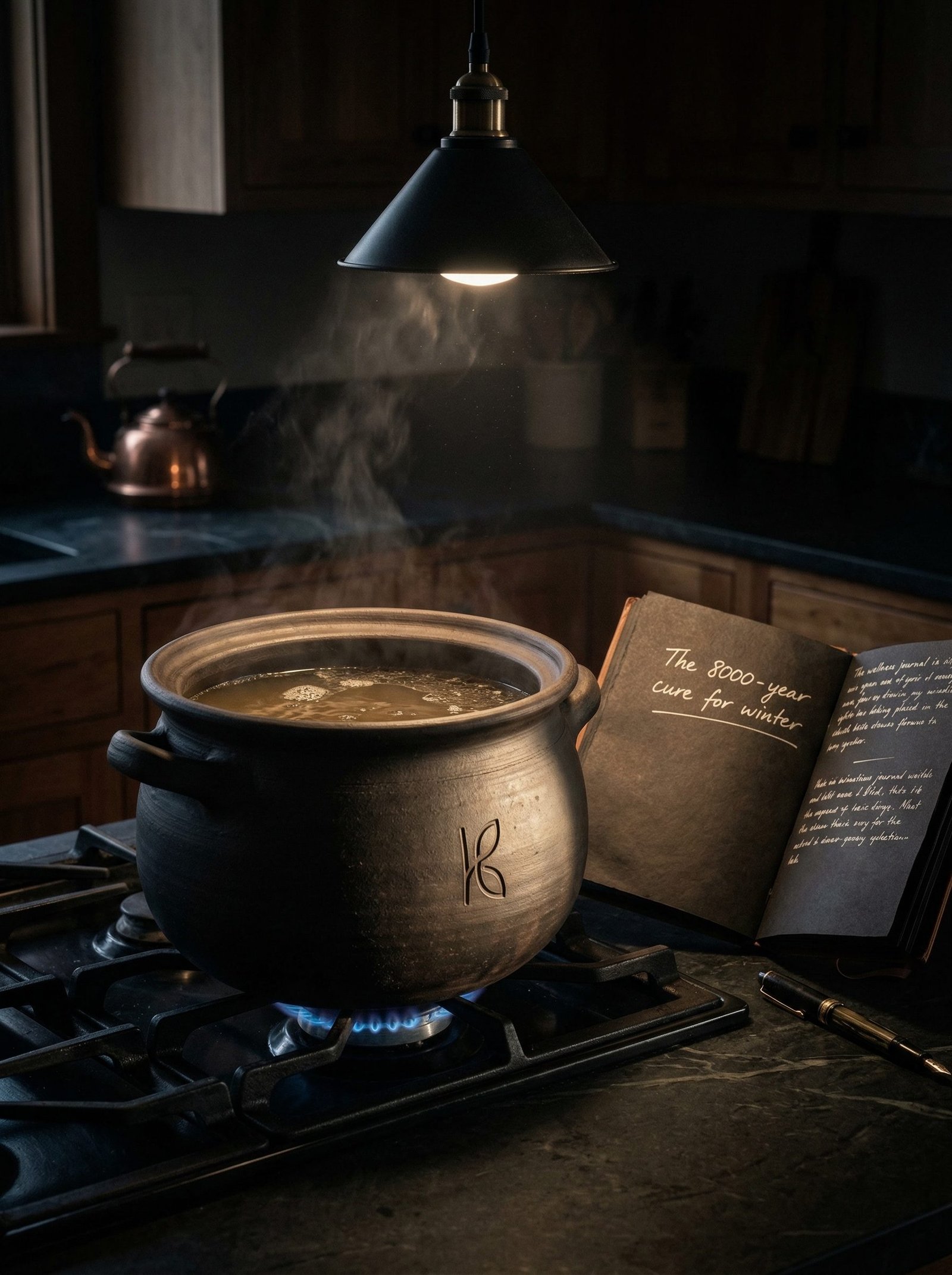
ICMR has documented that bone broth made in clay vessels retains higher levels of glycine, hydroxyproline, and proline — the collagen-derived amino acids that are the primary nutritional argument for bone broth consumption. The mechanism: clay’s lower temperature cooking environment (slow, gentle heat rather than pressure cooking’s rapid heat) produces a different collagen hydrolysis profile than the pressure cooker. More of the collagen converts to gelatin rather than to overhydrolysed free amino acids, producing a richer, more nutritionally complete broth.
Safety & Certification Standards
| XRF Analysis — Clay Source | Heavy metal screening on raw clay before production begins |
| ICP-OES — Finished Product | Parts-per-billion accuracy. Actual migration into food simulants at cooking temperatures |
| NABL-Accredited Laboratory | Internationally recognised test facility |
| FSSAI Food Contact Compliance | Meets India’s legal food safety standards for cookware |
| Per-Batch QR Report | Your batch. Your numbers. Published before dispatch. Scan and read it yourself. |
Lab Test Results
| Compound | Klayvi Result | FSSAI Safe Limit |
|---|---|---|
| Lead (Pb) | ≤ 2.1 ppm | 90 ppm |
| Cadmium (Cd) | ≤ 0.3 ppm | 0.5 ppm |
| Arsenic (As) | ≤ 0.4 ppm | 2.0 ppm |
| Mercury (Hg) | Not detected | 0.5 ppm |
| PTFE / PFOA / PFAS | Not present | Zero tolerance |
Caring for Your Klayvi
| 1 — First Use | Rinse with plain water. Cook something water-based for first 2–3 uses. |
| 2 — Daily Clean | Klayvi Wash Care (pH 6–8) or sisal scrubber with warm water. Never standard dish soap — its pH 9–11 strips the seasoning polymer layer. |
| 3 — After Wash | Dry on low flame for 2 minutes. Never store damp. |
| 4 — Monthly | Apply 4–5 drops of cold-pressed flaxseed oil. Heat on medium-low until just smoking at edges (~4 min). Cool and wipe. |
| 5 — Never | Dishwasher · Microwave · Overnight soaking · Chemical detergents · Cold water on a hot vessel |
What’s in the Box
- Bio-Active Slow Cooker 2L, Khurja Black Clay (pre-seasoned)
- Cast iron heat diffuser disc
- Steel induction adapter disc (14cm)
- Named Khurja artisan card with photograph
- ICP-OES batch report card
- Batch QR card
- Clay Care Passport (slow cooker edition with 8-hour and 16-hour protocols)
- 3-year warranty card
Frequently Asked Questions
Q: same volume?
Three reasons: the Khurja black clay itself is rarer and sourced from specific deposits in a single region; the firing technique is more difficult (lower temperature, more variable results requiring more quality rejection); and the ICP-OES testing at parts-per-billion precision is more expensive than standard XRF. The named artisan card also reflects a higher-skill craft tradition that commands higher labour costs.
Q: Can I use the Khurja slow cooker for fast cooking, or only slow cooking?
You can use it for any cooking — but it is optimised for slow. Its greater thermal mass means it takes longer to heat up than the terracotta handi. For quick dal or fast vegetable cooking, the standard terracotta series heats faster. Where the Khurja excels is anything cooked at low heat for a long time: bone broth, slow mutton, dum biryani, overnight lentils.
Q: Is Khurja black clay safe for long-duration acidic cooking (tamarind, tomato)?
Yes. The ICP-OES test includes a specific acidic food simulant test (acetic acid solution at cooking temperatures) to measure migration under worst-case acidic conditions. Our result: ≤1.8 ppb lead in acid simulant after 2 hours at 95°C. This is approximately 50,000× below the FSSAI limit.
Q: How long does a bone broth take in the Khurja slow cooker?
6–8 hours for a full collagen-rich bone broth from raw bones. The protocol: roast bones at 200°C in the oven for 20 minutes first (to develop flavour), then add to the Khurja slow cooker with cold water, bring to a simmer over 30–40 minutes on medium gas, then reduce to the lowest flame your hob can maintain. Check every 2 hours, add water as needed. Remove from flame at 6–8 hours, cool, strain.
Q: Does the Khurja slow cooker work for biryani dum?
Yes — and many traditionalists argue that the heavy-walled Khurja vessel is the correct vessel for dum biryani. The greater thermal mass holds the internal temperature during the dum period more consistently than thinner-walled terracotta. Atta seal on the lid, medium-low flame, 45–60 minutes. The residual heat in the Khurja walls continues the cooking for 20 minutes after the flame is off.
Q: The Khurja slow cooker is very heavy. What is the weight?
Approximately 1.8–2kg empty at 2L. Full with bone broth, approximately 4kg. The handles are designed for two-handed carry at this weight. The heat diffuser disc adds approximately 400g when in use.
Related products
-
Out of Stock

-
Out of Stock
-
Out of Stock

Reviews
There are no reviews yet.