
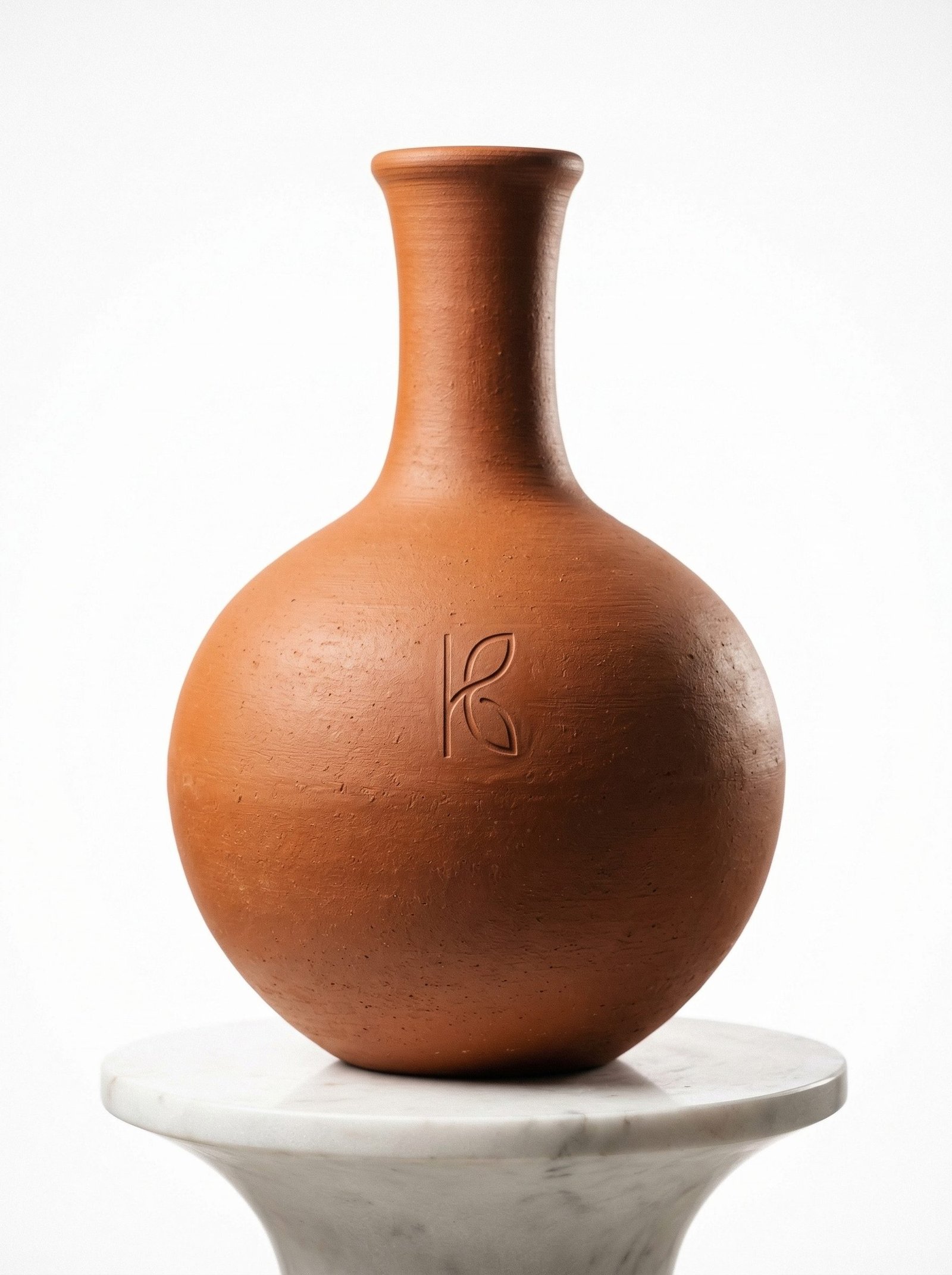
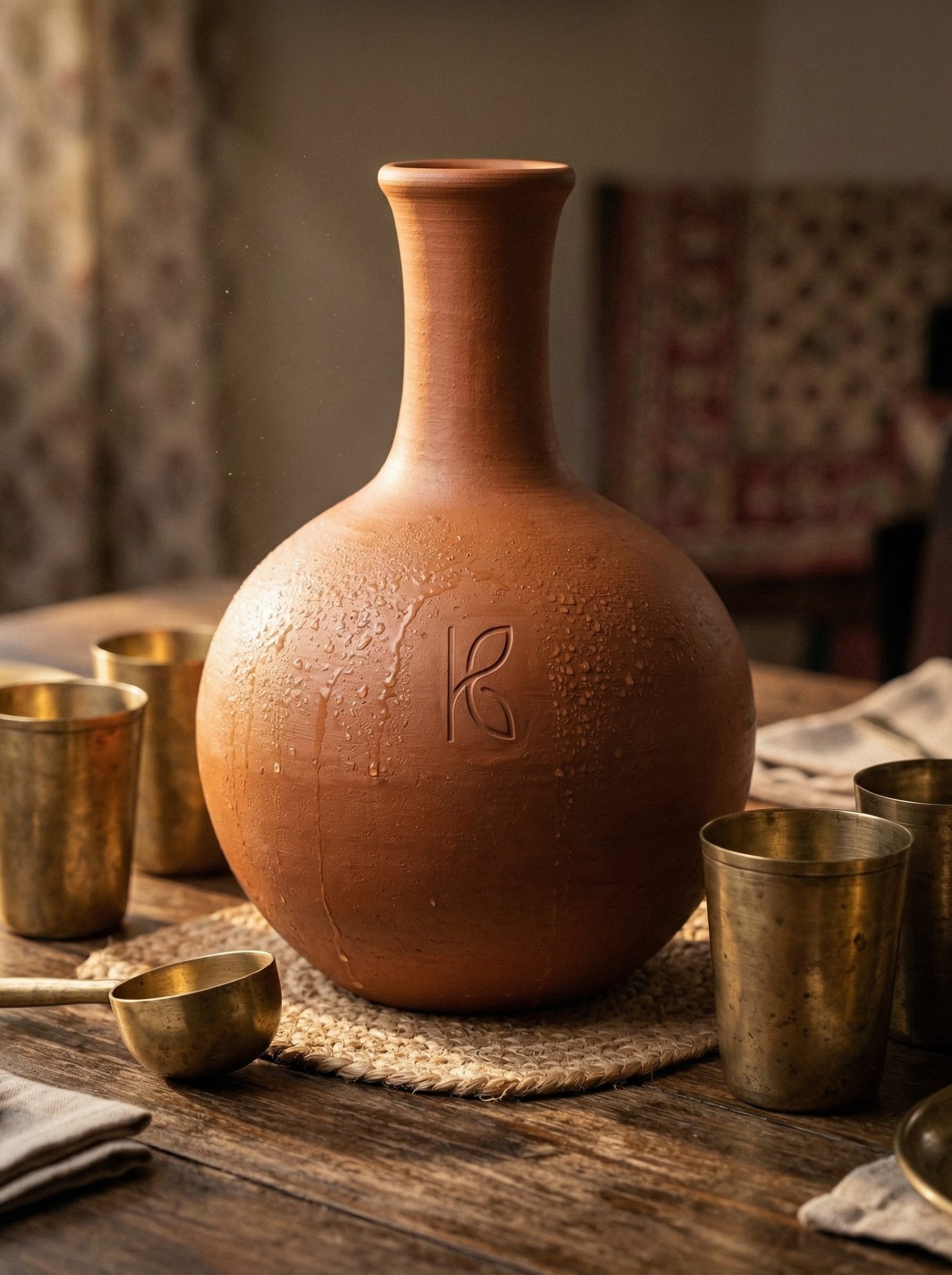
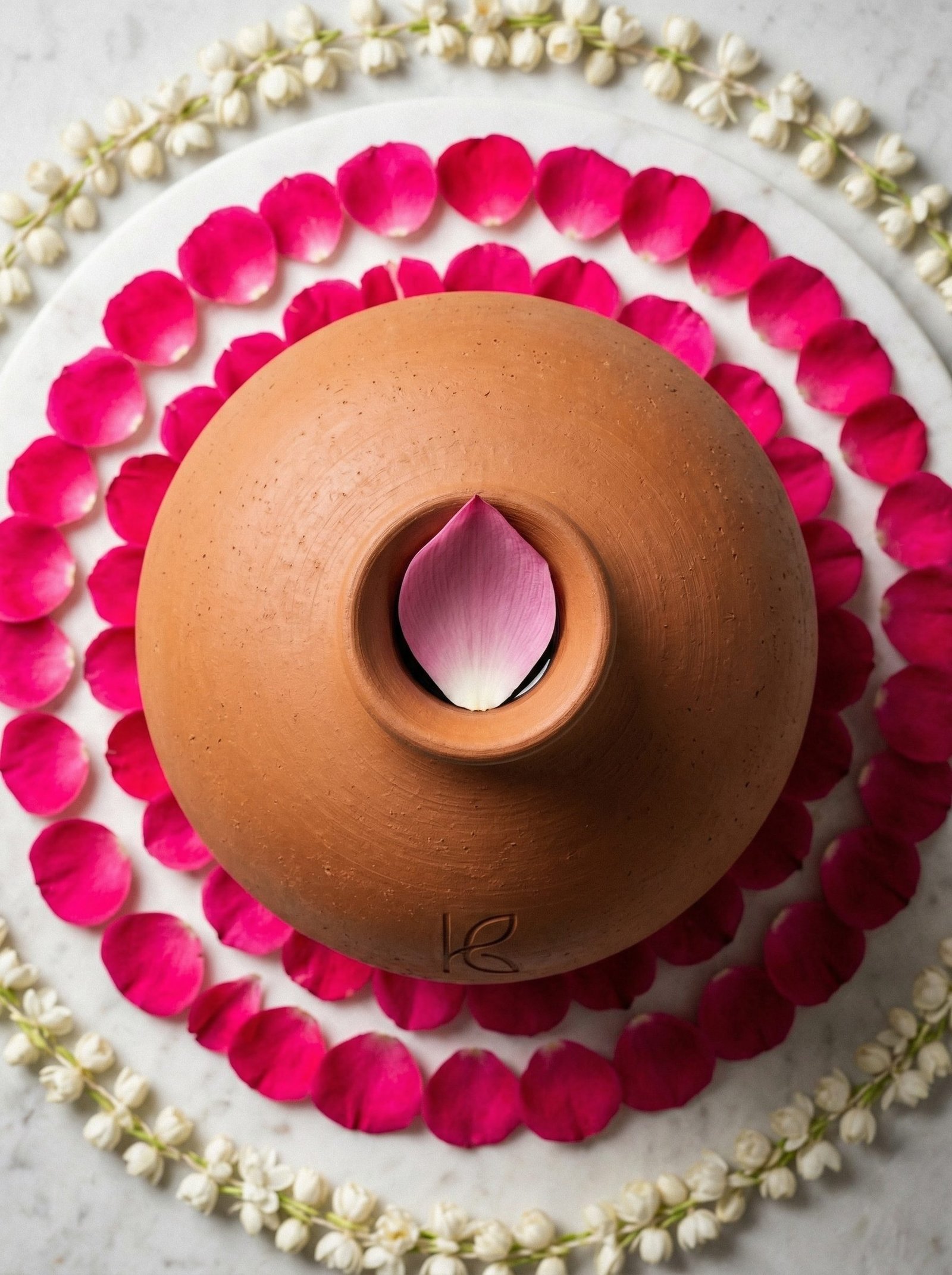
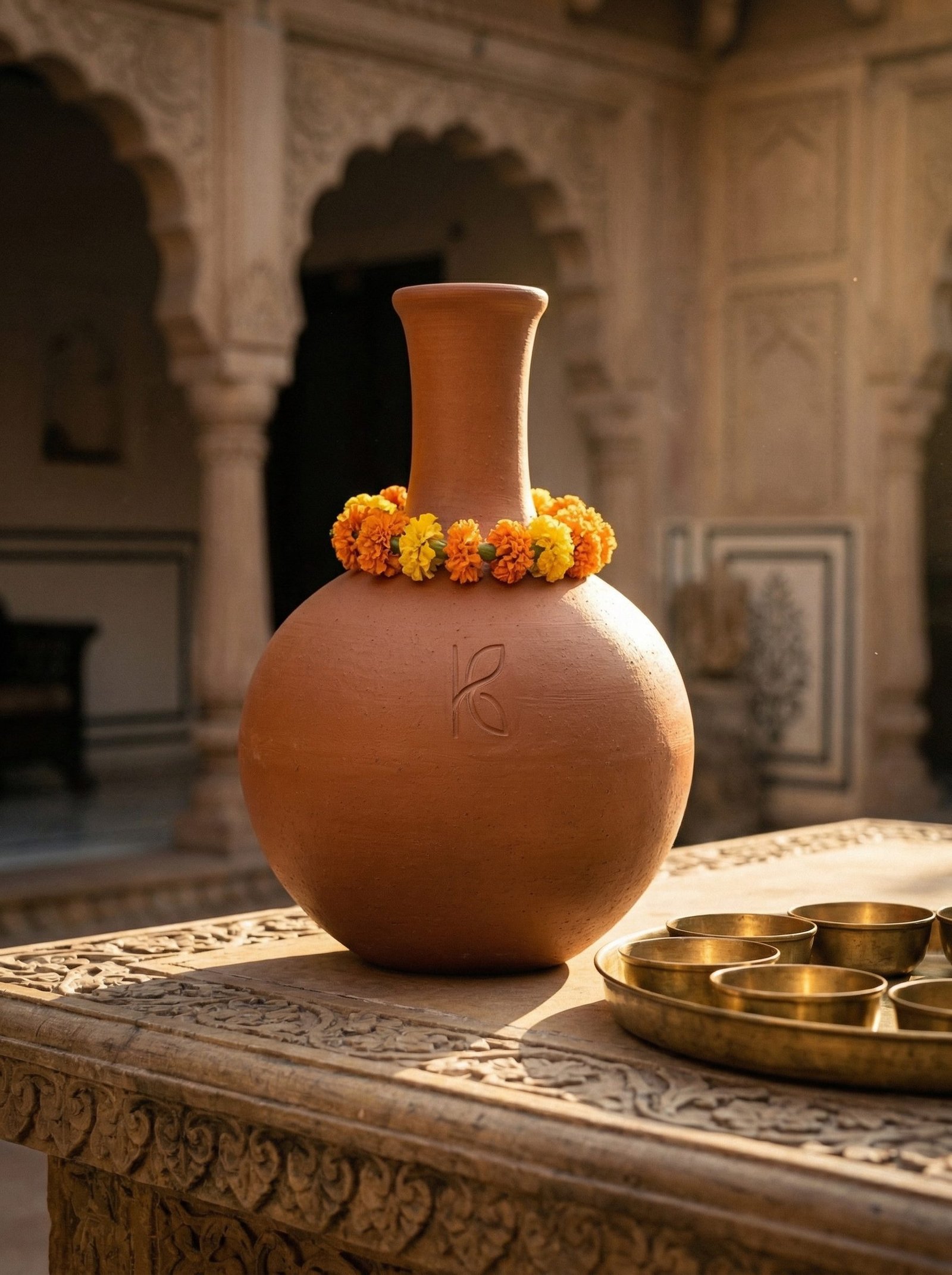
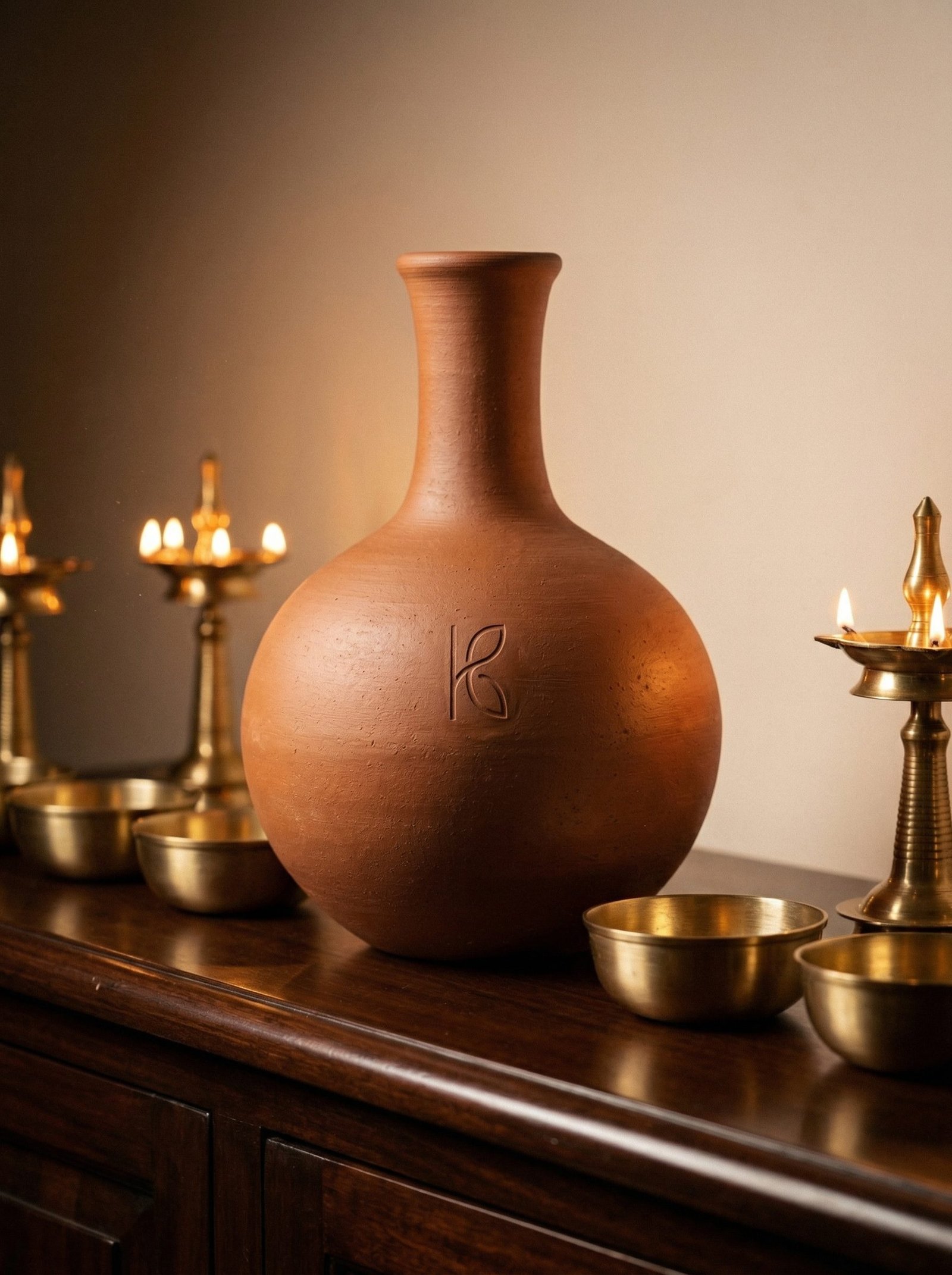
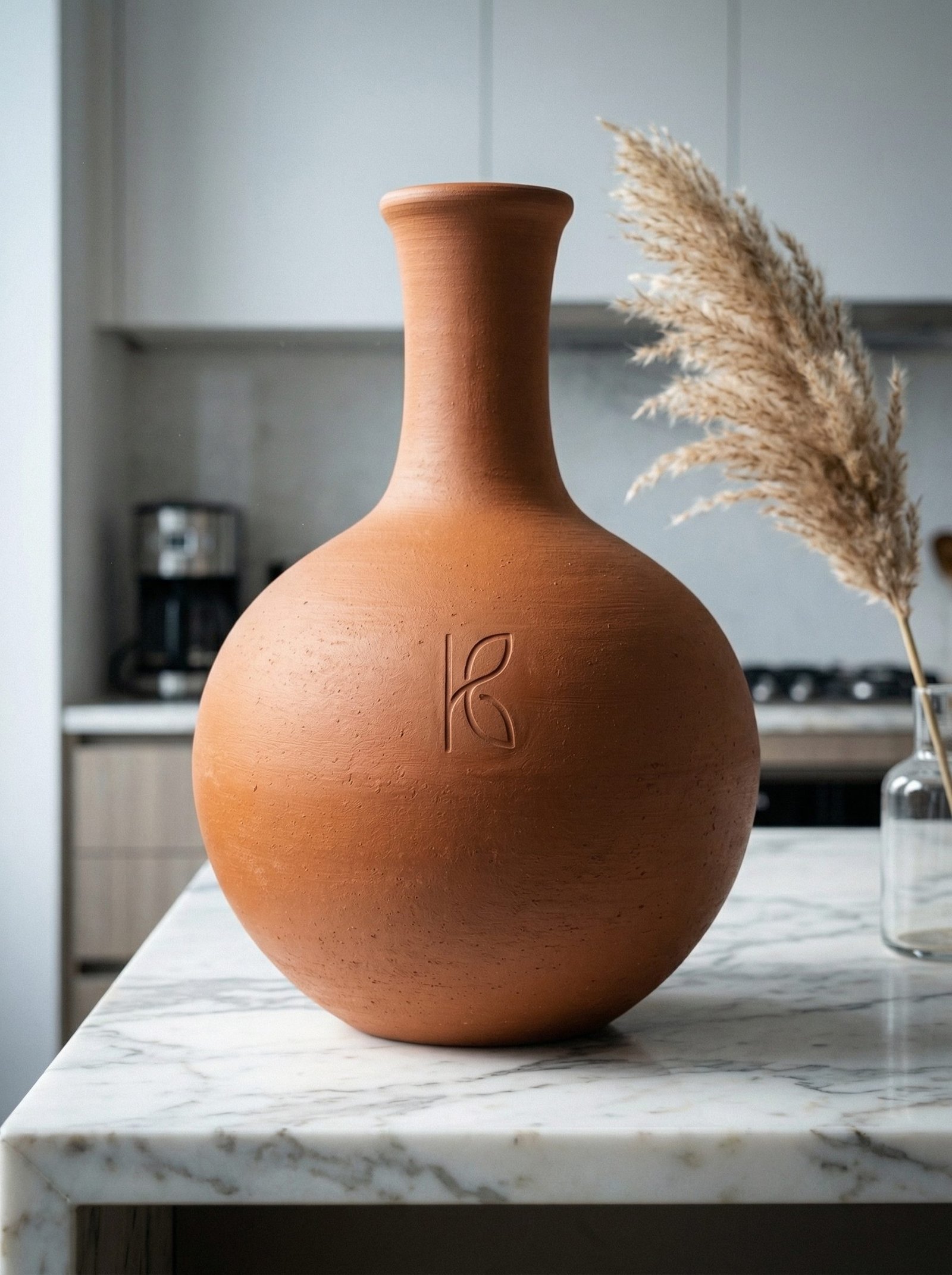
Clay Water Pot (Surahi) – 2.5 L
Out of StockThe dining-table surahi. One fill for the whole meal. One form for 4,000
Terracotta Clay · 2.5 Litres · SKU: KL-DW-005
₹899.00
| Material | Terracotta Clay |
|---|---|
| Size / Capacity | 2.5 Litres |
| Induction Ready | NO |
| XRF Tested | NO |
| Sub-Category | Surahi / Water Pot |
The dining-table surahi. One fill for the whole meal. One form for 4,000
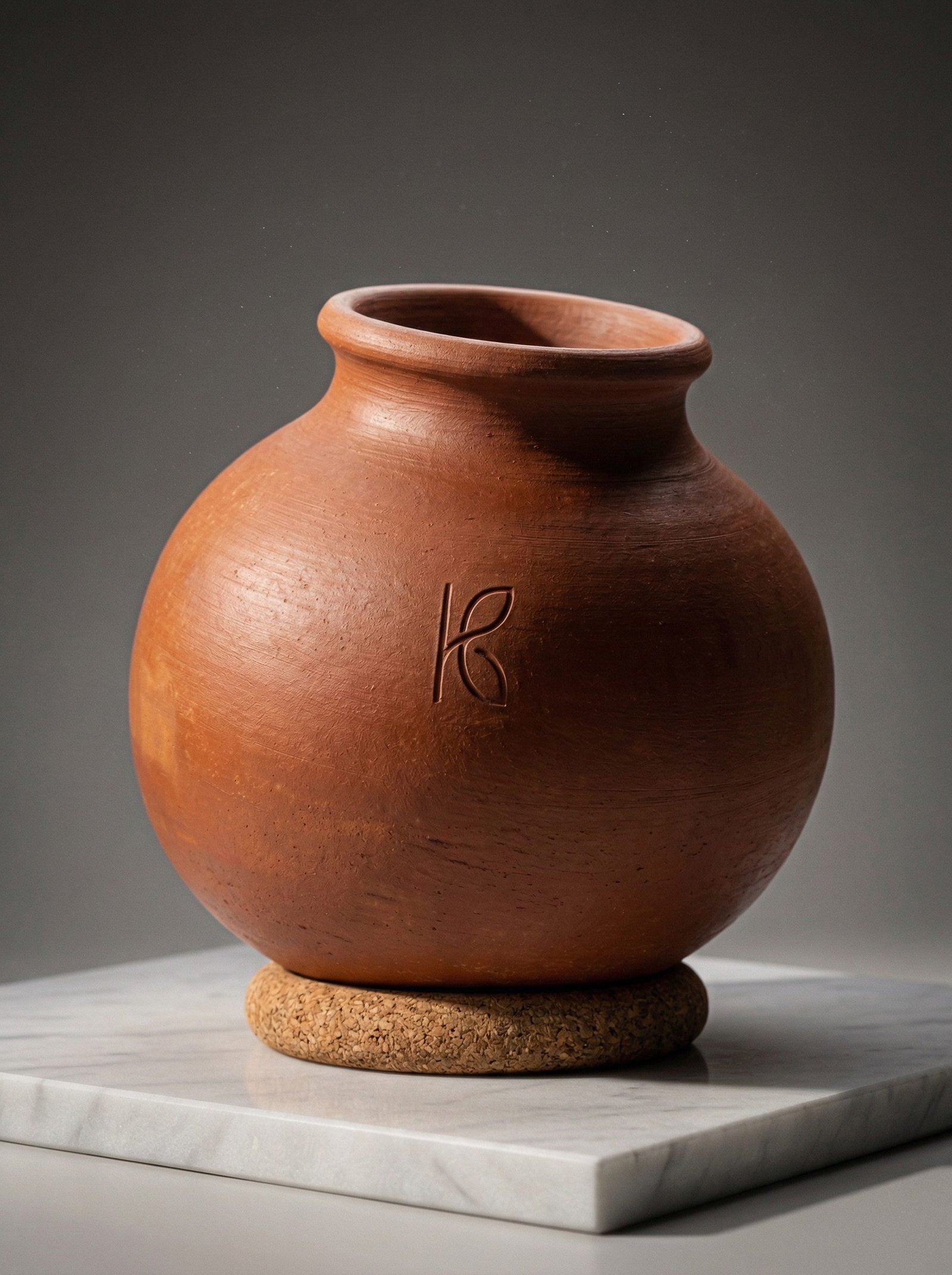
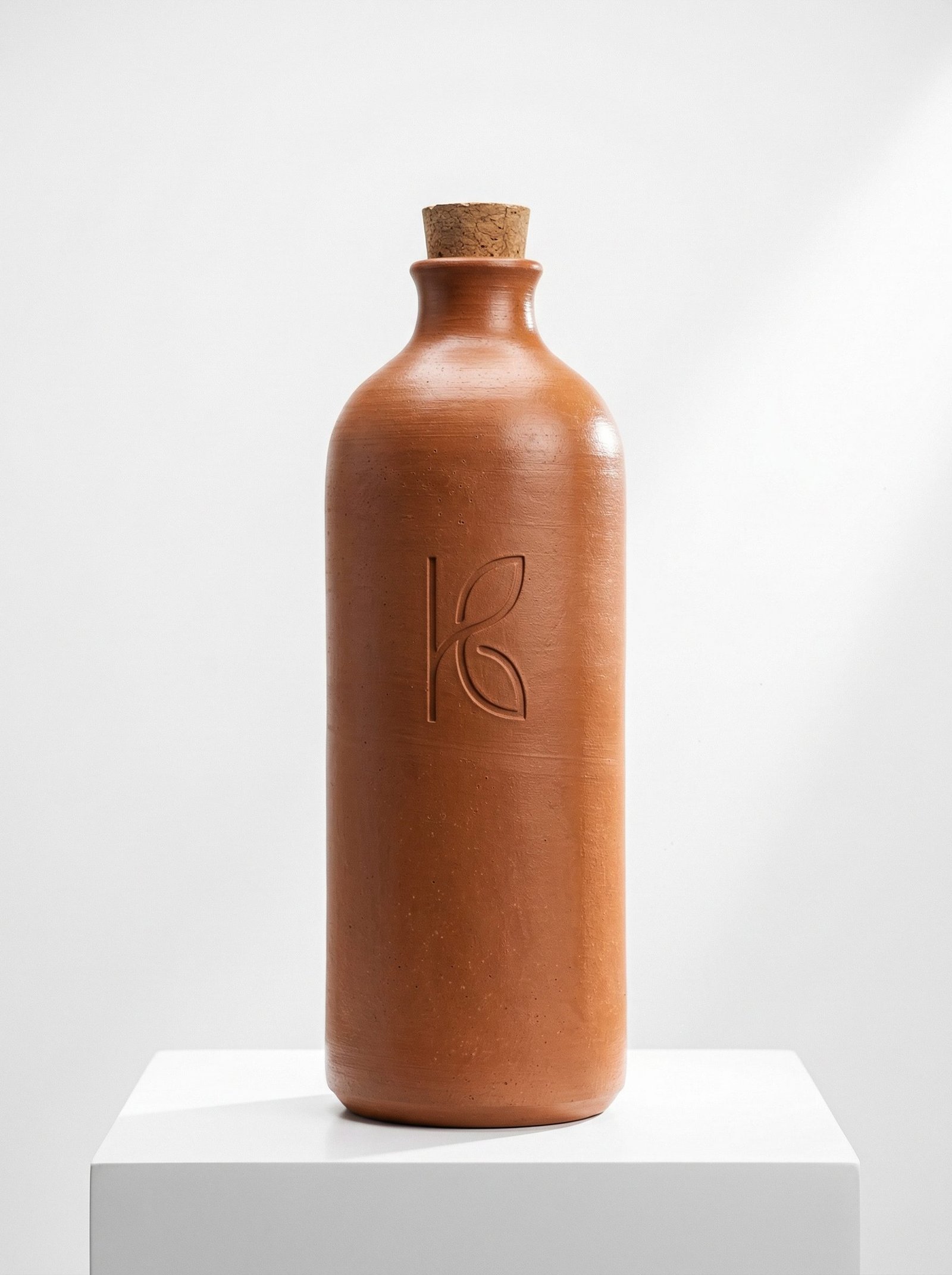
years. The 2.5L surahi is sized for the family dining table — enough cool water for a full meal for four to six people without a refill. The same narrow-neck, round-belly form. The same Aqua-Lock interior. The same ICP-OES precision. But at 2.5L, the greater clay mass produces even more effective cooling and longer temperature stability — the water stays cool from the first roti to the last bite.
Key Features & Benefits
- Table-Scale Volume: 2.5L is enough for a full family meal without refilling. At the dining table, a surahi that needs refilling mid-meal disrupts the flow. 2.5L prevents this for families of 4–6.
- Maximum Cooling Differential: More clay surface area per litre at 2.5L means the most effective cooling of any vessel in our range. In a 35°C room, the 2.5L surahi maintains water at 27–29°C throughout a one-hour meal.
- Dining Table Presence: A 2.5L surahi on a dining table makes the same statement as good silverware — it is an object that communicates that the meal was considered. The form is ancient and its elegance is self-evident.
- ICP-OES + Named Artisan: At 2.5L, the surahi form is more complex to throw. The named artisan card honours the skill required.
- Aqua-Lock Interior: Sealed, watertight, inert.
- XRF + ICP-OES Certified: Batch QR on belly.
About the Material
The 2.5L surahi’s belly diameter is approximately 22–24cm at its widest point — giving it a significantly larger clay surface area than the 1.5L. This surface area is what drives the cooling differential: more clay exposed to air = more evaporation = more cooling per hour. At 2.5L, the surahi also has greater thermal buffering capacity — the larger clay mass absorbs and stores the cooling energy of evaporation over a longer period. A 2.5L surahi filled at 8am in Delhi in May will maintain water at 26–30°C through the afternoon, which is the optimal temperature for staying hydrated during peak heat hours.
The Science
Hydration science makes a strong case for the surahi as the optimal family water vessel in Indian conditions. At 27–29°C water temperature: gastric absorption is maximum. At pH 7.2–7.5 from clay mineral contact: the water is in the same pH range as the body’s own extracellular fluid (7.35–7.45), minimising any pH adjustment burden on the body during absorption. At zero microplastic content: no endocrine-disrupting compounds entering the bloodstream with each glass. The surahi produces water that is, by several measurable parameters, more compatible with the body’s absorption systems than refrigerated plastic-bottled water.
Safety & Certification Standards
| XRF Analysis — Clay Source | Heavy metal screening on raw clay before production begins |
| ICP-OES — Finished Product | Parts-per-billion accuracy. Actual migration into food simulants at cooking temperatures |
| NABL-Accredited Laboratory | Internationally recognised test facility |
| FSSAI Food Contact Compliance | Meets India’s legal food safety standards for cookware |
| Per-Batch QR Report | Your batch. Your numbers. Published before dispatch. Scan and read it yourself. |
Lab Test Results
| Compound | Klayvi Result | FSSAI Safe Limit |
|---|---|---|
| Lead (Pb) | ≤ 2.1 ppm | 90 ppm |
| Cadmium (Cd) | ≤ 0.3 ppm | 0.5 ppm |
| Arsenic (As) | ≤ 0.4 ppm | 2.0 ppm |
| Mercury (Hg) | Not detected | 0.5 ppm |
| PTFE / PFOA / PFAS | Not present | Zero tolerance |
Caring for Your Klayvi
| 1 — First Use | Rinse with plain water. Cook something water-based for first 2–3 uses. |
| 2 — Daily Clean | Klayvi Wash Care (pH 6–8) or sisal scrubber with warm water. Never standard dish soap — its pH 9–11 strips the seasoning polymer layer. |
| 3 — After Wash | Dry on low flame for 2 minutes. Never store damp. |
| 4 — Monthly | Apply 4–5 drops of cold-pressed flaxseed oil. Heat on medium-low until just smoking at edges (~4 min). Cool and wipe. |
| 5 — Never | Dishwasher · Microwave · Overnight soaking · Chemical detergents · Cold water on a hot vessel |
What’s in the Box
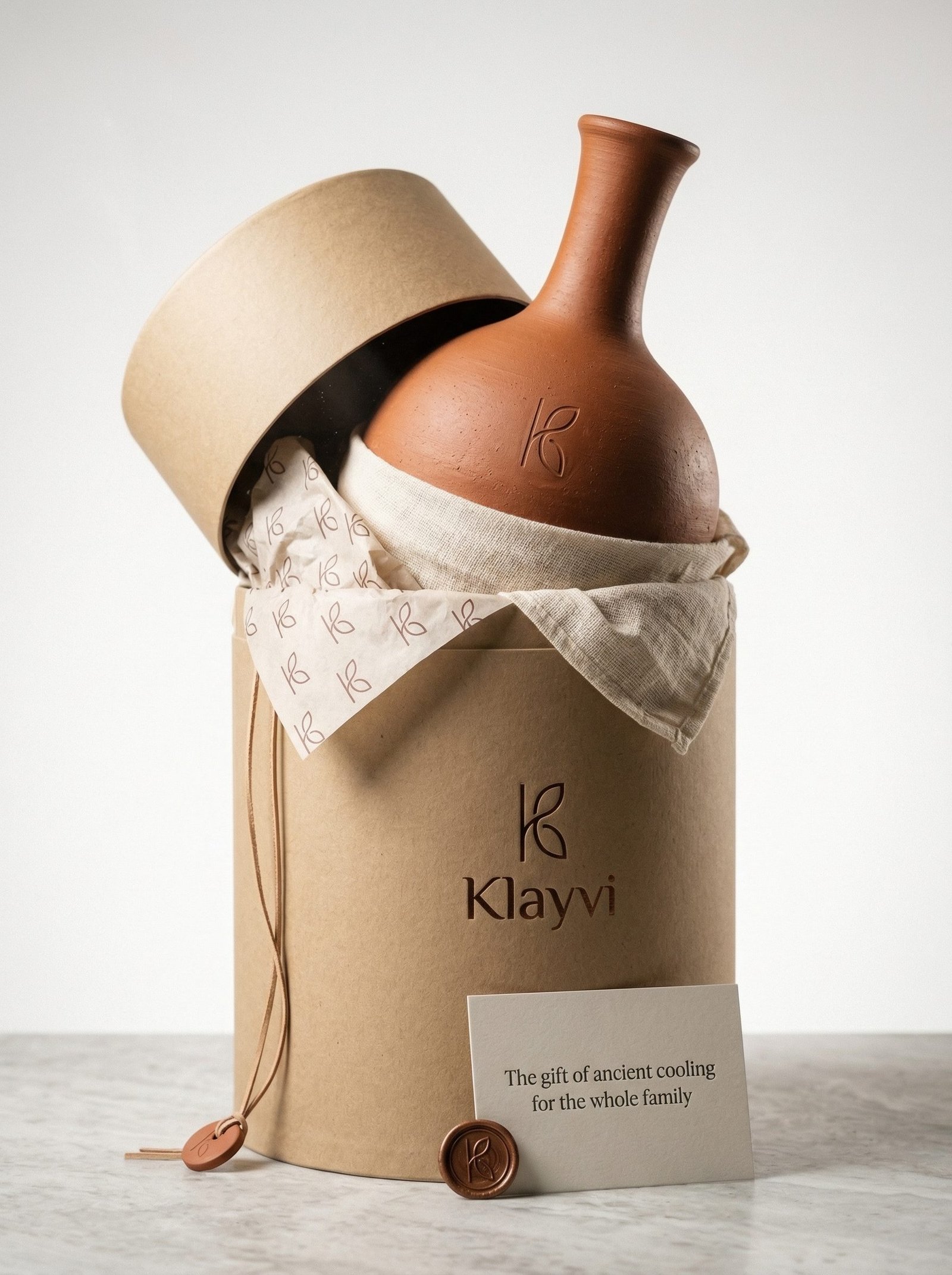
- Clay Surahi 2.5L (Aqua-Lock interior)
- Natural cork stopper for neck
- Named artisan provenance card
- Cotton muslin storage pouch
- Clay Care Passport
- Batch QR card
Frequently Asked Questions
Q: Is 2.5L heavy to carry?
Full, a 2.5L surahi weighs approximately 3.5–4kg total (clay + water). It is designed as a table vessel, not a carry vessel. The traditional use is to fill it in the kitchen and carry it to the dining table once — a 2–3 metre carry at most. For a dedicated carry vessel, the 500ml or 750ml water bottle is more appropriate.
Q: How many glasses does a 2.5L surahi serve?
Approximately 12 standard 200ml glasses. For a family of four at a meal where each person drinks 2–3 glasses, the 2.5L covers the entire meal with some remaining.
Q: Does the 2.5L surahi fit in a standard Indian refrigerator?
Most Indian refrigerators can accommodate the 2.5L surahi in the vegetable drawer or bottom shelf with the shelves adjusted. The dimensions are approximately 28–30cm tall and 22–24cm wide at the belly. We recommend keeping it at room temperature rather than refrigerating — the passive cooling to 27–29°C is ideal for hydration; refrigerator temperature (4°C) is too cold for optimal absorption.
Q: Can the 2.5L surahi be kept outdoors during summer?
Yes — traditional use in many parts of India involved keeping the surahi in a shaded outdoor space (a veranda or cool corner). The shade is important: direct sunlight heats the clay surface and reduces the cooling mechanism’s effectiveness. In shade, the 2.5L in outdoor conditions can achieve a 6–8°C cooling differential from ambient.
Q: What is the best surface to place the 2.5L surahi on?
A stable, level, non-heat-retaining surface. Stone countertops, clay pots’ traditional stone base, or a wooden surface all work. Avoid placing on surfaces that themselves get hot in summer sunlight — a marble surface in direct sunlight can be 40°C+, which reduces the clay’s cooling effectiveness from below.
Q: The surahi makes a slight earthy smell when first used. Is that normal?
Yes. New terracotta has a characteristic mineral-earth smell that is most noticeable in the first 3–5 fills. It diminishes significantly by the 10th fill and typically disappears entirely by the 20th. Some people describe the smell as pleasant; if you find it noticeable, fill the surahi with water, add a small piece of raw rice and a pinch of alum (phitkari), let it sit for 4 hours, rinse thoroughly, and repeat. This process clears the new-clay smell faster.
Related products
-
Out of Stock

-
Out of Stock
-
Out of Stock

Reviews
There are no reviews yet.