
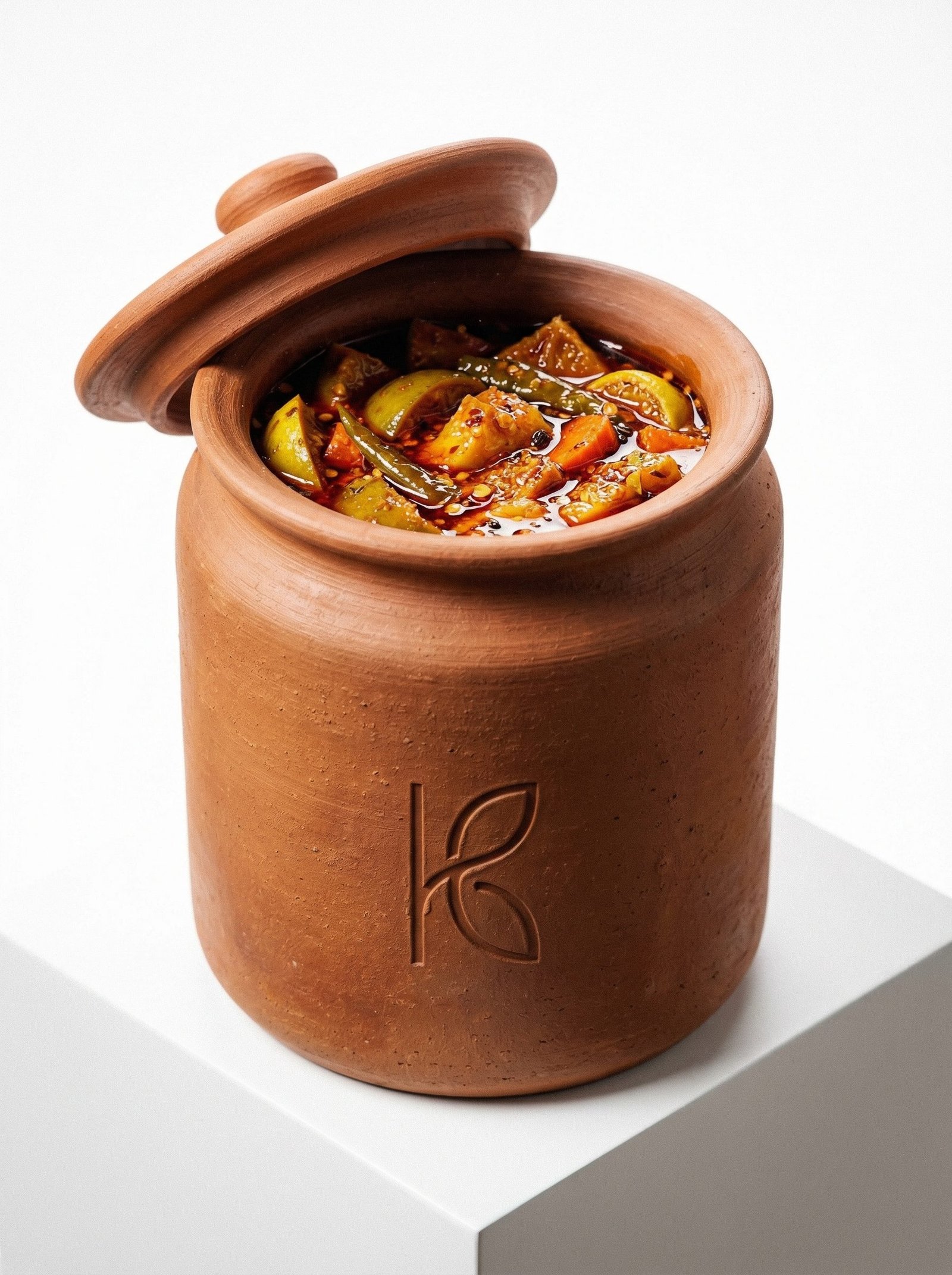
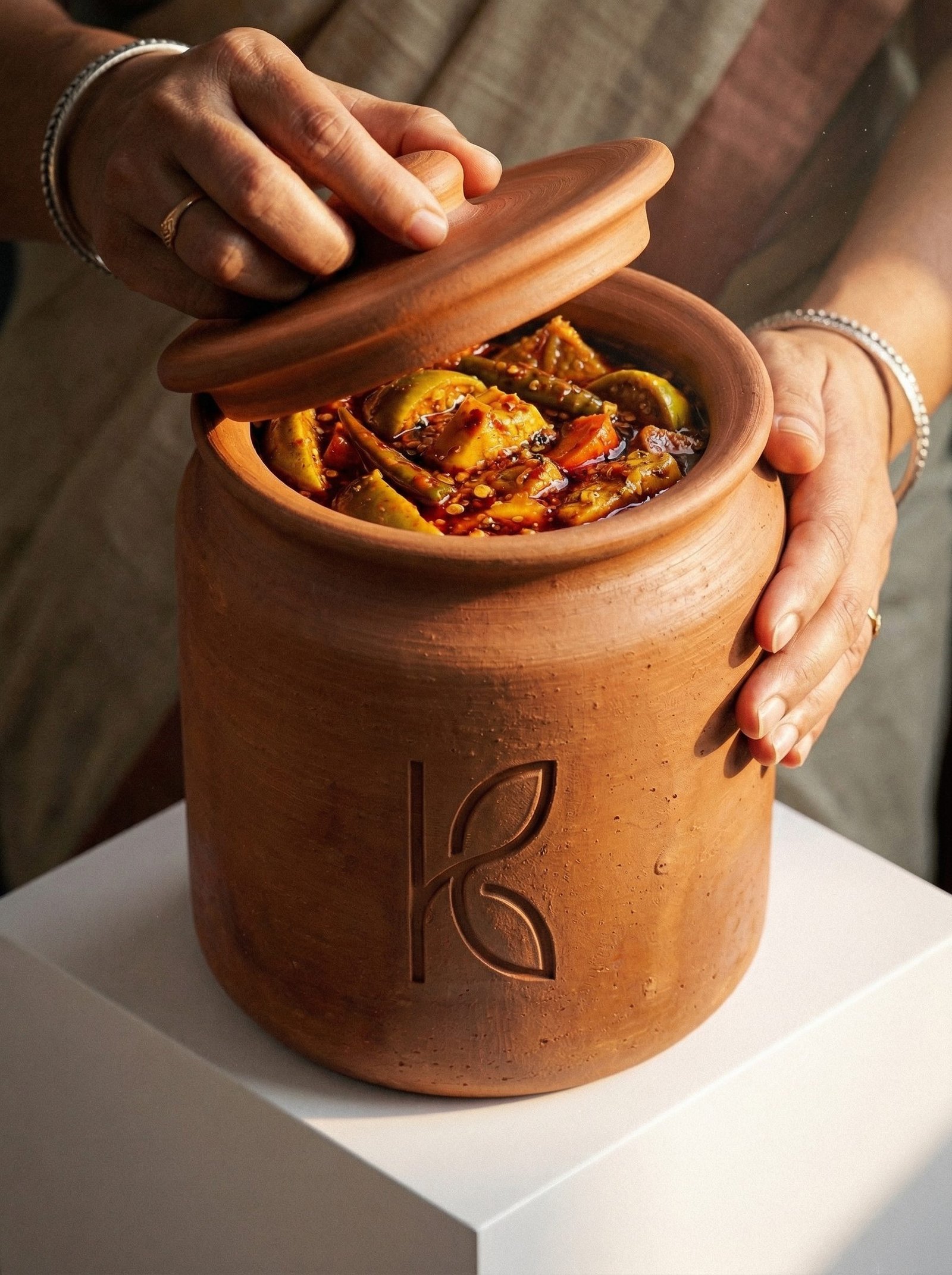
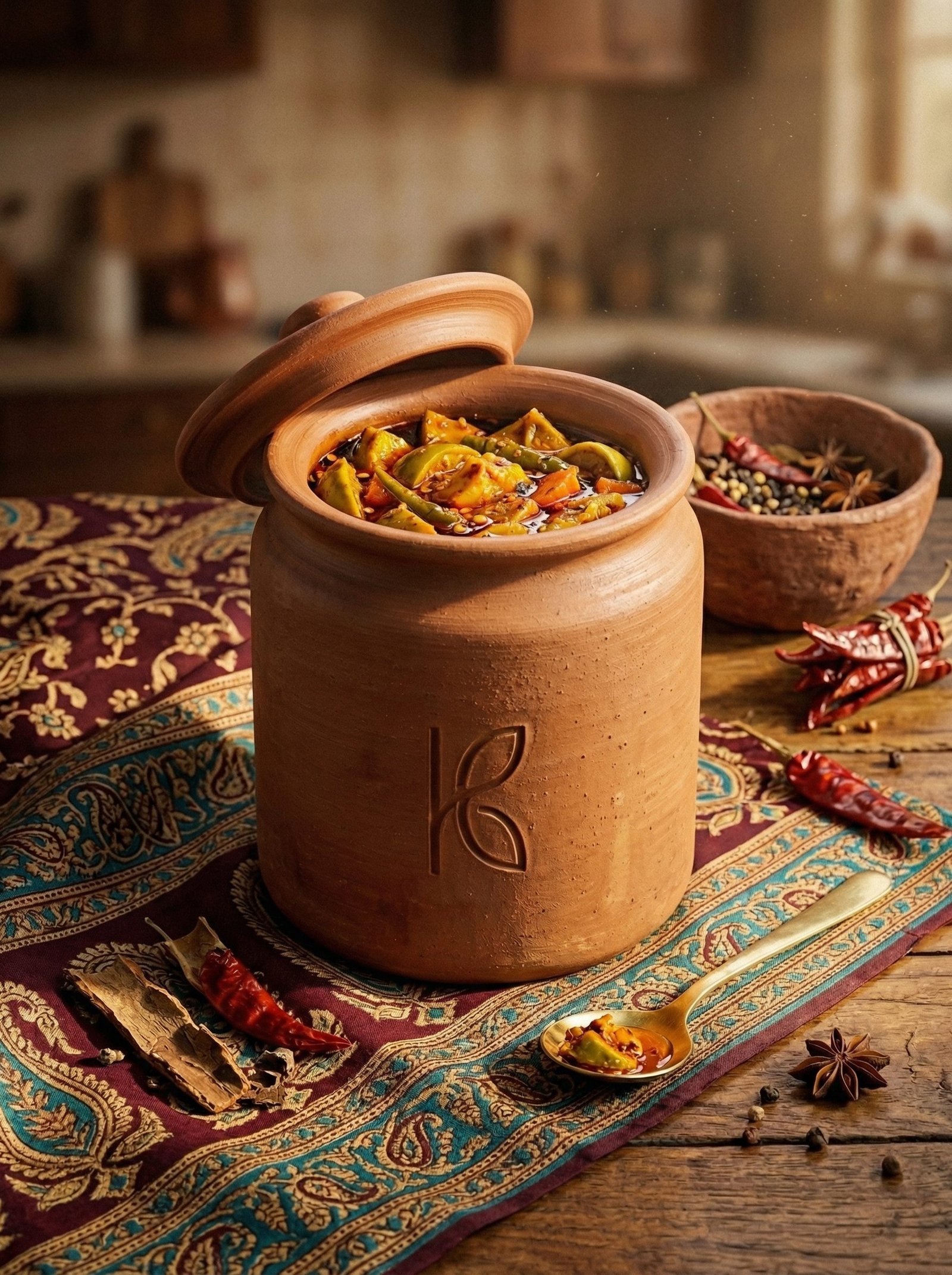
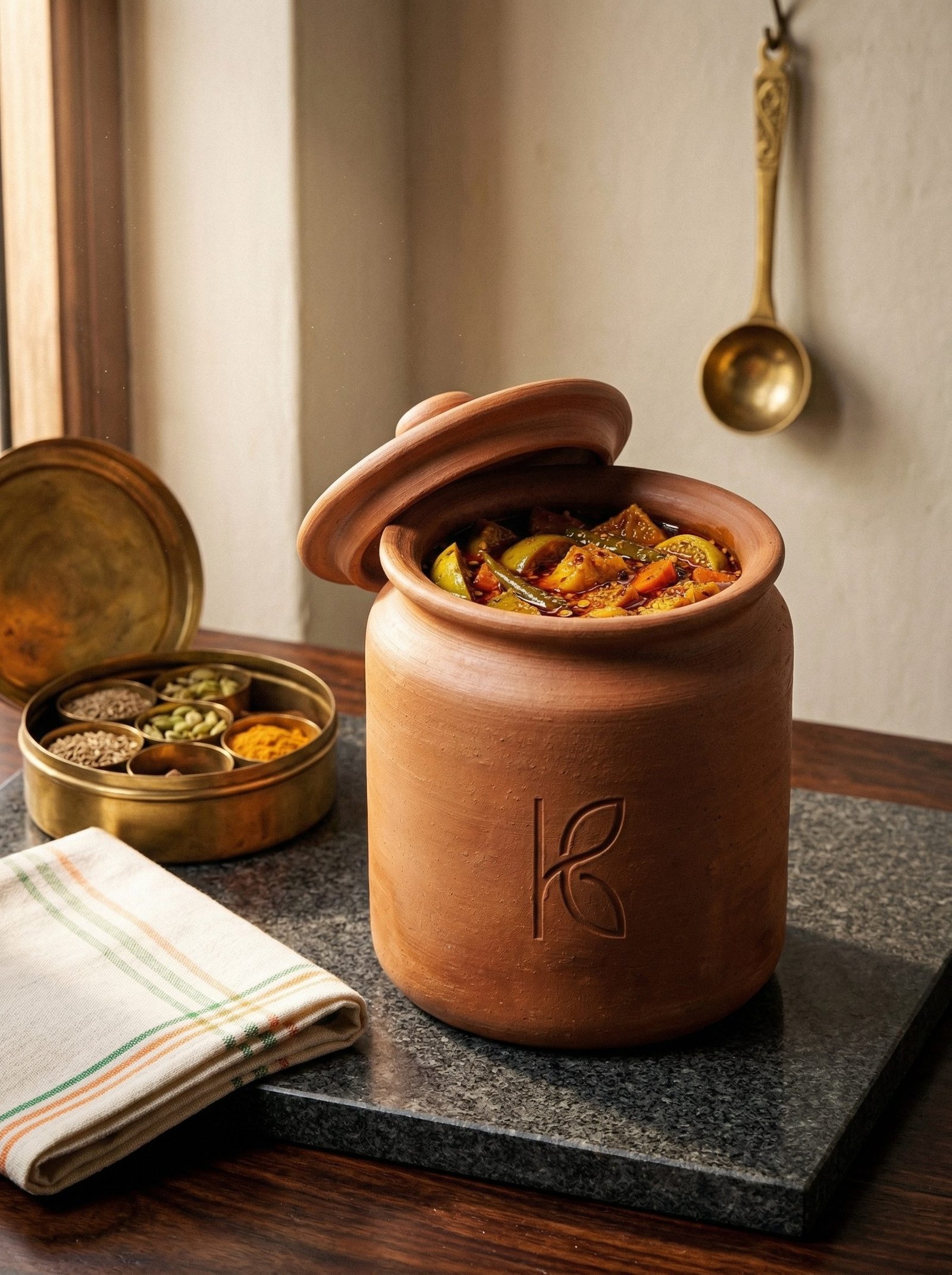
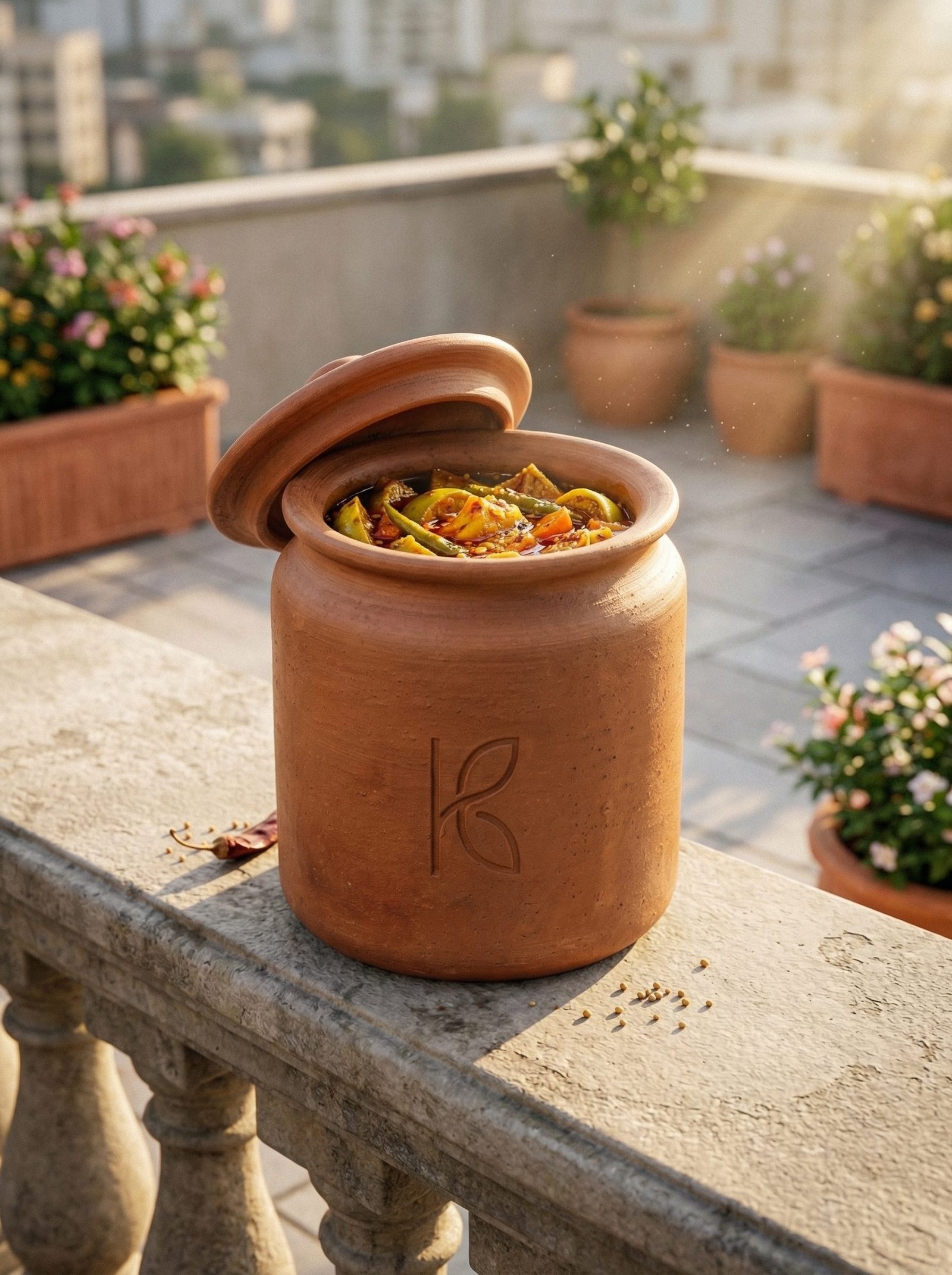
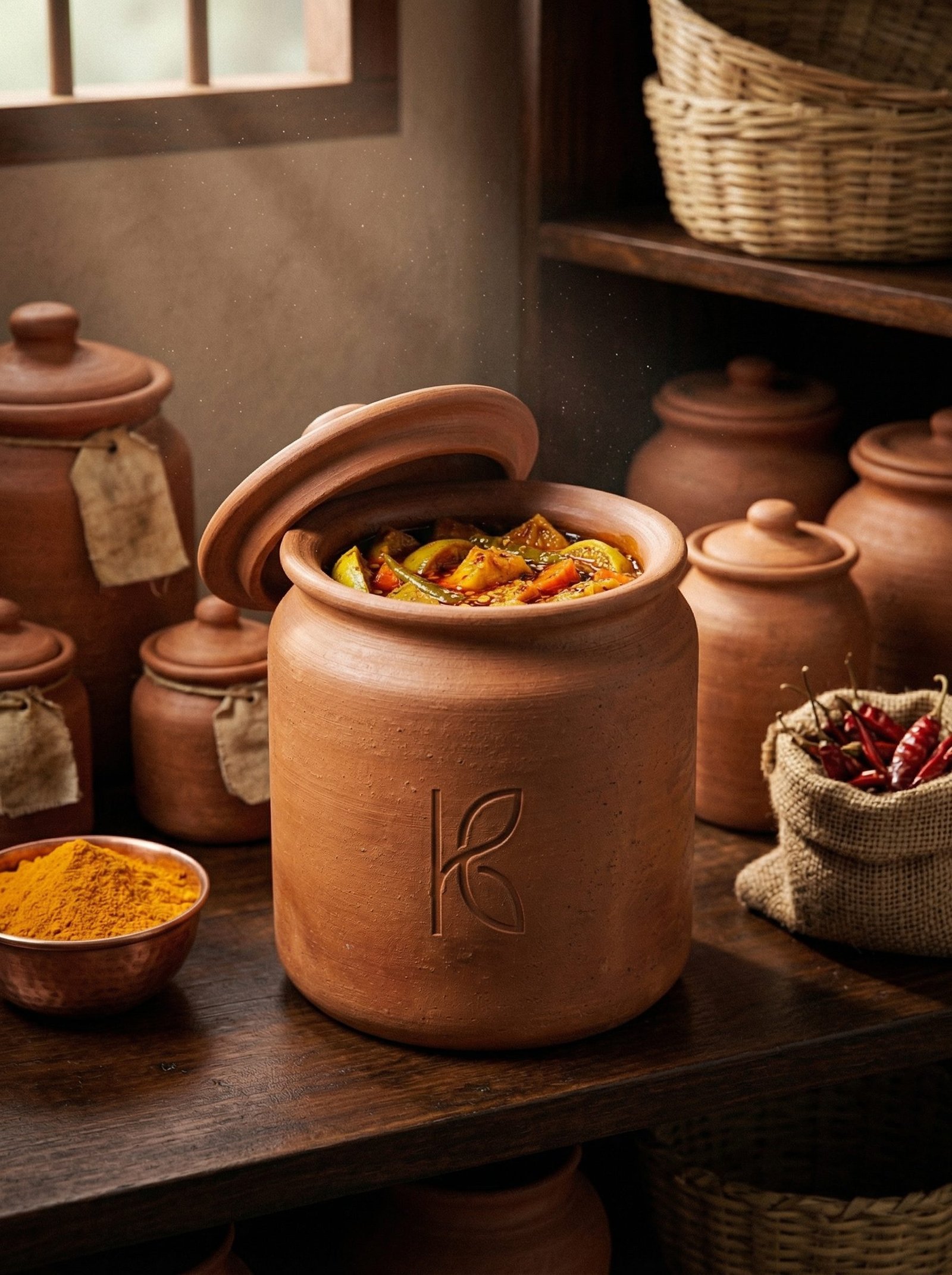
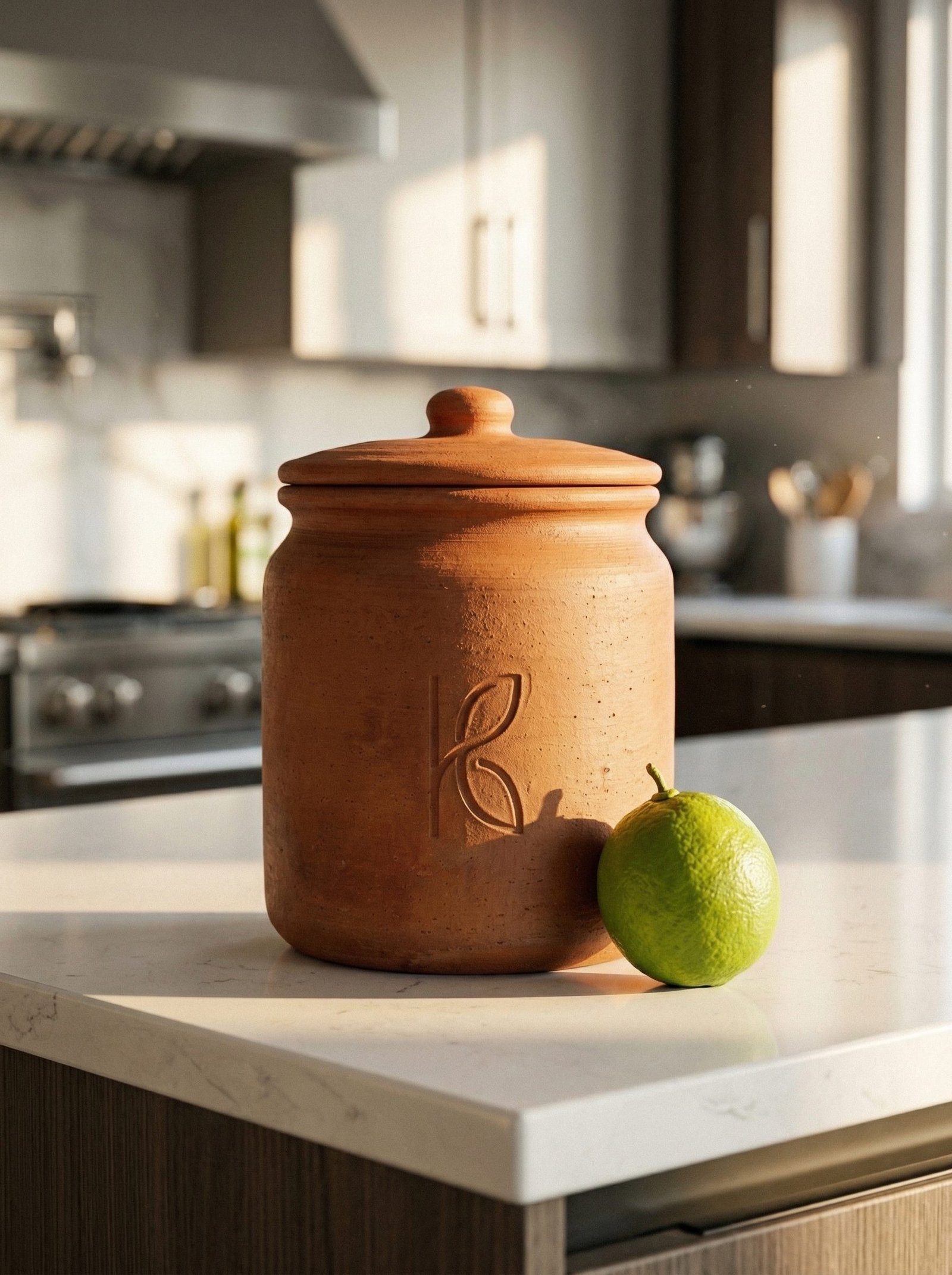
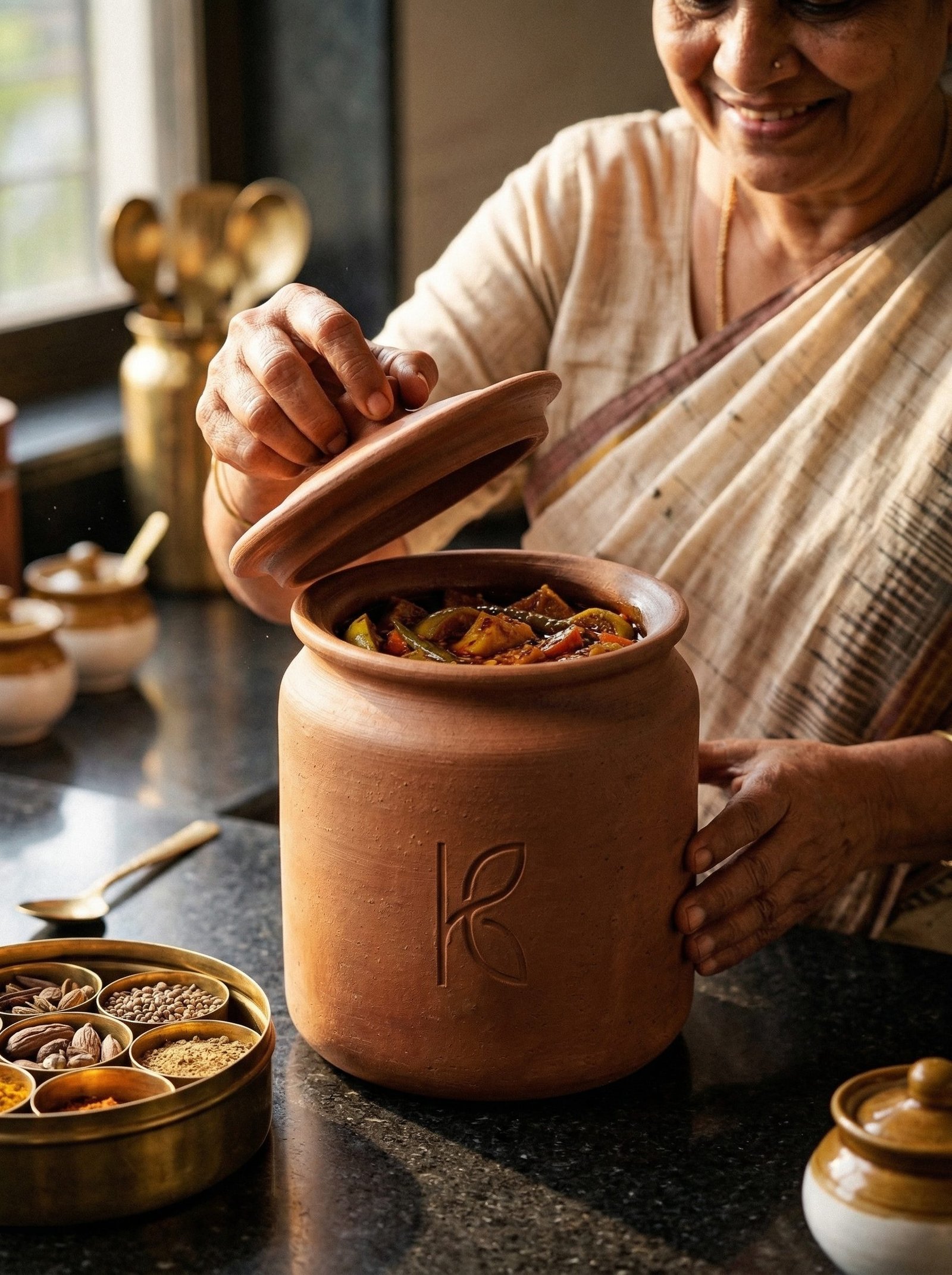
Clay Pickle Jar – 1 L
Out of StockFor the mango season. The lime season. The amla season. The jar for the
Terracotta Clay · 1 Litre · SKU: KL-SW-008
₹599.00
| Material | Terracotta Clay |
|---|---|
| Size / Capacity | 1 Litre |
| Induction Ready | NO |
| XRF Tested | NO |
| Sub-Category | Pickle Jar |
For the mango season. The lime season. The amla season. The jar for the
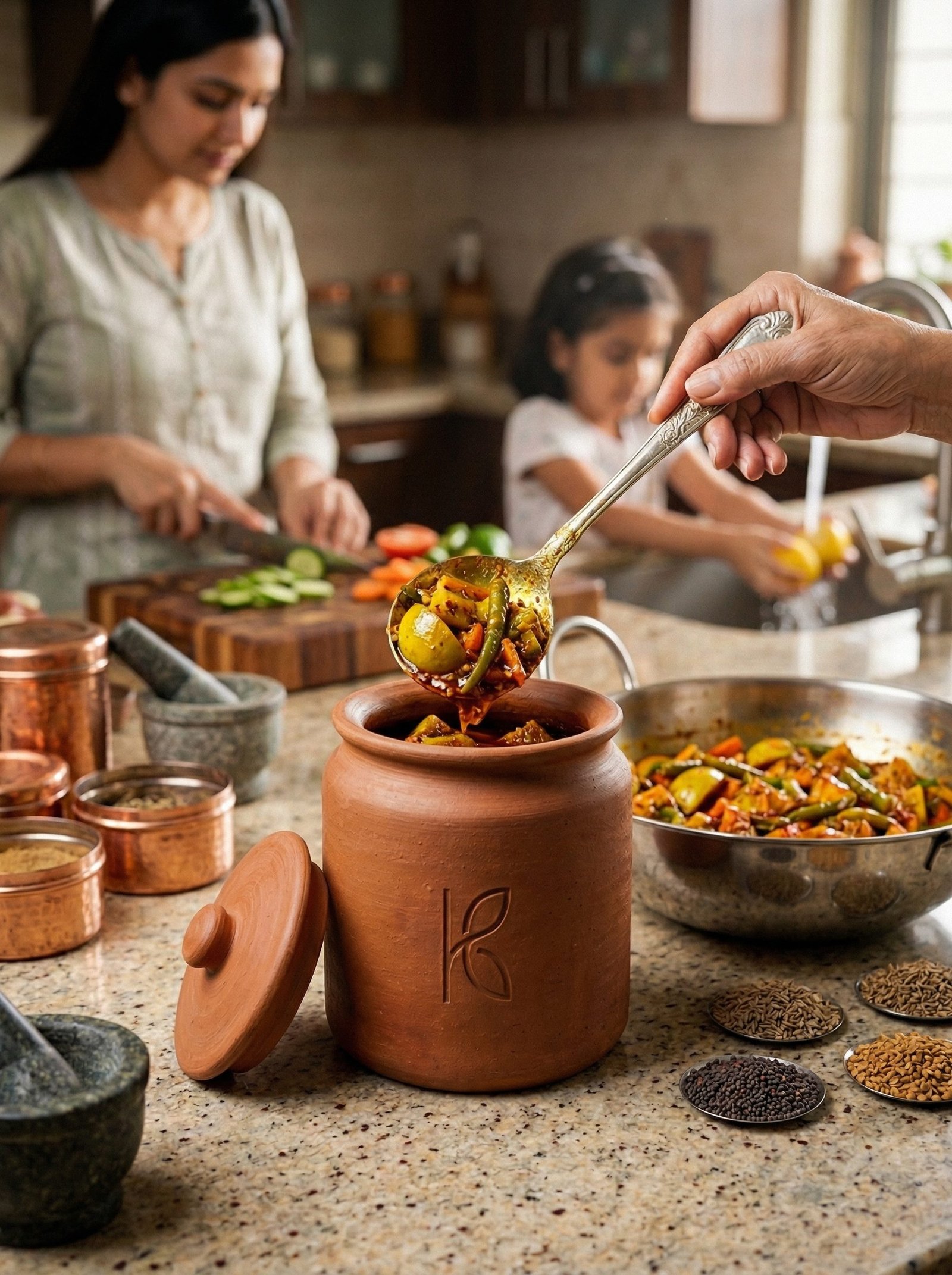
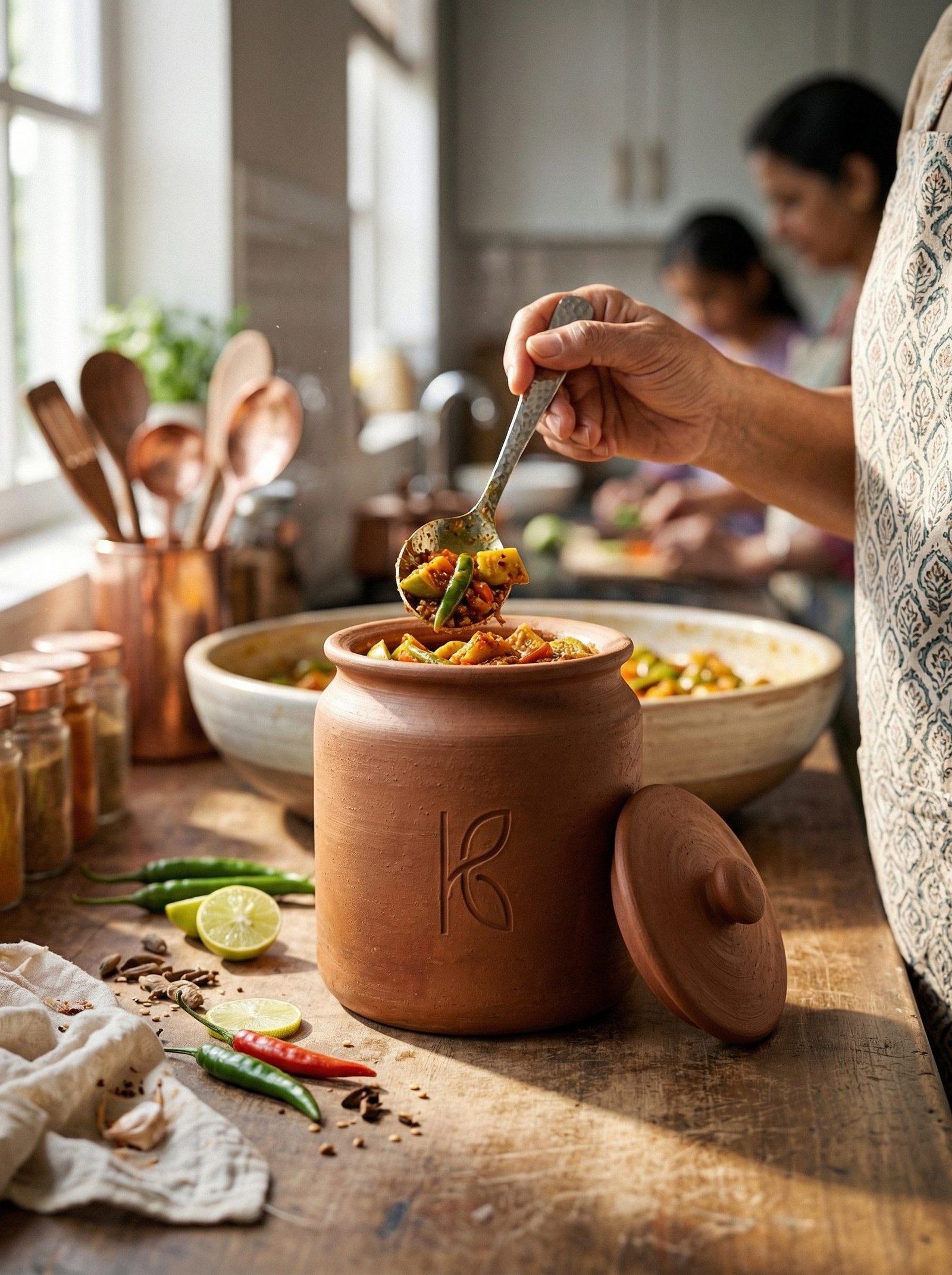
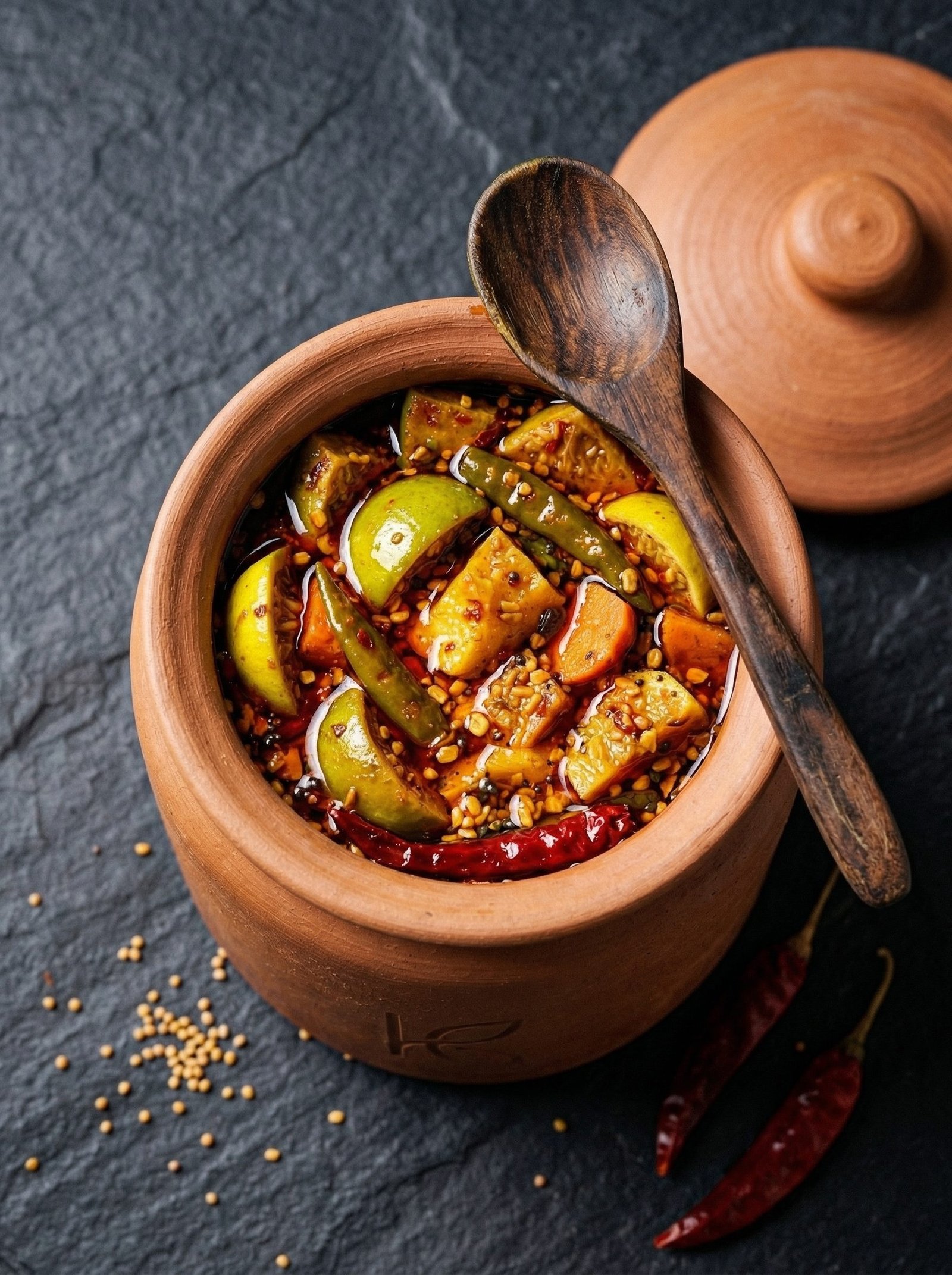
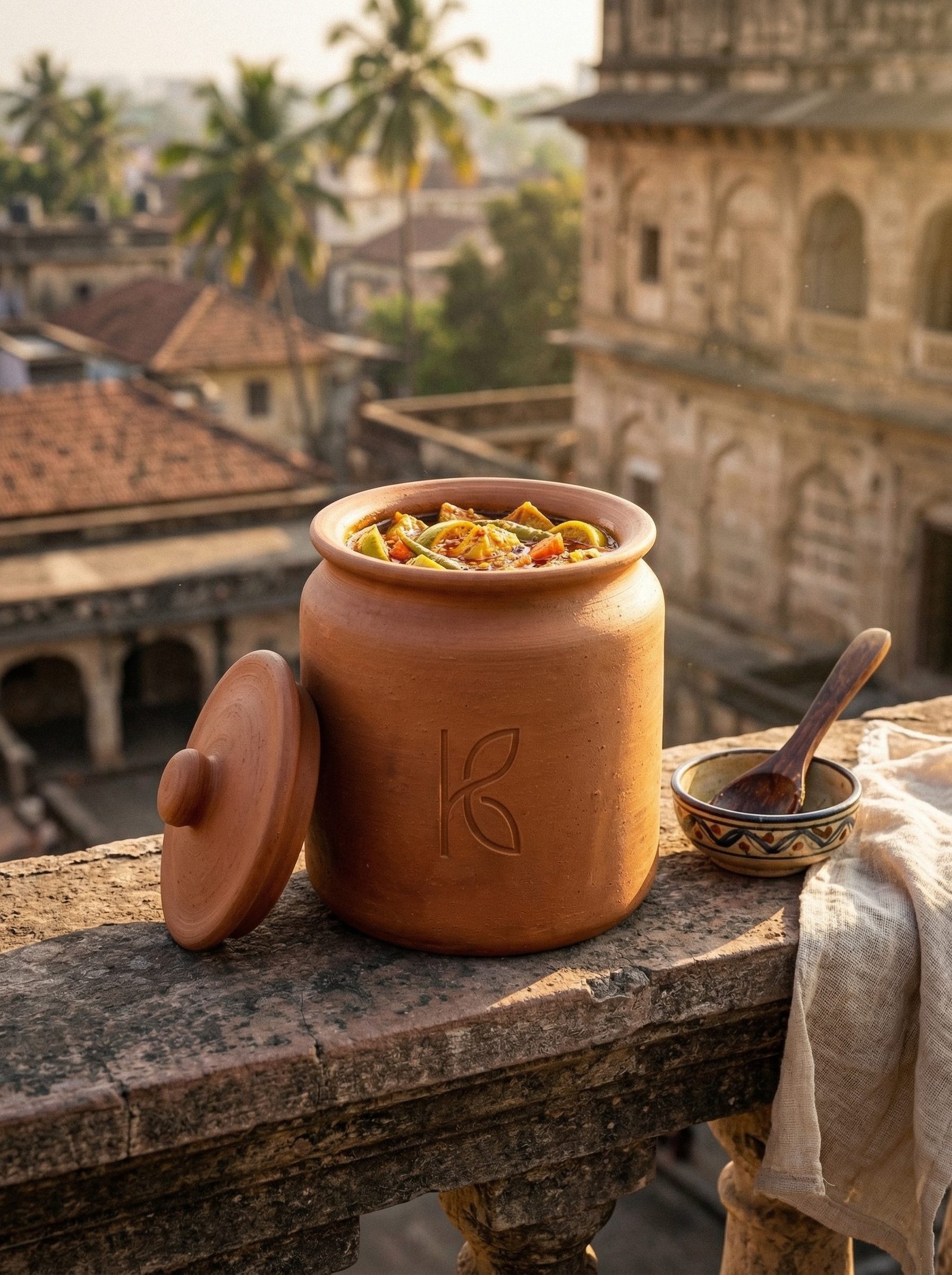
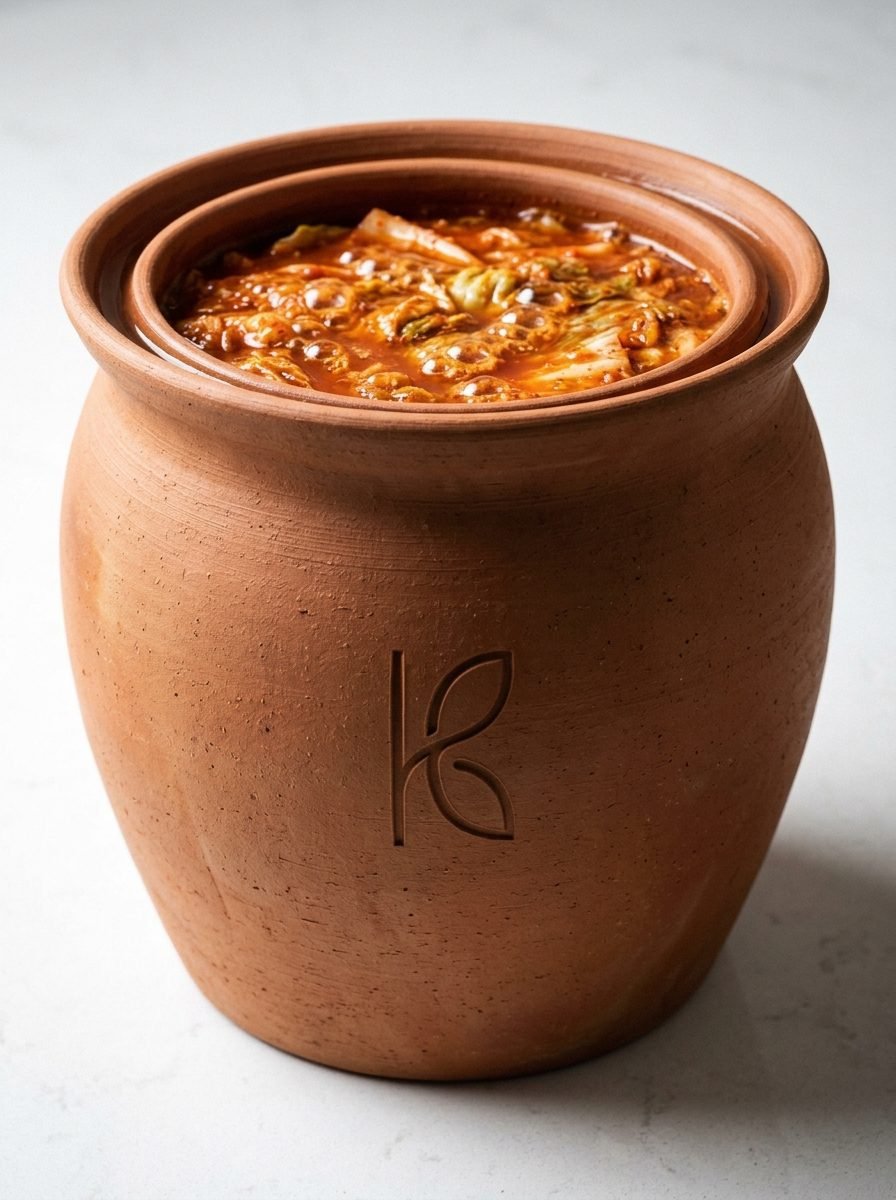
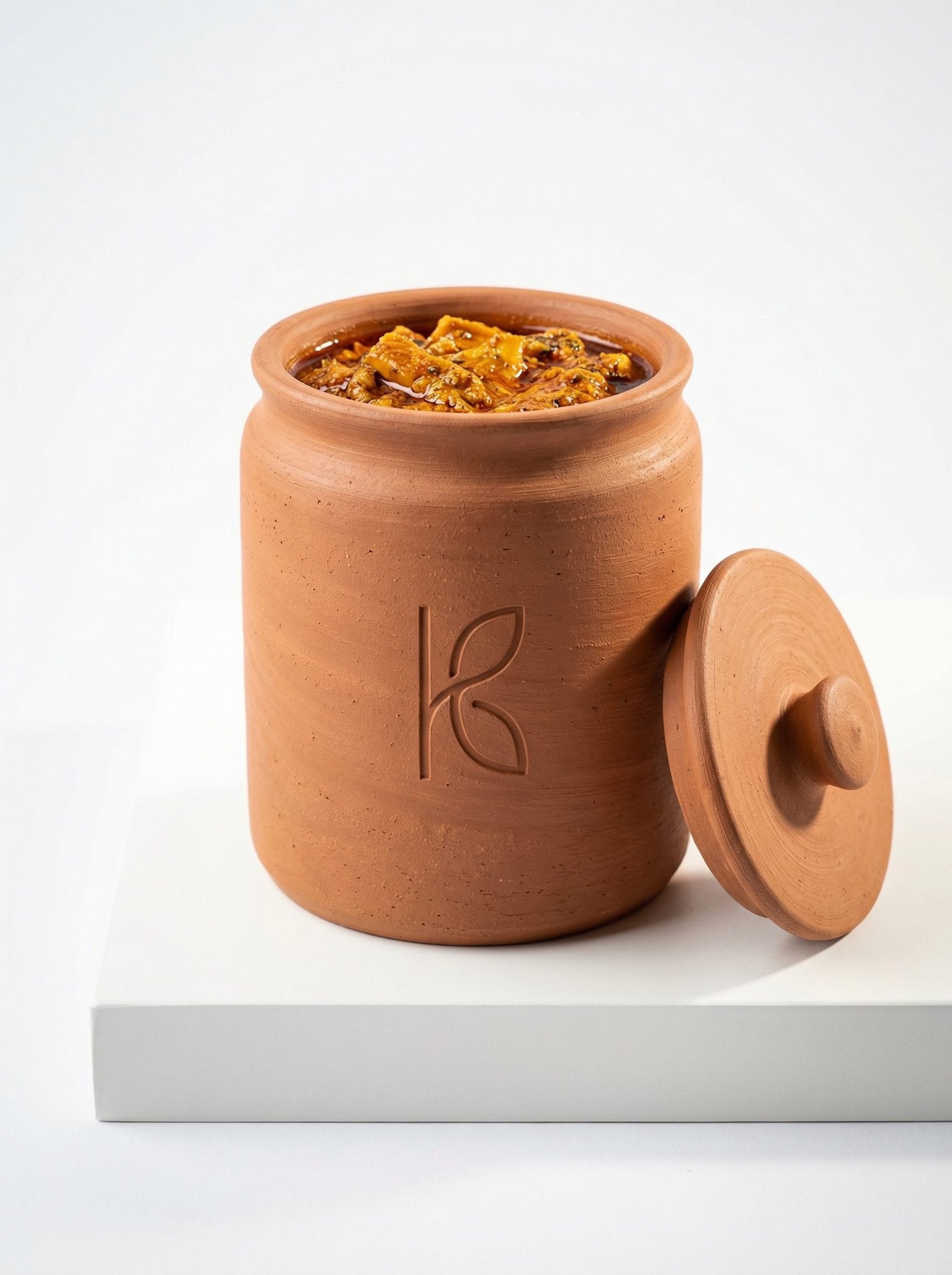
A 1-litre clay storage jar for the standard Indian seasonal pickle batch. Wide mouth for easy packing. Fitted clay lid. XRF-certified. At 1 litre, this is the right size for a family of three to four consuming achar regularly — enough for 60–90 days of supply from a single batch made during the peak season of each fruit.
Key Features & Benefits
- Seasonal Batch Scale: 1L holds approximately 800–900g of packed mango achar including oil. For a family consuming achar daily: 60–90 days of supply from one batch. One jar per seasonal fruit (mango, lime, amla, green chilli) covers the full pickle repertoire through the year.
- The Memory Jar: Traditional families have specific clay jars for specific pickles — the mango jar, the lime jar, the amla jar. Each develops a distinct identity as the spices and oils absorb into the clay pores over years of use. The 1L jar is the right scale for this kind of long-term relationship with a specific pickle.
- Oil-Compatible Clay Lid: The clay-on-clay seal works with the traditional oil layer for a preservation system that requires no refrigeration for oil-based Indian pickle.
- Non-Reactive Throughout: Mango achar pH 2.5–3.5. Clay completely non-reactive. The pickle chemistry is preserved exactly as it was packed.
- XRF Certified: Batch QR on base.
- Wide Mouth — 8cm Diameter: Sufficient for whole mango slices or large lime halves without cutting smaller to fit.
About the Material
At 1 litre, the clay jar has enough wall thickness (7–8mm) to provide meaningful thermal buffering during the initial pickling period when temperature stability is most important for the fermentation and flavour development of the pickle. The clay also contributes something that glass and plastic cannot: over months of storage, the alkaline minerals from the clay slowly interact with the acidic pickle at the point of contact with the jar walls. This interaction moderates the pickle’s sharpest acidity over time, producing the characteristic rounded flavour of a well-stored achar in clay — tangy but not harsh, complex rather than one-dimensionally sour. The Science Indian pickle chemistry is a complex fermentation and acid-preservation system. Oil-based achar preserves through a combination of osmotic effects (salt drawing moisture from the vegetable), enzymatic fermentation (natural microorganisms on the fruit skin), and acid-preservation (the resulting lactic acid and added ingredients like vinegar). All of these processes are temperature-sensitive and proceed most effectively in a slightly open, stable environment — exactly what the clay jar with its breathing walls and non-hermetic lid provides.
Safety & Certification Standards
| XRF Analysis — Clay Source | Heavy metal screening on raw clay before production begins |
| ICP-OES — Finished Product | Parts-per-billion accuracy. Actual migration into food simulants tested |
| NABL-Accredited Laboratory | Internationally recognised test facility |
| FSSAI Food Contact Compliance | Meets India’s legal food safety standards |
| Per-Batch QR Report | Your batch. Your numbers. Published before dispatch. |
Lab Test Results
| Compound | Klayvi Result | FSSAI Safe Limit |
|---|---|---|
| Lead (Pb) | ≤ 2.1 ppm | 90 ppm |
| Cadmium (Cd) | ≤ 0.3 ppm | 0.5 ppm |
| Arsenic (As) | ≤ 0.4 ppm | 2.0 ppm |
| Mercury (Hg) | Not detected | 0.5 ppm |
| PTFE / PFOA / PFAS | Not present | Zero tolerance |
Caring for Your Klayvi
| 1 — First Use | Rinse with plain water. No soap on first use. |
| 2 — Daily Clean | Klayvi Wash Care (pH 6–8) or sisal scrubber + warm water. Never standard dish soap — it destroys seasoning at pH 9–11. |
| 3 — After Wash | Dry completely on low flame (cookware) or air-dry fully (decor/storage). Never store damp. |
| 4 — Monthly | Apply 4–5 drops cold-pressed flaxseed oil to cooking surfaces. Heat on medium-low until just smoking. Cool and wipe. |
| 5 — Never | Dishwasher · Microwave · Overnight soaking · Chemical detergents · Cold water on a hot vessel |
What’s in the Box
- Clay Pickle Jar 1L with fitted clay lid
- Artisan provenance card
- Clay Care Passport (pickle storage section)
- Batch QR card
Frequently Asked Questions
Q: Can I store different pickle types in the same jar sequentially?
Yes — but allow 48 hours of airing between types. Empty, rinse with warm water, let air-dry in direct sunlight for 48 hours (the UV exposure helps neutralise residual aromas), then use for the new pickle. The clay will retain a faint memory of the previous pickle which may subtly influence the next batch — a considered flavour layering, not a problem.
Q: My 1L jar smells strongly of mustard seed. How do I reduce this?
Sun-dry for 2–3 days with the lid off in direct sunlight. If the mustard aroma is very strong, fill with water and a tablespoon of wood ash (traditional Indian method) for 12 hours, rinse thoroughly, sun-dry again. The clay pores release absorbed aromatics most effectively through a combination of water saturation and UV exposure.
Q: Can I use the 1L jar for making the pickle directly (as the fermentation vessel)?
Yes — traditional Indian achar is often made directly in the storage jar. Salt the vegetable, add spices and oil, pack into the clay jar, seal with oil layer and lid, and store in a sunny spot for 2–4 weeks for the initial fermentation. The clay breathing walls are ideal for this process.
Q: What is the best location to store the clay pickle jar?
A cool, dark corner with occasional indirect light. The traditional Indian kitchen shelf, a pantry cupboard, or a cool corner of the kitchen floor. Avoid: direct strong sunlight (which accelerates rancidity of the oil), damp areas (which can introduce mould), and very hot locations above 40°C (which accelerates fermentation unpredictably).
Q: Can I seal the clay lid with wax for longer storage?
Yes — traditional practice for very long-term storage (1–2 years) involves sealing the lid with natural beeswax around the rim. Apply molten wax around the junction, let it set, and the jar is effectively hermetically sealed. Break the wax seal to access. The clay and wax are both completely non-reactive with the pickle.
Q: Does the 1L jar need to be stored upright?
Always upright. The oil-seal layer must remain on the surface of the pickle to function as an oxygen barrier. Tilting the jar moves the oil to the side, exposing part of the pickle surface to air. Store on a flat, stable surface.
Related products
-
Out of Stock

-
Out of Stock
-
Out of Stock

Reviews
There are no reviews yet.