Bio-Active Diya – Set of 12
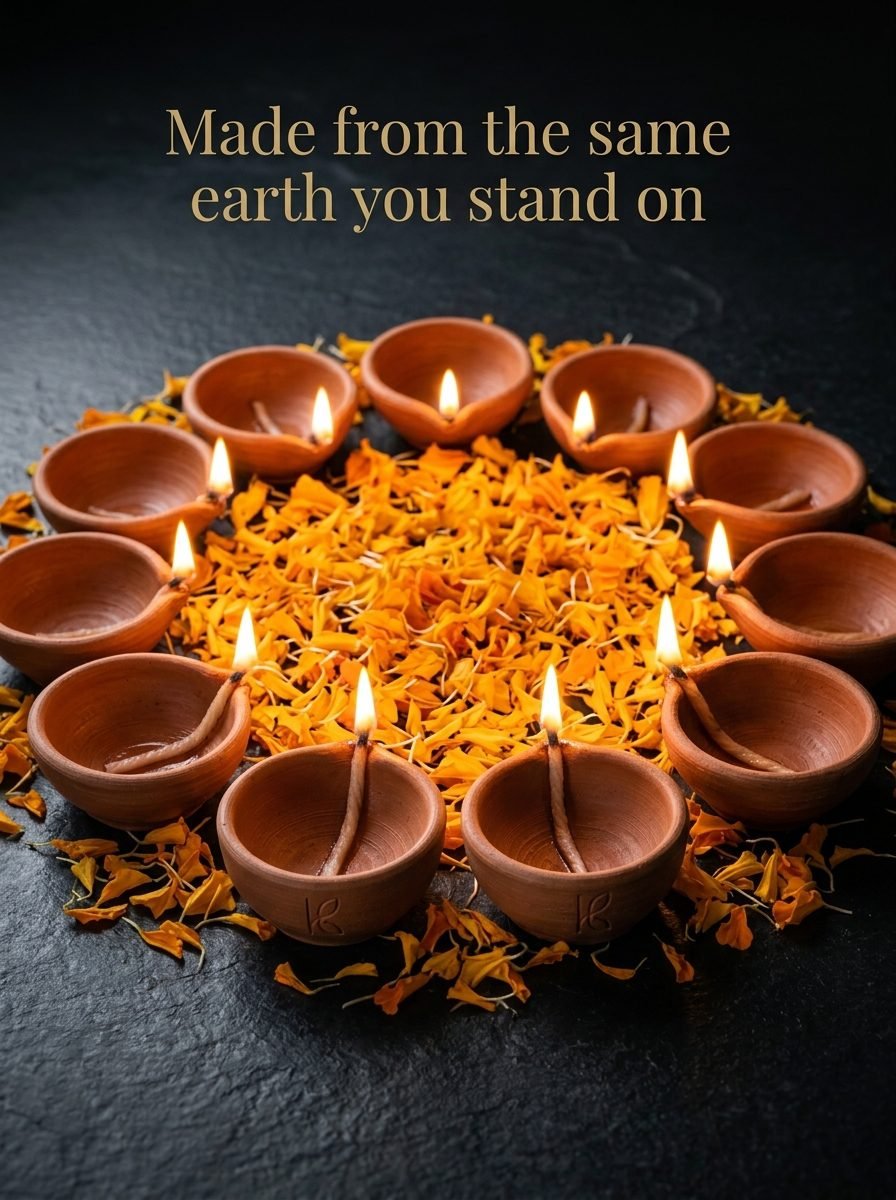
Out of StockTwelve flames. Twelve clay vessels. The festival of lights in the material of
Terracotta Clay · Set of 12 · SKU: KL-DC-010
₹299.00
| Material | Terracotta Clay |
|---|---|
| Size / Capacity | Set of 12 |
| Induction Ready | NO |
| XRF Tested | NO |
| Sub-Category | Diya |
Twelve flames. Twelve clay vessels. The festival of lights in the material of
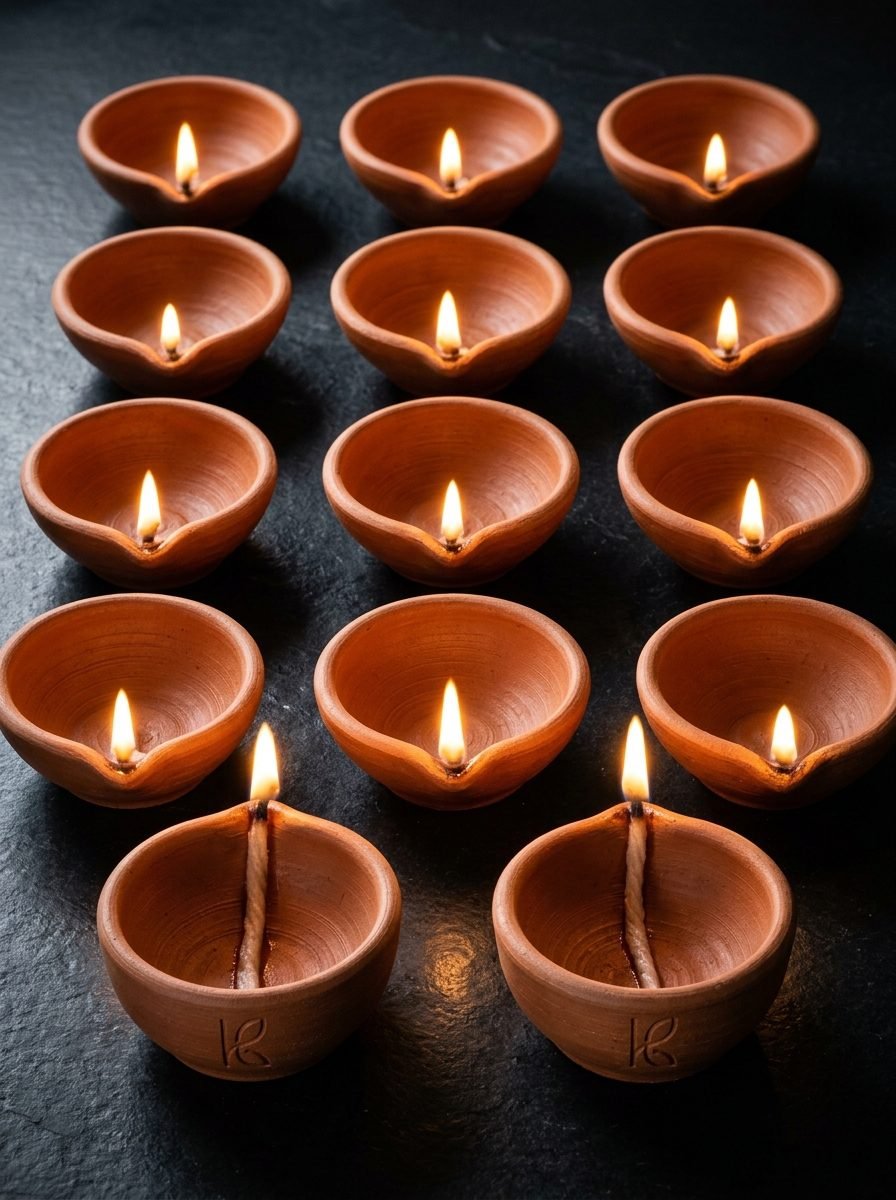
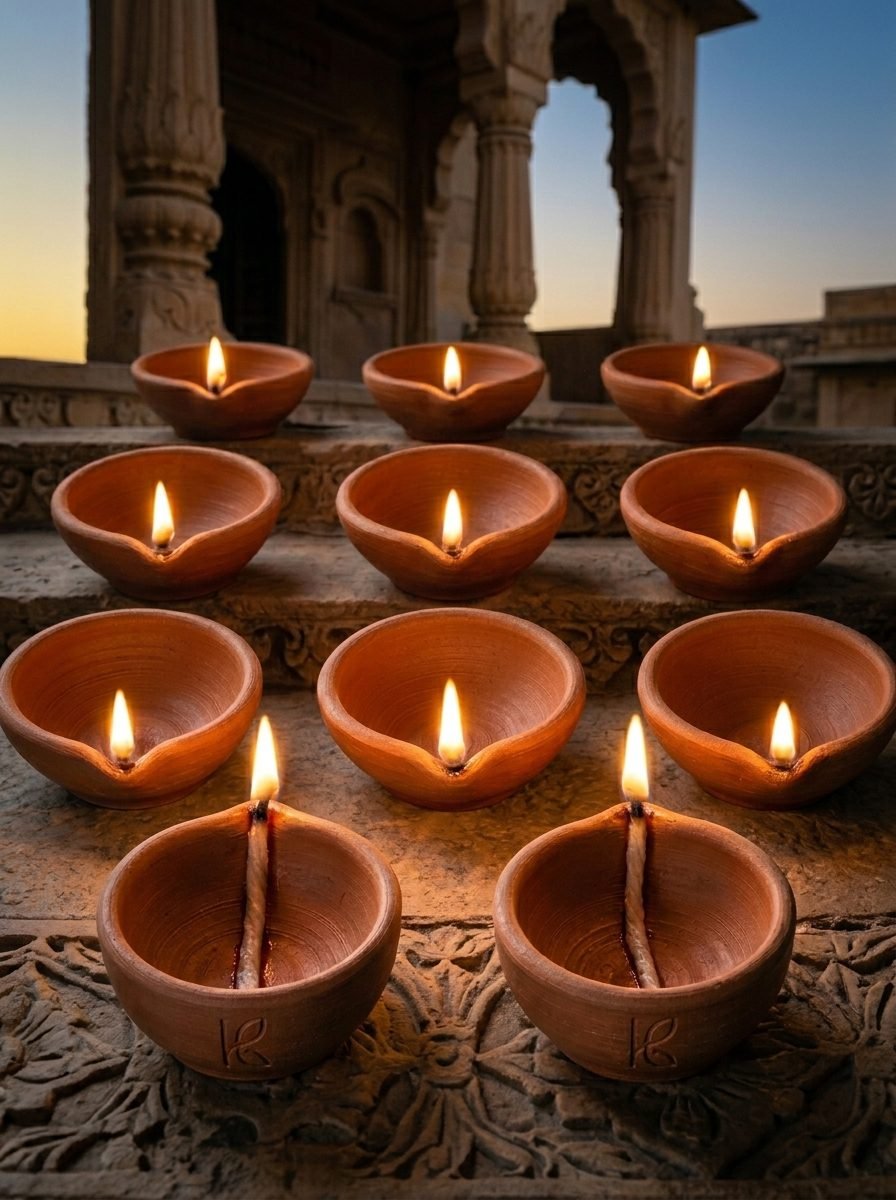
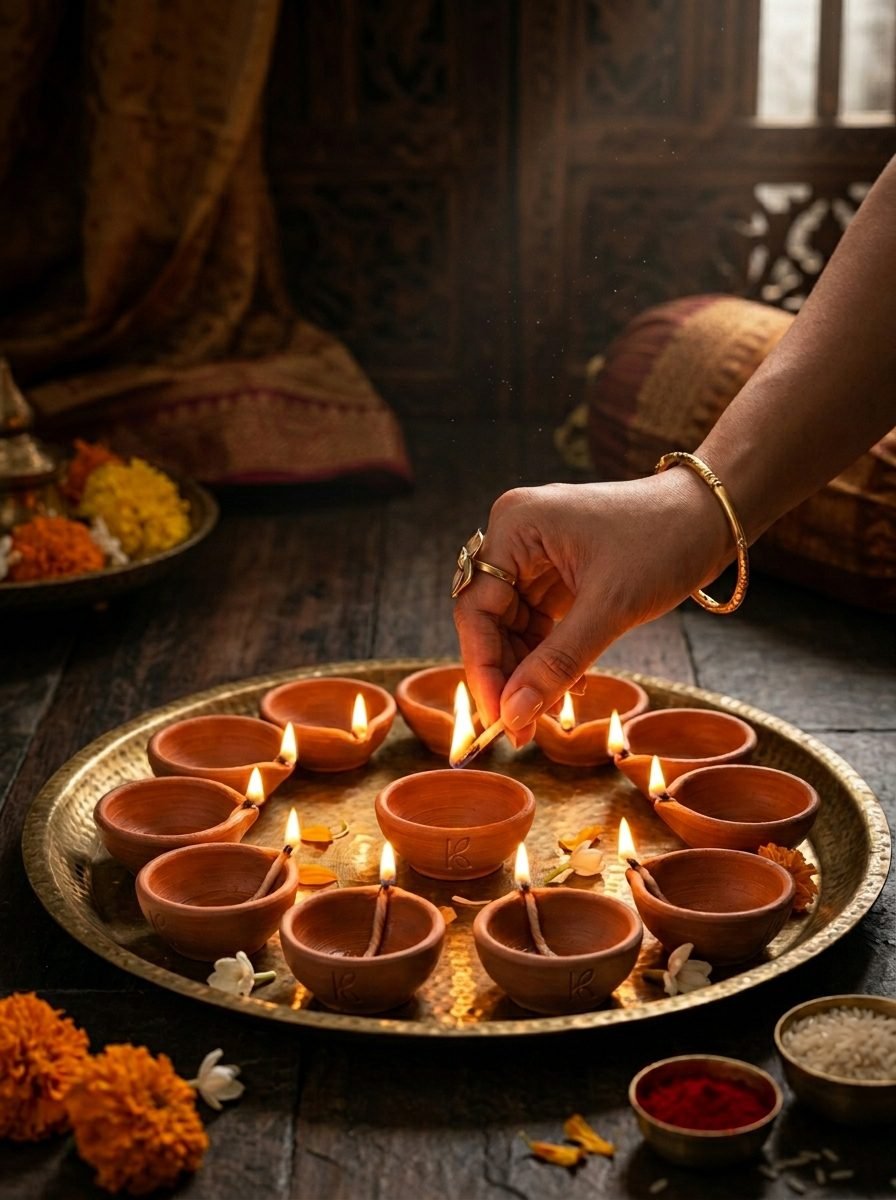
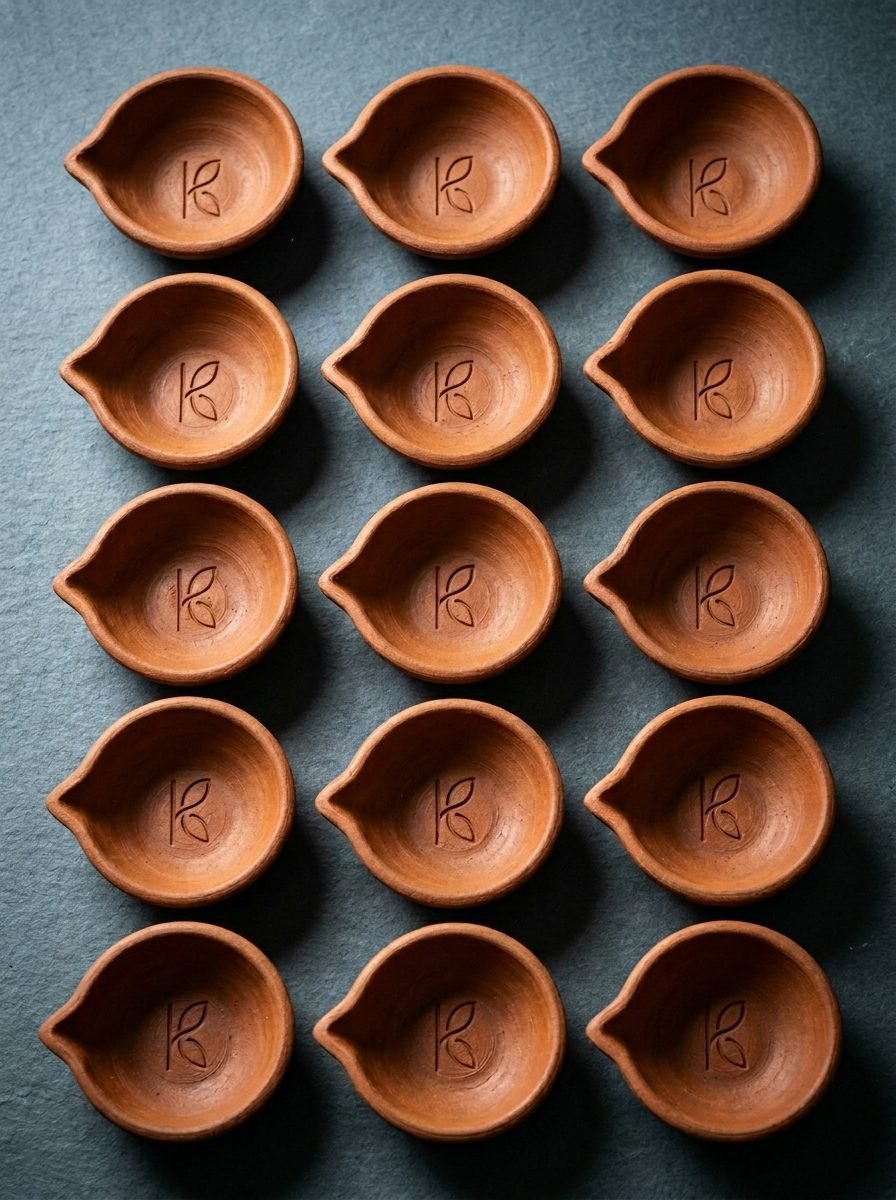
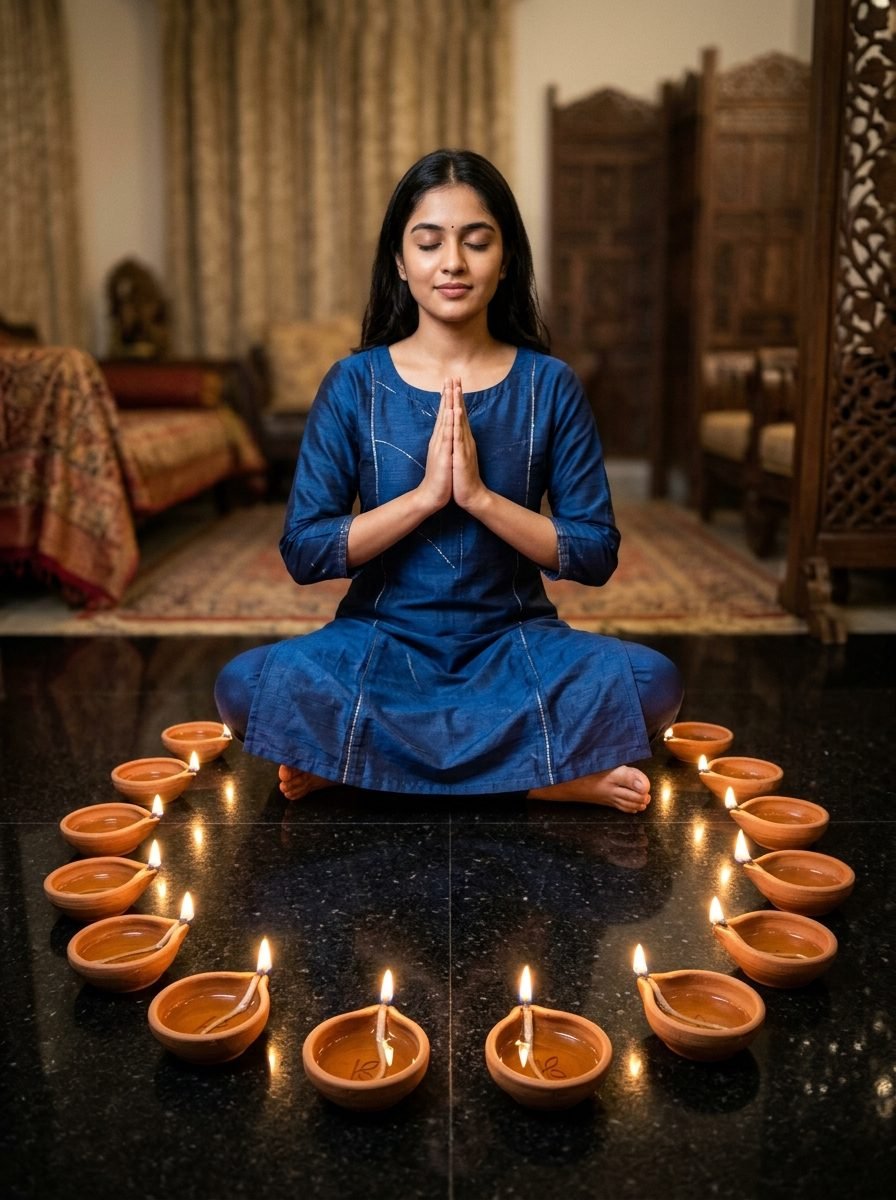
light. Twelve individually hand-thrown terracotta diyas — each with the classic saucer form and pointed wick channel that has characterised Indian oil lamps since at least 3000 BCE. XRF-certified. Designed to be lit with cotton wicks and ghee, sesame oil, or mustard oil. Not single-use. Not decorative. Actually lit. Reusable for years. The diyas that become the family’s Diwali objects, not the ones that are discarded in November.
Key Features & Benefits
- Individually Hand-Thrown — Not Moulded: A mould-made diya has uniform walls and a flat base. A wheel-thrown diya has slight wall variation and a naturally rounded base that sits slightly lower at the centre — exactly the geometry that allows oil to pool at the deepest point and feed the wick continuously without running dry at the edges. The difference shows in the flame quality.
- 3000 BCE — The Unchanged Form: The clay diya’s form has not changed in 5,000 years because the form is correct. Shallow circular bowl, enough depth for oil and wick, pointed channel that keeps the wick in position and directs the flame. At 5,000 years old, this is a design that has had time to become optimal.
- XRF Certified — Flame-Heated Clay: Diyas are heated objects. Some clay sources contain compounds that produce unwanted combustion byproducts when flame-heated. Klayvi diyas are XRF tested to verify that no such compounds are present above threshold levels. When you light a Klayvi diya, what burns is the cotton wick and the oil. The clay is inert.
- Reusable for Decades: Heat the empty diya on a low flame for 2 minutes after use to burn off residual oil and carbon. Wipe with a dry cloth. Store in cotton muslin for the next Diwali. Twelve clay diyas, maintained, will serve the family for 20+ years.
- Natural Light Quality: The flame from a ghee-lit clay diya has a specific warm amber quality that no electric light replicates. The clay surface reflects and slightly diffuses this light, creating pools of warmth rather than points of brightness.
- Each Diya Is Unique: No two hand-thrown diyas are identical. The slight variations in size, depth, and wall thickness are the fingerprint of the artisan’s hands on that specific day.
About the Material
The diya is the oldest continuously used clay object in India. It appears in the Rig Veda, in Harappan figurines, at every temple and home puja for thousands of years. The continuity is not sentiment — it is the recognition that the clay diya at a small oil flame is the correct technology for this specific function: safe, beautiful, fragrant when lit with ghee, biodegradable, and requiring no electricity. Our diyas are individually wheel-thrown and fired at 850°C. The clay body is verified clean at XRF level for the specific compounds that become relevant when clay is repeatedly flame-heated. The wicking channel depth (approximately 5–6mm) is specifically calibrated for standard 3mm cotton wicks. The Science The visible flame spectrum of a ghee-lit clay diya occupies the 550–700nm range — warm yellow-amber. This is the same wavelength range as firelight, which human neurobiology has evolved alongside for 400,000 years of fire use. Research in chronobiology finds that warm-spectrum light in the 500–700nm range does not suppress melatonin secretion the way cool (blue-spectrum) light does, making the diya the correct evening light for maintaining circadian rhythm. The traditional Indian practice of diya lighting in the evening is, without knowing the neuroscience, biologically appropriate.
Safety & Certification Standards
| XRF Analysis — Clay Source | Heavy metal screening on raw clay before production begins |
| ICP-OES — Finished Product | Parts-per-billion accuracy. Actual migration into food simulants tested |
| NABL-Accredited Laboratory | Internationally recognised test facility |
| FSSAI Food Contact Compliance | Meets India’s legal food safety standards |
| Per-Batch QR Report | Your batch. Your numbers. Published before dispatch. |
Lab Test Results
| Compound | Klayvi Result | FSSAI Safe Limit |
|---|---|---|
| Lead (Pb) | ≤ 2.1 ppm | 90 ppm |
| Cadmium (Cd) | ≤ 0.3 ppm | 0.5 ppm |
| Arsenic (As) | ≤ 0.4 ppm | 2.0 ppm |
| Mercury (Hg) | Not detected | 0.5 ppm |
| PTFE / PFOA / PFAS | Not present | Zero tolerance |
Caring for Your Klayvi
| 1 — First Use | Rinse with plain water. No soap on first use. |
| 2 — Daily Clean | Klayvi Wash Care (pH 6–8) or sisal scrubber + warm water. Never standard dish soap — it destroys seasoning at pH 9–11. |
| 3 — After Wash | Dry completely on low flame (cookware) or air-dry fully (decor/storage). Never store damp. |
| 4 — Monthly | Apply 4–5 drops cold-pressed flaxseed oil to cooking surfaces. Heat on medium-low until just smoking. Cool and wipe. |
| 5 — Never | Dishwasher · Microwave · Overnight soaking · Chemical detergents · Cold water on a hot vessel |
What’s in the Box
- Bio-Active Diya × 12 (hand-thrown, individually fired)
- Cotton wicks (6 per diya — 72 total)
- Small bottle of cold-pressed sesame oil for first lighting
- Artisan provenance card (set card covering all 12)
- Batch QR card
- Diya care and storage guide
- Kraft gift box with natural excelsior packing
Frequently Asked Questions
Q: Which oil is best for lighting the diyas?
Ghee produces the cleanest, brightest flame and the least smoke. It also produces the characteristic aroma that defines Diwali. Sesame oil produces an amber-tinted flame with minimal smoke. Mustard oil produces more smoke and the traditional pungent aroma of North Indian Diwali. All three work. Choose by aroma and flame character preference.
Q: How much oil do I use per diya?
Fill to approximately 80% of the bowl capacity — not to the rim, which causes oil to overflow when the ghee liquefies from the flame’s heat. A well-filled 80% diya burns for approximately 4–6 hours depending on the oil and wick thickness.
Q: The diya flame keeps going out. What is wrong?
Three most common causes: (1) the wick is too short — it should extend 5–6mm above the oil surface; (2) the diya is in a draught (move to a more sheltered position); (3) the oil level has dropped below the wick end — top up the oil and re-position the wick.
Q: Can I reuse the diyas next year?
Yes — this is the point. After each use: allow to cool completely. Heat the empty diya on a very low flame for 2 minutes to burn off any residual oil and carbon deposits in the wicking channel. Wipe with a dry cloth. Store in the kraft box with the excelsior packing, or wrap in the artisan cotton muslin individually for extended storage. Next Diwali: condition with a small oil wipe before lighting.
Q: The diyas are slightly different sizes. Is that a defect?
No. Each diya is individually hand-thrown, so sizes vary by 5–10% between pieces. This variation is the mark of hand-crafted authenticity. For a uniform appearance, arrange larger diyas at the back of compositions and smaller at the front. The variation becomes invisible once lit.
Q: Can I use the diyas for floating flower arrangements (water + flowers + diyas)?
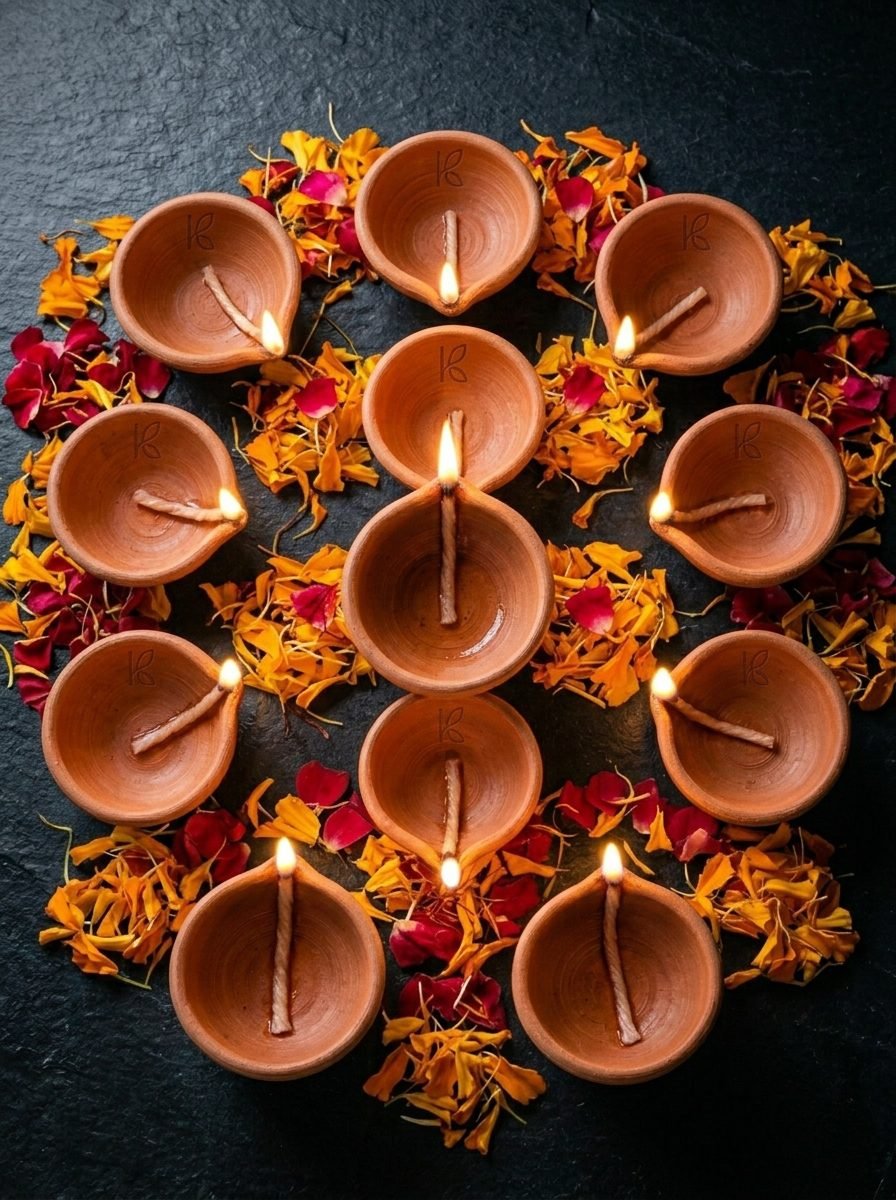
Yes. The clay diya is stable enough to float in a large plate of water with flower petals, and the flame on the surface of the oil (lighter than water) will remain lit even with the diya partially surrounded by water. Traditional Indian puja includes this arrangement frequently. Ensure the oil level is sufficient so the flame stays above the water surface.
Related products
-
Out of Stock

-
Out of Stock
-
Out of Stock
Reviews
There are no reviews yet.