
Bio-Active Kadhai – 1 L (Lite)
Out of StockYour wok is making you sick. This one won’t.
Terracotta Clay · 1 Litre · SKU: KL-CK-006
₹549.00
| Material | Terracotta Clay |
|---|---|
| Size / Capacity | 1 Litre |
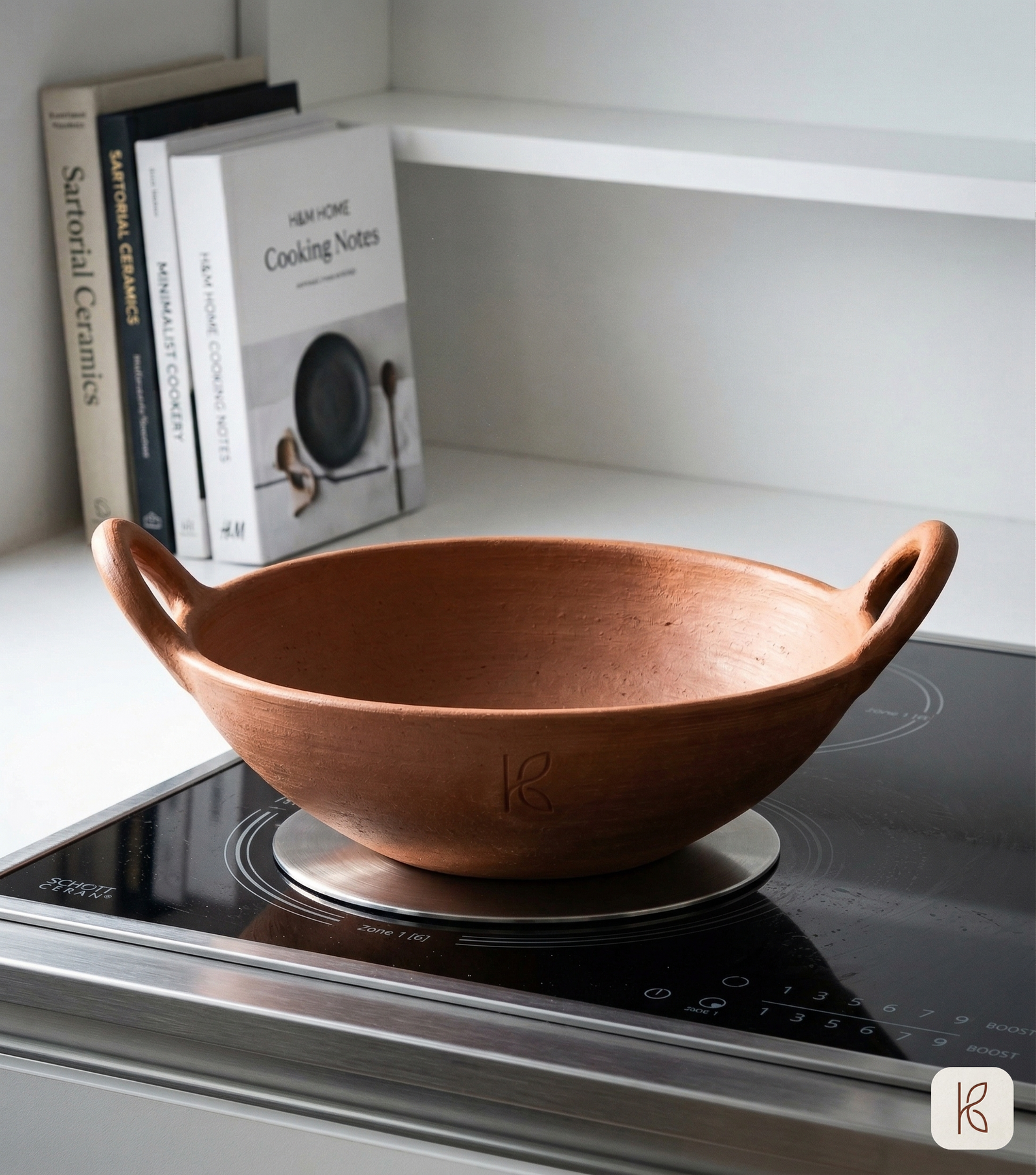
| Induction Ready | YES |
| XRF Tested | YES |
| Sub-Category | Kadhai |
Your wok is making you sick. This one won’t.
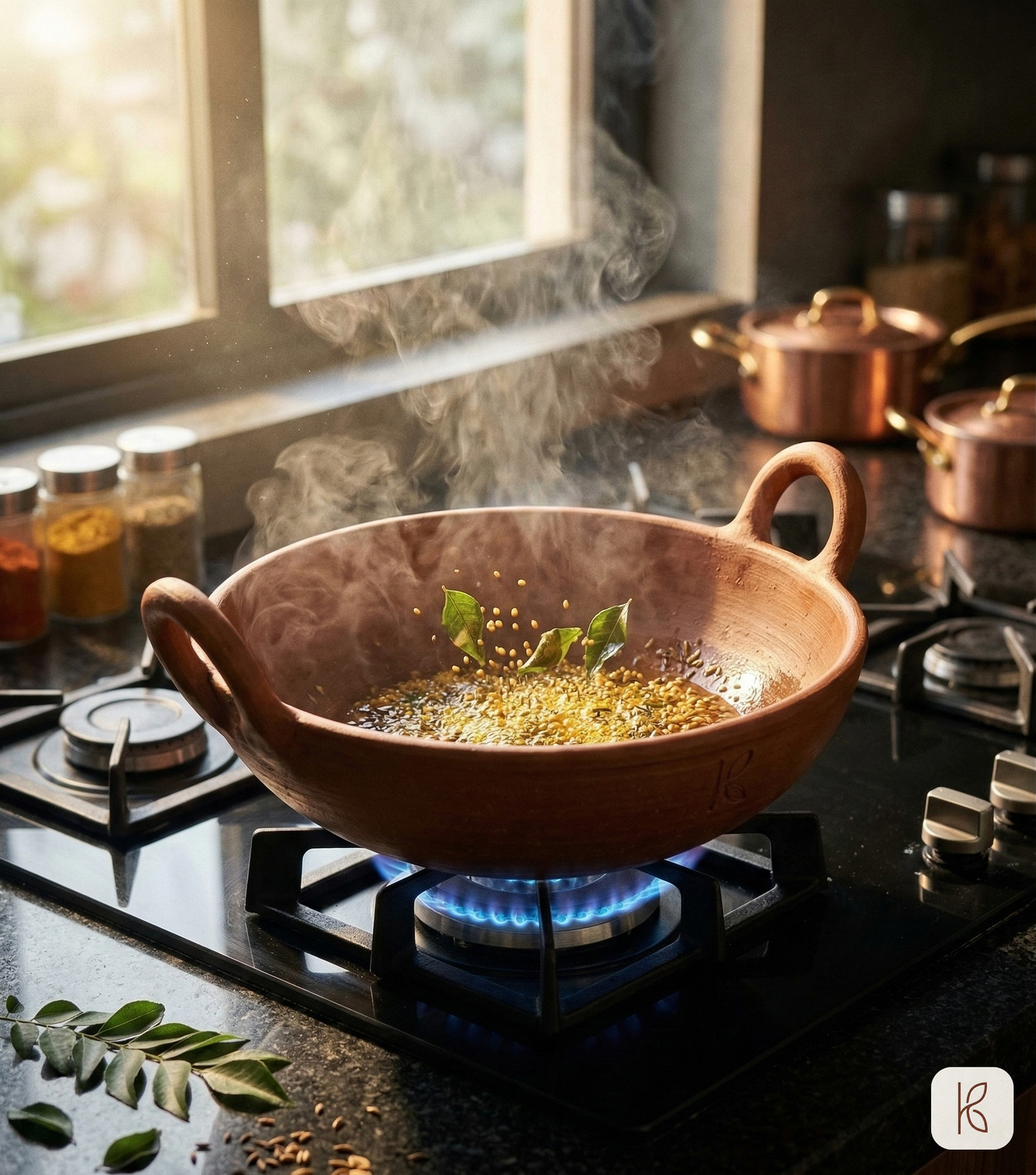
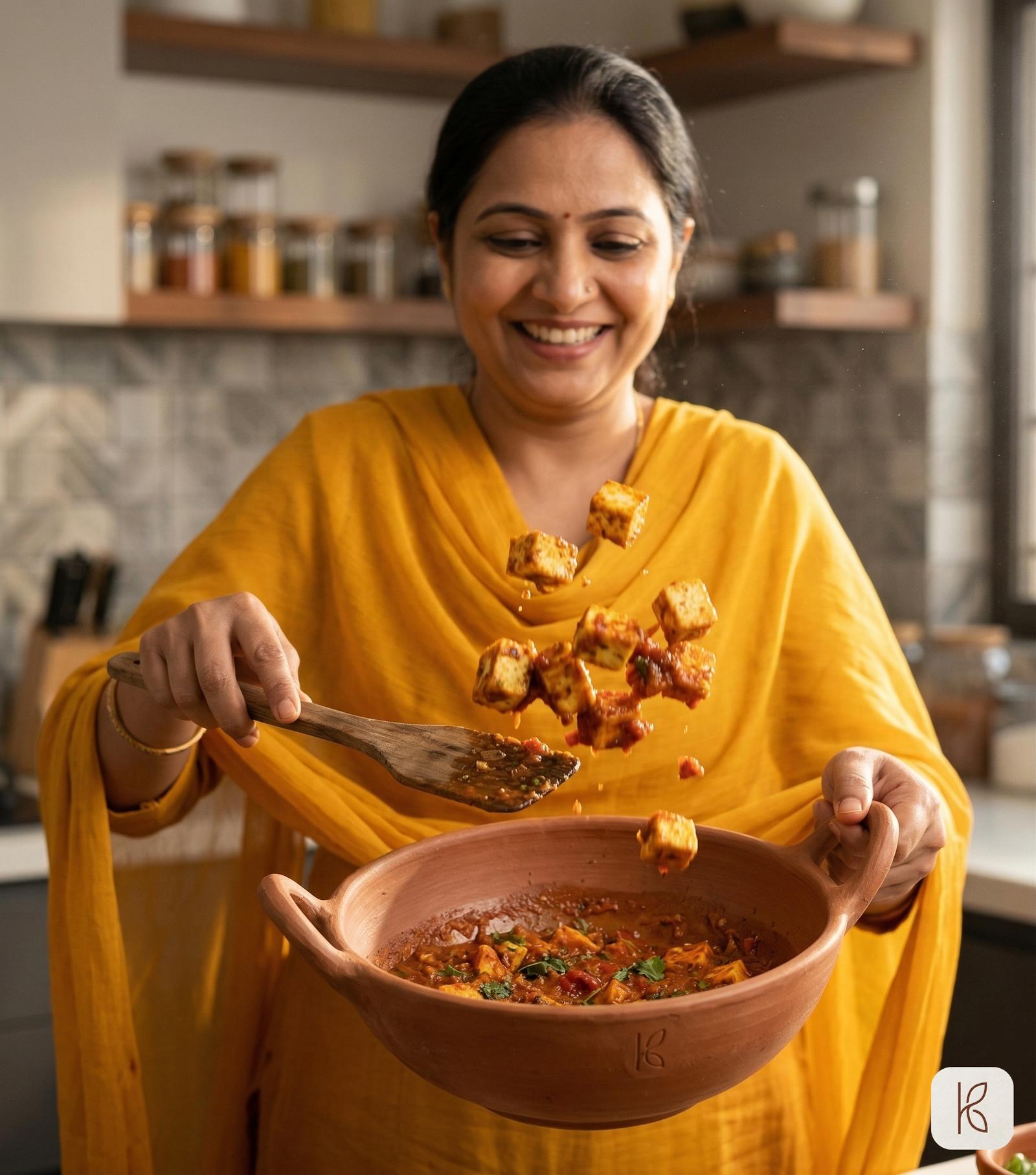
Wide, shallow, completely uncoated. This is how sabzi was made before non-stick arrived and quietly ruined the flavour. The 1L kadhai is XRF-tested, pre-seasoned, and designed for the everyday Indian kitchen. No PTFE. No PFOA. No fumes when the oil hits temperature.
Key Features & Benefits
- Zero Toxic Coating: Indian cooking — especially tadka and stir-frying — regularly hits 260–300°C. PTFE degrades at 260°C. Terracotta at the same temperature releases nothing. There is no polymer to break down.
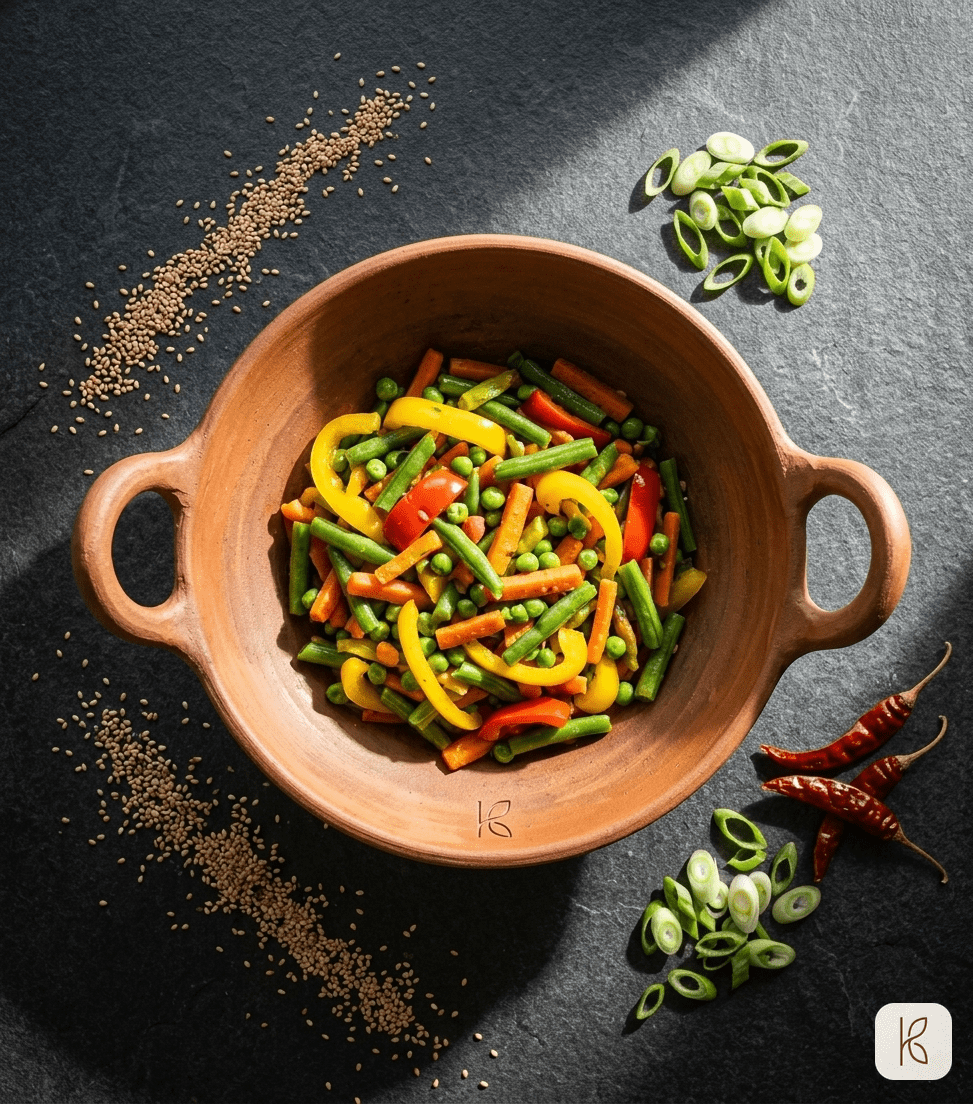
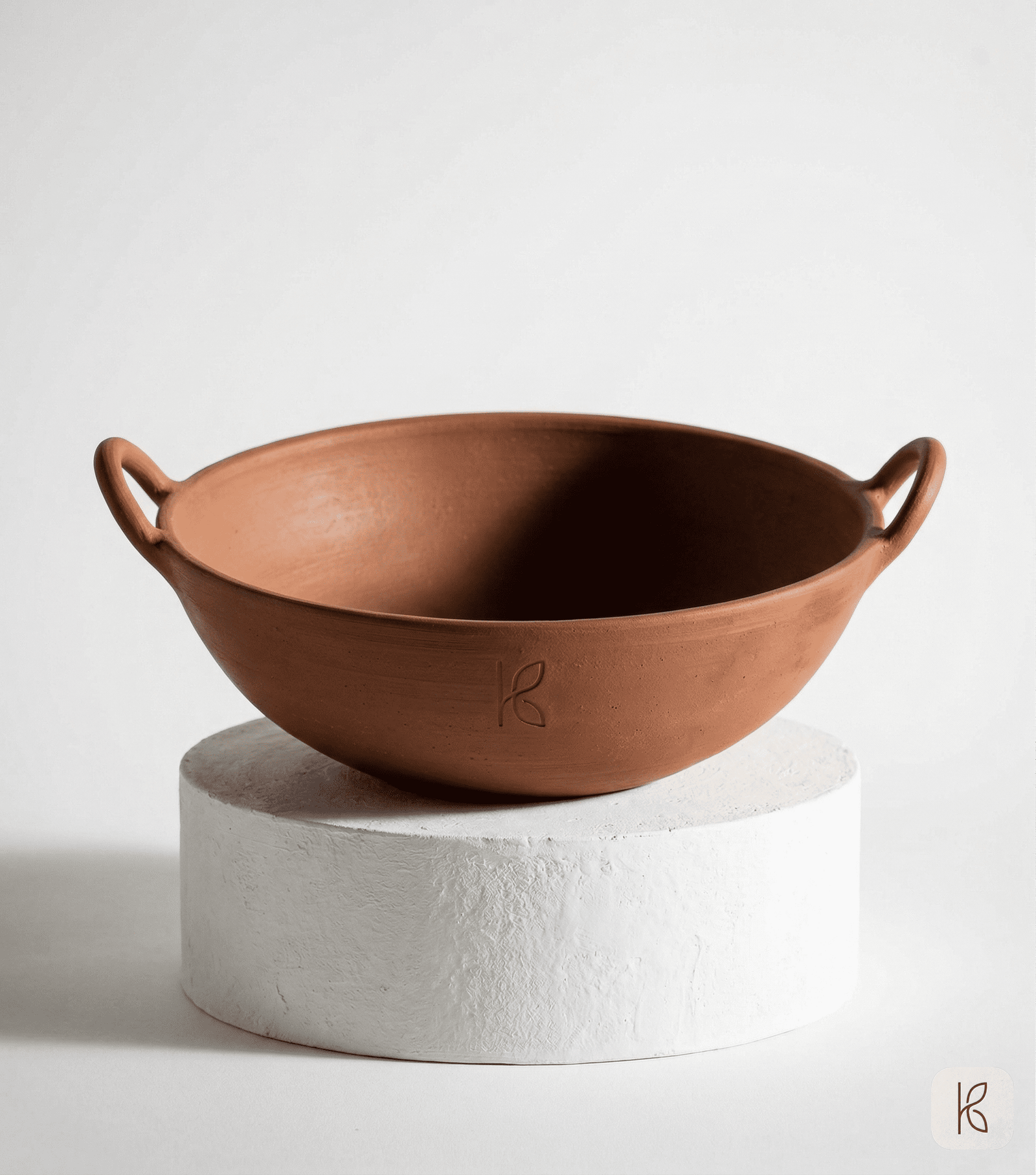
- Wide Cooking Surface: The concave kadhai form distributes food in a thin layer over maximum surface area. That’s the geometry that high-heat stir-frying and tadka requires — wide, open, hot.
- Lite Series: Heats Quickly: 4–5mm walls. Reaches cooking temperature in 4–5 minutes on medium-high. Suitable for high-heat cooking; for very long slow simmers, use the handi instead.
- XRF + ICP-OES Certified: Batch-specific lab report via QR on base.
- Ra ≤4µm Interior Surface: Surface roughness fine enough that, with seasoning, most foods release cleanly. Not as smooth as Teflon — better than Teflon, because it doesn’t degrade.
- Pre-Seasoned: Three flaxseed oil cycles at 200°C. First use: wash with water and cook.
About the Material
The kadhai is the most-used vessel in the Indian kitchen. Dal tadka, vegetable sabzi, paneer dishes, egg bhurji — all of it happens in the kadhai, usually at high heat, usually with oil. High heat with oil is exactly where non-stick pans become dangerous. The Lite series uses 4–5mm chamotte-reinforced terracotta. Thin enough to heat quickly on gas, thick enough to not crack under thermal cycling. The concave interior form is 4,000 years old and exactly right for Indian cooking — deep enough to hold liquid dishes, wide enough to toss vegetables.
The Science
At 260°C, PTFE begins to decompose. At 300°C — easily reached during high-heat tadka on a full gas flame — decomposition accelerates. The resulting fluorocarbon gases are documented as hazardous at sufficient concentrations. A 2020 University of Newcastle study found that a single Teflon scratch releases an estimated 9,000 particles per event. The clay kadhai has no coating. The cooking surface is mineral, already formed at 850°C. A 300°C tadka is far below its creation temperature. Nothing breaks down. Nothing releases.
Safety & Certification Standards
| XRF Analysis — Clay Source | Heavy metal screening on raw clay before production begins |
| ICP-OES — Finished Product | Parts-per-billion accuracy. Actual migration into food simulants tested |
| NABL-Accredited Laboratory | Internationally recognised test facility |
| FSSAI Food Contact Compliance | Meets India’s legal food safety standards for cookware |
| Per-Batch QR Report | Your batch. Your numbers. Published before dispatch. Scan and read it yourself. |
Lab Test Results
| Compound | Klayvi Result | FSSAI Safe Limit |
|---|---|---|
| Lead (Pb) | ≤ 2.1 ppm | 90 ppm |
| Cadmium (Cd) | ≤ 0.3 ppm | 0.5 ppm |
| Arsenic (As) | ≤ 0.4 ppm | 2.0 ppm |
| Mercury (Hg) | Not detected | 0.5 ppm |
| PTFE / PFOA / PFAS | Not present | Zero tolerance |
Caring for Your Klayvi
| 1 — First Use | Rinse with plain water. Cook something water-based (dal, rice water) for first 2–3 uses. |
| 2 — Daily Clean | Use Klayvi Wash Care (pH 6–8) or a sisal scrubber with warm water. Never standard dish soap — its pH 9–11 strips the seasoning. |
| 3 — After Wash | Dry completely on low flame for 2 minutes. Never store damp. |
| 4 — Monthly | Apply 4–5 drops of cold-pressed flaxseed oil. Heat on medium-low until it just smokes at the edges (~4 min). Cool. Wipe. |
| 5 — Never | Dishwasher · Microwave · Submerging overnight · Chemical detergents · Cold water on a hot pot |
What’s in the Box
- Bio-Active Kadhai 1L (pre-seasoned)
- Steel induction adapter disc
- Artisan provenance card
- Clay Care Passport
- Batch QR card
Frequently Asked Questions
Q: How is a clay kadhai different from clay handi?
The kadhai is wide and shallow — designed for stir-frying, tadka, and high-heat cooking where you want maximum surface exposure. The handi is deep and round — designed for liquid dishes, biryani dum, and slow simmers. Different geometries for different cooking methods.
Q: Can I deep-fry in the clay kadhai?
Yes. The 1L is suitable for small-batch frying — enough oil for pakoras or small batches of puri. Do not fill more than 60% with oil; clay’s slight porosity means oil can slowly seep if the vessel sits oil-filled for hours. For large-batch frying, use the 2L or 3L kadhai.
Q: The tadka popped and oil splattered. Is the kadhai too hot?
Possibly. Clay heats differently from metal — it can have surface hotspots, especially in early uses before the seasoning is fully established. Try a slightly lower flame for tadka initially. After 5–6 uses, the surface temperature becomes more uniform.
Q: Can I use a metal spatula?
You can, but it accelerates surface wear at the microscopic level. The Ra ≤4µm surface is best maintained with silicone or wood spatulas (40 Shore A hardness silicone is ideal). Metal spatulas won’t ruin the pot — they just reduce how long the smooth surface lasts.
Q: Why does my sabzi taste different in clay?
Because it is different. Clay’s alkaline mineral surface subtly affects the pH of oil-based cooking, and the vessel’s lower thermal conductivity creates more even heat across the food. The Maillard browning (colour and flavour development) happens more evenly without hot spots. Most people describe the difference as “fuller flavour” or “more rounded.”
Q: Is this suitable for making chai?
Yes — though the sauce pan series is better suited for liquid-heavy boiling. The kadhai works for chai; just ensure adequate liquid level and avoid boiling dry.
Related products
-
Out of Stock

-
Out of Stock
-
Out of Stock

Reviews
There are no reviews yet.