
Bio-Active Patila – 1.5 L
Out of StockThe boiling pot with 6,000 years of food science behind it.
Terracotta Clay · 1.5 Litres · SKU: KL-CK-013
₹849.00
| Material | Terracotta Clay |
|---|---|
| Size / Capacity | 1.5 Litres |
| Induction Ready | YES |
| XRF Tested | YES |
| Sub-Category | Patila |
The boiling pot with 6,000 years of food science behind it.
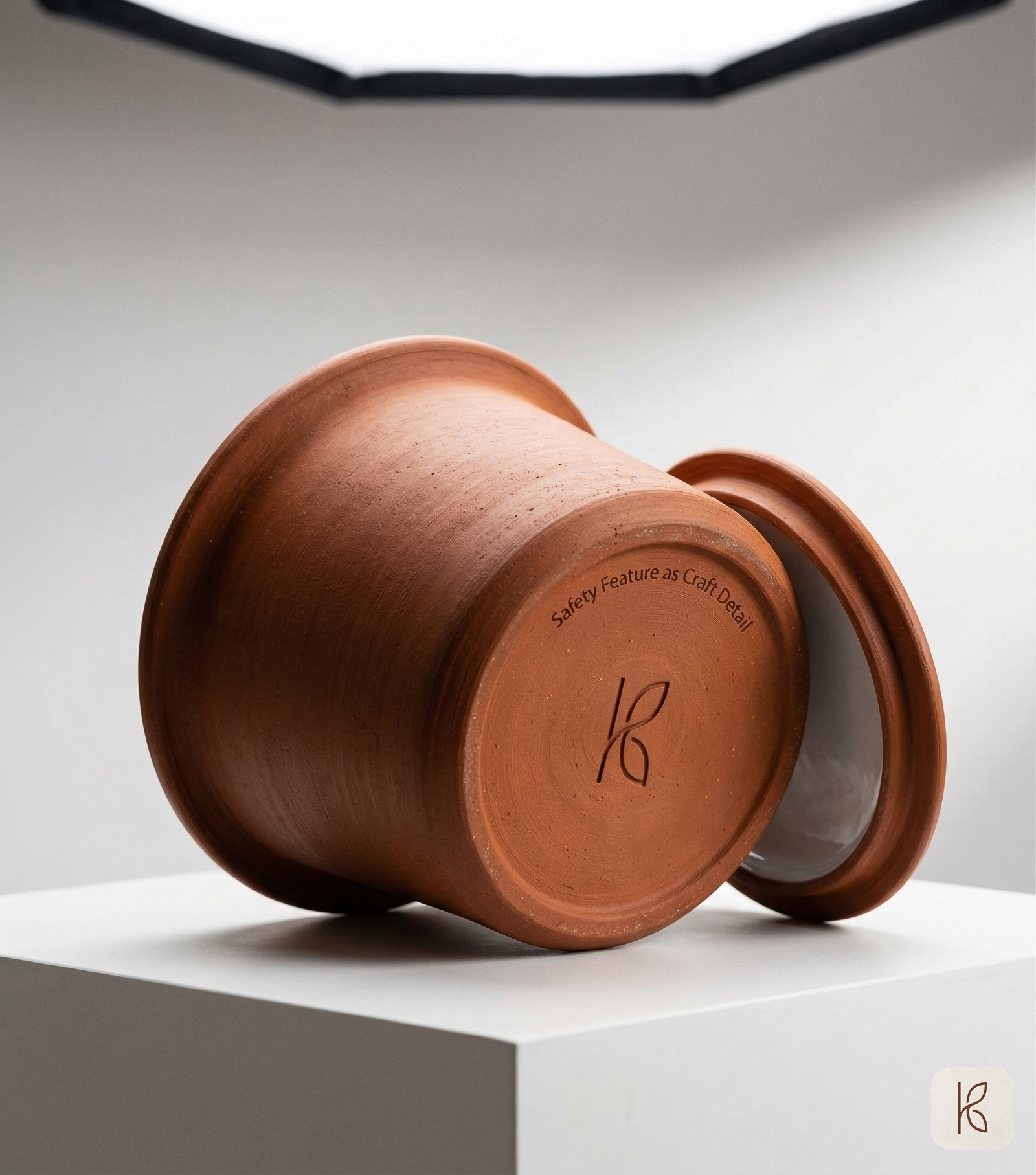
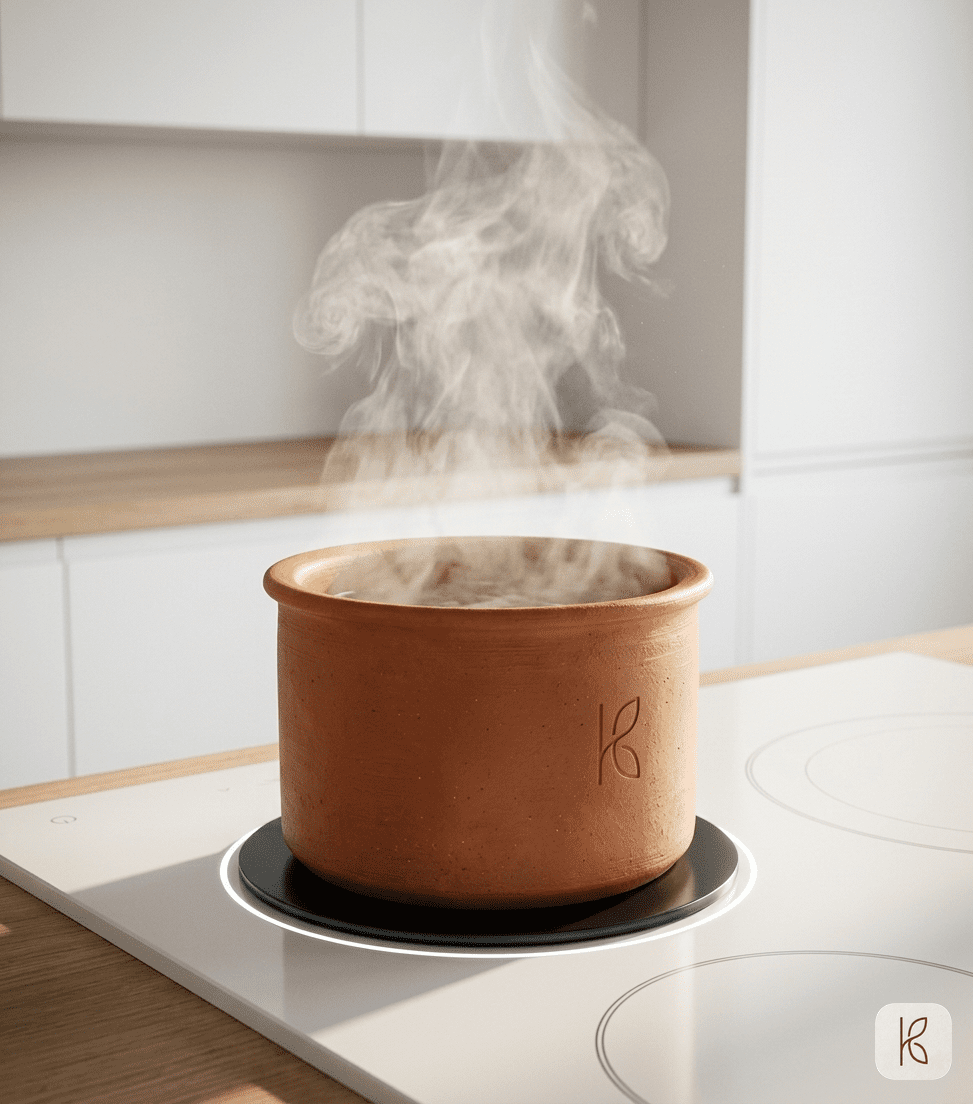
A straight-sided, deep clay boiling vessel. 1.5 litre. 8mm reinforced base for even heat distribution. XRF + ICP-OES certified. Pre-seasoned. “DO NOT HEAT EMPTY” engraved on the base — because we would rather tell you once than explain it later. The daily boiling vessel that most Indian kitchens have in aluminium and shouldn’t.
Key Features & Benefits
- 8mm Reinforced Base: Boiling generates strong convection currents that concentrate heat at the base centre. An 8mm thick base distributes this heat laterally before it reaches the food — eliminating the scorched-base phenomenon common in thin-walled vessels.
- “DO NOT HEAT EMPTY” on Base: An empty clay vessel on a high flame develops extreme temperature gradients across the walls that can cause thermal shock failure. This instruction is engraved on every patila. It matters.
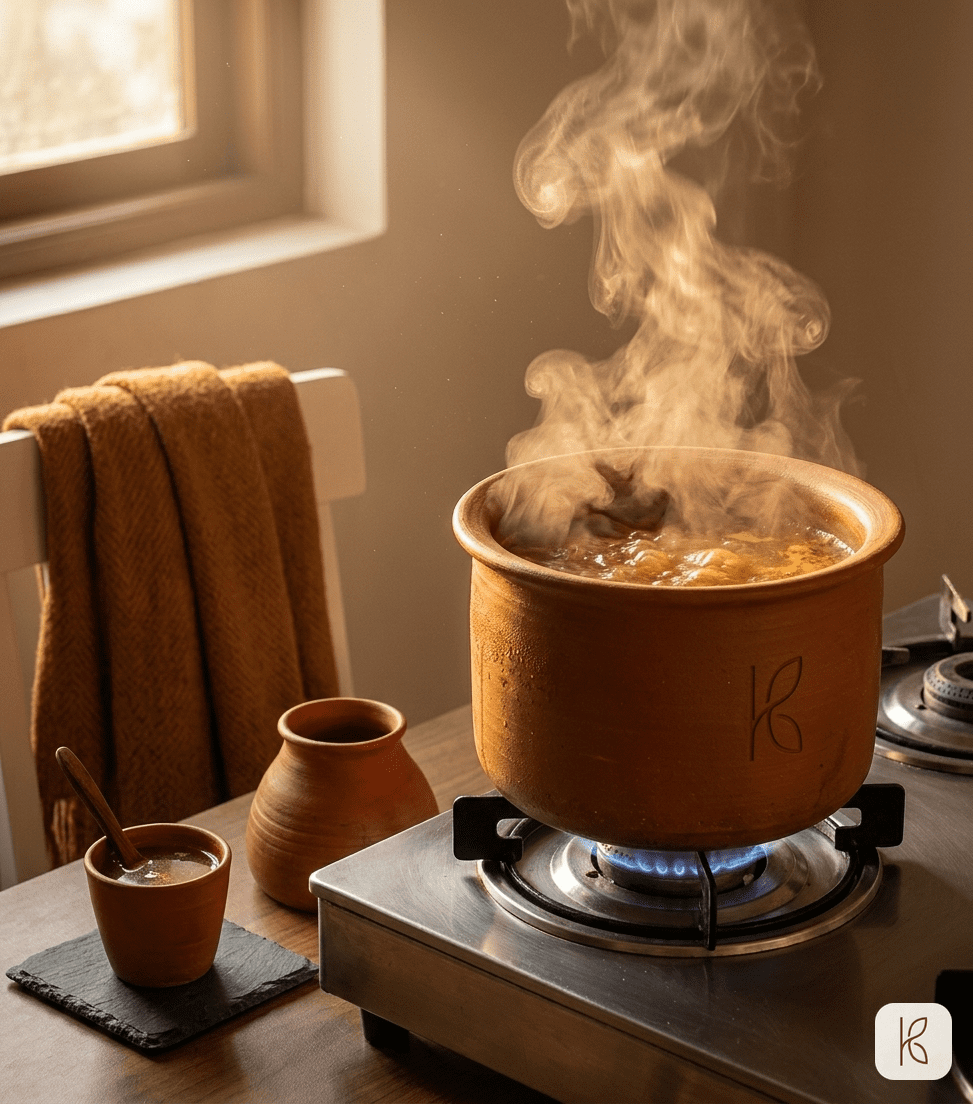
- Non-Reactive with Acidic Food: Dal, tamarind rasam, tomato-based soups: all acidic. Clay’s alkaline surface neutralises rather than reacts with these acids. Aluminium cookware, under the same conditions, can migrate aluminium ions into food.
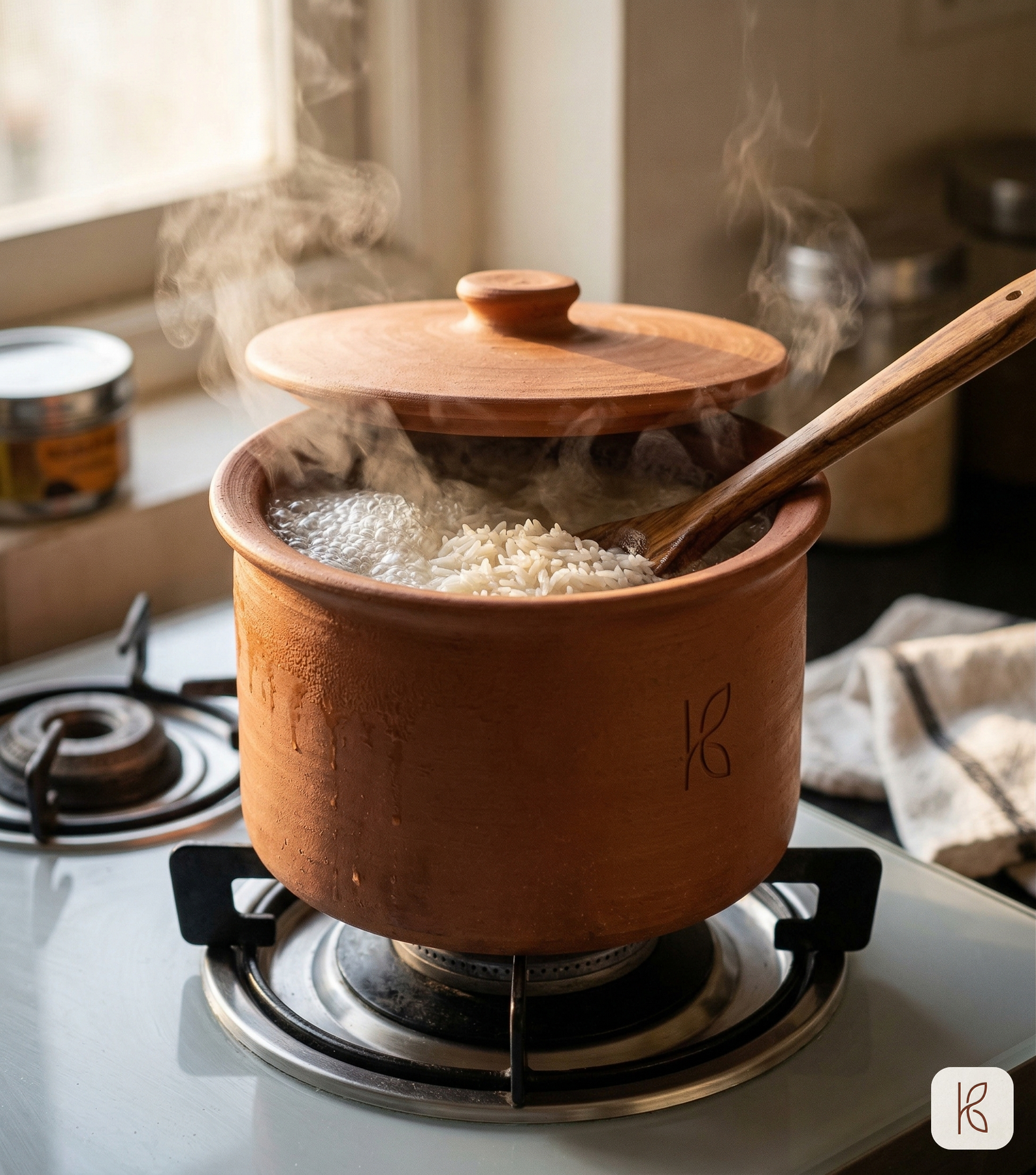
- Ra ≤4µm Interior: Starchy boiling residue (rice water, dal) releases more easily from a smooth clay surface than from rough uncoated aluminium or steel.
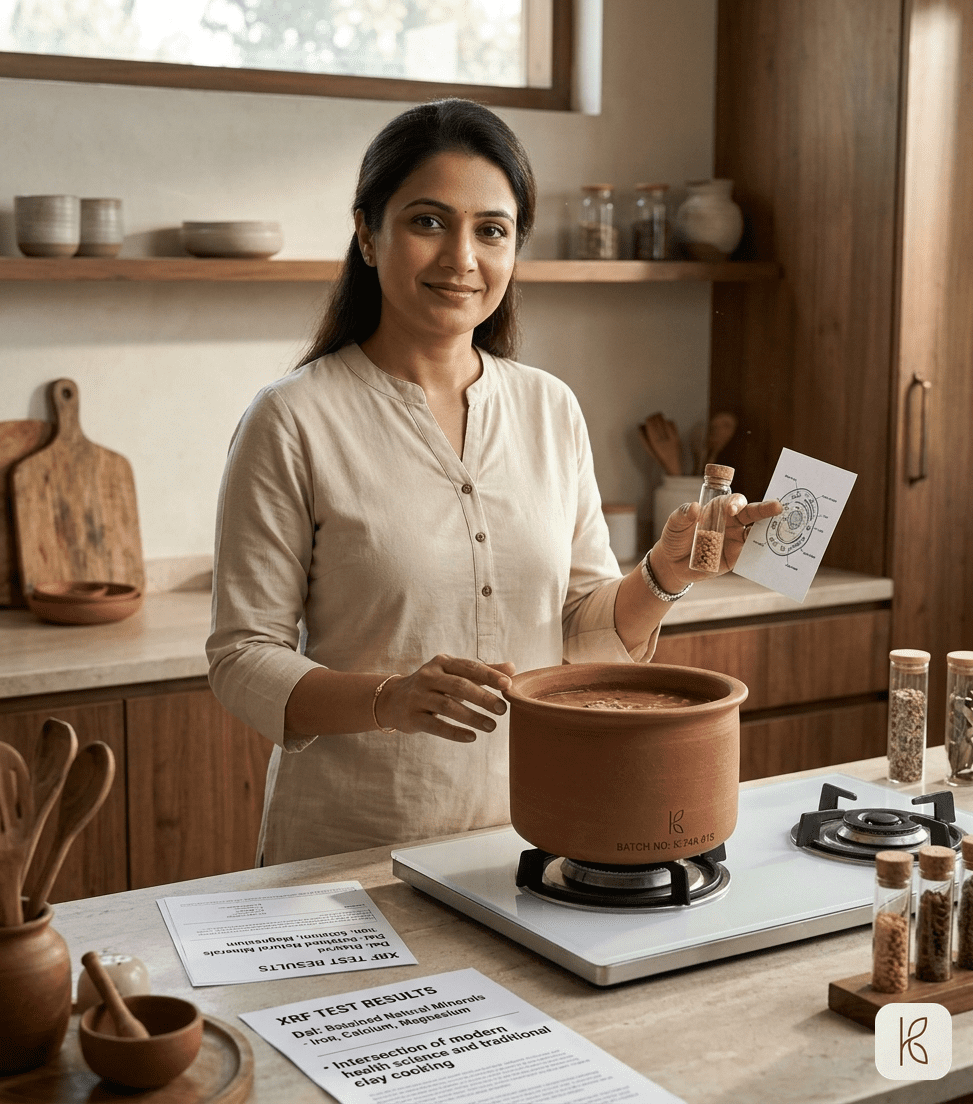
- XRF + ICP-OES Certified: Batch QR on base.
- Gas + Induction Ready: Induction adapter disc included.
About the Material
Aluminium degchis are the most common boiling vessels in Indian kitchens. They are also the least appropriate material for the job. Research published in Environmental Chemistry measured aluminium migration in tomato juice cooked in aluminium cookware — migration that increased significantly with temperature and cooking time. Boiling tamarind rasam in aluminium for 30 minutes at 95°C is not a conservative use case. The clay patila does the opposite: alkaline minerals buffer the acidity rather than adding ions to the food. The straight-sided cylindrical form of the patila is not decorative — it maximises the volume-to-surface-area ratio for efficient boiling and makes ladling easier than a round-bellied vessel.
The Science
Ra ≤4µm on a boiling vessel matters for a reason that most people don’t consider: starchy boiling residue. Rice water, lentil water, and bean-cooking liquid all contain amylose and amylopectin — the starch molecules responsible for the characteristic “sticking” that ruins pots and creates difficult cleaning. These molecules bond more aggressively to rough surfaces. The smooth clay interior of the patila releases boiling residue more easily than uncoated aluminium or steel of equivalent surface area.
Safety & Certification Standards
| XRF Analysis — Clay Source | Heavy metal screening on raw clay before production begins |
| ICP-OES — Finished Product | Parts-per-billion accuracy. Actual migration into food simulants tested |
| NABL-Accredited Laboratory | Internationally recognised test facility |
| FSSAI Food Contact Compliance | Meets India’s legal food safety standards for cookware |
| Per-Batch QR Report | Your batch. Your numbers. Published before dispatch. Scan and read it yourself. |
Lab Test Results
| Compound | Klayvi Result | FSSAI Safe Limit |
|---|---|---|
| Lead (Pb) | ≤ 2.1 ppm | 90 ppm |
| Cadmium (Cd) | ≤ 0.3 ppm | 0.5 ppm |
| Arsenic (As) | ≤ 0.4 ppm | 2.0 ppm |
| Mercury (Hg) | Not detected | 0.5 ppm |
| PTFE / PFOA / PFAS | Not present | Zero tolerance |
Caring for Your Klayvi
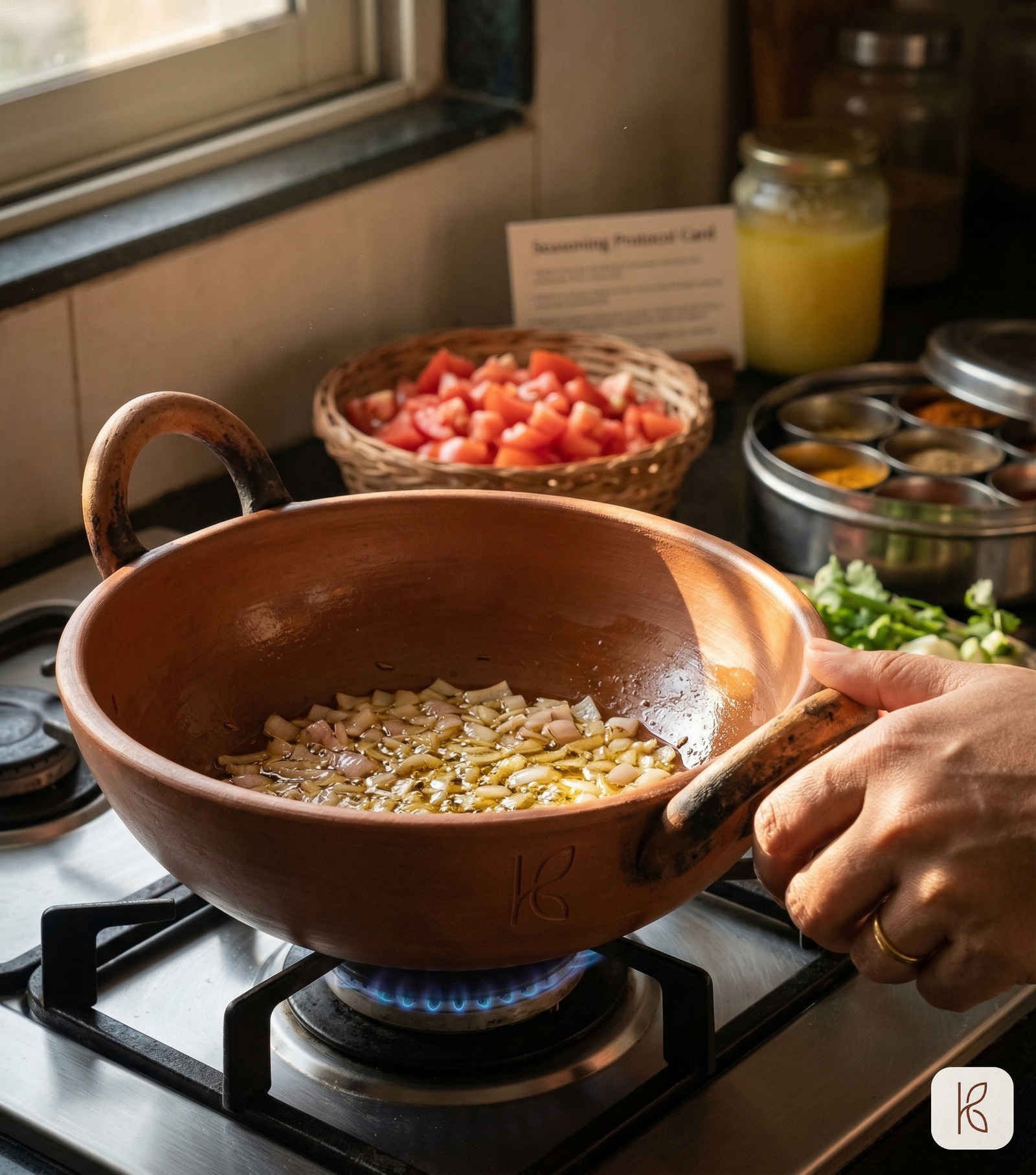
| 1 — First Use | Rinse with plain water. Cook something water-based (dal, rice water) for first 2–3 uses. |
| 2 — Daily Clean | Use Klayvi Wash Care (pH 6–8) or a sisal scrubber with warm water. Never standard dish soap — its pH 9–11 strips the seasoning. |
| 3 — After Wash | Dry completely on low flame for 2 minutes. Never store damp. |
| 4 — Monthly | Apply 4–5 drops of cold-pressed flaxseed oil. Heat on medium-low until it just smokes at the edges (~4 min). Cool. Wipe. |
| 5 — Never | Dishwasher · Microwave · Submerging overnight · Chemical detergents · Cold water on a hot pot |
What’s in the Box
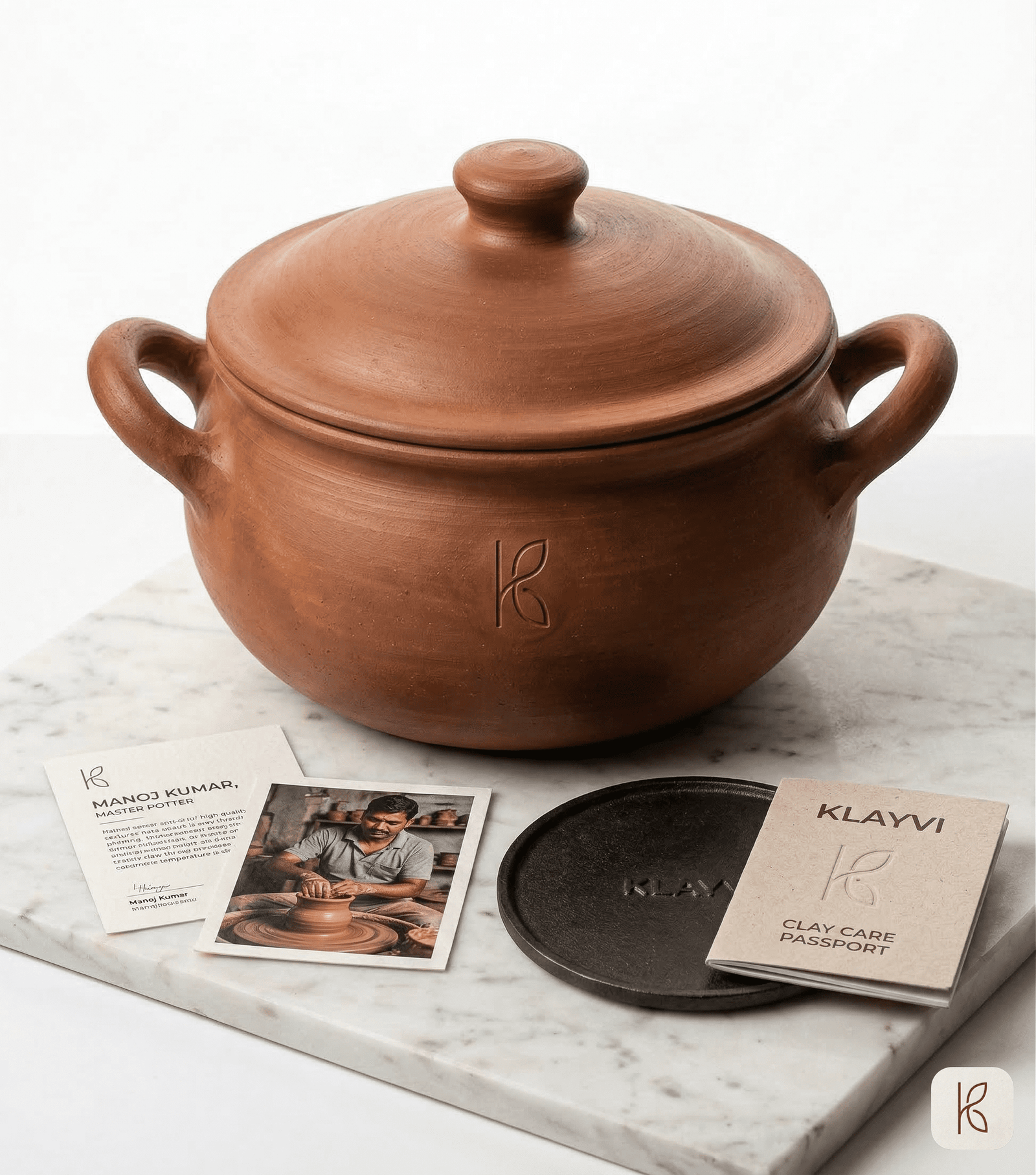
- Bio-Active Patila 1.5L (pre-seasoned)
- Steel induction adapter disc
- Artisan provenance card
- Clay Care Passport (with DO NOT HEAT EMPTY instruction prominently featured)
- Batch QR card
Frequently Asked Questions
Q: Why is “DO NOT HEAT EMPTY” engraved on the base?
An empty clay vessel on high heat can reach surface temperatures that create extreme temperature gradients across the walls. Without liquid to moderate the interior temperature, the outer surface heats far faster than the inner — producing stress that can cause cracking. Always add liquid before placing on flame. This applies to all clay cookware but is most important for the patila, which has a thicker, wider base that can get very hot very quickly.
Q: Can I boil milk in the clay patila?
Yes — and it’s particularly good for it. Milk at high temperatures in aluminium degchis can develop a metallic undertone, especially when milk proteins scorch on aluminium’s reactive surface. The clay patila’s slightly smoother interior and non-reactive surface prevents this. The clay chai sauce pan (KL-CK-016) is specifically designed for this use case; the patila works for larger milk quantities. My lentils are taking longer to cook in clay than in my pressure cooker. Yes. The patila cooks dal at atmospheric pressure, not the 1.2–1.5 bar of a pressure cooker. Cook times will be 40–60% longer than a pressure cooker. The texture result is different — pressure-cooked dal is more uniform; clay-boiled dal retains more individual lentil texture. Different results, not worse results.
Q: Can I use the patila for making paneer (curdling milk)?
Yes. The patila’s capacity is right for a 1.5L milk batch (which yields approximately 250–300g paneer). The clay surface does not react with the curdling agents (lemon juice or vinegar) and the gentle heat distribution prevents scorching at the base during the curdling process.
Q: Is the patila suitable for making bone broth?
For short broths (2–3 hours), yes. For very long broths (8–16 hours), use the Slow Cooker (KL-CK-024/025) — it is specifically designed for extended heat exposure. The patila’s straight sides and thinner walls are less suited to very long cooking sessions than the slow cooker’s round-bellied, heavy-walled form.
Q: The exterior of my patila has turned darker at the base. Is that normal?
Yes. The base exterior darkens from flame exposure — carbon deposits and the clay’s natural response to repeated thermal cycling. This is normal and doesn’t affect performance or safety. Some customers call it “seasoning the outside.” It is essentially that.
Related products
-
Out of Stock

-
Out of Stock
-
Out of Stock

Reviews
There are no reviews yet.