
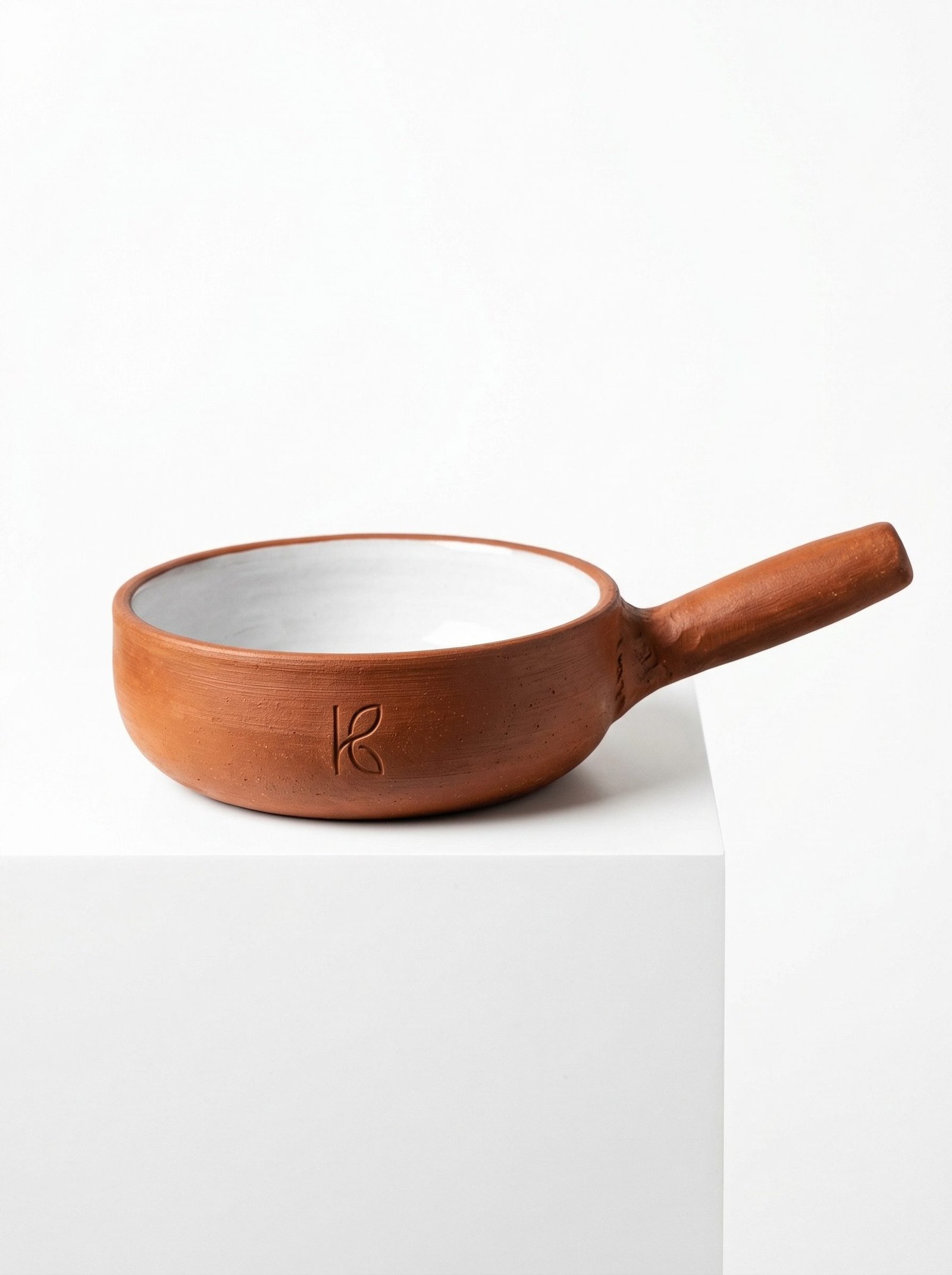
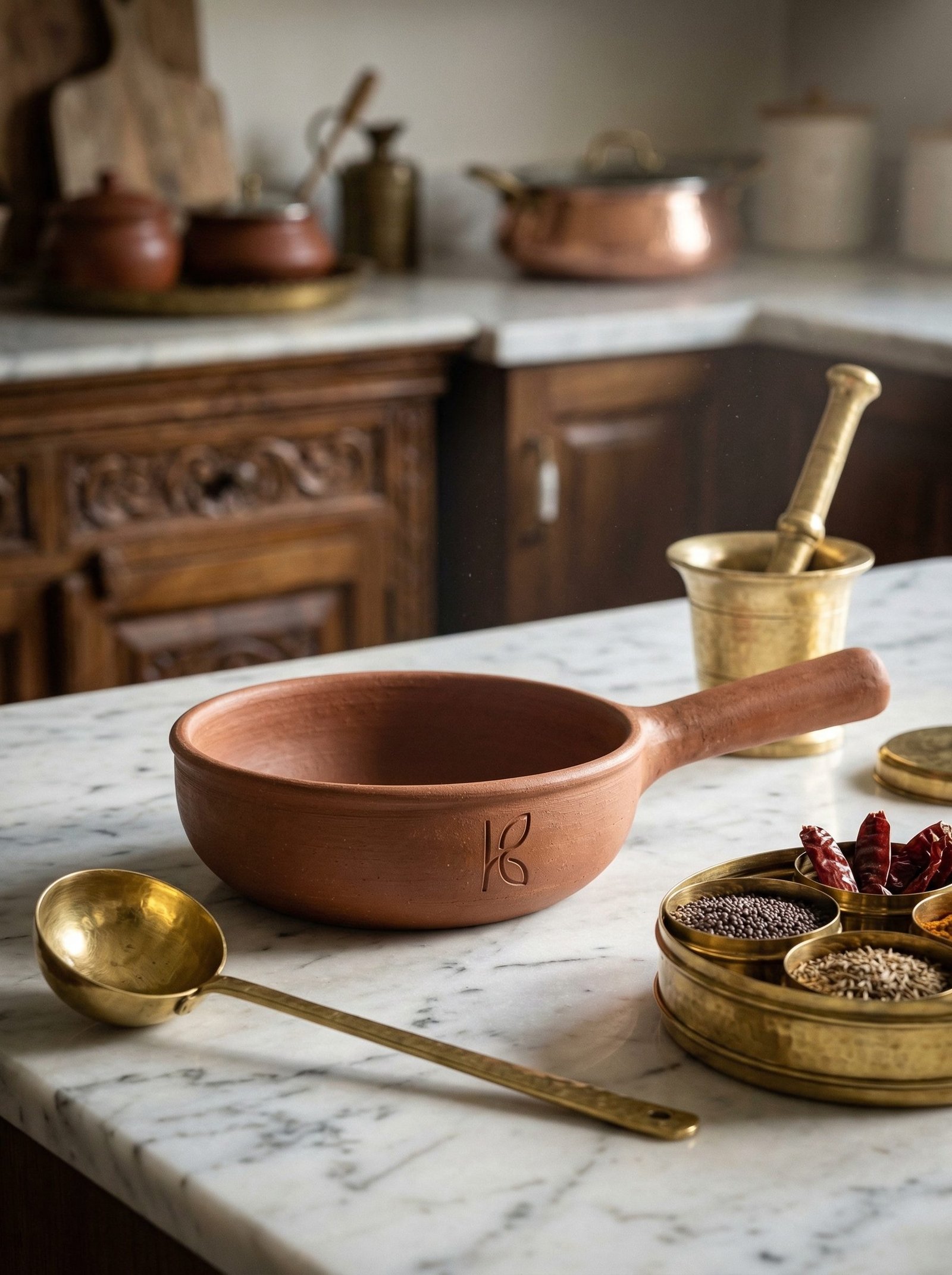
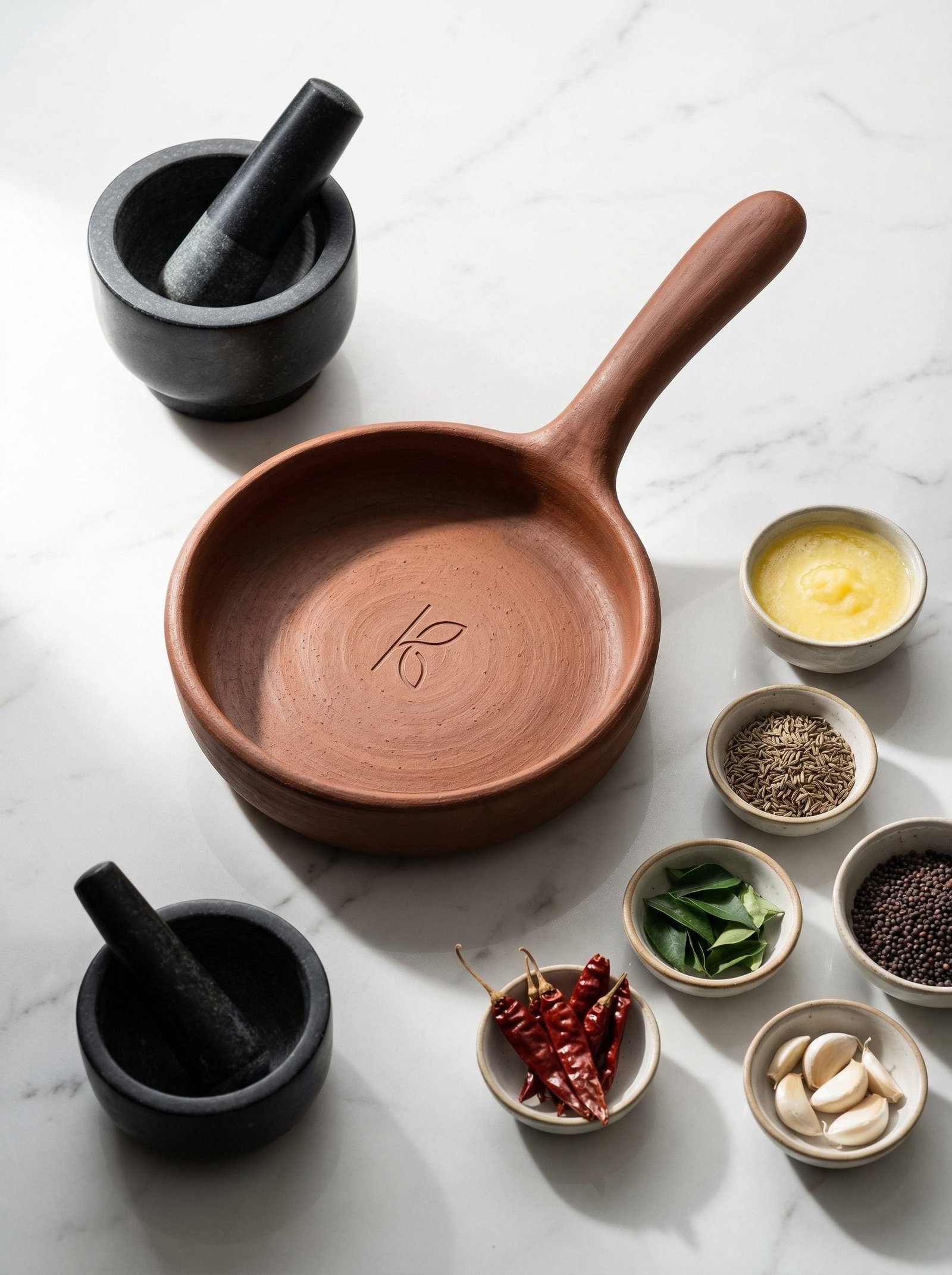
Bio-Active Tadka Pan – Medium
Out of StockWhen the tadka needs to feed more than two. And do more than mustard
Terracotta Clay · 250 ml · SKU: KL-CK-023
₹399.00
| Material | Terracotta Clay |
|---|---|
| Size / Capacity | 250 ml |
| Induction Ready | YES |
| XRF Tested | NO |
| Sub-Category | Tadka Pan |
When the tadka needs to feed more than two. And do more than mustard
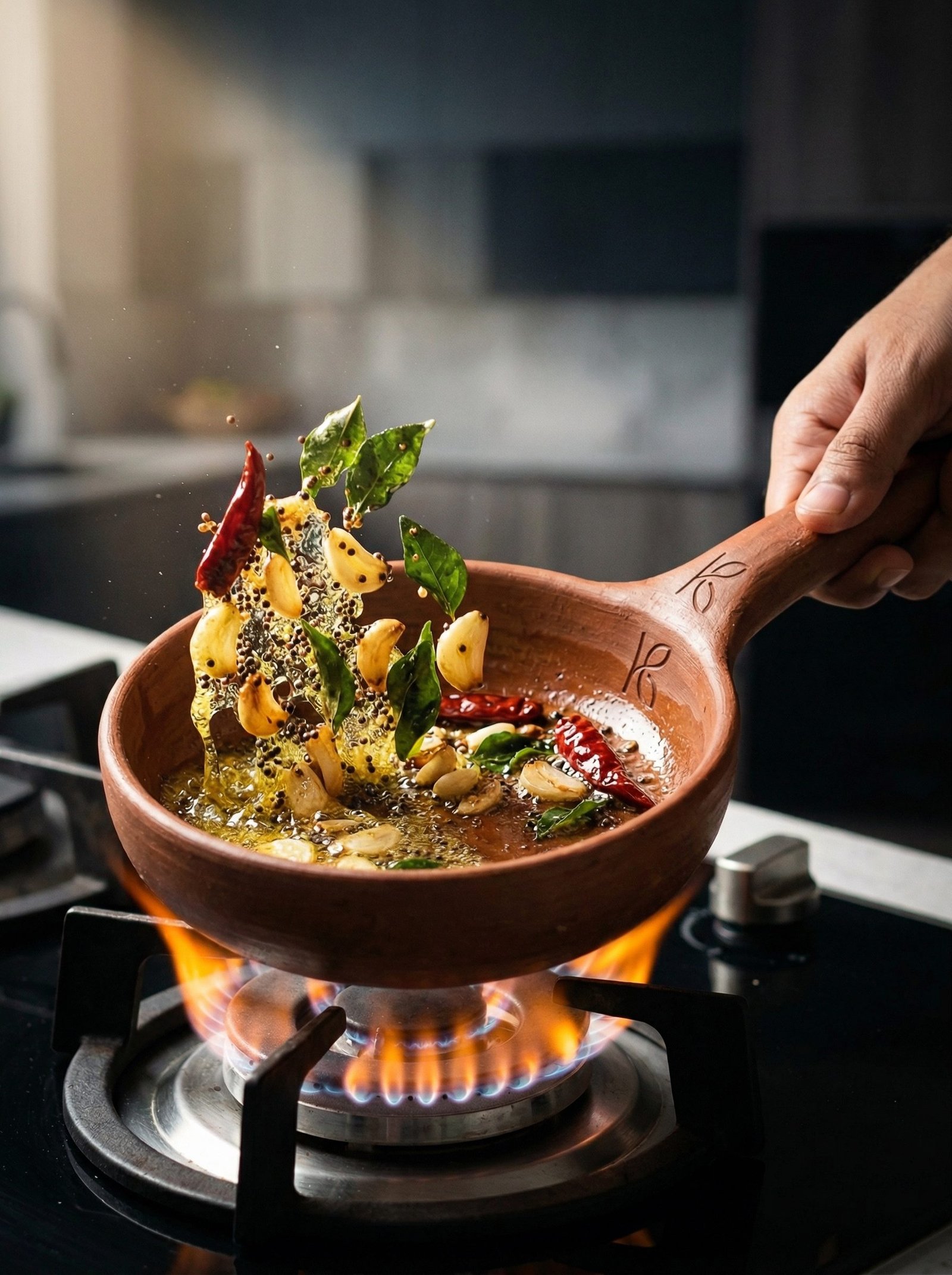
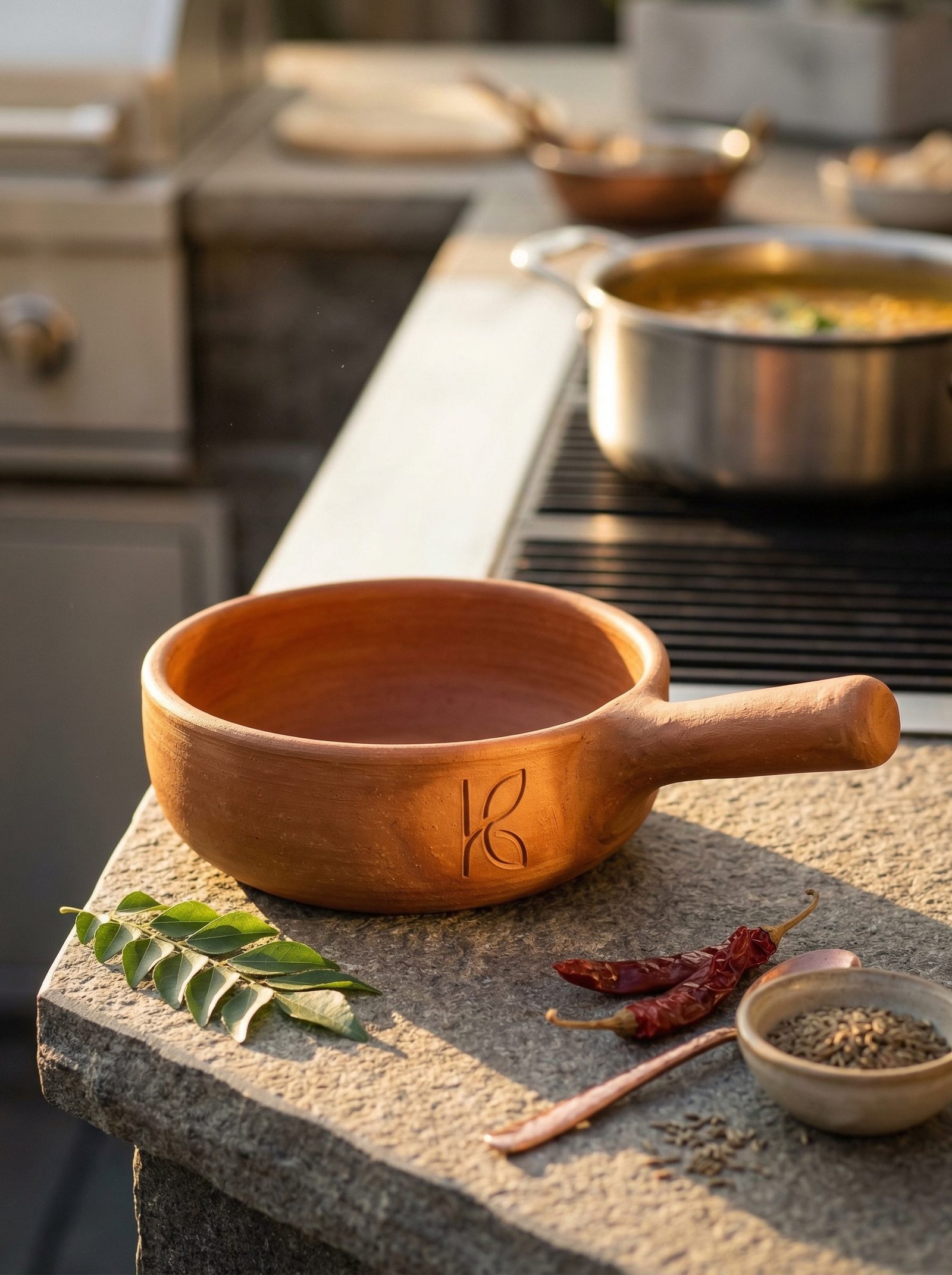
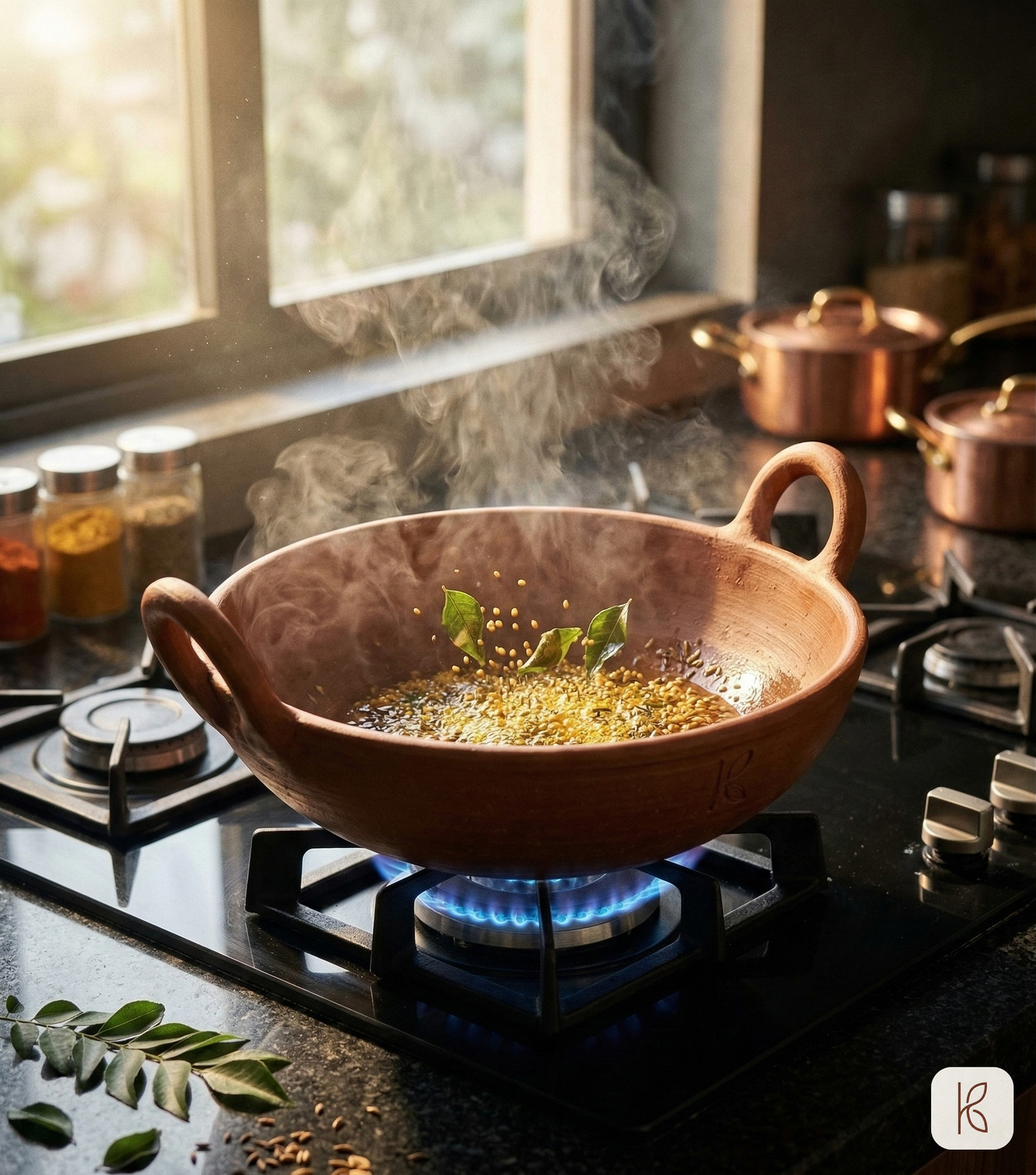
seeds. The 250ml tadka pan for household cooking where the 150ml is consistently not enough. Larger tadka for a full 2–3L kadhai of dal. Tadka with more ingredients simultaneously: curry leaves, dried chillies, hing, sliced garlic, mustard and cumin together. Or a wet tadka where fresh tomatoes or onions are briefly cooked in hot oil before combining. 250ml gives you room to do all of this correctly.
Key Features & Benefits
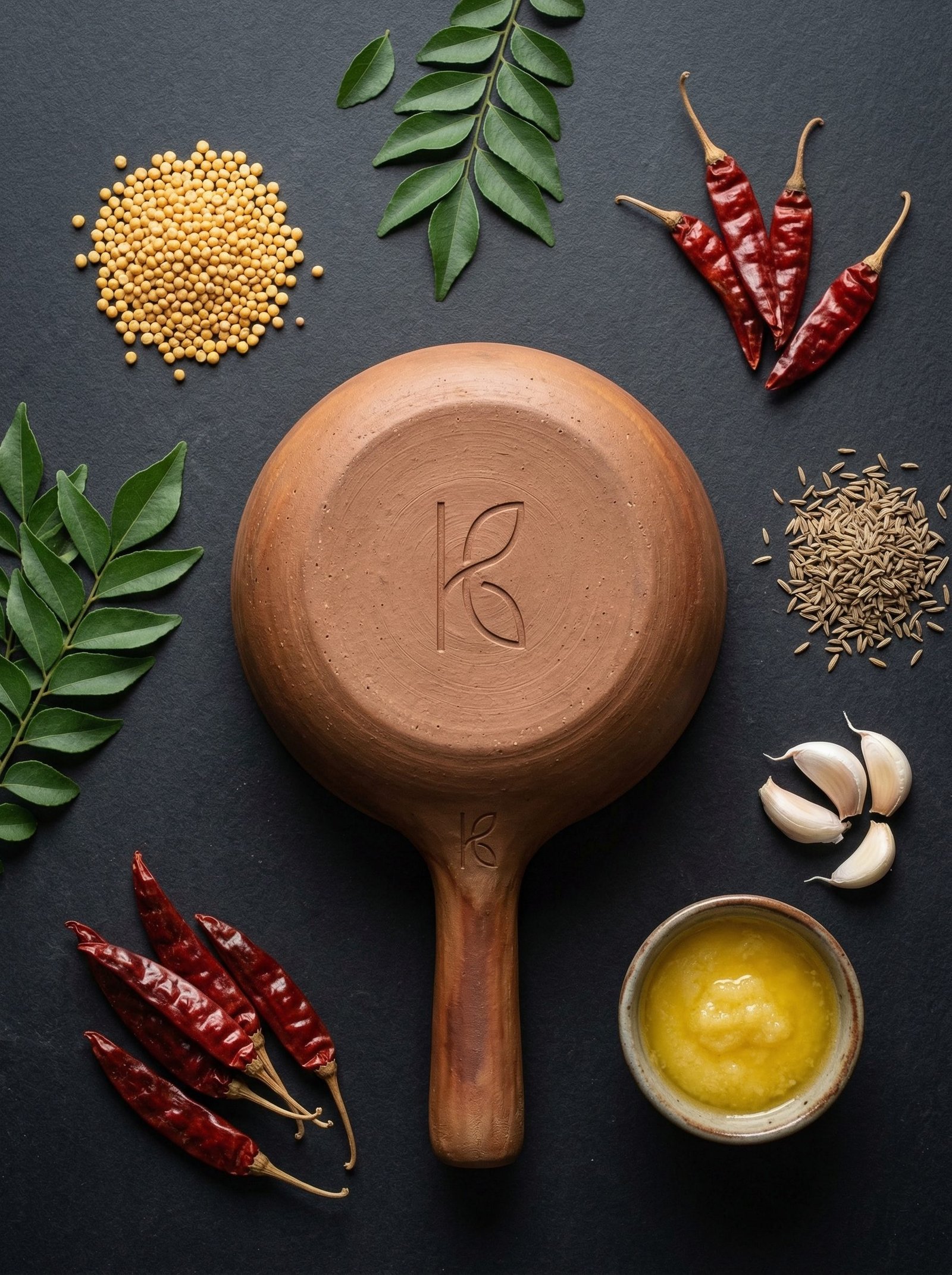
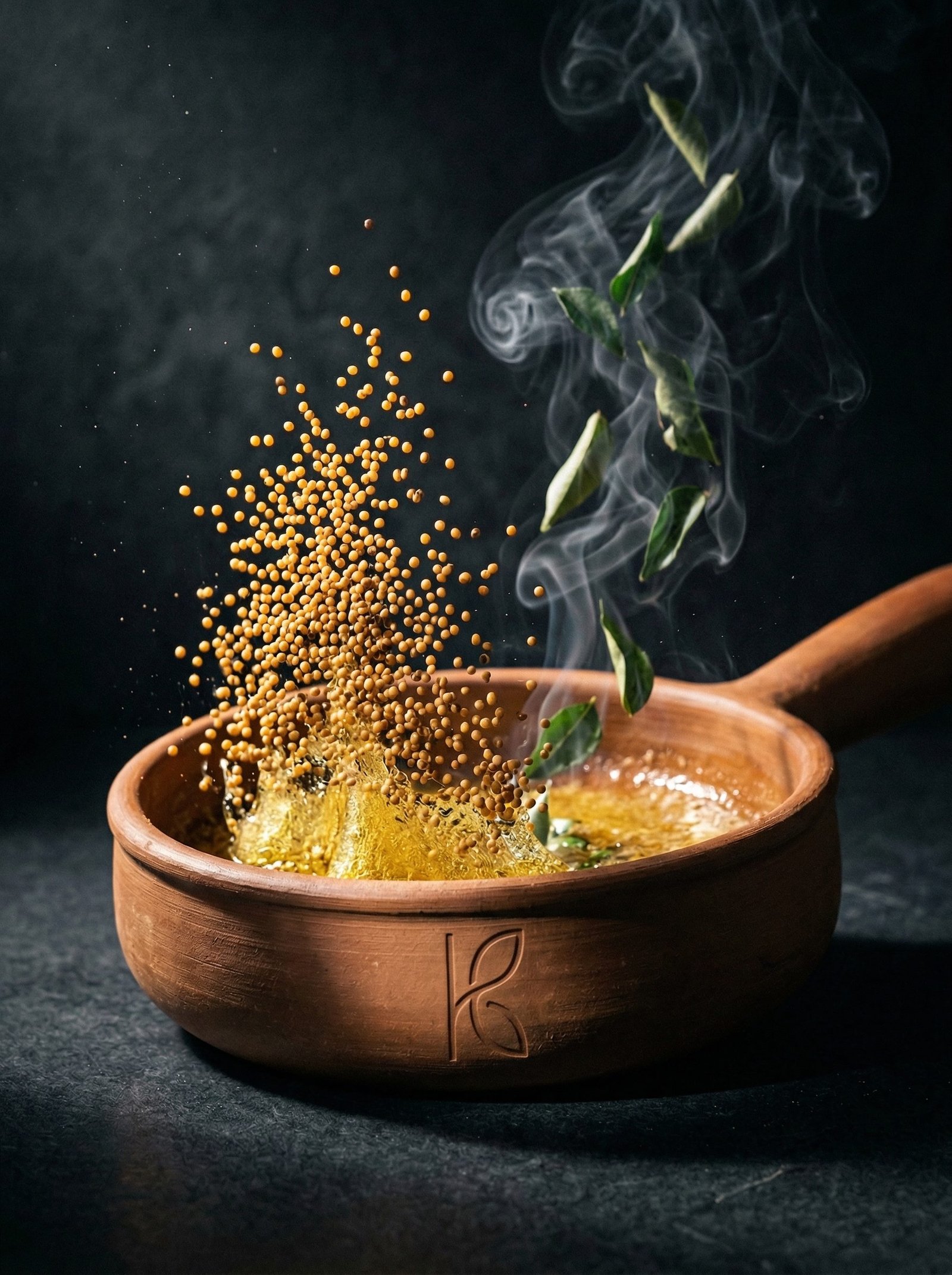
- Room for the Complete Tadka: At 250ml, you can execute a full 7-ingredient tadka: ghee, mustard seeds, cumin, dried red chilli, curry leaves, hing, and sliced garlic — all simultaneously, with space for the spices to move and pop without jumping out of the pan.
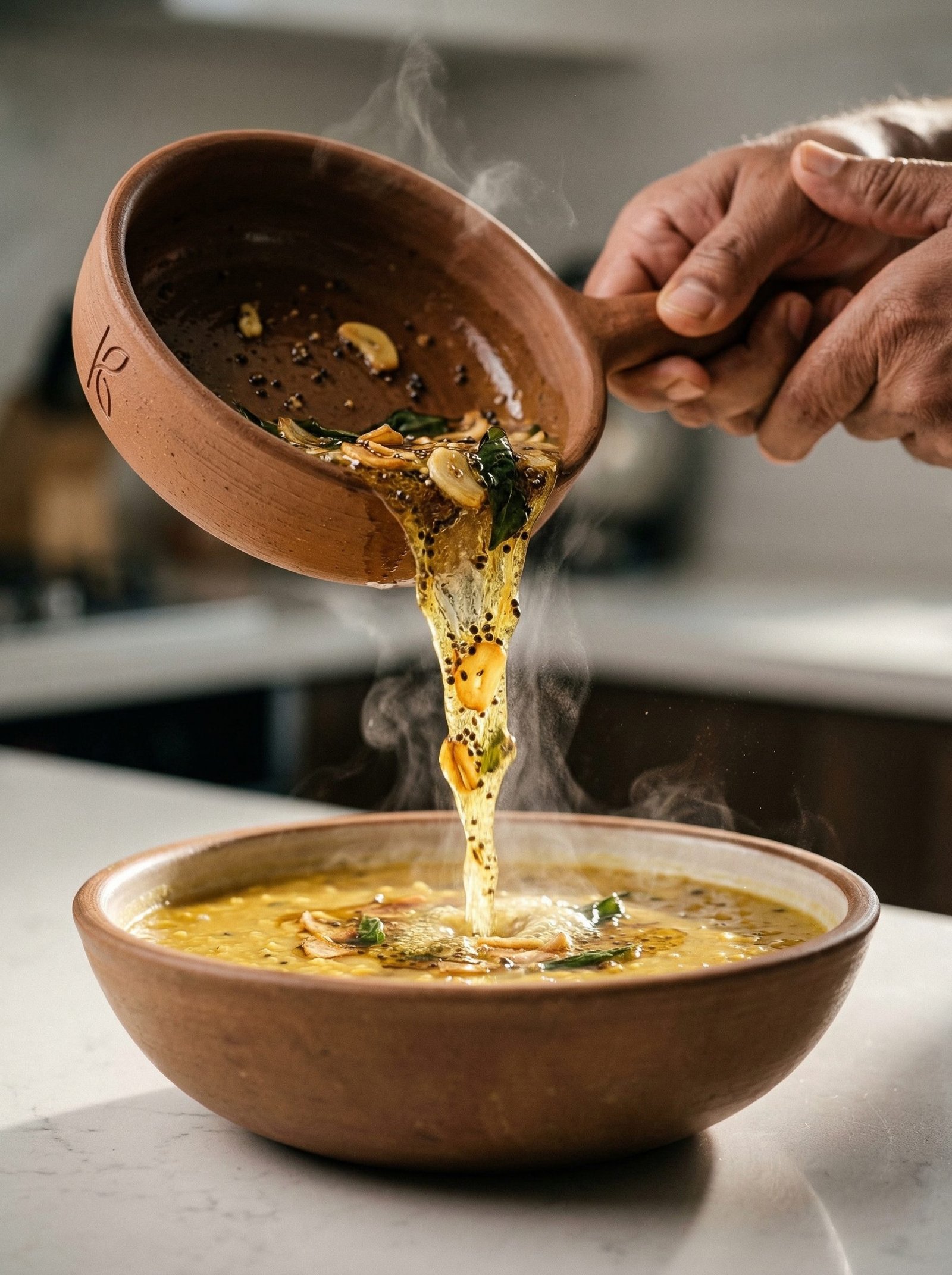
- Wet Tadka Capable: Fresh tomatoes, onions, or green chillies briefly cooked in hot oil before combining with the main dish — the 150ml cannot accommodate this without overflow risk. The 250ml handles it comfortably.
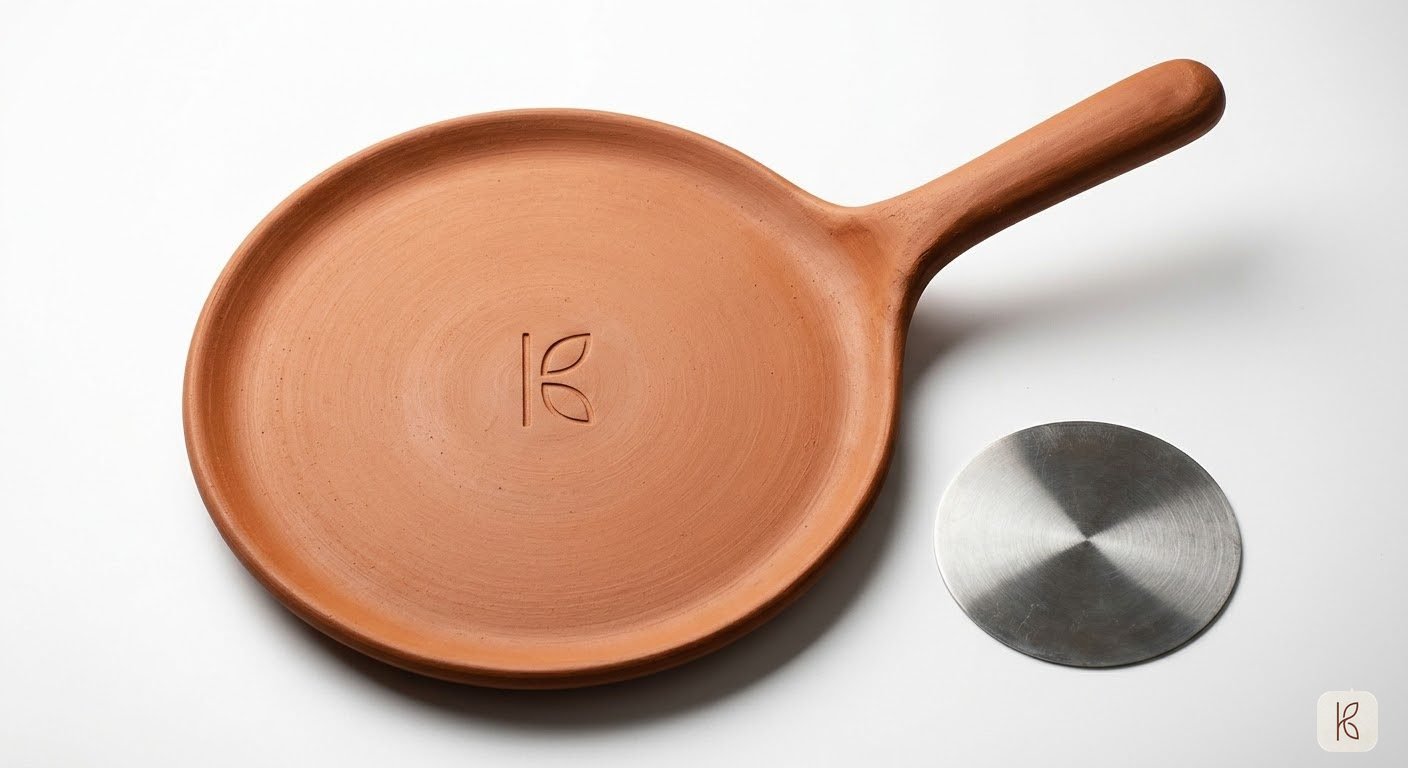
- Longer Handle (22cm): The heavier 250ml vessel at full temperature with a tablespoon of ghee needs more leverage for confident pouring. The 22cm handle (vs 18cm on the 150ml) provides this.
- Zero Toxic Coating: No PTFE at tadka temperatures. No compromise.
- XRF Certified: Batch QR on handle.
- Pre-Seasoned: Three flaxseed oil cycles at 200°C.
About the Material
The 250ml tadka pan follows the same chamotte-reinforced clay body as the 150ml, with proportionally thicker walls (4.5mm vs 4mm) to support the slightly larger vessel diameter without compromising structural integrity under repeated high-heat cycling. The additional 100ml of the 250ml (versus 150ml) creates a meaningfully different cooking environment for complex tadkas. At 150ml, a 7-ingredient tadka is crowded. At 250ml, the same tadka has room for each ingredient to contact the hot fat surface directly rather than being pushed aside by other ingredients.
The Science
Tadka (tempering) is a fat-extraction process: the fat-soluble aromatic compounds in whole spices are dissolved into the cooking fat at high temperature. The efficiency of this extraction depends on the surface area of spice that contacts the hot fat. A crowded 150ml pan gives less contact per seed; a 250ml pan gives each seed proper fat contact. The resulting tadka has a more complete flavour extraction.
Safety & Certification Standards
| XRF Analysis — Clay Source | Heavy metal screening on raw clay before production begins |
| ICP-OES — Finished Product | Parts-per-billion accuracy. Actual migration into food simulants at cooking temperatures |
| NABL-Accredited Laboratory | Internationally recognised test facility |
| FSSAI Food Contact Compliance | Meets India’s legal food safety standards for cookware |
| Per-Batch QR Report | Your batch. Your numbers. Published before dispatch. Scan and read it yourself. |
Lab Test Results
| Compound | Klayvi Result | FSSAI Safe Limit |
|---|---|---|
| Lead (Pb) | ≤ 2.1 ppm | 90 ppm |
| Cadmium (Cd) | ≤ 0.3 ppm | 0.5 ppm |
| Arsenic (As) | ≤ 0.4 ppm | 2.0 ppm |
| Mercury (Hg) | Not detected | 0.5 ppm |
| PTFE / PFOA / PFAS | Not present | Zero tolerance |
Caring for Your Klayvi
| 1 — First Use | Rinse with plain water. Cook something water-based for first 2–3 uses. |
| 2 — Daily Clean | Klayvi Wash Care (pH 6–8) or sisal scrubber with warm water. Never standard dish soap — its pH 9–11 strips the seasoning polymer layer. |
| 3 — After Wash | Dry on low flame for 2 minutes. Never store damp. |
| 4 — Monthly | Apply 4–5 drops of cold-pressed flaxseed oil. Heat on medium-low until just smoking at edges (~4 min). Cool and wipe. |
| 5 — Never | Dishwasher · Microwave · Overnight soaking · Chemical detergents · Cold water on a hot vessel |
What’s in the Box
- Bio-Active Tadka Pan 250ml (pre-seasoned)
- Artisan provenance card
- Clay Care Passport
- Batch QR card
Frequently Asked Questions
Q: What is a “wet tadka” and when do I use the 250ml for it?
A wet tadka involves cooking fresh aromatics (tomato, onion, garlic, green chilli) briefly in hot oil before combining with the main dish. This produces a different flavour profile from a dry tadka — rounder, less sharp, more integrated. The 250ml has enough depth and width to cook 2–3 tablespoons of chopped tomatoes or onion without them immediately burning from contact with the pan sides.
Q: Can I use the 250ml for mustard oil tadka?
Yes. Mustard oil tadka is common in Bengali and North Indian cooking. Heat the mustard oil until it just begins to smoke (the characteristic smoking point that denotes readiness) — the 250ml pan’s even heat makes this smoking point more uniform than in a metal pan. Add spices immediately after the initial smoke.
Q: My curry leaves are burning before the mustard seeds pop. What is happening?
Curry leaves burn faster than mustard seeds. Add the curry leaves 10–15 seconds after the mustard seeds have already popped, not simultaneously. The clay pan’s even heat makes this timing more consistent because the temperature distribution is more uniform — the seeds pop at a predictable moment rather than at different times across the pan.
Q: Can I make the tempering oil for pasta or non-Indian dishes in this?
Yes. The clay tadka pan is a precision tempering vessel for any cuisine. Garlic confit in olive oil. Chilli oil. Herb-infused butter. The clay’s even heat and zero-reactivity make it ideal for any temperature-sensitive fat infusion.
Q: How do I clean the tadka pan after a garlic tadka?
Let it cool completely. Wipe out excess oil with a paper cloth while still warm. Then: a pinch of rock salt, a sisal scrubber, warm water. The garlic residue on clay releases easily. For persistent garlic aroma in the clay, sun-dry the pan for 1–2 hours — UV exposure breaks down residual organic compounds.
Q: Does the 250ml tadka pan come with an induction adapter?
No — for the same reason as the 150ml. The 250ml base diameter (approximately 11cm) is too small for efficient heat transfer from a standard 12cm induction disc. For induction tadka, we recommend making the tadka in any induction-compatible small pan and pouring it into the clay tadka pan to serve over the dish.
Related products
-
Out of Stock

-
Out of Stock
-
Out of Stock

Reviews
There are no reviews yet.