
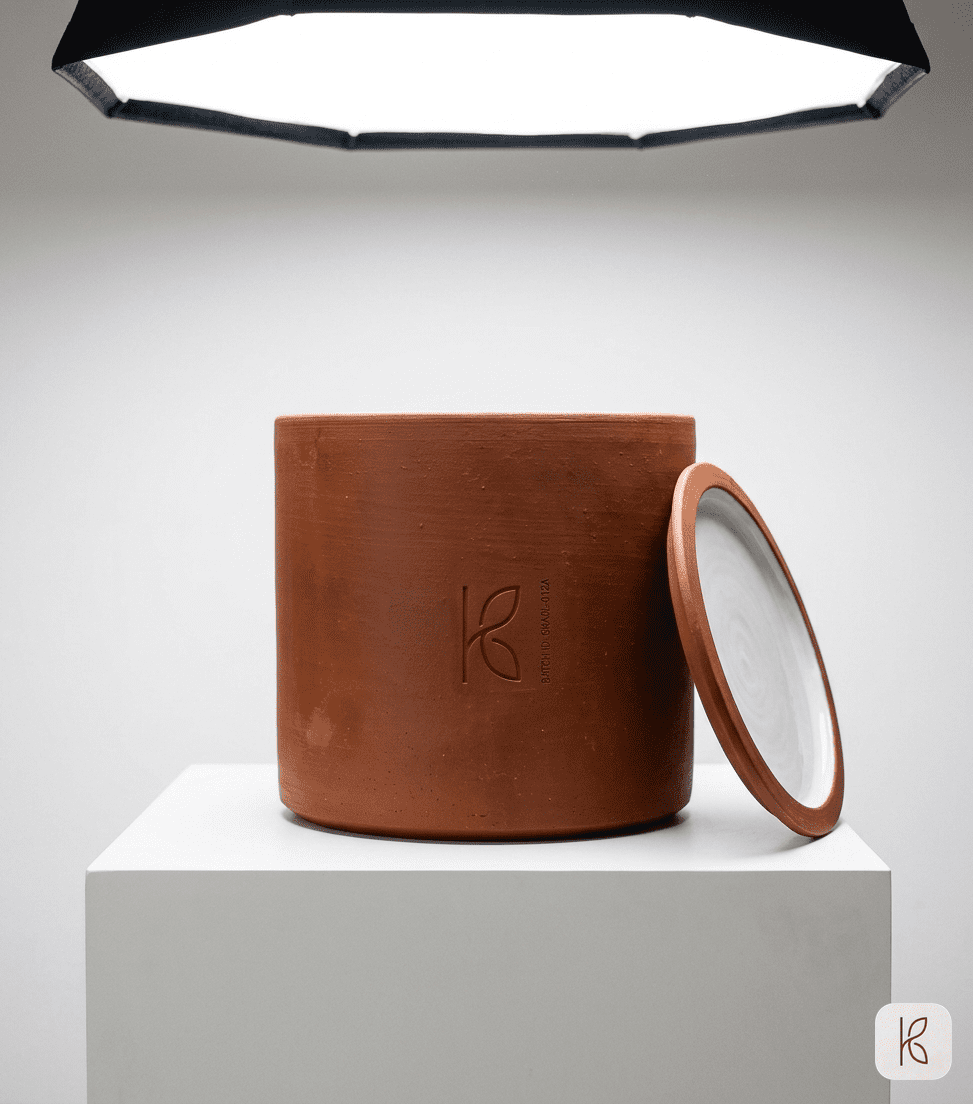
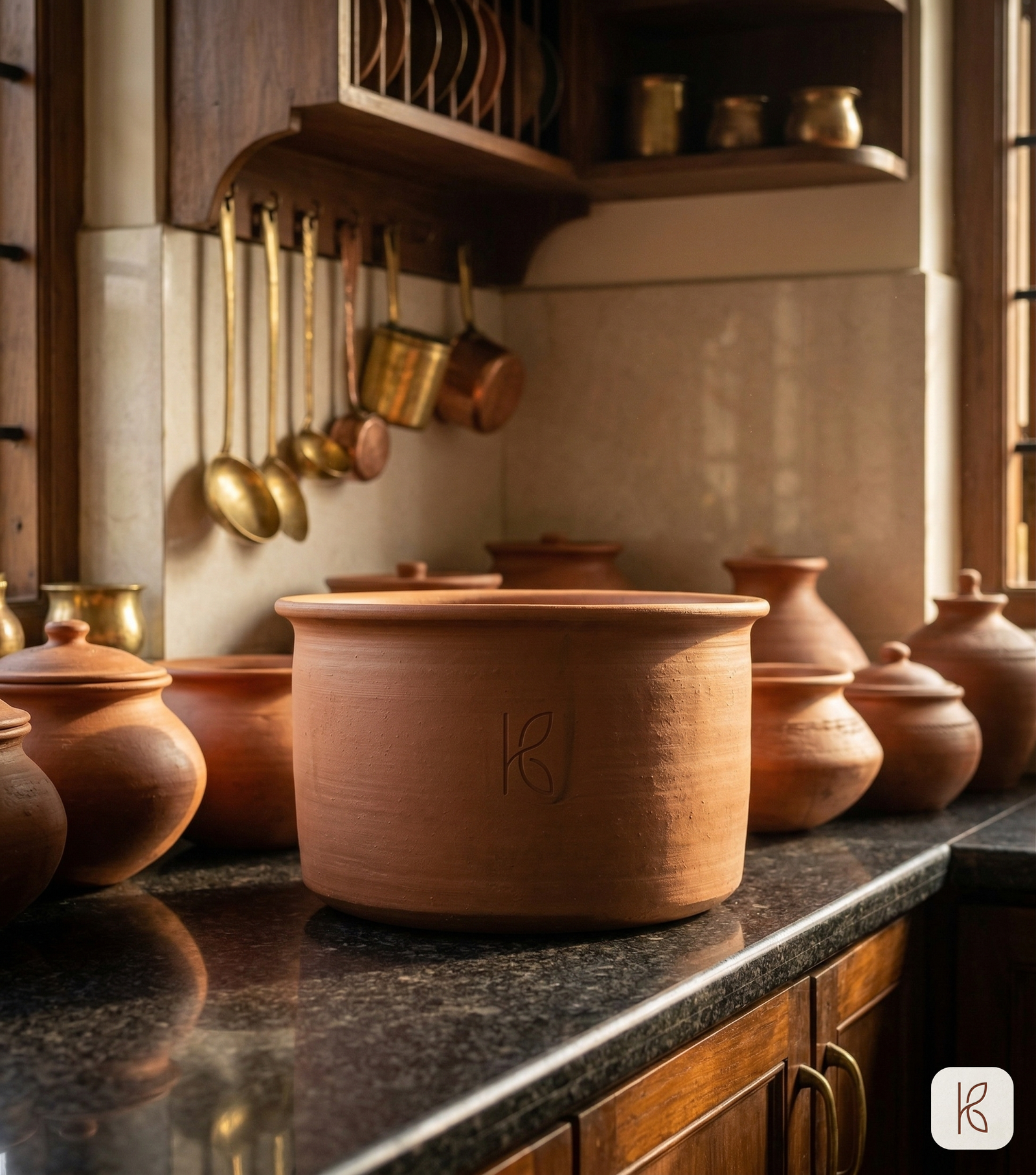
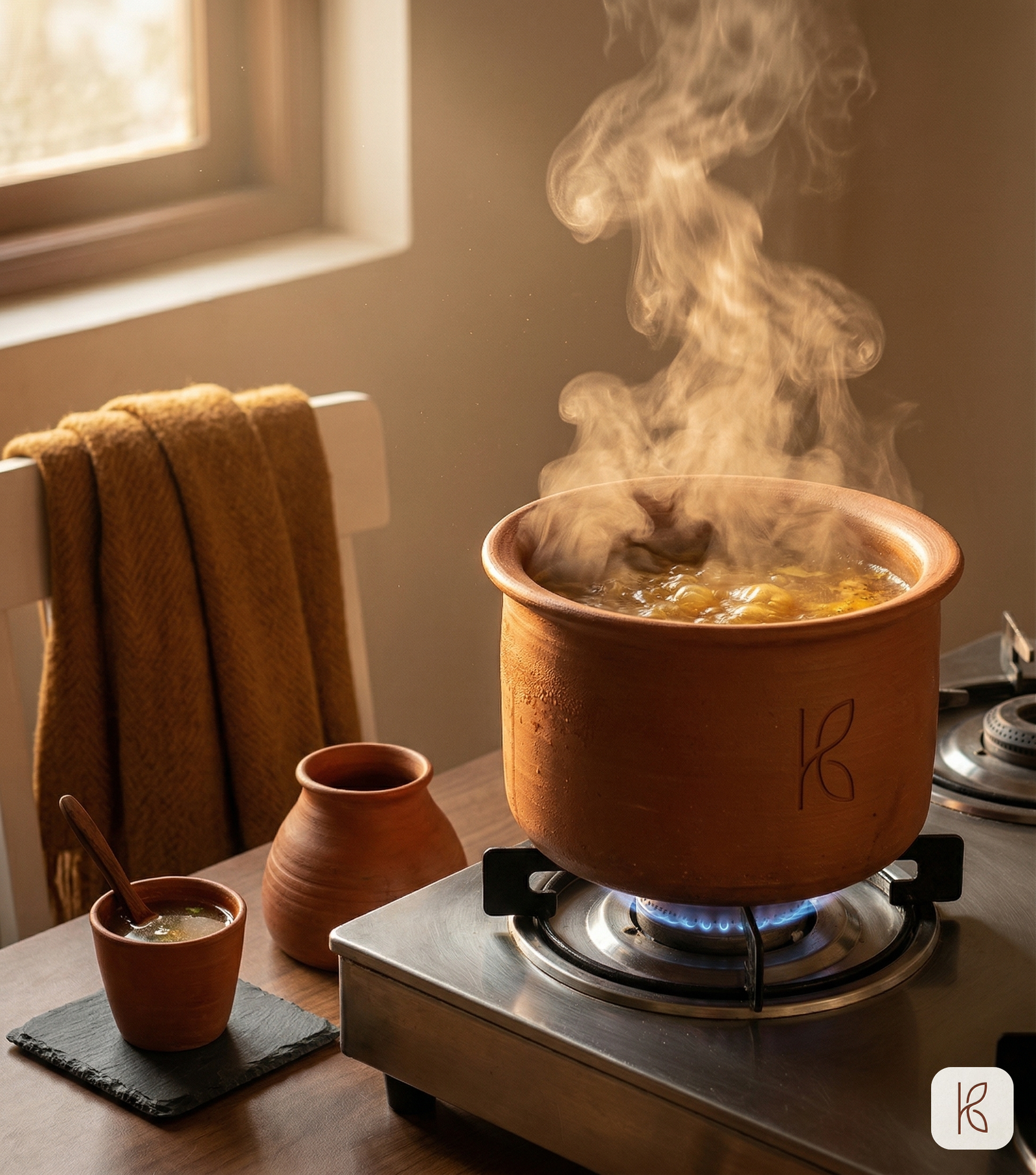
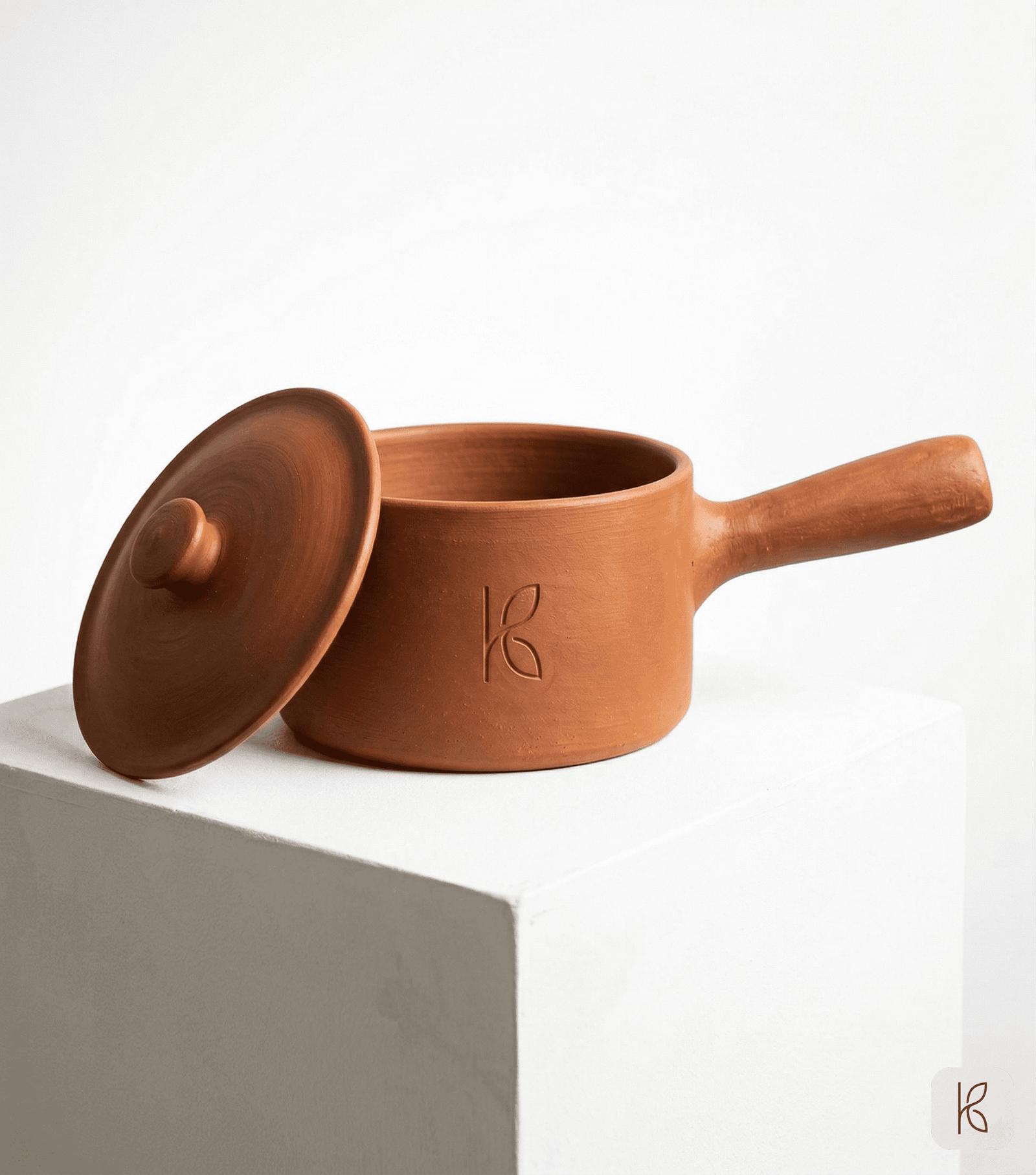
Bio-Active Patila – 3 L
Out of StockThe family boiling pot. Because 1.5L is never enough on Sunday.
Terracotta Clay · 3 Litres · SKU: KL-CK-014
₹1,299.00
| Material | Terracotta Clay |
|---|---|
| Size / Capacity | 3 Litres |
| Induction Ready | YES |
| XRF Tested | YES |
| Sub-Category | Patila |
The family boiling pot. Because 1.5L is never enough on Sunday.
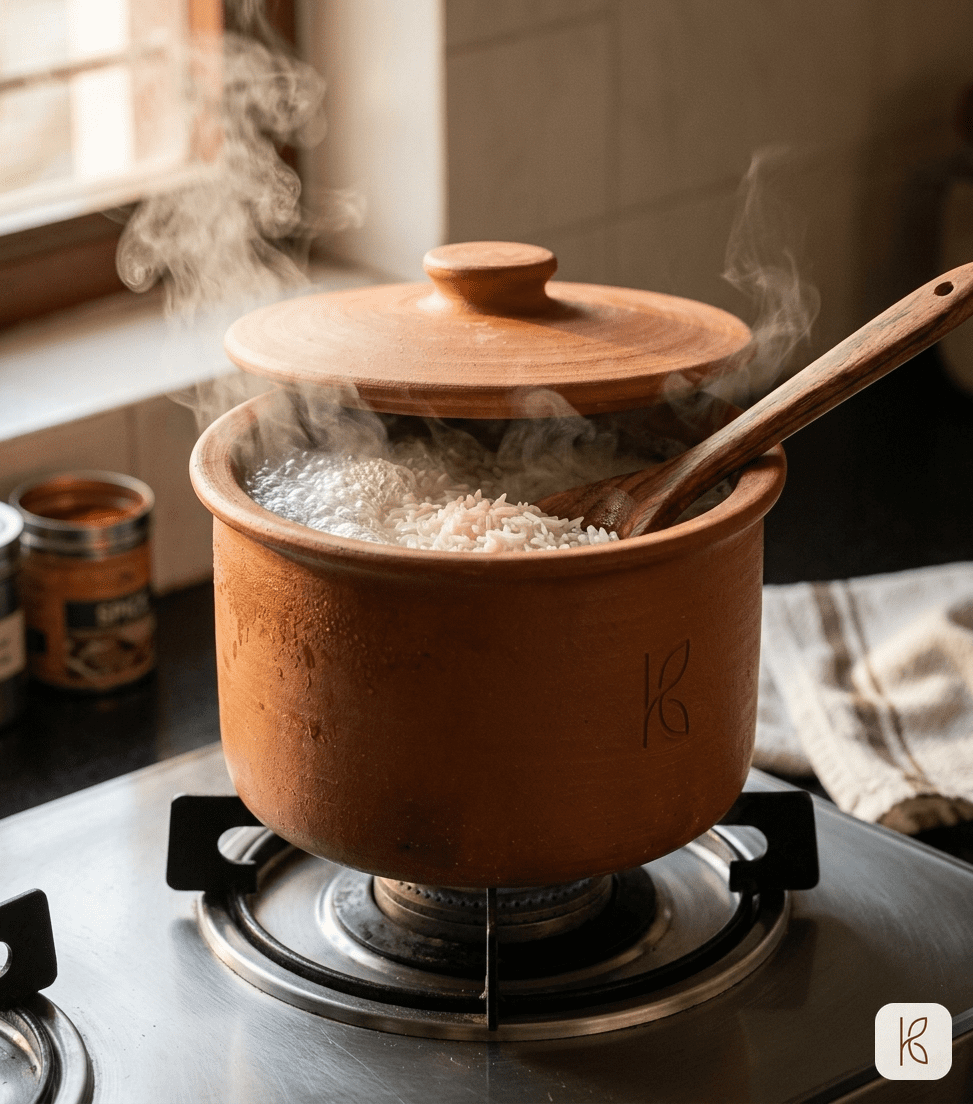
3 litres of straight-sided clay for family-scale boiling: rice for 4–6 people, full dal batches, soup stocks. 8mm reinforced base. XRF + ICP-OES certified. Pre-seasoned. “DO NOT HEAT EMPTY” on base. The replacement for the aluminium degchi that has been in your kitchen for years and quietly contributing aluminium to every acidic dish you cook.
Key Features & Benefits
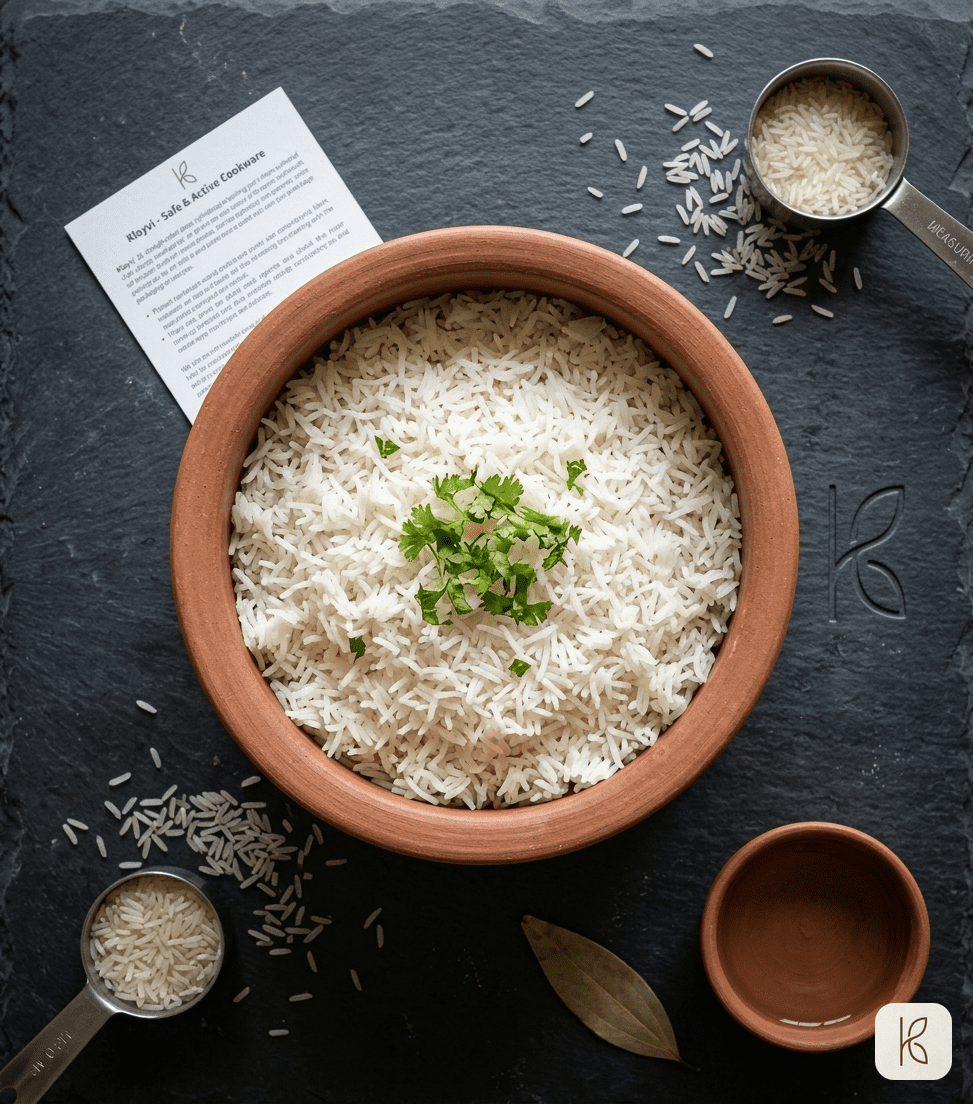
- Family Scale: 3L serves 4–6 people for rice or dal. One full cook, enough for the whole family, with the clay’s mineral contribution improving every batch.
- 8mm Base — Critical at 3L: At 3 litres, the convection currents in boiling liquid are stronger. The 8mm base is more important here than at 1.5L — it distributes base-centre heat laterally across the entire base before it reaches the food.
- Non-Reactive Throughout: All the same alkaline buffering properties as the 1.5L — no aluminium migration, no reactive surface chemistry with acidic food.
- XRF + ICP-OES Certified: Batch QR on base.
- Gas + Induction Ready: Induction adapter disc included.
- “DO NOT HEAT EMPTY” on Base: Engraved. Not on a sticker. Permanent.
About the Material
The 3L patila is the right choice for the household that cooks rice or dal daily at family scale. At 3L, the clay walls are 6mm — slightly thicker than the 1.5L — which means better heat retention for long-simmered dal (the kind that cooks for 45 minutes to an hour) and better stability for a full 3L of boiling liquid.
The Science
A 3L batch of dal cooked in clay has a different nutritional profile than the same recipe cooked in aluminium. The alkaline calcium, magnesium, and potassium oxides from the clay surface ionise into the acidic lentil water during cooking, raising the pH slightly and improving the bioavailability of the lentils’ iron content. The effect is most pronounced in dal that simmers for 30+ minutes — long enough for meaningful mineral ion exchange.
Safety & Certification Standards
| XRF Analysis — Clay Source | Heavy metal screening on raw clay before production begins |
| ICP-OES — Finished Product | Parts-per-billion accuracy. Actual migration into food simulants tested |
| NABL-Accredited Laboratory | Internationally recognised test facility |
| FSSAI Food Contact Compliance | Meets India’s legal food safety standards for cookware |
| Per-Batch QR Report | Your batch. Your numbers. Published before dispatch. Scan and read it yourself. |
Lab Test Results
| Compound | Klayvi Result | FSSAI Safe Limit |
|---|---|---|
| Lead (Pb) | ≤ 2.1 ppm | 90 ppm |
| Cadmium (Cd) | ≤ 0.3 ppm | 0.5 ppm |
| Arsenic (As) | ≤ 0.4 ppm | 2.0 ppm |
| Mercury (Hg) | Not detected | 0.5 ppm |
| PTFE / PFOA / PFAS | Not present | Zero tolerance |
Caring for Your Klayvi
| 1 — First Use | Rinse with plain water. Cook something water-based (dal, rice water) for first 2–3 uses. |
| 2 — Daily Clean | Use Klayvi Wash Care (pH 6–8) or a sisal scrubber with warm water. Never standard dish soap — its pH 9–11 strips the seasoning. |
| 3 — After Wash | Dry completely on low flame for 2 minutes. Never store damp. |
| 4 — Monthly | Apply 4–5 drops of cold-pressed flaxseed oil. Heat on medium-low until it just smokes at the edges (~4 min). Cool. Wipe. |
| 5 — Never | Dishwasher · Microwave · Submerging overnight · Chemical detergents · Cold water on a hot pot |
What’s in the Box
- Bio-Active Patila 3L (pre-seasoned)
- Steel induction adapter disc
- Artisan provenance card
- Clay Care Passport
- Batch QR card
Frequently Asked Questions
Q: How long does family rice take in the clay patila versus a steel pot?
Approximately 20–25% longer. Clay heats more slowly, so the water takes longer to boil — 8–10 minutes vs. 5–6 minutes in steel on medium-high gas. Once boiling, rice cooking time is similar. Plan an extra 5 minutes total. Most users find the result worth the slight wait: rice that is less watery, with more distinct grain separation.
Q: Can I use this for making rasam?
Yes. The 3L is a good size for a family rasam batch. Clay is particularly well-suited for tamarind-based rasam — the alkaline clay surface buffers the tamarind’s acidity, producing a rasam that is tangy but not harsh. Traditional South Indian rasam has always been made in clay for this reason.
Q: The water is taking a very long time to boil. Is something wrong?
Likely not. Clay takes 8–10 minutes to boil water at medium-high flame. If it’s taking longer, check: (1) is the flame at medium-high? (2) is the induction disc properly positioned if using induction? (3) is the pot starting cold from the refrigerator? Cold clay takes longer to heat from below 10°C.
Q: Can I stack this with other clay vessels for storage?
Store the patila separately or place soft cotton muslin between stacked pieces. Clay surfaces are durable against clay contact at room temperature — the risk is chipping at the rim if pieces shift. The muslin pouch included is designed for storage.
Q: Does the clay patila work for making jaggery solutions or sweet preparations?
Yes. Jaggery-based sweet preparations, sugar syrups, and kheer all work in clay. The neutral-to-alkaline clay surface does not caramelise differently from metal for these applications. Monitor sugar-based preparations carefully — they can heat unevenly at the base if not stirred.
Q: What’s the advantage over my steel pressure cooker for dal?
Different use cases, not direct competition. The pressure cooker is faster and more convenient. The clay patila produces a different texture — softer-skinned lentils with more individual grain integrity, and a slightly richer flavour from mineral exchange. Use both: pressure cooker for weekday speed, clay patila for the Sunday dal that deserves time.
Related products
-
Out of Stock

-
Out of Stock
-
Out of Stock

Reviews
There are no reviews yet.