
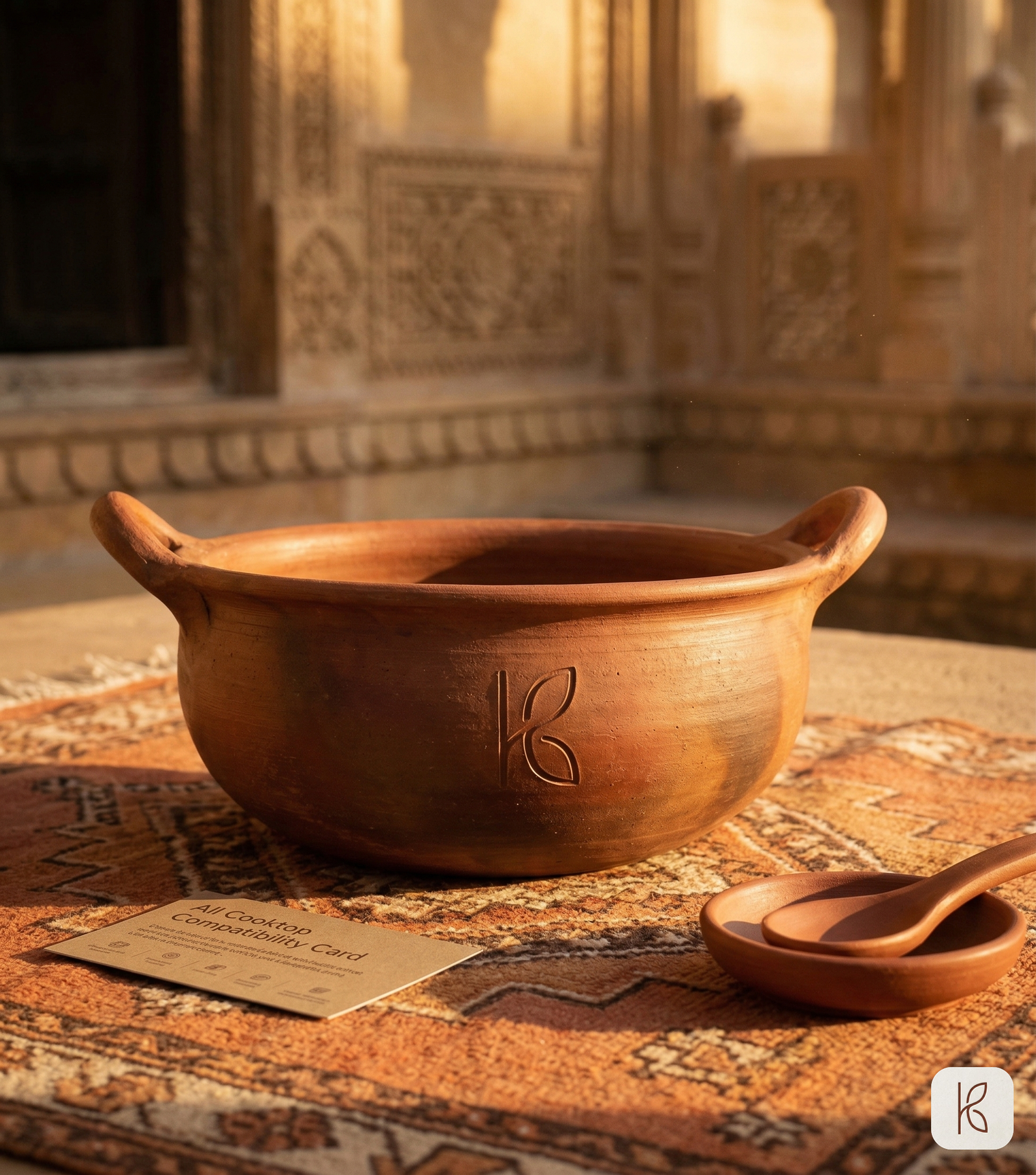
Bio-Active Kadhai – 2 L
Out of StockThe Indian kitchen’s most essential vessel. In the safest material that
Terracotta Clay · 2 Litres · SKU: KL-CK-008
₹1,199.00
| Material | Terracotta Clay |
|---|---|
| Size / Capacity | 2 Litres |
| Induction Ready | YES |
| XRF Tested | YES |
| Sub-Category | Kadhai |
The Indian kitchen’s most essential vessel. In the safest material that
exists. Our highest-demand cookware SKU. At 2 litres, this kadhai covers every method in the Indian kitchen — sabzi, paneer, eggs, stir-frying, tadka, shallow frying. Lab-tested. Pre-seasoned. All-cooktop compatible. The switch from non-stick your household has been delaying.
Key Features & Benefits
- The All-Purpose Size: 2L covers 80% of daily Indian cooking for families of 3–5. Wide enough to stir efficiently, deep enough for liquid dishes, hot enough for proper tadka.
- Zero Toxic Coating: Every cooking method in the Indian kitchen — sabzi, tadka, stir-frying — happens at temperatures where PTFE degrades. This kadhai has no coating to degrade.
- Dual Lab Certified: XRF + ICP-OES. Batch QR on base. Lead: ≤2.1 ppm vs. FSSAI limit of 90 ppm.
- Ra ≤4µm Interior: Genuine non-stick performance builds over the first 10–12 cooking sessions. After that: eggs, paneer, fish — all release cleanly.
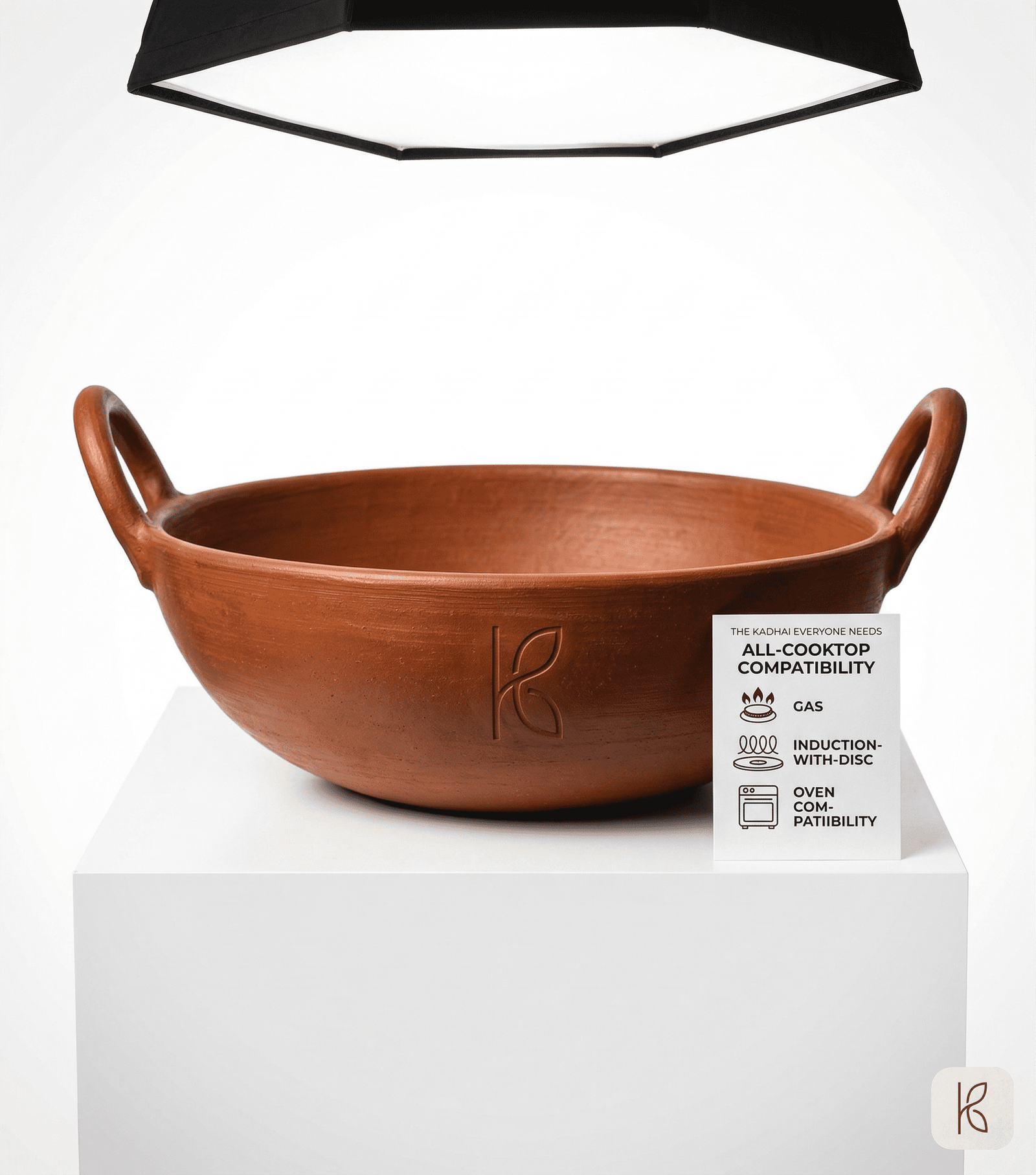
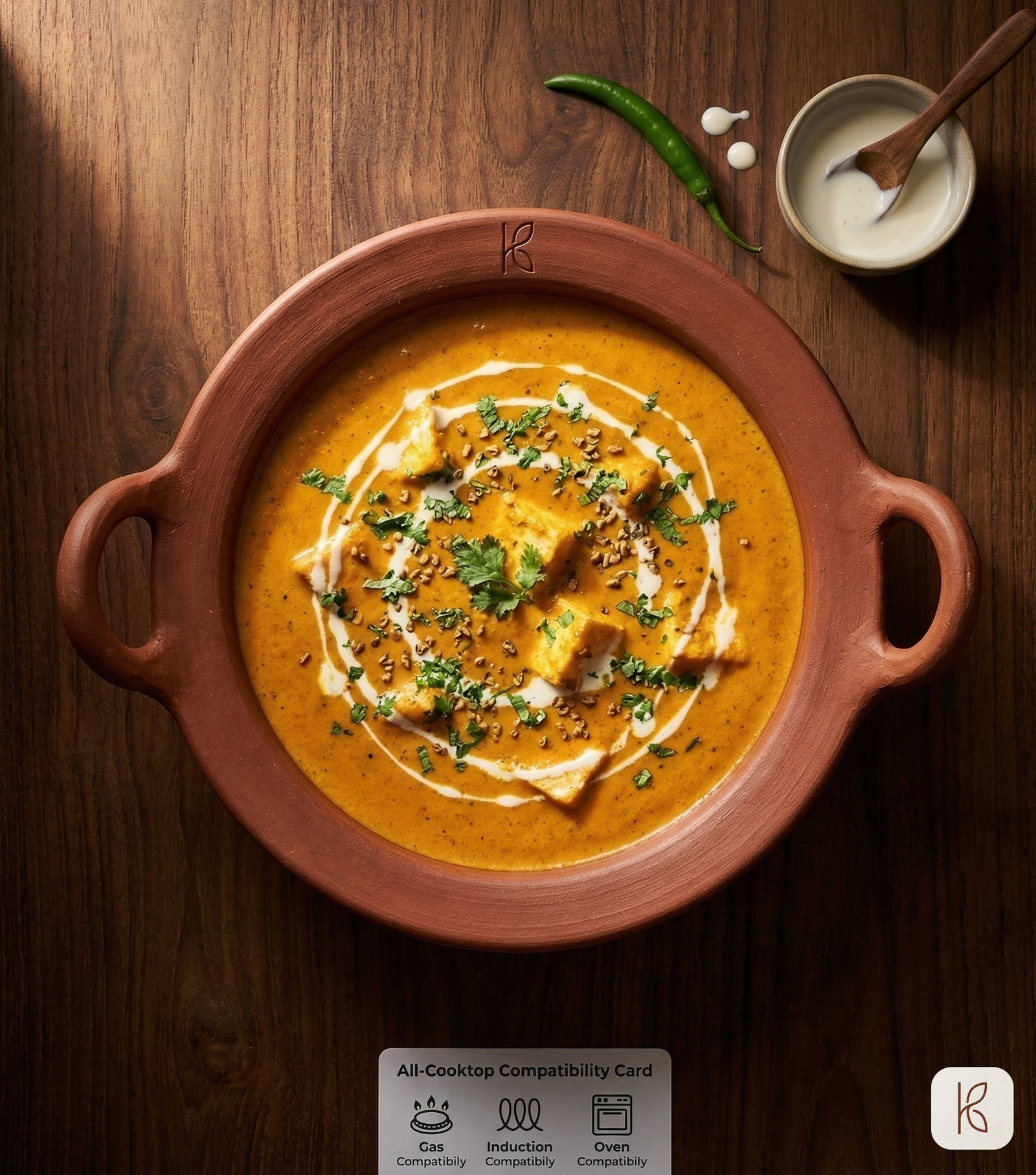
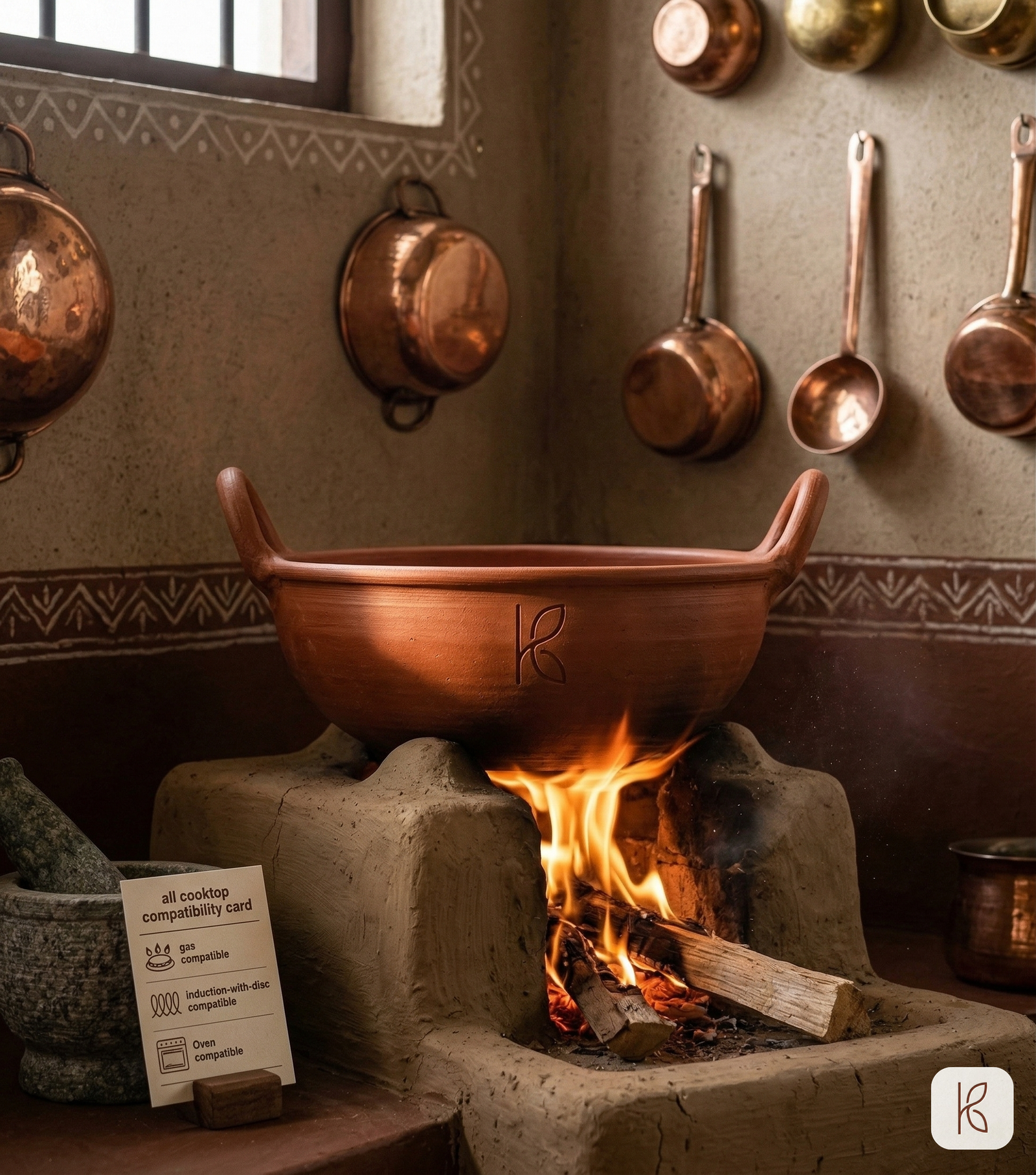
- All Cooktops Compatibility Card: Tested on gas, induction (adapter disc included), cast iron electric hob, and oven up to 250°C. The card lists specific brand compatibility with settings guidance.
- 3-Year Structural Warranty: Manufacturing defects covered. This is not a consumable that wears out — it’s a kitchen investment.
About the Material
At 2 litres, the Standard series walls hit 5mm. This is the point at which the kadhai becomes a genuinely versatile cooking vessel rather than just a sabzi pan. You can start a gravy base in this kadhai, cook it down for 20 minutes, then add protein and continue cooking without transferring — the 2L has the depth for it. The loop handles are sized for a confident two-handed grip at 2L. At full capacity with a gravy dish, the pot weighs approximately 2.5kg — manageable single-handed, better two-handed for controlled movement.
The Science
PFAS chemistry is worth understanding at the product level. PTFE (polytetrafluoroethylene) is the specific polymer used in most non-stick coatings. PFOA was used to manufacture PTFE until bans began in the early 2000s. PFAS is the broader category of “forever chemicals” — so called because they accumulate in biological tissue and do not break down in natural environments. All three are absent from clay. Not in reduced quantities — absent.
Safety & Certification Standards
| XRF Analysis — Clay Source | Heavy metal screening on raw clay before production begins |
| ICP-OES — Finished Product | Parts-per-billion accuracy. Actual migration into food simulants tested |
| NABL-Accredited Laboratory | Internationally recognised test facility |
| FSSAI Food Contact Compliance | Meets India’s legal food safety standards for cookware |
| Per-Batch QR Report | Your batch. Your numbers. Published before dispatch. Scan and read it yourself. |
Lab Test Results
| Compound | Klayvi Result | FSSAI Safe Limit |
|---|---|---|
| Lead (Pb) | ≤ 2.1 ppm | 90 ppm |
| Cadmium (Cd) | ≤ 0.3 ppm | 0.5 ppm |
| Arsenic (As) | ≤ 0.4 ppm | 2.0 ppm |
| Mercury (Hg) | Not detected | 0.5 ppm |
| PTFE / PFOA / PFAS | Not present | Zero tolerance |
Caring for Your Klayvi
| 1 — First Use | Rinse with plain water. Cook something water-based (dal, rice water) for first 2–3 uses. |
| 2 — Daily Clean | Use Klayvi Wash Care (pH 6–8) or a sisal scrubber with warm water. Never standard dish soap — its pH 9–11 strips the seasoning. |
| 3 — After Wash | Dry completely on low flame for 2 minutes. Never store damp. |
| 4 — Monthly | Apply 4–5 drops of cold-pressed flaxseed oil. Heat on medium-low until it just smokes at the edges (~4 min). Cool. Wipe. |
| 5 — Never | Dishwasher · Microwave · Submerging overnight · Chemical detergents · Cold water on a hot pot |
What’s in the Box
- Bio-Active Kadhai 2L (pre-seasoned)
- Steel induction adapter disc (14cm)
- All-cooktop compatibility reference card
- Artisan provenance card
- Clay Care Passport
- Batch QR card
- 3-year warranty card
Frequently Asked Questions
Q: This is my first clay kadhai. What should I cook first?
Aloo sabzi, or any vegetable sabzi in mustard oil. Oil-based cooking in the first 2–3 sessions builds the seasoning fastest. Avoid very acidic dishes (tamarind-heavy, large amounts of tomato) and protein (chicken, paneer) in the first 5 uses.
Q: Can I use the kadhai for biryani?
The kadhai’s wide, open form is not ideal for dum biryani — the steam escapes too easily. For biryani, use the handi series (deep, round-bellied, tight lid). The kadhai is excellent for the initial preparation of biryani masala before transferring to the handi.
Q: I see white residue on the clay exterior after washing. What is it?
That’s mineral deposit — calcium carbonate from hard water, which is common in North Indian tap water. It’s harmless. Wipe with a cloth dampened in diluted lemon juice (not vinegar) and rinse well. Do not use chemical descalers.
Q: Is the clay reactive with iron or steel utensils?
No. The clay surface is chemically inert with metals. What does happen is mechanical: metal utensils can scratch the Ra ≤4µm surface, disrupting the seasoning layer. Use silicone or wood spatulas to preserve the surface finish.
Q: My kadhai has a smell after the first wash. What is it?
That’s the natural smell of terracotta clay, most noticeable in the first 3–5 uses. It diminishes quickly with cooking use and typically disappears entirely by the 10th use. Cooking water-based dishes first accelerates this.
Q: Does the warranty cover cracks from thermal shock?
No. The 3-year warranty covers manufacturing defects — cracks that appear under normal use with no apparent cause. Thermal shock (cold water on a hot pot, or a cold pot on maximum flame immediately) is user-caused and not covered. The care guide specifies how to avoid this.
Related products
-
Out of Stock

-
Out of Stock
-
Out of Stock

Reviews
There are no reviews yet.