

Bio-Active Sauce Pan – 600 ml
Out of StockThe safest vessel you can boil your chai in. Twice a day, every day.
Terracotta Clay · 600 ml · SKU: KL-CK-016
₹499.00
| Material | Terracotta Clay |
|---|---|
| Size / Capacity | 600 ml |
| Induction Ready | YES |
| XRF Tested | YES |
| Sub-Category | Sauce Pan |
The safest vessel you can boil your chai in. Twice a day, every day.
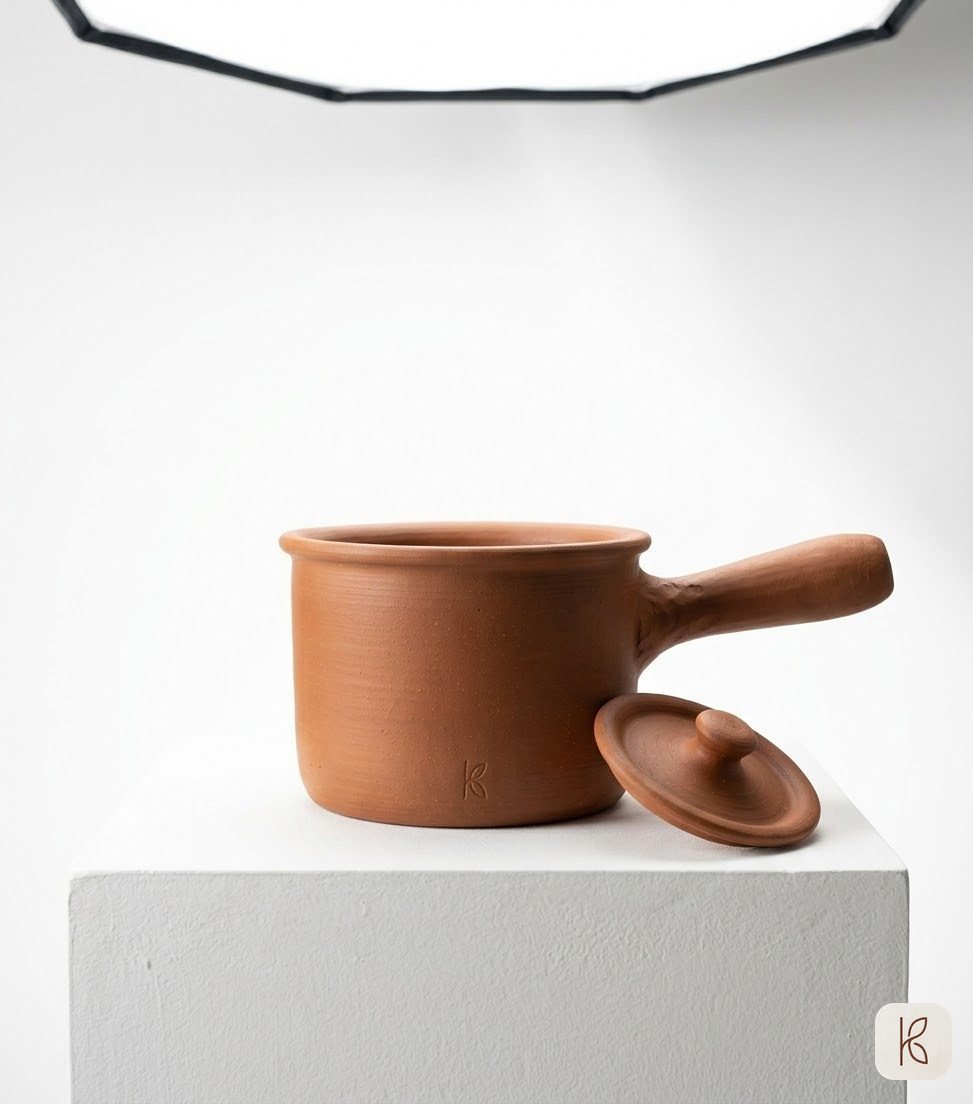
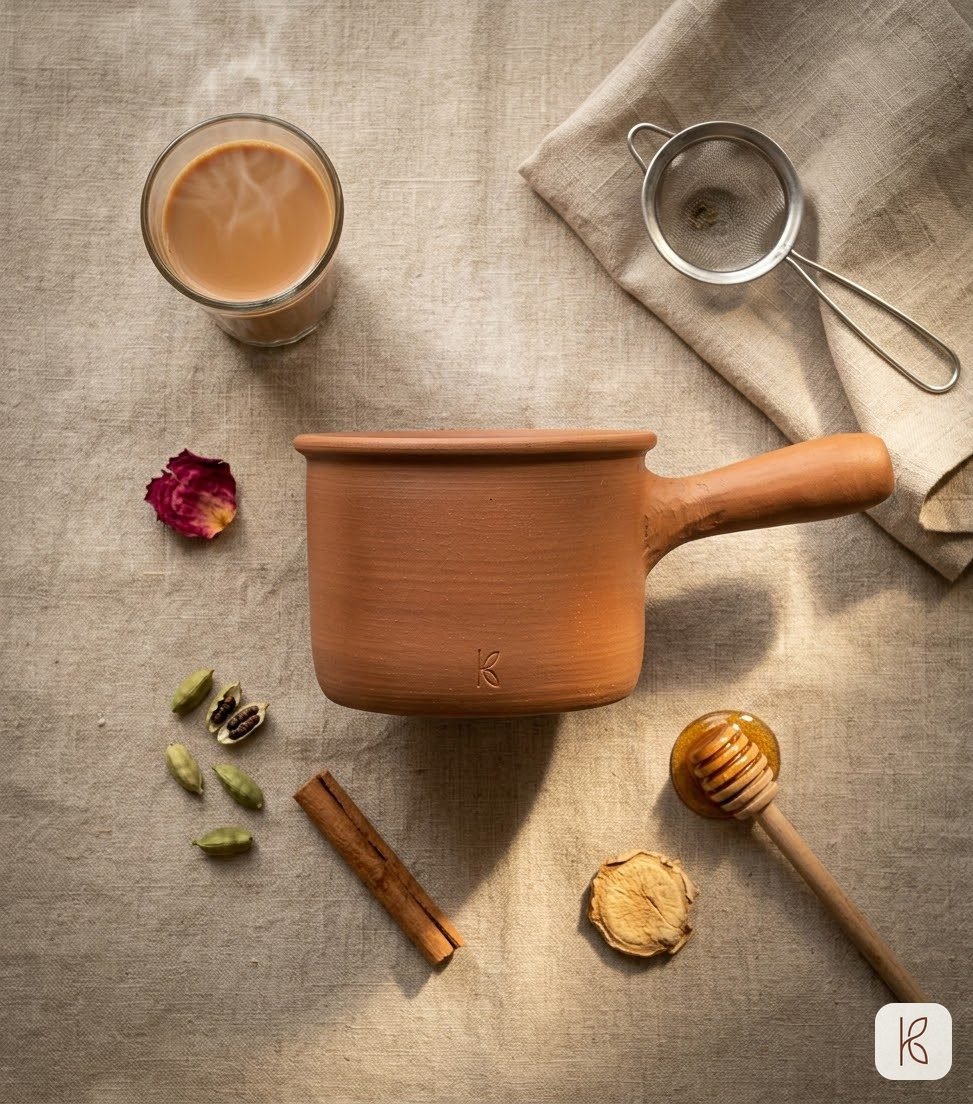
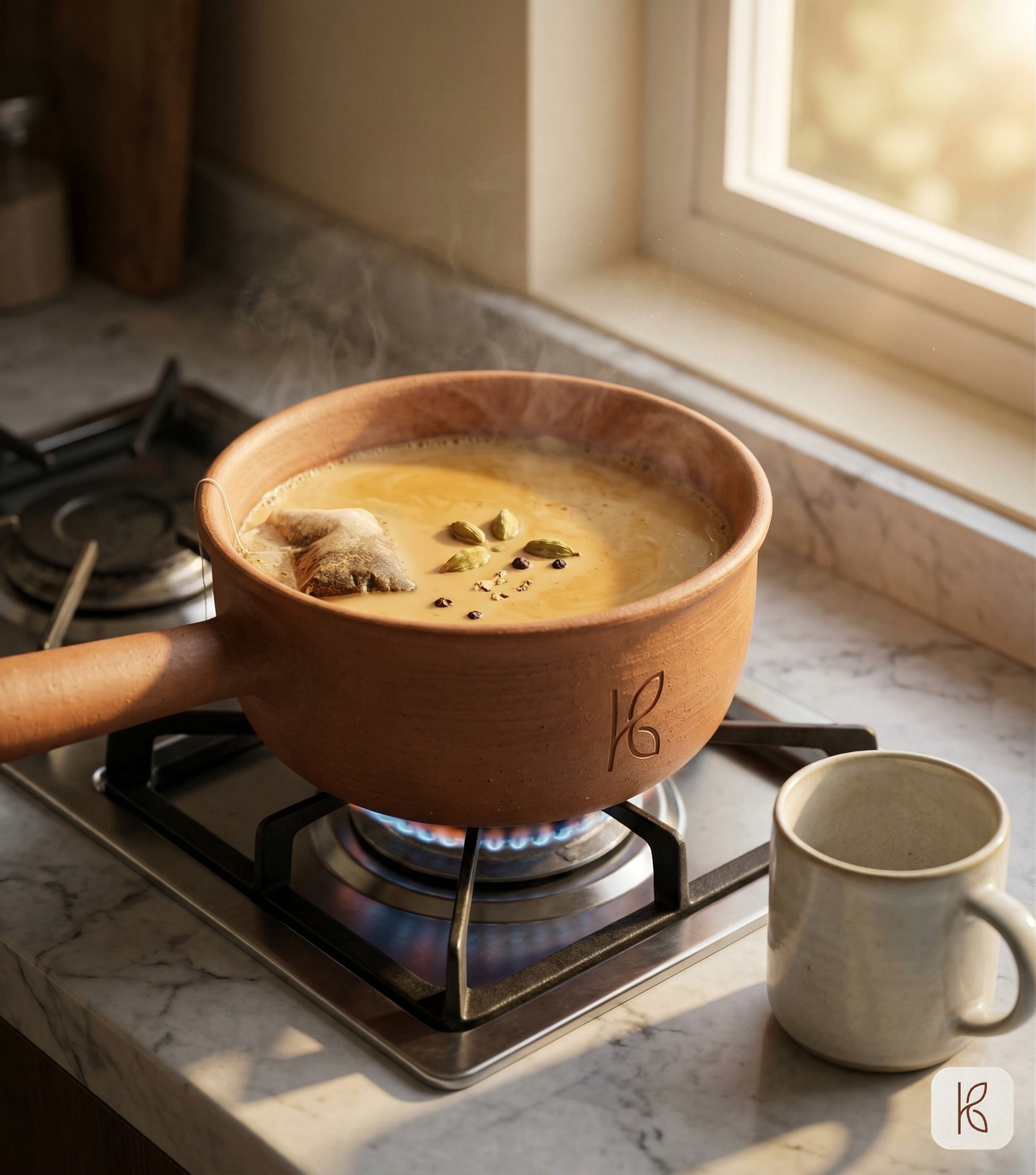
A small single-handled clay sauce pan for masala chai, milk, herbal teas, and single-serve sauces. 600ml. Pre-seasoned. XRF-certified. Most Indian households boil milk twice a day. That is roughly 700 boiling events per year. If that boiling happens in a non-stick coated pan — and PTFE degrades most rapidly during high-heat, protein-rich liquid cooking — you are looking at 700 events per year where coating particles can enter your family’s morning chai. This one does not do that.
Key Features & Benefits
- Zero Toxic Coating: No PTFE, PFOA, PFAS. The sauce pan you use every morning for chai should not be the vessel that slowly introduces fluorocarbon particles into your family’s first drink of the day.
- Single-Handled Pour Design: The long handle is positioned for single-hand chai straining — holding the pot at the correct angle while the other hand manages the strainer. Ergonomic, balanced, deliberate.
- Flavour Difference — Documented: Clay-boiled chai tastes different from metal-boiled chai. The mechanism involves the clay’s alkaline minerals affecting tea polyphenol chemistry — reducing astringency and producing a softer, fuller flavour. This is documented in food science literature. It is also verifiable in your own kitchen in one cup.
- Ra ≤4µm Interior: The smooth interior surface means that milk proteins do not bond aggressively to the clay surface. Scorched milk scrubs off easily rather than forming the permanent burnt layer that ruins cheap pans.
- XRF Certified: Batch-specific lab report via QR on handle.
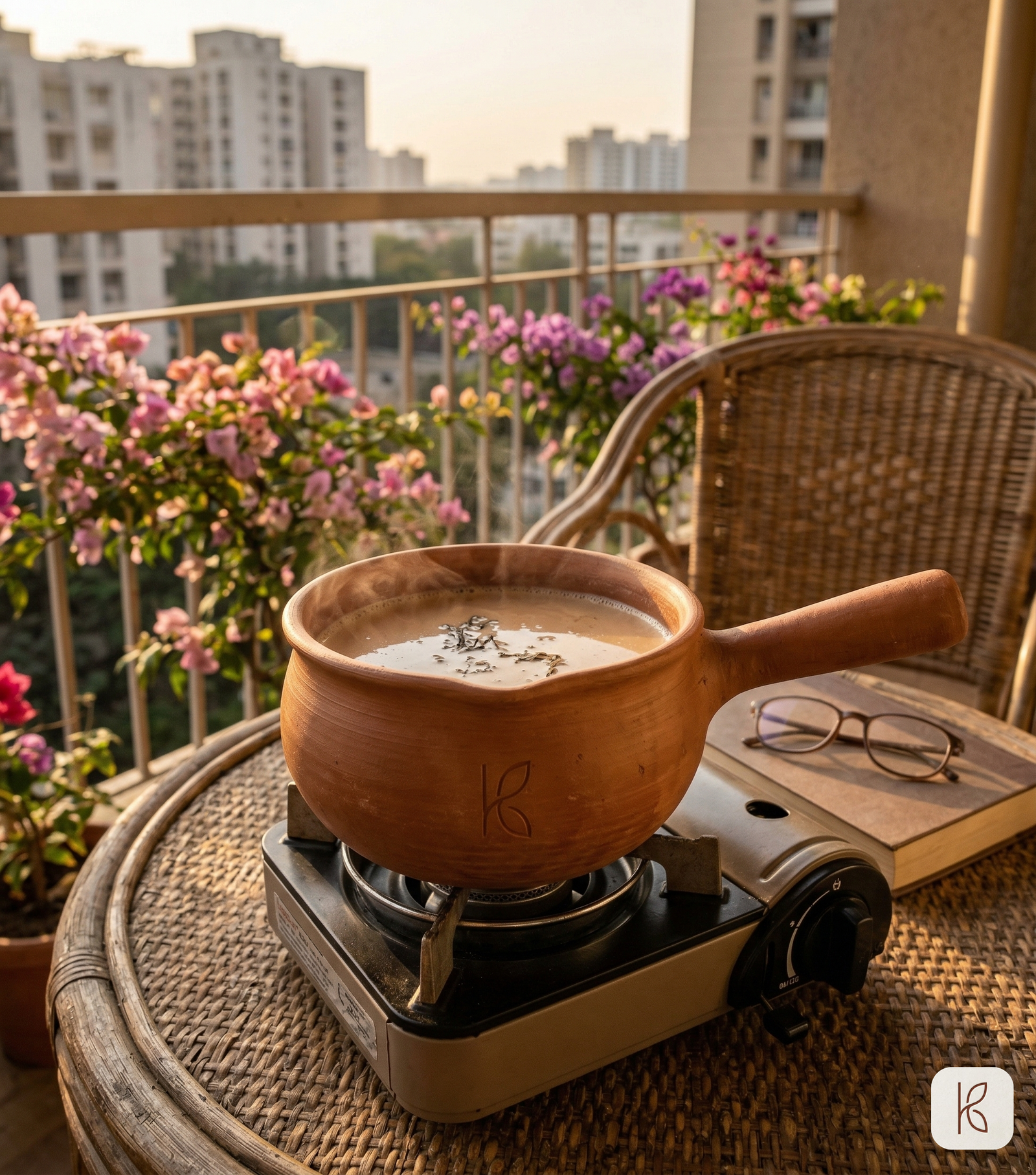
- Gas + Induction Ready: Steel adapter disc (12cm) included.
About the Material
600ml is deliberately the right capacity. Two proper cups of masala chai. One cup of herbal tea with room for the herbs. A small sauce batch for one or two people. Not so small that every recipe requires two pans; not so large that milk scorches on the sides because it is spread too The handle attachment on the 600ml sauce pan is worth noting: the clay handle is attached to the body during making — clay-to-clay bond during the throwing stage, not added as a separate fired piece. This joint, fired in as one continuous material, is stronger than any glued or mechanically attached handle. The angle is 15 degrees upward from horizontal — enough to lift naturally, not so steep that it feels awkward at counter height.
The Science
PTFE (polytetrafluoroethylene) is most vulnerable during protein-rich liquid cooking at high heat. The reason: proteins at high temperature can catalyse PTFE surface degradation reactions. Boiling milk — which is 3.3% protein — at near-boiling temperature in a PTFE-coated pan is precisely the condition that accelerates coating degradation. The clay sauce pan has no coating. The boiling milk contacts clay minerals and nothing else.
Safety & Certification Standards
| XRF Analysis — Clay Source | Heavy metal screening on raw clay before production begins |
| ICP-OES — Finished Product | Parts-per-billion accuracy. Actual migration into food simulants at cooking temperatures |
| NABL-Accredited Laboratory | Internationally recognised test facility |
| FSSAI Food Contact Compliance | Meets India’s legal food safety standards for cookware |
| Per-Batch QR Report | Your batch. Your numbers. Published before dispatch. Scan and read it yourself. |
Lab Test Results
| Compound | Klayvi Result | FSSAI Safe Limit |
|---|---|---|
| Lead (Pb) | ≤ 2.1 ppm | 90 ppm |
| Cadmium (Cd) | ≤ 0.3 ppm | 0.5 ppm |
| Arsenic (As) | ≤ 0.4 ppm | 2.0 ppm |
| Mercury (Hg) | Not detected | 0.5 ppm |
| PTFE / PFOA / PFAS | Not present | Zero tolerance |
Caring for Your Klayvi
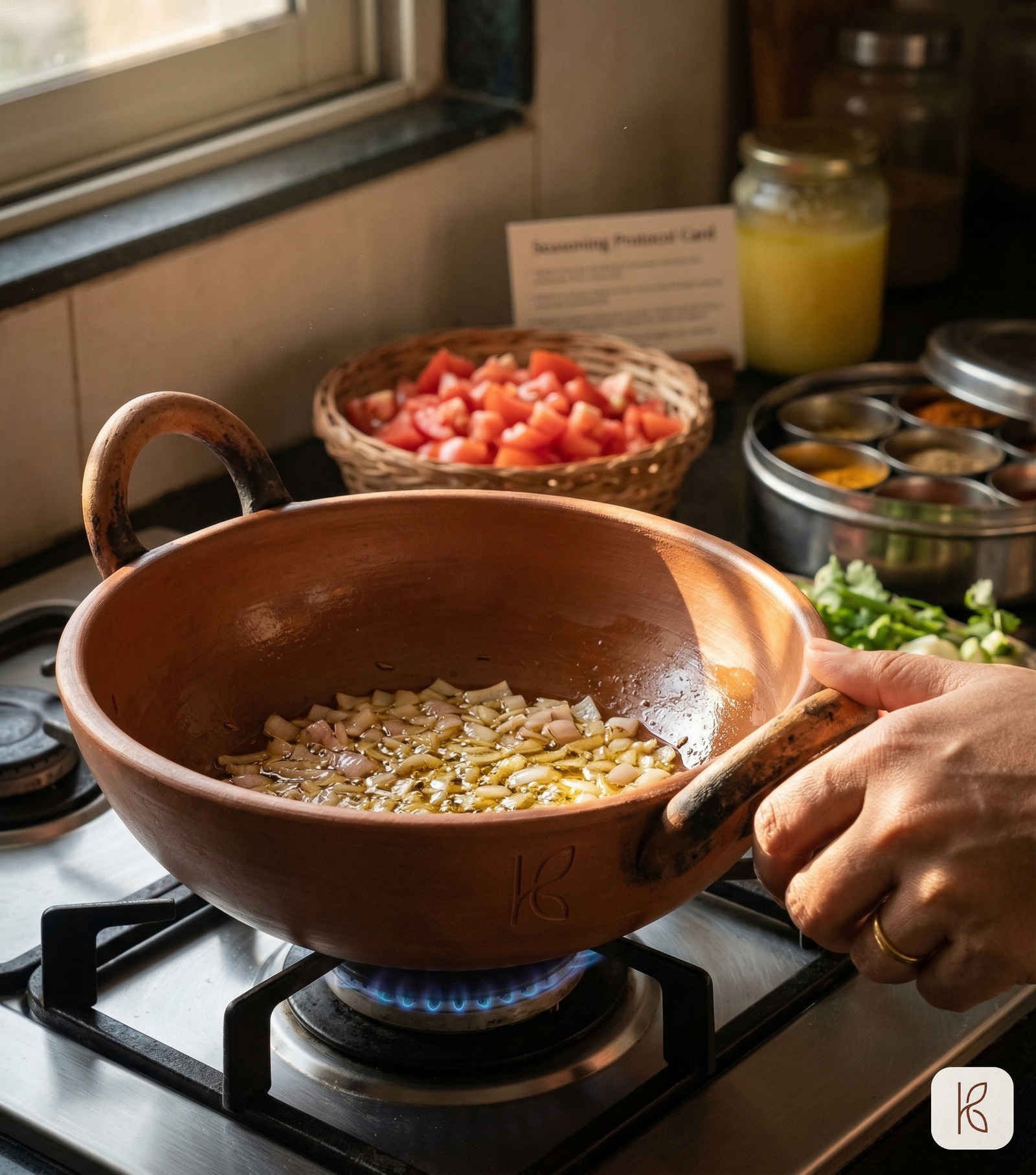
| 1 — First Use | Rinse with plain water. Cook something water-based for first 2–3 uses. |
| 2 — Daily Clean | Klayvi Wash Care (pH 6–8) or sisal scrubber with warm water. Never standard dish soap — its pH 9–11 strips the seasoning polymer layer. |
| 3 — After Wash | Dry on low flame for 2 minutes. Never store damp. |
| 4 — Monthly | Apply 4–5 drops of cold-pressed flaxseed oil. Heat on medium-low until just smoking at edges (~4 min). Cool and wipe. |
| 5 — Never | Dishwasher · Microwave · Overnight soaking · Chemical detergents · Cold water on a hot vessel |
What’s in the Box
- Bio-Active Sauce Pan 600ml (pre-seasoned)
- Steel induction adapter disc (12cm)
- Artisan provenance card
- Clay Care Passport
- Batch QR card
Frequently Asked Questions
Q: Can I make chai directly from cold milk in this sauce pan?
Yes. Start at medium flame, not high. Clay heats milk more evenly than metal — add your spices and tea leaves once the milk is warm (not boiling), and let it simmer at medium for 3–4 minutes. The result: chai with less of the “boiled” smell that high-heat metal chai can develop.
Q: The milk boiled over and stained the exterior. How do I clean it?
Let the pan cool completely. Soak a sisal scrubber in warm water, apply a pinch of rock salt, and scrub the exterior. The alkaline clay surface releases milk protein stains more easily than rough metal or plastic. For persistent marks on the exterior clay, a light rub with diluted lemon juice followed by a plain water rinse works well.
Q: Can I make herbal kadha (immunity broth) in this?
Yes — and the clay is particularly well-suited for kadha. Many traditional kadha recipes (tulsi, ginger, black pepper, cloves) are mildly acidic. The clay’s alkaline surface buffers this acidity, and traditional Ayurvedic texts specifically prescribe clay vessels for herbal decoctions because the mineral interaction is considered beneficial.
Q: The chai tastes different from my steel pan. Is that a problem?
No — it is the point. Clay-boiled chai has a softer, less astringent profile. If you are used to the sharper taste of metal-boiled chai, the clay version may seem milder initially. Most people prefer it within a week. The flavour difference comes from clay’s alkaline minerals affecting the tannin chemistry of the tea, not from any contamination.
Q: Is 600ml enough for two large cups of chai?
Yes. 600ml fills two standard 200ml chai cups with 200ml to spare for evaporation during boiling. For three cups, the 1L sauce pan is the better choice.
Q: Can I leave chai standing in the sauce pan for an hour before reheating?
Yes. The clay retains heat better than metal, so chai left in the sauce pan stays warm noticeably longer. When reheating, use medium flame — not high. Do not bring to a full rolling boil again, just heat to serving temperature.
Related products
-
Out of Stock

-
Out of Stock
-
Out of Stock

Reviews
There are no reviews yet.