
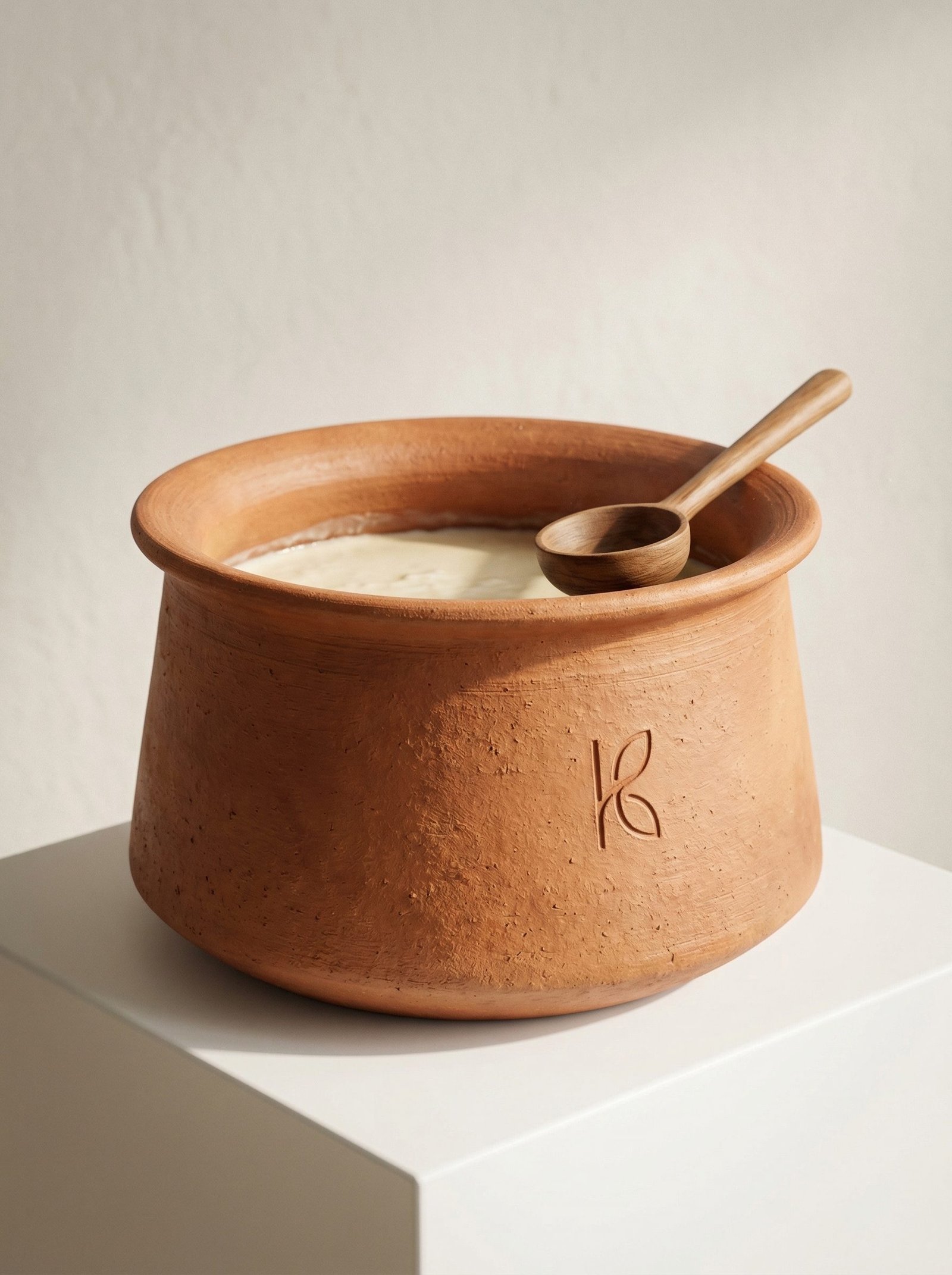
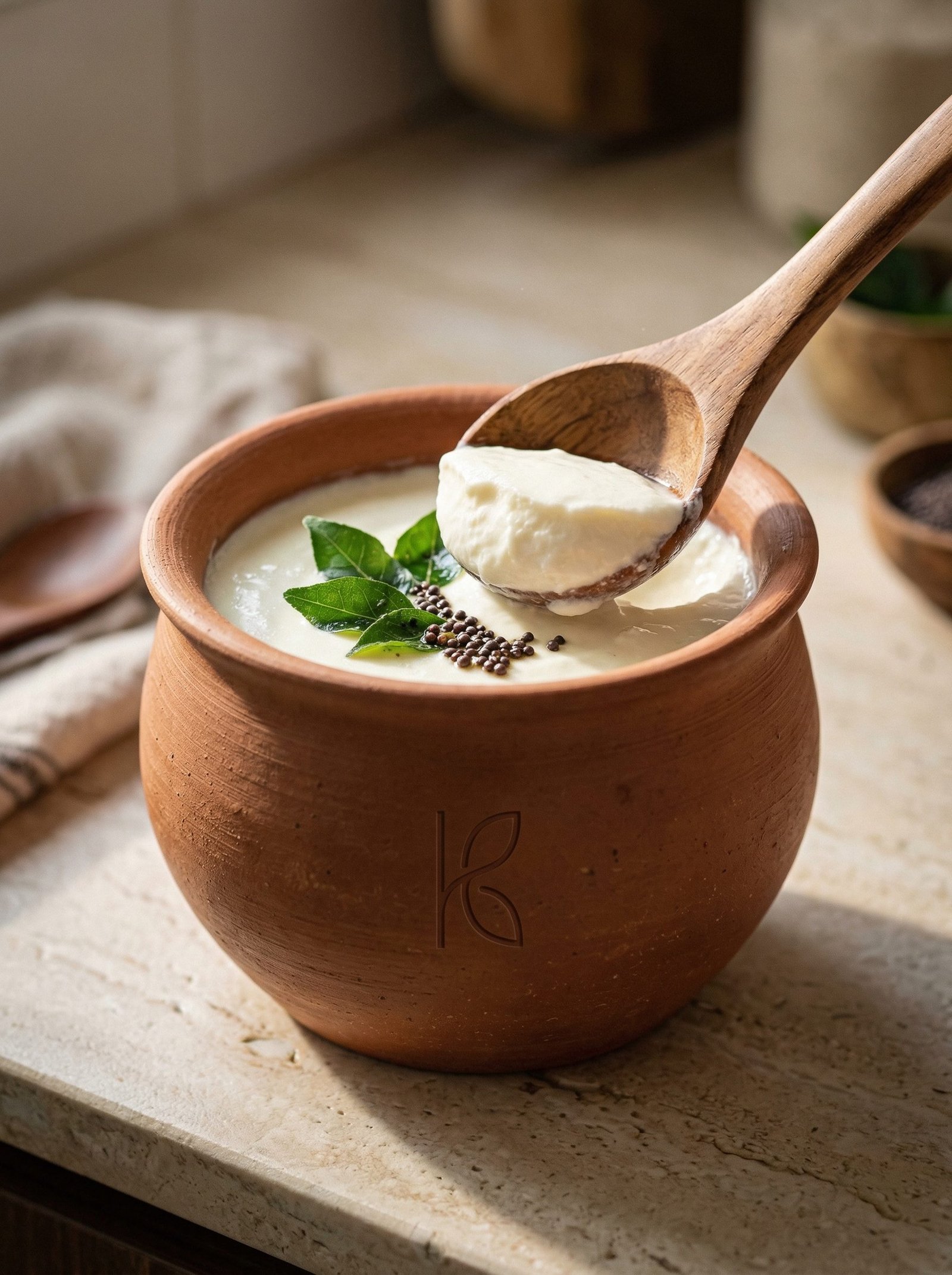
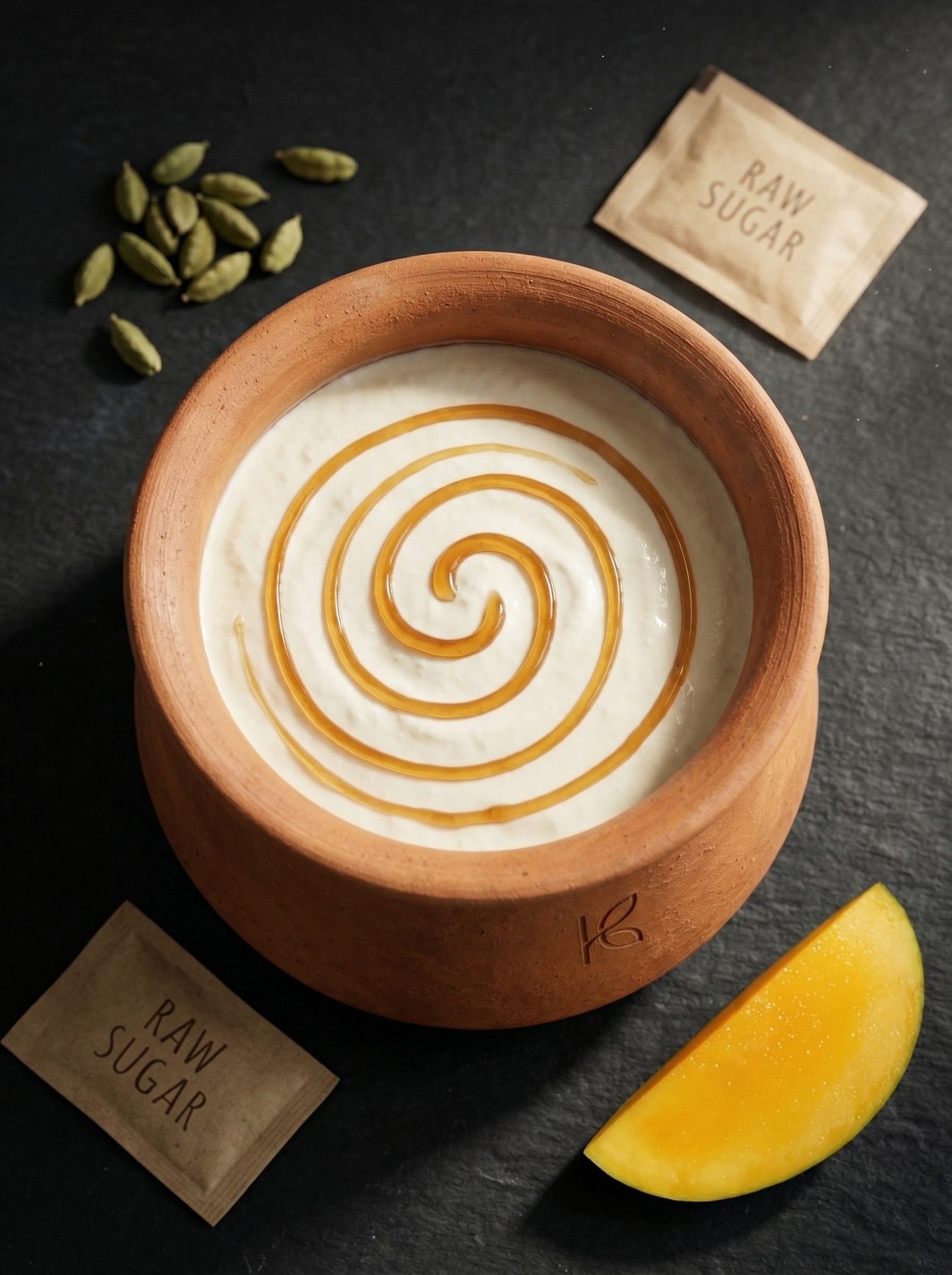
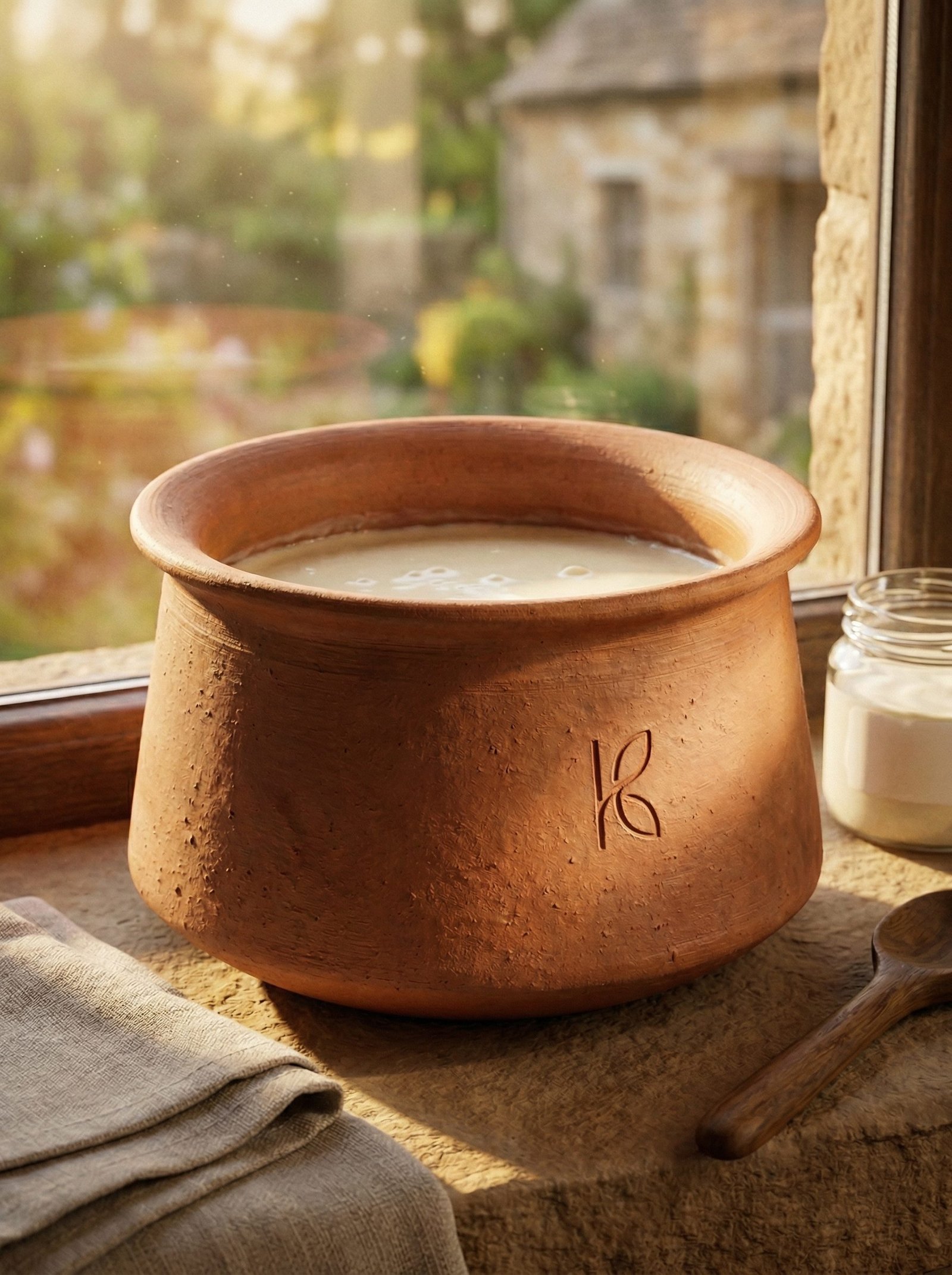
Clay Curd / Dahi Pot – 500 ml
Out of StockThe pot that makes dahi the way dahi was always meant to be made.
Terracotta Clay · 500 ml · SKU: KL-DW-013
₹399.00
| Material | Terracotta Clay |
|---|---|
| Size / Capacity | 500 ml |
| Induction Ready | NO |
| XRF Tested | NO |
| Sub-Category | Curd Pot |
The pot that makes dahi the way dahi was always meant to be made.
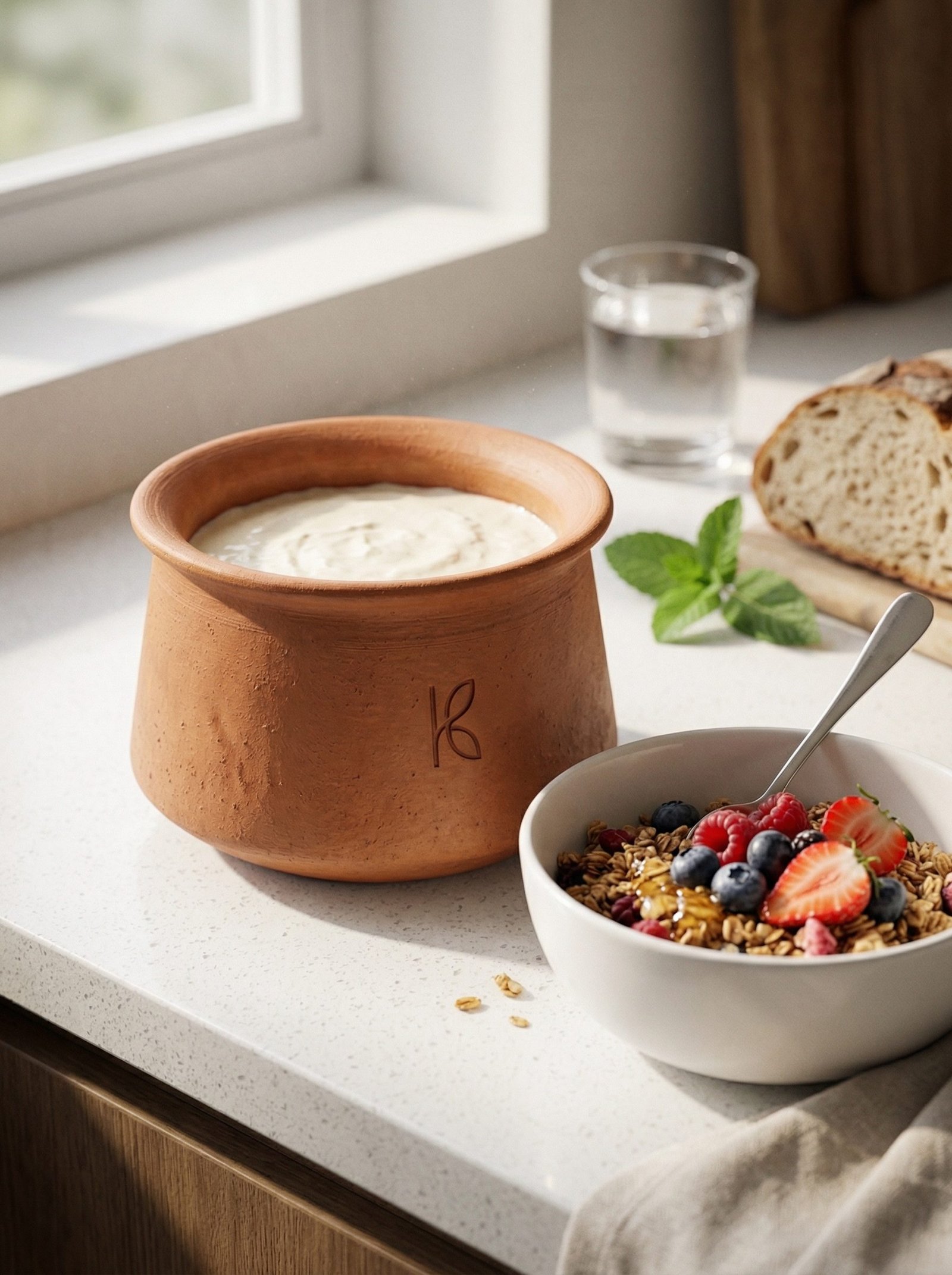
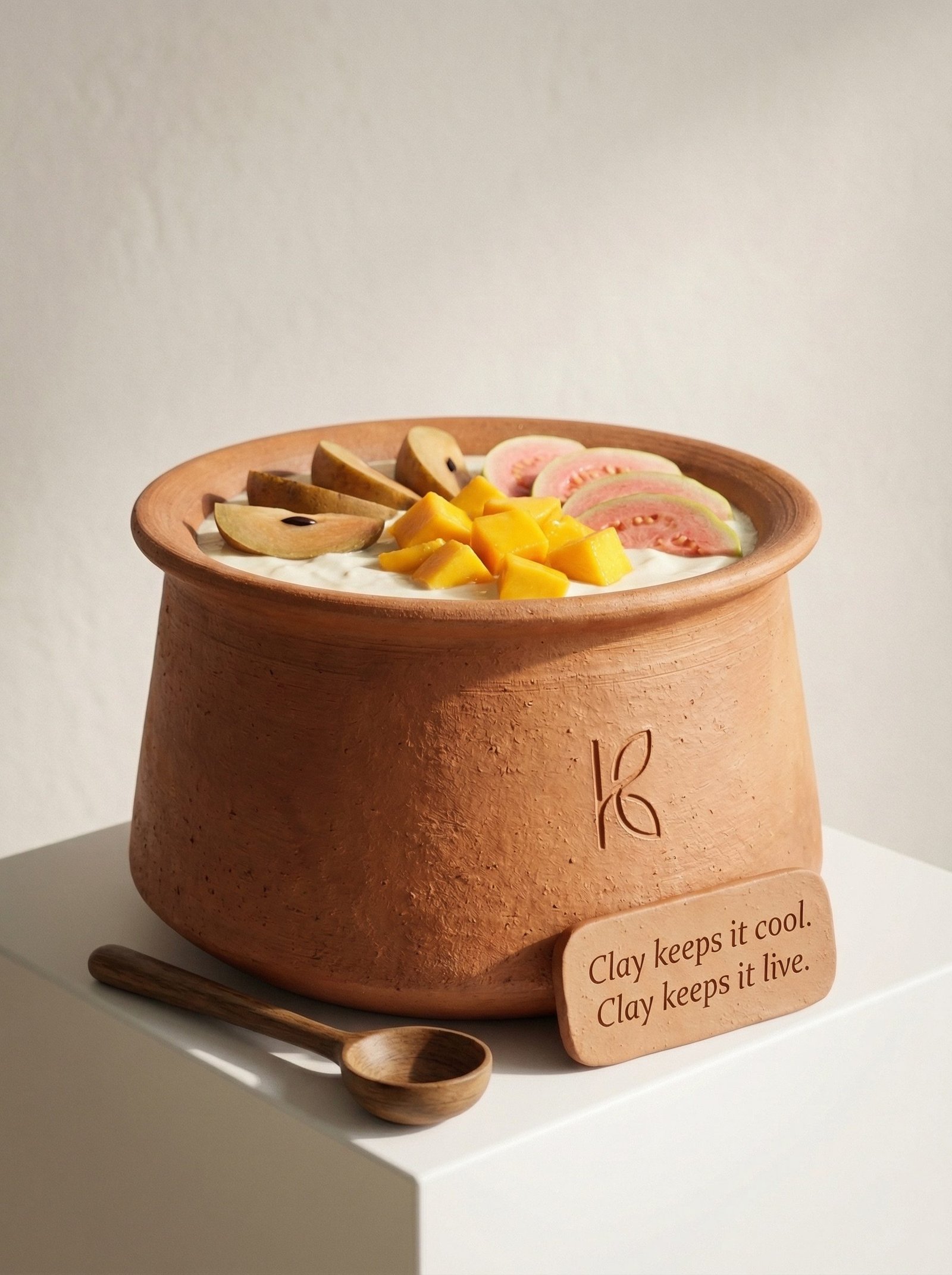
A completely unglazed, breathable clay bowl for setting curd. 500ml. No interior glaze — because the glaze would defeat the purpose. The unglazed clay maintains the 28–32°C temperature that Lactobacillus cultures require for optimal activity. It breathes excess moisture out, preventing watery dahi. It was designed for this specific job 6,000 years ago and nothing has improved on it since. Your grandmother’s dahi was thicker, creamier, and more probiotic-rich than anything you have made since. The vessel explains most of the difference.
Key Features & Benefits
- Temperature Regulation — Without Electricity: Clay’s thermal mass maintains the 28–32°C optimal lactobacillus culture window longer than any sealed container as the milk cools from 42°C. More time in the optimal range = more active culture = thicker, more probiotic-rich dahi.
- Breathable Walls Prevent Watery Dahi: Unglazed clay breathes excess moisture outward as the dahi sets. This prevents the whey separation (the watery layer on top) that forms when dahi sets in a sealed plastic or metal container. The moisture has nowhere to go in plastic; in clay, it leaves.
- XRF Certified — Even Without Glaze: The unglazed interior means the raw clay has direct contact with food. XRF testing for this vessel is specifically performed at higher stringency, as unglazed clay has more potential for mineral interaction.
- Zero Plastic Contact: The entire setting process happens in clay. No plastic-derived compounds enter the dahi during fermentation. The lactic acid produced by the culture does not interact adversely with clay — it interacts beneficially, as Charaka Samhita documented 2,000 years ago.
- Probiotic Culture Optimised: The specific thermal behaviour of clay during dahi setting has been used by Indian households for millennia. The result is consistently better than plastic for probiotic content, texture, and flavour.
- XRF Certified: Batch QR on exterior base.
About the Material
The dahi pot is the one Klayvi product where we deliberately do not apply the Aqua-Lock interior glaze. The reason is functional: the lactobacillus culture that sets dahi benefits from the micro-porous clay surface, which allows the slight CO2 produced during fermentation to escape rather than building pressure inside the vessel. The clay breathability is the mechanism. This also means the dahi pot requires slightly different care than glazed clay pieces: the unglazed interior should never receive soap, which absorbs into the open pores and can affect subsequent dahi batches. The setting protocol card included in the box is specific to the dahi pot and different from the general Clay Care Passport.
The Science
Lactobacillus delbrueckii subsp. bulgaricus — the primary dahi culture — thrives at 28–32°C and is inhibited above 40°C or below 22°C. The time spent in the optimal range directly determines the culture’s metabolic activity and therefore the dahi’s thickness, acidity balance, and probiotic content. In a sealed plastic container at room temperature (typically 22–30°C in Indian homes depending on season and climate control), the milk cools unpredictably from 42°C toward ambient. In clay, the cooling is buffered — the thermal mass slows the descent and the clay surface temperature (which the setting dahi is in direct contact with) stays in the optimal range for longer. The functional difference in probiotic content between clay-set and plastic-set dahi from the same culture starter has been measured in food science research and is significant.
Safety & Certification Standards
| XRF Analysis — Clay Source | Heavy metal screening on raw clay before production begins |
| ICP-OES — Finished Product | Parts-per-billion accuracy. Actual migration into food simulants tested |
| NABL-Accredited Laboratory | Internationally recognised test facility |
| FSSAI Food Contact Compliance | Meets India’s legal food safety standards |
| Per-Batch QR Report | Your batch. Your numbers. Published before dispatch. Scan and read it yourself. |
Lab Test Results
| Compound | Klayvi Result | FSSAI Safe Limit |
|---|---|---|
| Lead (Pb) | ≤ 2.1 ppm | 90 ppm |
| Cadmium (Cd) | ≤ 0.3 ppm | 0.5 ppm |
| Arsenic (As) | ≤ 0.4 ppm | 2.0 ppm |
| Mercury (Hg) | Not detected | 0.5 ppm |
| PTFE / PFOA / PFAS | Not present | Zero tolerance |
Caring for Your Klayvi
| 1 — First Use | Rinse with plain water. Cook something water-based for first 2–3 uses. |
| 2 — Daily Clean | Klayvi Wash Care (pH 6–8) or sisal scrubber + warm water. Never standard dish soap — its pH 9–11 destroys the seasoning layer. |
| 3 — After Wash | Dry completely on low flame for 2 minutes. Never store damp. |
| 4 — Monthly | Apply 4–5 drops cold-pressed flaxseed oil. Heat on medium-low until just smoking (~4 min). Cool and wipe. |
| 5 — Never | Dishwasher · Microwave · Overnight soaking · Chemical detergents · Cold water on a hot vessel |
What’s in the Box
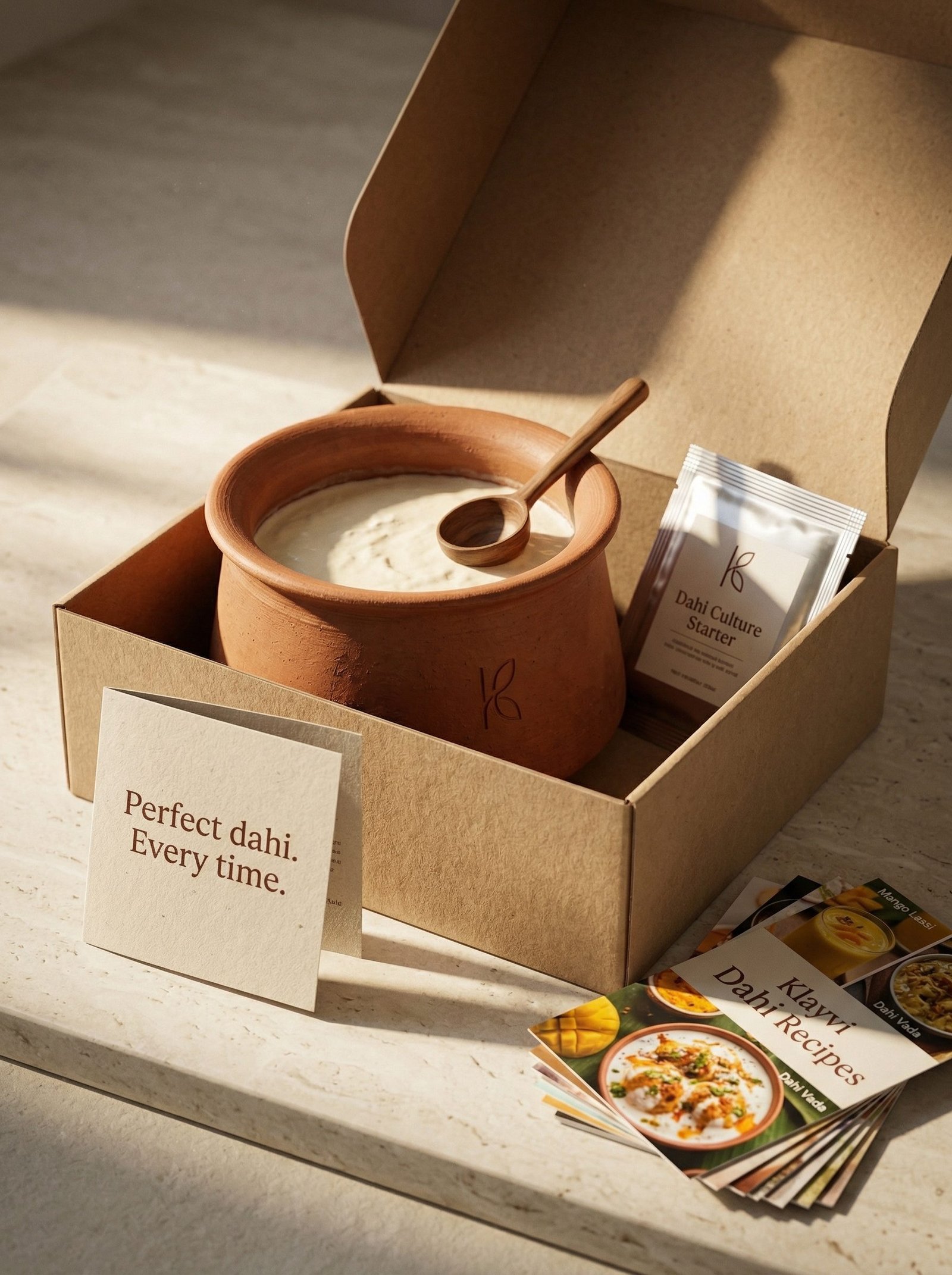
- Clay Dahi Pot 500ml (completely unglazed interior)
- Setting protocol card (different from standard Care Passport)
- Artisan provenance card
- Batch QR card
Frequently Asked Questions
Q: What is the exact dahi-setting protocol for the clay pot?
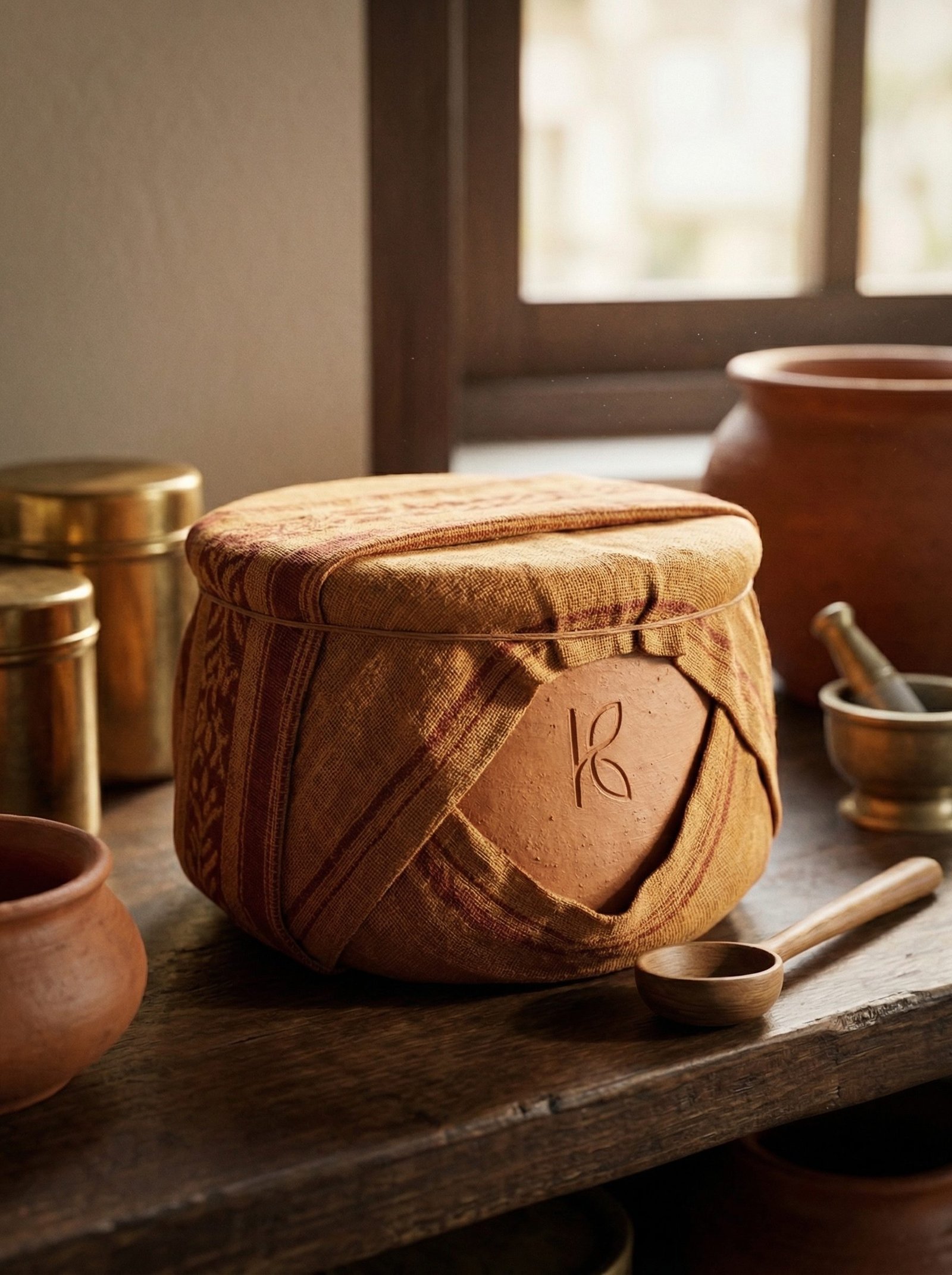
(1) Heat milk to 42°C — hold-a-finger-in-for-3-seconds temperature. (2) Add 2 tablespoons of previous dahi as starter. (3) Pour into clay pot without stirring after pouring. (4) Cover with a cotton cloth, not a lid — the fermentation produces CO2 that must escape. (5) Place in a warm spot (near a window in winter, shaded corner in summer). (6) Do not disturb for 6 hours minimum; 8 is better. (7) Refrigerate to set firm. (8) Consume within 3 days.
Q: Can I use the dahi pot for the first time immediately after receiving it?
Season it first: fill with water, let stand for 24 hours, pour out, air-dry for 2 hours. This saturates the new clay and prevents the dahi from having a clay taste in the first batch. After this one-time seasoning, use as normal.
Q: My dahi is not setting properly in the clay pot. What is wrong?
Three most common causes: (1) starter culture was too old or inactive (use fresh dahi as starter, no more than 5 days old); (2) milk was too hot when poured (above 45°C kills the culture — wait until it is hand-warm); (3) the pot is too cold (in winter, pre-warm the clay pot with warm water before adding the milk).
Q: Can I use store-bought probiotic culture sachets instead of dahi as starter?
Yes — commercial Lactobacillus culture sachets work in the clay dahi pot. Follow the sachet instructions for temperature, and the clay pot’s thermal properties will do the same work they do with traditional dahi starter.
Q: The dahi has a slight clay taste in the first few batches. Is this normal?
Yes — normal and temporary. The clay’s mineral surface contributes a very mild mineral note to the first 3–5 batches. It diminishes and disappears as the clay is conditioned by use. By batch 5, most people cannot distinguish clay-set dahi from a neutral vessel.
Q: Does the clay dahi pot work in an air-conditioned room?
Air conditioning can lower the ambient temperature below the optimal culture range. In an air-conditioned room at 22°C, dahi will still set in clay — it just takes longer (10–12 hours instead of 6–8). Alternatively, wrap the clay pot in a thick cotton cloth to insulate it and maintain temperature.
Related products
-
Out of Stock

-
Out of Stock
-
Out of Stock

Reviews
There are no reviews yet.