
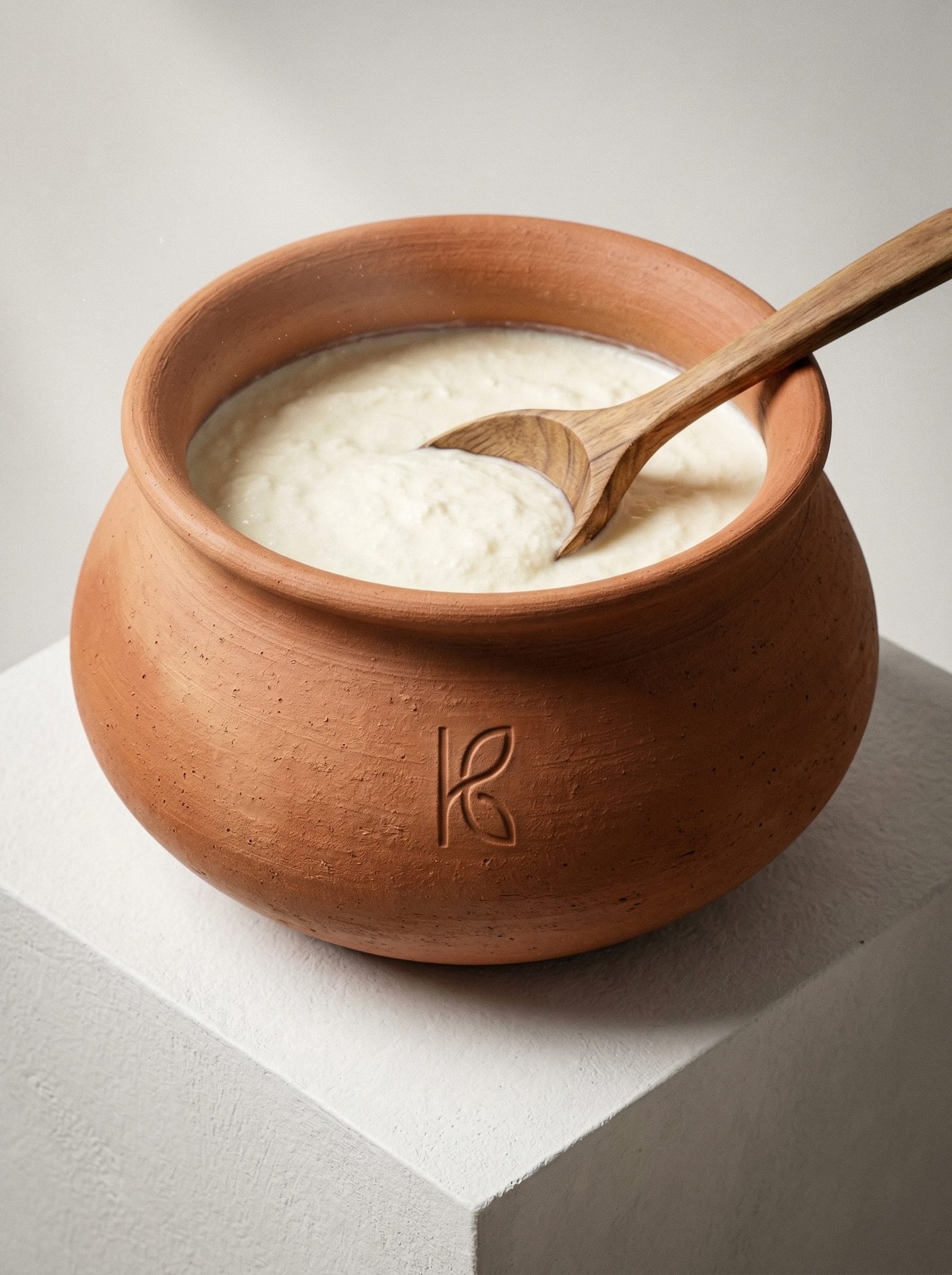
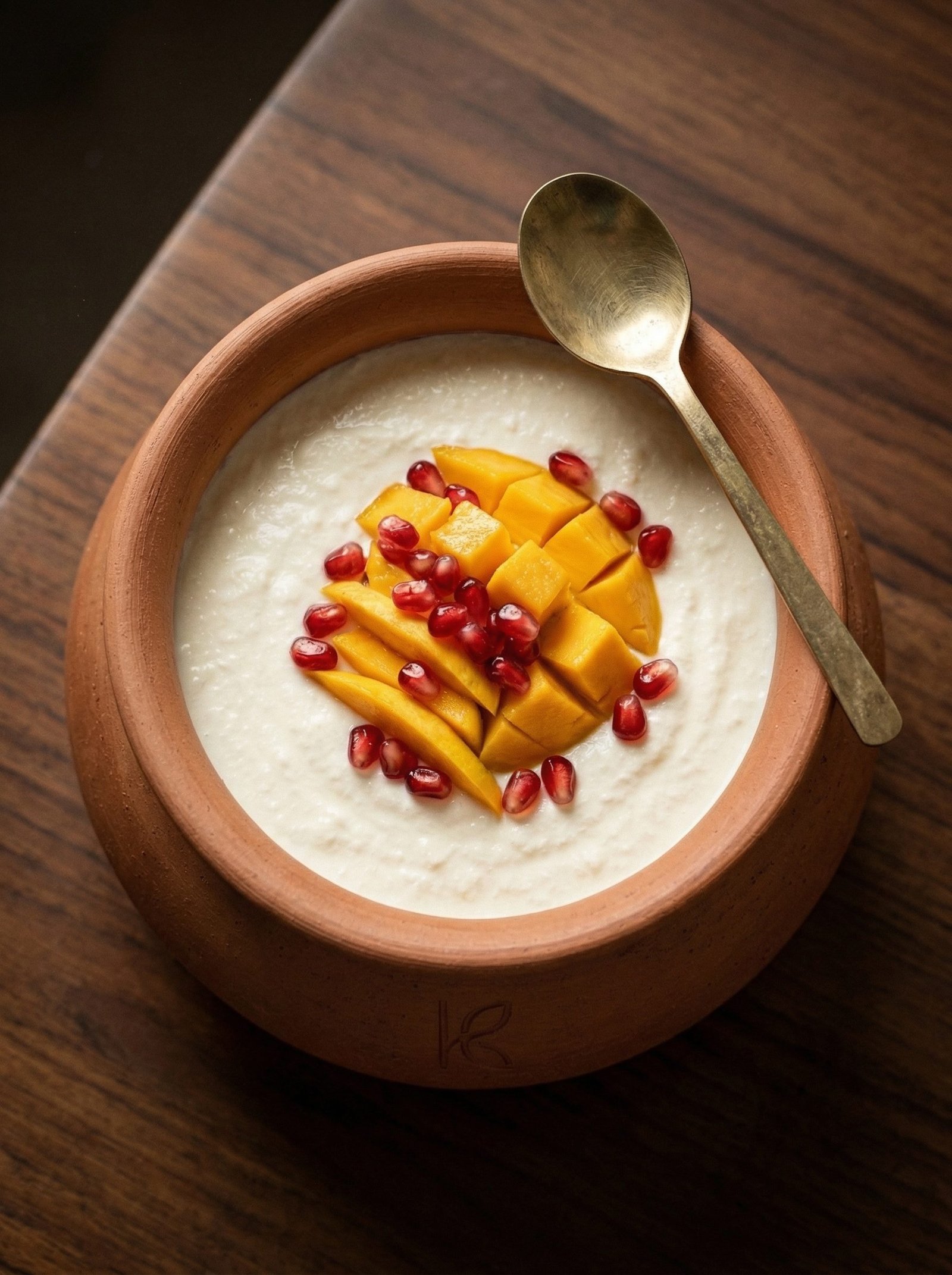
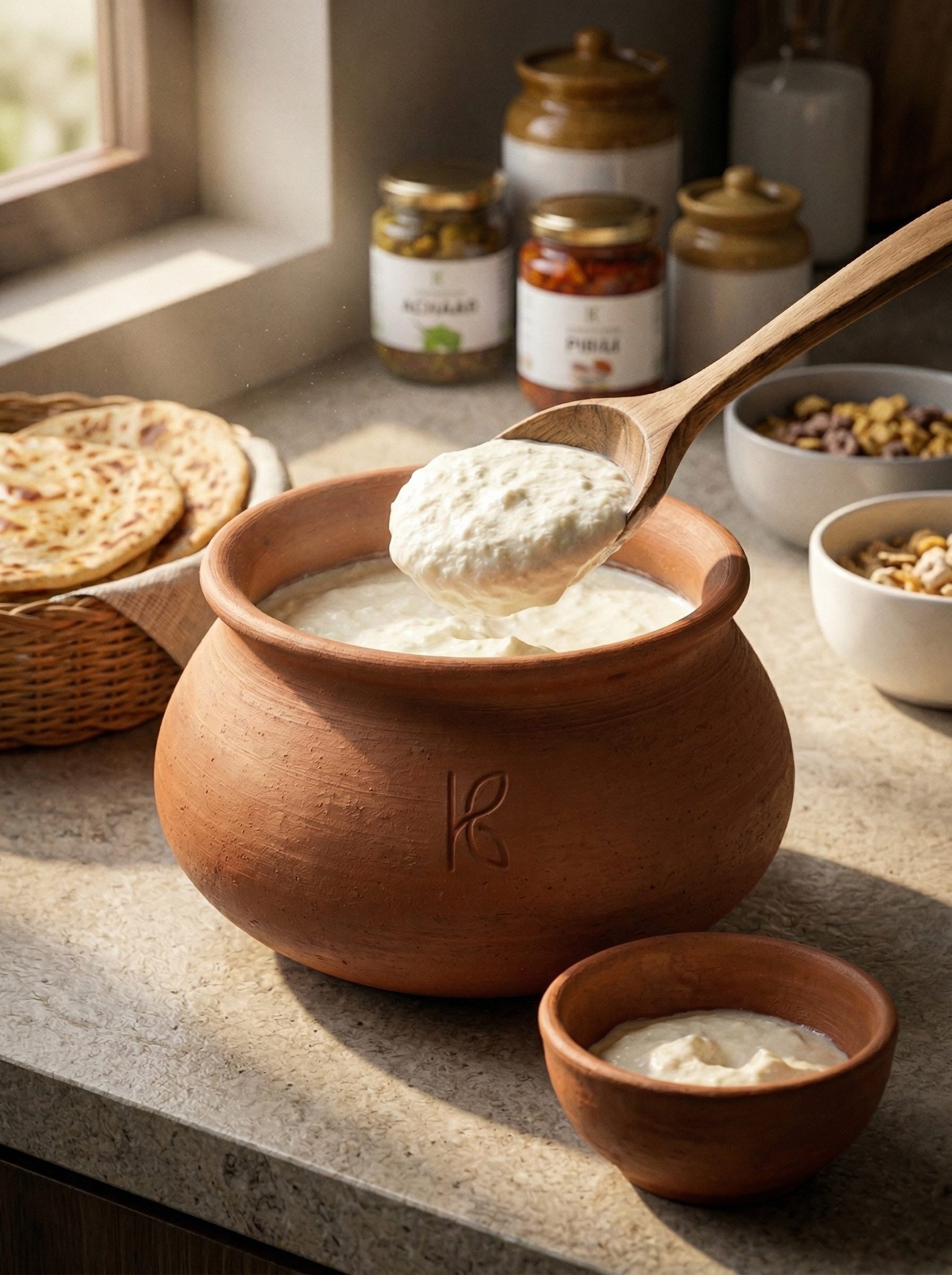
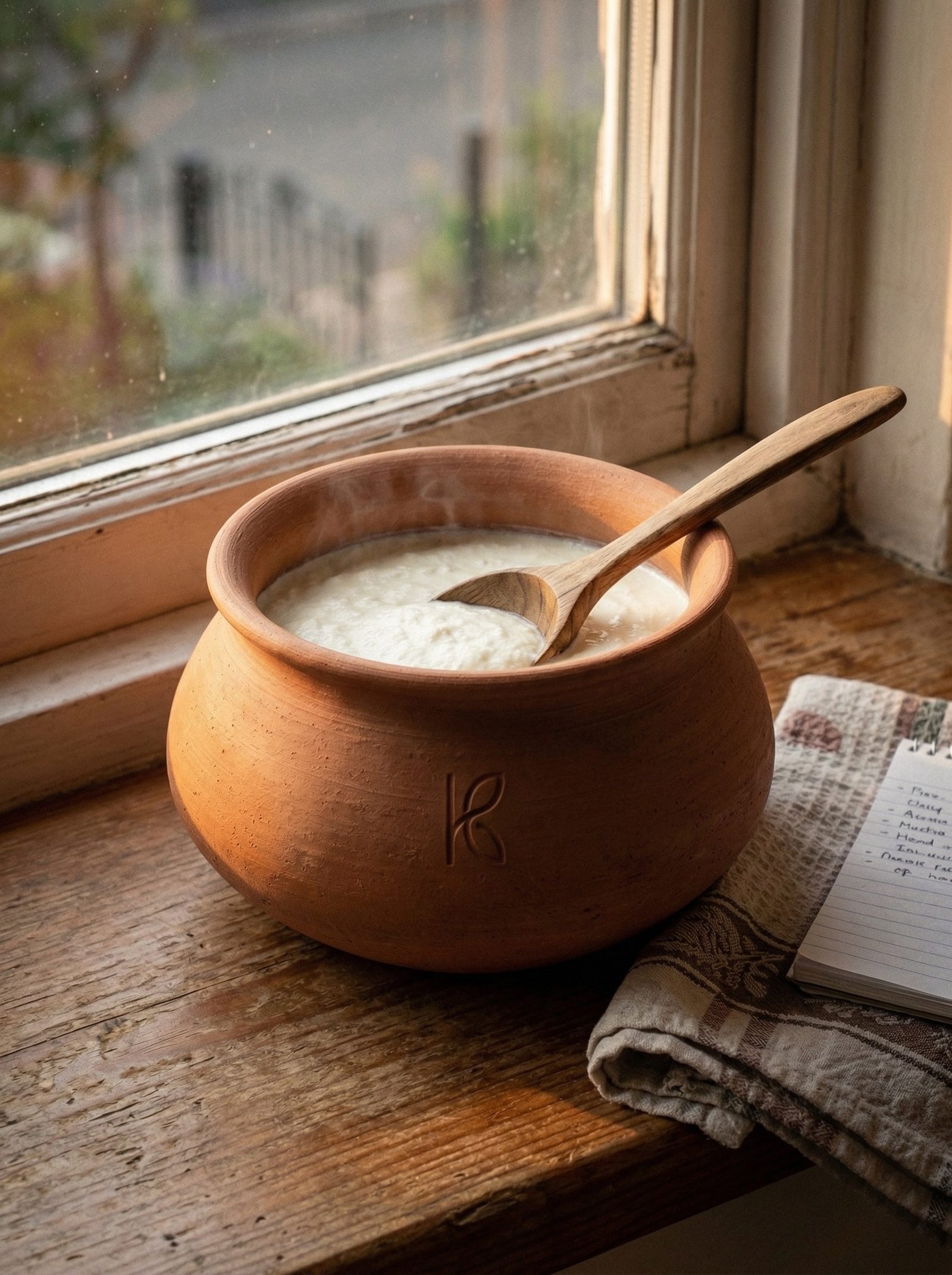
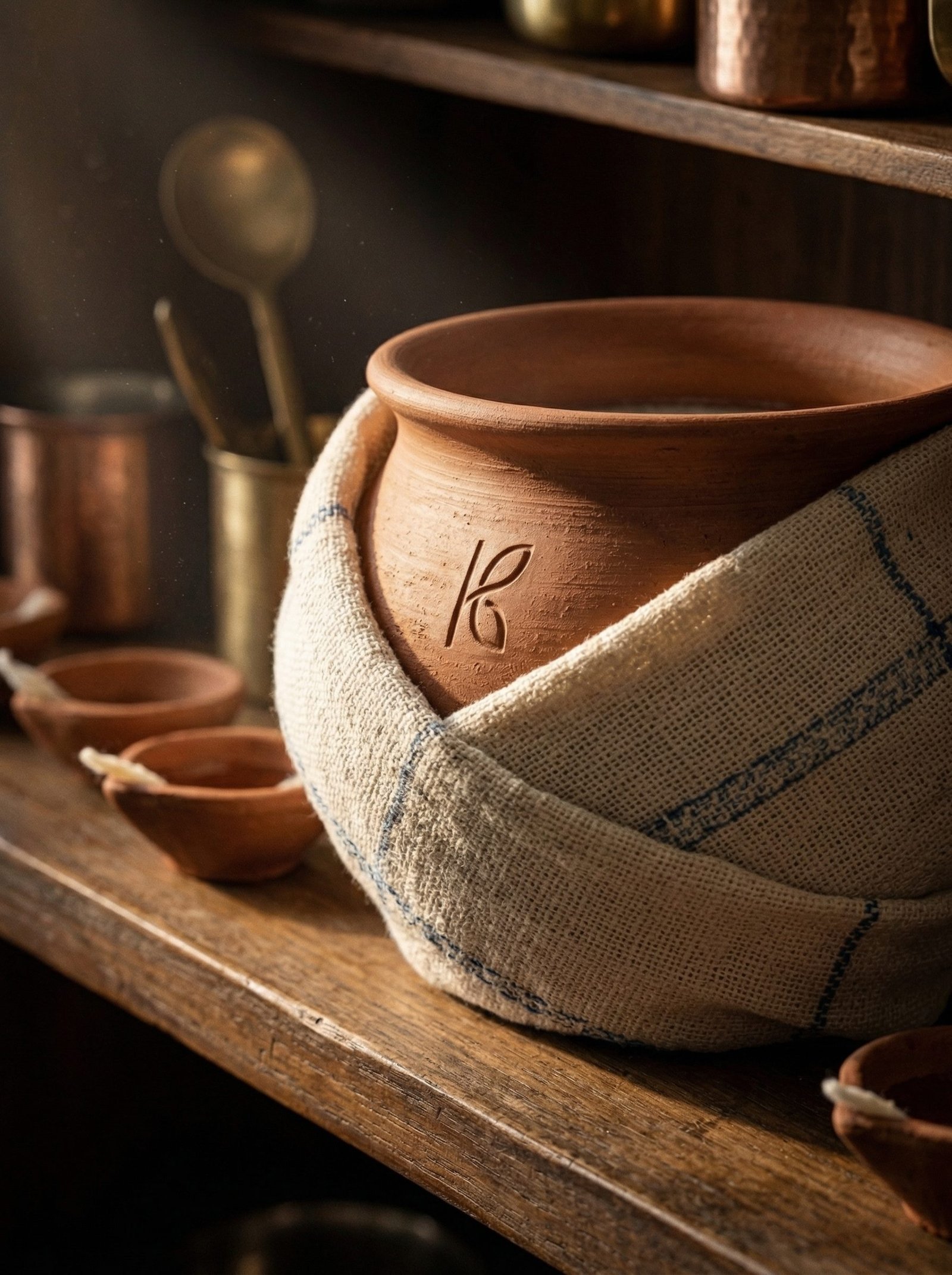
Clay Curd / Dahi Pot – 1 L
Out of StockThe family dahi pot. One batch for everyone, every day.
Terracotta Clay · 1 Litre · SKU: KL-DW-014
₹549.00
| Material | Terracotta Clay |
|---|---|
| Size / Capacity | 1 Litre |
| Induction Ready | NO |
| XRF Tested | NO |
| Sub-Category | Curd Pot |
The family dahi pot. One batch for everyone, every day.
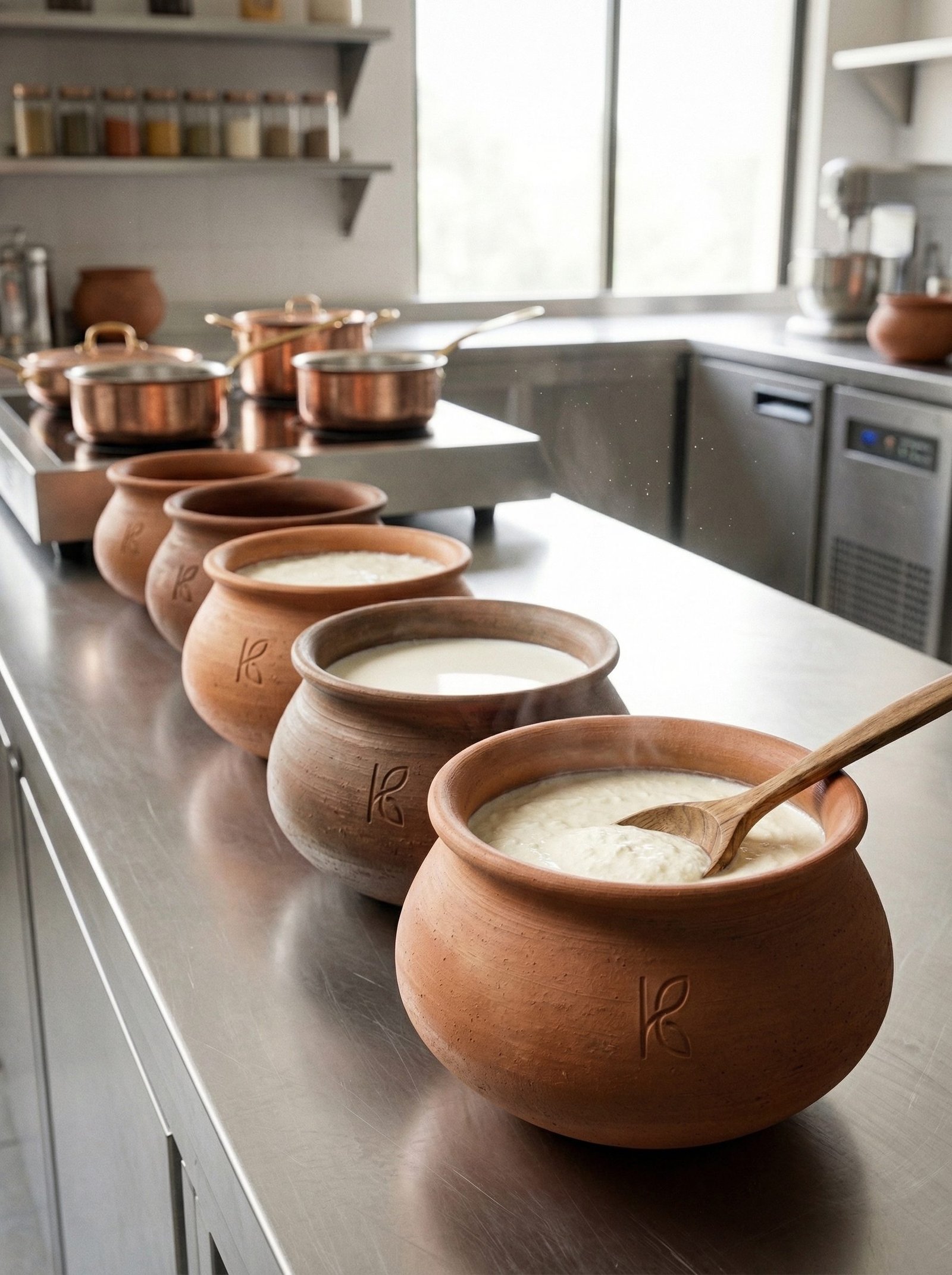
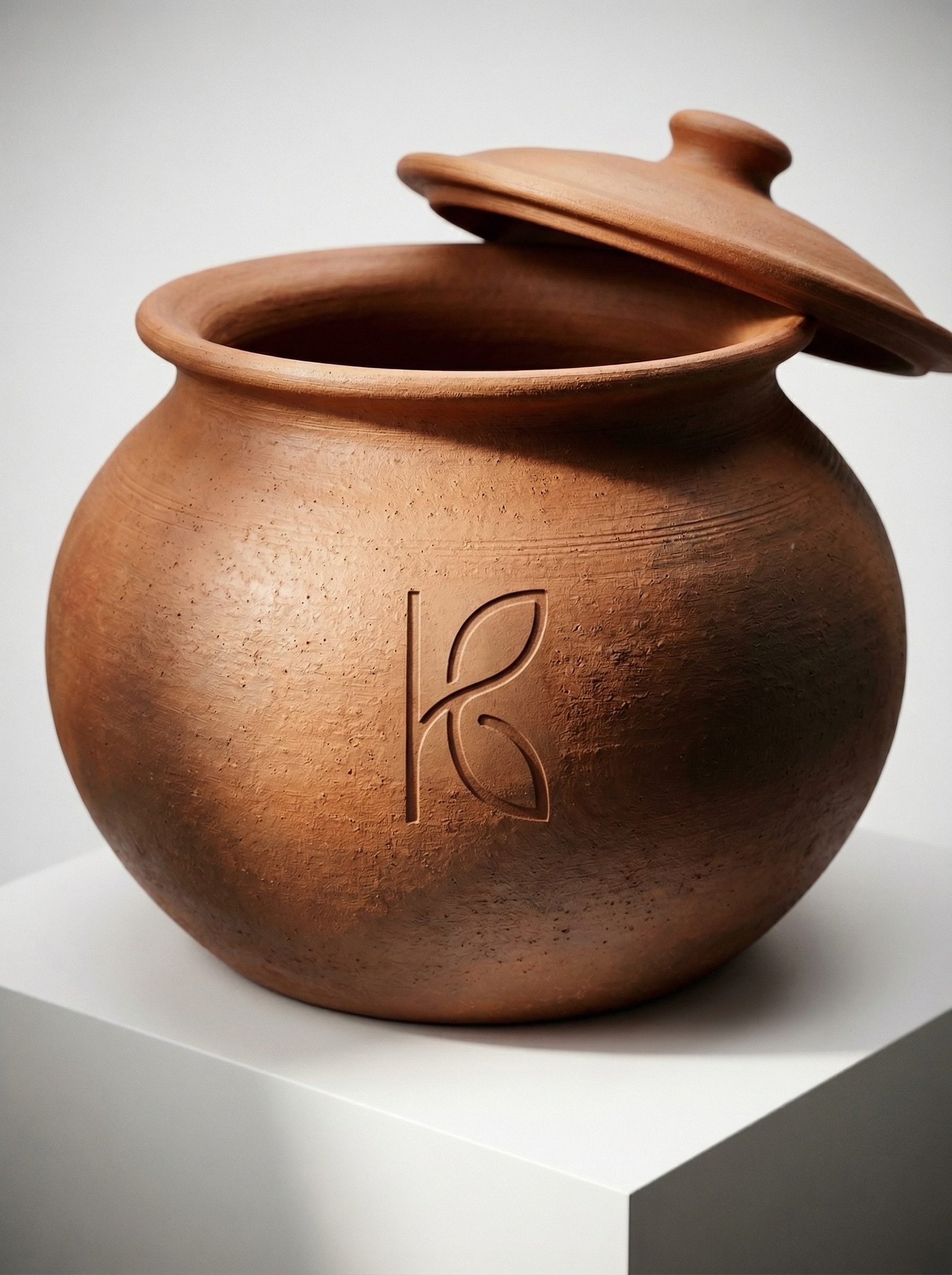
A 1-litre completely unglazed breathable clay bowl for setting curd at family scale. Serves 3–4 people. The same temperature-regulating mechanism as the 500ml, but with the greater thermal mass of the larger clay body working more effectively over the full litre of milk. XRF-certified. One batch every 2 days: enough probiotic-rich dahi for a family of four throughout the week.
Key Features & Benefits
- Greater Thermal Mass for Better Results: At 1L, the clay body has more thermal mass than the 500ml. The buffering of temperature during dahi setting is more pronounced — the milk spends even more time in the 28–32°C optimal range.
- Consistent Texture Throughout: The 1L pot’s wider form reduces the thickness-to-width ratio, meaning the clay walls are close to the dahi throughout — producing more consistent temperature and therefore more consistent texture from surface to base.
- Zero Whey Separation: The unglazed clay breathes moisture outward during setting. At 1L of milk, the potential for whey pooling on the surface is greater than at 500ml; the clay’s breathability is more important at this scale.
- Zero Plastic Contact: The entire litre of daily dahi for your family, set entirely in clay. No plastic-derived compounds during fermentation.
- XRF Certified — Unglazed Standard: Higher-stringency XRF testing for the unglazed clay that has direct food contact.
- Family Economy: Set 1L every 2 days: approximately 4 servings at 250ml each. One batch of 500g yogurt starter, set in clay, feeds 4 people for 2 days. The most cost-effective daily probiotic available.
About the Material
The 1L dahi pot shares the construction and care philosophy of the 500ml — completely unglazed interior, breathable walls, cotton cloth cover rather than a lid. The practical difference at 1L is the base width: the 1L pot is proportionally wider than the 500ml, which means the clay walls are at a shallower angle relative to the milk depth. This wider, shallower form is particularly effective for the top-layer setting behaviour that produces the characteristic thick cream surface of well-made dahi.
The Science
The surface layer of well-made dahi — the thick, creamy layer that forms on top and is the most prized for its texture and probiotic density — forms because the milk proteins and fats concentrate at the surface during setting. This concentration is most pronounced when: (1) the setting temperature is stable in the optimal range, (2) the vessel is wide and shallow (more surface area for the concentration to occur), and (3) moisture escapes upward through the surface rather than pooling. The 1L clay dahi pot satisfies all three conditions.
Safety & Certification Standards
| XRF Analysis — Clay Source | Heavy metal screening on raw clay before production begins |
| ICP-OES — Finished Product | Parts-per-billion accuracy. Actual migration into food simulants tested |
| NABL-Accredited Laboratory | Internationally recognised test facility |
| FSSAI Food Contact Compliance | Meets India’s legal food safety standards |
| Per-Batch QR Report | Your batch. Your numbers. Published before dispatch. Scan and read it yourself. |
Lab Test Results
| Compound | Klayvi Result | FSSAI Safe Limit |
|---|---|---|
| Lead (Pb) | ≤ 2.1 ppm | 90 ppm |
| Cadmium (Cd) | ≤ 0.3 ppm | 0.5 ppm |
| Arsenic (As) | ≤ 0.4 ppm | 2.0 ppm |
| Mercury (Hg) | Not detected | 0.5 ppm |
| PTFE / PFOA / PFAS | Not present | Zero tolerance |
Caring for Your Klayvi
| 1 — First Use | Rinse with plain water. Cook something water-based for first 2–3 uses. |
| 2 — Daily Clean | Klayvi Wash Care (pH 6–8) or sisal scrubber + warm water. Never standard dish soap — its pH 9–11 destroys the seasoning layer. |
| 3 — After Wash | Dry completely on low flame for 2 minutes. Never store damp. |
| 4 — Monthly | Apply 4–5 drops cold-pressed flaxseed oil. Heat on medium-low until just smoking (~4 min). Cool and wipe. |
| 5 — Never | Dishwasher · Microwave · Overnight soaking · Chemical detergents · Cold water on a hot vessel |
What’s in the Box
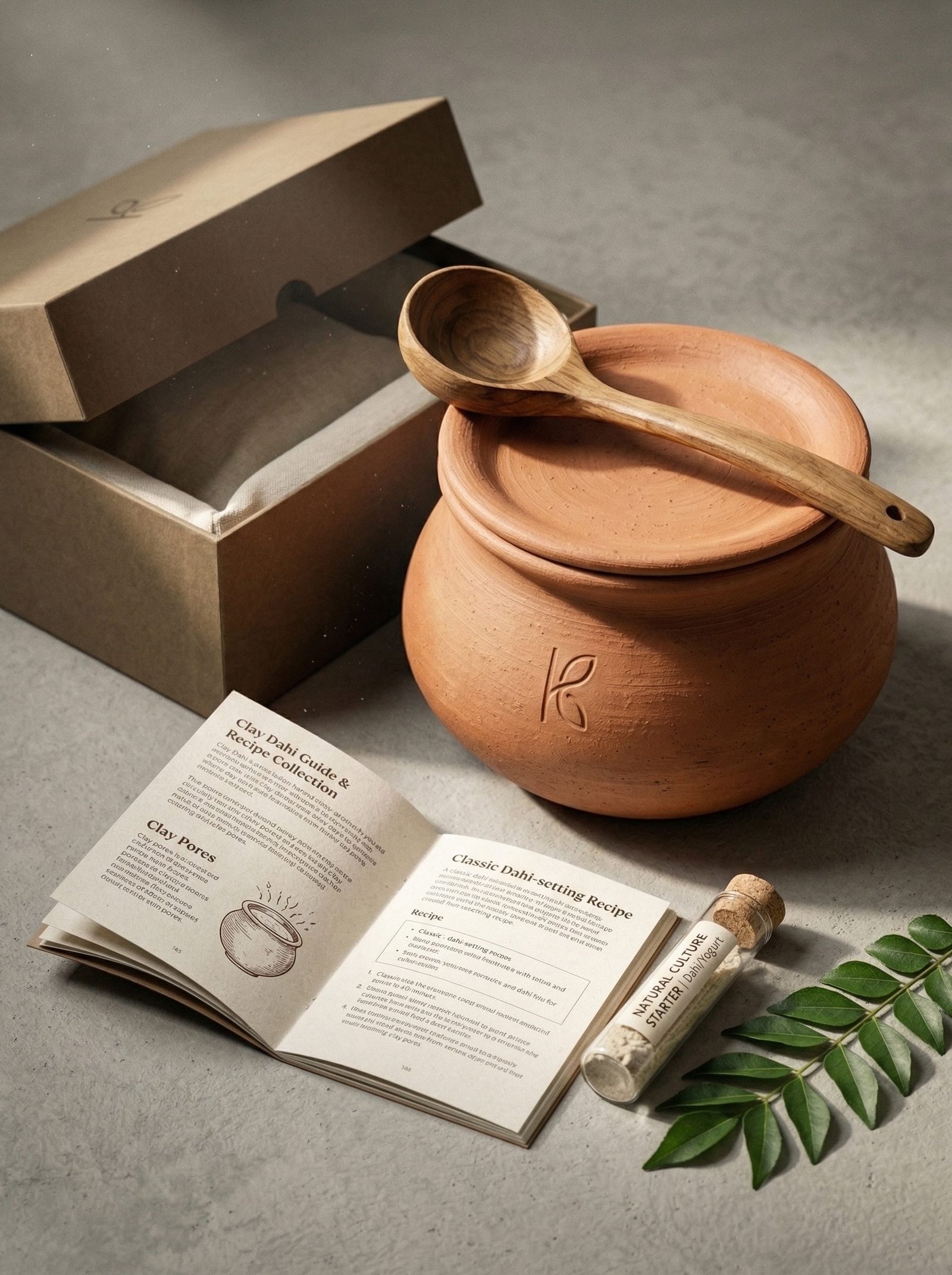
- Clay Dahi Pot 1L (completely unglazed interior)
- Setting protocol card
- Artisan provenance card
- Batch QR card
Frequently Asked Questions
Q: How does the 1L compare to making dahi in a 1L steel container?
Steel conducts heat 20× faster than clay. When you place a steel container of warm milk in a room at 25°C, the milk cools toward 25°C within 2–3 hours. In clay, the cooling is buffered — the 1L clay pot can maintain the milk above 27°C for 4–5 hours before falling below the culture’s optimal range. That extra 2–3 hours of optimal-temperature culture activity is the texture and probiotic content difference.
Q: Can I set different dahi varieties in the same 1L pot?
Yes — Greek-style thick dahi (hang the set dahi in a muslin cloth to drain whey), flavoured dahi (add fruit or saffron after setting), mishti doi (sweetened with jaggery before setting): all work in the clay pot. Clean thoroughly between varieties if the flavour differs significantly.
Q: The dahi in the 1L pot is firmer at the base than at the top. Is that normal?
Yes — the clay base provides additional temperature stability below, so the culture is most active at the base and sets firmer there. The surface is set by the ambient temperature and the cotton cloth cover. Stir before serving for a consistent texture, or serve from the top layer first if you prefer the progression.
Q: Can I refrigerate the 1L dahi pot directly?
Yes — once the dahi is set (6–8 hours at room temperature), place the entire clay pot in the refrigerator to firm and chill. The clay pot in the refrigerator maintains the dahi at a stable cool temperature and continues to provide slight breathability even at refrigerator temperatures.
Q: How many times a week should I make dahi?
For a family of four consuming approximately 200–250g of dahi per person per day: set 1L every 1.5–2 days. The clay pot can be refilled and restarted within 30 minutes of emptying, so the turnaround is very fast.
Q: Will the dahi pot develop a smell over time?
The clay dahi pot develops a characteristic dahi smell over time — the lactic acid and dahi-specific flavour compounds absorb into the clay pores. This is desirable: it means subsequent batches set in the same pot will have a head start on the culture from the microorganisms already present in the clay. A well-used dahi pot sets dahi faster and more consistently than a new one.
Related products
-
Out of Stock

-
Out of Stock
-
Out of Stock

Reviews
There are no reviews yet.