
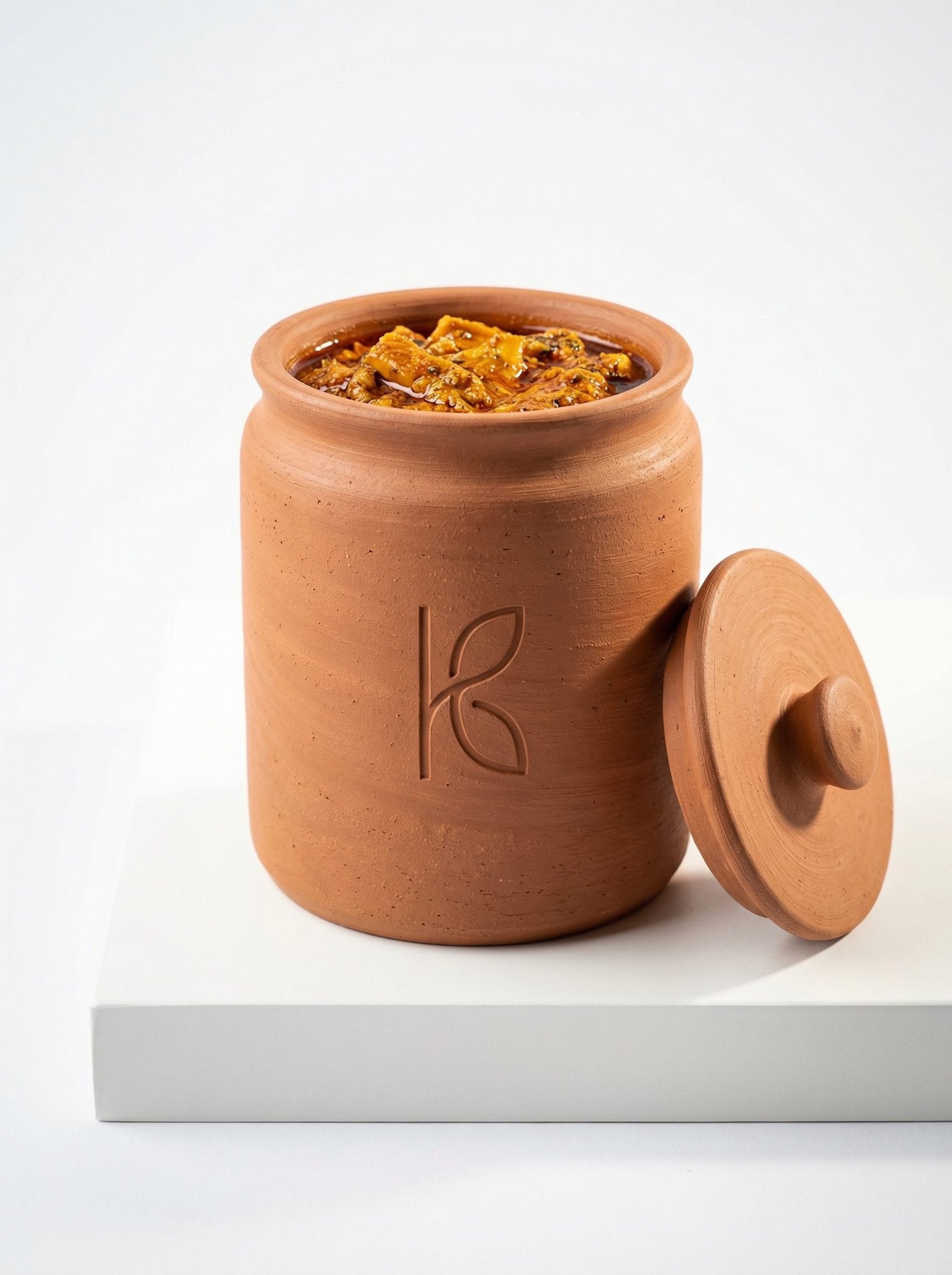
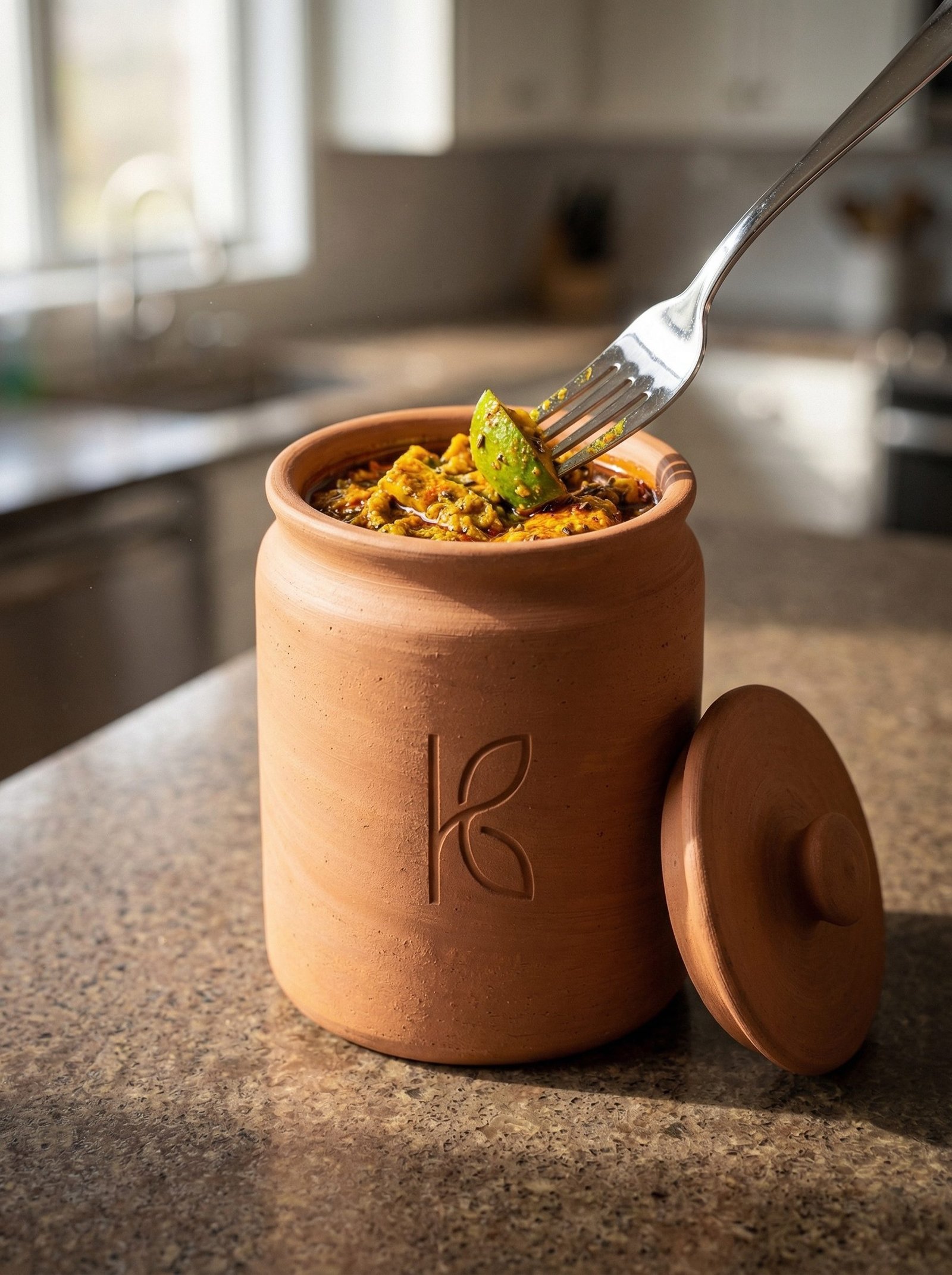
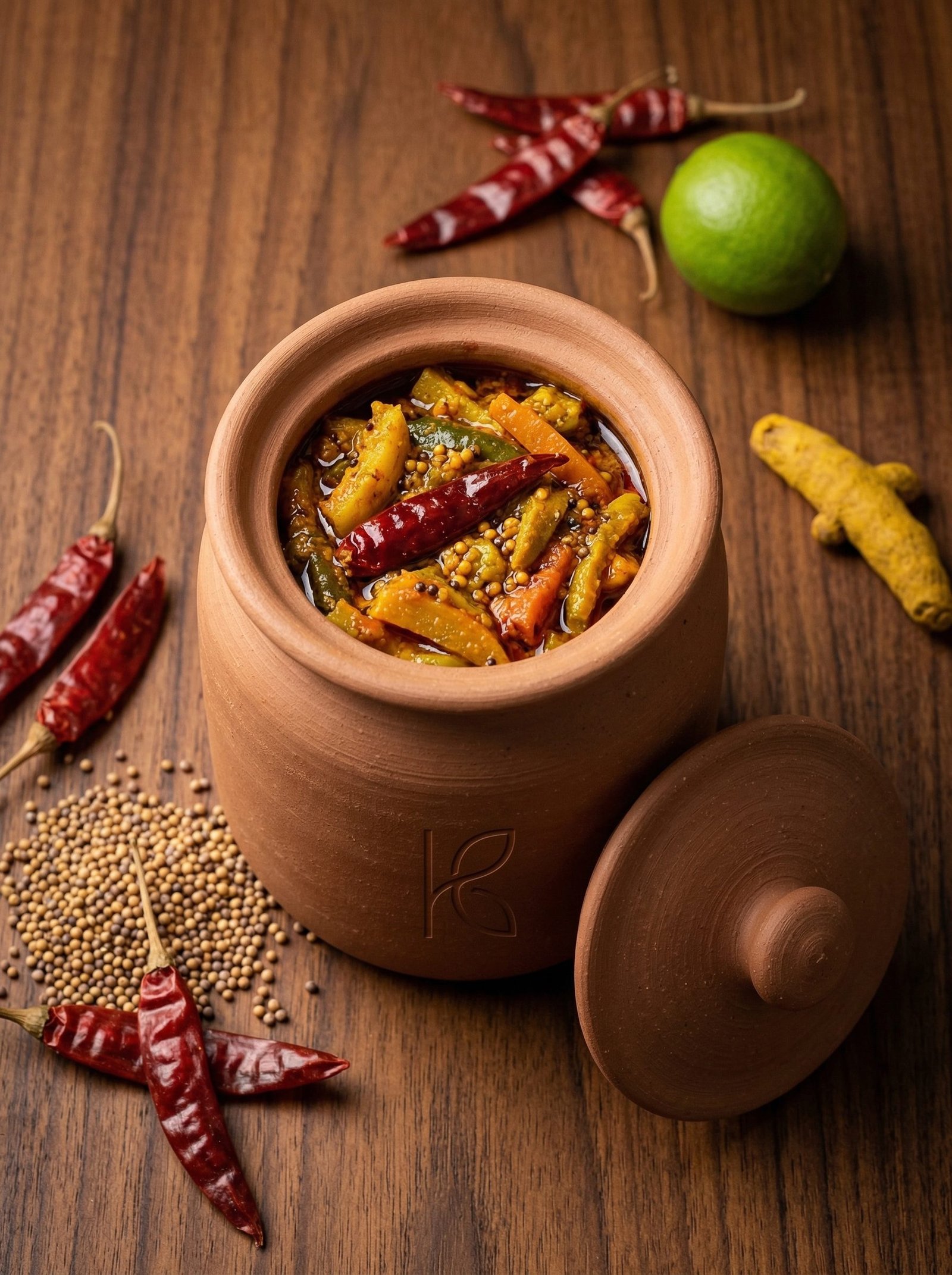
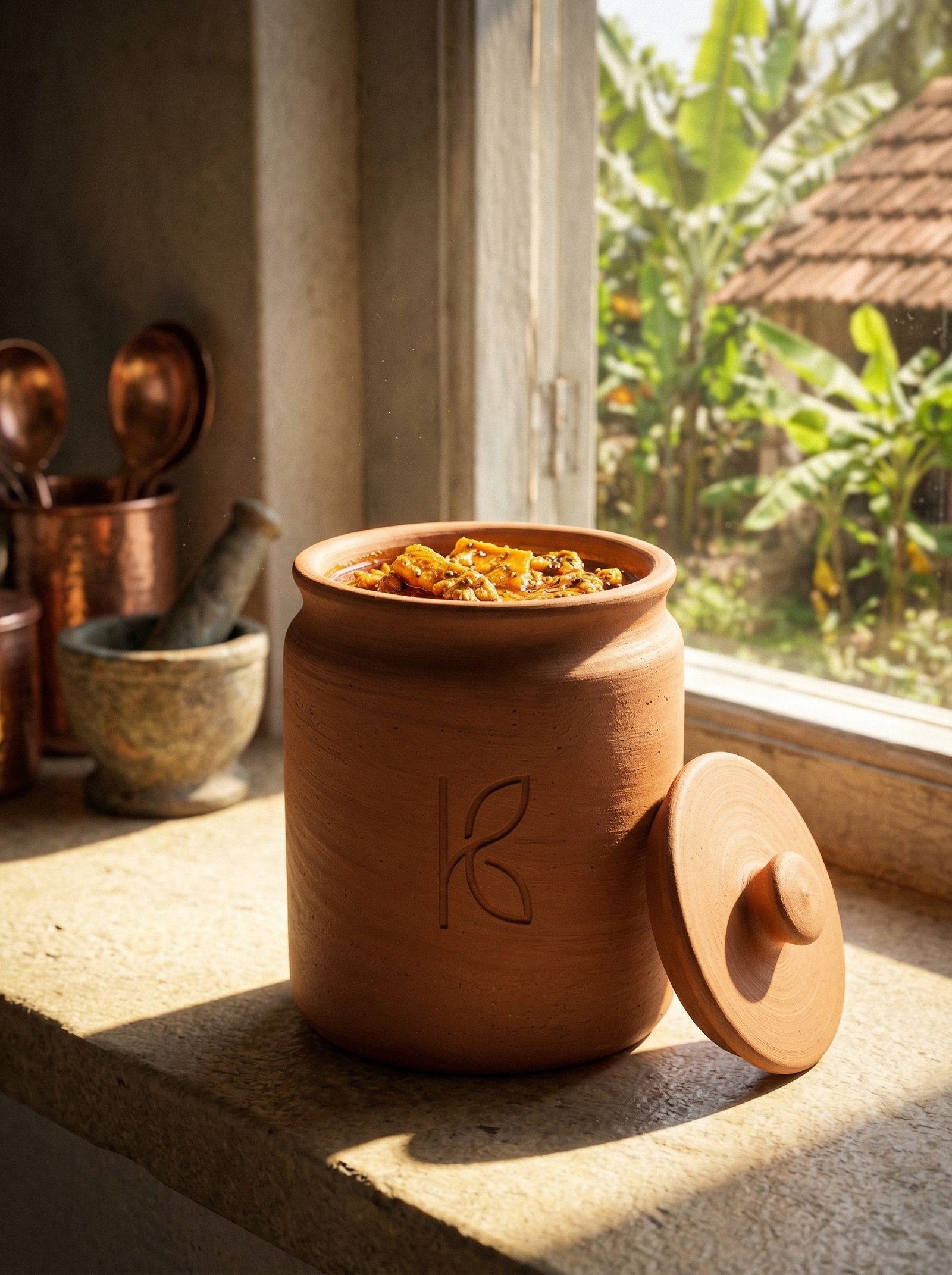
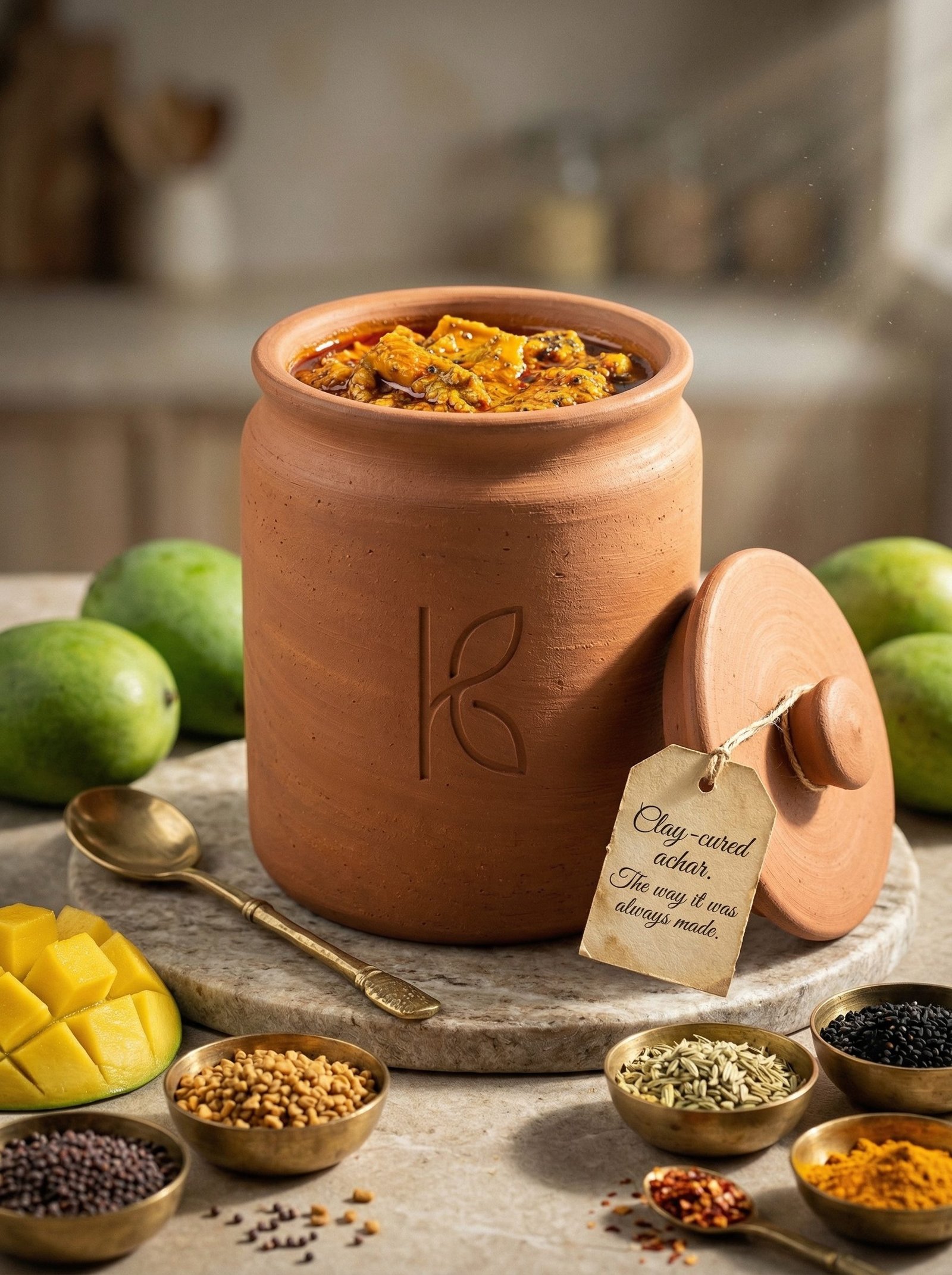
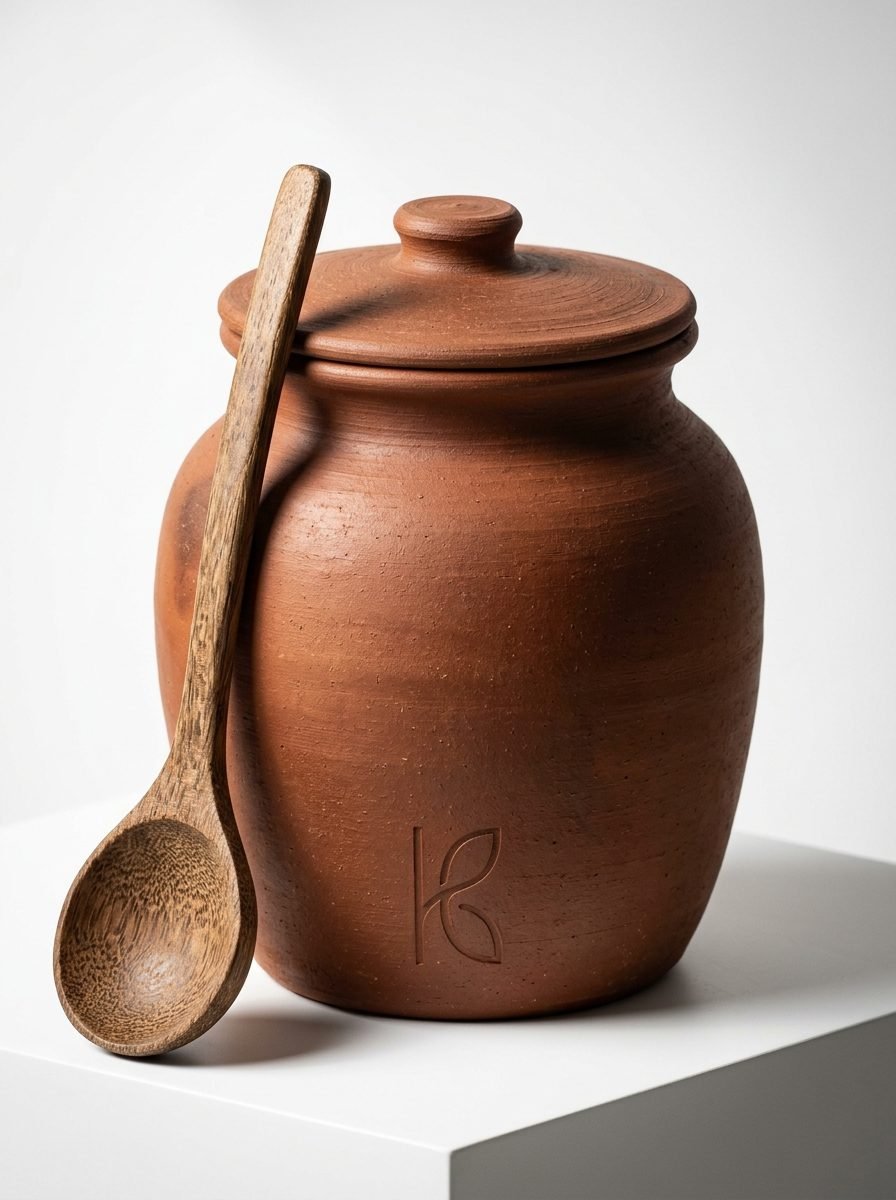
Clay Pickle Jar – 500 ml
Out of StockThe safest place for your achar. Clay-sealed, lab-certified, completely
Terracotta Clay · 500 ml · SKU: KL-SW-007
₹449.00
| Material | Terracotta Clay |
|---|---|
| Size / Capacity | 500 ml |
| Induction Ready | NO |
| XRF Tested | NO |
| Sub-Category | Pickle Jar |
The safest place for your achar. Clay-sealed, lab-certified, completely
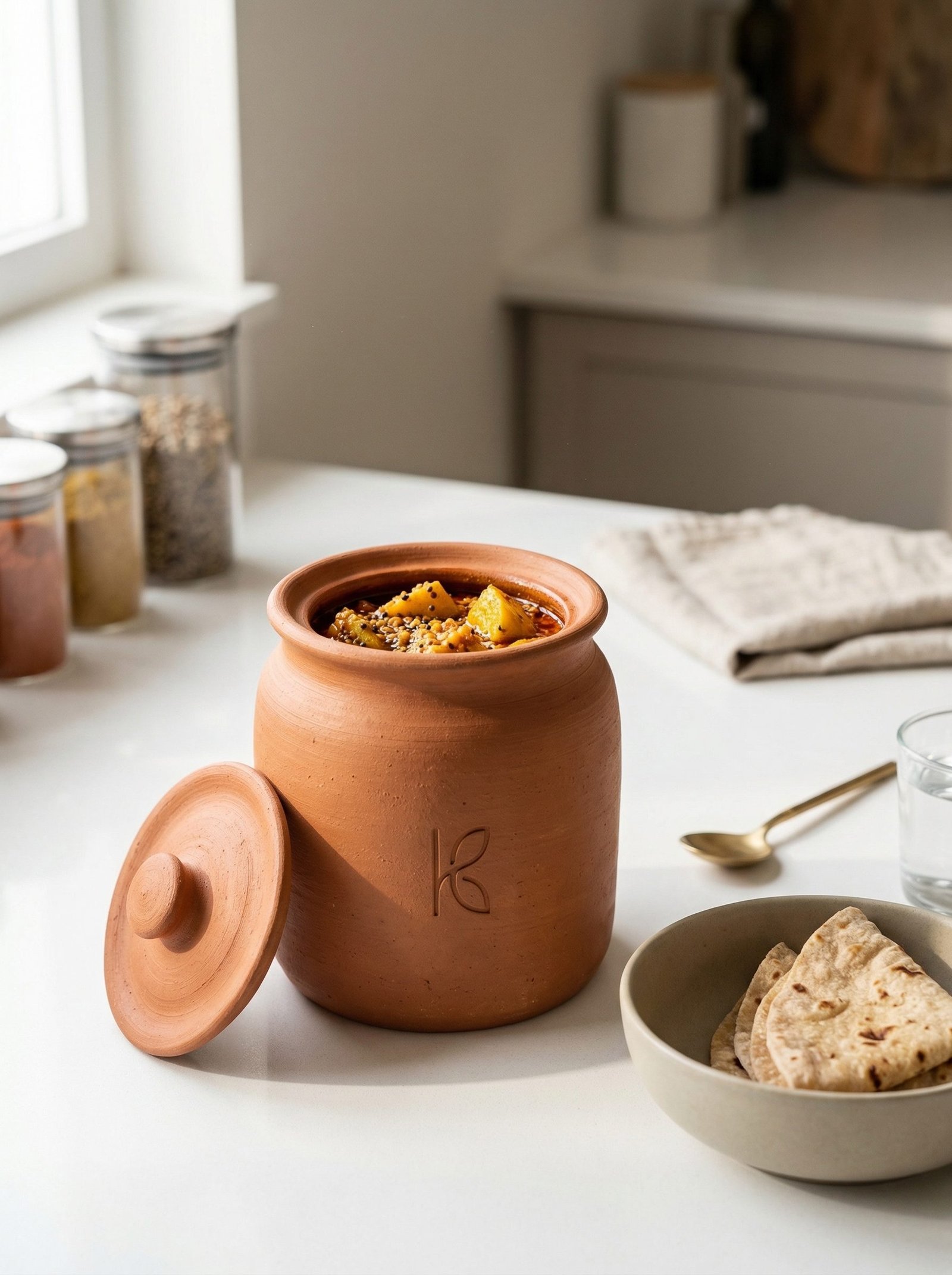
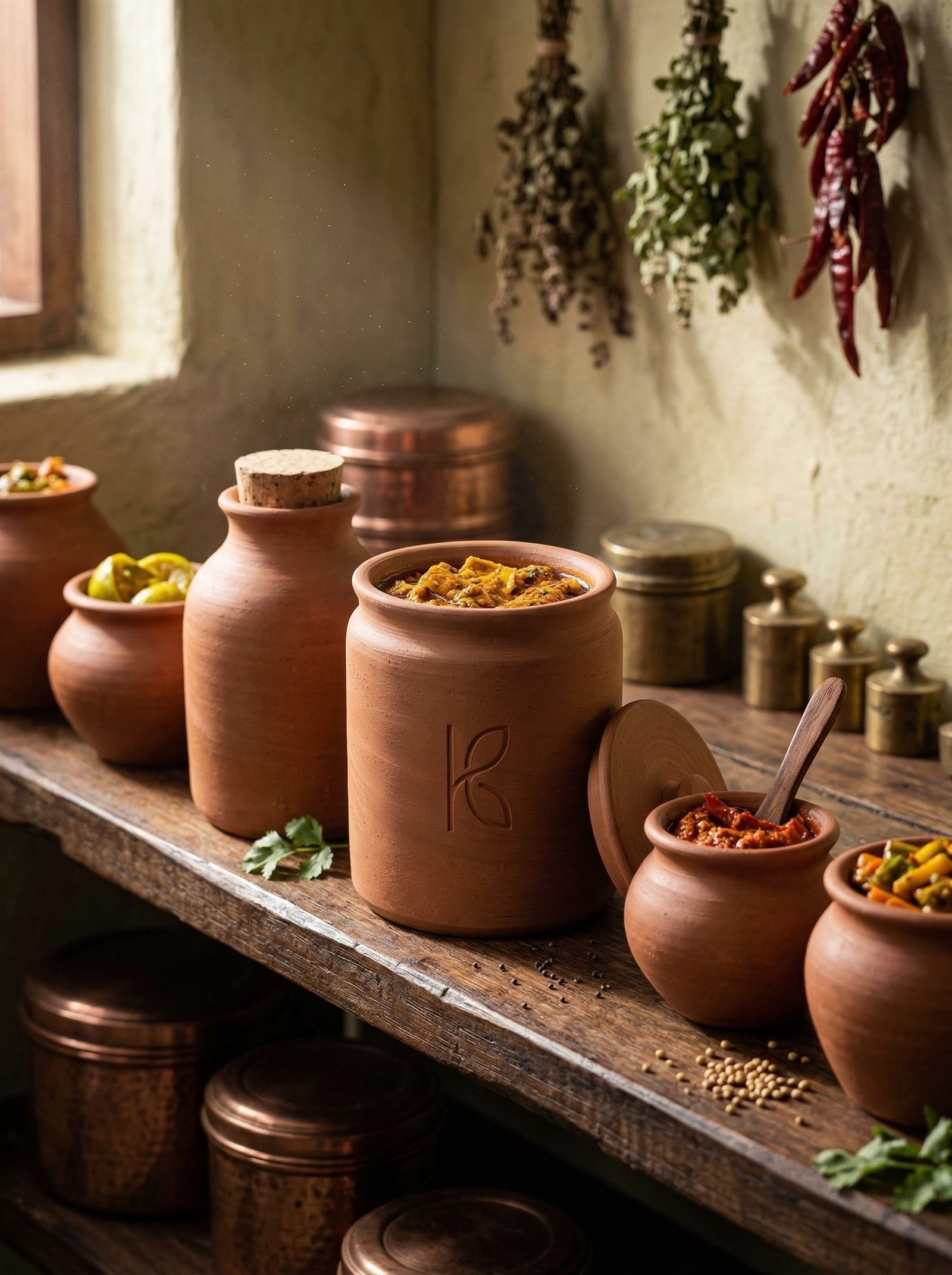
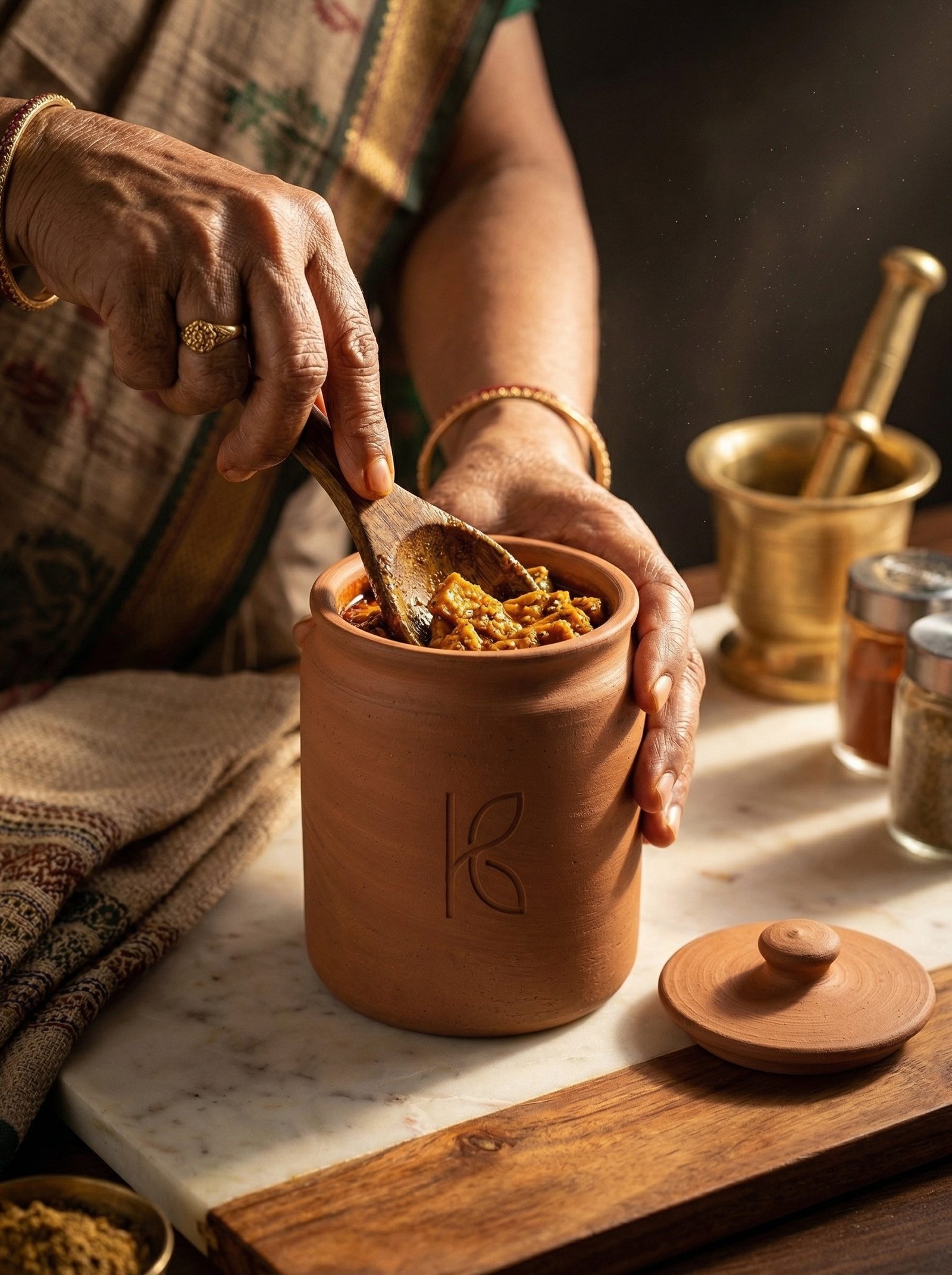
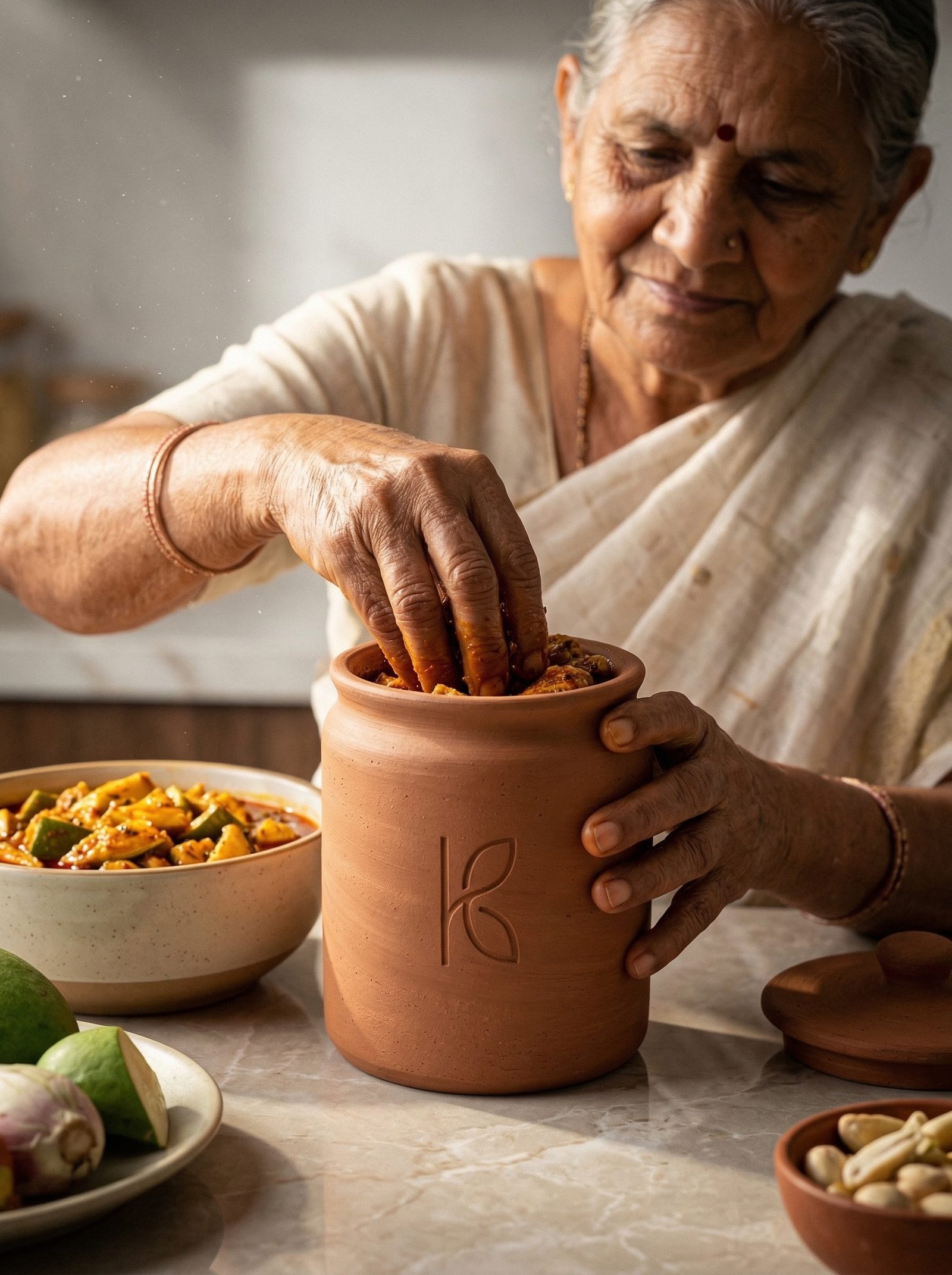
non-reactive. A wide-mouthed clay storage jar with a fitted clay lid for homemade pickles and achar. 500ml. XRF-certified. No plastic to leach into your oil-based pickle. No metal lid to corrode against acidic mango achar. No synthetic seal. Clay meeting clay, sealing food the way it has been sealed for 6,000 years — and doing it better than anything that has replaced it.
Key Features & Benefits
- Non-Reactive With Acidic, Oily Food: Mango achar at pH 2.5–4.0 in oily base: this is the combination that attacks plastic containers (acid + oil dissolves plasticiser) and corrodes metal lids (acid oxidises metal). Clay is completely non-reactive with both. The pickle chemistry is preserved, not contaminated.
- Clay Lid — Not Airtight by Design: Traditional pickling requires a slightly open-but-protected environment. The clay lid keeps dust out and oil in without creating the fully sealed environment that causes off-flavours in long-stored pickles. This is correct storage — not a limitation.
- Oil-Layer Compatible: The traditional oil-seal method (pouring oil over the pickle surface before lidding) works in perfect concert with the clay lid. Together they are the original, scientifically sound preservation method for Indian pickle.
- Wide Mouth for Easy Packing: The 7cm mouth diameter allows packing whole mango slices, long chilli strips, or large lime pieces without cutting them smaller to fit a narrow opening.
- XRF Certified: Batch QR on base.
- Alkaline Buffering Over Time: The clay’s slight alkalinity slowly moderates the pickle’s acidity over months of storage — producing a rounder, less harsh flavour in long-stored pickles.
About the Material
The problem with pickle storage that most people have never thought about: mango achar is highly acidic (pH 2.5–4.0) and almost always oil-based. Oil is lipophilic — it dissolves fat-soluble compounds extremely efficiently. Plastic containers and acidic, oily food together accelerate the leaching of BPA, phthalates, and other plasticisers from the container into the oil, which carries them directly into your food. Glass is better than plastic but has its own issue: metal lids. The standard metal pickle jar lid reacts with acidic vapours from the pickle over time, producing rust or verdigris that can contaminate the top layer of pickle. Clay is the correct answer. A clay jar with a clay lid is completely non-reactive. This is why traditional Indian pickle jars were always clay. The Science The oil seal is an ancient food technology: a thin layer of oil on the surface of the pickle creates a barrier between the pickle and the air above, preventing oxidation and slowing surface contamination. This oil layer has very low gas permeability — oxygen cannot diffuse through it easily. The clay lid on top prevents evaporation of the oil layer. Together: an oxygen-excluded, evaporation-resistant, chemically stable storage environment. No refrigeration required. This system has kept pickle safe and delicious without refrigeration for centuries.
Safety & Certification Standards
| XRF Analysis — Clay Source | Heavy metal screening on raw clay before production begins |
| ICP-OES — Finished Product | Parts-per-billion accuracy. Actual migration into food simulants tested |
| NABL-Accredited Laboratory | Internationally recognised test facility |
| FSSAI Food Contact Compliance | Meets India’s legal food safety standards |
| Per-Batch QR Report | Your batch. Your numbers. Published before dispatch. |
Lab Test Results
| Compound | Klayvi Result | FSSAI Safe Limit |
|---|---|---|
| Lead (Pb) | ≤ 2.1 ppm | 90 ppm |
| Cadmium (Cd) | ≤ 0.3 ppm | 0.5 ppm |
| Arsenic (As) | ≤ 0.4 ppm | 2.0 ppm |
| Mercury (Hg) | Not detected | 0.5 ppm |
| PTFE / PFOA / PFAS | Not present | Zero tolerance |
Caring for Your Klayvi
| 1 — First Use | Rinse with plain water. No soap on first use. |
| 2 — Daily Clean | Klayvi Wash Care (pH 6–8) or sisal scrubber + warm water. Never standard dish soap — it destroys seasoning at pH 9–11. |
| 3 — After Wash | Dry completely on low flame (cookware) or air-dry fully (decor/storage). Never store damp. |
| 4 — Monthly | Apply 4–5 drops cold-pressed flaxseed oil to cooking surfaces. Heat on medium-low until just smoking. Cool and wipe. |
| 5 — Never | Dishwasher · Microwave · Overnight soaking · Chemical detergents · Cold water on a hot vessel |
What’s in the Box
- Clay Pickle Jar 500ml with fitted clay lid
- Artisan provenance card
- Clay Care Passport (pickle storage section)
- Batch QR card
Frequently Asked Questions
Q: How do I prepare a new clay pickle jar for first use?
Wash with warm water. Fill with water and let stand 24 hours — this saturates the clay and prevents the pickle from initially absorbing into the walls. Pour out, let air-dry for 2 hours. The jar is now ready for pickle.
Q: The clay lid is not perfectly airtight. Should I be concerned?
No. An imperfect clay-on-clay seal is the correct environment for pickle storage. Completely airtight containers cause off-flavours because the gases produced during pickling (from ongoing fermentation and the natural chemistry of the pickle) have nowhere to go. The clay lid is sealing, not hermetically sealing. This is correct.
Q: How long does pickle keep in a clay jar?
Oil-based mango or lime achar: 12–18 months at room temperature. Vinegar-based pickles: 6–12 months. The clay’s alkaline buffering and the oil seal together create excellent long-term storage conditions. Traditional achar in clay jars has been documented at 2+ years storage in cool, dark conditions.
Q: Can I store pickle in the refrigerator in the clay jar?
Yes. The clay jar is stable in refrigerator conditions. Cold temperatures slow the ongoing fermentation in the pickle, which can be desirable for very acidic batches. The clay will not crack from refrigerator temperatures.
Q: The inside of the jar has turned orange from turmeric. Is that permanent?
Turmeric staining of unglazed clay is permanent and expected. The turmeric’s curcumin binds to the clay minerals. This is the jar developing its identity from the pickle it stores. It does not affect the safety or function of the jar for subsequent pickle batches.
Q: Can I use the 500ml jar for something other than pickle?
Yes — small spice storage, dried herb storage, salt storage, honey. The wide mouth and clay breathability make it excellent for any ingredient that benefits from a natural, breathable, non-reactive container.
Related products
-
Out of Stock

-
Out of Stock
-
Out of Stock

Reviews
There are no reviews yet.