
Clay Grain Storage Jar – 3 kg
Out of StockMonthly supply. Permanent zero-plastic kitchen storage.
Terracotta Clay · 3 kg capacity · SKU: KL-SP-002
₹899.00
| Material | Terracotta Clay |
|---|---|
| Size / Capacity | 3 kg capacity |
| Induction Ready | NO |
| XRF Tested | NO |
| Sub-Category | Grain Jar |
Monthly supply. Permanent zero-plastic kitchen storage.
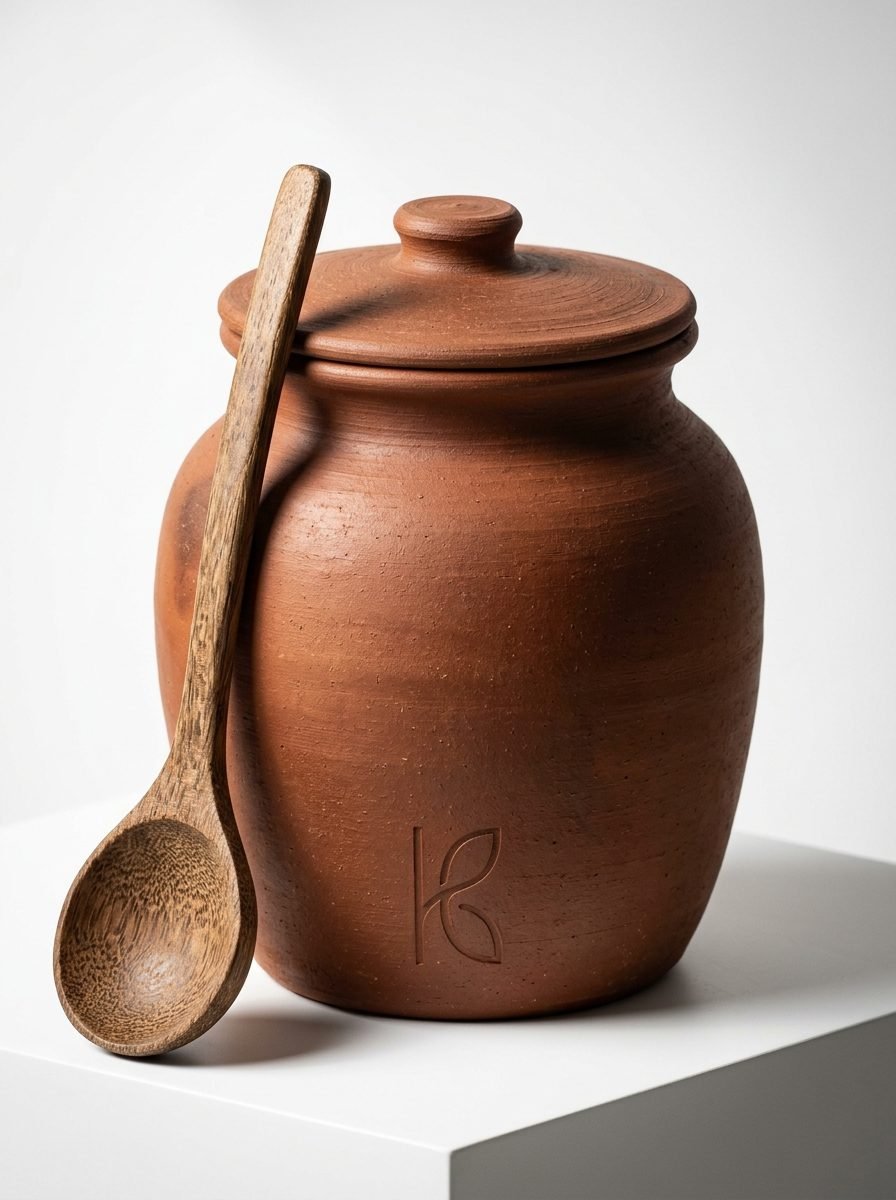
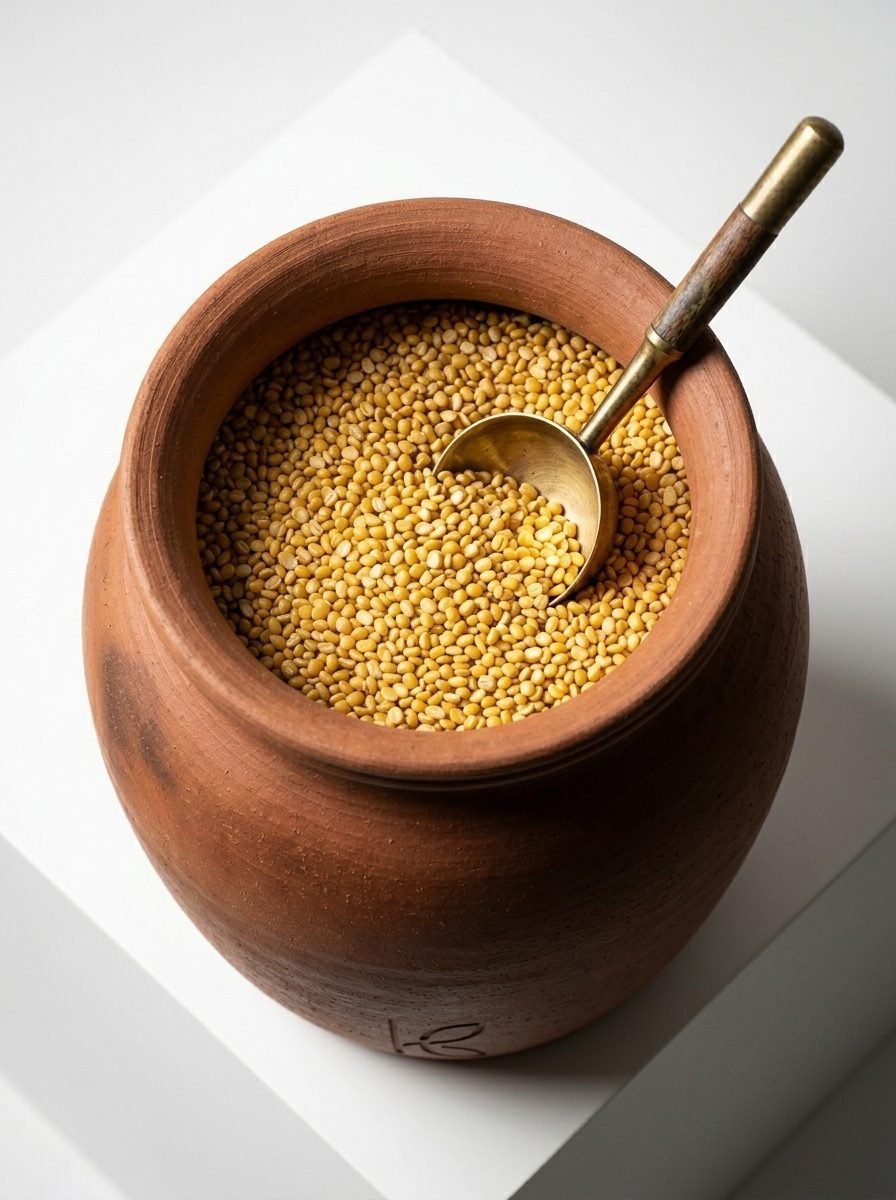
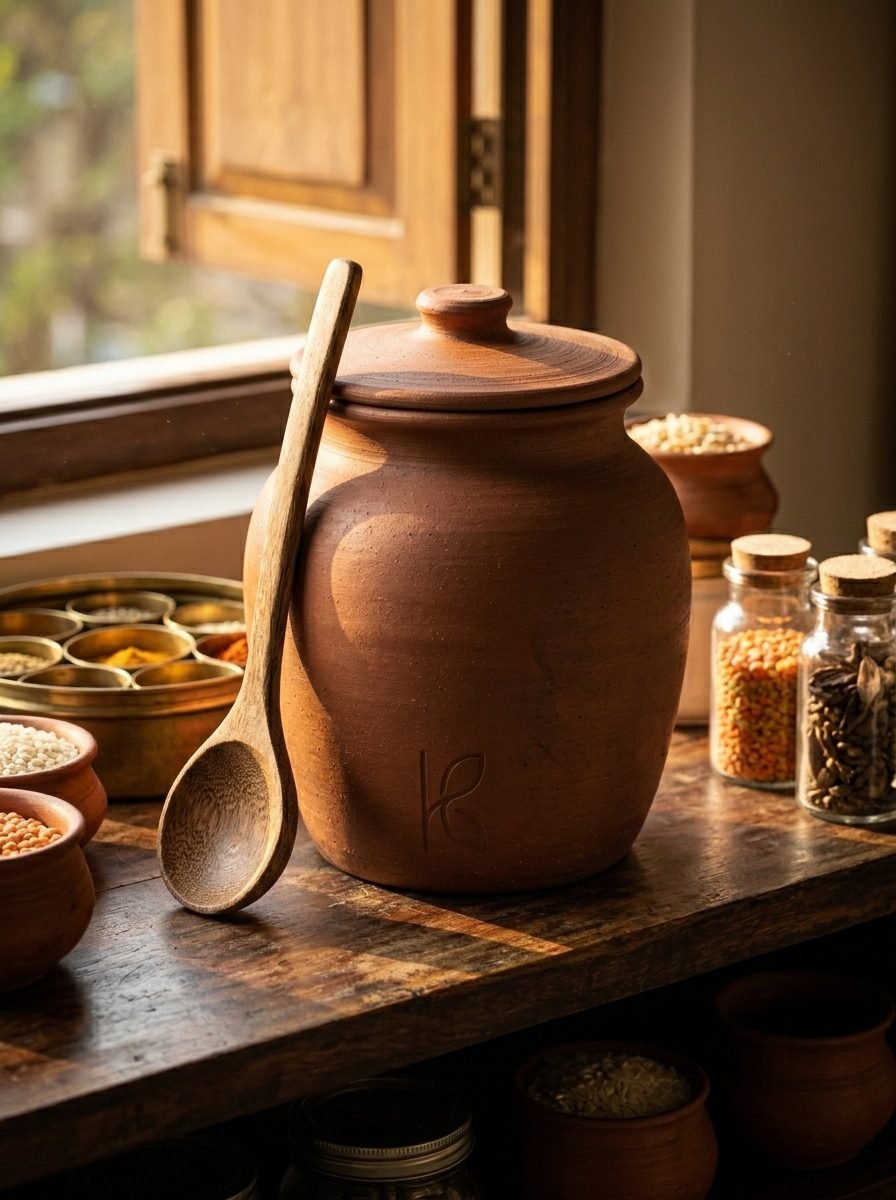
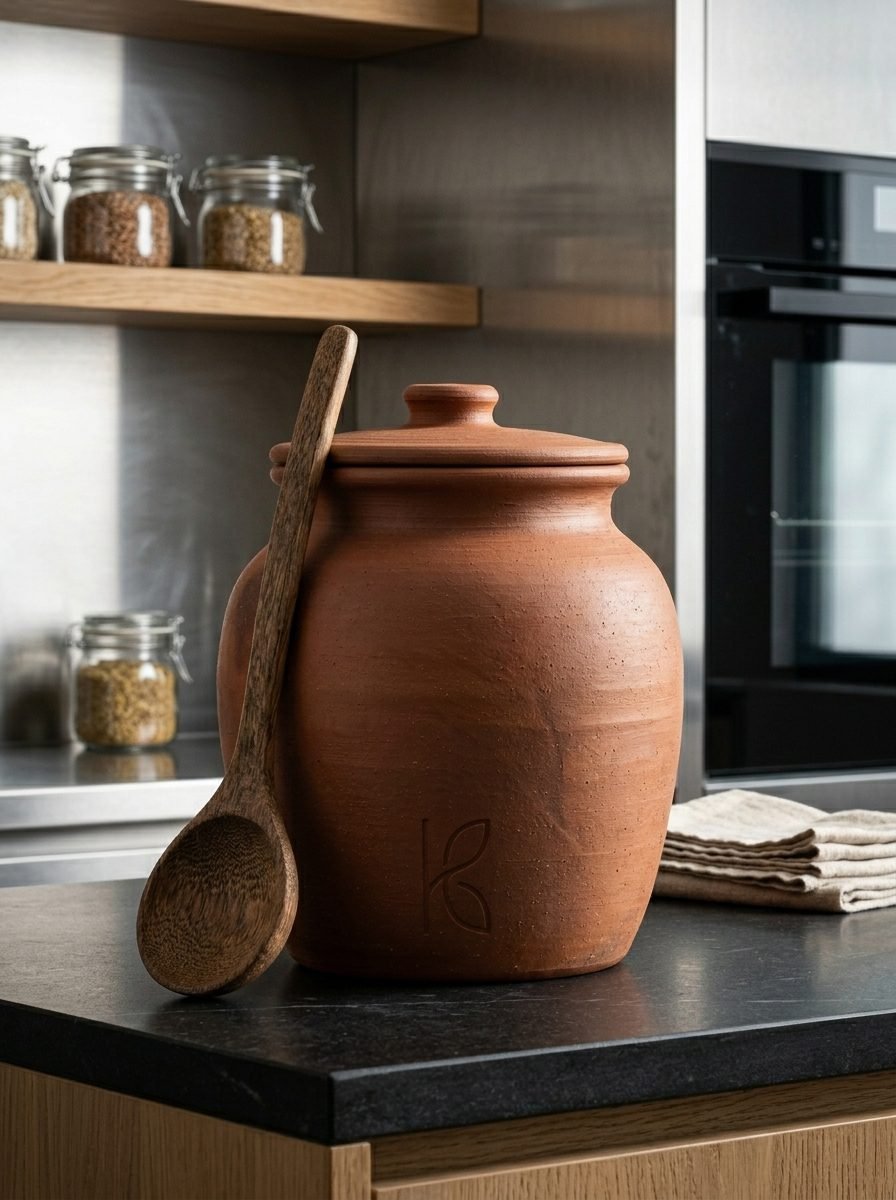
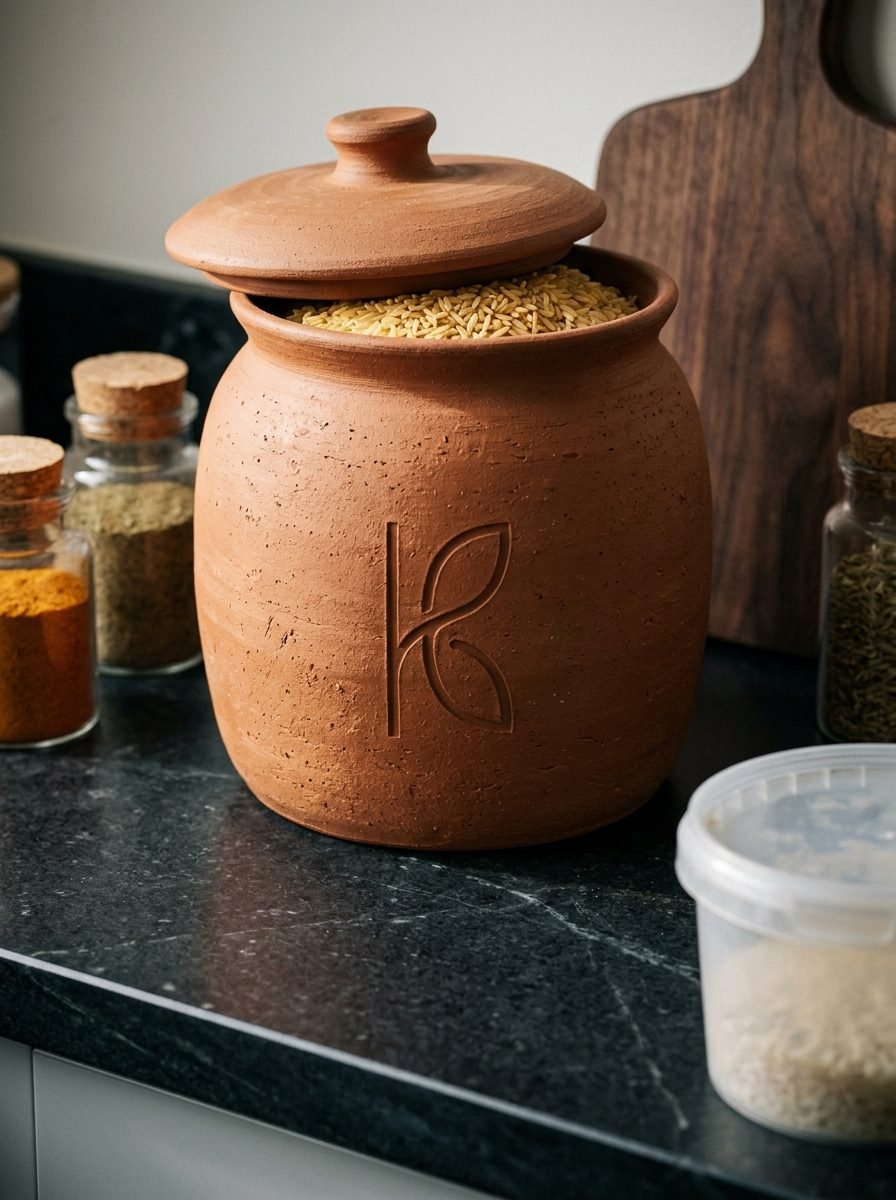
A wide cylindrical clay storage jar at 3kg capacity for bulk dry goods — atta flour, basmati rice, toor dal, chickpeas, or any monthly-buy dry staple. Breathable clay walls. Fitted clay lid. XRF-certified. At 3kg, this is the jar that replaces the largest plastic container on your kitchen shelf permanently. One decision. One jar. Indefinite storage.
Key Features & Benefits
- Monthly Supply Scale: 3kg atta: approximately 2.5 weeks for a family of four making rotis daily. 3kg basmati: approximately 2–3 weeks of rice for a family of four. One jar, one monthly bulk purchase, zero interim plastic contact.
- Substantial Clay Body for Extended Storage: The 3kg jar has thicker walls than the 1kg — more clay mass means more humidity buffering capacity for the larger grain volume inside. For long-term storage (4+ weeks), this extra buffering is where the clay advantage over plastic is most pronounced.
- Zero Plastic in Long-Term Grain Contact: The research on long-term food contact with plastic is most concerning for dry goods stored at room temperature over months: the slow temperature cycling (warm day, cool night) that happens in Indian kitchens accelerates plasticiser migration from plastic containers into dry food contact surfaces over time.
- Humidity Regulation at 3kg Scale: At 3kg of grain, the moisture management challenge is greater than at 1kg. More grain means more potential for moisture variation across the stored batch. Clay’s continuous breathability manages this throughout the storage period, not just at the moment of filling.
- XRF Certified: Batch QR on base.
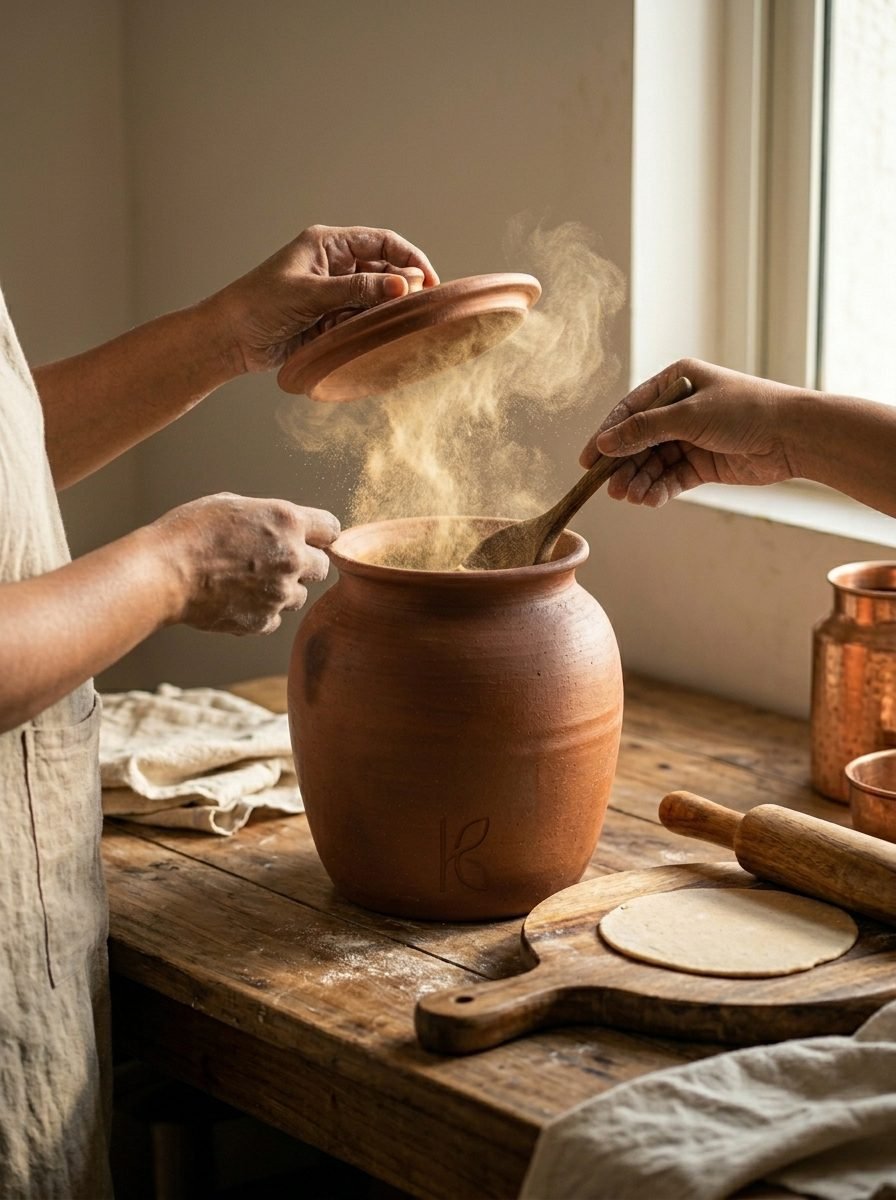
- Wide 8cm Mouth: Accommodates a standard 500ml measuring cup for scooping bulk grain without spillage.
About the Material
The 3kg jar is a significant kitchen object — full, it weighs approximately 3.8–4kg. At this weight, it sits in one place on the kitchen shelf rather than being moved regularly. This permanence is part of its design philosophy: choose the shelf position when empty, fill, and it stays there through the season. The clay walls at 3kg are 8–9mm thick — the thickest in the storage jar range — which provides structural integrity for a vessel that will be heavily loaded and repeatedly sealed and opened over months of daily use. The Science A 2020 study in Food Packaging and Shelf Life measured plasticiser migration from HDPE containers (the most common plastic for food storage in India) into dry food contact surfaces at 25°C and 40°C over 90 days. The migration at 40°C — a temperature easily reached by a kitchen shelf in summer in North India — was approximately 4.5× higher than at 25°C. For a family storing atta in plastic through an Indian summer, the cumulative plasticiser exposure over the season is measurably significant. Clay is non-reactive at any temperature reached in an Indian kitchen environment.
Safety & Certification Standards
| XRF Analysis — Clay Source | Heavy metal screening on raw clay before production begins |
| ICP-OES — Finished Product | Parts-per-billion accuracy. Actual migration into food simulants tested |
| NABL-Accredited Laboratory | Internationally recognised test facility |
| FSSAI Food Contact Compliance | Meets India’s legal food safety standards |
| Per-Batch QR Report | Your batch. Your numbers. Published before dispatch. |
Lab Test Results
| Compound | Klayvi Result | FSSAI Safe Limit |
|---|---|---|
| Lead (Pb) | ≤ 2.1 ppm | 90 ppm |
| Cadmium (Cd) | ≤ 0.3 ppm | 0.5 ppm |
| Arsenic (As) | ≤ 0.4 ppm | 2.0 ppm |
| Mercury (Hg) | Not detected | 0.5 ppm |
| PTFE / PFOA / PFAS | Not present | Zero tolerance |
Caring for Your Klayvi
| 1 — First Use | Rinse with plain water. No soap on first use. |
| 2 — Daily Clean | Klayvi Wash Care (pH 6–8) or sisal scrubber + warm water. Never standard dish soap (pH 9–11). |
| 3 — After Wash | Dry completely — on low flame for cookware, air-dry for storage and decor. |
| 4 — Monthly | Apply 4–5 drops cold-pressed flaxseed oil to cooking surfaces. Heat medium-low, cool, wipe. |
| 5 — Never | Dishwasher · Microwave · Chemical detergents · Overnight soaking · Cold water on a hot vessel |
What’s in the Box
- Clay Grain Jar 3kg with fitted clay lid
- Artisan provenance card
- Storage guide card
- Batch QR card
Frequently Asked Questions
Q: Is the 3kg jar stable enough not to tip?
Yes — the base diameter is proportionally wider relative to height than the 1kg, and the clay body’s weight provides natural ballast. Full at 3kg, the jar is very stable. Place on a flat, level shelf and it will not move.
Q: Can I store atta and rice in the same jar at different times?
Yes — but allow a full 48-hour airing between grain types. Empty, brush clean with a dry sisal brush, leave the lid off in a well-ventilated spot for 48 hours, then fill with the new grain. The 3kg jar will retain a faint previous-grain aroma for the first batch after switching, which is harmless.
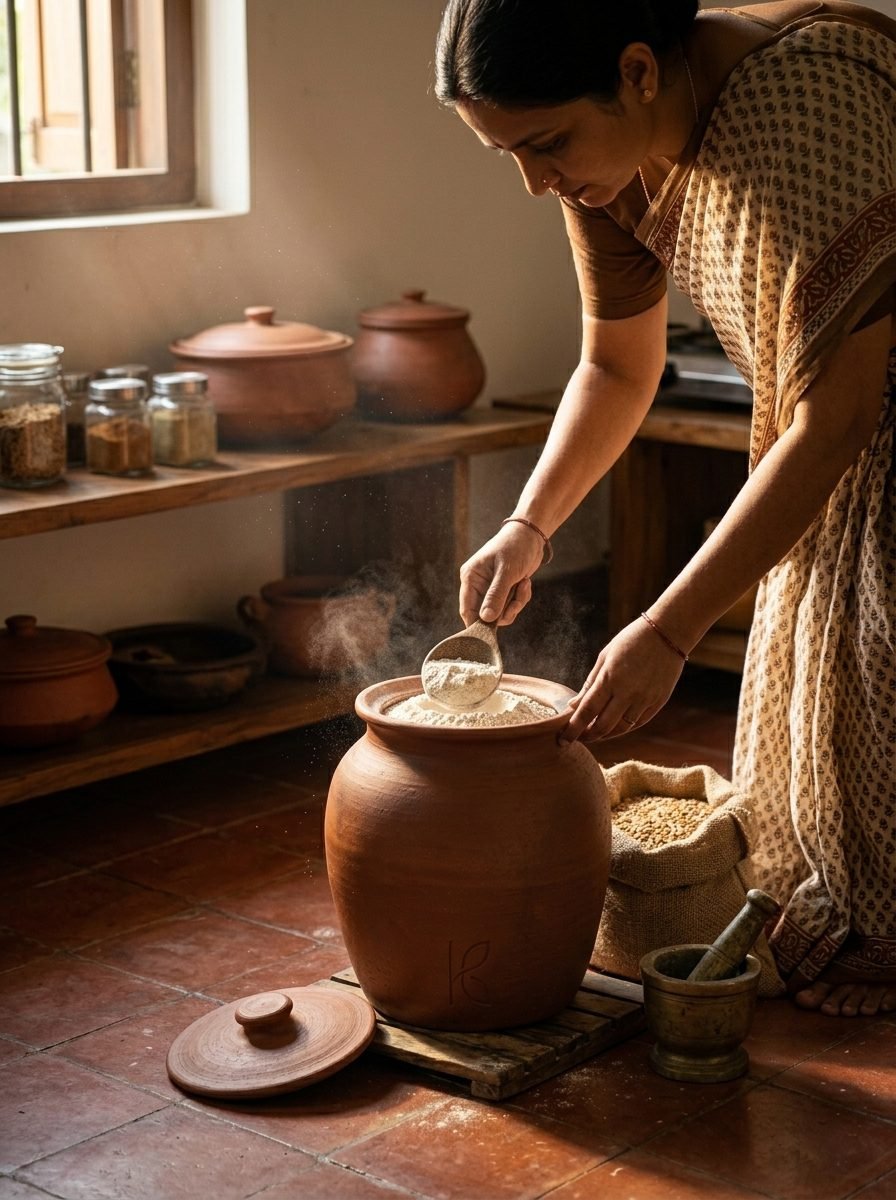
Q: My 3kg atta jar is on the kitchen floor. Is that appropriate?
Traditional storage of large grain quantities in India was floor-level. A stable, cool kitchen floor position is actually better for the clay’s humidity regulation than a high warm shelf — floor positions are typically cooler and less exposed to the temperature cycling that drives moisture fluctuation in grain.
Q: How do I clean the 3kg jar?
Empty completely. Brush interior with a dry sisal brush to remove grain dust and debris. Fill with warm water to approximately 30% capacity, swirl vigorously, pour out. Air-dry with the lid off for 24–48 hours. Never wash the 3kg jar with soap inside. The grain contact surface is unglazed clay and should remain soap-free.
Q: Can the 3kg jar hold cooked food overnight?
No — the grain jars are designed for dry storage only. Cooked food in an unglazed clay vessel overnight creates conditions for rapid bacterial growth (the moist, warm environment) and the unglazed clay absorbs cooked food residue in a way that is difficult to clean thoroughly.
Q: Is the clay jar rat or pest proof?
The clay lid sits on a rim and is weight-sealed — it is not mechanically locked. Persistent rodents can dislodge a clay lid. In environments with significant rodent pressure, add a heavy flat stone on top of the clay lid for additional weight. The clay jar itself is rodent-proof — no rodent can chew through 8–9mm clay walls.
Related products
-
Out of Stock

-
Out of Stock
-
Out of Stock

Reviews
There are no reviews yet.