
Clay Spice Box (Masala Dani) – 7 Sections
Out of StockSeven spices. One clay box. The daily kitchen object that improves every
Terracotta Clay · 7 sections · SKU: KL-SW-010
₹1,299.00
| Material | Terracotta Clay |
|---|---|
| Size / Capacity | 7 sections |
| Induction Ready | NO |
| XRF Tested | NO |
| Sub-Category | Masala Dani |
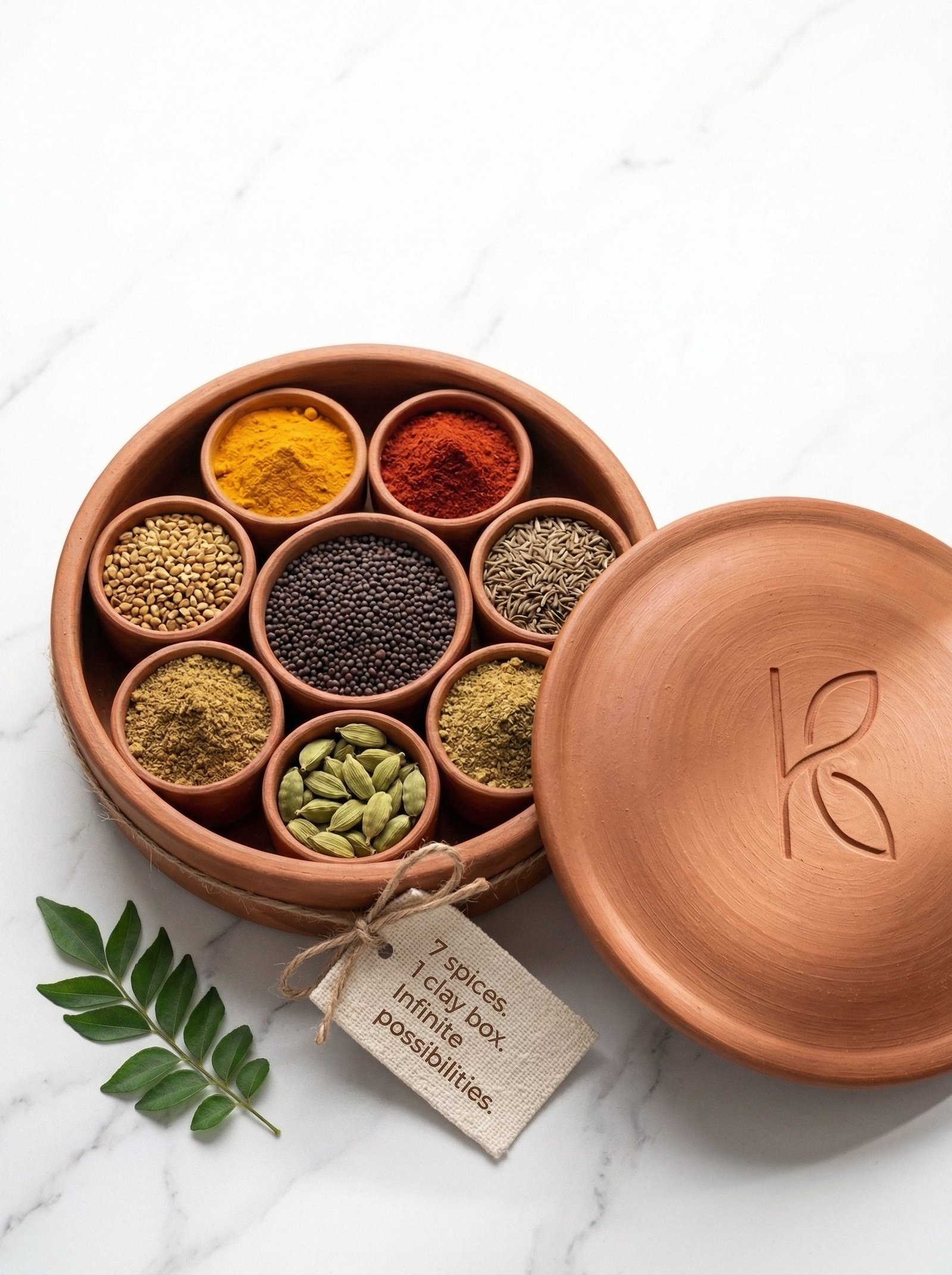
Seven spices. One clay box. The daily kitchen object that improves every
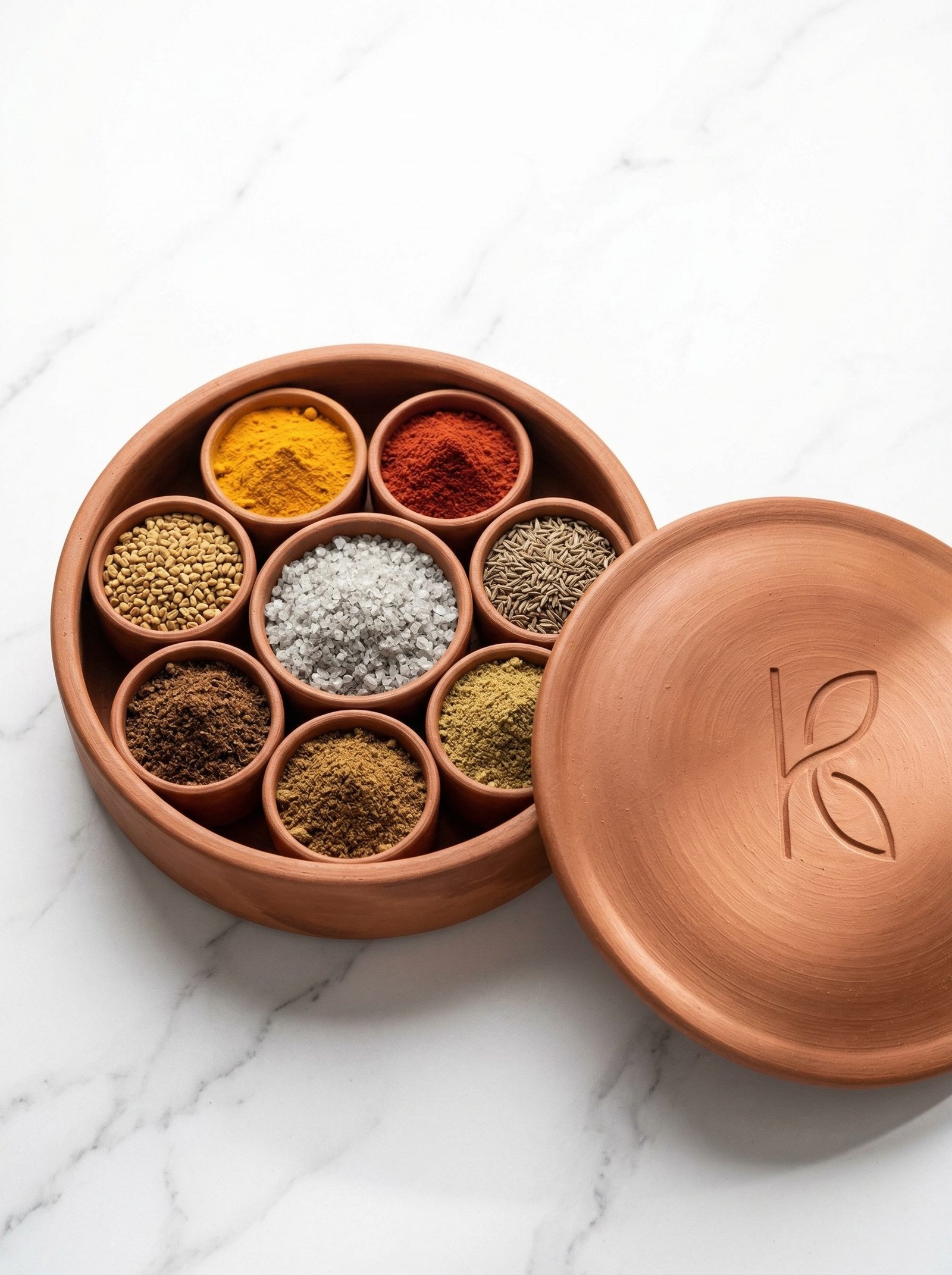
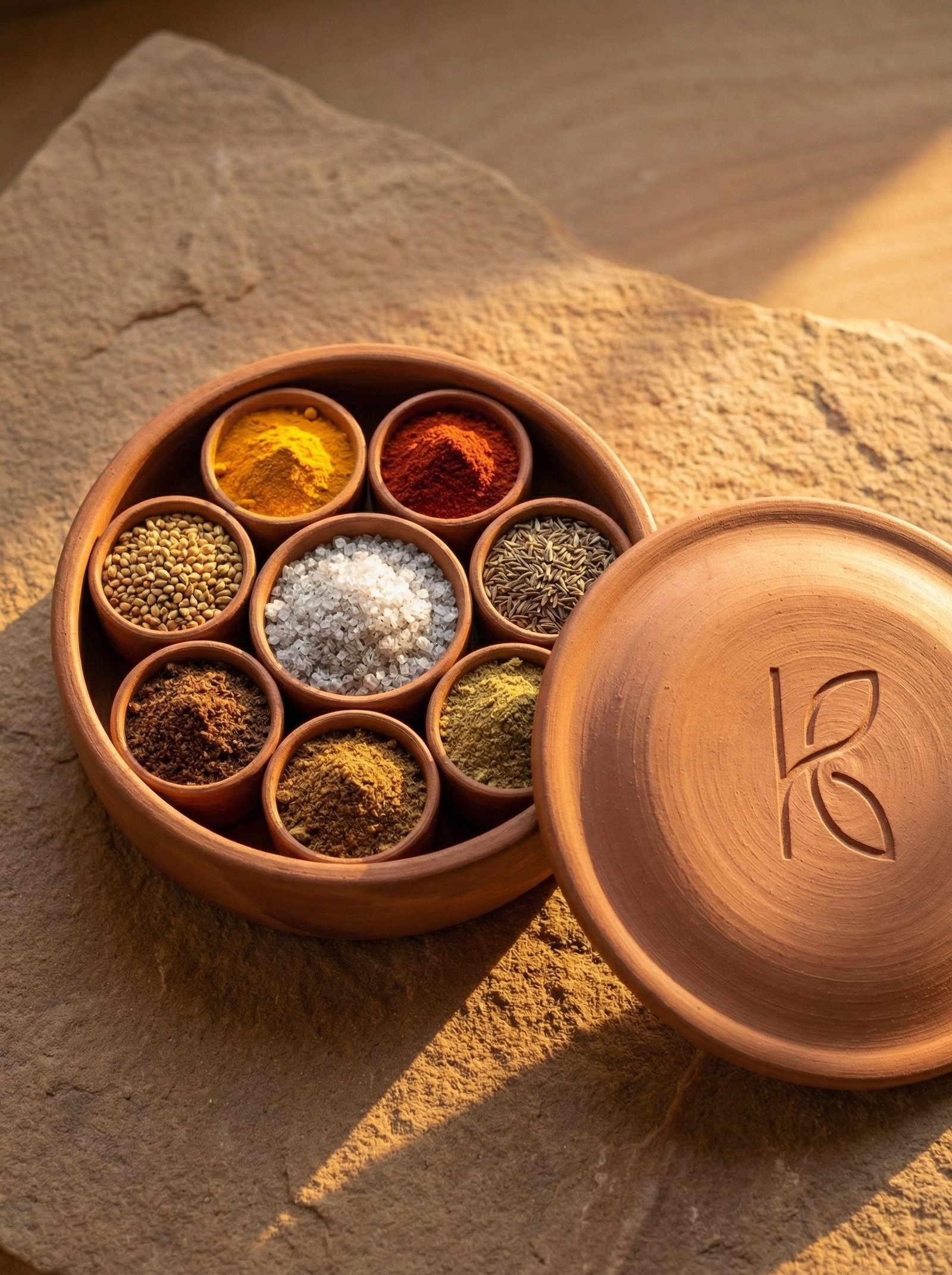
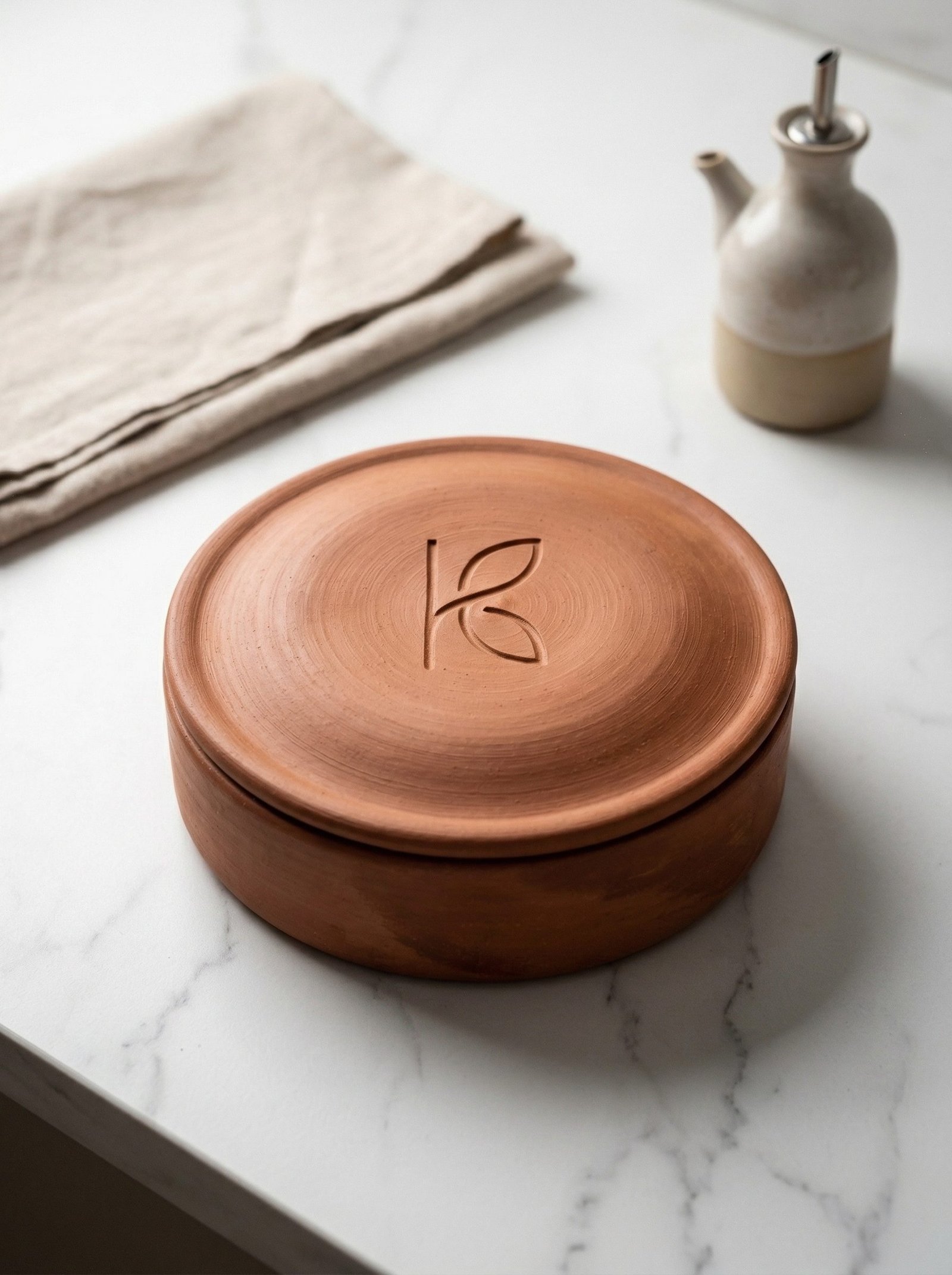
dish you cook. A round clay spice box with seven individual compartments — each sealed from the others — and a fitted clay lid. XRF-certified. The clay body’s slight porosity allows slow gas exchange between each compartment interior and the exterior, maintaining spice freshness by preventing the volatile aromatic buildup that stales spices in sealed metal dani. Your spices stay potent longer in clay than in any other material. This is documented in food science.
Key Features & Benefits
- Spice Freshness Through Clay Porosity: Spices lose potency when volatile aromatic compounds accumulate above them in a sealed container. Clay’s slight porosity allows this buildup to slowly exchange with fresh air. Each time you open a clay compartment, you release fresh volatiles from the spice rather than the stale accumulated fragrance of a sealed metal dani.
- Seven Is the Right Number: The foundational seven spices of the Indian kitchen: turmeric, red chilli, coriander powder, cumin, garam masala, black mustard, and either hing or namak. Seven compartments = zero reaching past the masala dani for the basics.
- XRF Certified — Spice Contact: Spices are in direct contact with the unglazed clay compartment interiors. XRF testing is performed at higher stringency for direct food contact, with specific verification that no harmful mineral levels are present in compartments used for high-contact fine powder spices.
- Non-Reactive With All Indian Spices: All Indian spices — including the acidic dried fruits in some masalas and the sulphur compounds in asafoetida — are non-reactive with terracotta clay. The clay does not alter the chemistry of any spice stored in it.
- Fitted Clay Lid for Dust Protection: The lid sits on the full circumference of the masala dani, keeping dust out while the individual compartment lids provide section-level access control.
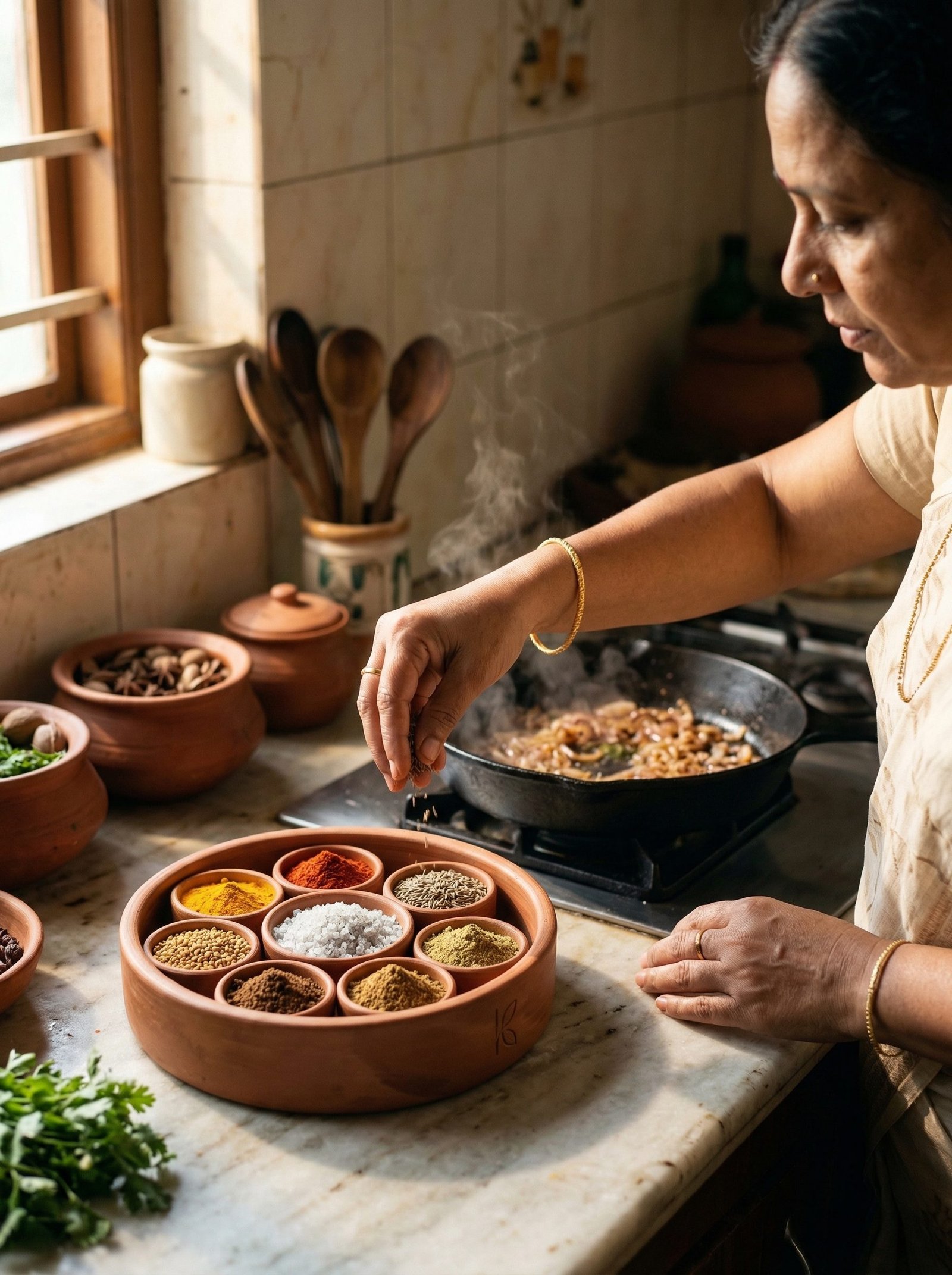
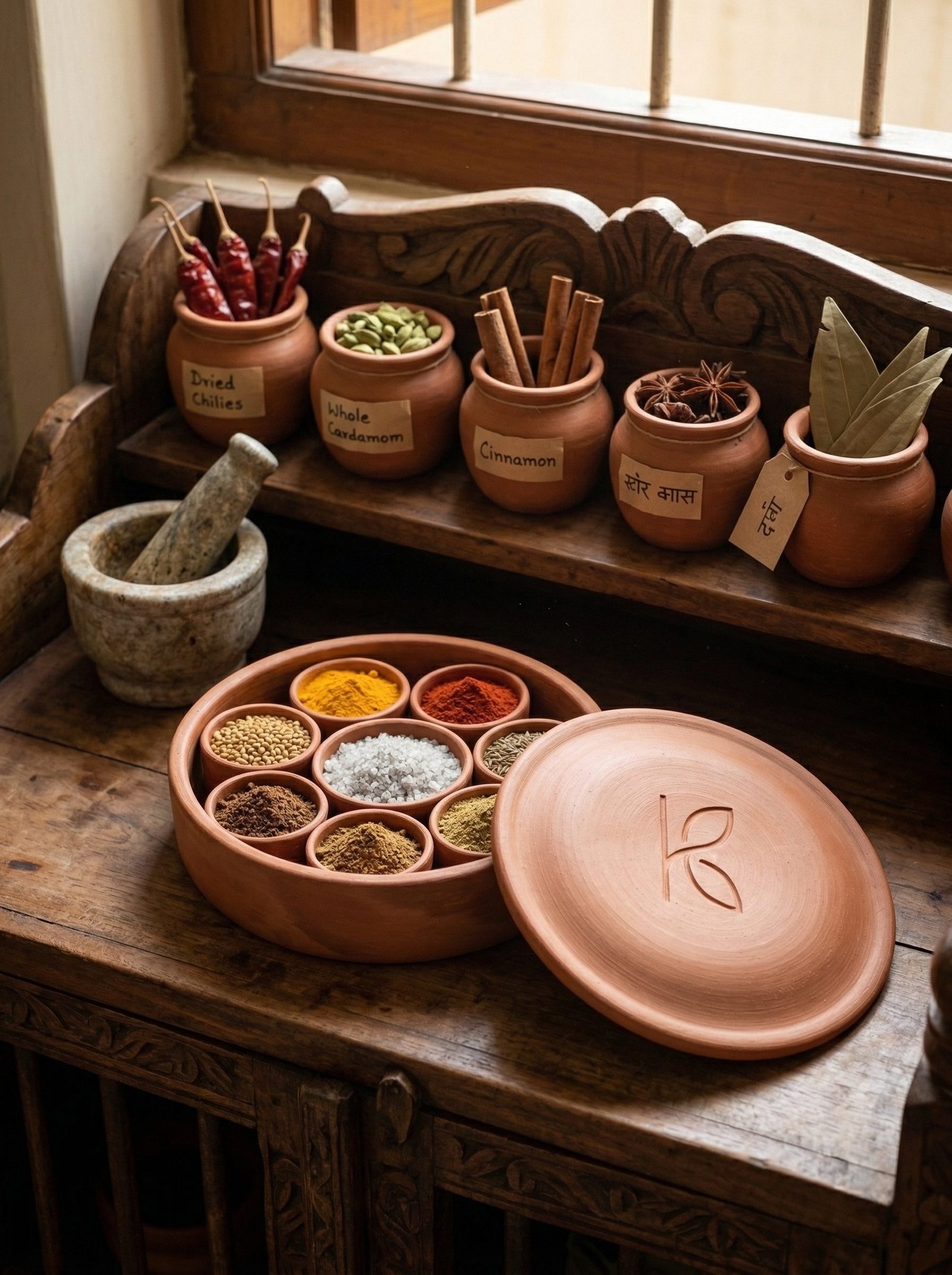
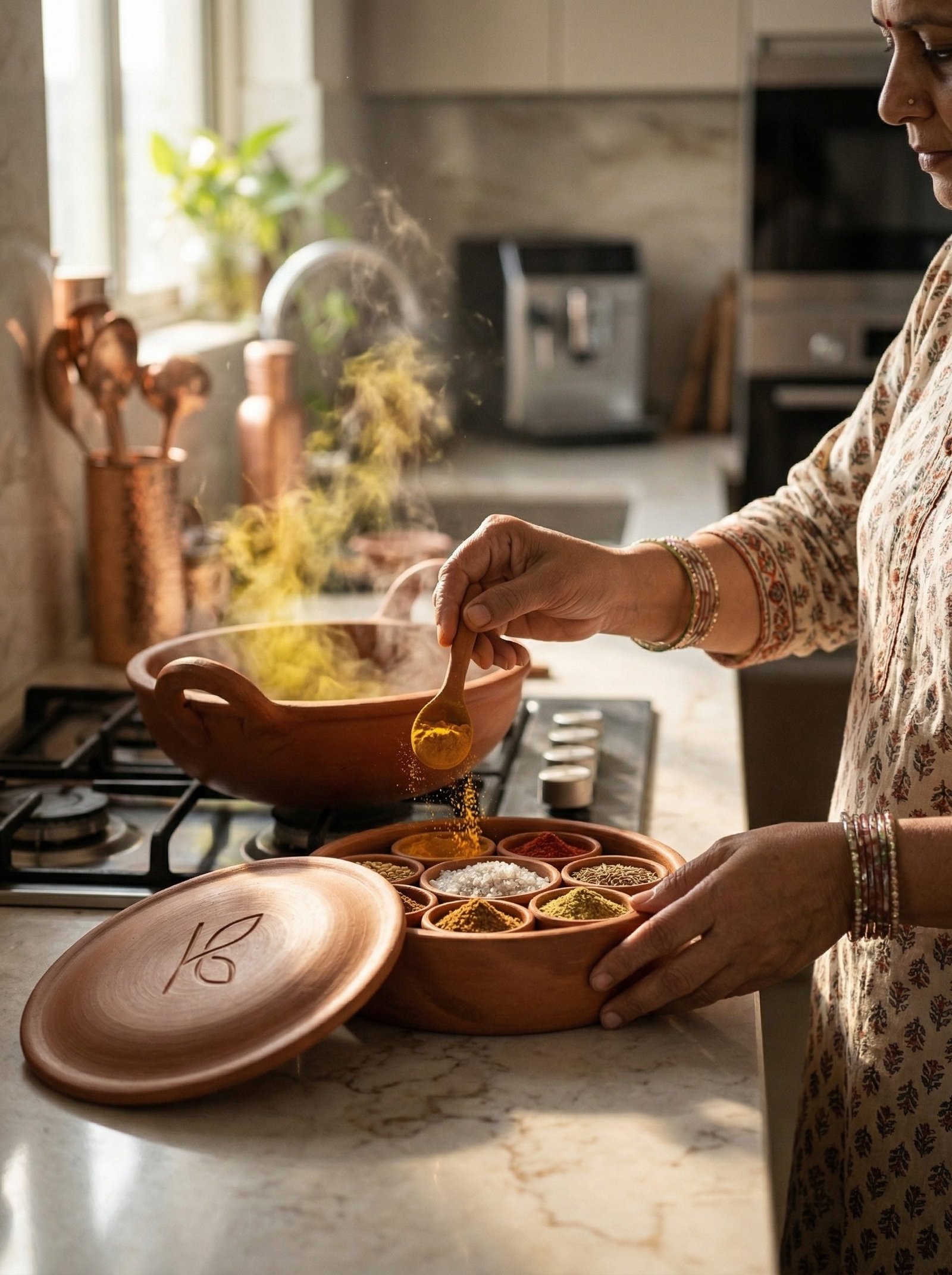
- Counter Presence: The masala dani is the most-touched object in the Indian kitchen. In clay, it is also the most beautiful.
About the Material
The masala dani sits on every Indian kitchen counter or stove-side shelf. It is touched multiple times daily. It contains the seven foundational spices that define Indian cooking. Almost every masala dani in India is made from stainless steel — which is fine, practically speaking, but which does nothing that clay cannot do better. The seven individual compartments in the clay masala dani are separated by clay walls rather than individual removable bowls. This means the spices cannot accidentally cross-contaminate — the clay walls form permanent, non-removable dividers. The fitted clay lid covers all seven simultaneously. The Science Spice potency is driven by volatile organic compounds — terpenes, terpenoids, and essential oils. In a sealed metal dani, these volatiles accumulate above the spice in the limited headspace of the compartment. This creates a supersaturated microenvironment that slows the release of fresh volatiles from the spice below. When you open a metal dani compartment, the aroma you experience is primarily old accumulated volatiles, not fresh ones. In a clay dani, the slight porosity of the clay walls allows slow exchange of this accumulated headspace with ambient air. Fresh volatiles are continuously available from the spice surface. The practical result: spices in a clay dani smell more potent per unit weight than the same spices stored for the same period in a metal dani. This is the reason traditional Indian spice storage used clay, not metal.
Safety & Certification Standards
| XRF Analysis — Clay Source | Heavy metal screening on raw clay before production begins |
| ICP-OES — Finished Product | Parts-per-billion accuracy. Actual migration into food simulants tested |
| NABL-Accredited Laboratory | Internationally recognised test facility |
| FSSAI Food Contact Compliance | Meets India’s legal food safety standards |
| Per-Batch QR Report | Your batch. Your numbers. Published before dispatch. |
Lab Test Results
| Compound | Klayvi Result | FSSAI Safe Limit |
|---|---|---|
| Lead (Pb) | ≤ 2.1 ppm | 90 ppm |
| Cadmium (Cd) | ≤ 0.3 ppm | 0.5 ppm |
| Arsenic (As) | ≤ 0.4 ppm | 2.0 ppm |
| Mercury (Hg) | Not detected | 0.5 ppm |
| PTFE / PFOA / PFAS | Not present | Zero tolerance |
Caring for Your Klayvi
| 1 — First Use | Rinse with plain water. No soap on first use. |
| 2 — Daily Clean | Klayvi Wash Care (pH 6–8) or sisal scrubber + warm water. Never standard dish soap — it destroys seasoning at pH 9–11. |
| 3 — After Wash | Dry completely on low flame (cookware) or air-dry fully (decor/storage). Never store damp. |
| 4 — Monthly | Apply 4–5 drops cold-pressed flaxseed oil to cooking surfaces. Heat on medium-low until just smoking. Cool and wipe. |
| 5 — Never | Dishwasher · Microwave · Overnight soaking · Chemical detergents · Cold water on a hot vessel |
What’s in the Box
- Clay Masala Dani 7-section with fitted clay lid
- Spice allocation guide card (suggested contents for each compartment)
- Artisan provenance card
- Batch QR card
- Clay Care Passport
Frequently Asked Questions
Q: How do I clean individual compartments without contaminating others?
Use a dry sisal brush per compartment. Never use water to clean a masala dani in daily use — moisture introduces clumping and mould risk in the fine spice powders. For a full deep clean (monthly or seasonally): empty all compartments, wash with warm water only, sun-dry completely for 48 hours before refilling.
Q: Which spice goes in which compartment?
The guide card inside the box suggests: centre = salt (used most frequently, best at centre reach); surrounding six = turmeric, red chilli, coriander, cumin, garam masala, mustard. The seventh typically holds a household-specific spice — hing, amchur, kala namak, or a custom blend. This is flexible; the clay has no preference.
Q: Will the spices absorb into the clay walls?
Slightly, yes — especially turmeric, which stains the clay a permanent yellow within weeks. Red chilli produces a mild orange tint. These mineral-spice absorptions are the masala dani’s patina of use. The compartments become specific to their assigned spice over time, which is why the spice assignment guide suggests choosing positions deliberately before the first use.
Q: Can I store whole spices in the masala dani as well?
Yes. The 150ml approximate capacity of each compartment fits comfortably: whole cumin (7–8 tablespoons), mustard seeds, coriander seeds, or whole peppercorns. Fine ground spices can also be stored. The clay breathability benefits whole spices most — the essential oils in whole spices are better preserved in clay than in sealed metal.
Q: Does the clay masala dani require seasoning before first use?
No seasoning protocol. For the first use: leave the compartments empty for 24 hours to allow any new-clay smell to dissipate (place in an airy spot, not a closed cabinet). Then fill. The new-clay smell in an uncooked vessel is mild and disappears completely once the spices are in place.
Q: What is the difference between this and a stainless steel masala dani?
The functionality is similar. The material difference creates three real benefits in clay: (1) spice freshness through clay breathability (documented); (2) zero metal interaction with acidic spice compounds (stainless steel is largely inert, but not as completely as unglazed clay with dry spices); (3) visual and tactile quality on the counter. The choice between clay and steel masala dani is not binary — both function well. The clay is simply better for spice preservation.
Related products
-
Out of Stock

-
Out of Stock
-
Out of Stock

Reviews
There are no reviews yet.