
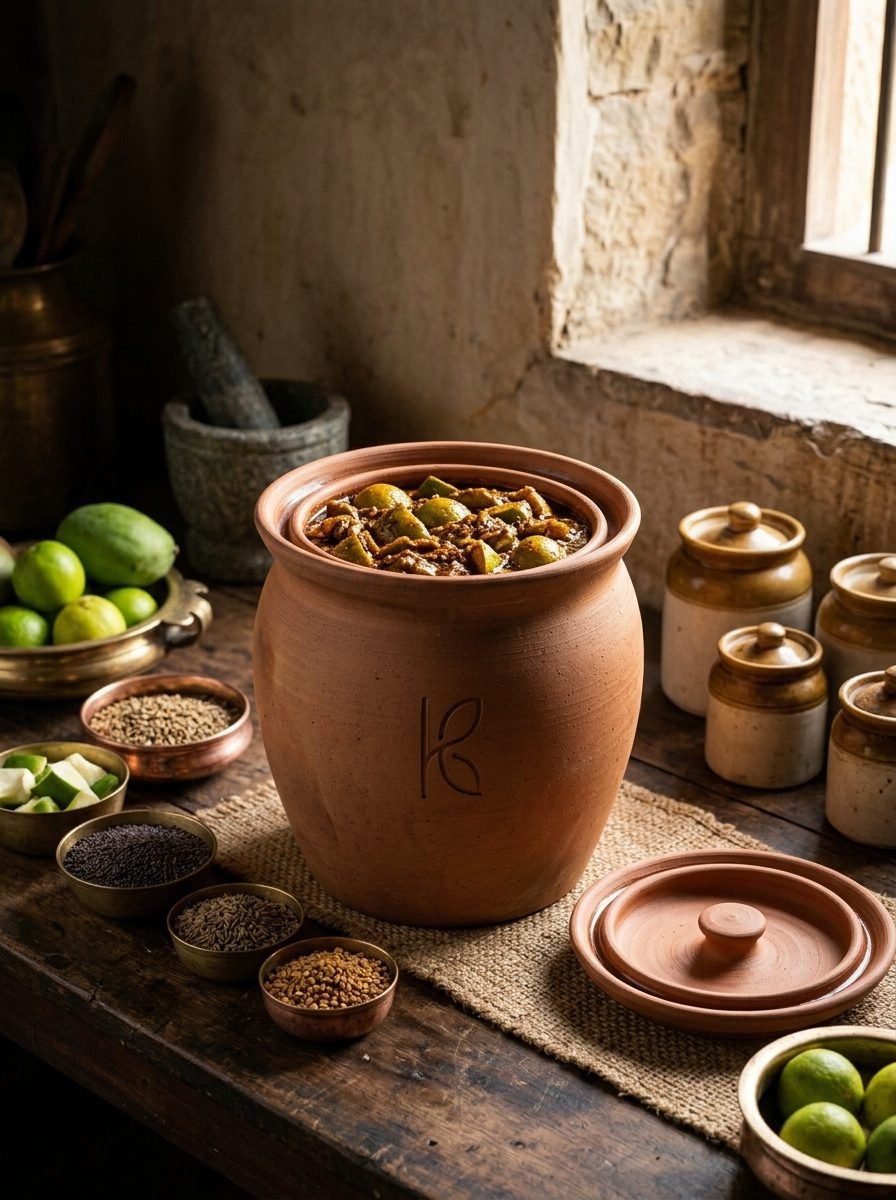
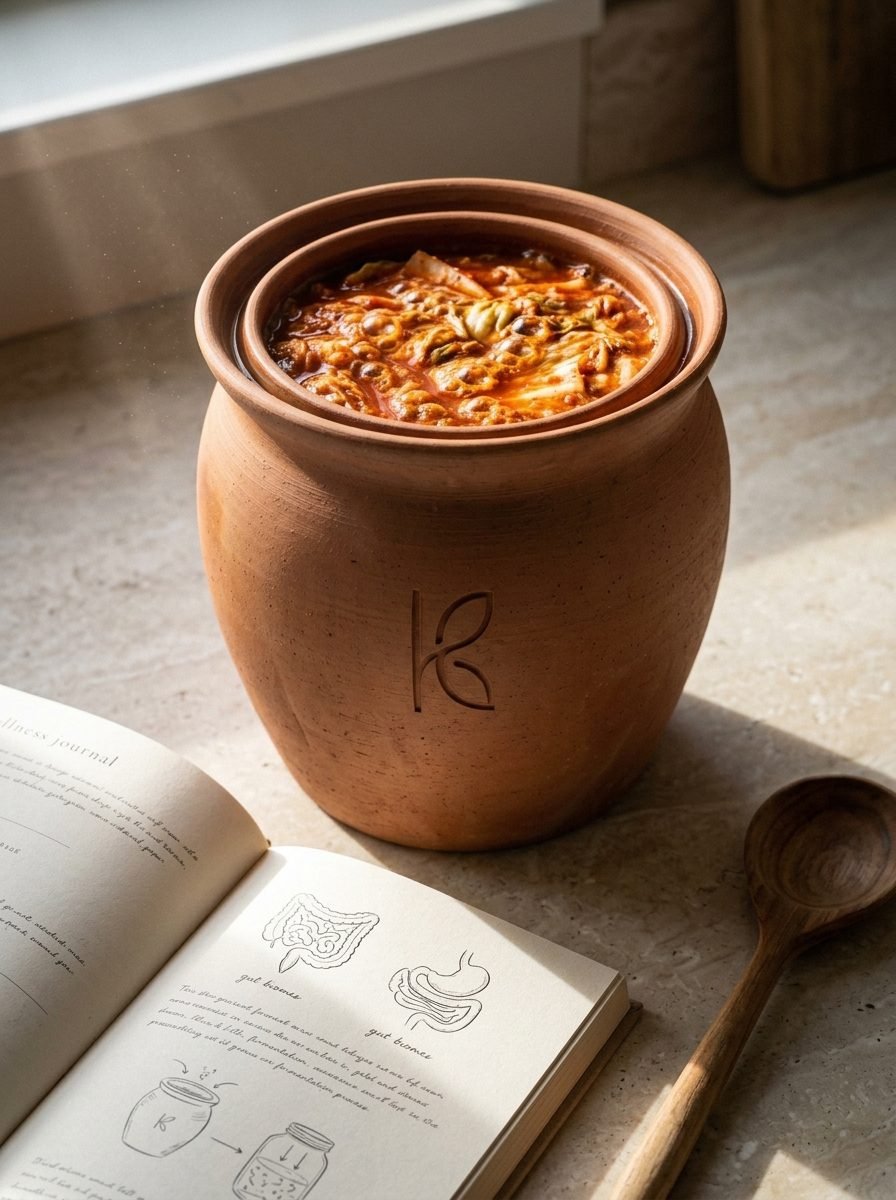
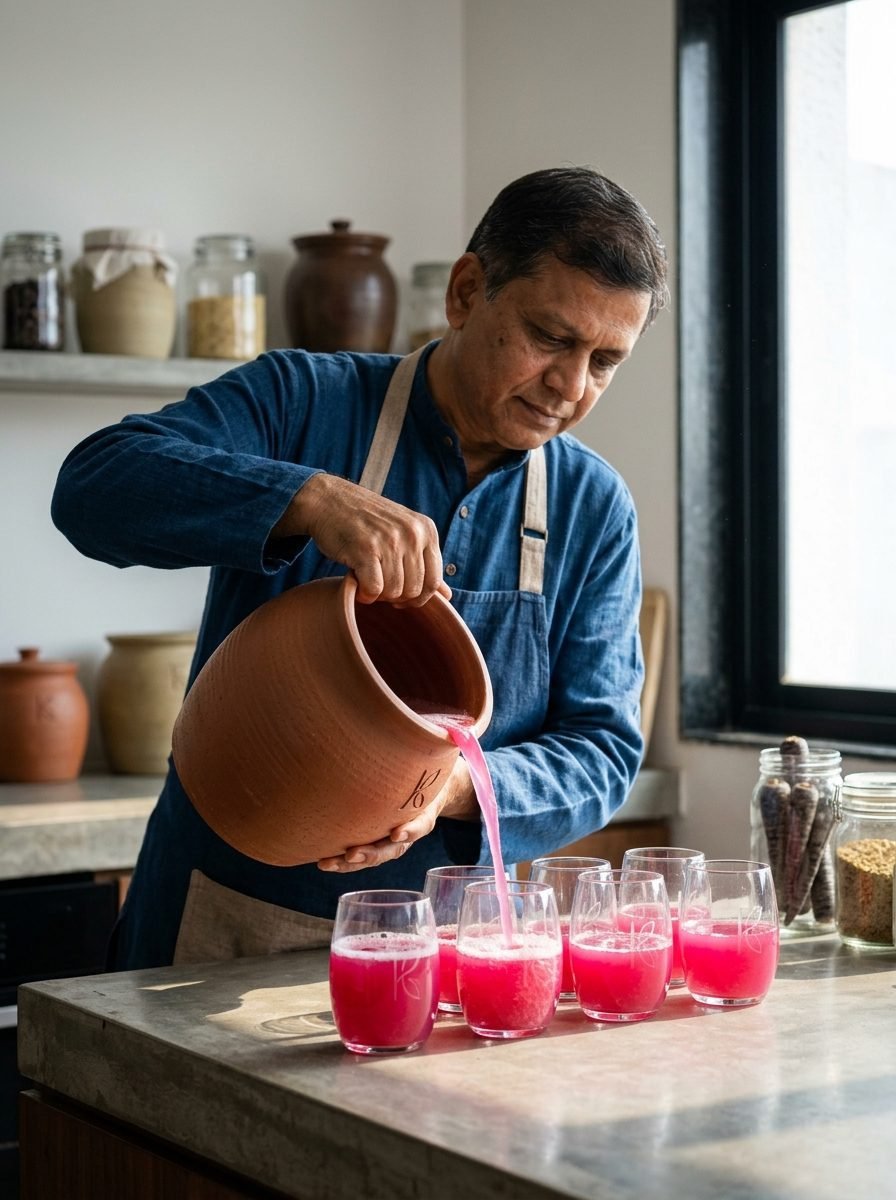
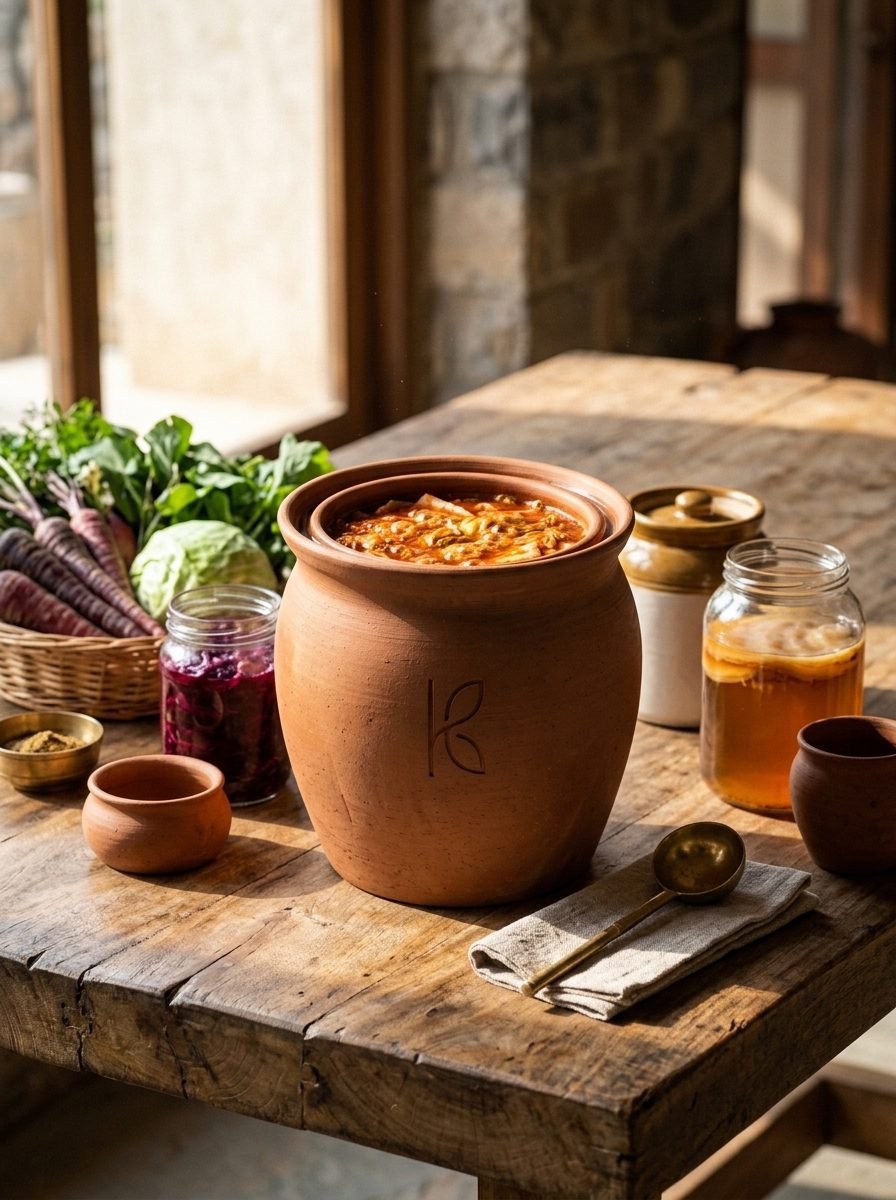
Clay Fermentation Crock – 3 L
Out of StockFamily fermentation. Weekly supply. The crock for the household that takes
Terracotta Clay · 3 Litres · SKU: KL-SP-008
₹1,599.00
| Material | Terracotta Clay |
|---|---|
| Size / Capacity | 3 Litres |
| Induction Ready | NO |
| XRF Tested | NO |
| Sub-Category | Fermentation Jar |
Family fermentation. Weekly supply. The crock for the household that takes
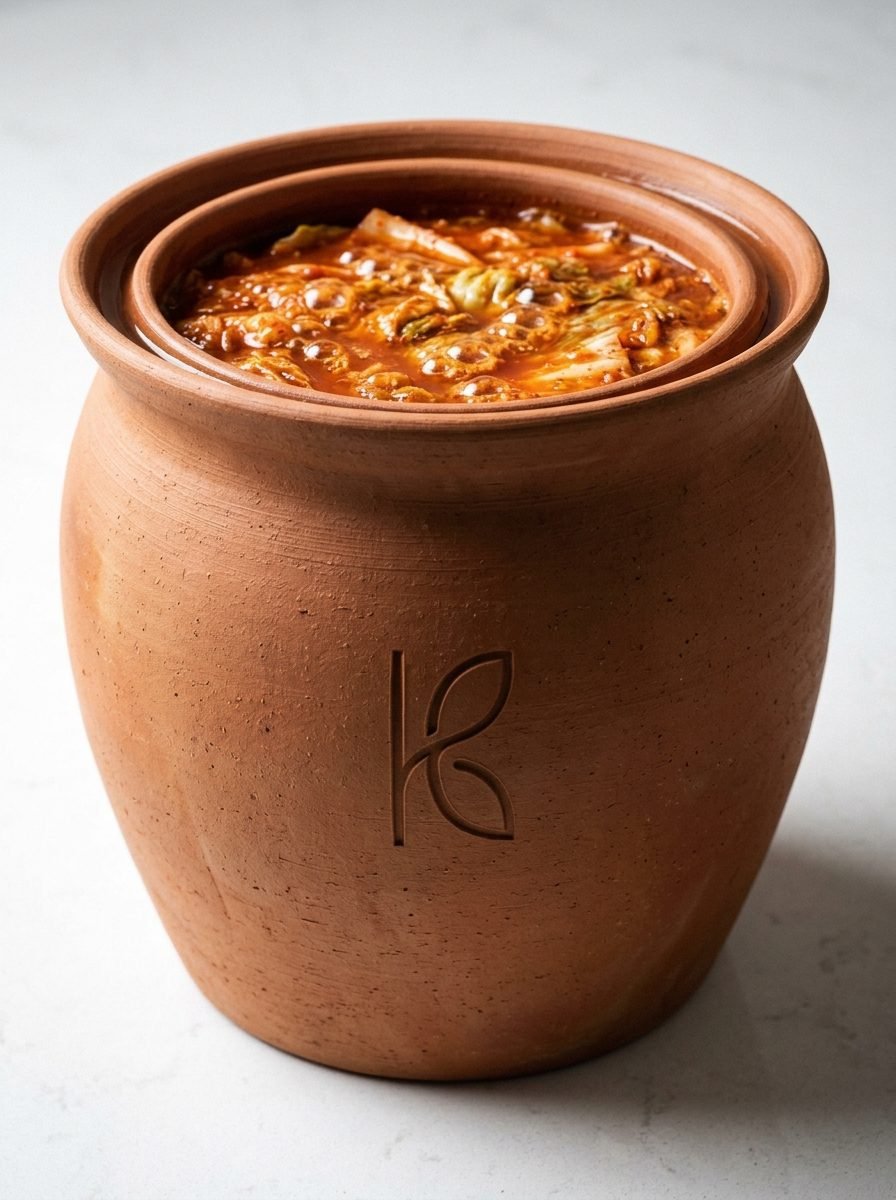
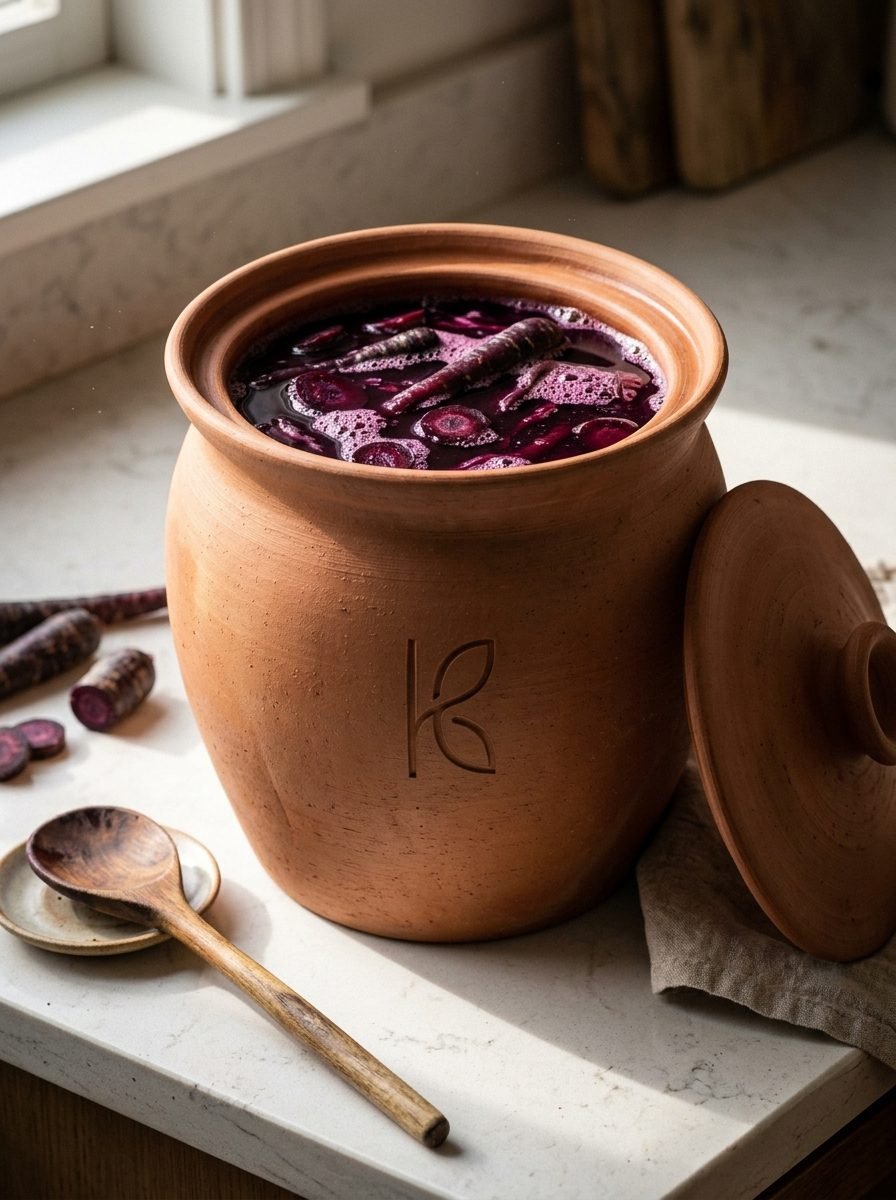
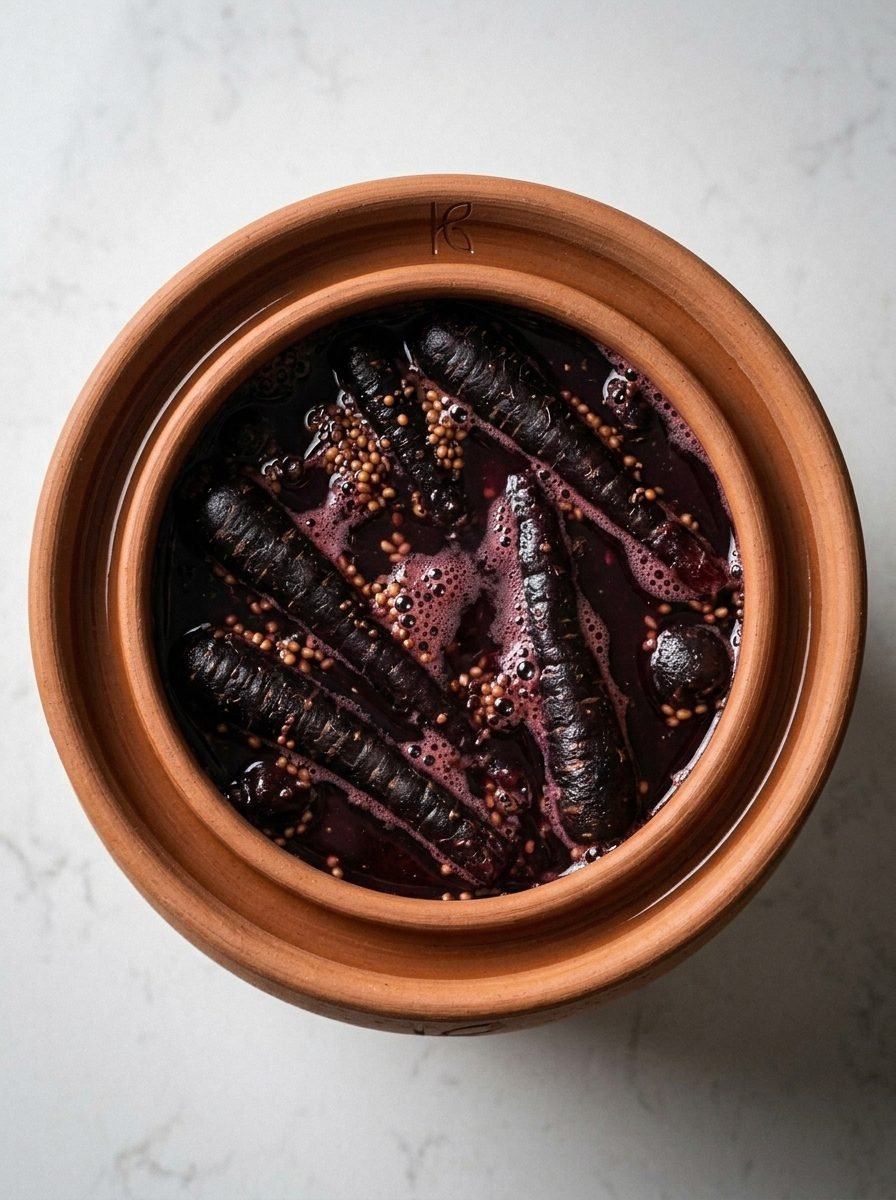
gut health seriously. A 3-litre clay fermentation crock with water-seal lid for large-batch anaerobic fermentation. For kanji in quantity, large sauerkraut batches, family-scale lacto-fermented vegetables, or any fermentation project that needs weekly supply rather than daily batches. The water-seal system is the same as the 1L — CO2 out, oxygen blocked — at triple the volume, with a deeper channel that handles the higher gas pressure of a larger fermentation.
Key Features & Benefits
- Family-Scale Volume: 3L kanji batch at 200ml per serving, twice daily for a family of four: 5–6 days of supply. One batch, one 5-day fermentation, one week of probiotic kanji. The right scale for a household that integrates kanji into daily nutrition.
- Deeper Water-Seal Channel: A 3L fermentation produces more CO2 than a 1L fermentation. The water-seal channel on the 3L holds approximately 60ml of water (versus 30ml on the 1L), providing a deeper seal that handles the higher gas pressure without water being pushed out of the channel.
- Superior Thermal Stability at 3L: Greater clay mass means greater thermal buffering. The 3L crock maintains internal fermentation temperature within a narrower range as ambient temperature fluctuates — producing more consistent fermentation outcomes than the 1L.
- Zero Plastic in 3L of Fermentation: 3 litres of acidic probiotic liquid in extended contact with the fermentation vessel is precisely the scenario where the difference between clay and plastic matters most. Zero plasticiser migration. Complete inertness throughout.
- XRF Certified — Acid-Tolerant Verification: Same ICP-OES acid simulant testing as the 1L. Lead migration at pH 3.0: ≤0.04 ppm.
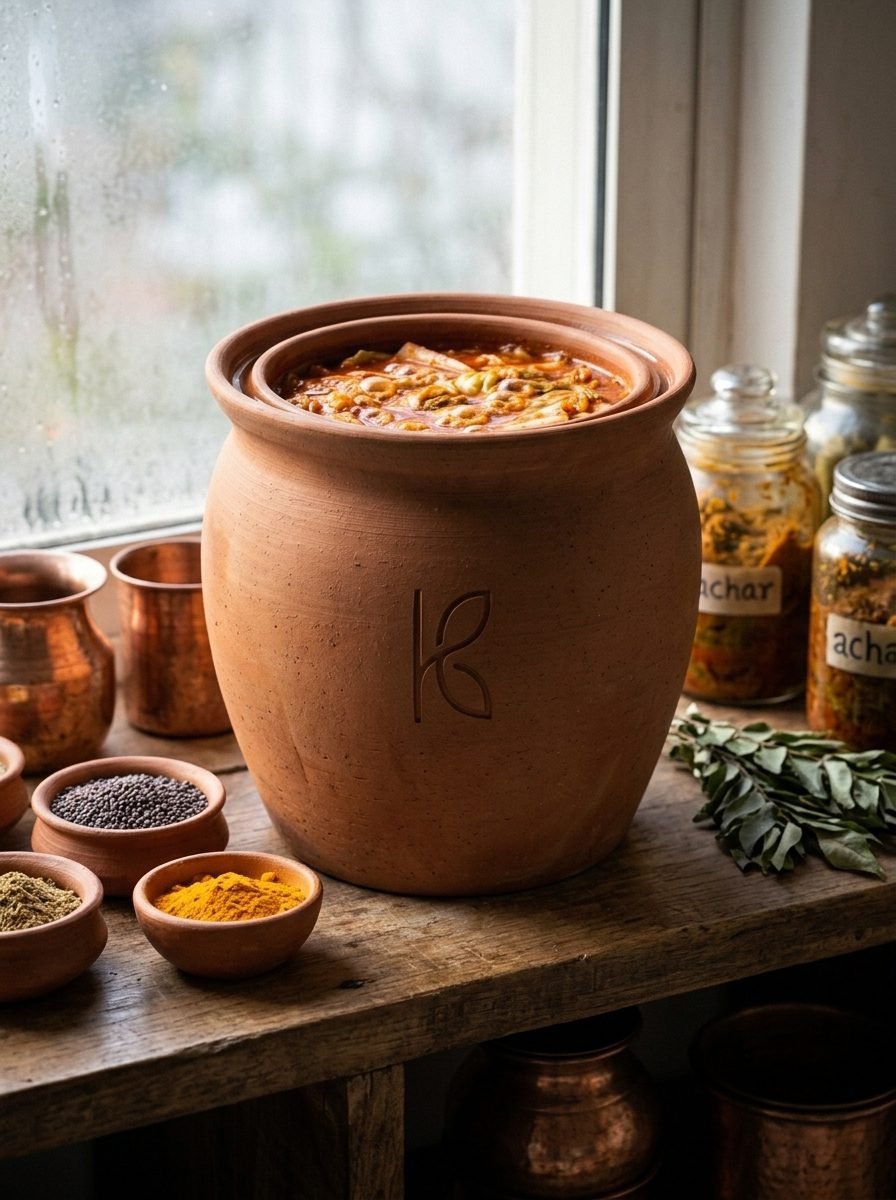
- Long Fermentation Capable: For ferments that go beyond 2 weeks — kimchi at 4–6 weeks, traditional achar at extended periods — the 3L’s heavy clay walls and thermal mass handle extended fermentation better than a smaller vessel.
About the Material
At 3 litres, the fermentation crock becomes a serious fermentation appliance. The 3L clay body has walls of 8–9mm — thick enough to act as significant thermal insulation between the fermentation environment inside and the kitchen temperature outside. This insulation is particularly valuable in Indian kitchens where the temperature difference between day and night can be 8–12°C — a swing that would significantly affect fermentation rate in a thin glass jar but barely affects the internal environment of the 3L clay crock. The Science The research on fermented food and gut microbiome diversity is consistent and growing: regular consumption of diverse fermented foods — including traditional Indian ferments like kanji, idli batter, dosa batter, and kadha — is associated with measurably more diverse gut microbiome profiles. Diversity of gut microbiome is the single most consistent predictor of gut health in current research. The 3L clay fermentation crock makes it practical to maintain a continuous weekly supply of at least one live fermented food in the daily diet — which is the minimum threshold for documented microbiome benefit.
Safety & Certification Standards
| XRF Analysis — Clay Source | Heavy metal screening on raw clay before production begins |
| ICP-OES — Finished Product | Parts-per-billion accuracy. Actual migration into food simulants tested |
| NABL-Accredited Laboratory | Internationally recognised test facility |
| FSSAI Food Contact Compliance | Meets India’s legal food safety standards |
| Per-Batch QR Report | Your batch. Your numbers. Published before dispatch. |
Lab Test Results
| Compound | Klayvi Result | FSSAI Safe Limit |
|---|---|---|
| Lead (Pb) | ≤ 2.1 ppm | 90 ppm |
| Cadmium (Cd) | ≤ 0.3 ppm | 0.5 ppm |
| Arsenic (As) | ≤ 0.4 ppm | 2.0 ppm |
| Mercury (Hg) | Not detected | 0.5 ppm |
| PTFE / PFOA / PFAS | Not present | Zero tolerance |
Caring for Your Klayvi
| 1 — First Use | Rinse with plain water. No soap on first use. |
| 2 — Daily Clean | Klayvi Wash Care (pH 6–8) or sisal scrubber + warm water. Never standard dish soap (pH 9–11). |
| 3 — After Wash | Dry completely — on low flame for cookware, air-dry for storage and decor. |
| 4 — Monthly | Apply 4–5 drops cold-pressed flaxseed oil to cooking surfaces. Heat medium-low, cool, wipe. |
| 5 — Never | Dishwasher · Microwave · Chemical detergents · Overnight soaking · Cold water on a hot vessel |
What’s in the Box
- Clay Fermentation Crock 3L with water-seal lid system
- Extended fermentation guide (kanji, kimchi, sauerkraut, mixed vegetable protocols
- with 3L-specific quantities)
- Artisan provenance card
- Batch QR card
Frequently Asked Questions
Q: What is the 3L batch recipe for kanji?
5 medium black carrots (julienned), 2 medium beetroots (julienned), 2 tbsp yellow mustard seeds, 2 tsp black salt, 2 tsp regular salt, 2.5L water. Method: pack the vegetables into the crock, add spices, pour in water to within 4cm of the rim (leave headspace for CO2), fill the water-seal channel, cover with lid. Ready in 5–7 days at 20–25°C, 10–14 days in winter.
Q: Can I leave the 3L crock unattended for several days?
Yes — that is the point of the water-seal system. Check the water-seal channel daily and top up if needed. Otherwise, the crock manages the fermentation autonomously. This is designed for the household that sets a batch on Sunday and returns to ready kanji by Friday without daily monitoring.
Q: How do I know when the 3L fermentation is complete?
Kanji: taste daily from day 5 in summer, day 10 in winter. When it is pleasantly sour, tangy, and slightly effervescent, it is ready. Sauerkraut: taste from day 14. When it has the characteristic sour, slightly soft texture, it is ready. The fermentation does not stop when “done” — it continues to develop. Consume within the time period that the flavour is pleasant (usually 2–3 weeks after the initial “ready” point for kanji, longer for sauerkraut).
Q: Can I store the completed ferment in the clay crock in the refrigerator?
Yes — once the fermentation is at the desired stage, the crock can be refrigerated to slow further fermentation. The clay body is stable at refrigerator temperatures. The water-seal channel should be emptied before refrigerating to prevent freezing in very cold refrigerators.
Q: The water-seal is bubbling very vigorously. Is that normal?
Active bubbling in the first 2–3 days is normal and desirable — it indicates vigorous fermentation with strong CO2 production. Bubbling slows and becomes intermittent as the fermentation stabilises. Vigorous initial bubbling is a sign of a healthy ferment, not a problem.
Q: My 3L batch developed a layer of solids at the top (not mould). What is it?
This is most likely the proteins from the vegetables rising to the surface as the liquid clarifies during fermentation — a completely normal stage. Skim off if it is discoloured; leave if it is white or pale. The liquid below is the ferment.
Related products
-
Out of Stock

-
Out of Stock
-
Out of Stock

Reviews
There are no reviews yet.