
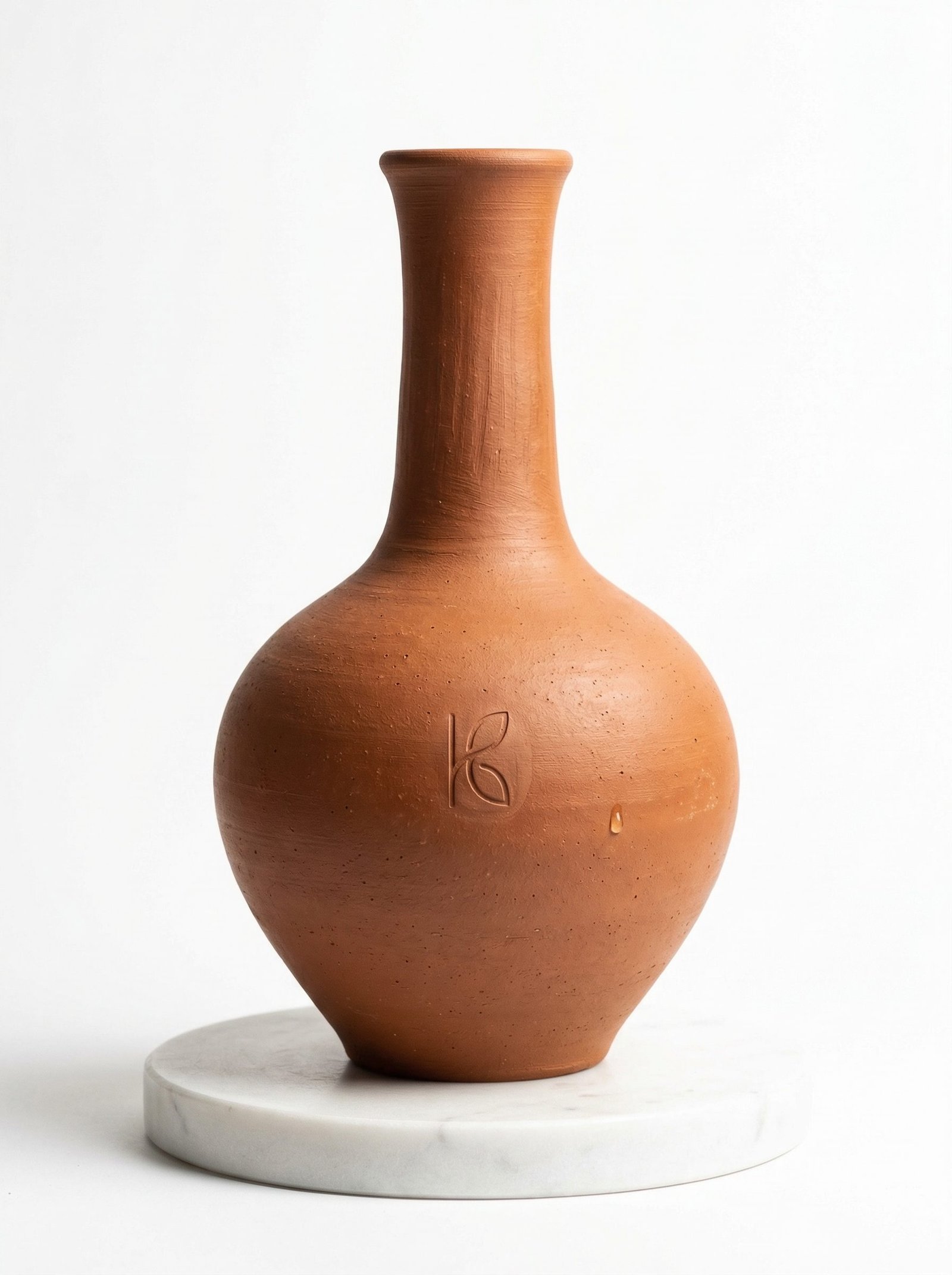
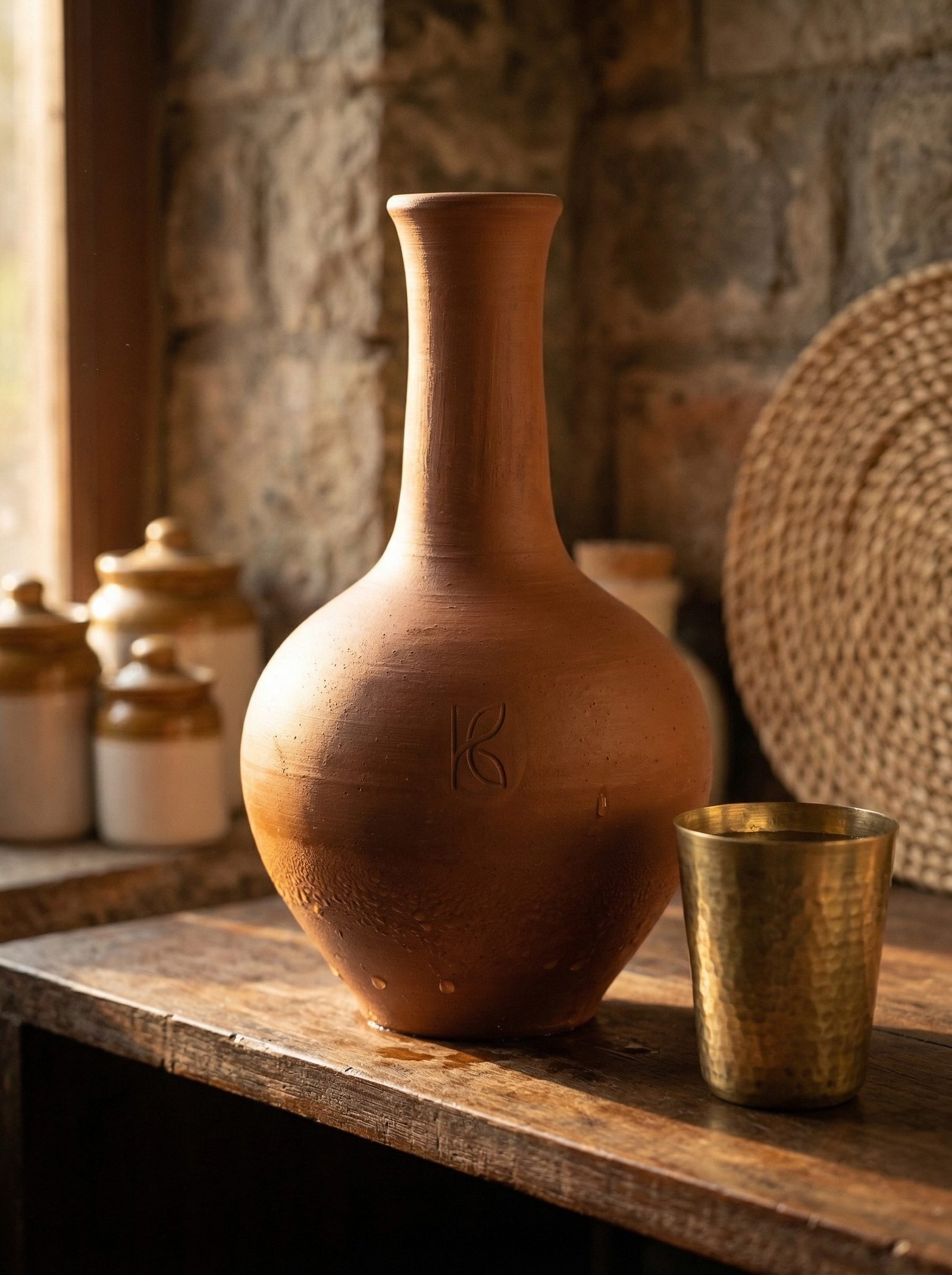
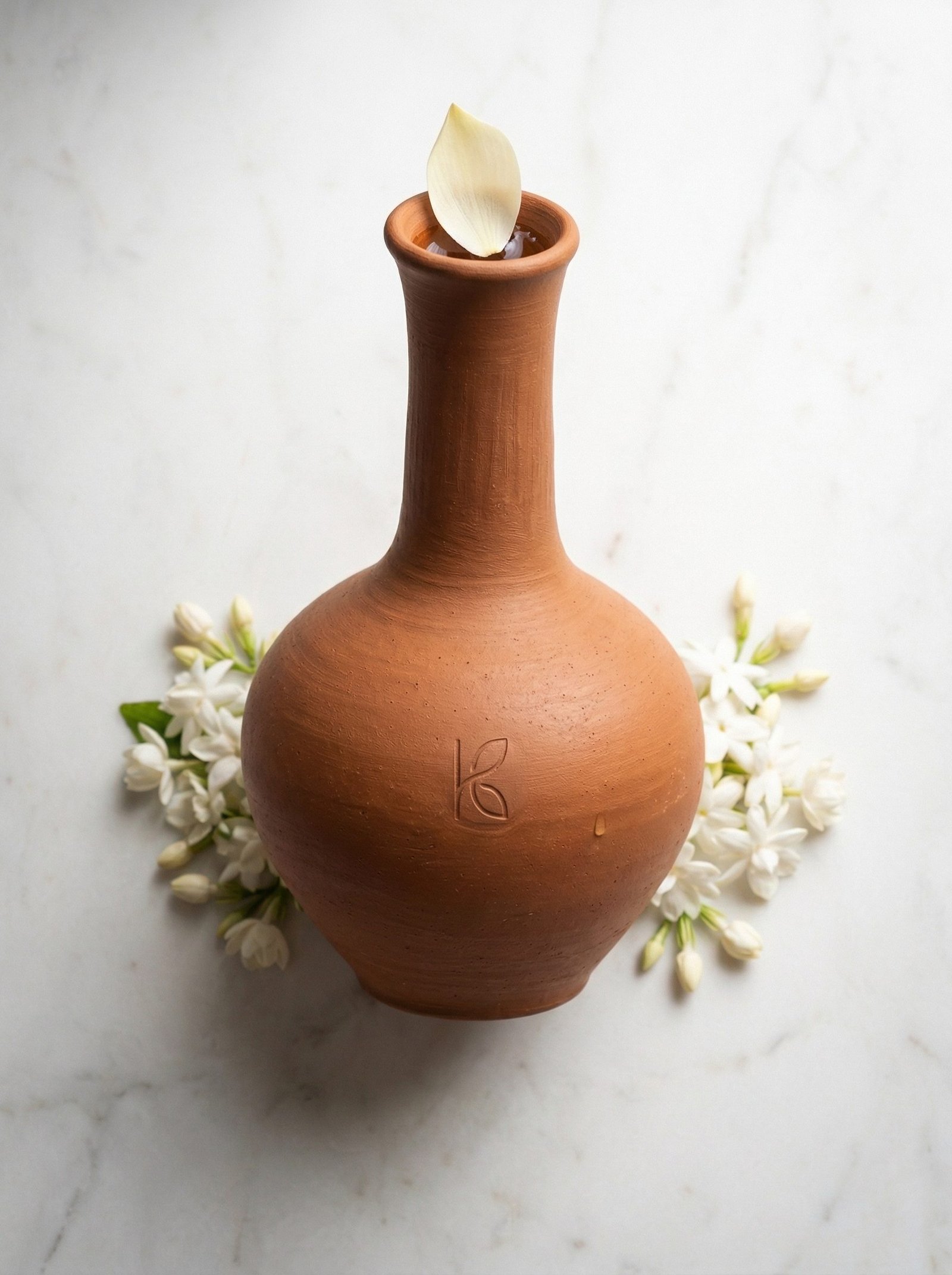
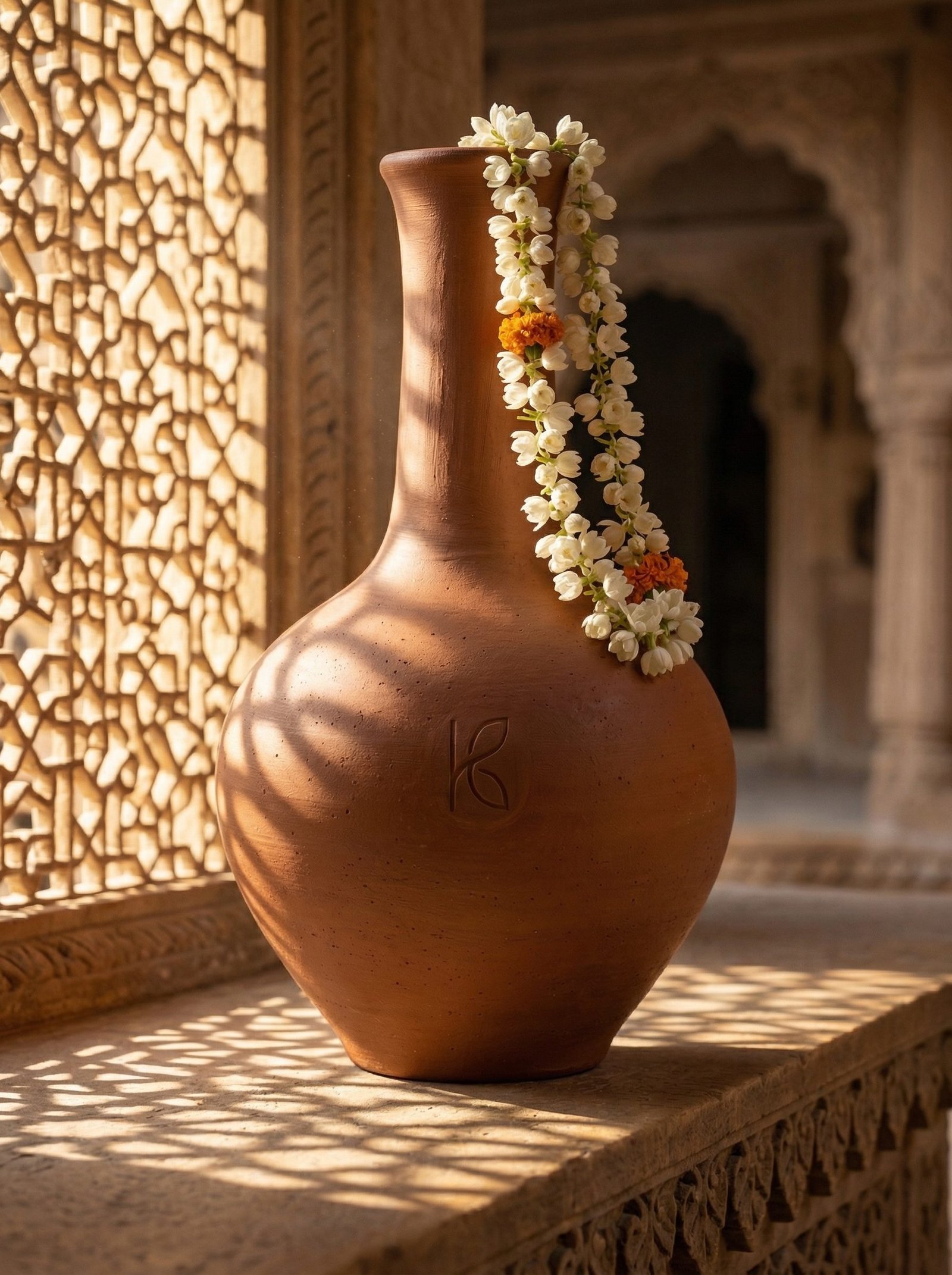
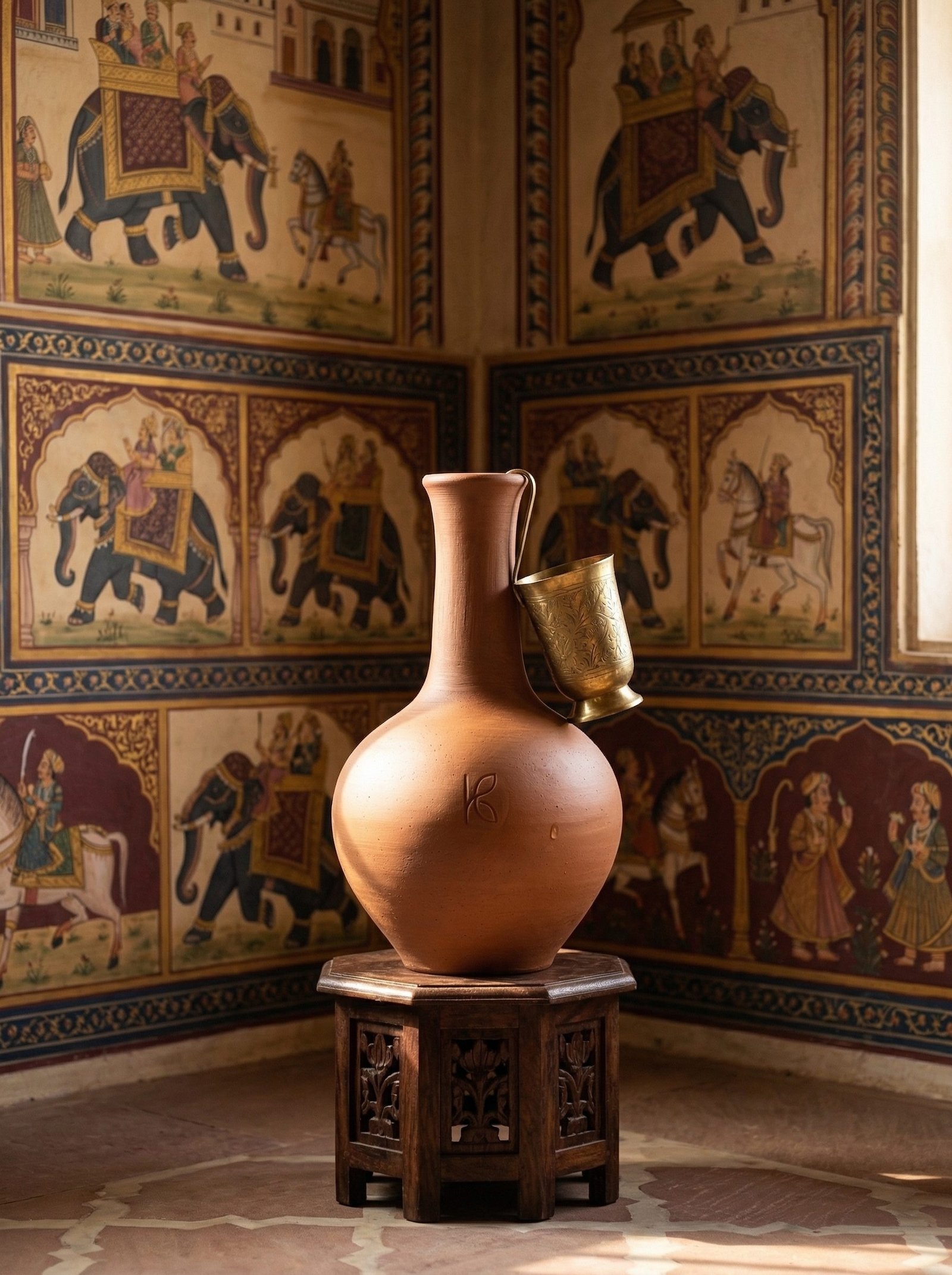
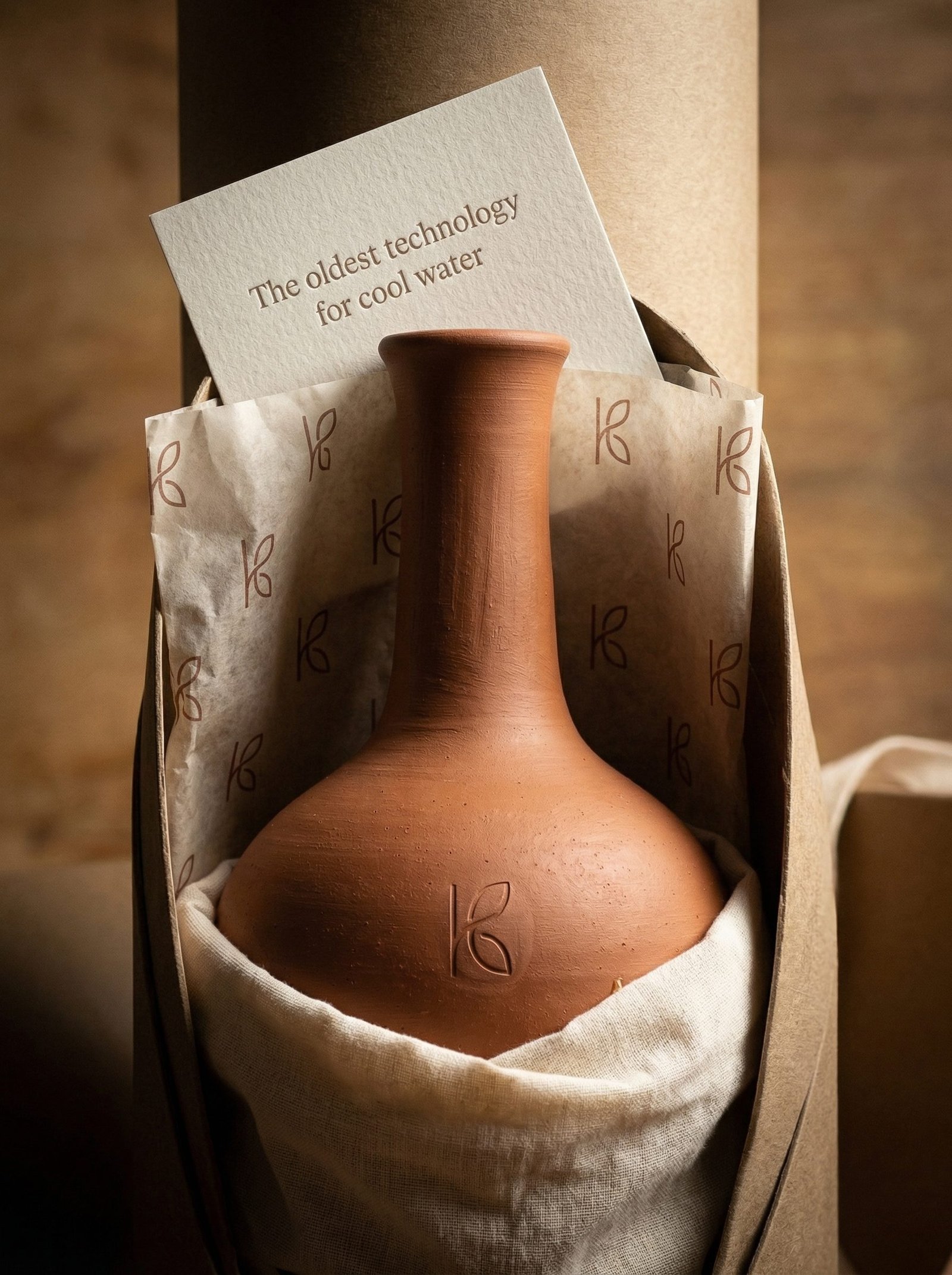
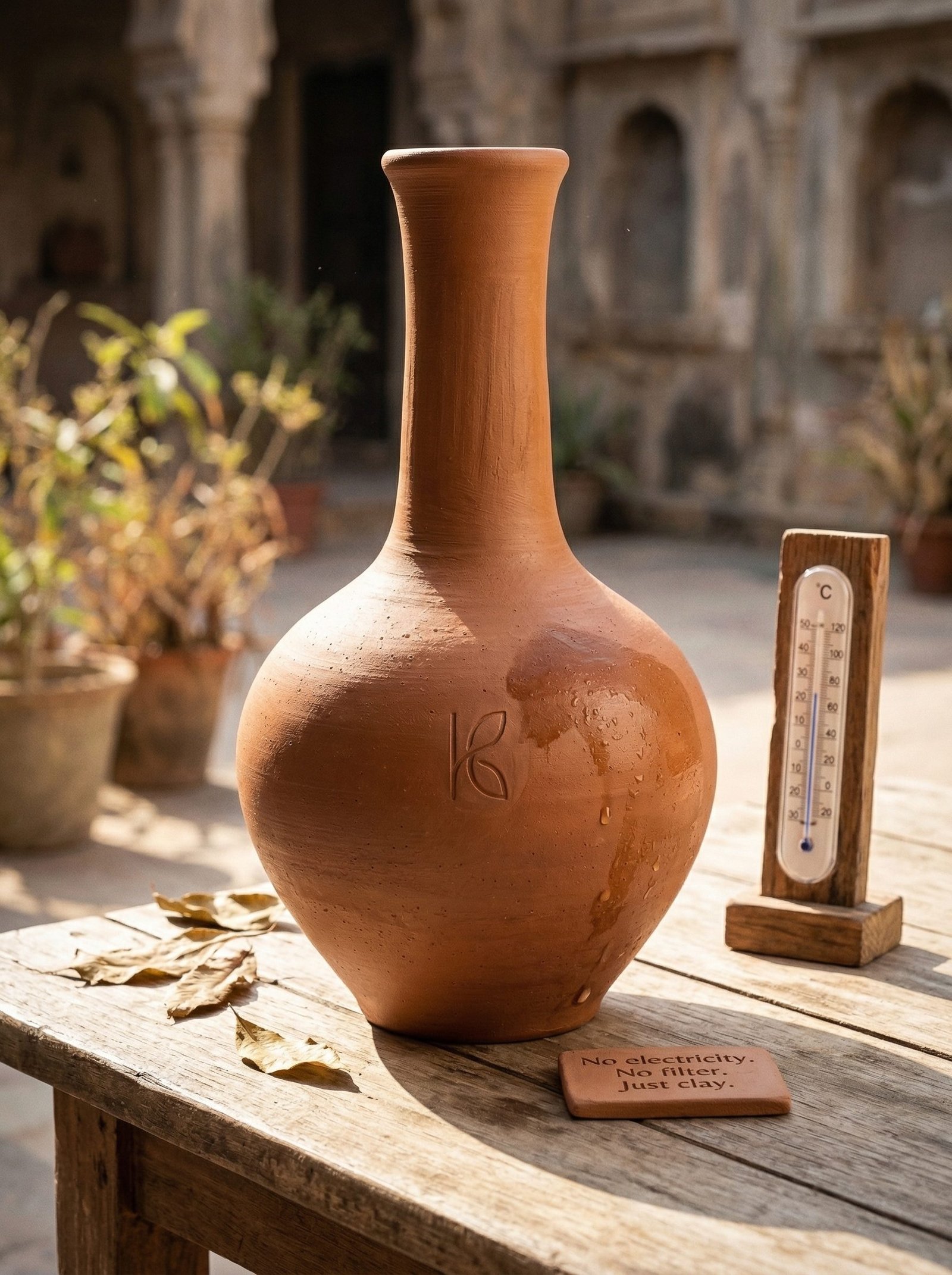
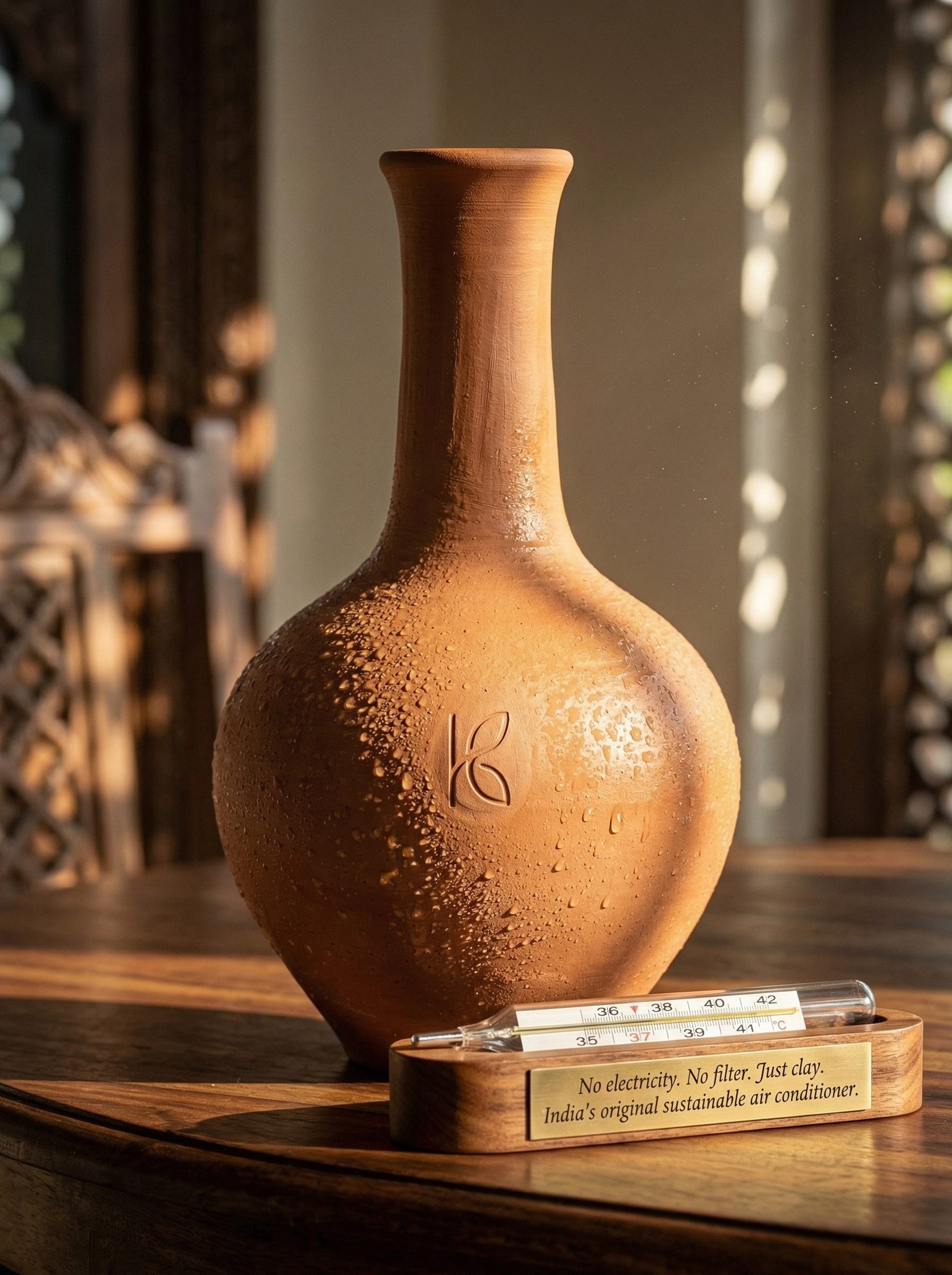
Clay Water Pot (Surahi) – 1.5 L
Out of StockThe most beautiful water vessel in Indian design. Now lab-certified.
Terracotta Clay · 1.5 Litres · SKU: KL-DW-004
₹699.00
| Material | Terracotta Clay |
|---|---|
| Size / Capacity | 1.5 Litres |
| Induction Ready | NO |
| XRF Tested | NO |
| Sub-Category | Surahi / Water Pot |
The most beautiful water vessel in Indian design. Now lab-certified.
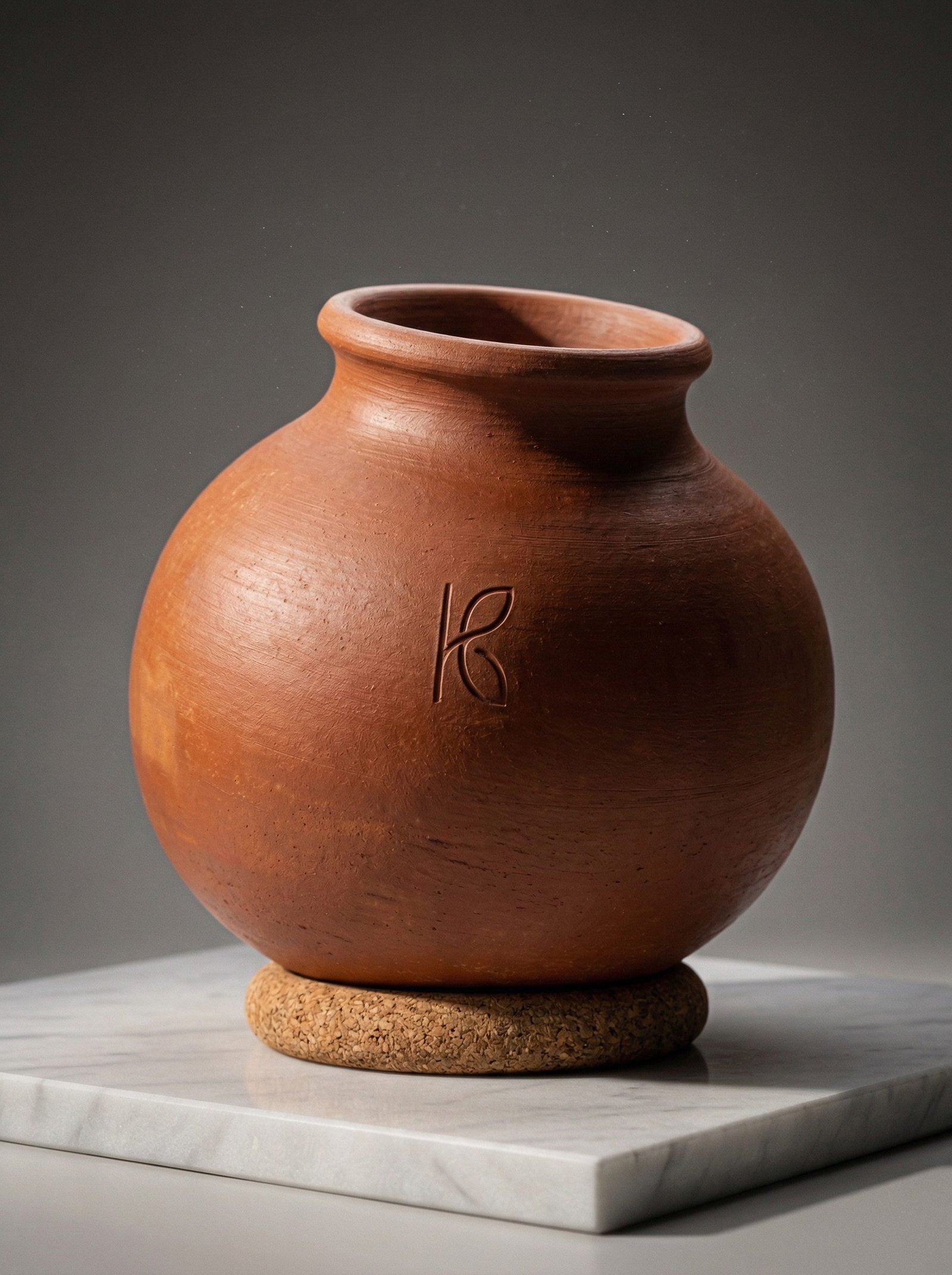
The surahi is the most recognisable clay water vessel in Indian history. Narrow neck, round body, elegant proportions unchanged in 4,000 years — because they were already correct. This is not nostalgia. The surahi’s geometry optimises evaporative cooling better than any other vessel form. XRF + ICP-OES certified. Aqua-Lock interior. Named artisan. The water vessel that needs no explanation.
Key Features & Benefits
- 4,000-Year Optimised Design: The narrow neck minimises dust entry and slows water loss. The round belly maximises clay surface area relative to water volume, maximising evaporative cooling rate. The geometry is the result of 4,000 years of optimisation, not aesthetic preference.
- Maximum Cooling of Any Vessel: The surahi’s belly-to-volume ratio is higher than any other vessel form in our range. More clay surface area per litre = more evaporation surface = more cooling. In dry heat, surahi water reaches 26–28°C in a 38°C room — the optimal temperature for maximum gastric absorption.
- Aqua-Lock Interior: The interior is sealed; the exterior breathes. The surahi cools from outside in. 100% watertight.
- ICP-OES + Named Artisan: The surahi form requires significant throwing skill. Yours was made by a named Klayvi artisan and certified to parts-per-billion accuracy.
- pH Balancing: 6–8 hours of clay contact produces water at pH 7.2–7.5 — softer, smoother tasting.
- XRF + ICP-OES Certified: Batch QR on belly.
About the Material
The surahi form appears in Mughal miniature paintings, in the archaeological record at Mohenjo-daro, and in every region of India in slightly different proportions but with the same essential geometry: wide, round belly narrowing to a long, elegant neck. Ancient Indian potters solved an optimisation problem — maximum cooling from minimum clay — that modern industrial design has not improved on. The throwing process for a surahi is significantly more complex than for a straight-sided vessel. The narrow neck requires a specific technique of closing the clay inward while maintaining wall consistency — a skill that takes years to develop. This is why the named artisan card matters more on the surahi than on most other pieces.
The Science
Sports science has established that the optimal water temperature for maximum gastric absorption is 15–22°C, not 4°C (refrigerated). Refrigerated water is absorbed more slowly and can cause throat constriction in some individuals. Surahi water at 26–28°C in a hot Indian summer sits precisely in the optimal range for maximum hydration efficiency — which is why traditional Indian communities preferred surahi water over cold water for heat-related illnesses.
Safety & Certification Standards
| XRF Analysis — Clay Source | Heavy metal screening on raw clay before production begins |
| ICP-OES — Finished Product | Parts-per-billion accuracy. Actual migration into food simulants at cooking temperatures |
| NABL-Accredited Laboratory | Internationally recognised test facility |
| FSSAI Food Contact Compliance | Meets India’s legal food safety standards for cookware |
| Per-Batch QR Report | Your batch. Your numbers. Published before dispatch. Scan and read it yourself. |
Lab Test Results
| Compound | Klayvi Result | FSSAI Safe Limit |
|---|---|---|
| Lead (Pb) | ≤ 2.1 ppm | 90 ppm |
| Cadmium (Cd) | ≤ 0.3 ppm | 0.5 ppm |
| Arsenic (As) | ≤ 0.4 ppm | 2.0 ppm |
| Mercury (Hg) | Not detected | 0.5 ppm |
| PTFE / PFOA / PFAS | Not present | Zero tolerance |
Caring for Your Klayvi
| 1 — First Use | Rinse with plain water. Cook something water-based for first 2–3 uses. |
| 2 — Daily Clean | Klayvi Wash Care (pH 6–8) or sisal scrubber with warm water. Never standard dish soap — its pH 9–11 strips the seasoning polymer layer. |
| 3 — After Wash | Dry on low flame for 2 minutes. Never store damp. |
| 4 — Monthly | Apply 4–5 drops of cold-pressed flaxseed oil. Heat on medium-low until just smoking at edges (~4 min). Cool and wipe. |
| 5 — Never | Dishwasher · Microwave · Overnight soaking · Chemical detergents · Cold water on a hot vessel |
What’s in the Box
- Clay Surahi 1.5L (Aqua-Lock interior)
- Natural cork stopper for neck
- Named artisan provenance card
- Cotton muslin storage pouch
- Clay Care Passport
- Batch QR card
Frequently Asked Questions
Q: How do I pour from a surahi without spilling?
The traditional grip: both hands on the belly, tilt the surahi until the neck points toward your glass, allow the narrow neck to control the pour rate. The narrow neck limits flow to a controlled stream — there is no danger of sudden glugging like a wide-mouthed jug. With 2–3 pours of practice, it becomes completely intuitive.
Q: Can I drink directly from the surahi neck?
Yes — the traditional Indian practice. The narrow neck is the right diameter for direct drinking with the surahi held elevated. This method does not contaminate the water in the belly because the surahi is tilted and poured rather than the mouth making contact with the interior.
Q: The surahi is leaning slightly. How do I stand it stably?
The surahi’s round base requires a flat, level surface or a ring support. A traditional clay ring base (available separately as an accessory) provides the most stable support. Alternatively, a rolled cotton ring or a small bowl provides stability. On a completely level surface, the surahi stands unaided — check that your surface is level if it is leaning.
Q: How do I fill the surahi through the narrow neck?
Use a jug, a bottle with a narrow spout, or a funnel. Standard funnel diameters fit the surahi neck opening (approximately 3–4cm). Fill slowly to avoid splashing inside the belly. The fill process takes 1–2 minutes — plan accordingly.
Q: The cork stopper keeps loosening. How do I make it tighter?
Natural cork swells slightly when wet. After a few fills, the cork will have swollen to fit the neck more tightly. If it is still loose after 3–4 fills, wrap a single layer of natural cotton thread around the cork’s lower circumference to build up the diameter slightly.
Q: Can the surahi go on a gas stove for warming water?
No. The surahi is a water storage vessel, not a cooking vessel. The round base is not designed for direct flame contact and the Aqua-Lock interior glaze is not designed for cooking temperatures. For warm water, heat water in the sauce pan and transfer to the surahi.
Related products
-
Out of Stock

-
Out of Stock
-
Out of Stock

Reviews
There are no reviews yet.