
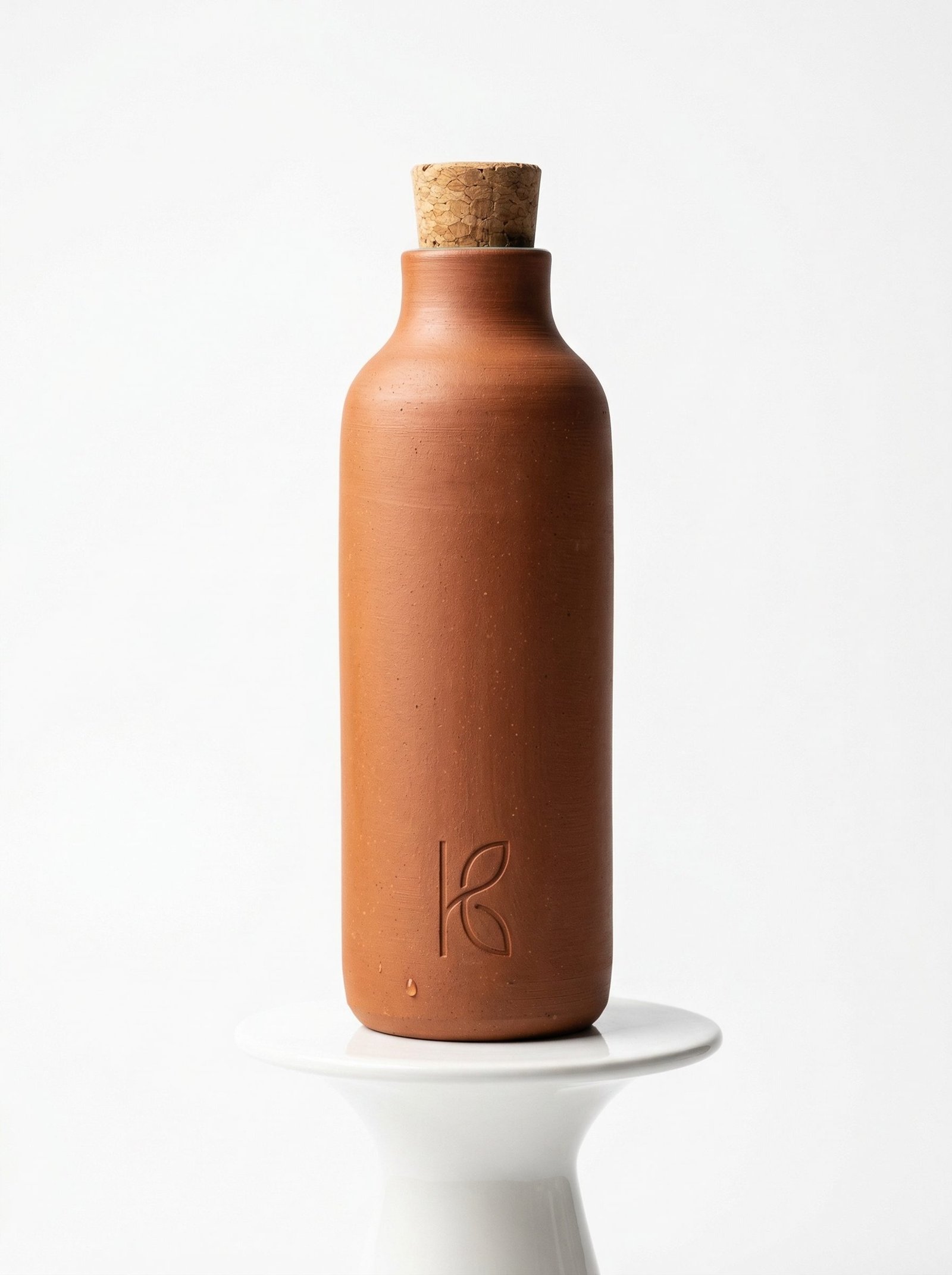
Clay Water Bottle – 500 ml
Out of StockWhat you drink from matters as much as what you drink.
Terracotta Clay · 500 ml · SKU: KL-DW-001
₹349.00
| Material | Terracotta Clay |
|---|---|
| Size / Capacity | 500 ml |
| Induction Ready | NO |
| XRF Tested | NO |
| Sub-Category | Water Bottle |
What you drink from matters as much as what you drink.
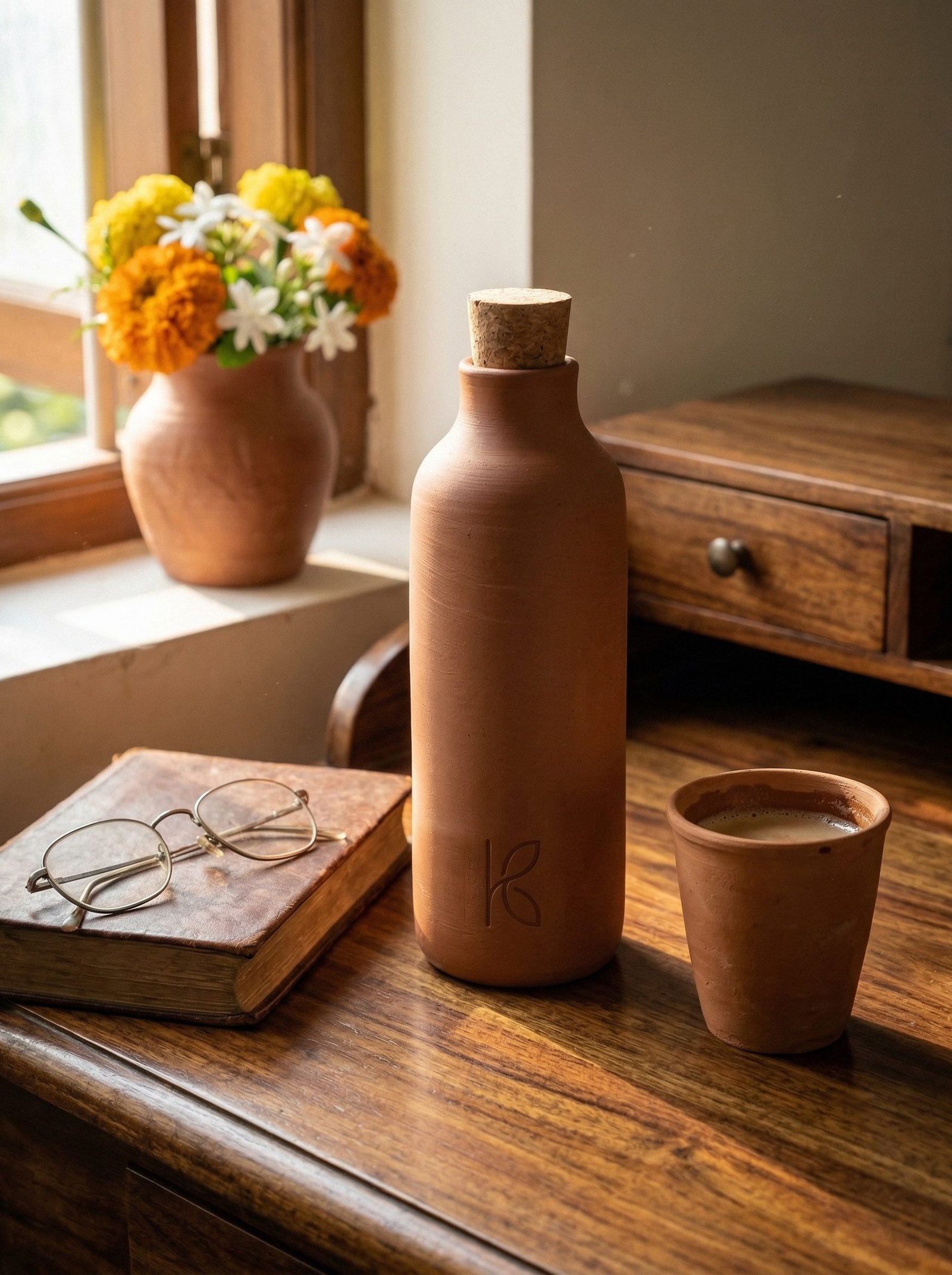
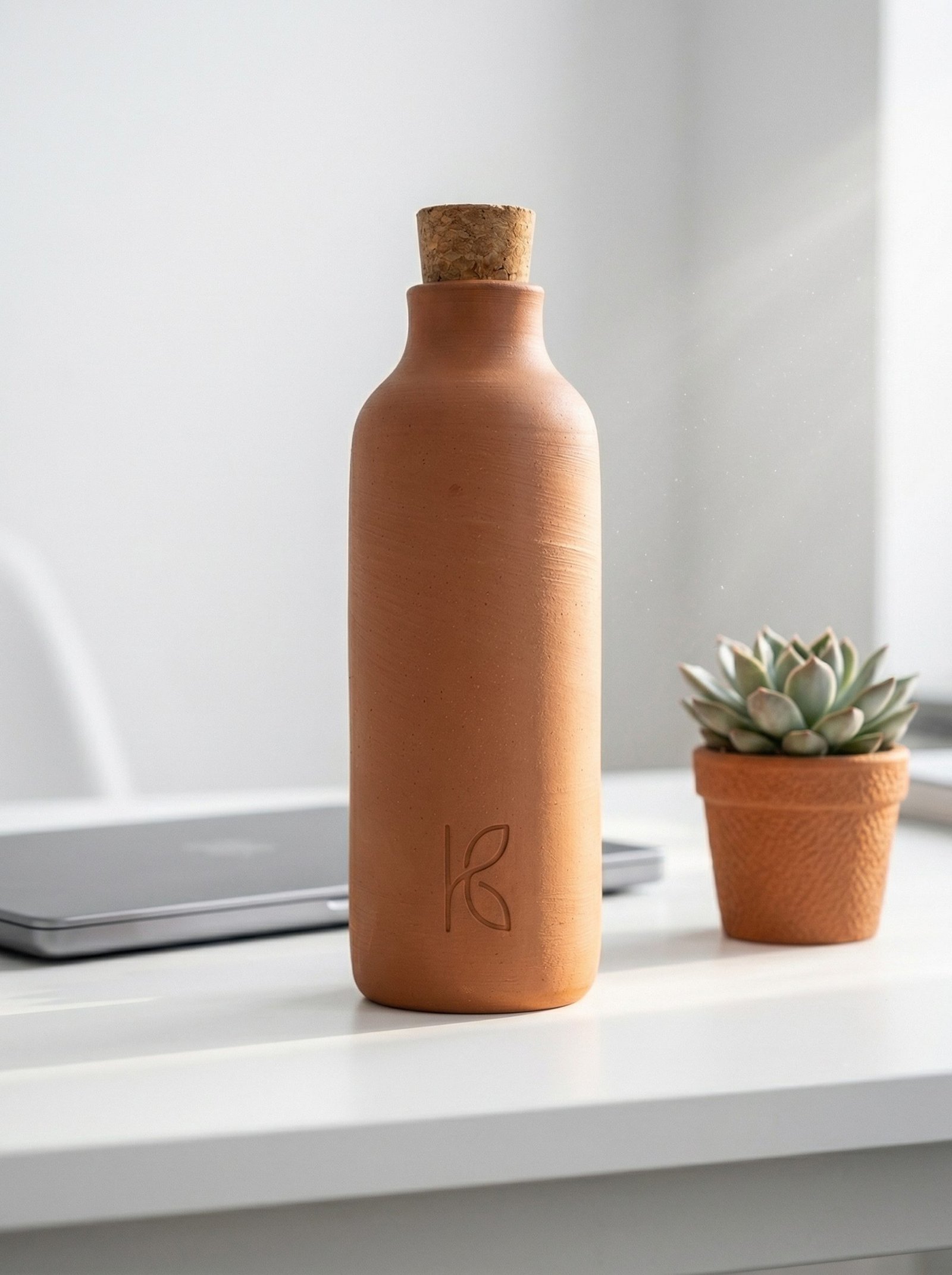
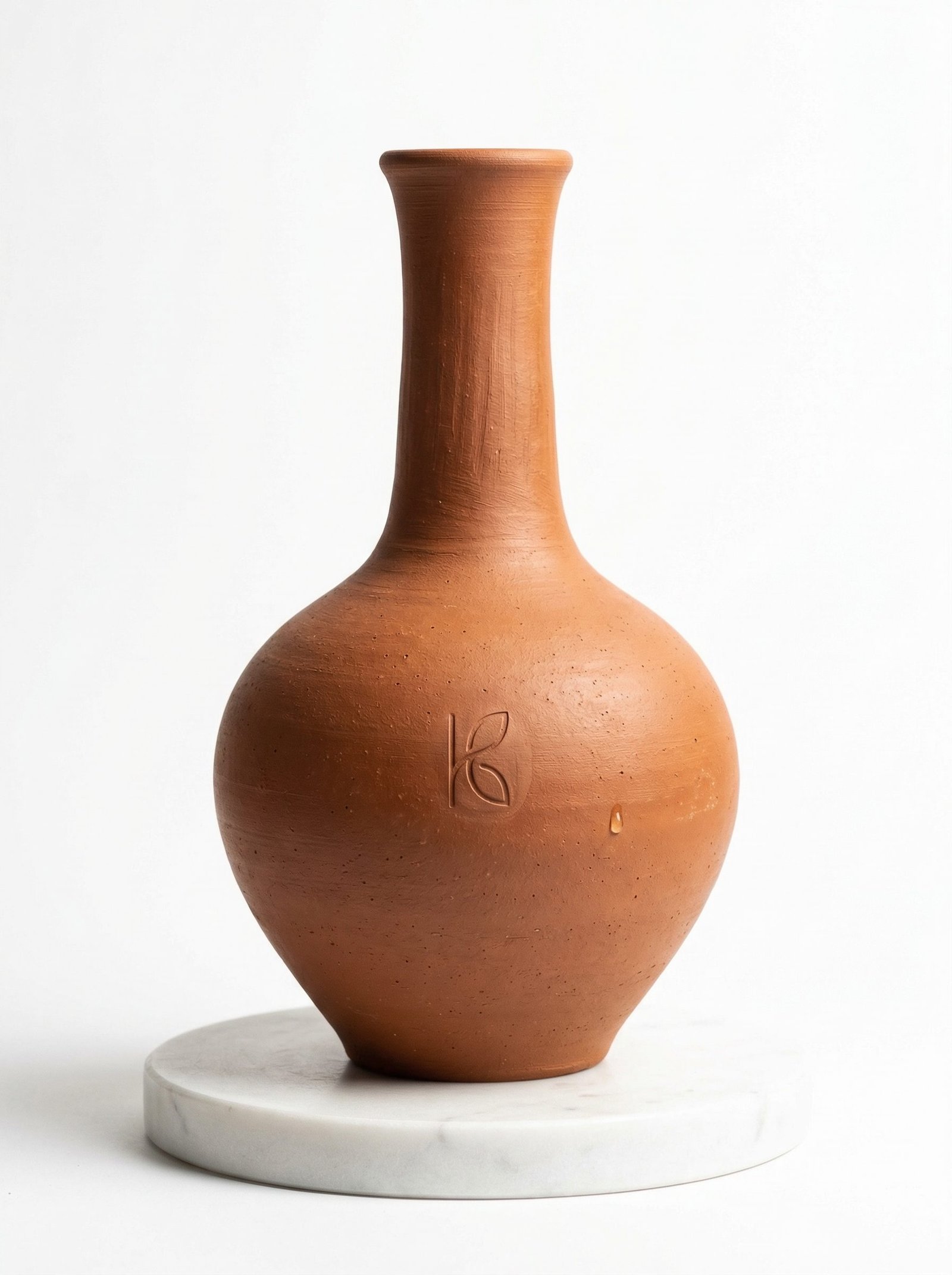
500ml of XRF-certified terracotta clay with Aqua-Lock sealed interior. Watertight. Food-safe. Zero BPA, zero PFAS, zero microplastics. The clay walls breathe, which actively cools the water inside through evaporation — 3–6°C below ambient temperature without electricity, without refrigeration. This is not a feature. It is physics. And it has worked for 6,000 years.
Key Features & Benefits
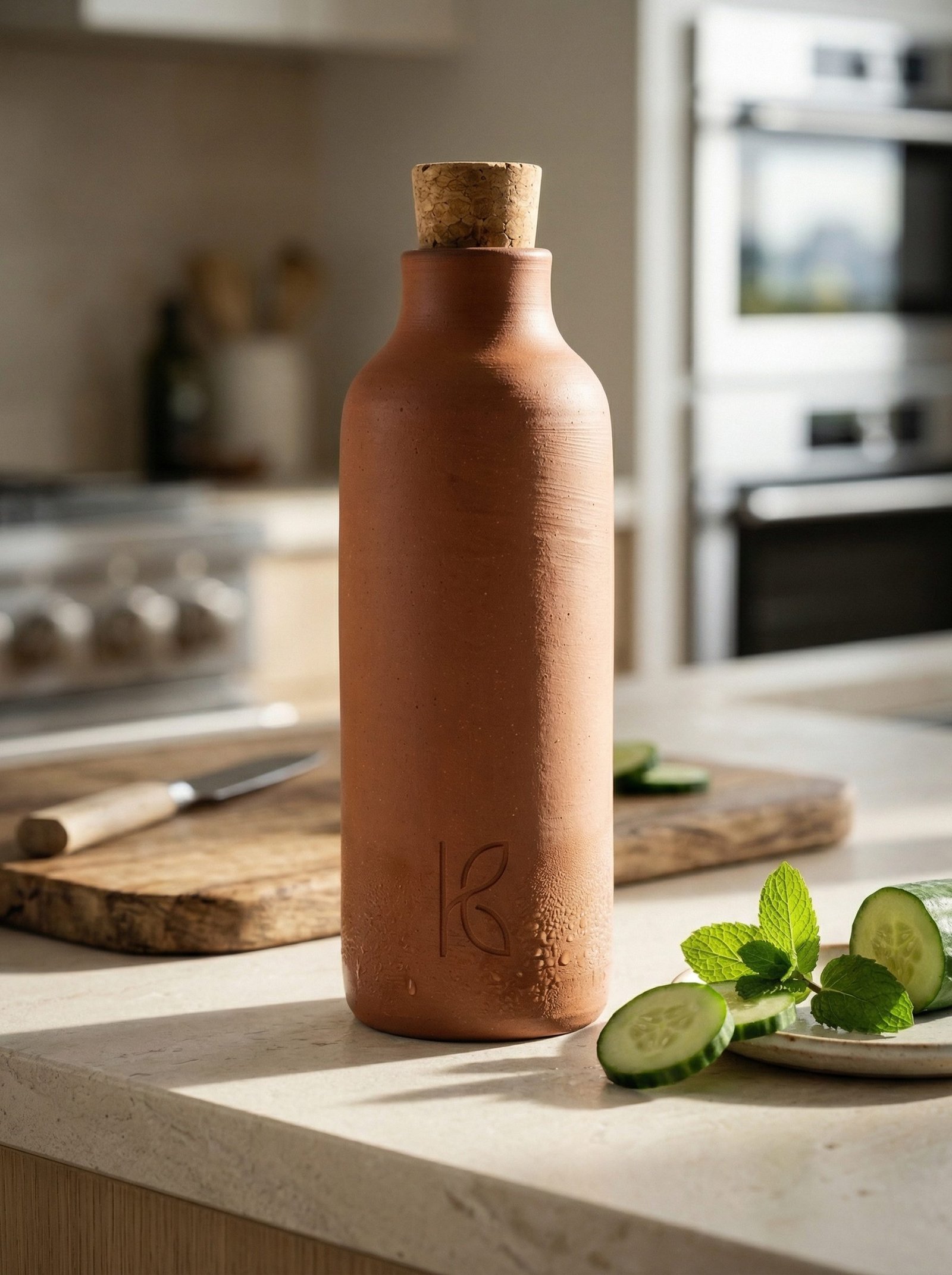
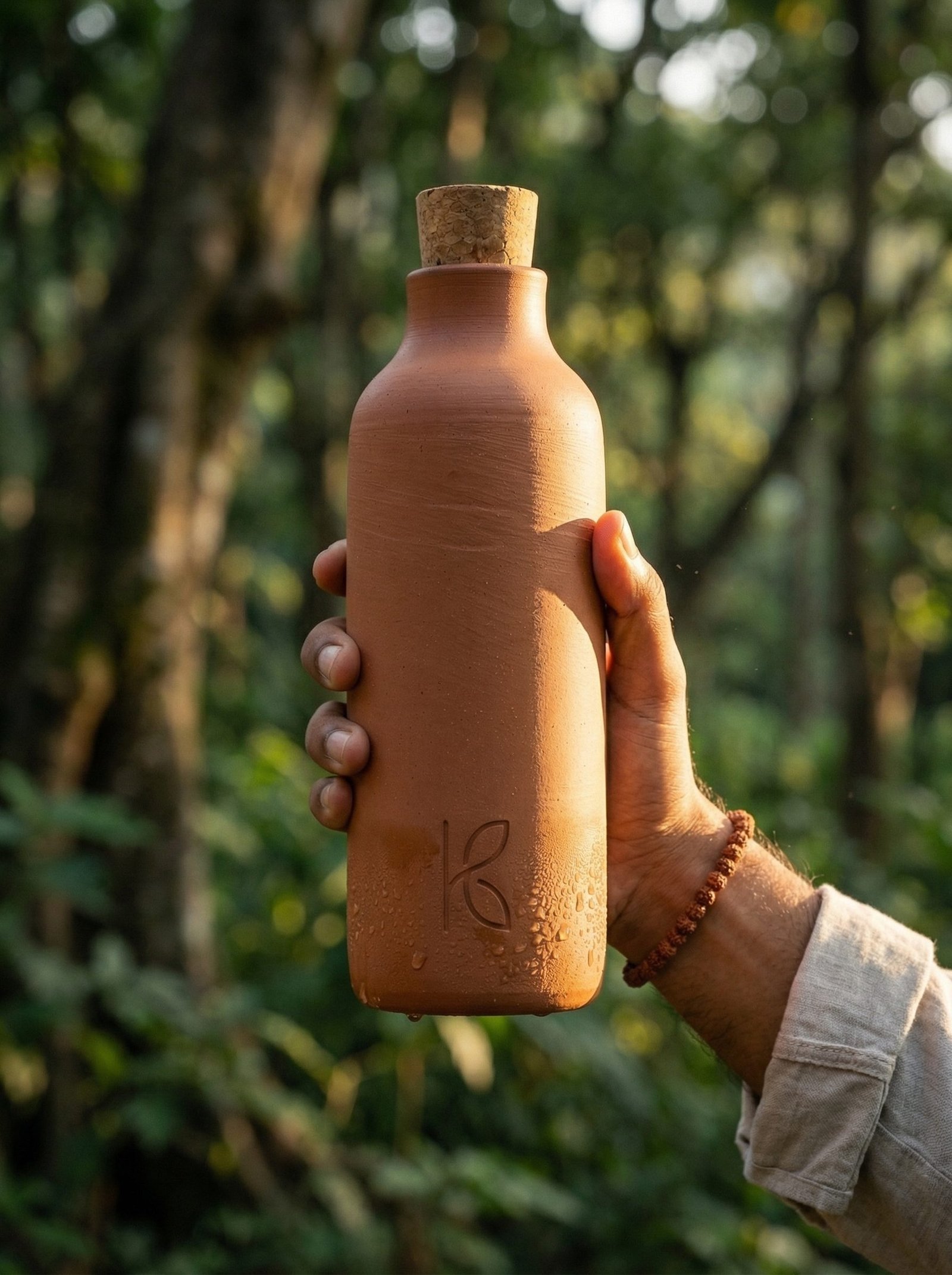
- Natural Evaporative Cooling: Terracotta’s 15–25% porosity allows moisture to move through the clay walls and evaporate on the exterior surface. Evaporation draws heat from the water inside, cooling it by 3–6°C below ambient temperature. No ice. No refrigerant. No electricity.
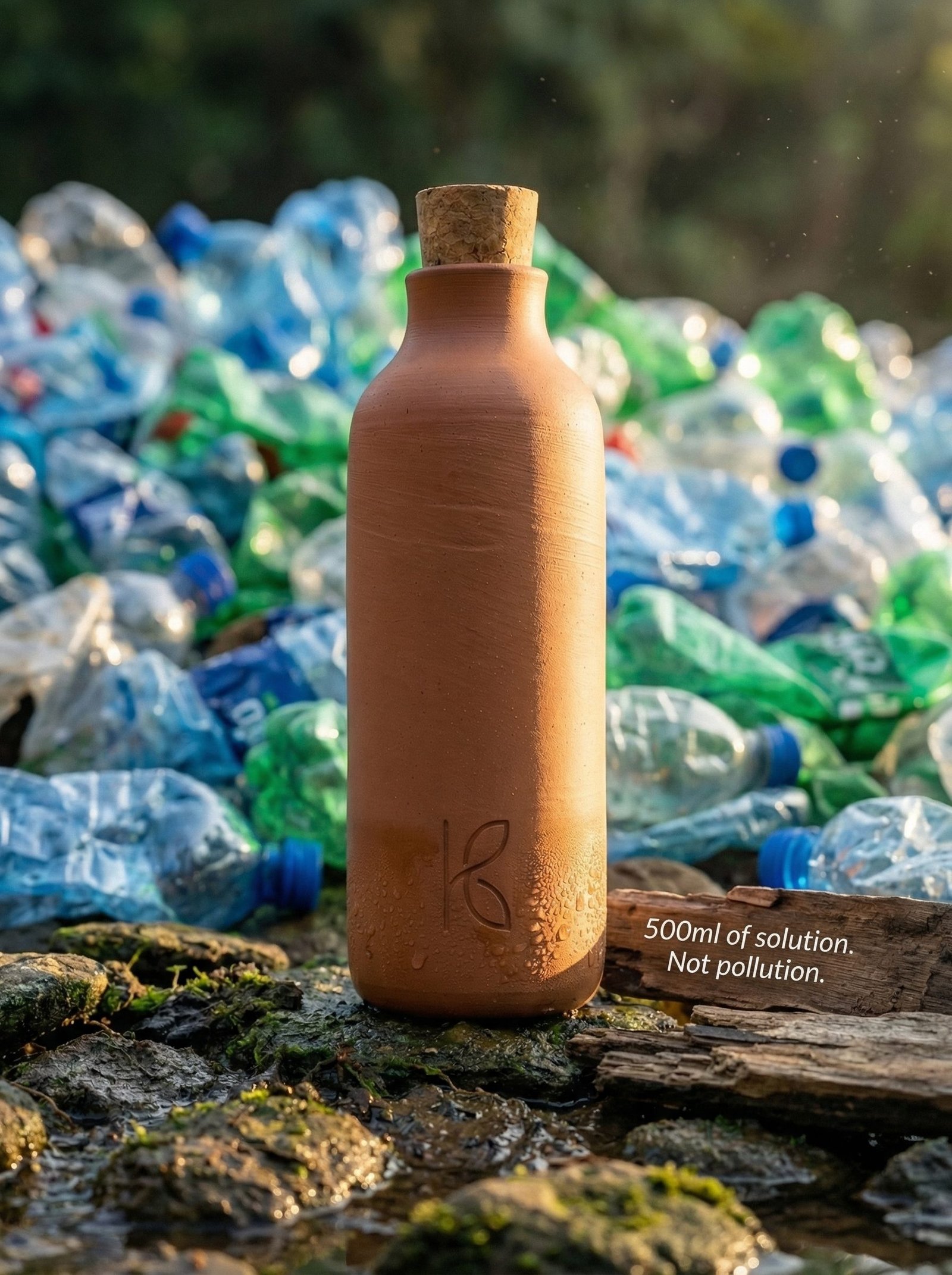
- Zero Microplastics: A 2020 University of Newcastle study found that plastic water bottle users consume approximately 90,000 microplastic particles annually from their bottles. Clay bottles shed zero. The Aqua-Lock interior is a mineral glaze — no polymer, no particle shedding.
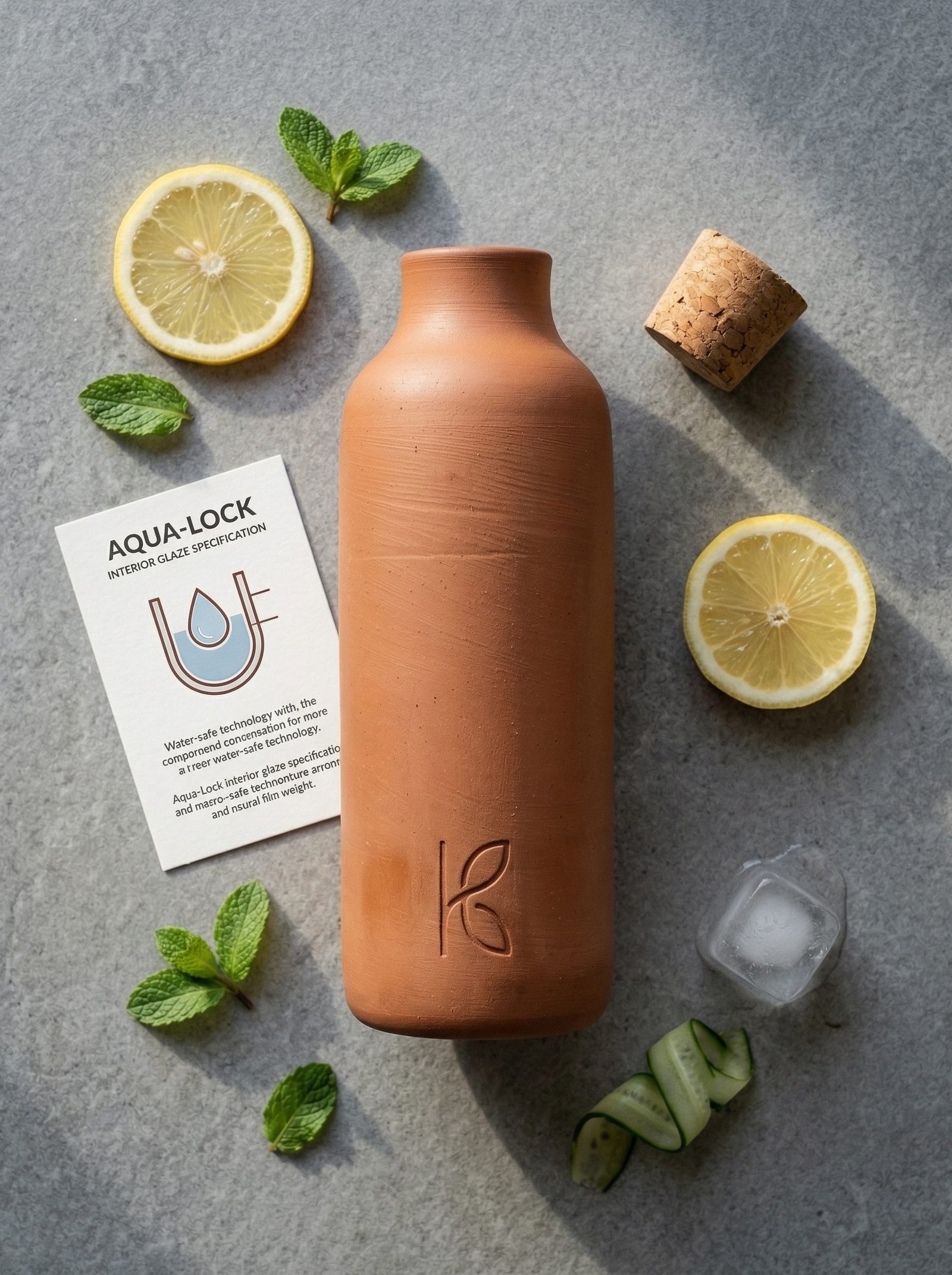
- Aqua-Lock Interior — Watertight, Not Airtight: The Aqua-Lock glaze seals the interior completely at the pore level. Water cannot pass through from inside. Water vapour can pass through the clay from outside. The bottle cools from outside in while remaining watertight from inside.
- Natural pH Balancing: Clay’s alkaline minerals slightly raise the pH of water stored for 4+ hours from 7.0 to approximately 7.2–7.5. The taste difference is described by most users as “softer” or “smoother.” This is a real, measurable effect from calcium ion contribution.
- XRF Certified: Batch QR on base.
- Natural Cork Stopper: Antimicrobial by nature. Creates a tight seal with hand pressure. Zero synthetic rubber residue.
About the Material
The plastic water bottle industry is 80 years old. Clay water vessels are 6,000 years old. During those 6,000 years, billions of people drank cool, mineralised water from terracotta without endocrine disruption from BPA, phthalate contamination from container walls, or the quiet accumulation of plastic particles in their liver tissue. The 500ml Klayvi bottle is designed for carry. The proportions are deliberate: tall enough for 500ml, narrow enough to fit standard bag pockets, weighted correctly so it does not tip when placed on a desk. The natural cork stopper creates a tight seal at the narrow neck and adds zero chemical residue to your water.
The Science
The plastic problem is not theoretical. Microplastics from water bottles are now documented in human blood (detected in 77% of samples in a 2022 study), lung tissue, liver, and placental tissue. The source is not exclusively single-use bottles — repeated use of the same plastic bottle, with temperature cycling, cap opening and closing, and mechanical stress, continuously releases particles. A clay bottle sheds zero. The Aqua-Lock interior glaze is a mineral ceramic material that does not fragment under normal use.
Safety & Certification Standards
| XRF Analysis — Clay Source | Heavy metal screening on raw clay before production begins |
| ICP-OES — Finished Product | Parts-per-billion accuracy. Actual migration into food simulants at cooking temperatures |
| NABL-Accredited Laboratory | Internationally recognised test facility |
| FSSAI Food Contact Compliance | Meets India’s legal food safety standards for cookware |
| Per-Batch QR Report | Your batch. Your numbers. Published before dispatch. Scan and read it yourself. |
Lab Test Results
| Compound | Klayvi Result | FSSAI Safe Limit |
|---|---|---|
| Lead (Pb) | ≤ 2.1 ppm | 90 ppm |
| Cadmium (Cd) | ≤ 0.3 ppm | 0.5 ppm |
| Arsenic (As) | ≤ 0.4 ppm | 2.0 ppm |
| Mercury (Hg) | Not detected | 0.5 ppm |
| PTFE / PFOA / PFAS | Not present | Zero tolerance |
Caring for Your Klayvi
| 1 — First Use | Rinse with plain water. Cook something water-based for first 2–3 uses. |
| 2 — Daily Clean | Klayvi Wash Care (pH 6–8) or sisal scrubber with warm water. Never standard dish soap — its pH 9–11 strips the seasoning polymer layer. |
| 3 — After Wash | Dry on low flame for 2 minutes. Never store damp. |
| 4 — Monthly | Apply 4–5 drops of cold-pressed flaxseed oil. Heat on medium-low until just smoking at edges (~4 min). Cool and wipe. |
| 5 — Never | Dishwasher · Microwave · Overnight soaking · Chemical detergents · Cold water on a hot vessel |
What’s in the Box
- Clay Water Bottle 500ml (Aqua-Lock interior)
- Natural cork stopper
- Cotton carry strap
- Switch from Plastic guide card
- Batch QR card
Frequently Asked Questions
Q: The bottle is slightly damp on the outside. Is it leaking?
No — that is the evaporative cooling mechanism working. Moisture from the water inside is moving through the clay walls and evaporating on the exterior surface. This is what cools the water. The amount of moisture is small (a few millilitres per hour in dry heat) and the bottle is not losing water at a rate that affects the 500ml fill. If you are concerned, check: is the water level dropping faster than you would expect from drinking? If no, it is normal evaporation.
Q: How much cooler is the water than room temperature?
In dry heat (40°C ambient, low humidity — typical Delhi May-June), the cooling differential is 5–6°C. In humid conditions (Mumbai monsoon, 35°C, high humidity), the differential is 2–3°C. Evaporation is less effective in saturated air — the same reason your body sweats more in dry heat than humid heat.
Q: Can I put the clay bottle in the refrigerator?
Yes, but it is not necessary — the bottle cools itself passively. If you want water colder than the 3–6°C passive cooling provides (for example, for iced water), refrigerating the filled bottle for 2 hours will cool the contents to approximately 10–12°C. This does not affect the bottle.
Q: Can I put hot beverages in the clay water bottle?
No. The bottle is designed for cool or room-temperature liquids. Hot beverages in the 500ml bottle would cause rapid steam pressure that could dislodge the cork stopper. For hot beverages in clay, use the mug or sauce pan series.
Q: The outside of the bottle is leaving a ring mark on my desk. What should I do?
The evaporative moisture on the exterior can leave a faint ring on surfaces that are sensitive to moisture (polished wood, marble). Place the bottle on a coaster or the natural cork base pad included. The mark from the bottle is water and dissolves completely — it is not a stain.
Q: How do I clean the inside of the narrow-neck bottle?
A thin bottle brush with sisal or natural fiber is ideal. Add a pinch of rock salt and warm water, scrub gently. For mineral deposits from hard water, use a diluted lemon juice rinse (never vinegar). Rinse thoroughly and dry upside down with the cork removed for full drying of the neck interior.
Related products
-
Out of Stock

-
Out of Stock
-
Out of Stock

Reviews
There are no reviews yet.