
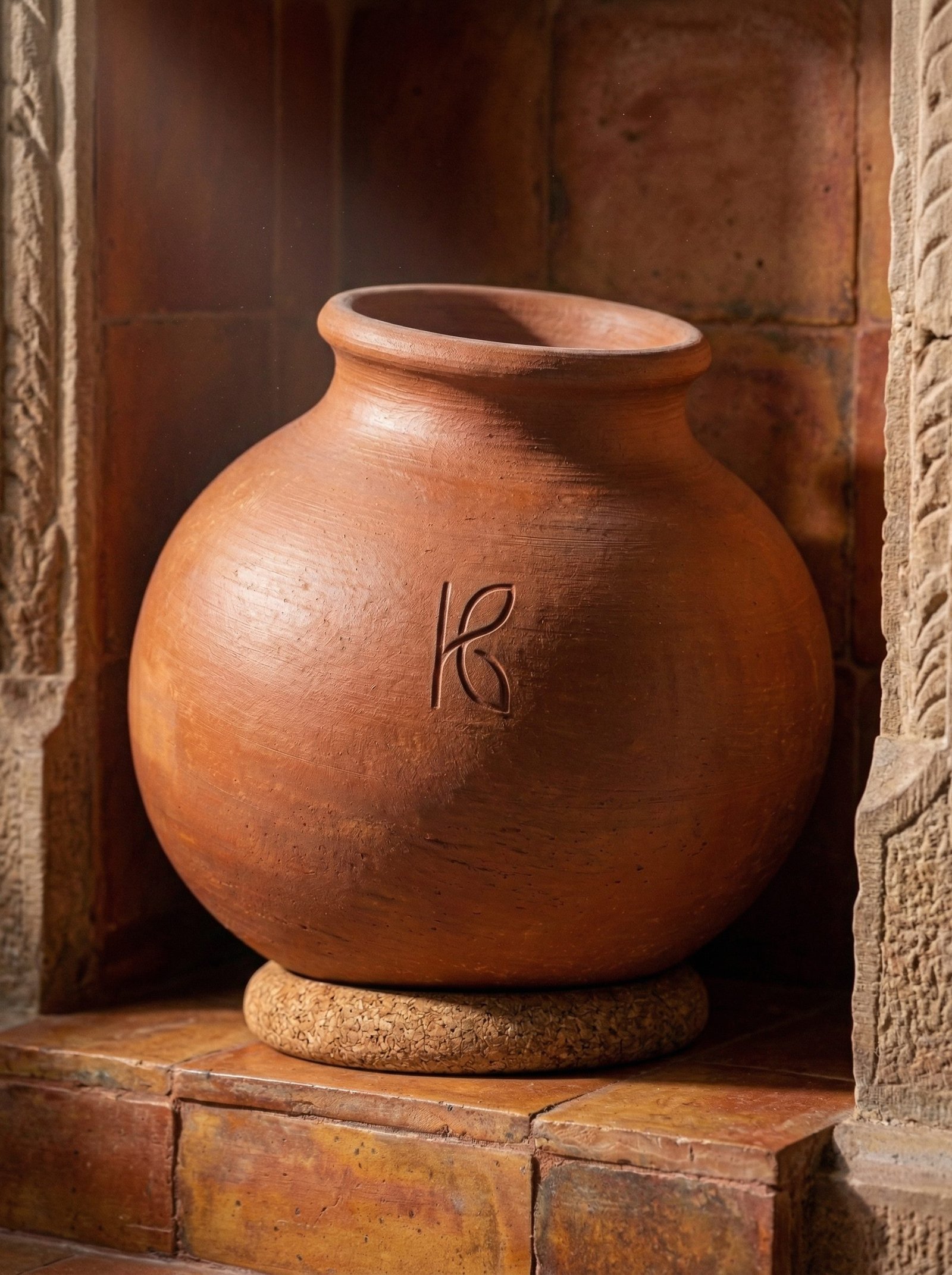
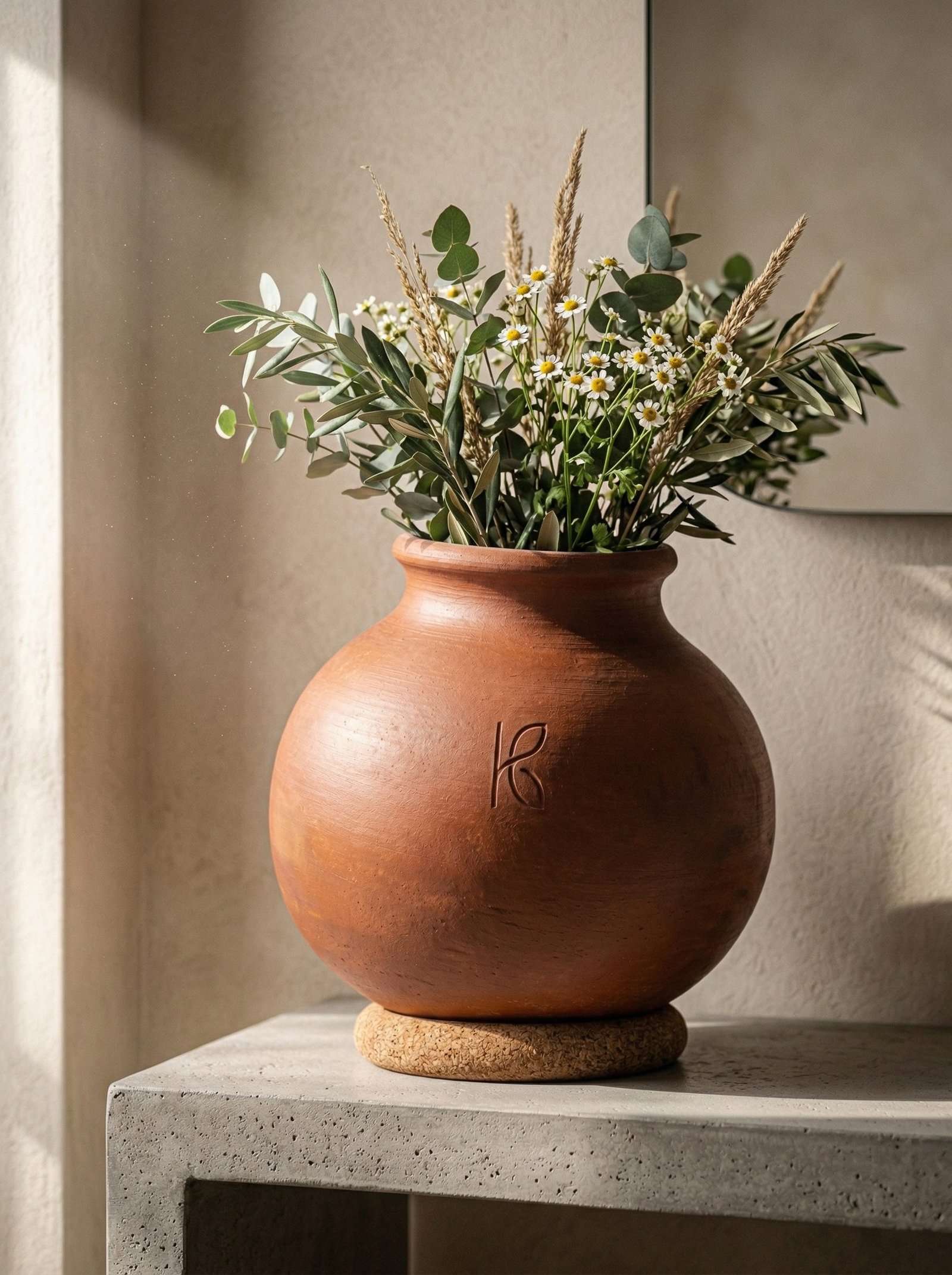
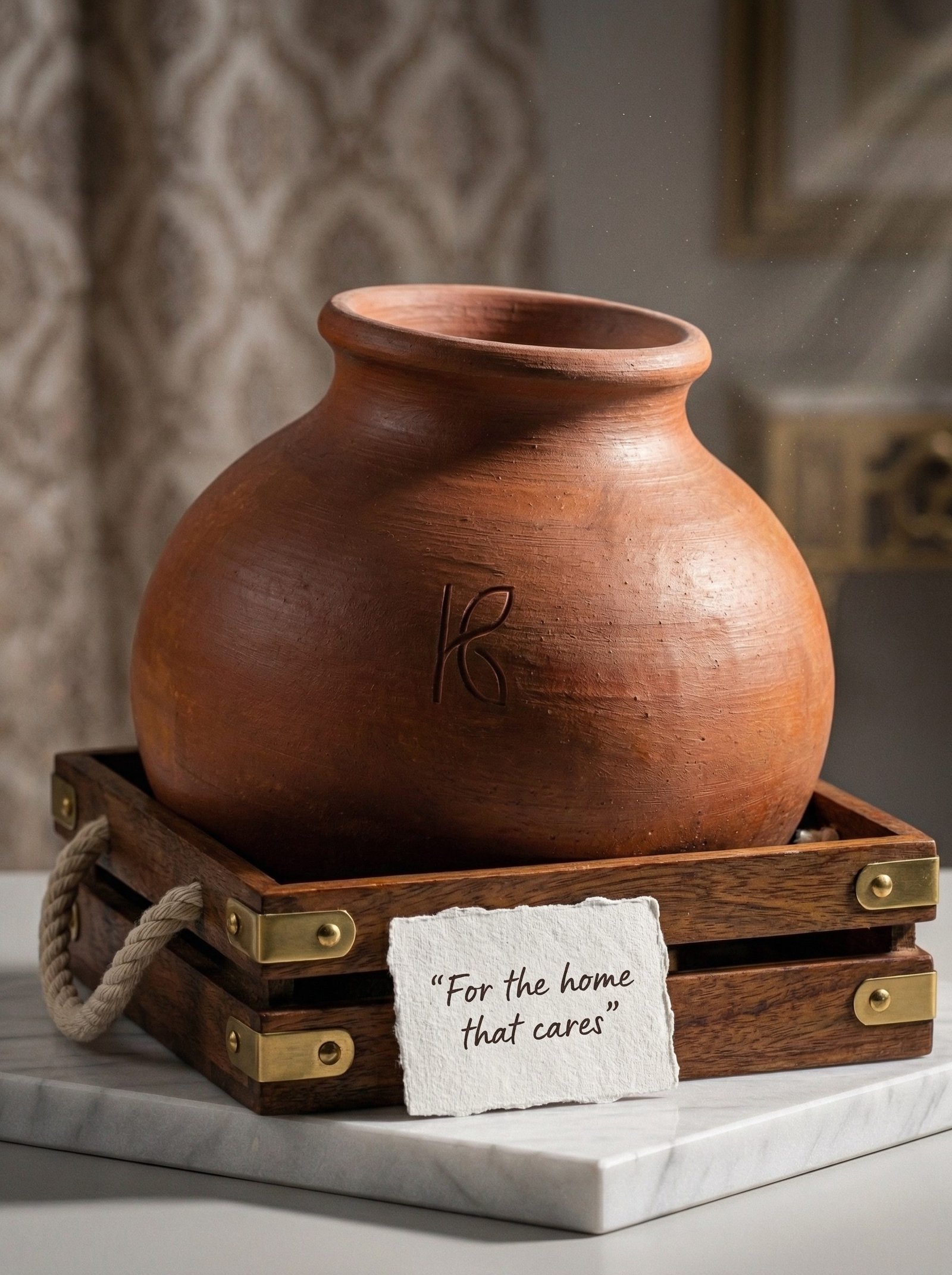
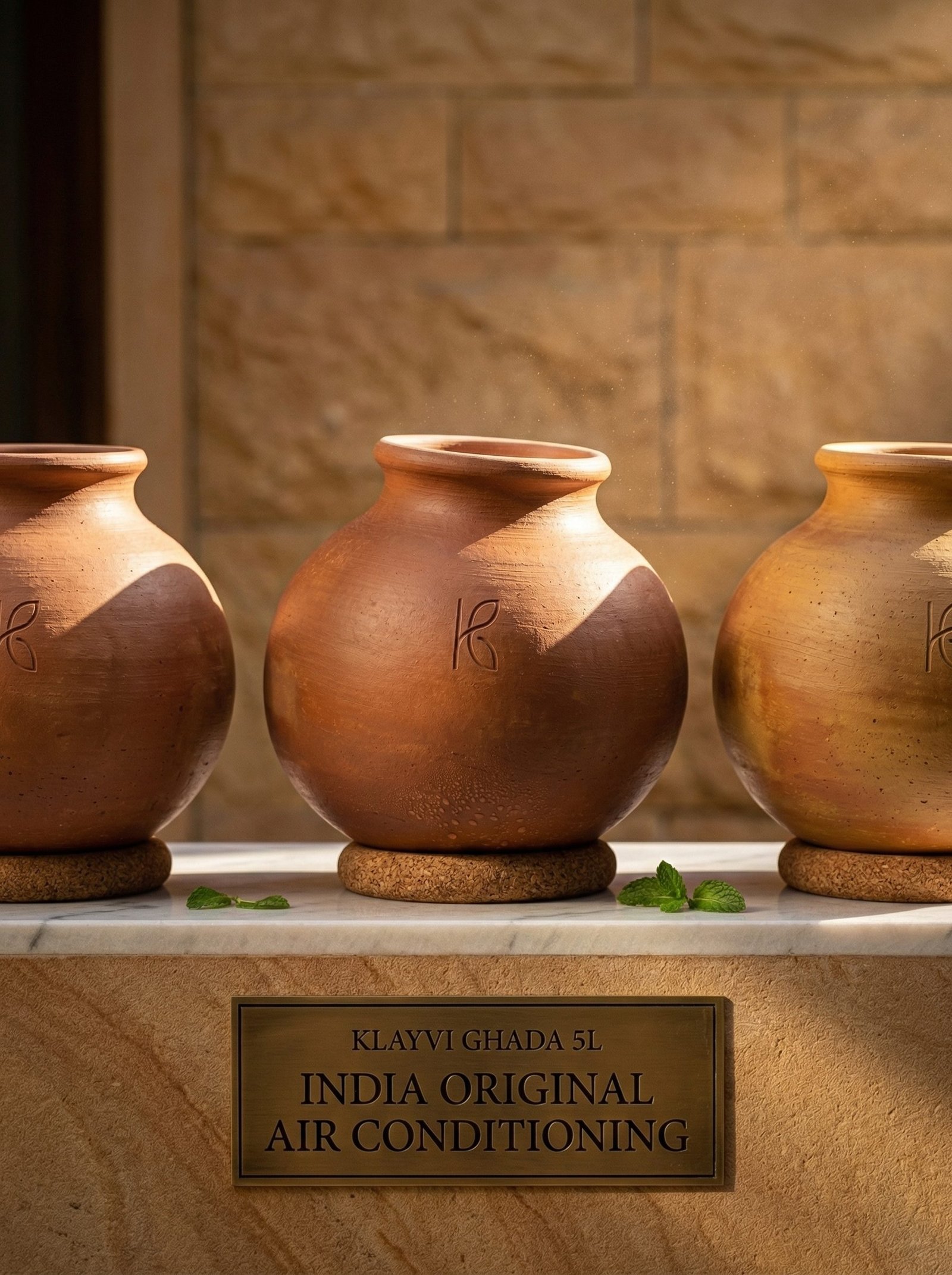
Clay Water Pot (Ghada) – 5 L
Out of StockIndia’s original cooling technology. Still undefeated.
Terracotta Clay · 5 Litres · SKU: KL-DW-006
₹1,299.00
| Material | Terracotta Clay |
|---|---|
| Size / Capacity | 5 Litres |
| Induction Ready | NO |
| XRF Tested | NO |
| Sub-Category | Ghada / Storage Pot |
India’s original cooling technology. Still undefeated.
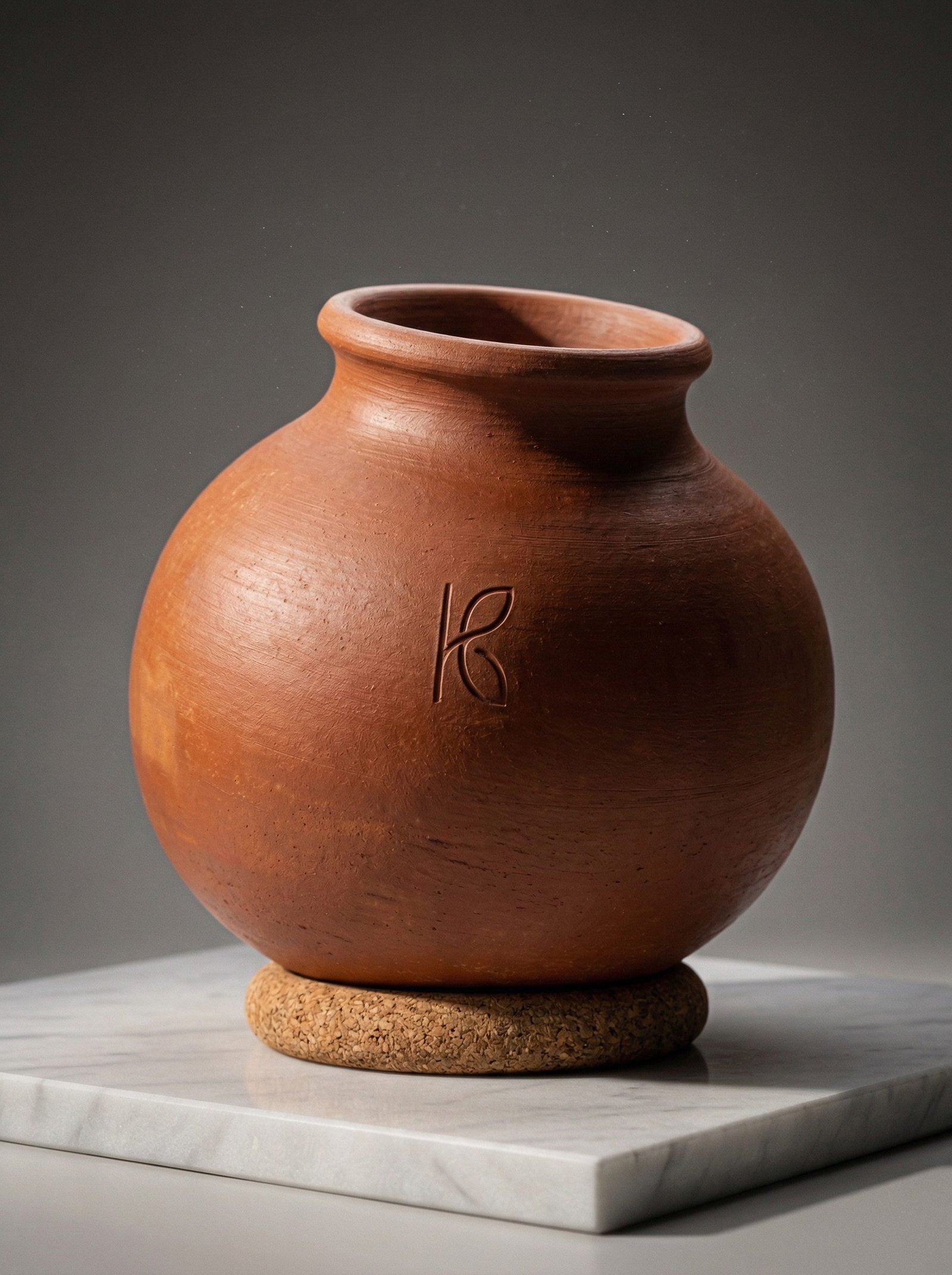
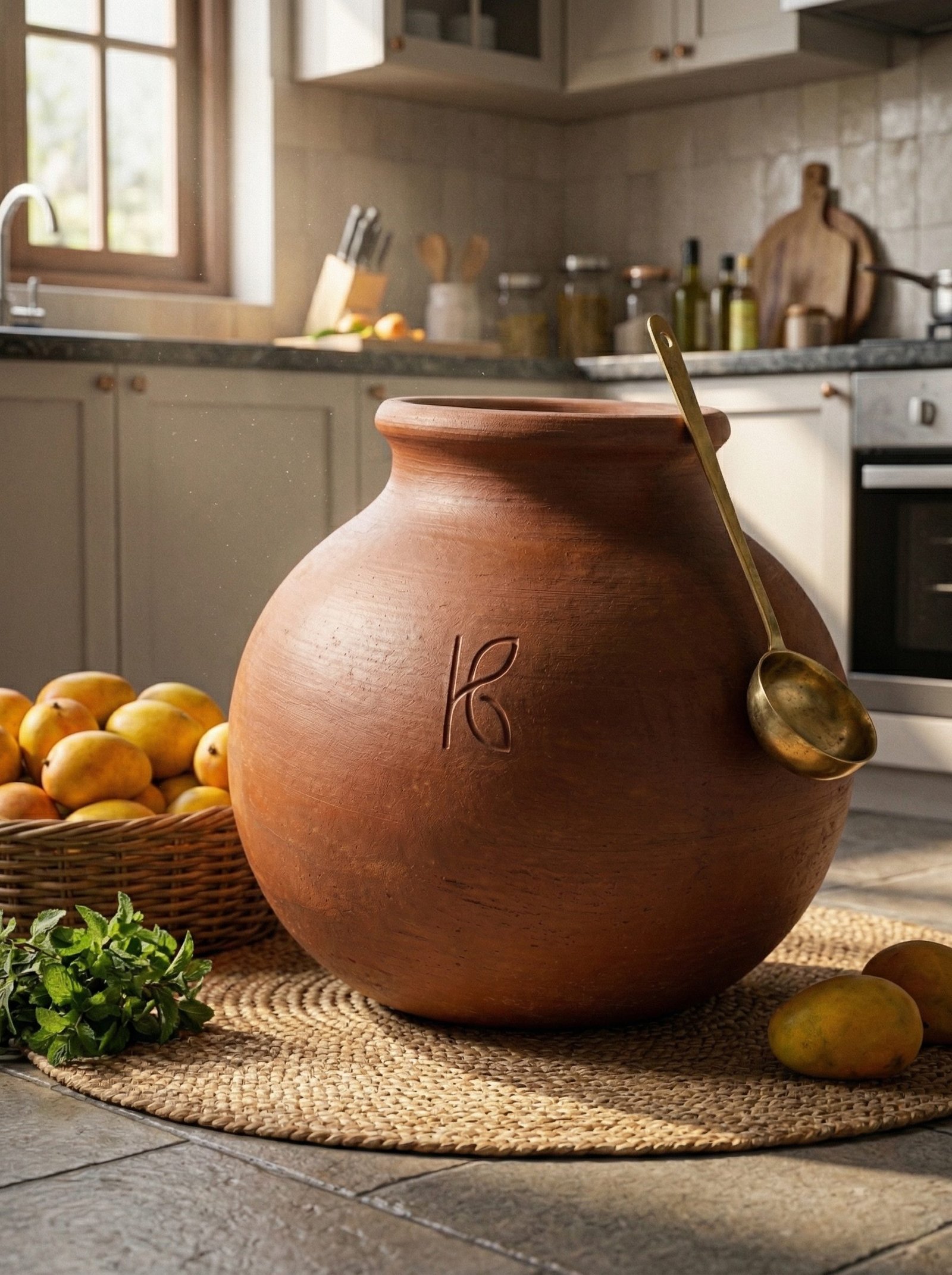
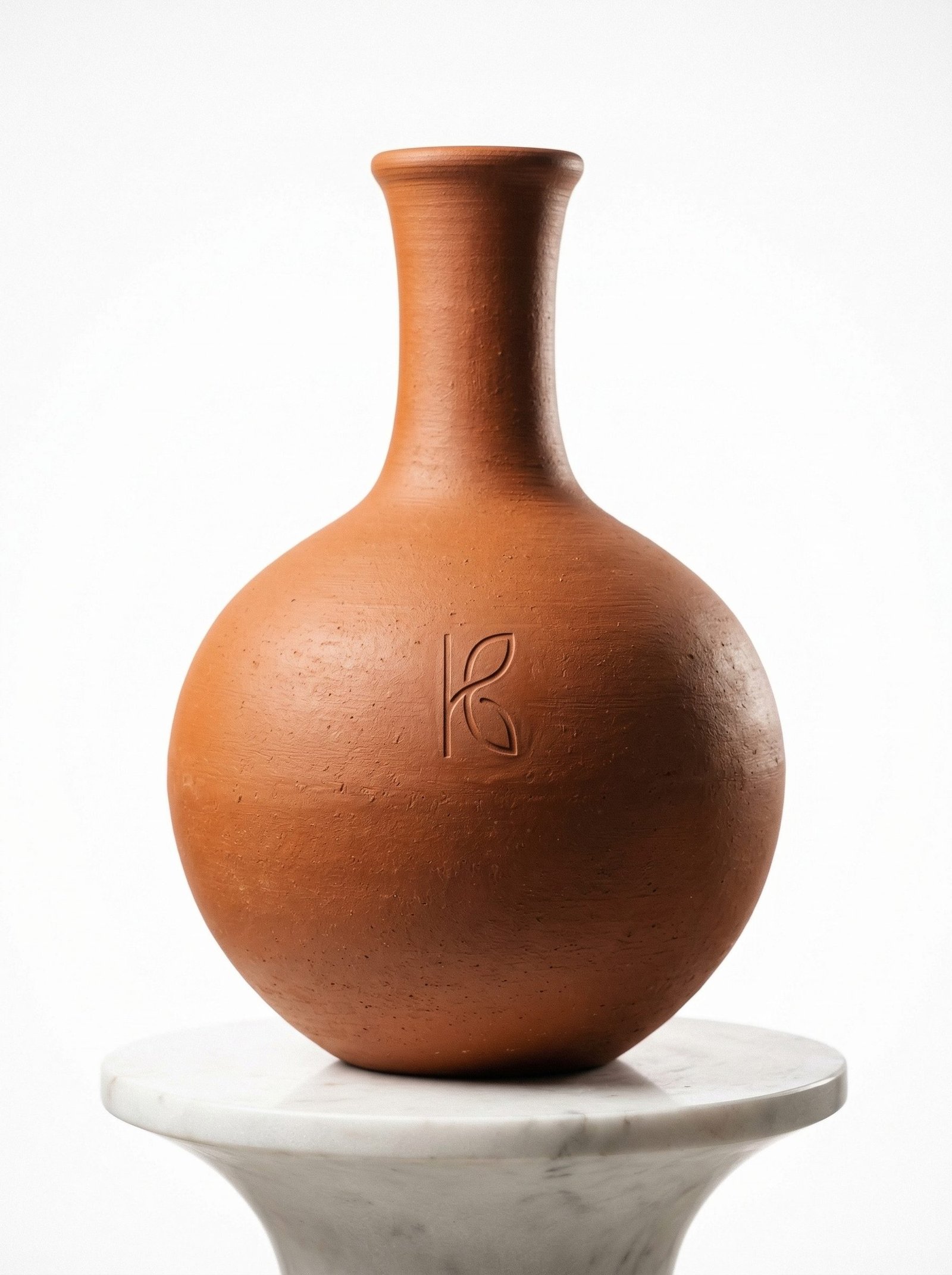
The ghada — the large traditional matka — is 5 litres of terracotta clay for the whole family. Anti-topple base ring. XRF-certified. No electricity. No refrigerant. No filter. Just porous clay, ambient air, and the same physics that kept Indian families hydrated through every summer before refrigerators were invented. Refrigerators have been available in India for 70 years. The ghada is still in use. There is a reason.
Key Features & Benefits
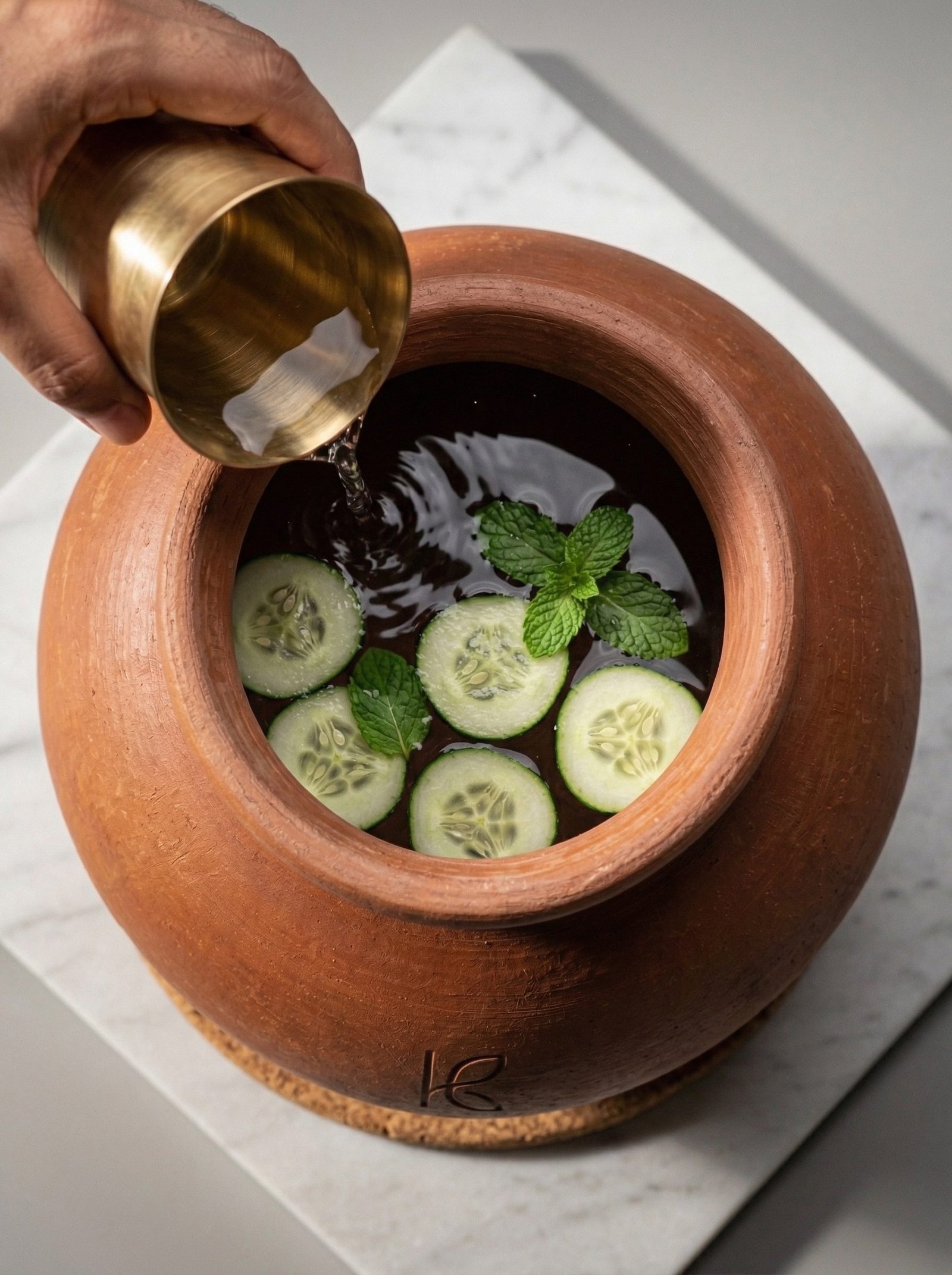
- India’s Original Cooling System: The ghada’s evaporative mechanism requires no moving parts, no electricity, and no maintenance beyond refilling. On a 42°C Delhi June afternoon, a full 5L ghada maintains water at 28–32°C — the optimal temperature for rapid rehydration, far more effective than the 4°C refrigerated water that shocks the stomach and slows absorption.
- Maximum Surface Area for Maximum Cooling: At 5L, the ghada has the largest clay surface area of any vessel in our range. More surface area = more evaporation = more cooling per hour. The wide belly and the traditionally tapered neck are optimised cooling geometry, refined over millennia.
- Anti-Topple Cork Base Ring: A full 5L ghada weighs approximately 7–8kg. It is a floor or counter vessel. The wide cork base ring prevents tipping at this weight.
- Zero Microplastics, Zero Plastic Contact: No BPA, no PFAS, no microplastics from container walls. 5 litres of water in contact with certified clay — nothing else.
- XRF Certified: Batch QR on body.
- Natural pH Balancing: Extended contact with 5L of clay produces measurably softer, slightly alkaline water — pH 7.2–7.5 after 6+ hours.
About the Material
The ghada’s wide round belly and moderately narrow neck are the result of 4,000 years of practical optimisation, not aesthetic preference. The wide belly maximises clay surface area relative to water volume. The moderate neck (wider than a surahi, narrower than an open pot) allows easy filling from a standard tap while limiting dust entry and reducing direct evaporation from the water surface. At 5L, the ghada has the most substantial clay body of any Klayvi drinkware piece — approximately 7–8mm wall thickness at the belly. This clay mass is itself a thermal buffer: once the ghada and its contents reach their equilibrium temperature (usually within 3–4 hours of filling), ambient temperature fluctuations take much longer to affect the internal water temperature.
The Science
Sports science has established that the optimal water temperature for maximum gastric absorption is 15–22°C, not 4°C. At 4°C, gastric absorption slows, and in some individuals, cold water triggers oesophageal spasm or significantly reduced thirst response. The ghada’s 28–32°C output in peak Indian summer is within the optimal absorption range. For heat-related illness prevention specifically — the context in which traditional Indian families relied most heavily on the ghada — the World Health Organization recommends frequent small drinks of water at 15–25°C. Ghada water is at precisely this temperature range in the conditions under which it is most needed.
Safety & Certification Standards
| XRF Analysis — Clay Source | Heavy metal screening on raw clay before production begins |
| ICP-OES — Finished Product | Parts-per-billion accuracy. Actual migration into food simulants tested |
| NABL-Accredited Laboratory | Internationally recognised test facility |
| FSSAI Food Contact Compliance | Meets India’s legal food safety standards |
| Per-Batch QR Report | Your batch. Your numbers. Published before dispatch. Scan and read it yourself. |
Lab Test Results
| Compound | Klayvi Result | FSSAI Safe Limit |
|---|---|---|
| Lead (Pb) | ≤ 2.1 ppm | 90 ppm |
| Cadmium (Cd) | ≤ 0.3 ppm | 0.5 ppm |
| Arsenic (As) | ≤ 0.4 ppm | 2.0 ppm |
| Mercury (Hg) | Not detected | 0.5 ppm |
| PTFE / PFOA / PFAS | Not present | Zero tolerance |
Caring for Your Klayvi
| 1 — First Use | Rinse with plain water. Cook something water-based for first 2–3 uses. |
| 2 — Daily Clean | Klayvi Wash Care (pH 6–8) or sisal scrubber + warm water. Never standard dish soap — its pH 9–11 destroys the seasoning layer. |
| 3 — After Wash | Dry completely on low flame for 2 minutes. Never store damp. |
| 4 — Monthly | Apply 4–5 drops cold-pressed flaxseed oil. Heat on medium-low until just smoking (~4 min). Cool and wipe. |
| 5 — Never | Dishwasher · Microwave · Overnight soaking · Chemical detergents · Cold water on a hot vessel |
What’s in the Box
- Clay Ghada 5L (Aqua-Lock interior)
- Anti-topple cork base ring (pre-attached)
- Artisan provenance card
- Cotton muslin storage pouch
- Clay Care Passport
- Batch QR card
Frequently Asked Questions
Q: How long does a 5L ghada take to cool water to the right temperature?
First fill takes 2–3 hours to reach optimal cooling temperature (28–32°C in dry heat). Once the clay is saturated with moisture and evaporation is established, subsequent fills cool to optimal temperature in 60–90 minutes.
Q: How do I clean the interior of the ghada?
The neck is wide enough for a long-handled bottle brush. After emptying, add 1L of warm water with a tablespoon of rock salt, shake vigorously, let stand 30 minutes, pour out. Rinse with plain water. Sun-dry for 2–3 hours with the neck up. Never use soap inside the ghada.
Q: Can the ghada be stored in a refrigerator between uses?
Unnecessary — the ghada cools its contents better than a refrigerator for drinking purposes. For storage between uses, drain the ghada, dry it completely (leave the neck open in a ventilated space for 24 hours), and store in the cotton muslin pouch. Storing a damp ghada leads to mineral buildup and odour.
Q: Is the ghada suitable for outdoor use in a veranda?
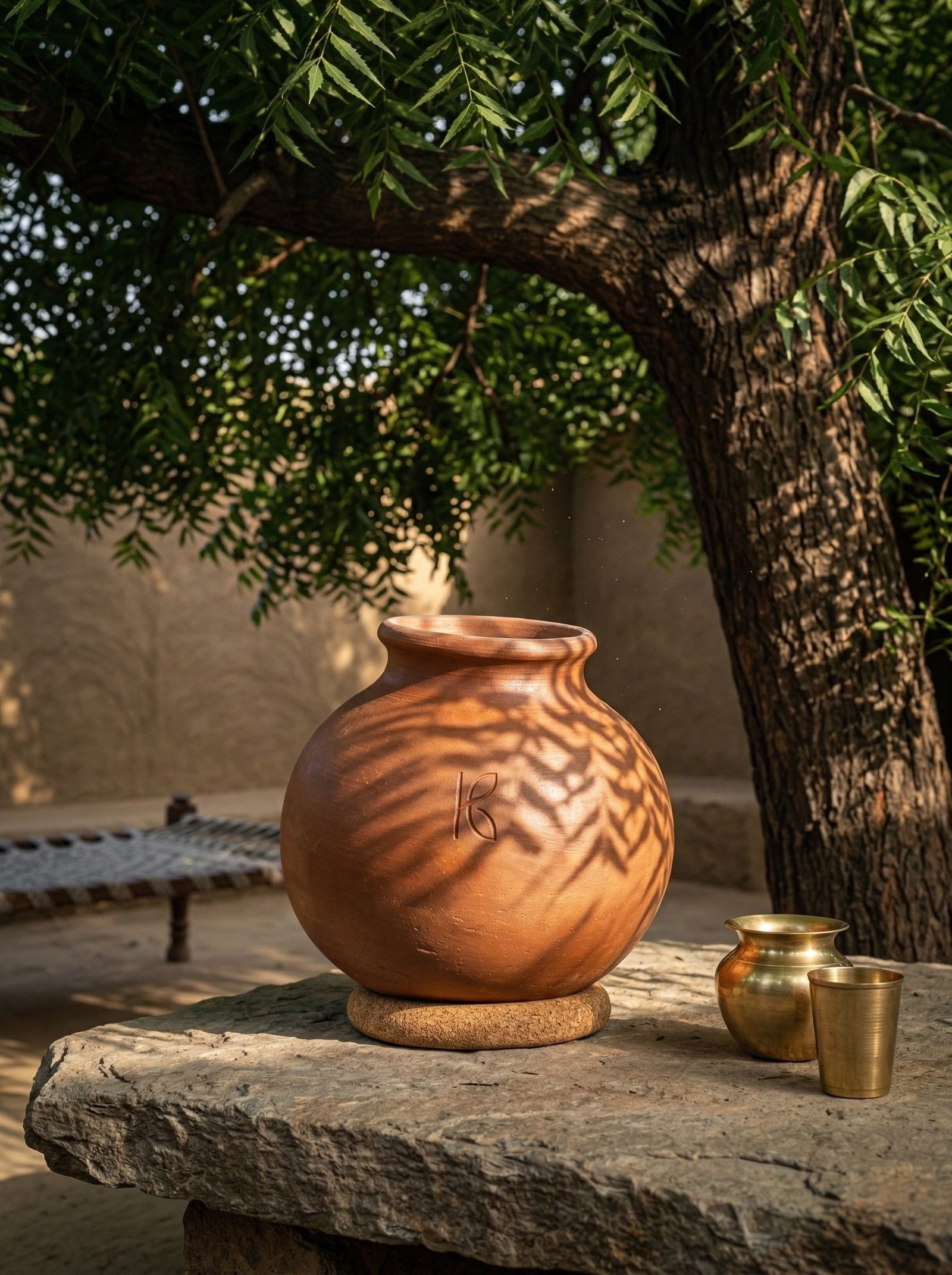
Yes — traditional use was specifically outdoor or semi-outdoor in shade. Keep it away from direct sunlight. In shade, the evaporative cooling is most effective. Direct sunlight heats the clay surface, reducing the cooling differential.
Q: Does the ghada water have a clay taste?
Slightly, in the first 5–10 fills. This is the natural mineral taste of fresh terracotta clay, not contamination. It diminishes with each fill and typically disappears entirely after 20 fills. To accelerate this: soak with water and a small piece of alum (phitkari) for 4 hours, rinse thoroughly, repeat twice.
Q: How often should I empty and dry the ghada?
Every 2–3 days in summer, empty completely and let the interior air-dry for 2–4 hours before refilling. This prevents mineral scale buildup and maintains maximum cooling efficiency. A ghada kept continuously full for weeks without drying loses some evaporative efficiency as the clay pores fill with mineral deposits.
Related products
-
Out of Stock

-
Out of Stock
-
Out of Stock

Reviews
There are no reviews yet.