
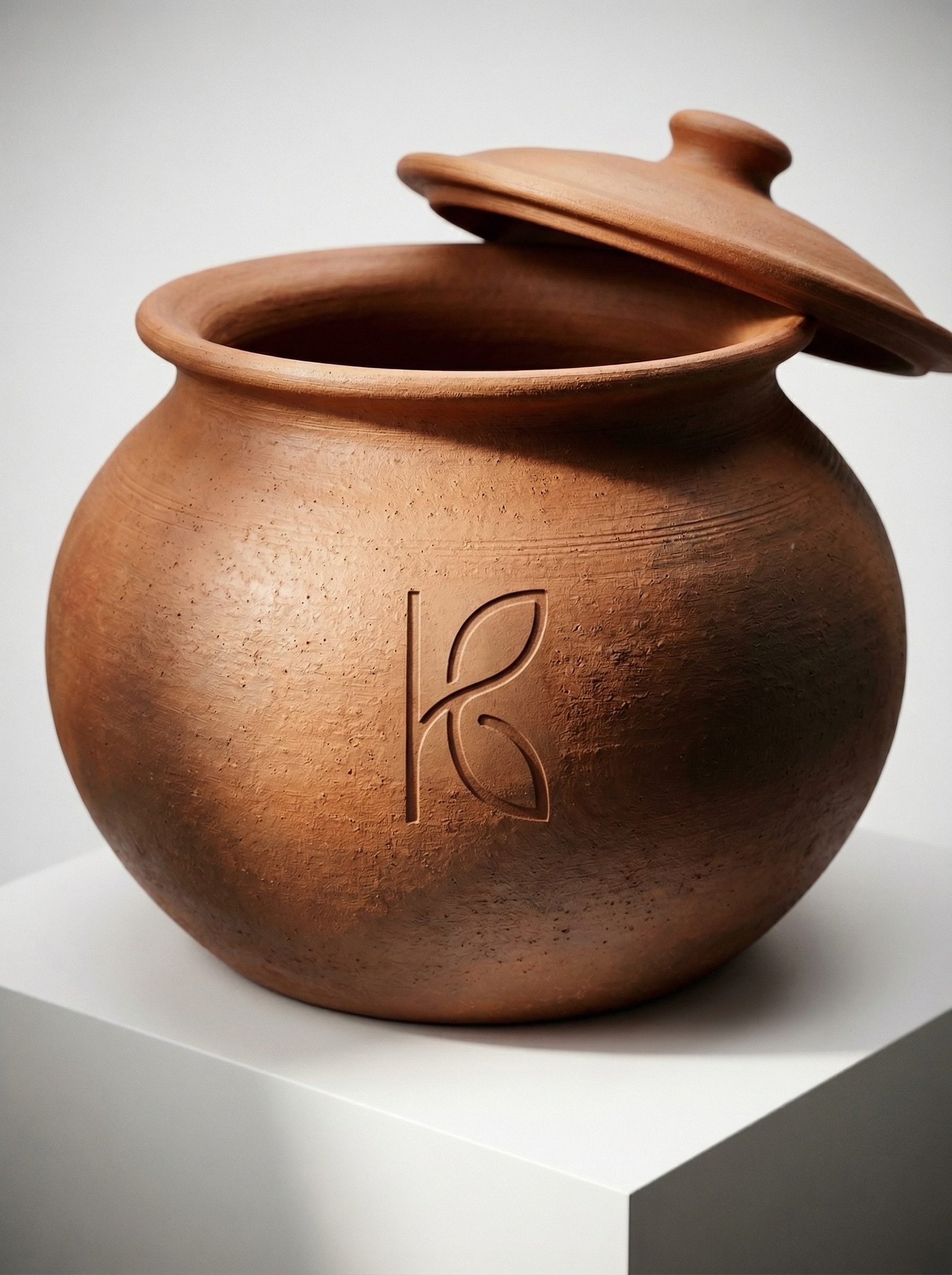
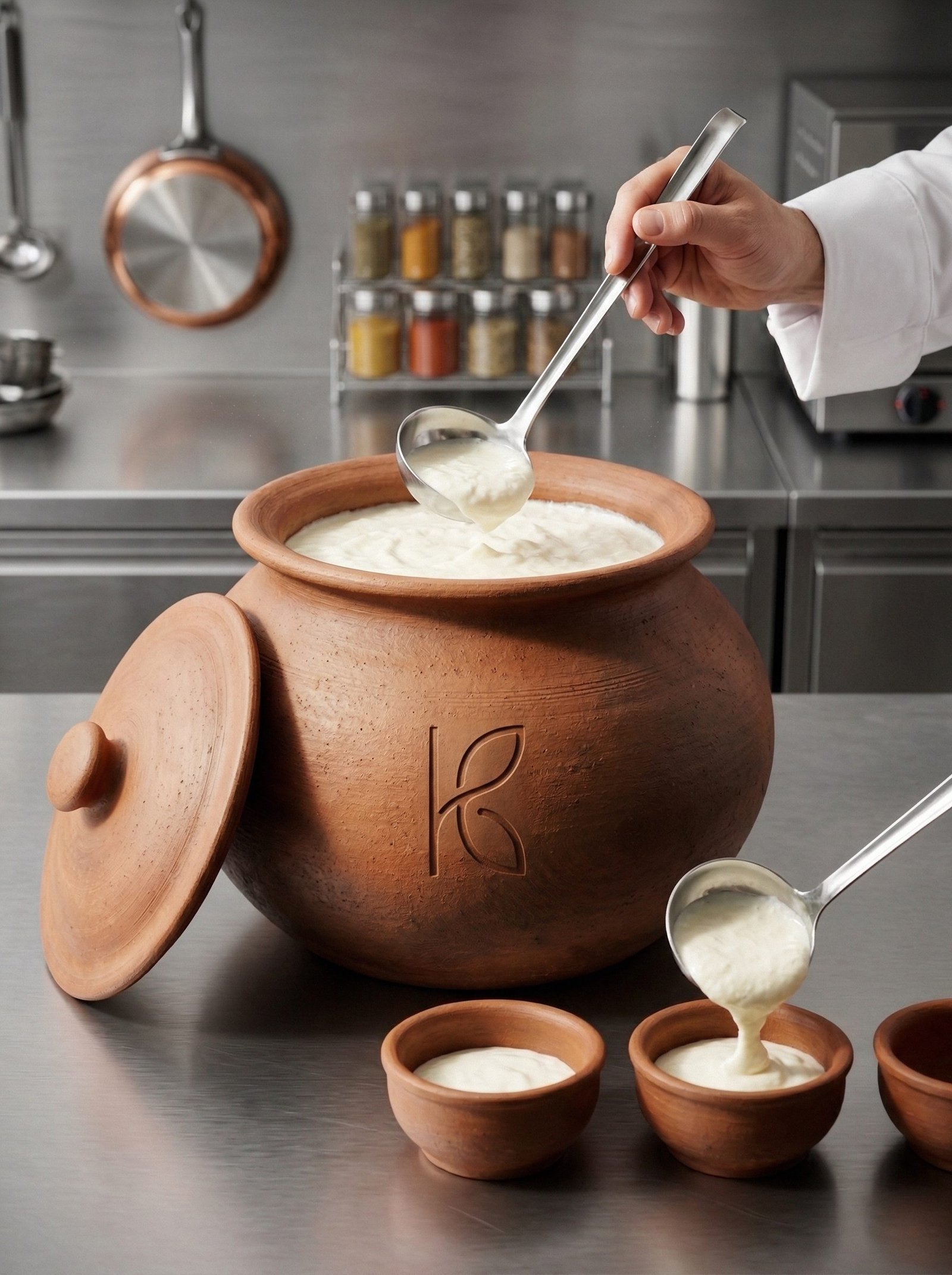
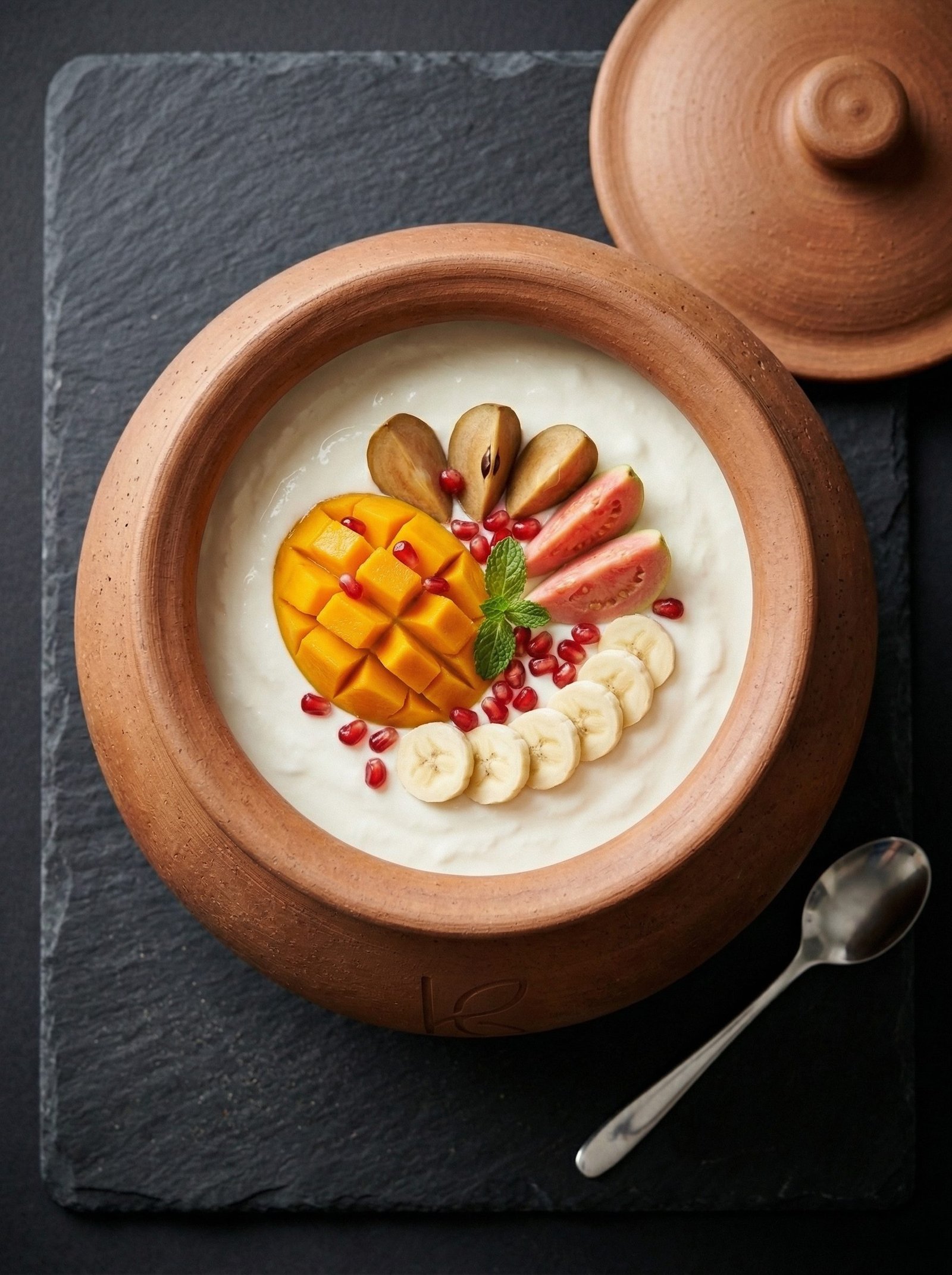
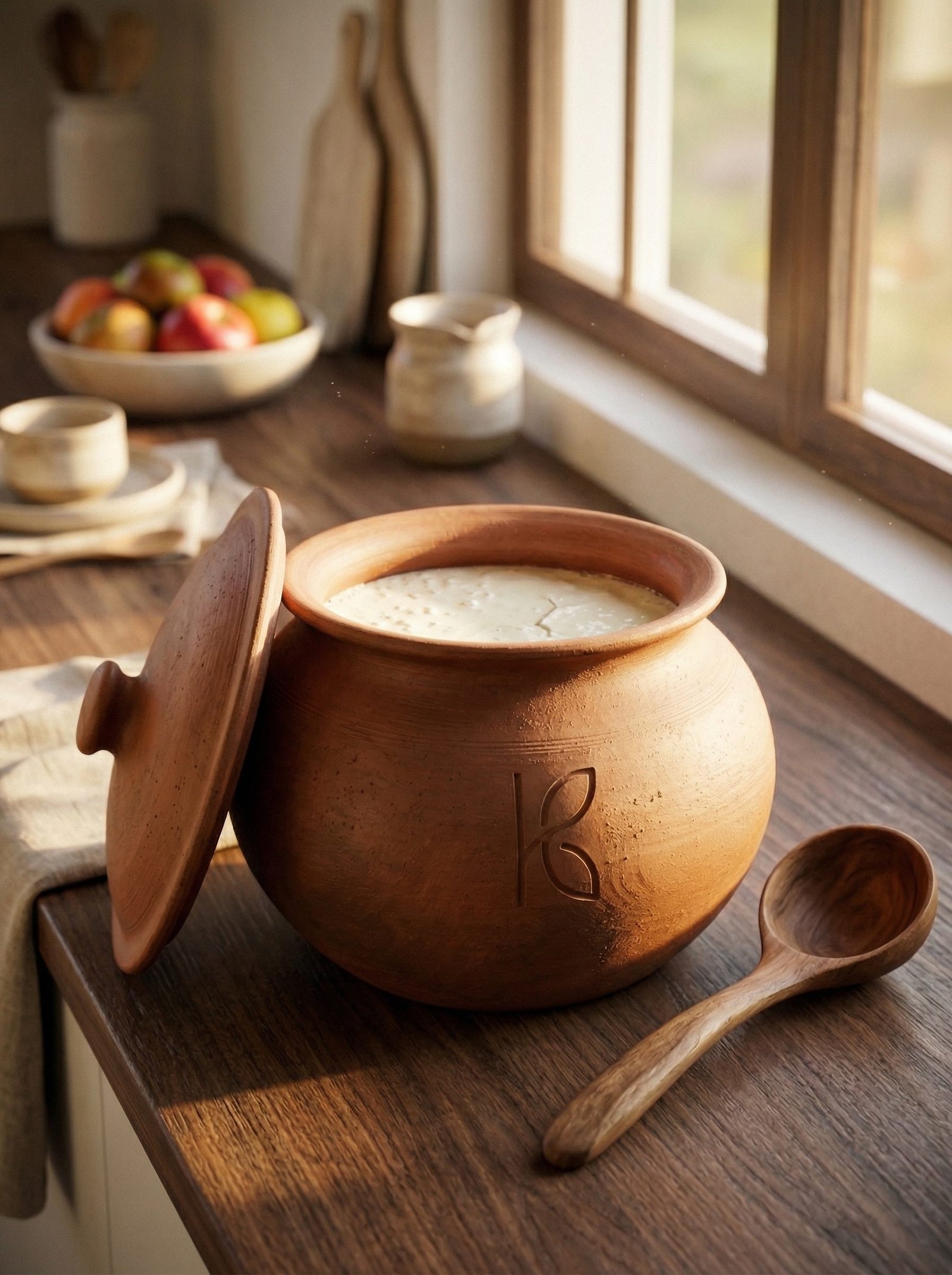
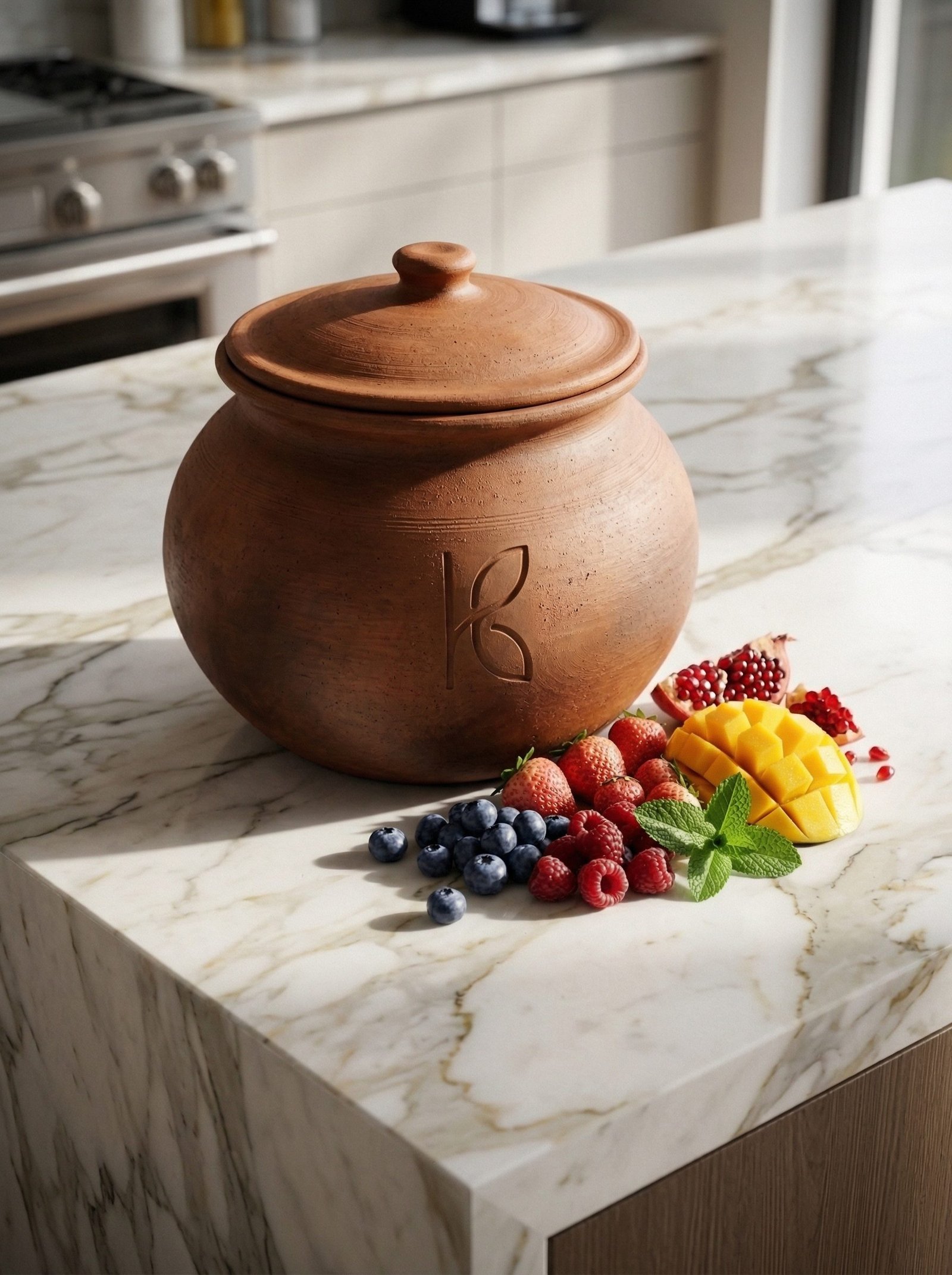
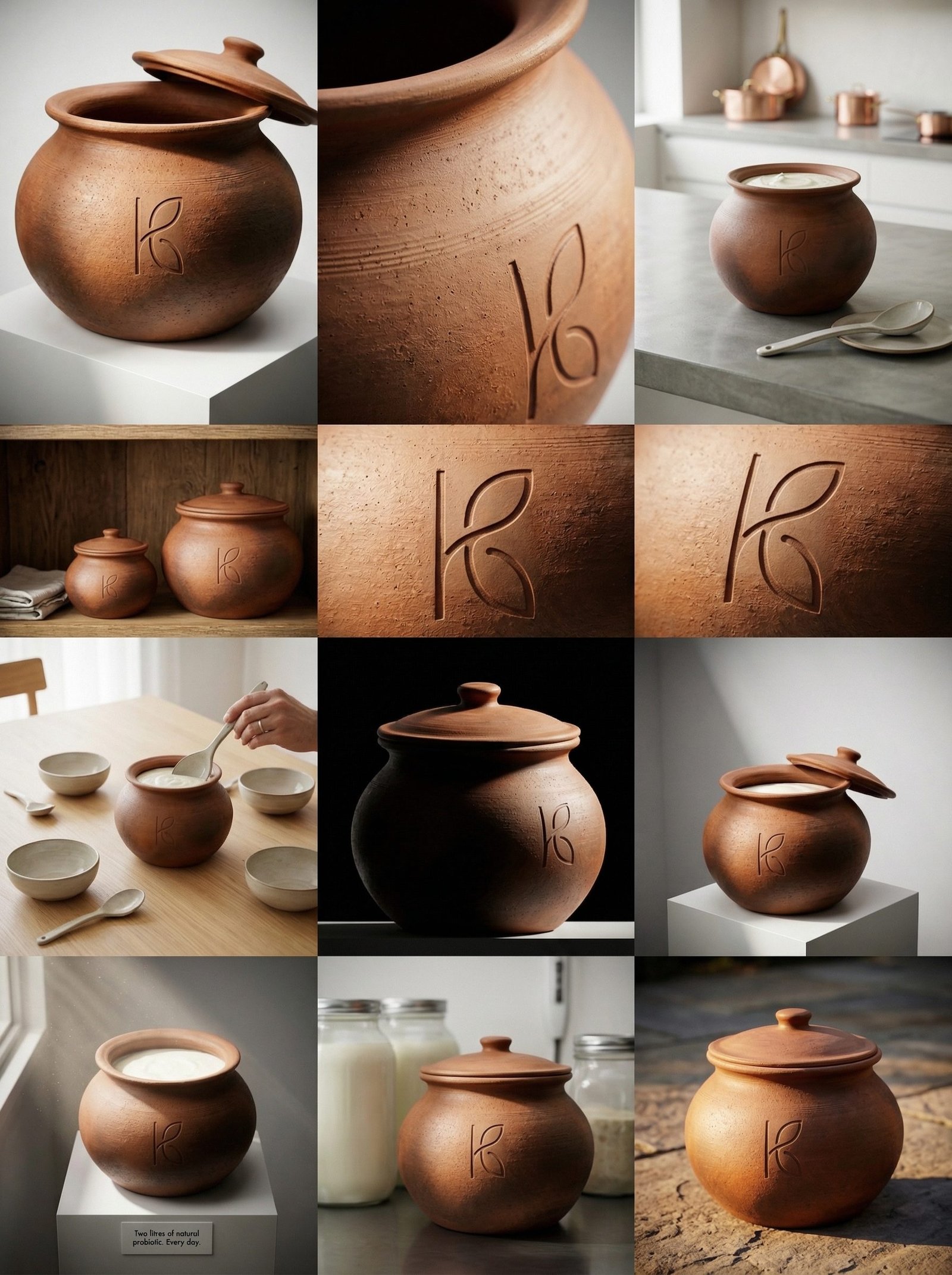
Clay Curd / Dahi Pot – 2 L
Out of StockTwo litres of the best dahi your family will have eaten in years.
Terracotta Clay · 2 Litres · SKU: KL-DW-015
₹749.00
| Material | Terracotta Clay |
|---|---|
| Size / Capacity | 2 Litres |
| Induction Ready | NO |
| XRF Tested | NO |
| Sub-Category | Curd Pot |
Two litres of the best dahi your family will have eaten in years.
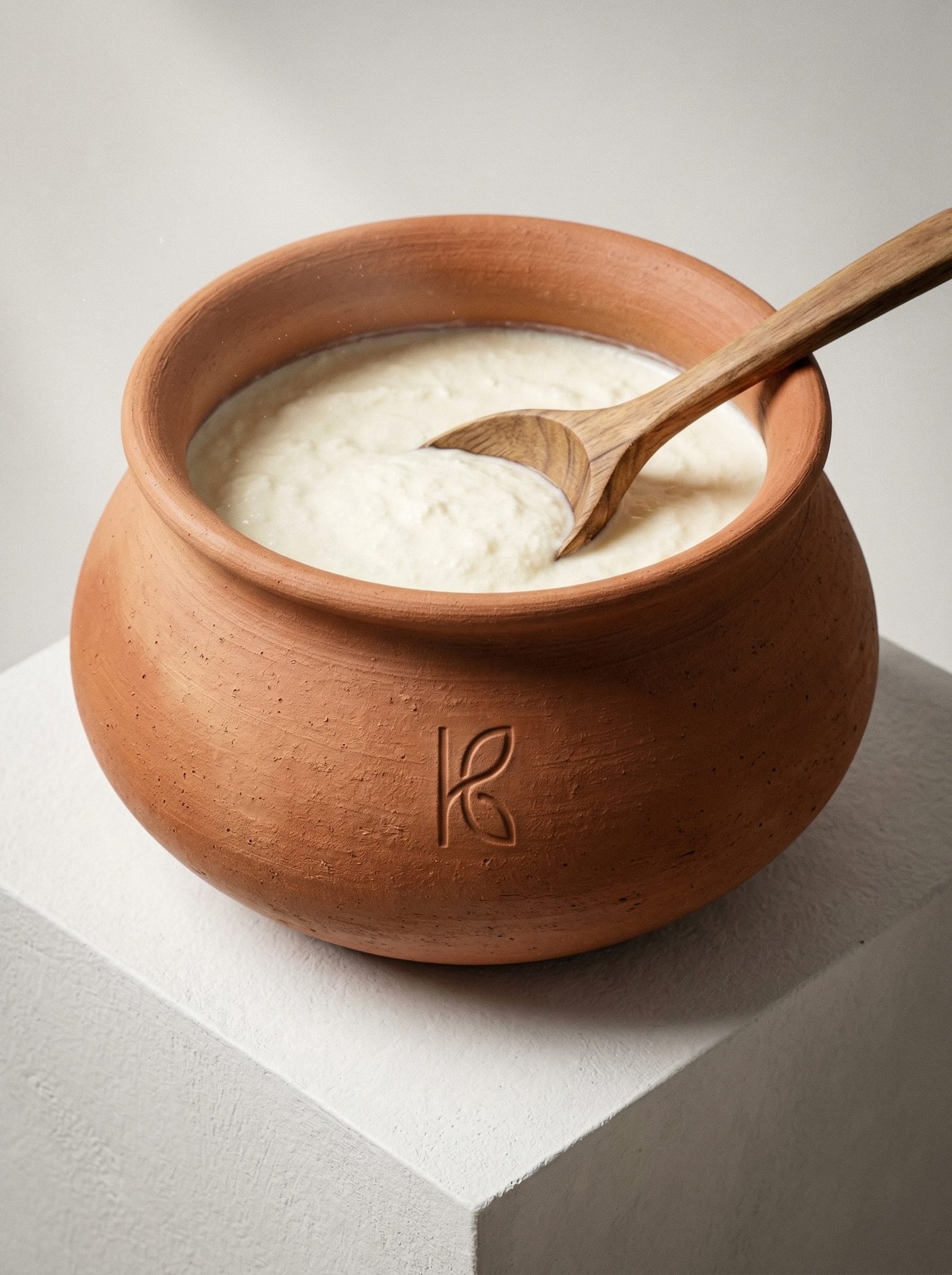
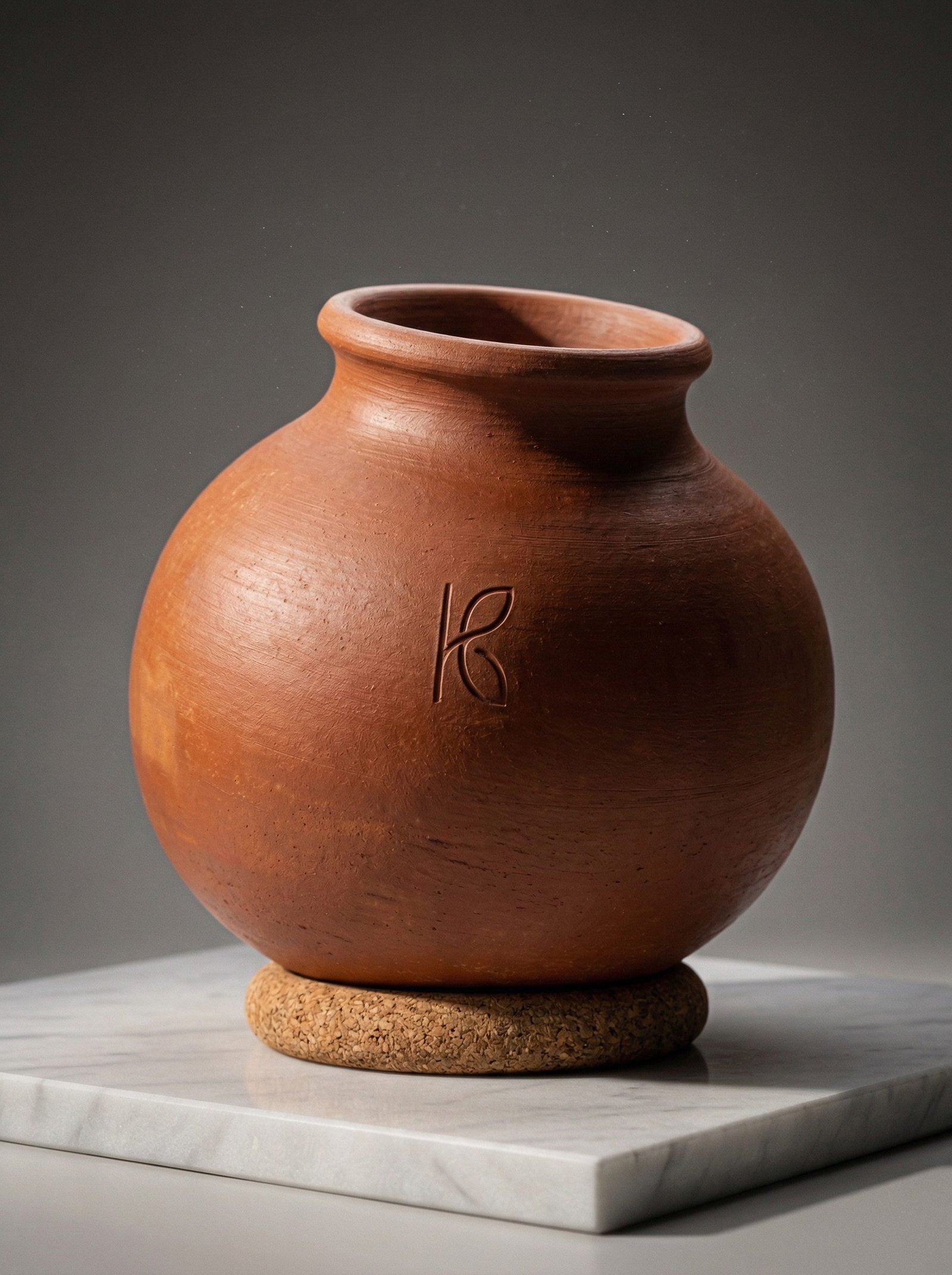
The 2L dahi pot for households that take daily probiotic nutrition seriously. Serves 5–7 people, or sets once for a 3–4 day supply for a smaller family. Completely unglazed. XRF-certified. Wider-than-tall proportions for maximum surface area and optimal top-layer formation. The full thermal and breathability benefits of clay at the scale that makes a meaningful weekly difference to your family’s gut health.
Key Features & Benefits
- Wider Than Tall Proportions: At 2L, the dahi pot is designed with a wider diameter and shallower depth than a straight-scaled-up version of the smaller sizes. This maximises surface area relative to depth, producing the best surface-layer formation and the most consistent temperature across the full volume.
- Weekly Batch Feasibility: 2L set every 3–4 days: enough for a family of five to have daily dahi throughout the week. One batch, one setting session, consistent quality throughout.
- Most Effective Moisture Regulation: At 2L of milk, the potential for whey accumulation is highest. The clay’s breathability is most important at this scale — the unglazed walls ensure moisture escapes rather than pooling.
- Zero Plastic in 2L of Daily Fermentation: If your household consumes 2L of dahi per week, that is 104L per year currently set in plastic. The 2L clay dahi pot replaces every container in that chain permanently.
- XRF Certified — Higher Stringency: As with all unglazed dahi pots, XRF testing is performed at higher stringency to account for direct unglazed clay-food contact.
- Storage in Refrigerator: The 2L pot fits most Indian refrigerator shelves. The clay keeps the set dahi at stable cold temperature and continues mild breathability even at 4°C.
About the Material
The 2L dahi pot requires specific proportions that differ from the 1L and 500ml. Too tall and narrow: the temperature gradient between surface and base becomes significant, producing uneven setting. Too wide and shallow: difficult to store and cover. The 2L Klayvi dahi pot is calibrated to a diameter-to-depth ratio of approximately 2:1 — wide enough for excellent surface area, deep enough for stable volume and practical storage. The completely unglazed interior of the 2L pot is the product’s most important feature. At 2 litres of fermenting milk, the CO2 production during active culture is substantial. The unglazed clay allows this gas to escape from the surface and through the slightly porous walls, preventing the CO2 accumulation that can produce off-flavours in sealed container dahi.
The Science
A 2019 review in the journal Nutrients found that regular daily consumption of traditionally fermented dairy products (as opposed to commercially pasteurised yogurt) was associated with significantly more diverse gut microbiome composition in study populations that consumed it. The key differentiator was the presence of multiple live Lactobacillus strains in traditionally set dahi, as opposed to the single or dual strain content of commercial yogurt. Clay-set dahi from a traditional starter maintains the multi-strain culture more effectively because the setting environment is more consistently optimal.
Safety & Certification Standards
| XRF Analysis — Clay Source | Heavy metal screening on raw clay before production begins |
| ICP-OES — Finished Product | Parts-per-billion accuracy. Actual migration into food simulants tested |
| NABL-Accredited Laboratory | Internationally recognised test facility |
| FSSAI Food Contact Compliance | Meets India’s legal food safety standards |
| Per-Batch QR Report | Your batch. Your numbers. Published before dispatch. Scan and read it yourself. |
Lab Test Results
| Compound | Klayvi Result | FSSAI Safe Limit |
|---|---|---|
| Lead (Pb) | ≤ 2.1 ppm | 90 ppm |
| Cadmium (Cd) | ≤ 0.3 ppm | 0.5 ppm |
| Arsenic (As) | ≤ 0.4 ppm | 2.0 ppm |
| Mercury (Hg) | Not detected | 0.5 ppm |
| PTFE / PFOA / PFAS | Not present | Zero tolerance |
Caring for Your Klayvi
| 1 — First Use | Rinse with plain water. Cook something water-based for first 2–3 uses. |
| 2 — Daily Clean | Klayvi Wash Care (pH 6–8) or sisal scrubber + warm water. Never standard dish soap — its pH 9–11 destroys the seasoning layer. |
| 3 — After Wash | Dry completely on low flame for 2 minutes. Never store damp. |
| 4 — Monthly | Apply 4–5 drops cold-pressed flaxseed oil. Heat on medium-low until just smoking (~4 min). Cool and wipe. |
| 5 — Never | Dishwasher · Microwave · Overnight soaking · Chemical detergents · Cold water on a hot vessel |
What’s in the Box
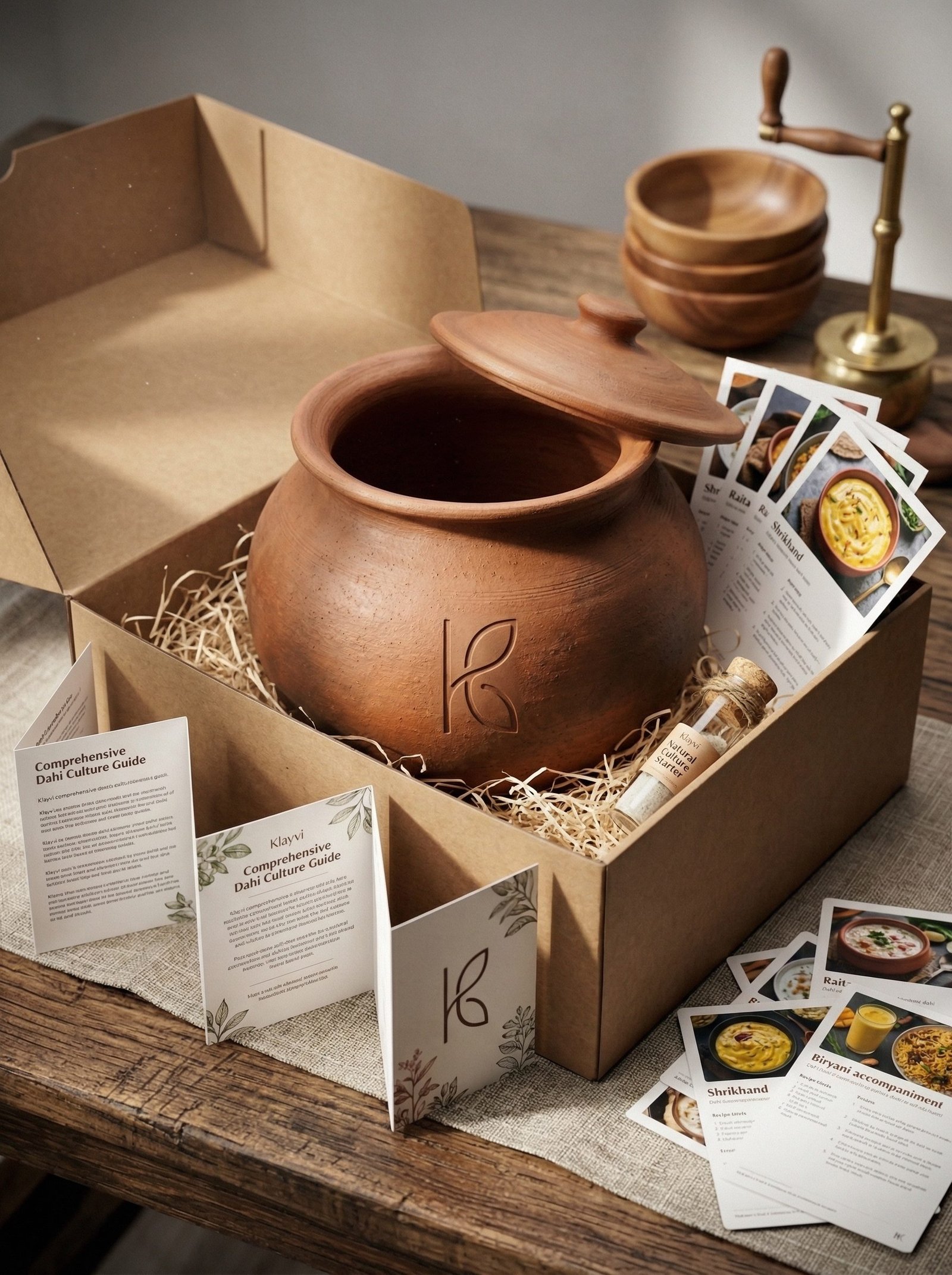
- Clay Dahi Pot 2L (completely unglazed interior)
- Setting protocol card for 2L batch
- Artisan provenance card
- Batch QR card
Frequently Asked Questions
Q: Is 2L of milk safe to leave out for 8 hours to set?
Yes — this is the traditional dahi-setting method practised for millennia. At 42°C initial temperature and a healthy starter culture, the lactic acid produced during fermentation reduces the milk’s pH to approximately 4.5 within 4–5 hours, at which point the acidity prevents pathogenic bacterial growth. The clay pot’s thermal buffering actually makes this process safer by maintaining the optimal temperature range longer, allowing the culture to dominate the fermentation environment before the temperature drops to where other organisms might compete.
Q: Can I double the starter for faster setting?
Adding more starter (4 tablespoons instead of 2) will accelerate setting by approximately 1–2 hours. The resulting dahi will be slightly more sour and firmer-textured. For thick, mildly tangy dahi, use the standard 2 tablespoon starter. For thicker, tangier dahi, use 4 tablespoons.
Q: Does the 2L clay pot need to be on a flat, level surface during setting?
Yes. The dahi should not be disturbed during the 6–8 hour setting period. A level, vibration-free surface is important — not because the pot will fall, but because mechanical disturbance of the setting milk can break the forming protein network, resulting in a grainy texture. Once set, the pot can be moved normally.
Q: Can the 2L pot go directly from setting (room temperature) to the refrigerator?
Yes. Move it slowly and without tilting to avoid disturbing the set. The transition from room temperature to refrigerator temperature will firm the dahi further over the next 2–3 hours. Do not tip or shake the pot during or immediately after the transition.
Q: How do I clean the 2L pot after use?
Rinse with warm water immediately after emptying while residual dahi is still liquid. A long-handled bottle brush with sisal fiber cleans the wide interior efficiently. No soap — ever. Sun-dry for 3–4 hours after cleaning (the 2L walls are thick and hold moisture). Restart within 4 hours of drying.
Q: What happens if the dahi goes off (too sour, wrong texture)?
The most common cause is allowing the temperature to exceed 45°C (culture dies, undesirable bacteria take over) or fall below 20°C too quickly (culture activity stops before setting completes). If a batch fails, clean the pot with warm water, sun-dry for 3–4 hours, and restart with fresh milk and a fresh starter from a commercial source. One failed batch does not permanently affect the pot.
Related products
-
Out of Stock

-
Out of Stock
-
Out of Stock

Reviews
There are no reviews yet.