

Clay Sprouter – 3-Chamber
Out of StockThree batches. Staggered. Every day is harvest day.
Terracotta Clay · 3 chambers · SKU: KL-SP-006
₹999.00
| Material | Terracotta Clay |
|---|---|
| Size / Capacity | 3 chambers |
| Induction Ready | NO |
| XRF Tested | NO |
| Sub-Category | Sprout Maker |
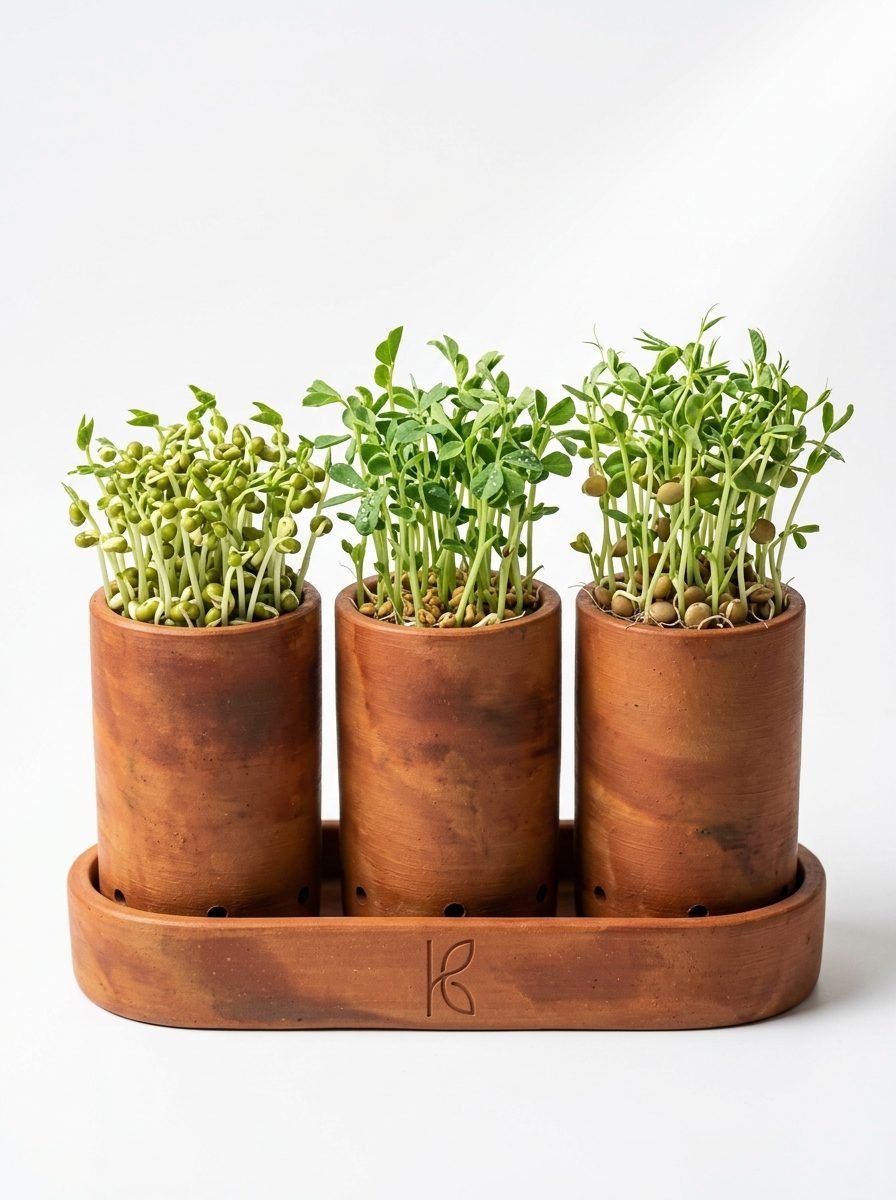
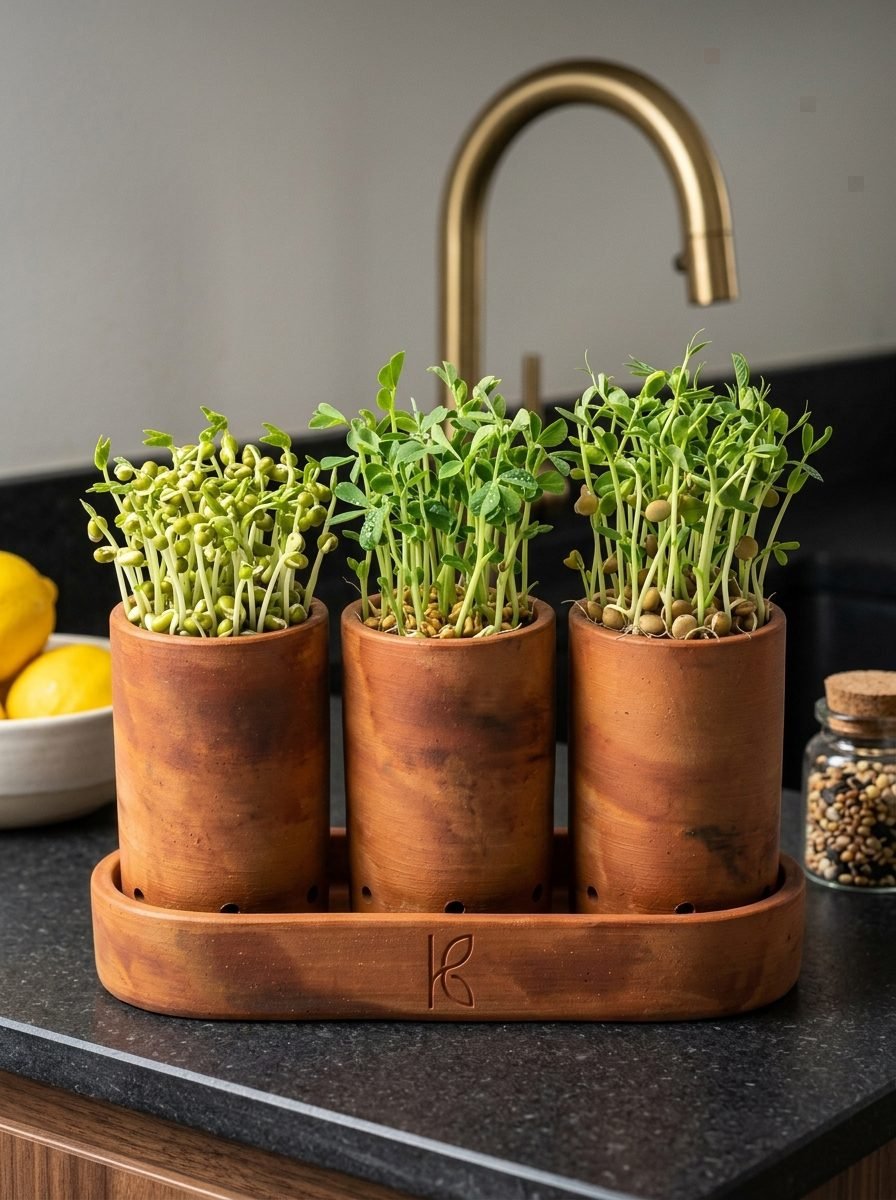
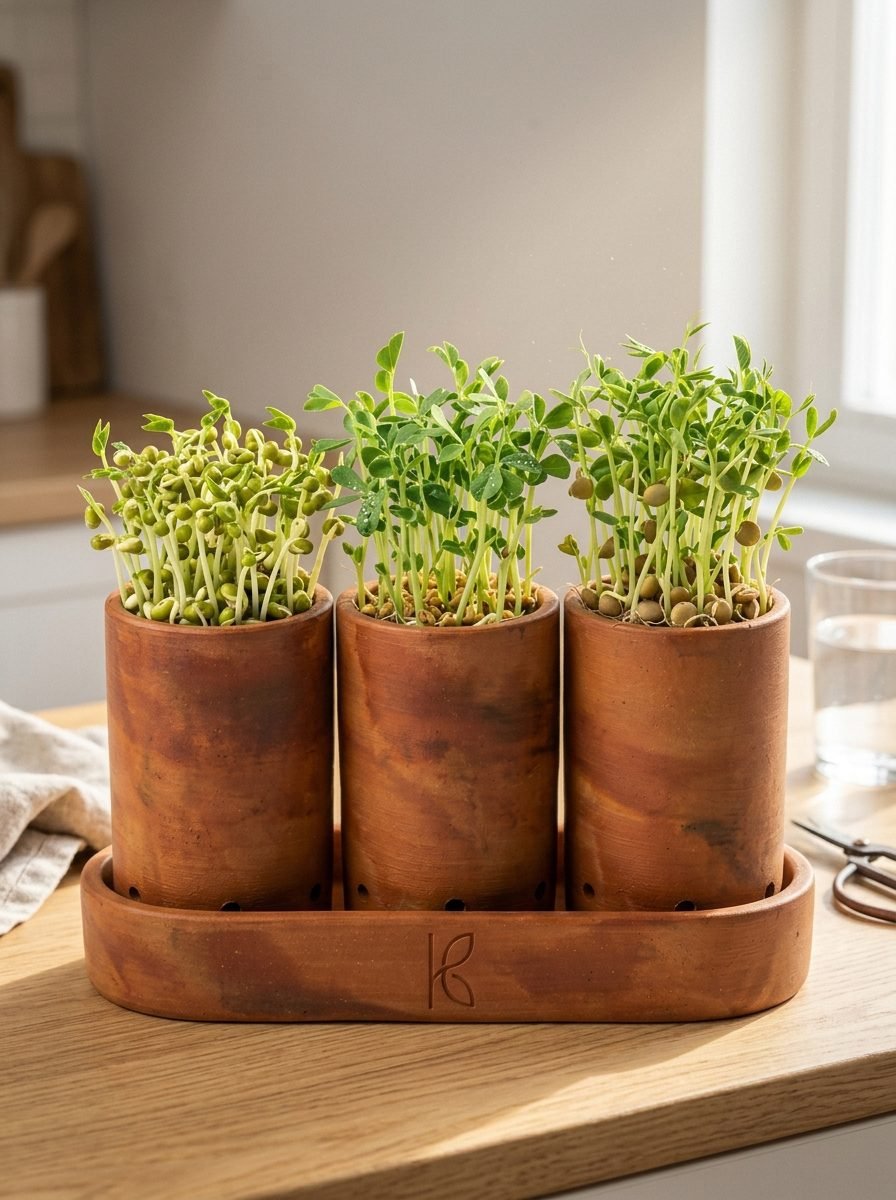
Three batches. Staggered. Every day is harvest day.
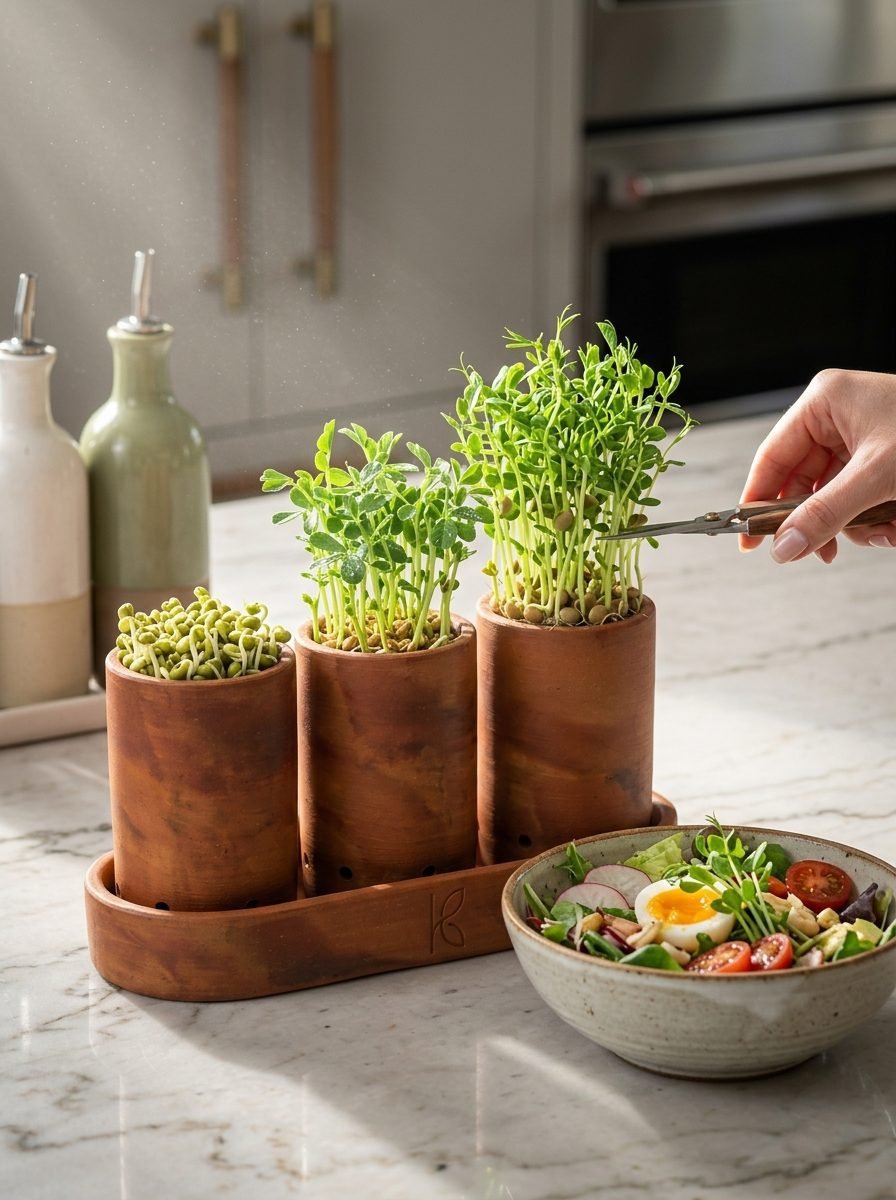
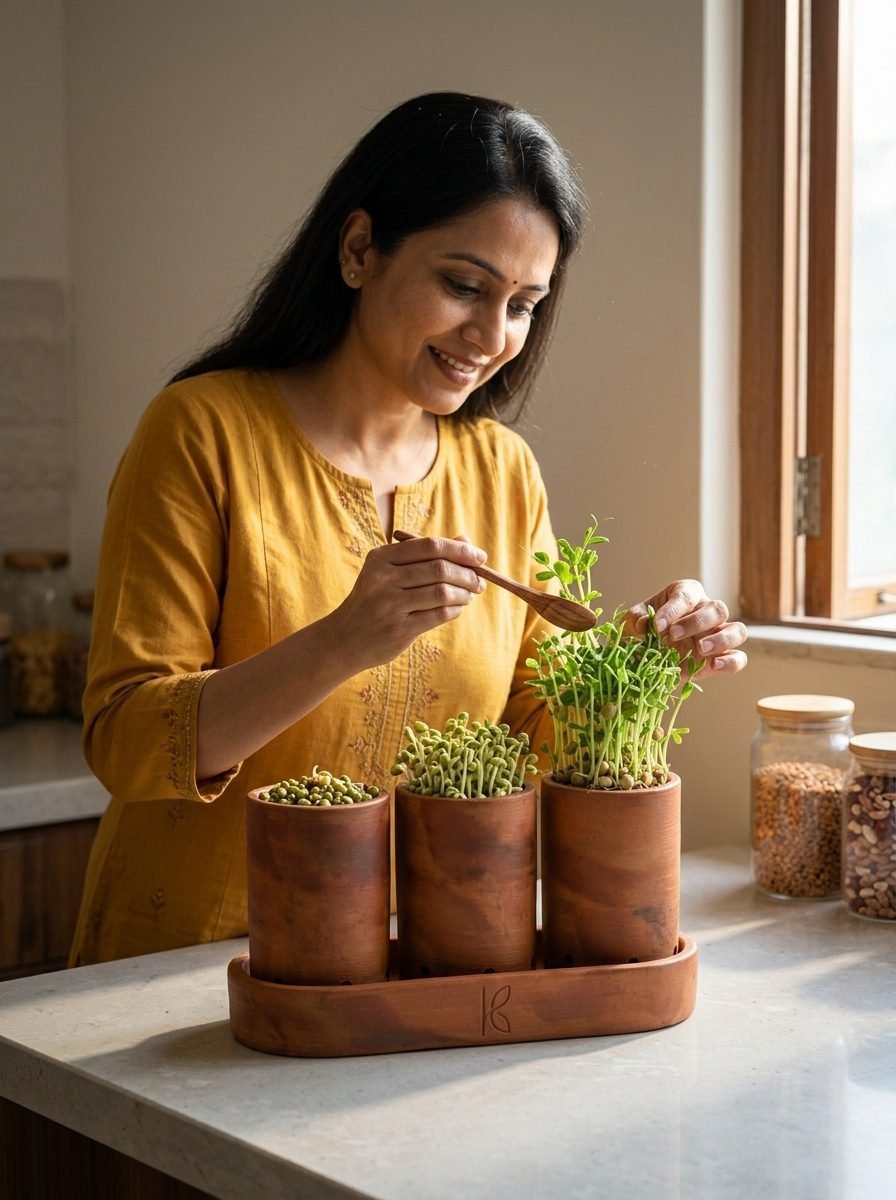
Three individual clay sprouting vessels stacked on a shared drip tray, each with drainage holes at the base. The system allows staggered sprouting: start one chamber per day, harvest one chamber per day, maintain a continuous supply of fresh sprouts without any gap. XRF-certified. For the household that has understood the nutritional value of daily sprouts and wants to make it a sustainable daily practice rather than a periodic project.
Key Features & Benefits
- Continuous Daily Harvest: Start Chamber 1 on Monday. Start Chamber 2 on Tuesday. Start Chamber 3 on Wednesday. Harvest Chamber 1 on Wednesday morning. Start Chamber 1 again Wednesday evening. From Thursday onward: harvest one chamber every 24 hours. Perpetual fresh sprouts with 5 minutes of daily attention.
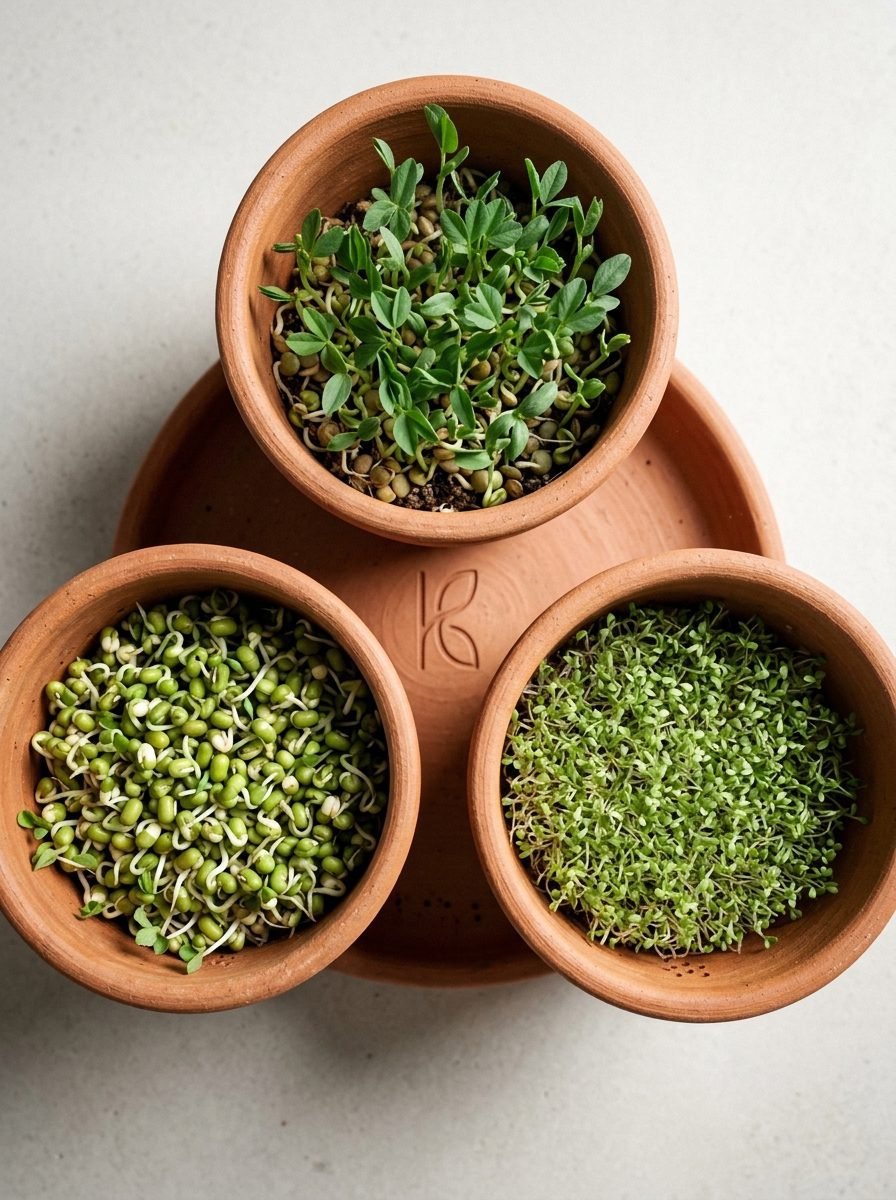
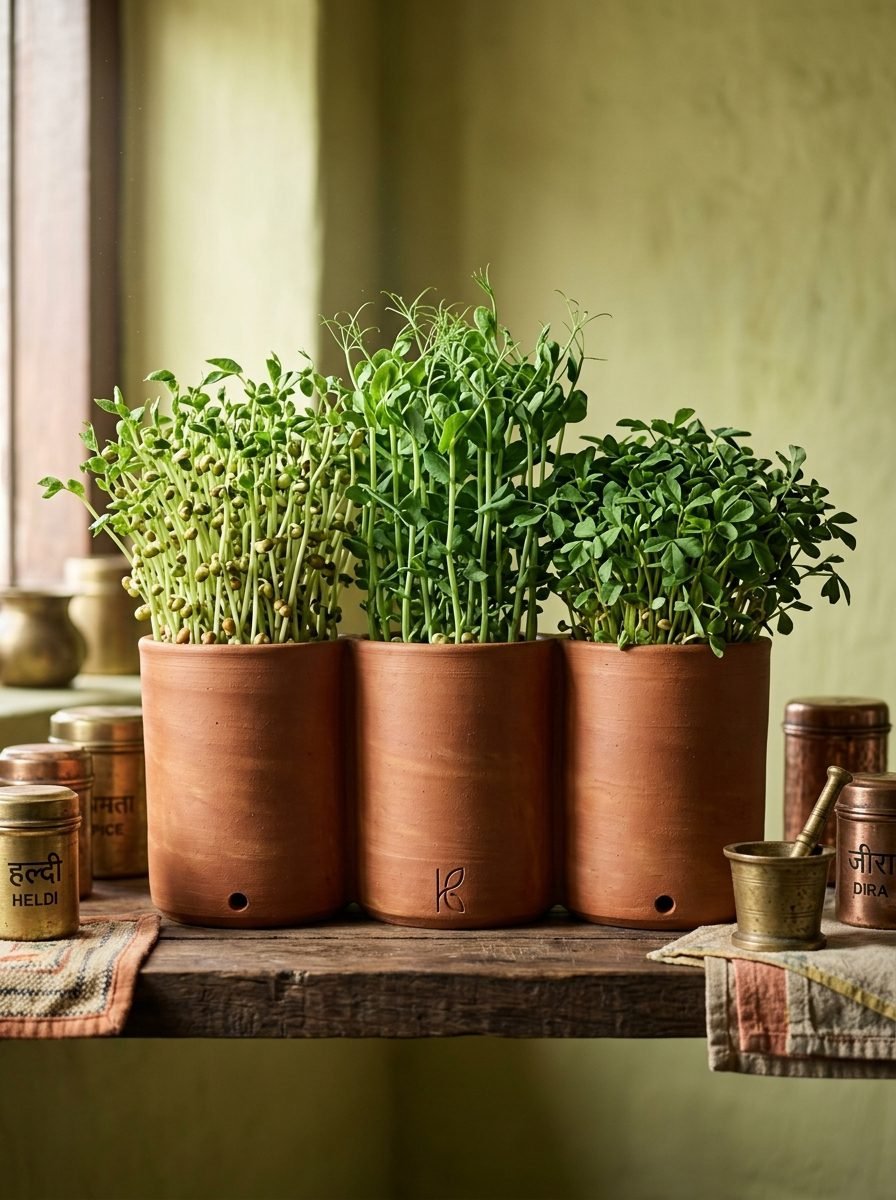
- Three Independent Chambers: Each chamber is a complete 1-chamber sprouter with its own drainage holes and independent moisture environment. Different varieties can be grown simultaneously — moong in Chamber 1, fenugreek in Chamber 2, chickpeas in Chamber 3.
- Shared Drip Tray: All three chambers drain into a single cork-lined collection tray. Convenient, compact, and eliminates three individual drainage arrangements.
- Clay Breathability ×3: Three clay chambers means three surfaces of passive moisture regulation working simultaneously. The combined clay surface area of the 3-chamber system is the largest in our wellness range and produces the most consistently ideal sprouting environment.
- XRF Certified: All three chambers tested from the same batch.
- Compact Footprint: Stacked, the three chambers occupy the same counter space as a single 1-chamber vessel at approximately 30cm total height.
About the Material
The 3-chamber system is stacked — each chamber sits on top of the next, with the bottom chamber on the shared tray. The stack is stable through the weight of the clay and the snug fit of each chamber within the tray walls. The stacking allows the entire system to occupy minimal counter space while providing triple the sprouting capacity. Each chamber in the 3-chamber system uses the same clay body and hole configuration as the standalone 1-chamber sprouter. The chambers are interchangeable: if one chamber needs cleaning or replacement, any Klayvi 1-chamber sprouter can substitute in the stack. The Science Daily sprout consumption at 100–150g (approximately one chamber’s harvest) provides a meaningful nutritional contribution to the household’s diet. The specific nutritional case for daily sprouts: (1) 47% improvement in iron bioavailability versus unsprouted legumes; (2) B-vitamin synthesis (particularly B6 and folate) increases 200–400% during sprouting; (3) vitamin C — which is absent in dry legumes — appears within 24 hours of germination and reaches significant levels at 48 hours; (4) digestibility improves as oligosaccharides (the compounds that cause gas from dry beans) are broken down during germination. A 3-chamber clay sprouting system providing daily harvest is a meaningful health infrastructure investment.
Safety & Certification Standards
| XRF Analysis — Clay Source | Heavy metal screening on raw clay before production begins |
| ICP-OES — Finished Product | Parts-per-billion accuracy. Actual migration into food simulants tested |
| NABL-Accredited Laboratory | Internationally recognised test facility |
| FSSAI Food Contact Compliance | Meets India’s legal food safety standards |
| Per-Batch QR Report | Your batch. Your numbers. Published before dispatch. |
Lab Test Results
| Compound | Klayvi Result | FSSAI Safe Limit |
|---|---|---|
| Lead (Pb) | ≤ 2.1 ppm | 90 ppm |
| Cadmium (Cd) | ≤ 0.3 ppm | 0.5 ppm |
| Arsenic (As) | ≤ 0.4 ppm | 2.0 ppm |
| Mercury (Hg) | Not detected | 0.5 ppm |
| PTFE / PFOA / PFAS | Not present | Zero tolerance |
Caring for Your Klayvi
| 1 — First Use | Rinse with plain water. No soap on first use. |
| 2 — Daily Clean | Klayvi Wash Care (pH 6–8) or sisal scrubber + warm water. Never standard dish soap (pH 9–11). |
| 3 — After Wash | Dry completely — on low flame for cookware, air-dry for storage and decor. |
| 4 — Monthly | Apply 4–5 drops cold-pressed flaxseed oil to cooking surfaces. Heat medium-low, cool, wipe. |
| 5 — Never | Dishwasher · Microwave · Chemical detergents · Overnight soaking · Cold water on a hot vessel |
What’s in the Box
- Clay Sprouter 3-Chamber (3 individual chambers with drainage holes)
- Shared cork-lined drip tray
- Sprouting rotation guide (staggered batch protocol)
- Artisan provenance cards (set card)
- Batch QR card
Frequently Asked Questions
Q: How much sprout does each chamber produce?
Each chamber holds approximately 50–60g of dry moong, which sprouts to approximately 150–180g of fresh sprouts at harvest (3× expansion). Three chambers on the staggered schedule: one harvest of 150–180g of fresh sprouts per day.
Q: Can I grow different varieties in each chamber simultaneously?
Yes — this is one of the key advantages of the 3-chamber system. Choose varieties with similar sprouting times if you want to harvest all chambers on the same cycle. For variety-specific timing: Chamber 1 moong (48 hours), Chamber 2 fenugreek (36 hours, started 12 hours after moong), Chamber 3 chickpeas (72 hours, started earlier). The separate chambers make individual timing management easy.
Q: The three chambers do not stack perfectly level. Is that a problem?
Slight angle variation between individually hand-thrown chambers is expected. The chambers are stable in the stack through weight and fit even with minor variation. If stability feels compromised, a small folded cloth between chambers provides additional friction.
Q: Can I use only 1 or 2 chambers if I do not need three?
Yes — use any 1, 2, or all 3 chambers independently on the shared tray. Store unused chambers empty and clean.
Q: My sprouts are not growing as fast as expected. What can I do?
Most common cause: temperature below 20°C. In winter, move the stack to a warmer spot — near (not on) the stove, inside a warm cabinet. Second cause: rinsing frequency too low. Every 12 hours minimum; every 8 hours in warm weather. Third: dry legumes are too old (stored for more than 18 months and germination rate has declined). Use fresh dry beans from a reliable source.
Q: Does the 3-chamber system need to be cleaned between every batch?
Between batches of the same variety in the same chamber: rinse with warm water, drain, dry, restart. This minimal cleaning is sufficient for consecutive batches of the same variety. For a full clean (between varieties, or monthly): warm water rinse, sisal brush scrub of the drainage holes, sun-dry for 2 hours.
Related products
-
Out of Stock

-
Out of Stock
-
Out of Stock




Reviews
There are no reviews yet.