
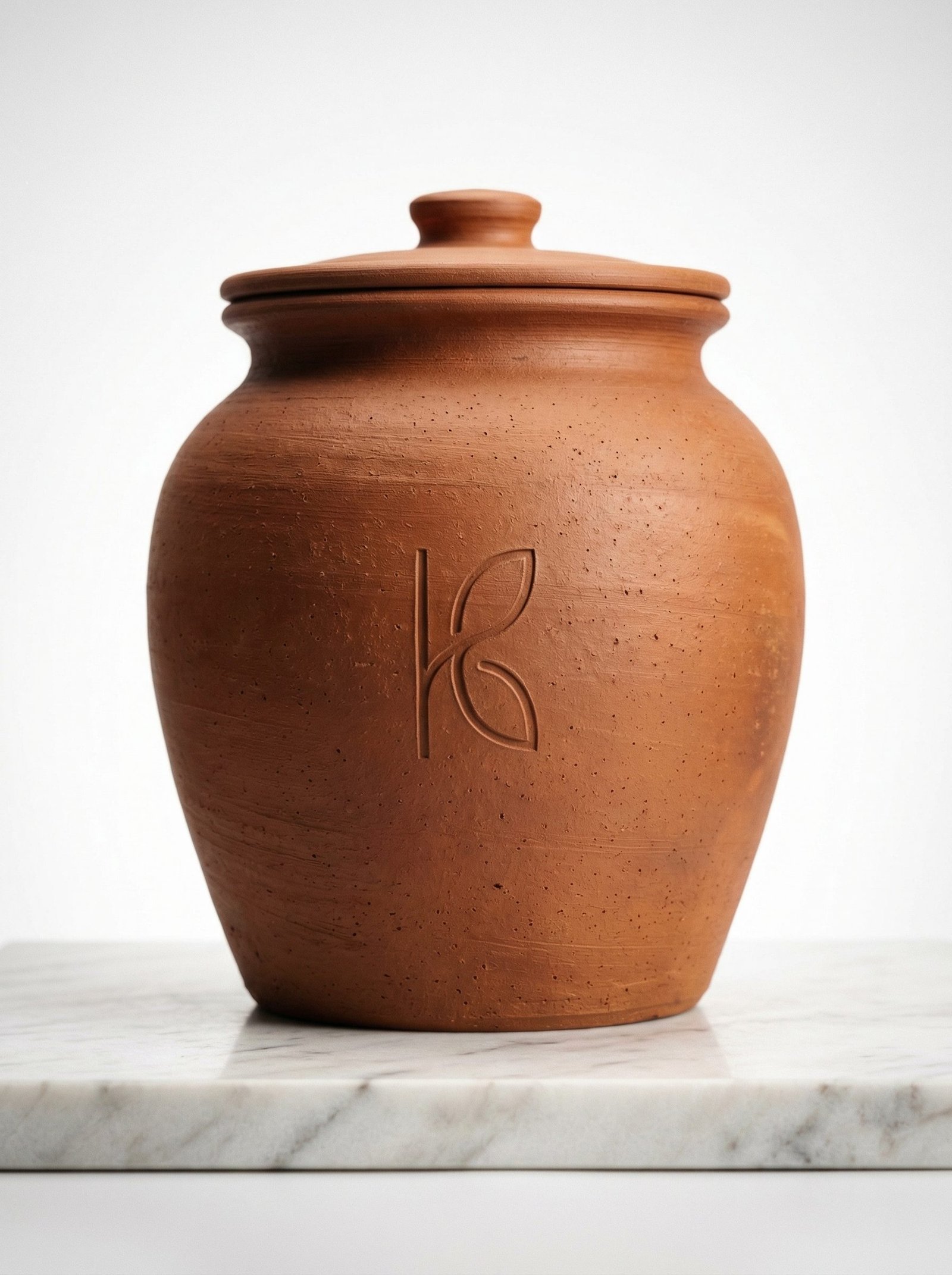
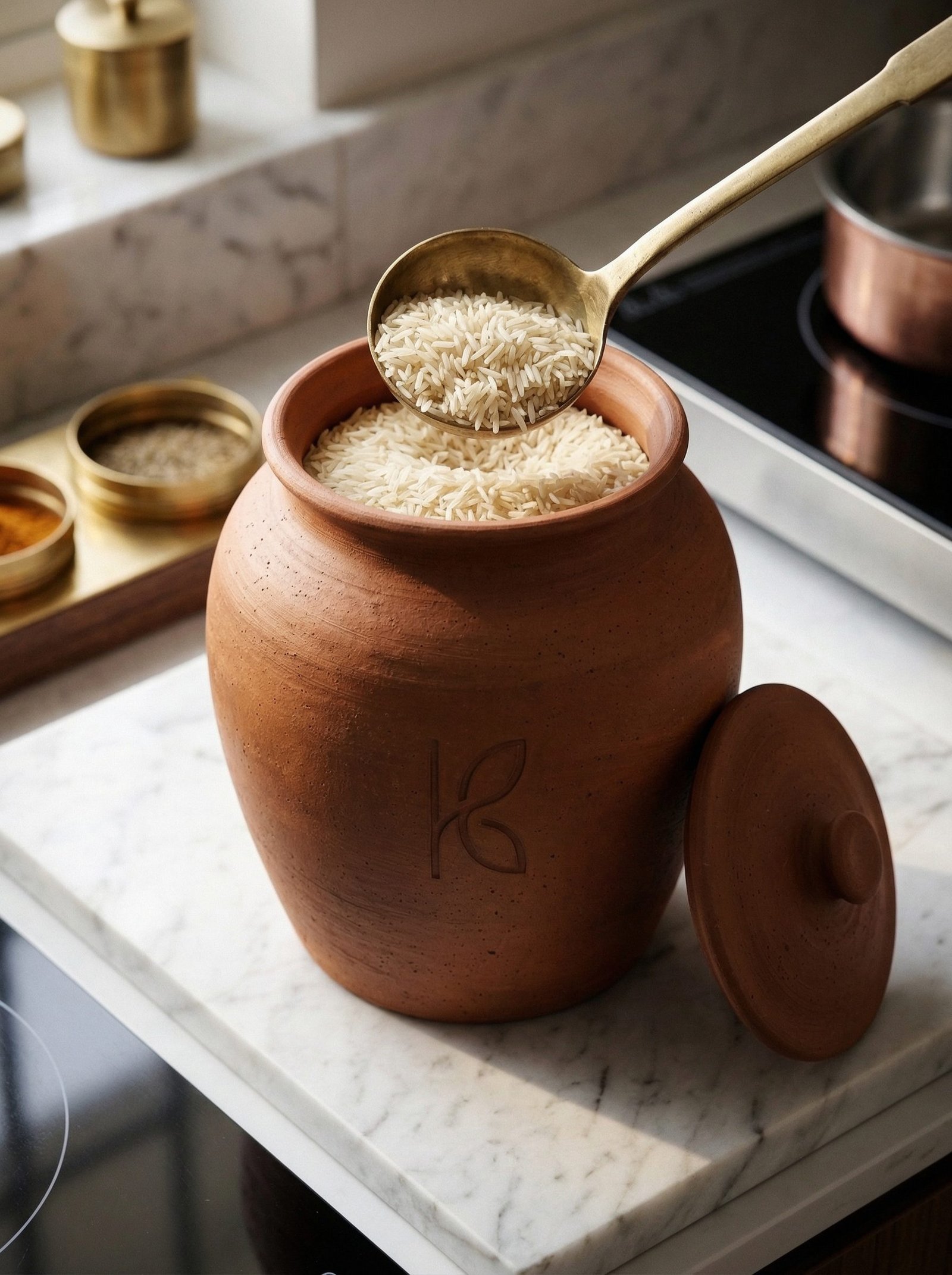
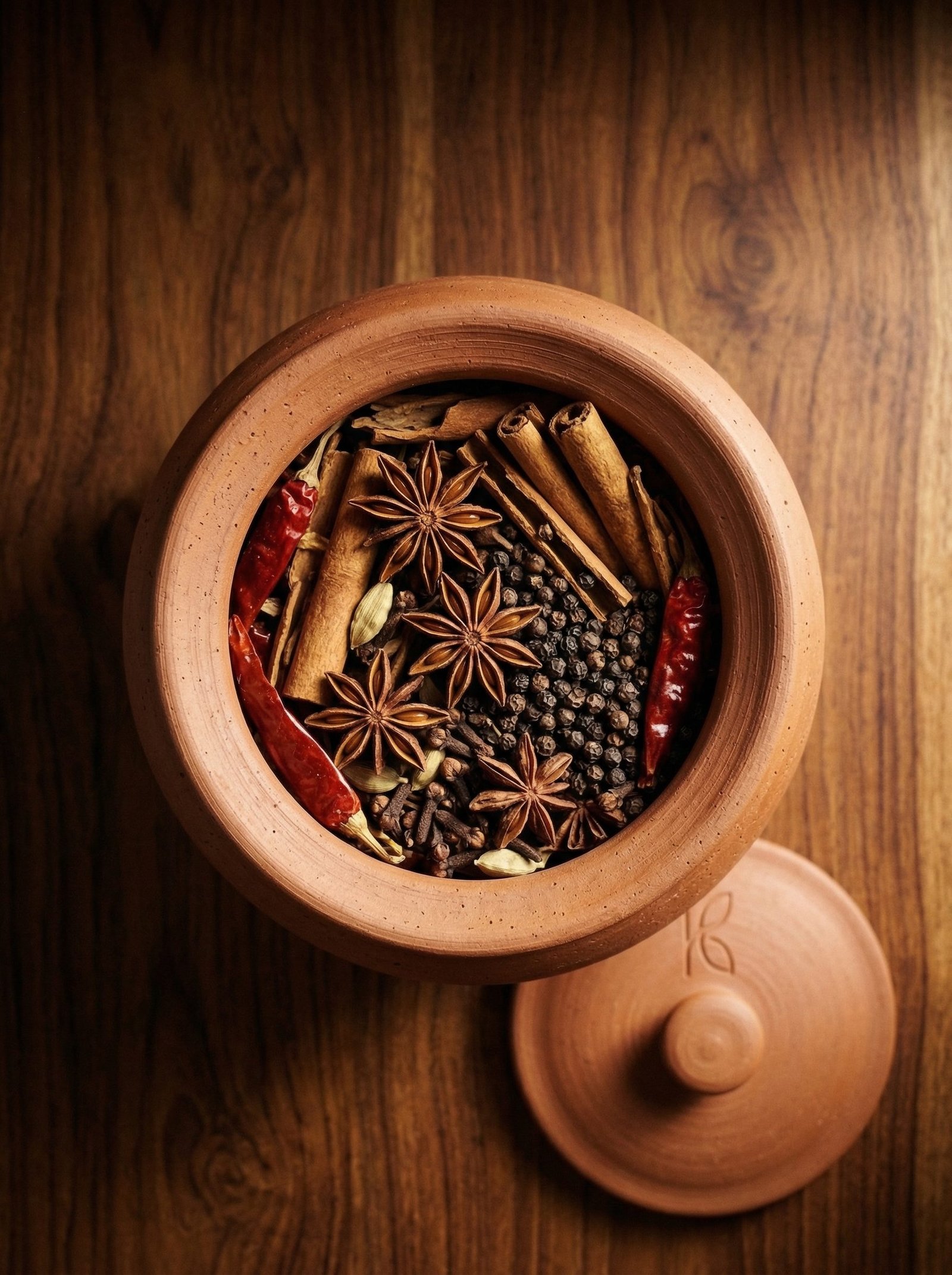
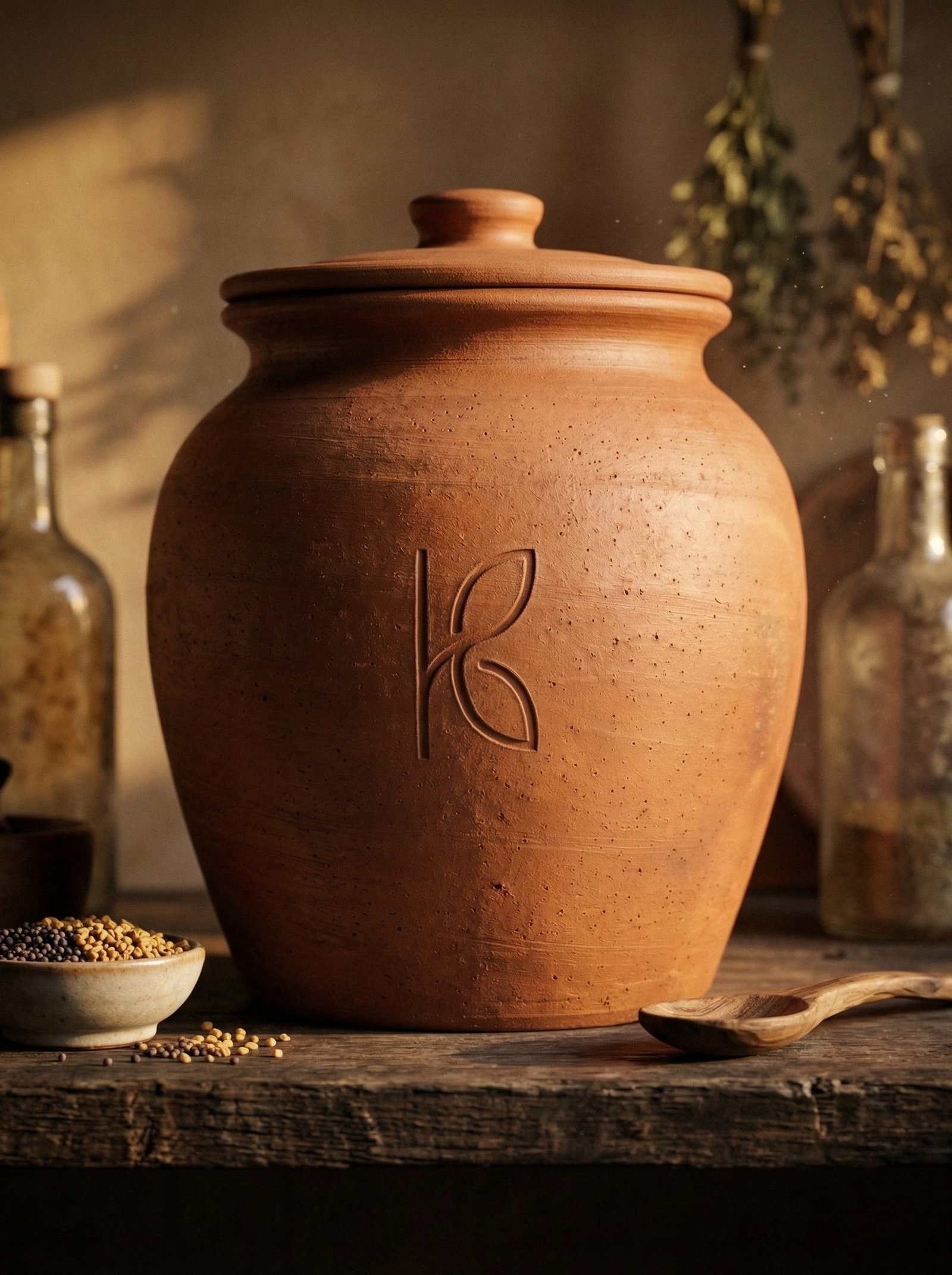
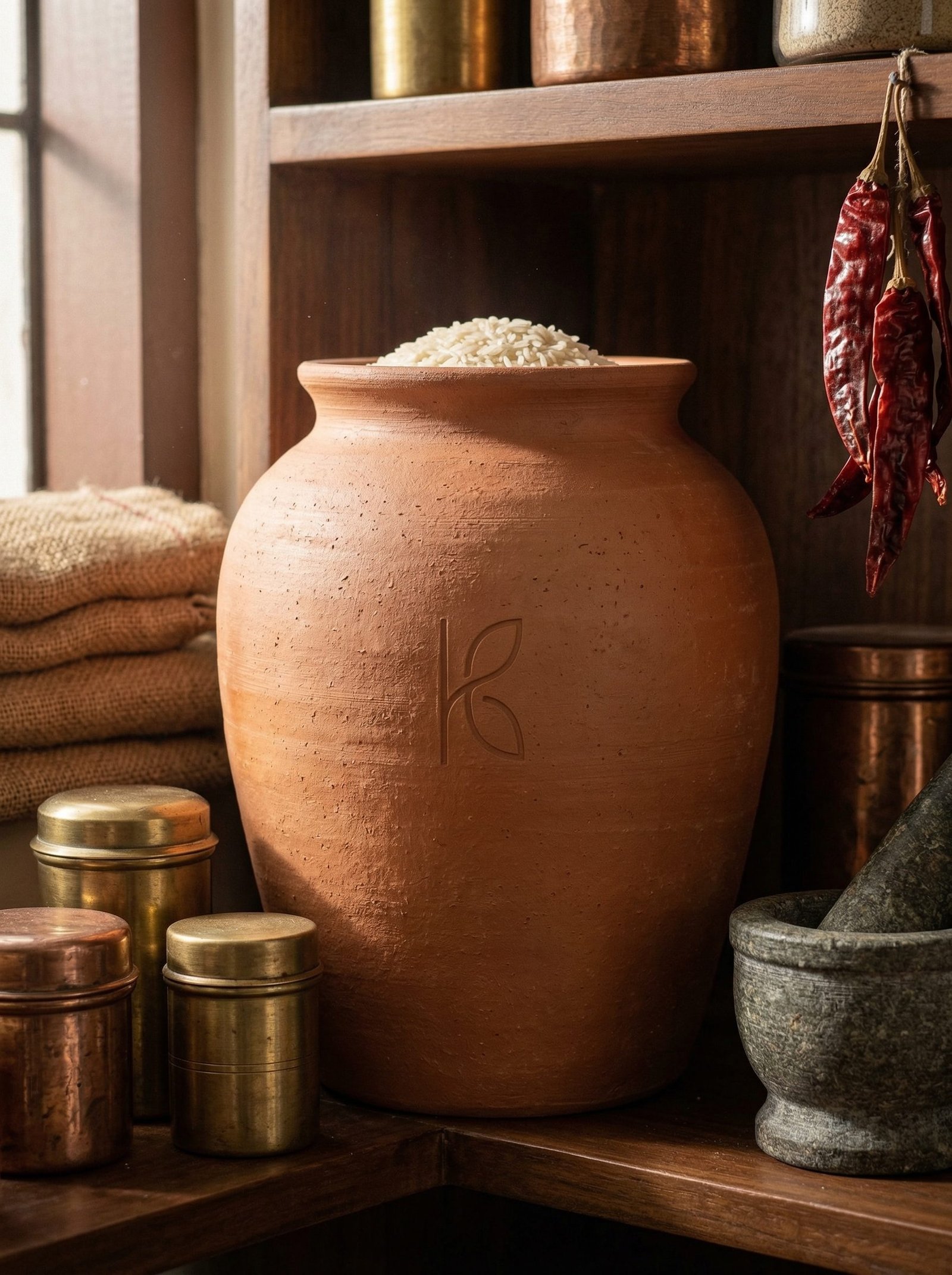
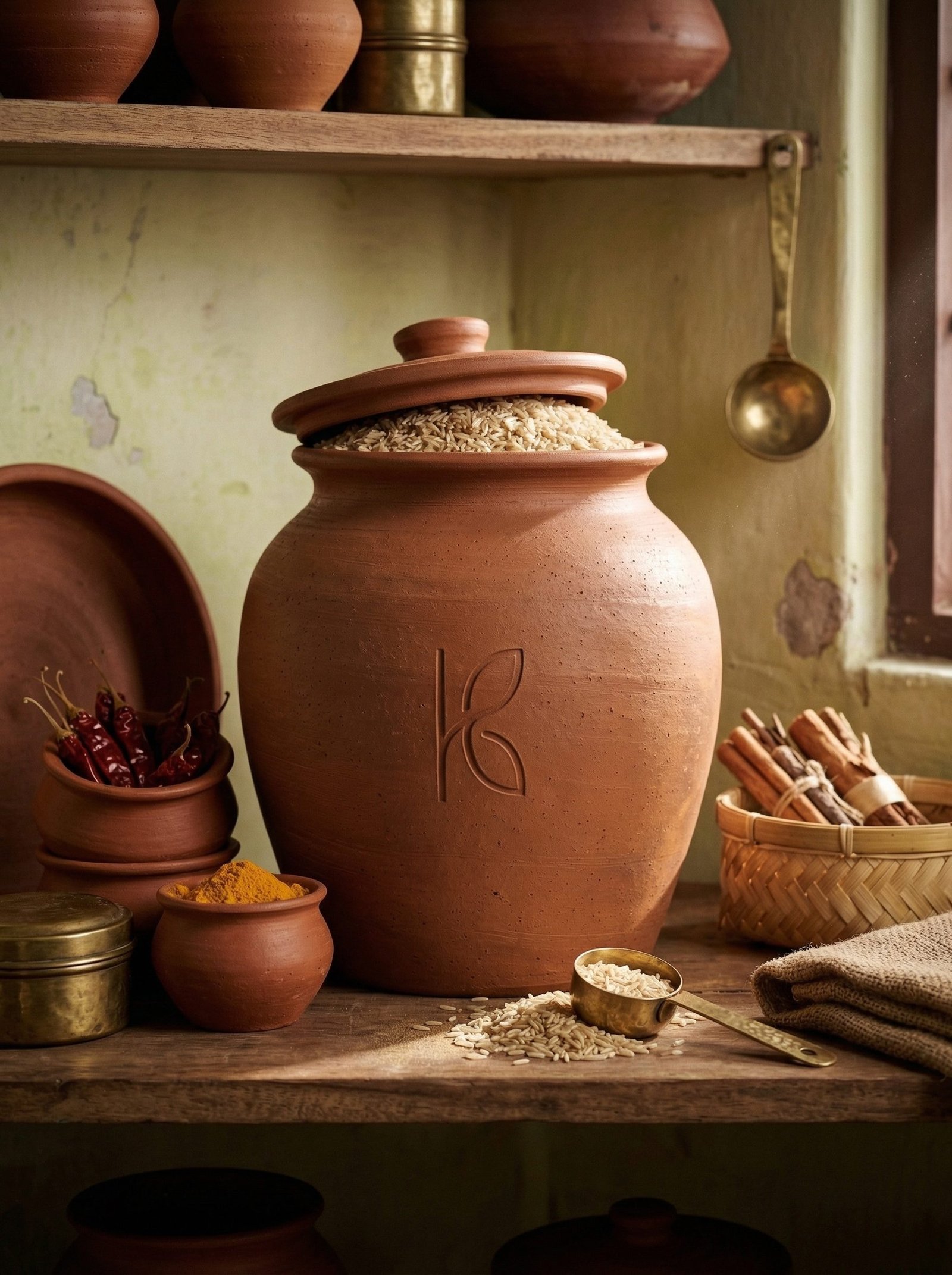
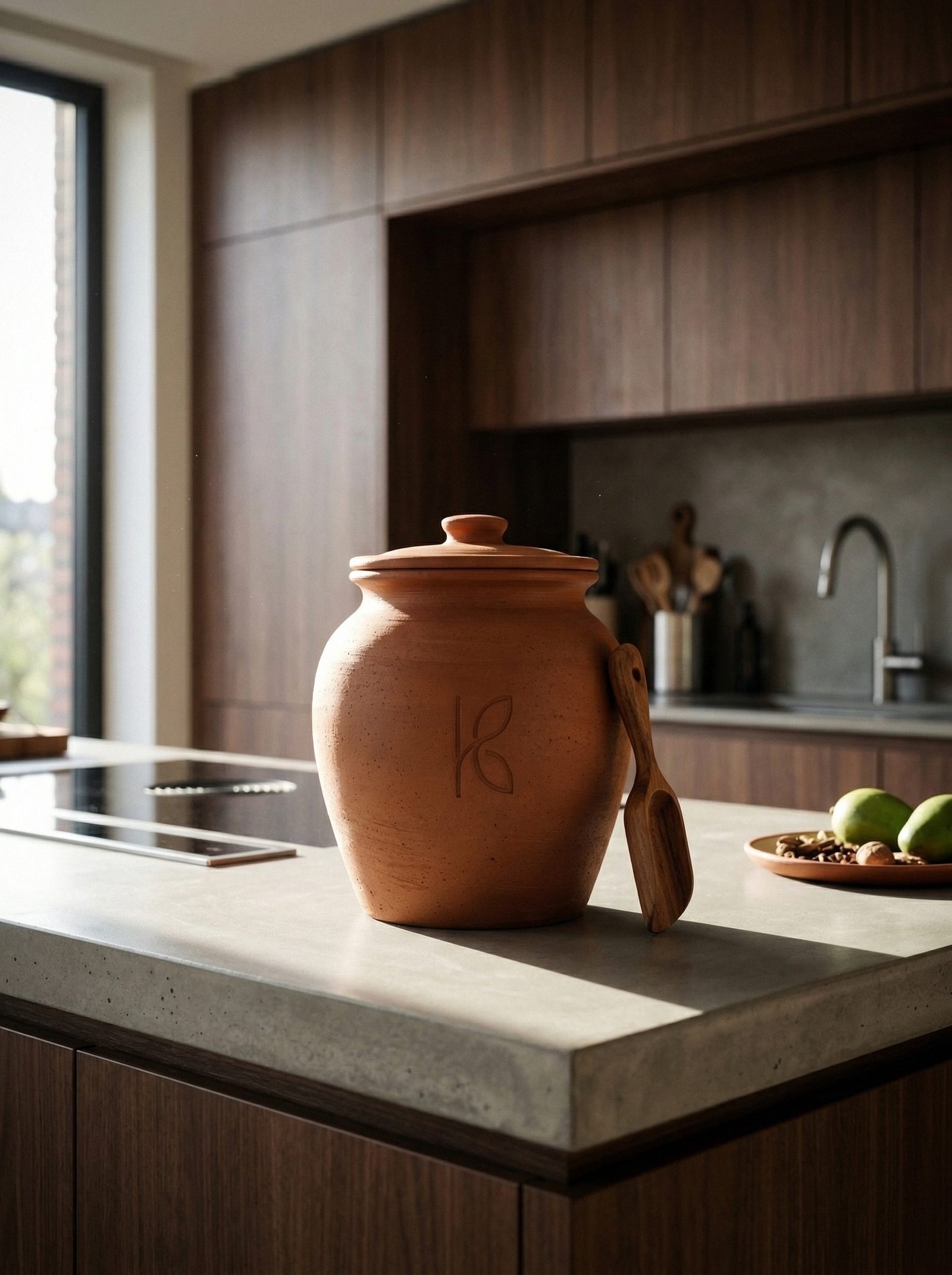
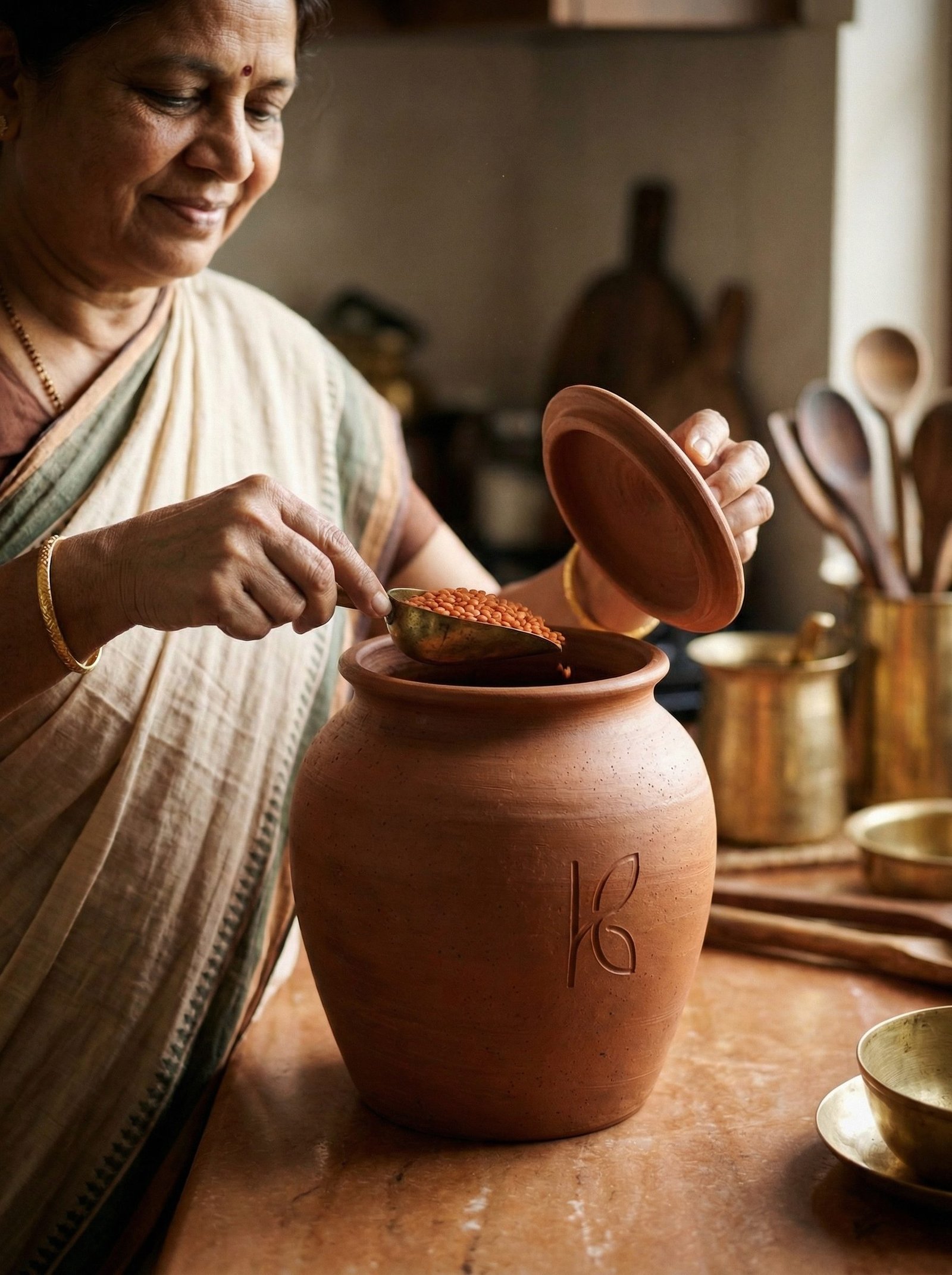
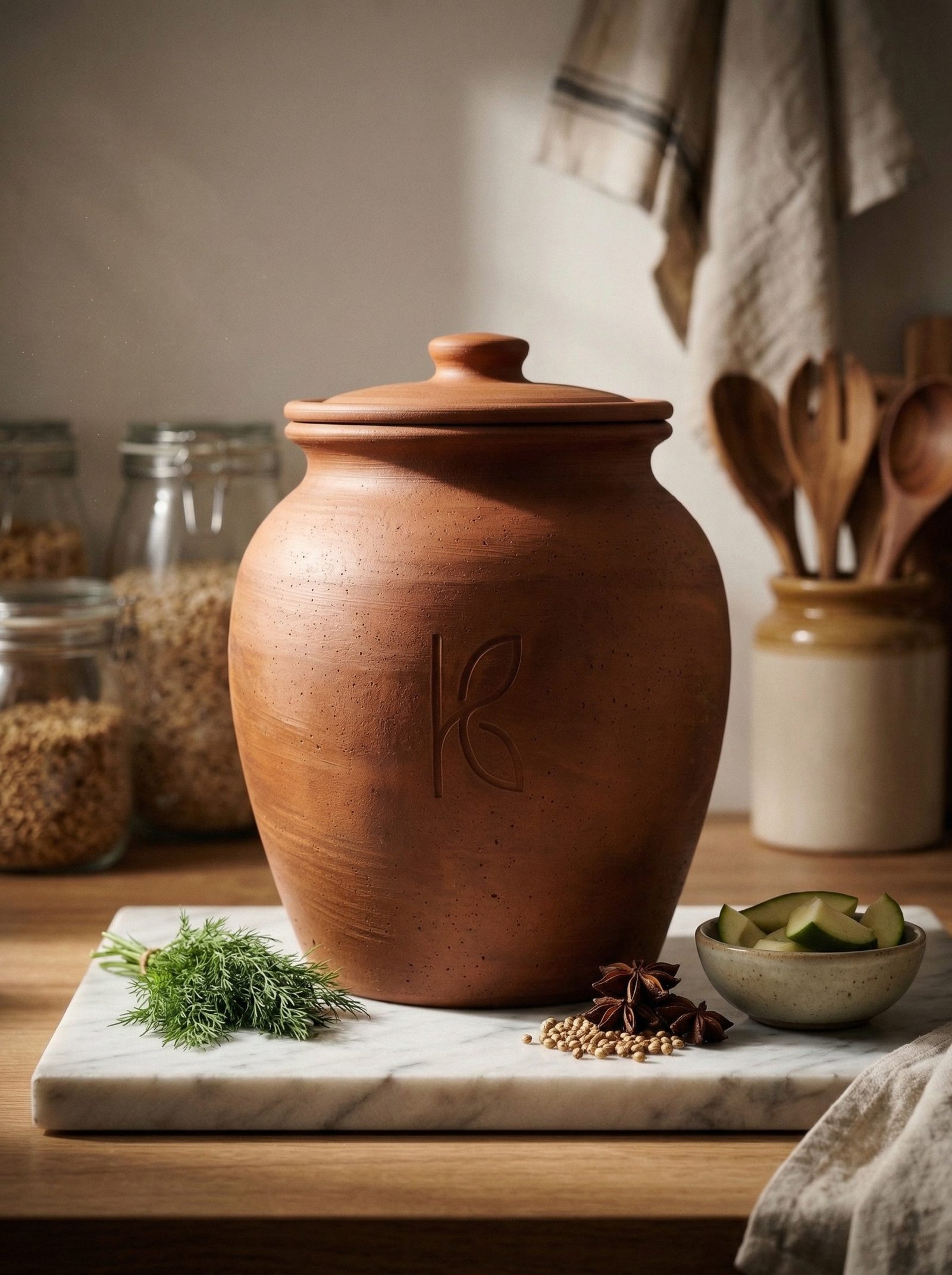
Clay Pickle / Storage Jar – 3 L
Out of StockFor the serious preserver. The mango season jar that fills in May and
Terracotta Clay · 3 Litres · SKU: KL-SW-009
₹999.00
| Material | Terracotta Clay |
|---|---|
| Size / Capacity | 3 Litres |
| Induction Ready | NO |
| XRF Tested | NO |
| Sub-Category | Pickle Jar |
For the serious preserver. The mango season jar that fills in May and
serves through the following year. A 3-litre clay storage jar for large-batch seasonal pickle making, long-term fermented vegetables, or bulk dry ingredient storage. Heavy, substantial clay body for durability in long-term use. Fitted clay lid. XRF-certified. The jar for the household where pickle making is a genuine seasonal practice — not a recipe followed once, but a tradition that marks the calendar.
Key Features & Benefits
- Large-Batch Scale: 3L holds approximately 2.5–2.8kg of packed mango achar with oil. For a family of four consuming achar at every meal: 5–6 months of supply from one batch. One jar, one season’s pickling session, months of table presence.
- Substantial Clay Body: 7–9mm walls at 3L. This thickness provides structural integrity for a vessel that will be lifted, placed, and tilted repeatedly over months and years of storage use.
- The Fermentation Jar: At 3L, the clay jar is also correctly sized for kanji fermentation (the traditional North Indian drink), large sauerkraut batches, or multi-vegetable lacto-ferment projects.
- Non-Reactive With Extended Contact: The same alkaline buffering and chemical inertness that makes the 500ml and 1L excellent for pickle is more pronounced at 3L over extended storage — more clay surface area in contact with the pickle for longer periods.
- XRF Certified: Batch QR on base.
- Wide Mouth — 9cm Diameter: Large enough for packing whole mangoes, full lemon halves, or large vegetable pieces.
About the Material
The 3L clay jar develops what traditional pickle makers call a “masala body” — the accumulated absorption of spices, oils, and pickle flavours into the clay pores over years of use. A well-seasoned 3L pickle jar that has held mango achar for three consecutive seasons will impart a subtle complexity to the fourth season’s batch that a new jar cannot. This is the clay’s memory — the palimpsest of every pickle it has ever held. At 3L and 7–9mm wall thickness, the jar is the heaviest single piece in the Klayvi range. Full at 3L of oil-based pickle, it weighs 4–5kg. Position it where you intend to keep it during the storage period; moving it regularly is impractical. The Science Large-batch traditional Indian pickle (over 1L) undergoes a two-phase process. Phase 1 (first 2–4 weeks): active fermentation driven by natural yeast and bacteria on the fruit surface. Phase 2 (weeks 4 onward): stabilisation, during which the lactic acid and salt levels reach equilibrium and the pickle’s flavour develops from sharp-and-raw to complex-and-rounded. The clay jar’s breathing walls are important during Phase 1 (allowing CO2 from fermentation to escape) and the clay’s thermal mass is important during Phase 2 (providing temperature stability that moderates ongoing chemical reactions).
Safety & Certification Standards
| XRF Analysis — Clay Source | Heavy metal screening on raw clay before production begins |
| ICP-OES — Finished Product | Parts-per-billion accuracy. Actual migration into food simulants tested |
| NABL-Accredited Laboratory | Internationally recognised test facility |
| FSSAI Food Contact Compliance | Meets India’s legal food safety standards |
| Per-Batch QR Report | Your batch. Your numbers. Published before dispatch. |
Lab Test Results
| Compound | Klayvi Result | FSSAI Safe Limit |
|---|---|---|
| Lead (Pb) | ≤ 2.1 ppm | 90 ppm |
| Cadmium (Cd) | ≤ 0.3 ppm | 0.5 ppm |
| Arsenic (As) | ≤ 0.4 ppm | 2.0 ppm |
| Mercury (Hg) | Not detected | 0.5 ppm |
| PTFE / PFOA / PFAS | Not present | Zero tolerance |
Caring for Your Klayvi
| 1 — First Use | Rinse with plain water. No soap on first use. |
| 2 — Daily Clean | Klayvi Wash Care (pH 6–8) or sisal scrubber + warm water. Never standard dish soap — it destroys seasoning at pH 9–11. |
| 3 — After Wash | Dry completely on low flame (cookware) or air-dry fully (decor/storage). Never store damp. |
| 4 — Monthly | Apply 4–5 drops cold-pressed flaxseed oil to cooking surfaces. Heat on medium-low until just smoking. Cool and wipe. |
| 5 — Never | Dishwasher · Microwave · Overnight soaking · Chemical detergents · Cold water on a hot vessel |
What’s in the Box
- Clay Storage Jar 3L with fitted clay lid
- Artisan provenance card
- Clay Care Passport (pickle and fermentation section)
- Batch QR card
Frequently Asked Questions
Q: Can the 3L jar hold whole raw mangoes for sun-drying inside before pickling?
Yes — the 9cm mouth diameter fits most medium raw mango varieties. Traditional karonda (Indian gooseberry) and small lime varieties fit whole. Large mangoes may need quartering before packing.
Q: Is the 3L jar suitable for long-term dry storage as well as pickle?
Yes. The 3L jar is excellent for bulk dry grains (atta, rice, lentils), whole spices, dried herbs, or any ingredient that benefits from breathable, non-reactive storage. The breathing walls regulate humidity, preventing the moisture buildup that causes grain to clump in sealed plastic.
Q: My 3L jar is developing a white powdery deposit on the exterior. What is it?
This is efflorescence — mineral salts from the pickle (particularly sodium chloride from the salt in the achar) migrating through the clay walls and crystallising on the exterior surface. It is completely normal and harmless. Wipe with a damp cloth to remove. It will recur as long as the jar holds salty pickle — this is expected behaviour.
Q: Can I use the 3L jar for making kanji (fermented beetroot and carrot drink)?
Yes — and clay is the traditionally correct vessel for kanji. Fill with grated or julienned black carrot and beetroot, mustard seeds, water, and salt. Cover with a cotton cloth (not the clay lid — kanji needs to breathe freely). Leave in a warm spot. The kanji will be ready in 3–5 days in summer, 7–10 days in winter. The clay vessel maintains the ideal fermentation environment through temperature buffering.
Q: How do I clean the 3L jar after pickle is finished?
Empty completely. Fill with warm water and a generous amount of rock salt. Let stand 2 hours. Pour out. Scrub with a sisal brush. Rinse thoroughly. Sun-dry for at least 2 full days (the thicker walls need longer drying time). Do not store the jar damp — residual moisture in a 7–9mm wall creates an ideal environment for mould between seasons.
Q: Where should I store the 3L jar?
On the kitchen floor or a low shelf in a cool, dark, ventilated space. The 3L full of pickle is too heavy for high shelving. Traditional storage was in a dedicated pantry corner or a cool room in the home. In a modern apartment: a corner of the kitchen floor, a pantry cupboard shelf, or a cool balcony corner away from direct sunlight.
Related products
-
Out of Stock

-
Out of Stock
-
Out of Stock

Reviews
There are no reviews yet.