
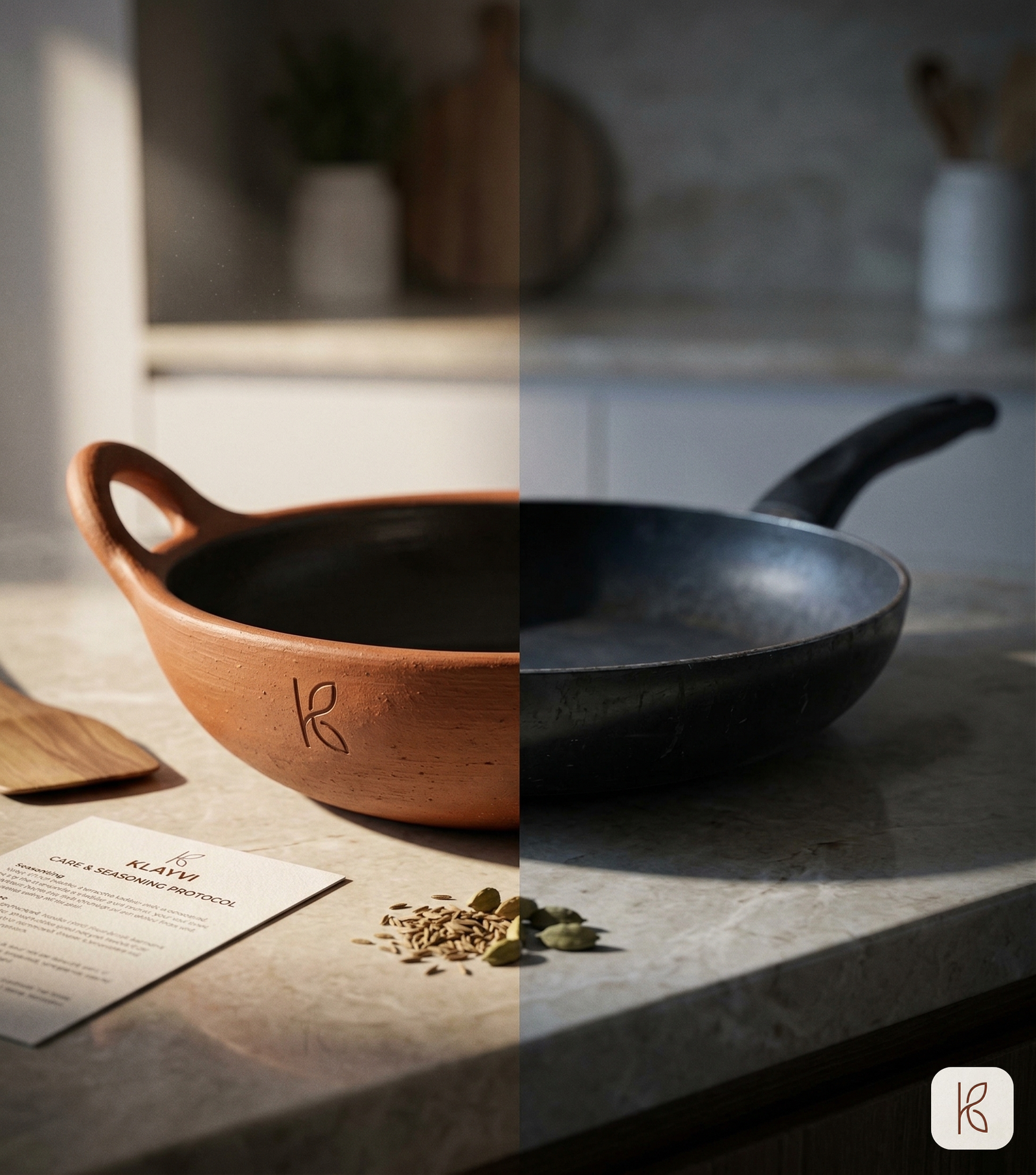
Bio-Active Kadhai – 1.5 L
Out of StockThe daily sabzi kadhai. The Teflon replacement you’ve been putting off.
Terracotta Clay · 1.5 Litres · SKU: KL-CK-007
₹899.00
| Material | Terracotta Clay |
|---|---|
| Size / Capacity | 1.5 Litres |
| Induction Ready | YES |
| XRF Tested | YES |
| Sub-Category | Kadhai |
The daily sabzi kadhai. The Teflon replacement you’ve been putting off.
1.5 litres — the standard daily-cooking size for households of 2–3 people. XRF + ICP-OES certified. Ra ≤4µm ultra-smooth interior for genuine non-stick performance after a few uses. Induction adapter included. This is the kadhai that converts people from non-stick.
Key Features & Benefits
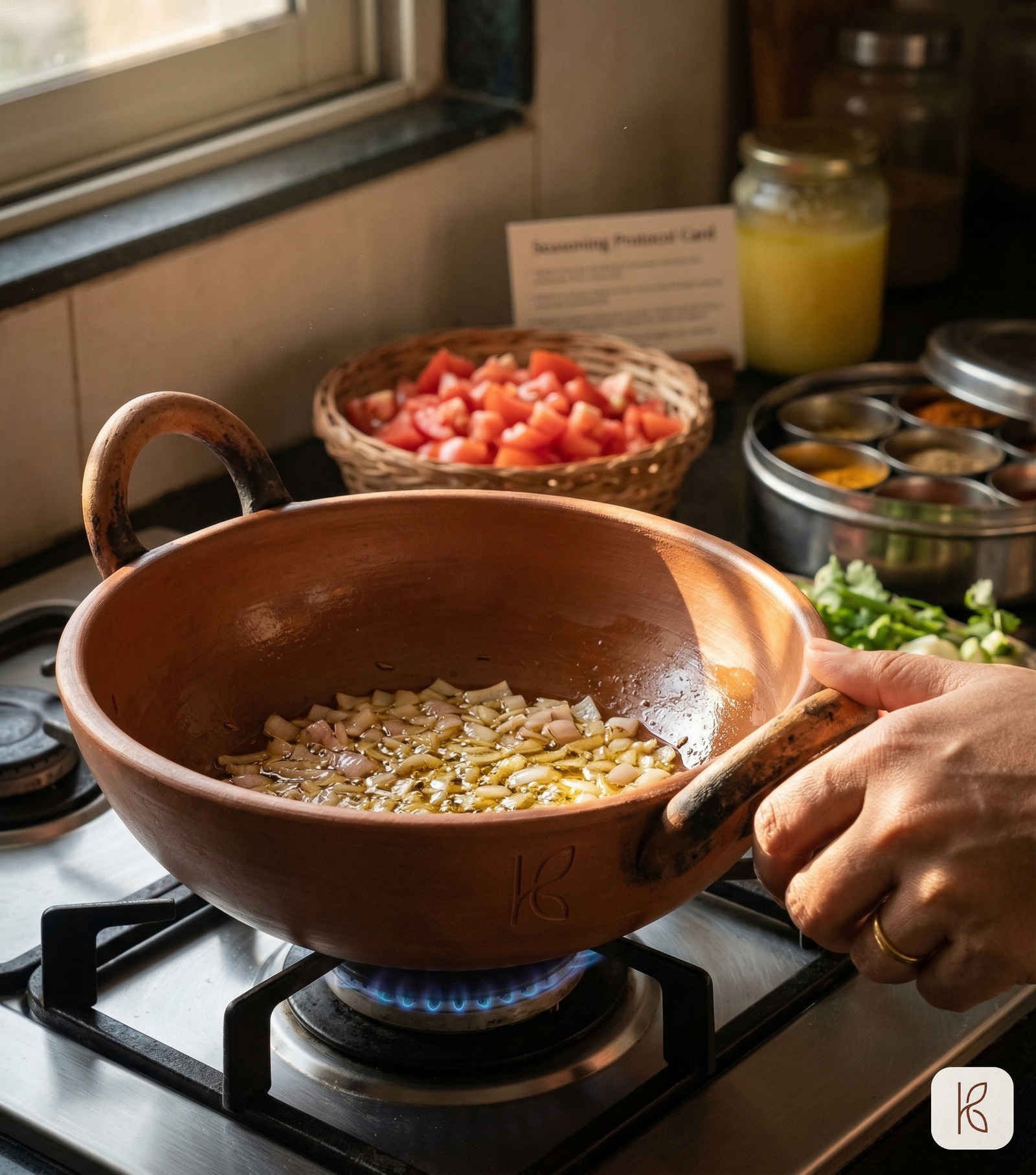
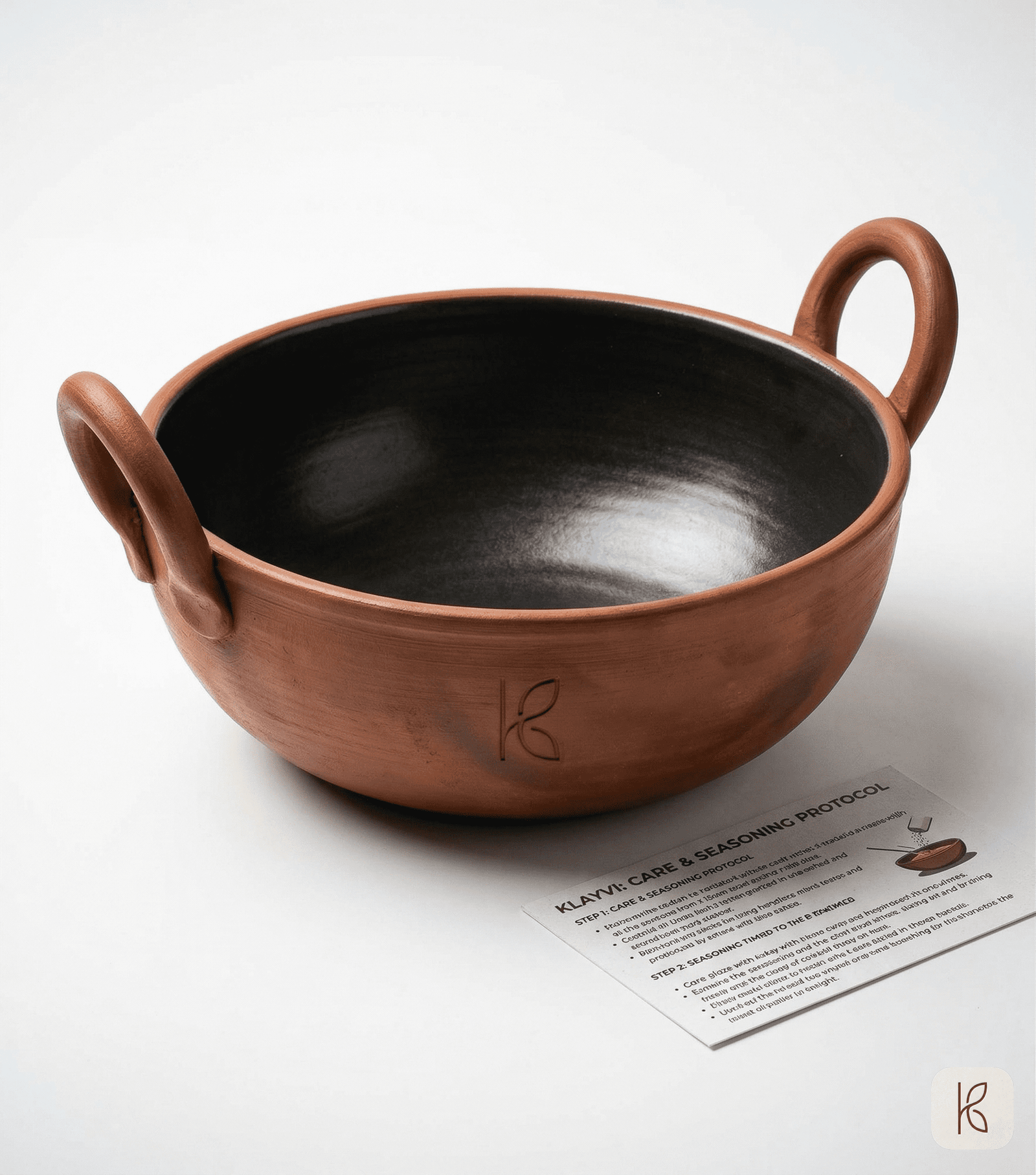
- Ra ≤4µm Ultra-Smooth Interior: Surface roughness approximately equal to a well-used cast iron pan. With the pre-applied flaxseed seasoning, this creates workable non-stick performance from first use — improving with each cooking session rather than degrading.
- The Daily Size: 1.5L is the sweet spot for a household of 2–3 people making a single sabzi. Not so small it overflows; not so large that half the surface goes unused. Food cooks evenly across the full surface.
- Zero Toxic Coating: No PTFE, PFOA, PFAS. The cooking surface is clay. It gets better with use — the opposite of non-stick.
- Dual Lab Certified: XRF + ICP-OES. Batch-specific QR on base.
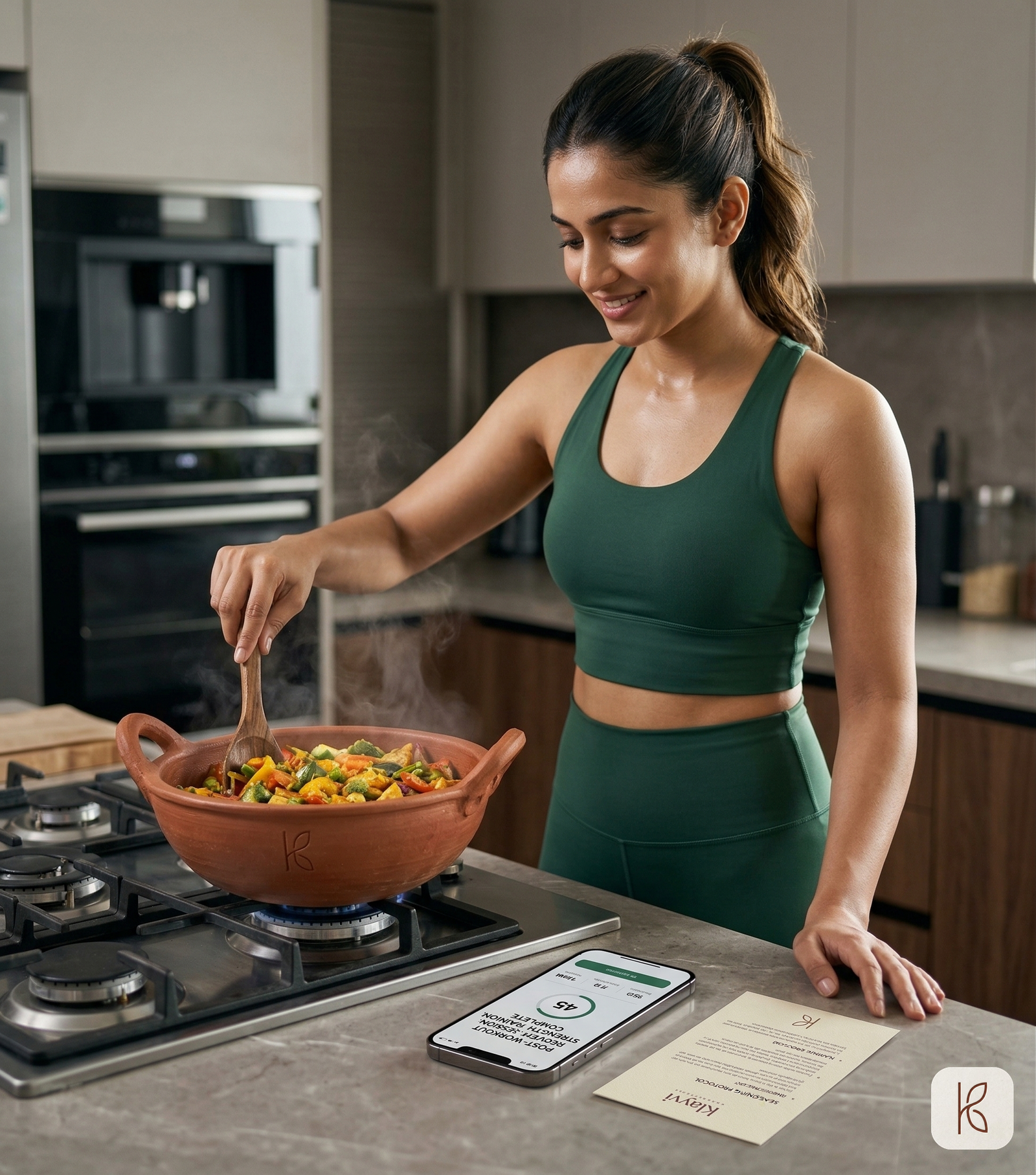
- Induction Ready: Steel adapter disc included. Tested on 5 major Indian induction brands.
- Seasoning Protocol Card: Included in the Clay Care Passport — a complete first-30-days guide specific to the kadhai.
About the Material
After 10 uses, most customers report that eggs no longer stick. Paneer no longer sticks. Vegetables toss easily. After 30 uses, the surface has developed a patina that is visually beautiful and functionally excellent. Some customers photograph their kadhais at 6 months, 1 year, 2 years. They look better each time. The Standard series walls: 5mm. Slightly more thermal mass than the Lite series, better for dishes that need consistent medium heat over 15–20 minutes — a slowly cooked dal fry, a keema preparation, a simmering masala base.
The Science
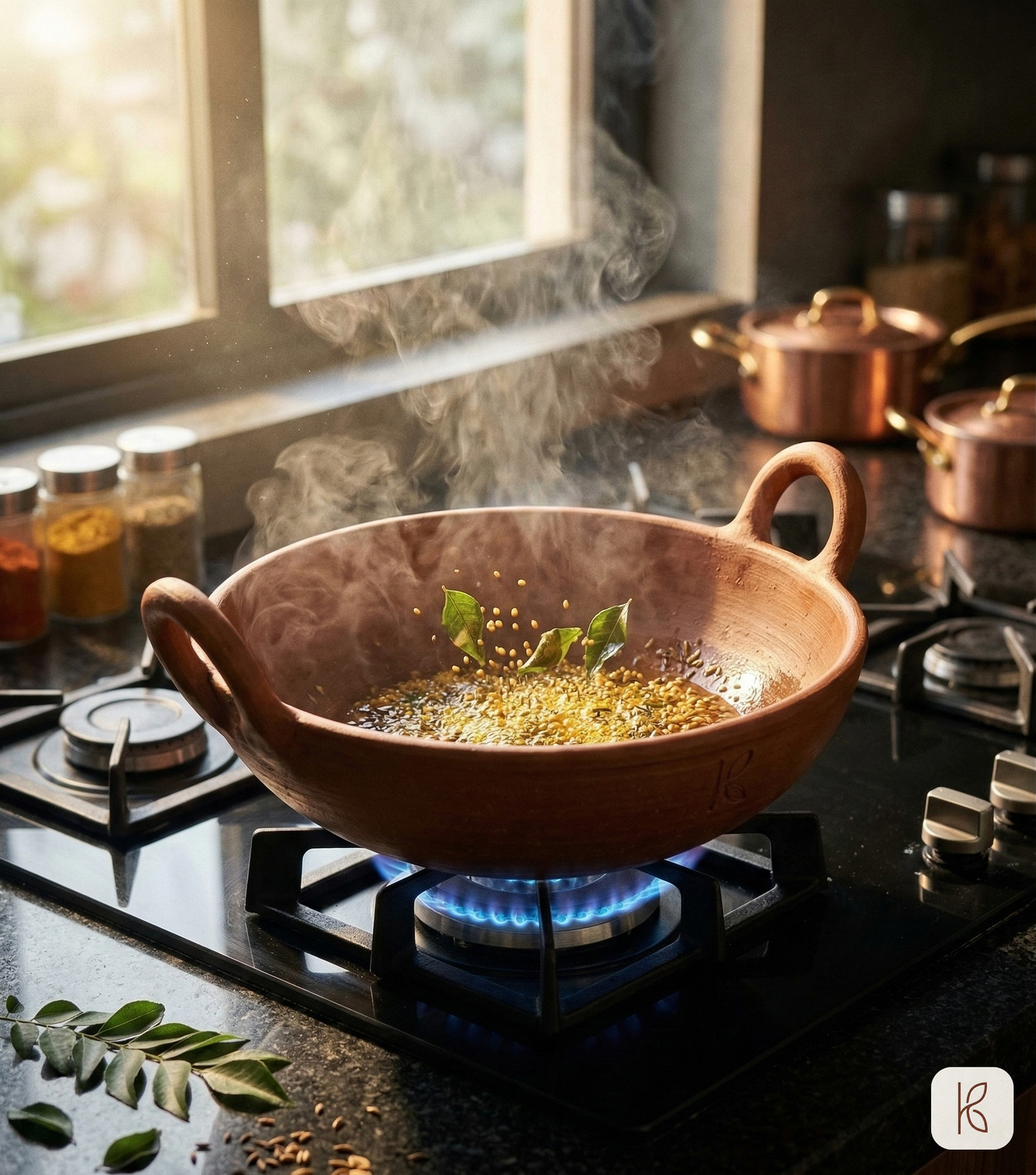
The break-in behaviour of the clay kadhai mirrors cast iron’s seasoning behaviour, for the same chemical reason: flaxseed oil contains alpha-linolenic acid, which polymerises under heat into a crosslinked film that bonds to the clay pores. Each cooking session adds to this film. After 15–20 uses, the film is functionally comparable to a seasoned cast iron surface — minus the weight, the rust risk, and the reactive surface chemistry with acidic food.
Safety & Certification Standards
| XRF Analysis — Clay Source | Heavy metal screening on raw clay before production begins |
| ICP-OES — Finished Product | Parts-per-billion accuracy. Actual migration into food simulants tested |
| NABL-Accredited Laboratory | Internationally recognised test facility |
| FSSAI Food Contact Compliance | Meets India’s legal food safety standards for cookware |
| Per-Batch QR Report | Your batch. Your numbers. Published before dispatch. Scan and read it yourself. |
Lab Test Results
| Compound | Klayvi Result | FSSAI Safe Limit |
|---|---|---|
| Lead (Pb) | ≤ 2.1 ppm | 90 ppm |
| Cadmium (Cd) | ≤ 0.3 ppm | 0.5 ppm |
| Arsenic (As) | ≤ 0.4 ppm | 2.0 ppm |
| Mercury (Hg) | Not detected | 0.5 ppm |
| PTFE / PFOA / PFAS | Not present | Zero tolerance |
Caring for Your Klayvi
| 1 — First Use | Rinse with plain water. Cook something water-based (dal, rice water) for first 2–3 uses. |
| 2 — Daily Clean | Use Klayvi Wash Care (pH 6–8) or a sisal scrubber with warm water. Never standard dish soap — its pH 9–11 strips the seasoning. |
| 3 — After Wash | Dry completely on low flame for 2 minutes. Never store damp. |
| 4 — Monthly | Apply 4–5 drops of cold-pressed flaxseed oil. Heat on medium-low until it just smokes at the edges (~4 min). Cool. Wipe. |
| 5 — Never | Dishwasher · Microwave · Submerging overnight · Chemical detergents · Cold water on a hot pot |
What’s in the Box
- Bio-Active Kadhai 1.5L (pre-seasoned)
- Steel induction adapter disc
- Seasoning protocol card
- Artisan provenance card
- Clay Care Passport
- Batch QR card
Frequently Asked Questions
Q: When exactly is this kadhai truly non-stick?
After approximately 8–12 cooking sessions with oil. The first 3–4 uses, some sticking is normal — you’re building the seasoning layer. By use 8, most foods (paneer, vegetables, eggs) release cleanly. By use 20, the surface performs at cast iron level. Unlike non-stick, it keeps improving rather than degrading.
Q: What oil builds the best seasoning?
Cold-pressed flaxseed oil — it has the highest alpha-linolenic acid content (around 57%), which polymerises most effectively onto clay surfaces at heat. Avoid coconut oil for seasoning (wrong fatty acid profile) and refined oils (stripped of natural polymerising compounds).
Q: Can I make dosa in a kadhai?
Not well — dosa requires a flat tawa surface for spreading. The kadhai’s concave sides prevent proper batter spread. Use the tawa series for dosa.
Q: My sabzi burns at the base even on medium heat. Why?
Most likely cause: the kadhai needs more seasoning. An under-seasoned clay surface has higher friction and uneven heat spots. Cook 2–3 more oil-based dishes before judging the heat performance. Also check that the heat diffuser disc (available separately) is in use if you’re on gas.
Q: Can I cook marinated meat in the kadhai?
Yes. Marinated chicken, lamb, or fish work well in the kadhai. The high-sided form is better for meat than for thin sabzi. Avoid acidic marinades (lemon, vinegar) in large quantities for the first 10 uses — let the seasoning establish first.
Q: Does the kadhai work without oil?
Not in the first 20 uses. The clay surface, while Ra ≤4µm smooth, requires a thin oil layer for non-stick cooking until the seasoning is fully established. After 20+ uses, some foods can be cooked with minimal oil.
Related products
-
Out of Stock

-
Out of Stock
-
Out of Stock

Reviews
There are no reviews yet.