
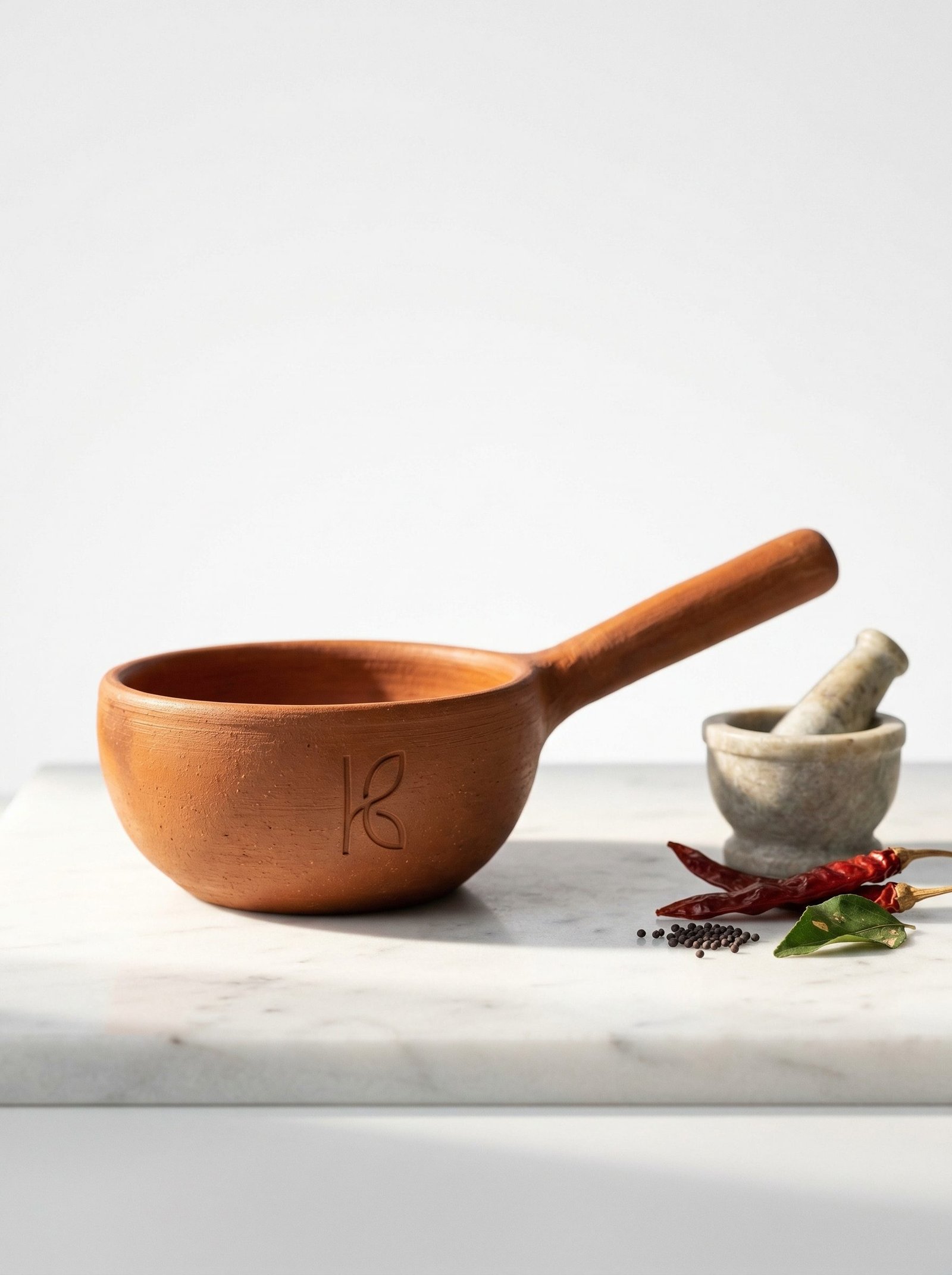
Bio-Active Tadka Pan – Small
Out of StockThe most important 30 seconds of Indian cooking. Use the right vessel.
Terracotta Clay · 150 ml · SKU: KL-CK-022
₹299.00
| Material | Terracotta Clay |
|---|---|
| Size / Capacity | 150 ml |
| Induction Ready | YES |
| XRF Tested | NO |
| Sub-Category | Tadka Pan |
The most important 30 seconds of Indian cooking. Use the right vessel.
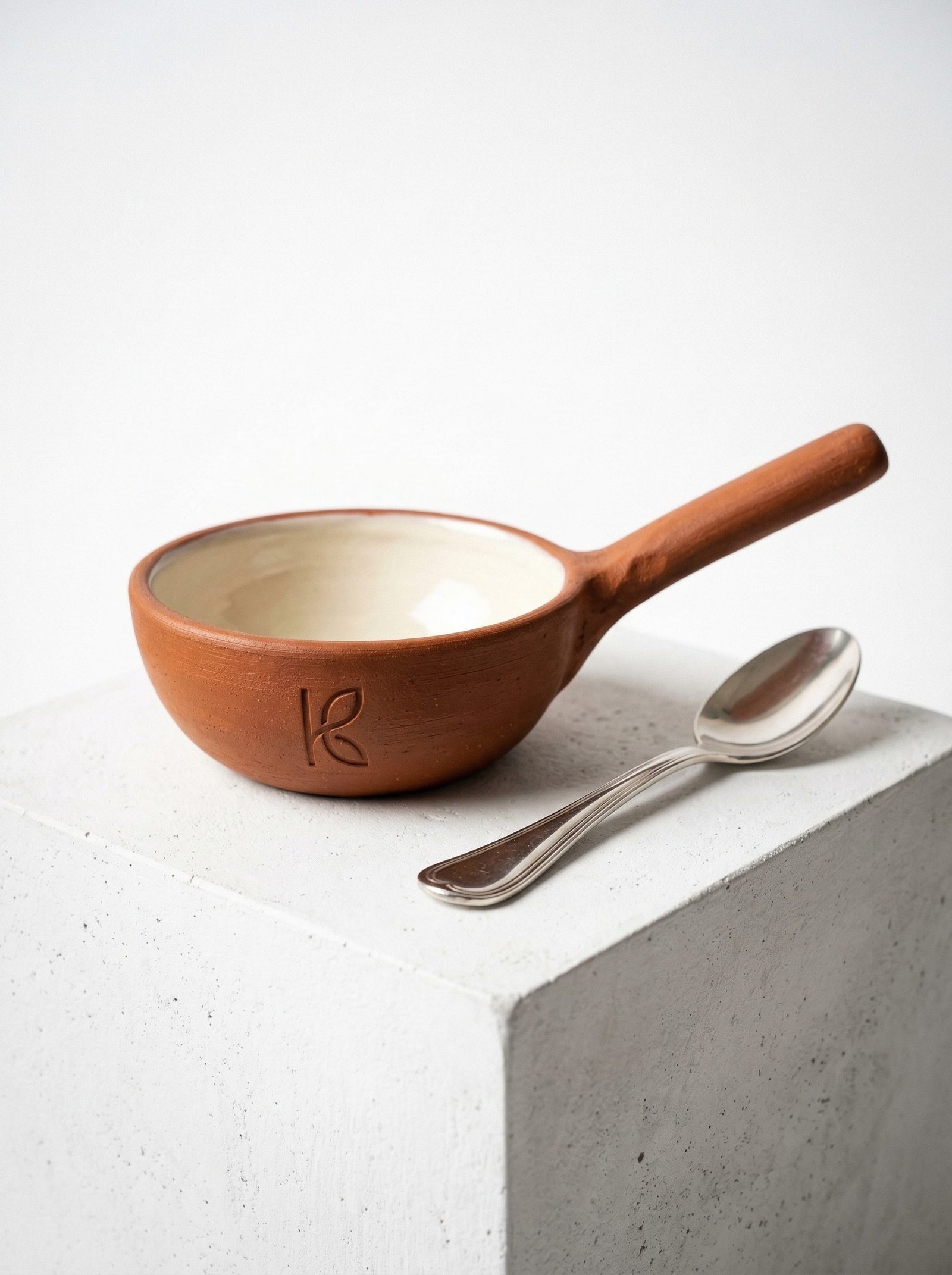
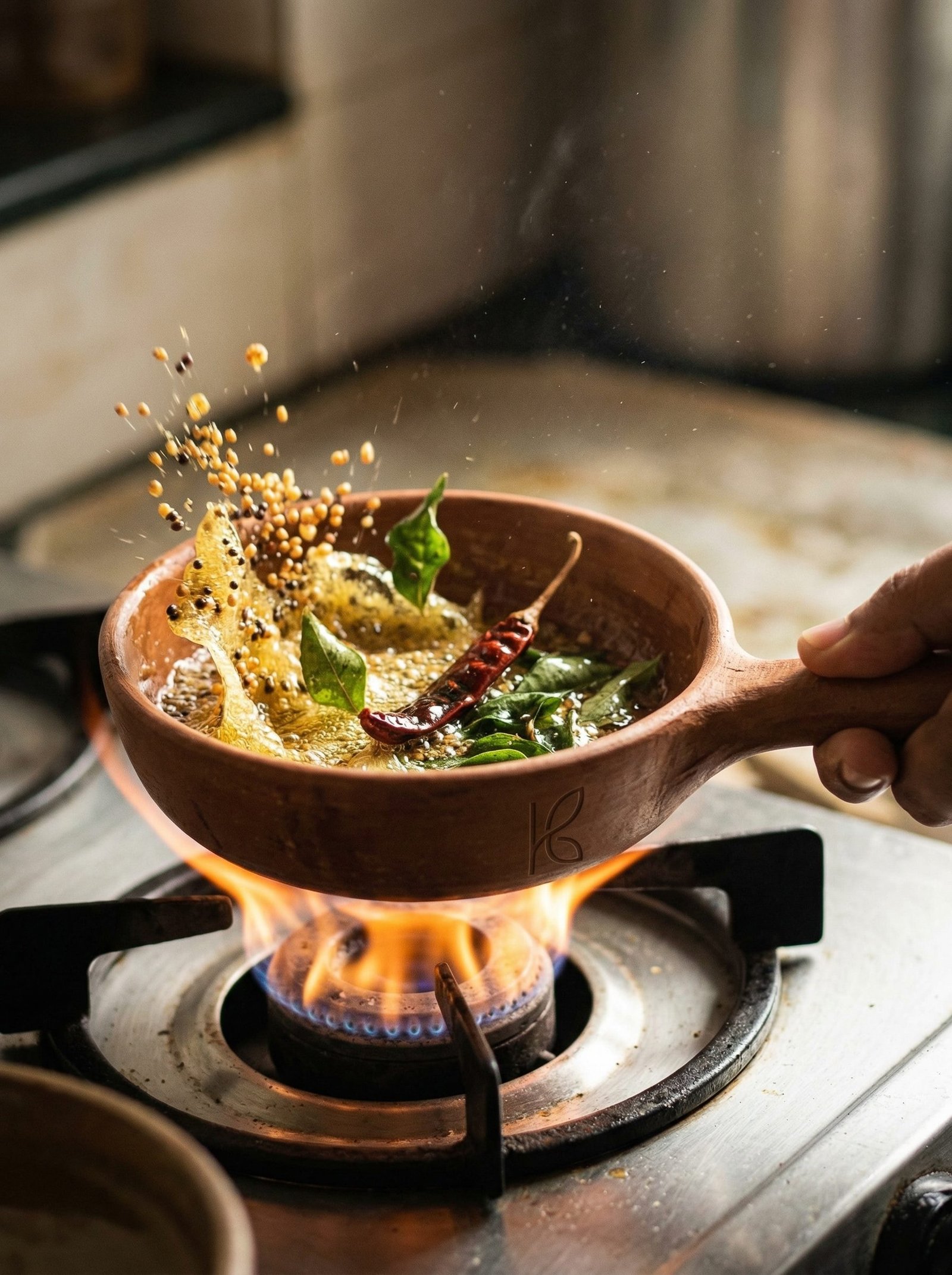
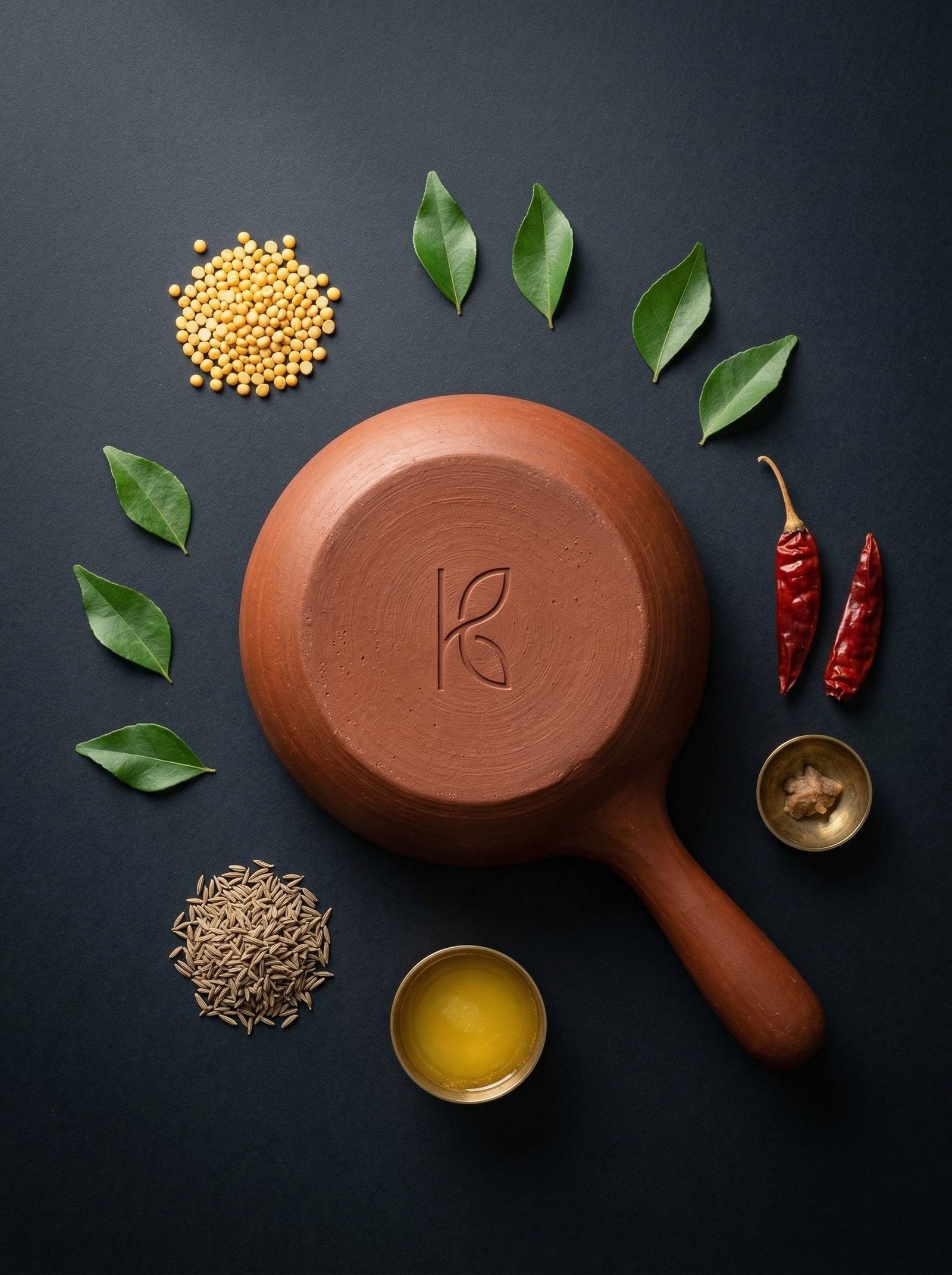
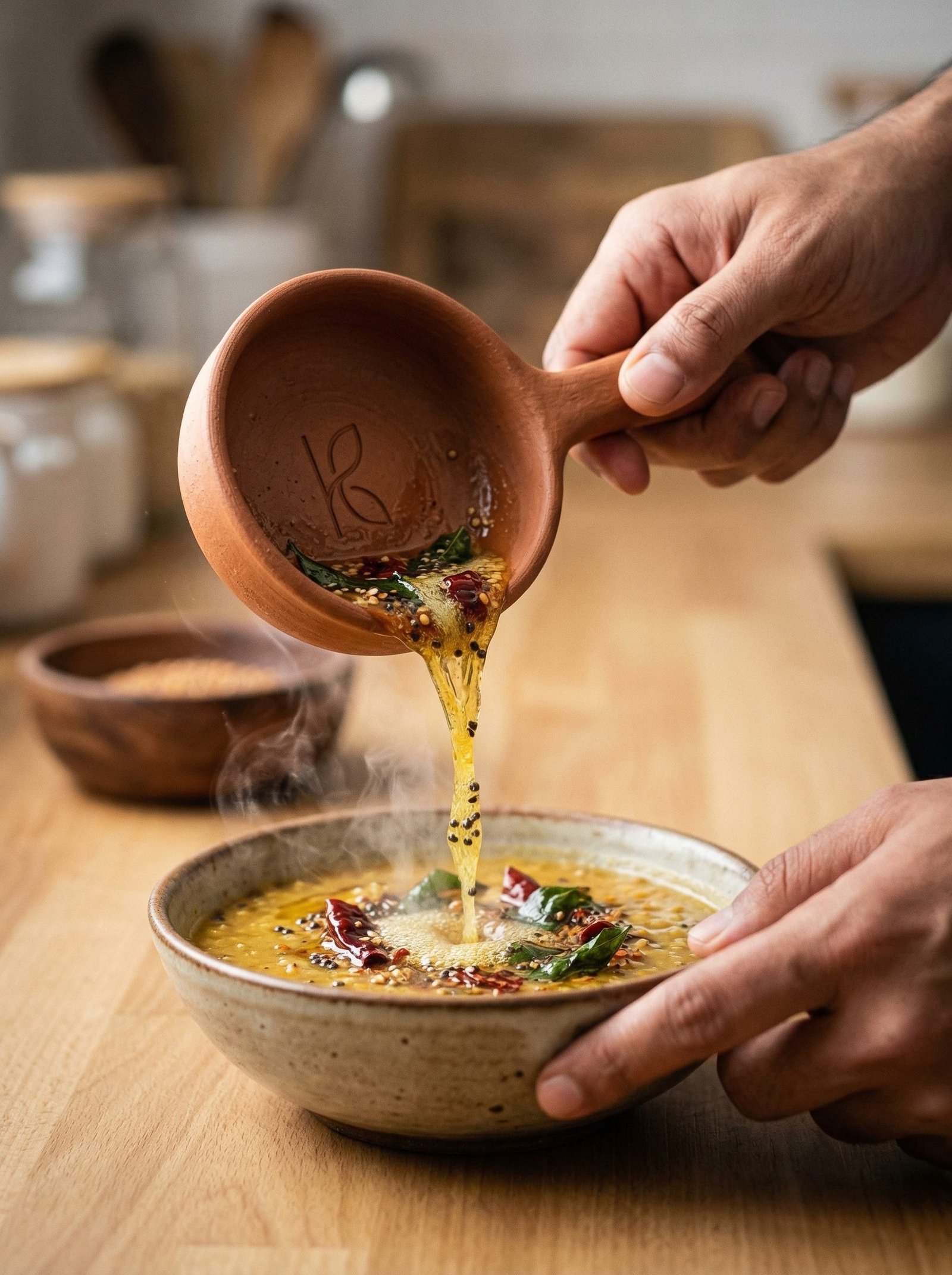
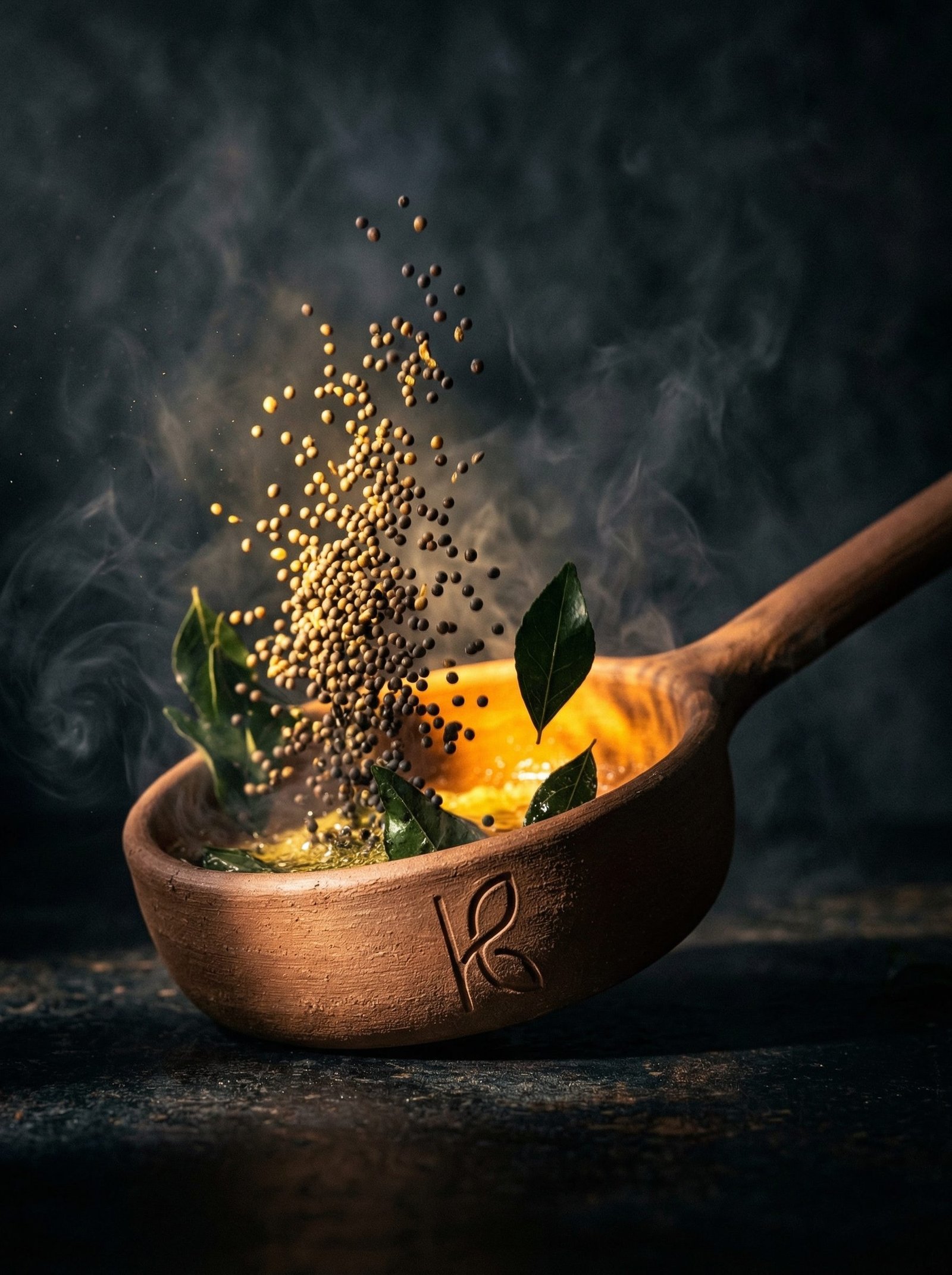
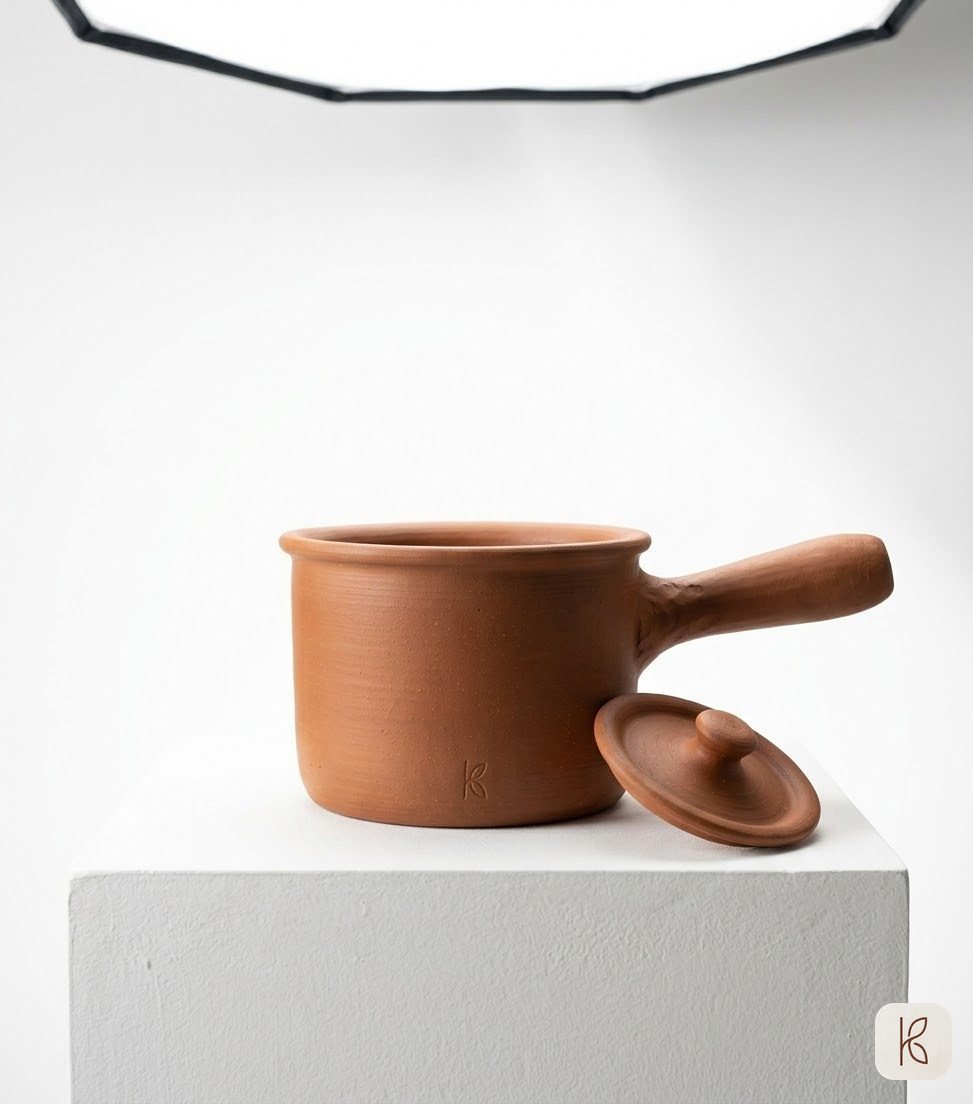
The smallest vessel in our range. 150ml. Pre-seasoned. Long handle for single-hand pouring. The tadka pan does one job: mustard seeds in hot ghee over a high flame, followed by immediate pouring over dal. It does it perfectly. No coating to worry about at 300°C. No polymer fumes when the ghee hits smoking point. Just clay and heat — as it has always been.
Key Features & Benefits
- 300°C — No Problem: Tadka happens at 200–320°C. PTFE decomposes at 260°C. Terracotta was formed at 850°C. The chemistry is stable. Ghee gets as hot as it needs to get. Nothing else enters your food.
- 150ml Is the Correct Size: Not so small that spices have no room to move. Not so large that the oil pools shallowly and heats unevenly. 150ml produces the geometry where mustard seeds pop correctly and ghee heats evenly from edge to edge.
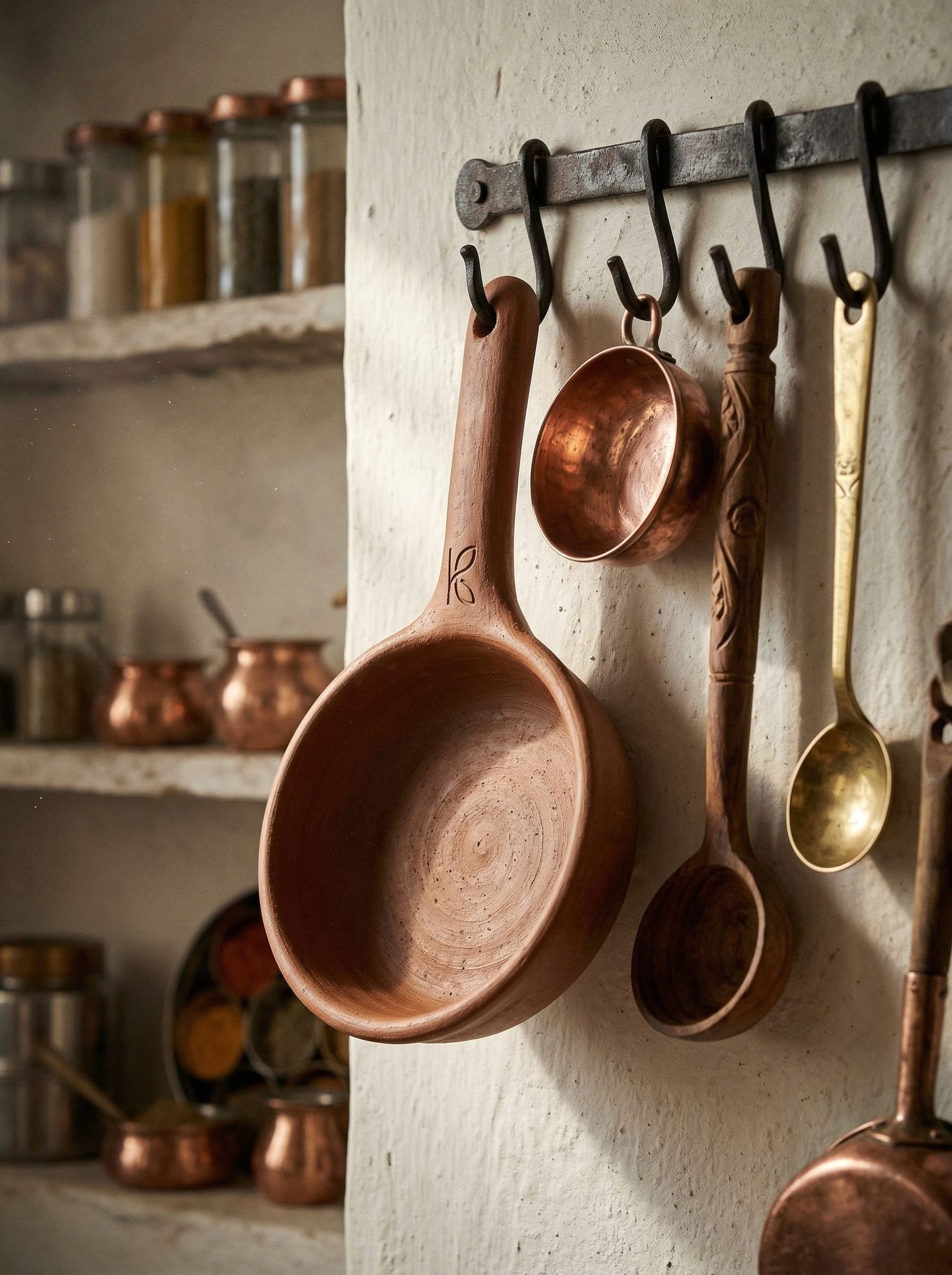
- Long Handle for Safe Pouring: Long enough to keep your hand well clear of the flame and oil spatter. Weighted to balance naturally when held one-handed. When you pour the tadka over the dal, the weight distribution makes precise pouring possible.
- XRF Certified: Batch QR on handle.
- Pre-Seasoned: Three flaxseed oil cycles at 200°C before dispatch. First use: wash, cook.
- Highest-Impulse Purchase in Our Range: Because every Indian kitchen needs one and almost none have clay.
About the Material
The tadka pan is the Klayvi product where the gap between clay and non-stick is most consequential. Every time you make a tadka in a non-stick pan, you are doing it at a temperature where PTFE is most vulnerable — high heat, oil, a brief moment at 280–320°C before the seeds go in. And you are doing it every day, or close to it. The clay tadka pan removes this exposure completely. The surface does not degrade. It does not release anything. It gets better with use as the seasoning builds up in the tiny 150ml bowl.
The Science
Tadka is defined by a specific chemical sequence: hot fat dissolves and activates the fat-soluble aromatic compounds in the whole spices (cumin, mustard, curry leaves). This happens most completely at temperatures above 180°C. The clay surface, by retaining heat evenly rather than having a small hot spot where the burner ring contacts the base, ensures that the entire 150ml surface is at the correct temperature simultaneously — not just the centre. Every mustard seed pops at the same time. The tadka is done correctly.
Safety & Certification Standards
| XRF Analysis — Clay Source | Heavy metal screening on raw clay before production begins |
| ICP-OES — Finished Product | Parts-per-billion accuracy. Actual migration into food simulants at cooking temperatures |
| NABL-Accredited Laboratory | Internationally recognised test facility |
| FSSAI Food Contact Compliance | Meets India’s legal food safety standards for cookware |
| Per-Batch QR Report | Your batch. Your numbers. Published before dispatch. Scan and read it yourself. |
Lab Test Results
| Compound | Klayvi Result | FSSAI Safe Limit |
|---|---|---|
| Lead (Pb) | ≤ 2.1 ppm | 90 ppm |
| Cadmium (Cd) | ≤ 0.3 ppm | 0.5 ppm |
| Arsenic (As) | ≤ 0.4 ppm | 2.0 ppm |
| Mercury (Hg) | Not detected | 0.5 ppm |
| PTFE / PFOA / PFAS | Not present | Zero tolerance |
Caring for Your Klayvi
| 1 — First Use | Rinse with plain water. Cook something water-based for first 2–3 uses. |
| 2 — Daily Clean | Klayvi Wash Care (pH 6–8) or sisal scrubber with warm water. Never standard dish soap — its pH 9–11 strips the seasoning polymer layer. |
| 3 — After Wash | Dry on low flame for 2 minutes. Never store damp. |
| 4 — Monthly | Apply 4–5 drops of cold-pressed flaxseed oil. Heat on medium-low until just smoking at edges (~4 min). Cool and wipe. |
| 5 — Never | Dishwasher · Microwave · Overnight soaking · Chemical detergents · Cold water on a hot vessel |
What’s in the Box
- Bio-Active Tadka Pan 150ml (pre-seasoned)
- Artisan provenance card
- Clay Care Passport
- Batch QR card
Frequently Asked Questions
Q: The tadka pan smokes a lot on first use. Is that normal?
Yes — this is the pre-applied flaxseed oil seasoning completing its polymerisation in your first high-heat use. It is most pronounced in the first 1–2 uses and diminishes significantly thereafter. Ensure your kitchen is ventilated. The smoke is from the oil, not from any coating.
Q: Can I add raw garlic directly to the tadka pan with ghee?
Yes. Garlic tadka in ghee is one of the most common uses. The 150ml size is perfect for a 4–6 clove garlic tadka — enough room for the garlic to move and brown evenly without crowding.
Q: The tadka pan handle is getting dark. Is that a problem?
No. The handle near the body darkens from proximity to the flame over time. This is carbon deposit and clay’s natural darkening response to heat. It does not affect safety or performance. Many users consider it the patina of use.
Q: Can I use the tadka pan on induction without an adapter?
No — clay is not ferromagnetic and won’t work directly on induction. The tadka pan is not sold with an induction adapter because the 150ml size is too small for the minimum disc size. For induction tadka, use the smallest induction-compatible vessel you have and pour the tadka from that into the clay tadka pan for serving.
Q: Is hing (asafoetida) safe to cook in the clay tadka pan?
Yes. Hing is typically added dry to hot oil or ghee — the clay pan handles this perfectly. The fat-soluble compounds in hing dissolve more completely in the evenly heated clay pan than in a metal pan with uneven temperature distribution.
Q: Can I deep-fry in the tadka pan?
No. 150ml is not enough volume for safe deep frying — the oil level would be too shallow and the splatter risk too high. Use the kadhai series for frying.
Related products
-
Out of Stock

-
Out of Stock
-
Out of Stock

Reviews
There are no reviews yet.