
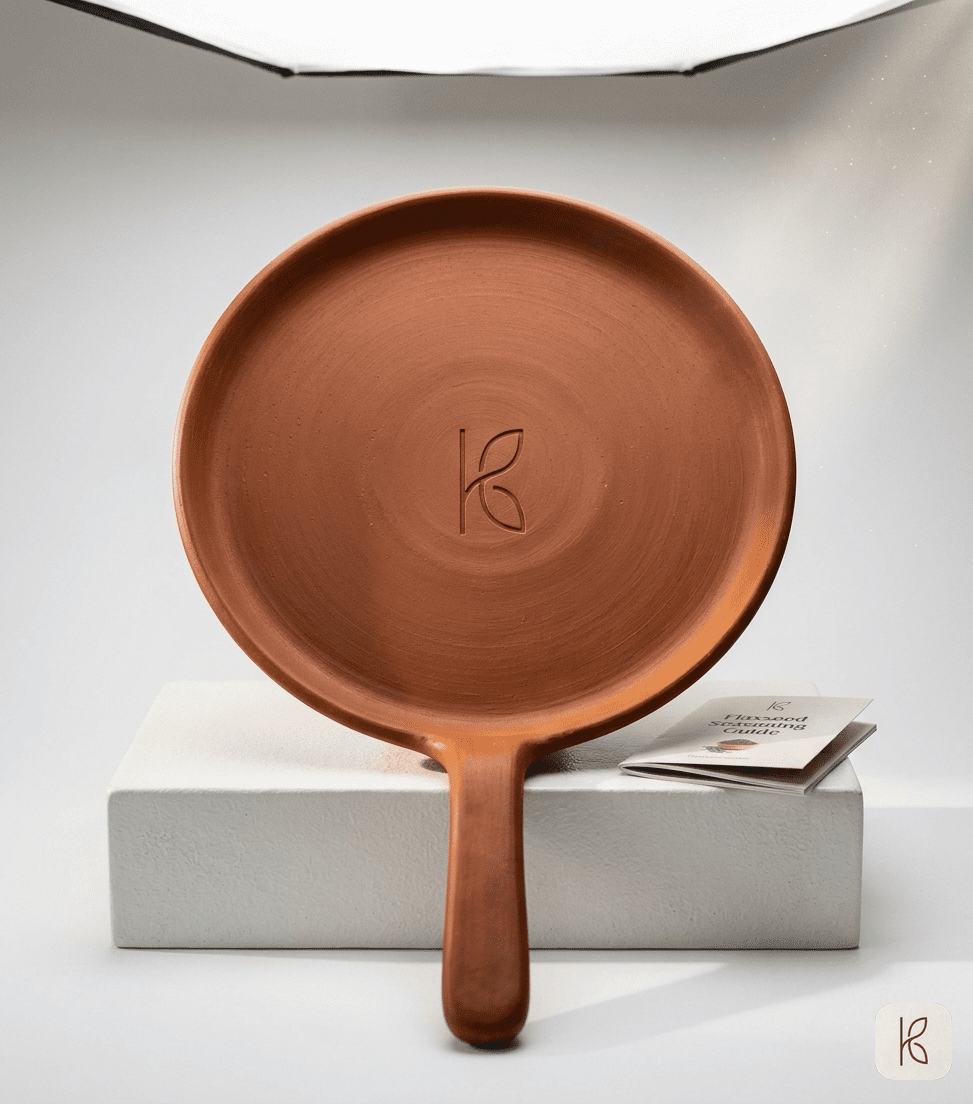
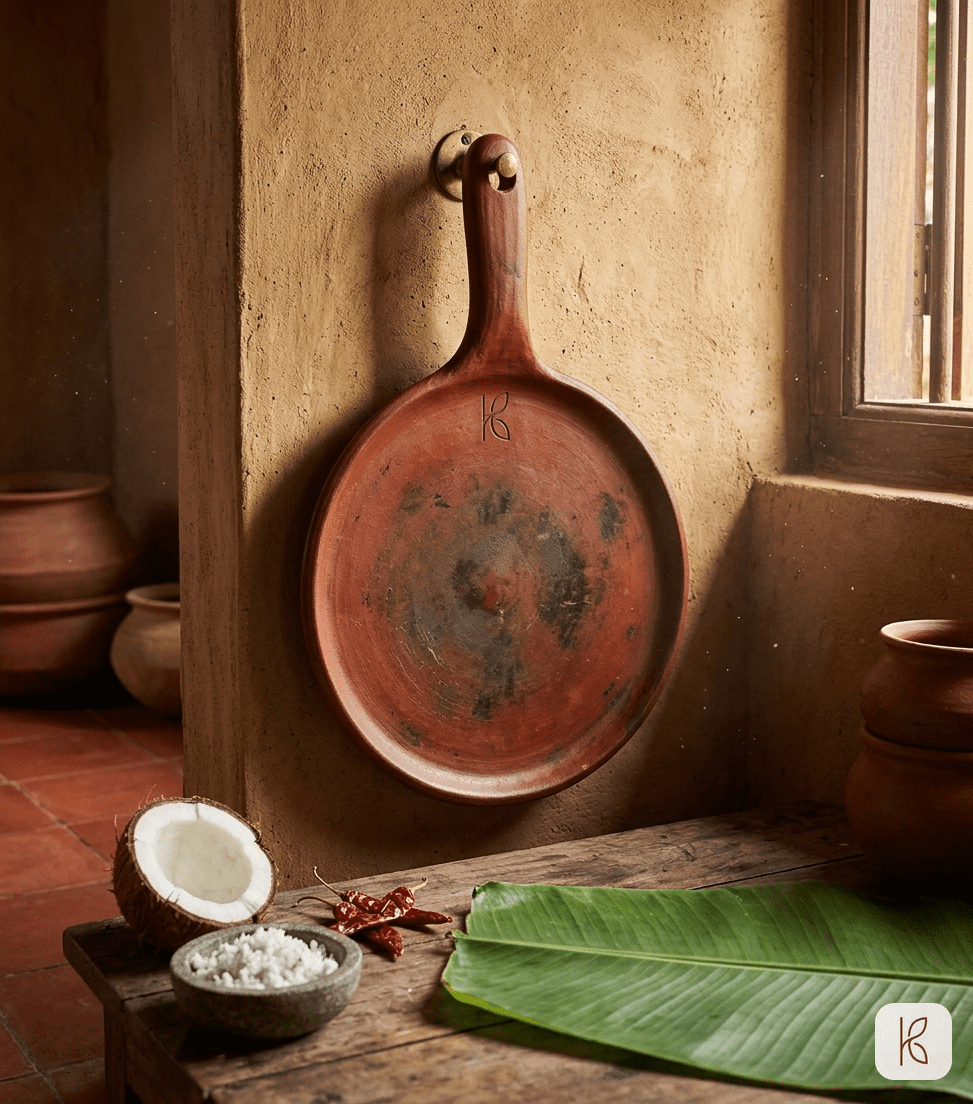
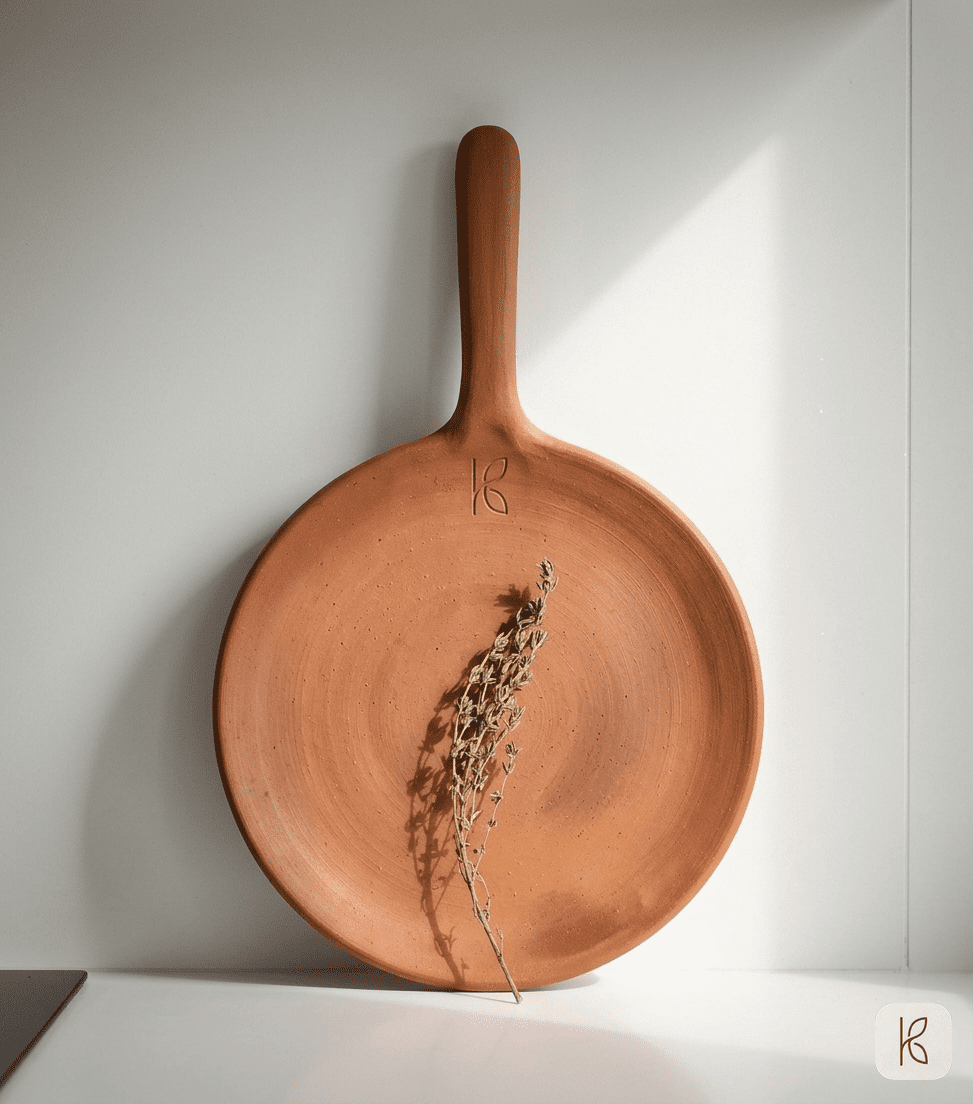
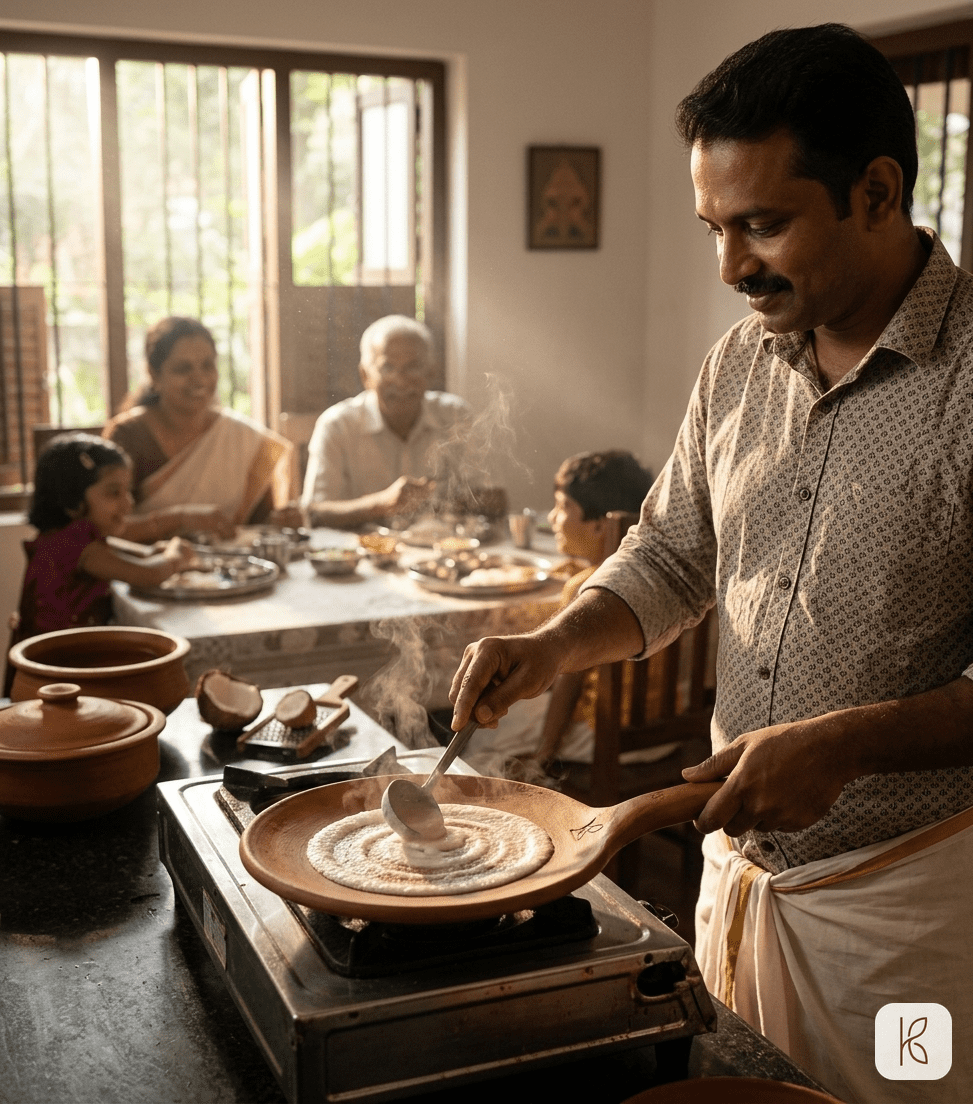
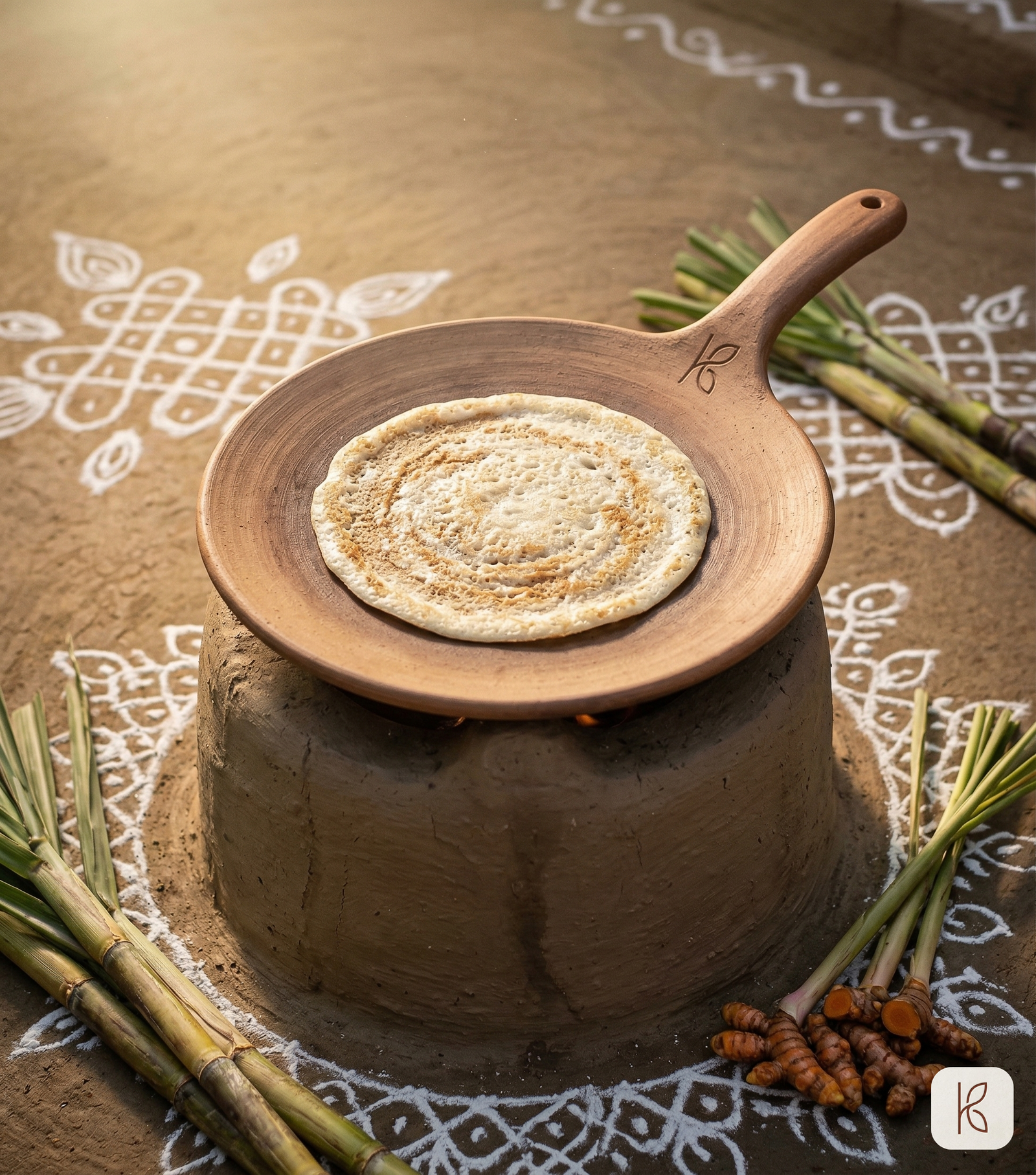
Bio-Active Tawa – 12 inch
Out of StockThe dosa tawa. The one your grandmother wishes she had access to.
Terracotta Clay · 12 inch · SKU: KL-CK-011
₹1,199.00
| Material | Terracotta Clay |
|---|---|
| Size / Capacity | 12 inch |
| Induction Ready | YES |
| XRF Tested | YES |
| Sub-Category | Tawa |
The dosa tawa. The one your grandmother wishes she had access to.
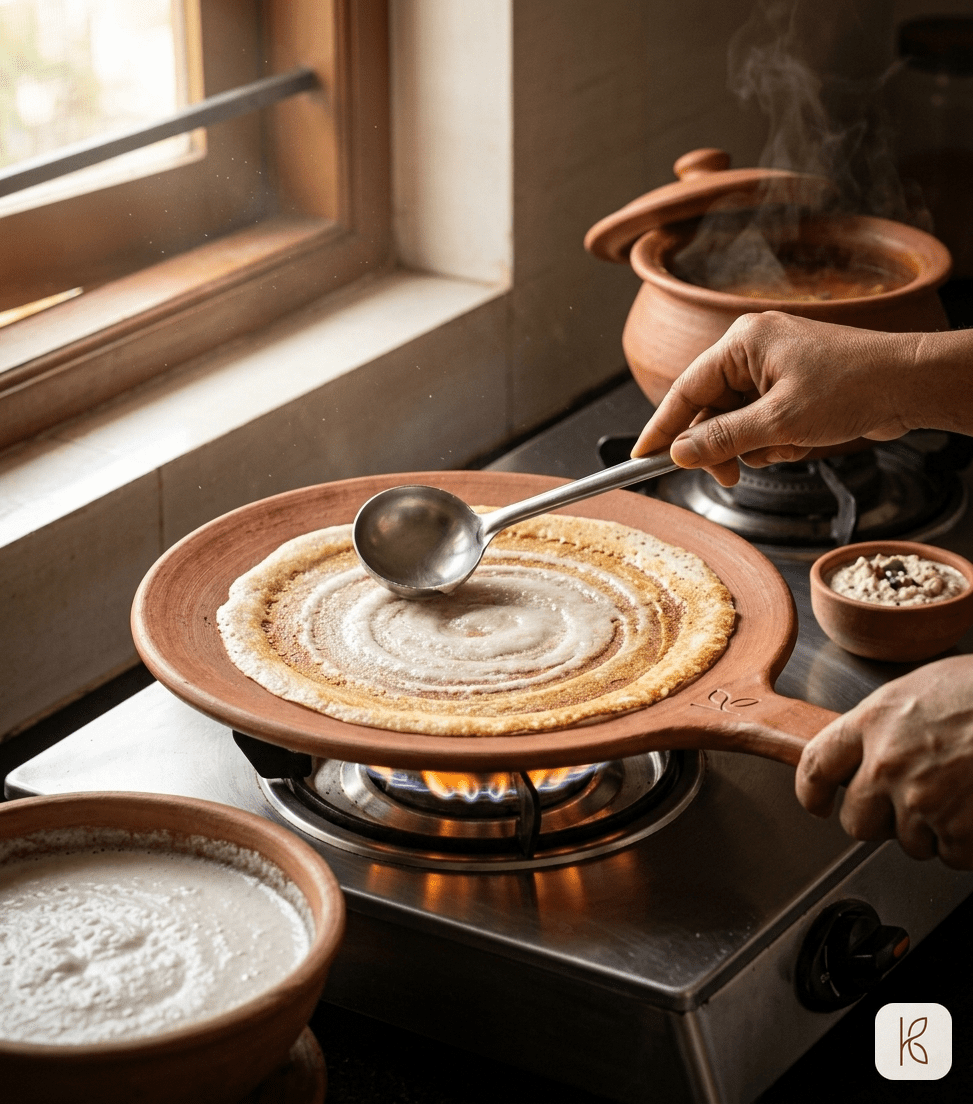
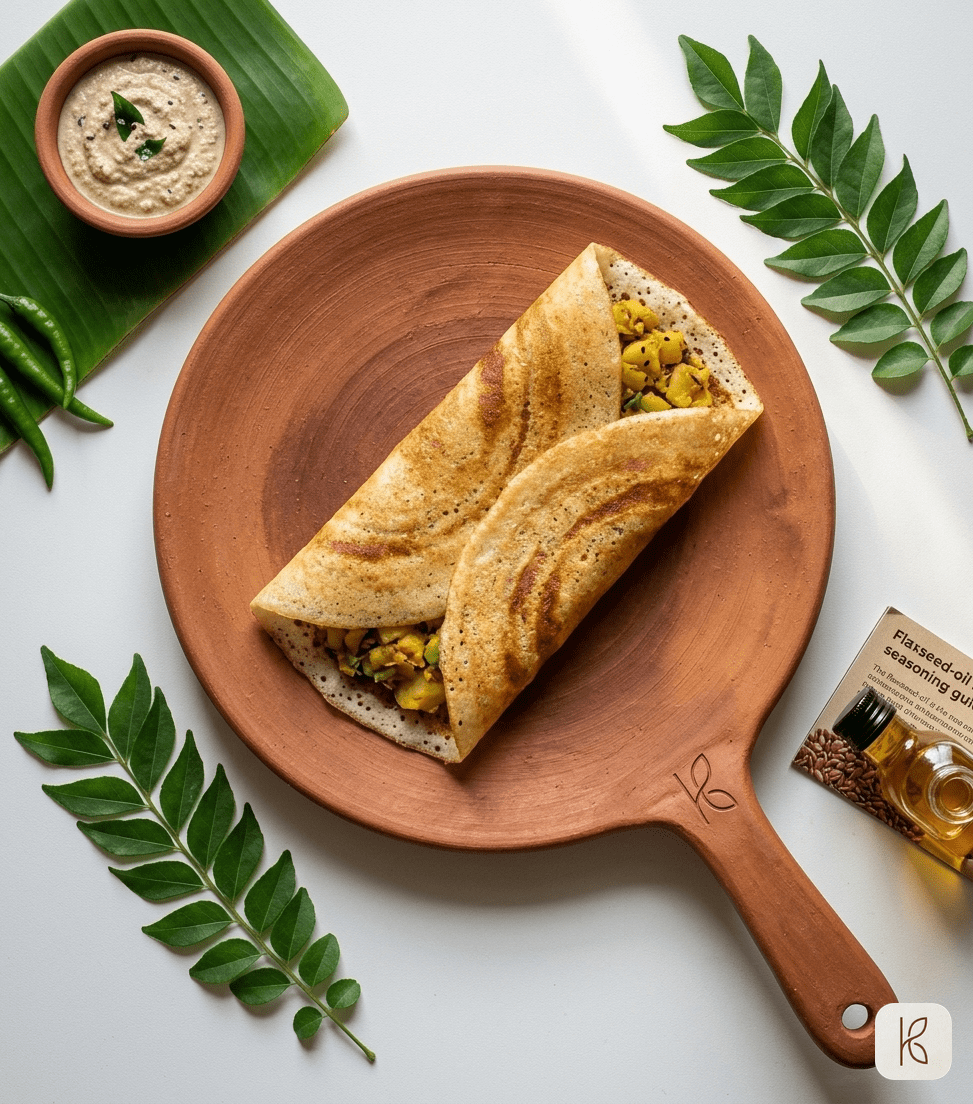
Large enough for a proper dosa, flat enough for an even paratha. 12 inches, precision-flat to ±0.5mm, pre-seasoned with flaxseed oil, with a full dosa seasoning guide inside. XRF + ICP-OES certified. Induction adapter included. The clay dosa tawa has a specific use protocol — and a specific result.
Key Features & Benefits
- 12 Inches — Dosa-Ready: The minimum comfortable diameter for a proper South Indian thin dosa. Enough surface to spread the batter in a full circle with the traditional ladle motion.
- Dosa Temperature Physics: Clay’s lower thermal diffusivity slows the temperature drop when cold batter contacts the hot surface. The batter has more time to spread evenly before the clay reheats — fewer burns, more even crepes.
- Dosa Seasoning Guide: The clay dosa tawa has a specific protocol — the first 2–3 dosas are calibration dosas that build the surface layer. The guide walks you through it. By dosa 4, the surface usually releases cleanly.
- ±0.5mm Flatness QC: Each 12-inch tawa base checked with a precision gauge before dispatch.
- XRF + ICP-OES Certified: Batch QR on handle.
- Pre-Seasoned + Induction Ready: Three oil cycles. Steel adapter disc included.
About the Material
The 12-inch tawa is the most requested size in our range from South Indian households. The clay surface for dosa-making is particularly effective because dosa batter — which is rice and lentil-based, at a slightly acidic pH — benefits from the clay’s alkaline surface interaction. The slight pH buffering produced by the clay contact produces a crisper edge and a more evenly browned surface than an iron tawa, which is reactive with the acidic batter over extended use.
The Science
Fermented dosa batter is pH 4.5–5.0 at optimal fermentation. When this acidic batter contacts an iron tawa, a very slow iron ion exchange occurs over time — detectable only in laboratory analysis, but real. Over years of daily use, the cumulative iron migration into dosa batter from iron tawas is measurable. Clay’s alkaline surface reverses this: it buffers the acidity rather than reacting with it.
Safety & Certification Standards
| XRF Analysis — Clay Source | Heavy metal screening on raw clay before production begins |
| ICP-OES — Finished Product | Parts-per-billion accuracy. Actual migration into food simulants tested |
| NABL-Accredited Laboratory | Internationally recognised test facility |
| FSSAI Food Contact Compliance | Meets India’s legal food safety standards for cookware |
| Per-Batch QR Report | Your batch. Your numbers. Published before dispatch. Scan and read it yourself. |
Lab Test Results
| Compound | Klayvi Result | FSSAI Safe Limit |
|---|---|---|
| Lead (Pb) | ≤ 2.1 ppm | 90 ppm |
| Cadmium (Cd) | ≤ 0.3 ppm | 0.5 ppm |
| Arsenic (As) | ≤ 0.4 ppm | 2.0 ppm |
| Mercury (Hg) | Not detected | 0.5 ppm |
| PTFE / PFOA / PFAS | Not present | Zero tolerance |
Caring for Your Klayvi
| 1 — First Use | Rinse with plain water. Cook something water-based (dal, rice water) for first 2–3 uses. |
| 2 — Daily Clean | Use Klayvi Wash Care (pH 6–8) or a sisal scrubber with warm water. Never standard dish soap — its pH 9–11 strips the seasoning. |
| 3 — After Wash | Dry completely on low flame for 2 minutes. Never store damp. |
| 4 — Monthly | Apply 4–5 drops of cold-pressed flaxseed oil. Heat on medium-low until it just smokes at the edges (~4 min). Cool. Wipe. |
| 5 — Never | Dishwasher · Microwave · Submerging overnight · Chemical detergents · Cold water on a hot pot |
What’s in the Box
- Bio-Active Tawa 12 inch (pre-seasoned)
- Steel induction adapter disc
- Dosa seasoning & protocol guide
- Flatness certification card
- Artisan provenance card
- Clay Care Passport
- Batch QR card
Frequently Asked Questions
Q: My dosa batter is sticking to the clay tawa.
Expected in the first 3 dosas — this is calibration, not failure. The protocol: apply a thin coat of oil with a halved onion (traditional method) before each of the first 3 dosas. By the 4th, the surface should release cleanly. Follow the dosa guide included in the box.
Q: Do I need to season the tawa differently for dosa versus roti?
The initial seasoning (flaxseed oil cycles) is the same. The difference is the first-use protocol: for dosa specifically, the onion-and-oil conditioning of the first 3 dosas is important. The guide explains this step-by-step.
Q: The edges of my dosa are crispy but the centre is soft. How do I fix this?
This indicates the tawa centre is slightly cooler than the edges — possibly because the burner ring is smaller than the tawa and heating concentrates at the ring. Use the heat diffuser disc to spread heat across the full base. Alternatively, spread batter in a slightly thicker layer at the centre.
Q: Can I make uttapam on this tawa?
Yes. The 12-inch surface has enough room for a proper uttapam. The clay surface works particularly well for uttapam — the slight roughness of the early-seasoning surface actually helps the thicker batter set without spreading too fast.
Q: How long does the dosa tawa last?
Indefinitely with care. Clay is not a material that degrades through use — it improves. The tawa you use for 10 years will perform better than the tawa you use for 1 year, because the seasoning layer is more established.
Q: Can I make cheela or besan pancakes on this?
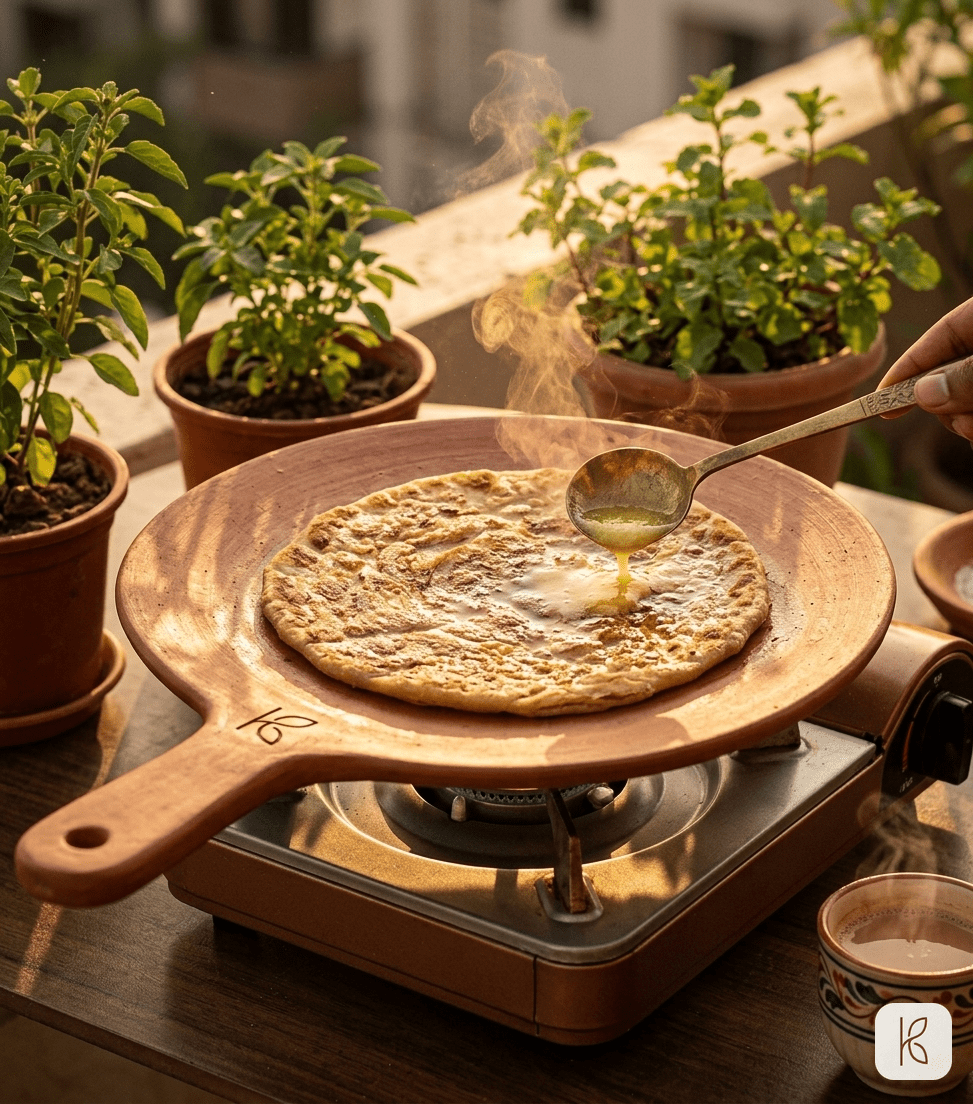
Yes. Any pancake-style preparation works on the 12-inch tawa — cheela, moong dal dosa, rava dosa, Korean pancakes, or standard wheat pancakes. The clay tawa is more versatile than a single-purpose dosa tawa.
Related products
-
Out of Stock

-
Out of Stock
-
Out of Stock


Reviews
There are no reviews yet.