
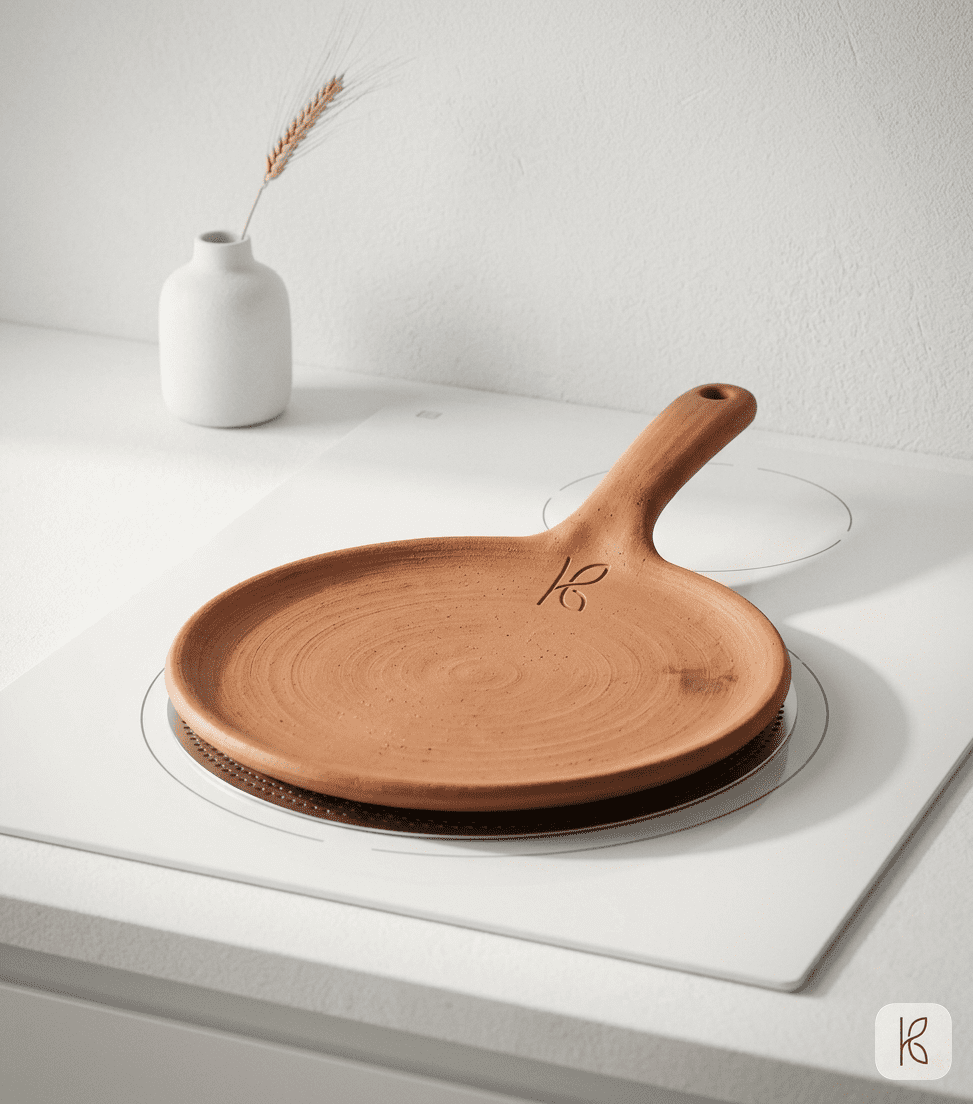
Bio-Active Tawa – 10 inch
Out of StockYour roti deserves better than PTFE. So does your family.
Terracotta Clay · 10 inch · SKU: KL-CK-010
₹899.00
| Material | Terracotta Clay |
|---|---|
| Size / Capacity | 10 inch |
| Induction Ready | YES |
| XRF Tested | YES |
| Sub-Category | Tawa |
Your roti deserves better than PTFE. So does your family.
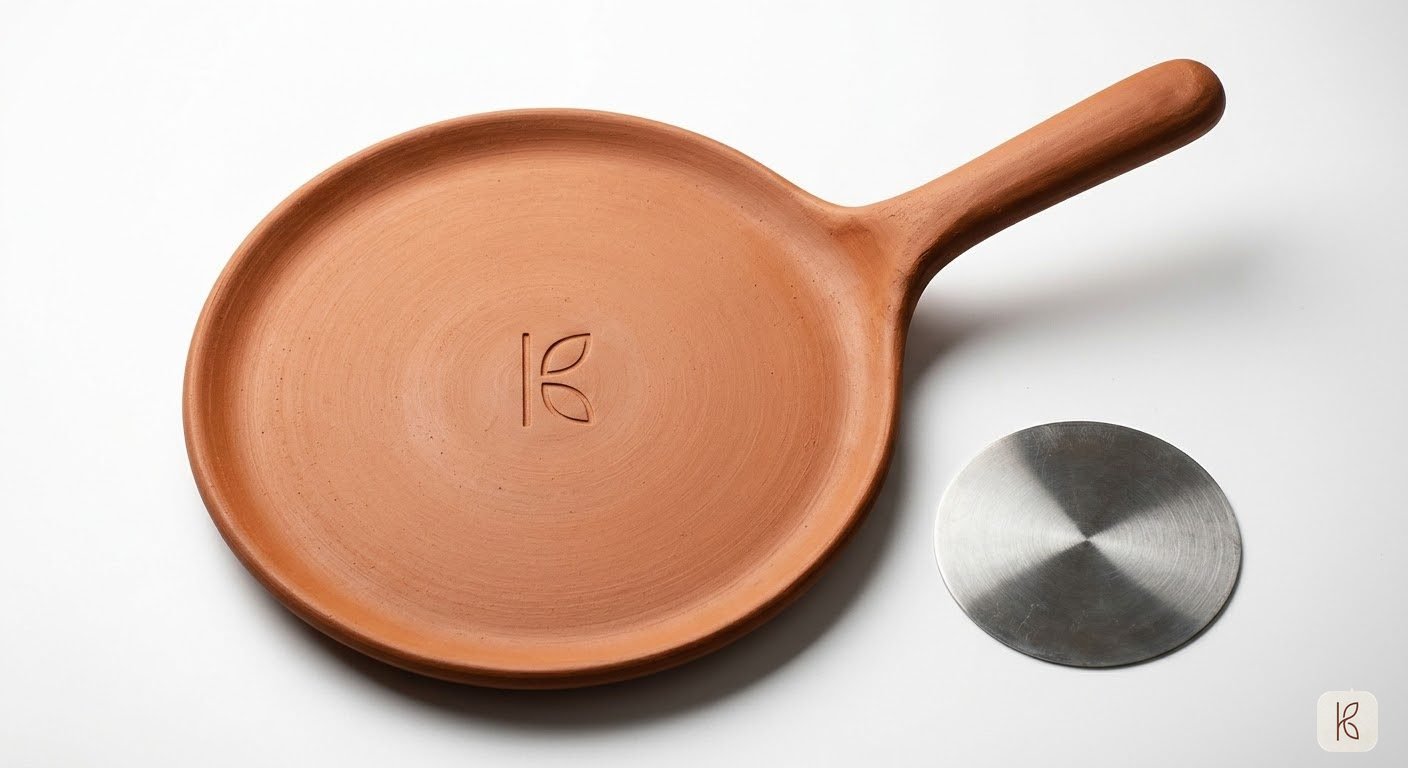
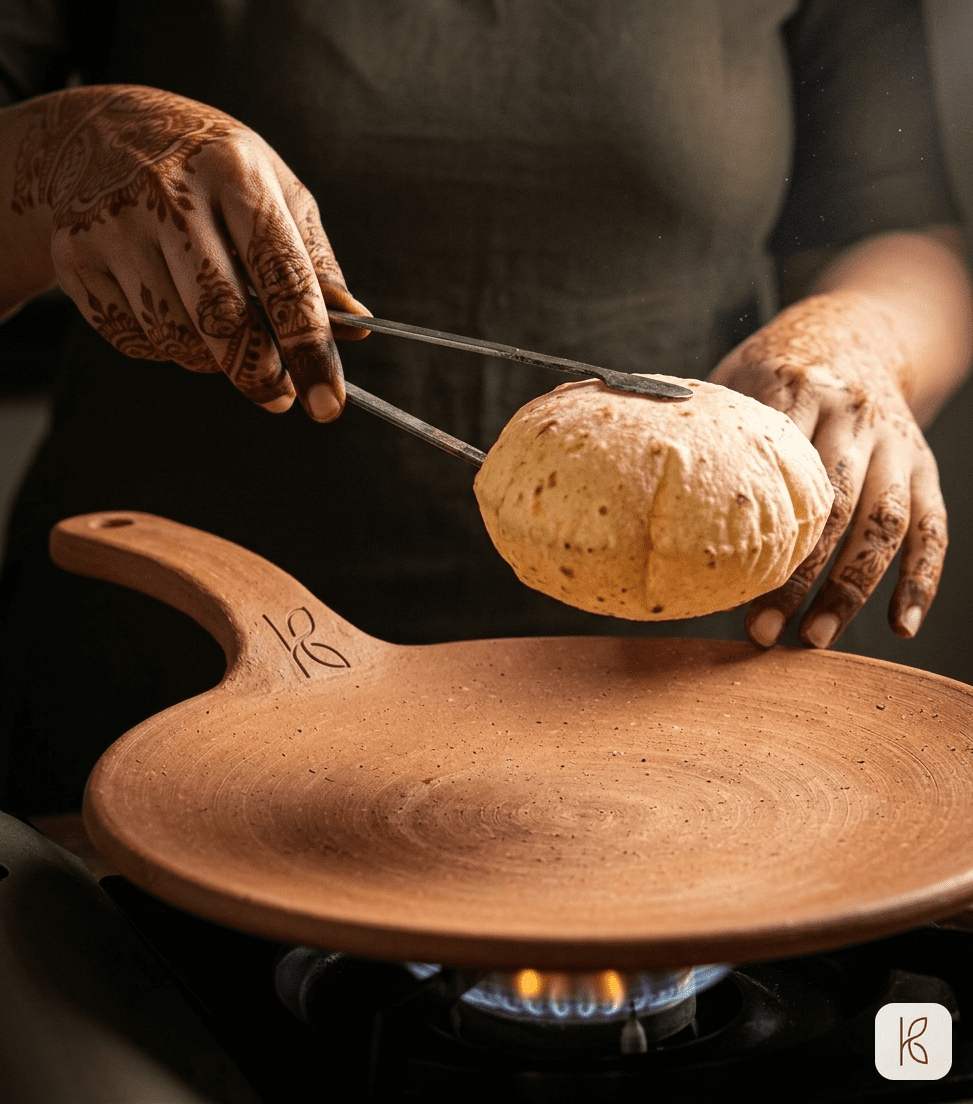
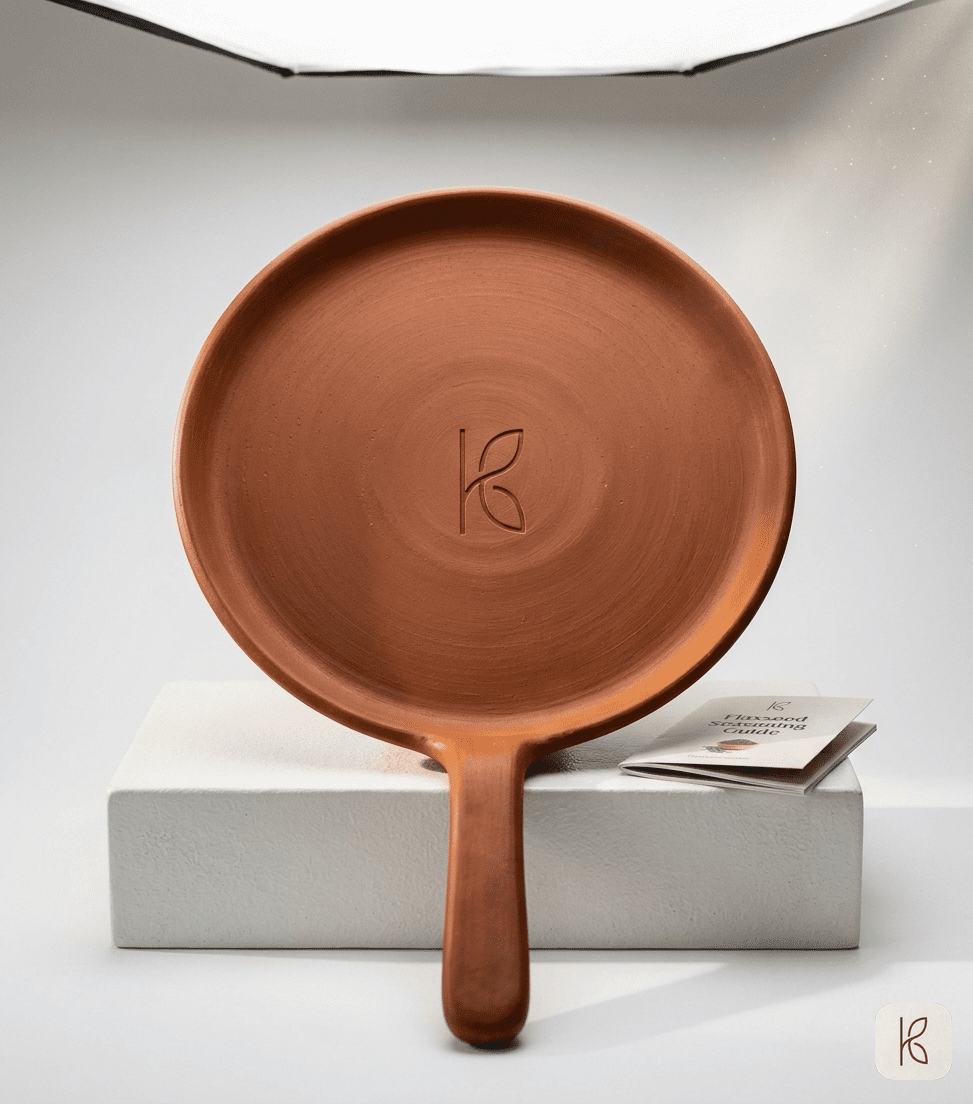
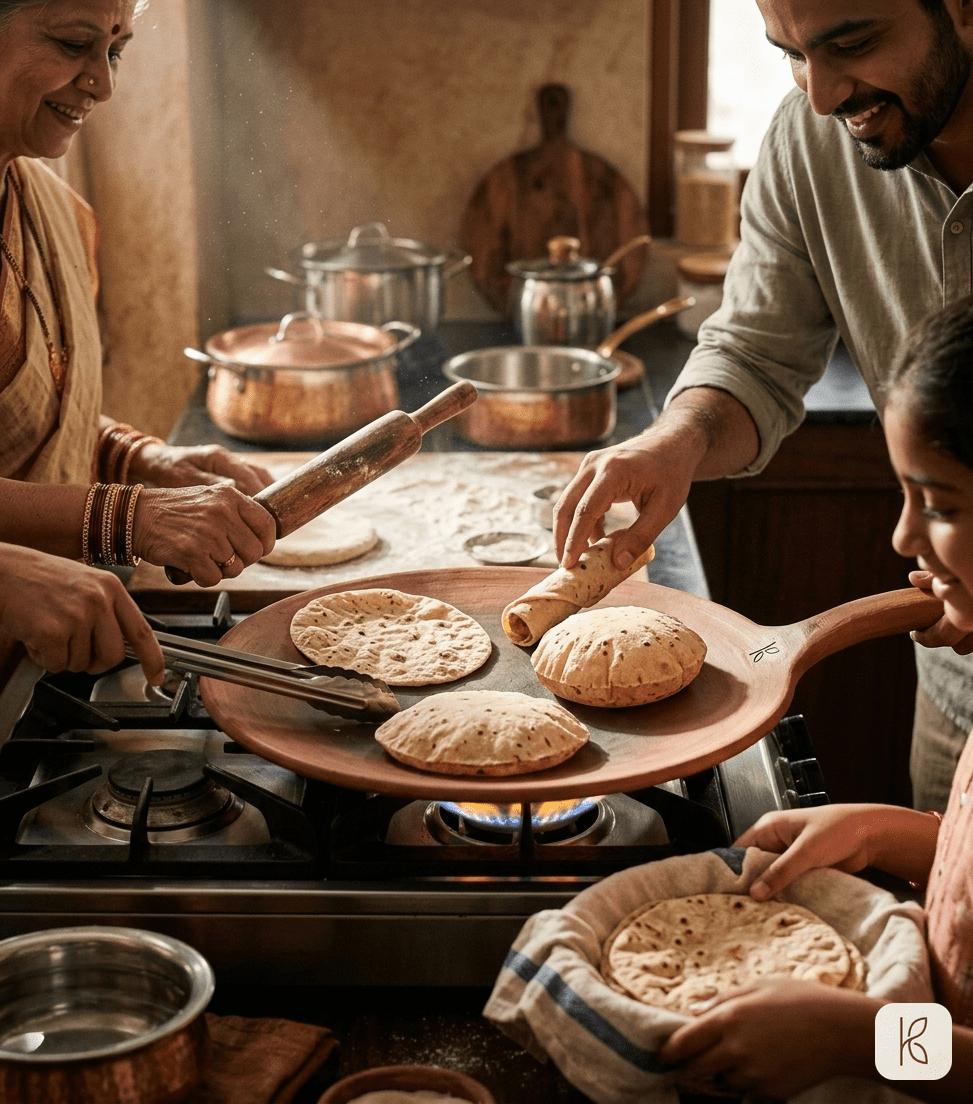
A completely flat, completely uncoated, XRF-certified terracotta tawa. 10 inches. Pre-seasoned. Flatness precision-checked to ±0.5mm — because a warped tawa is a ruined roti. Induction adapter disc included. The replacement for a cookware item you use twice a day, every day.
Key Features & Benefits
- ±0.5mm Flatness QC: Every tawa base is precision-checked with a straight-edge gauge before it leaves the workshop. Warped tawas — which create air pockets between tawa and roti — are rejected. Full surface contact, every roti.
- No Fumes at High Heat: PTFE decomposes at 260°C. A dry tawa on full gas can exceed 350°C before the roti goes on. Terracotta at 350°C releases nothing — it was formed at 850°C. The chemistry is stable.
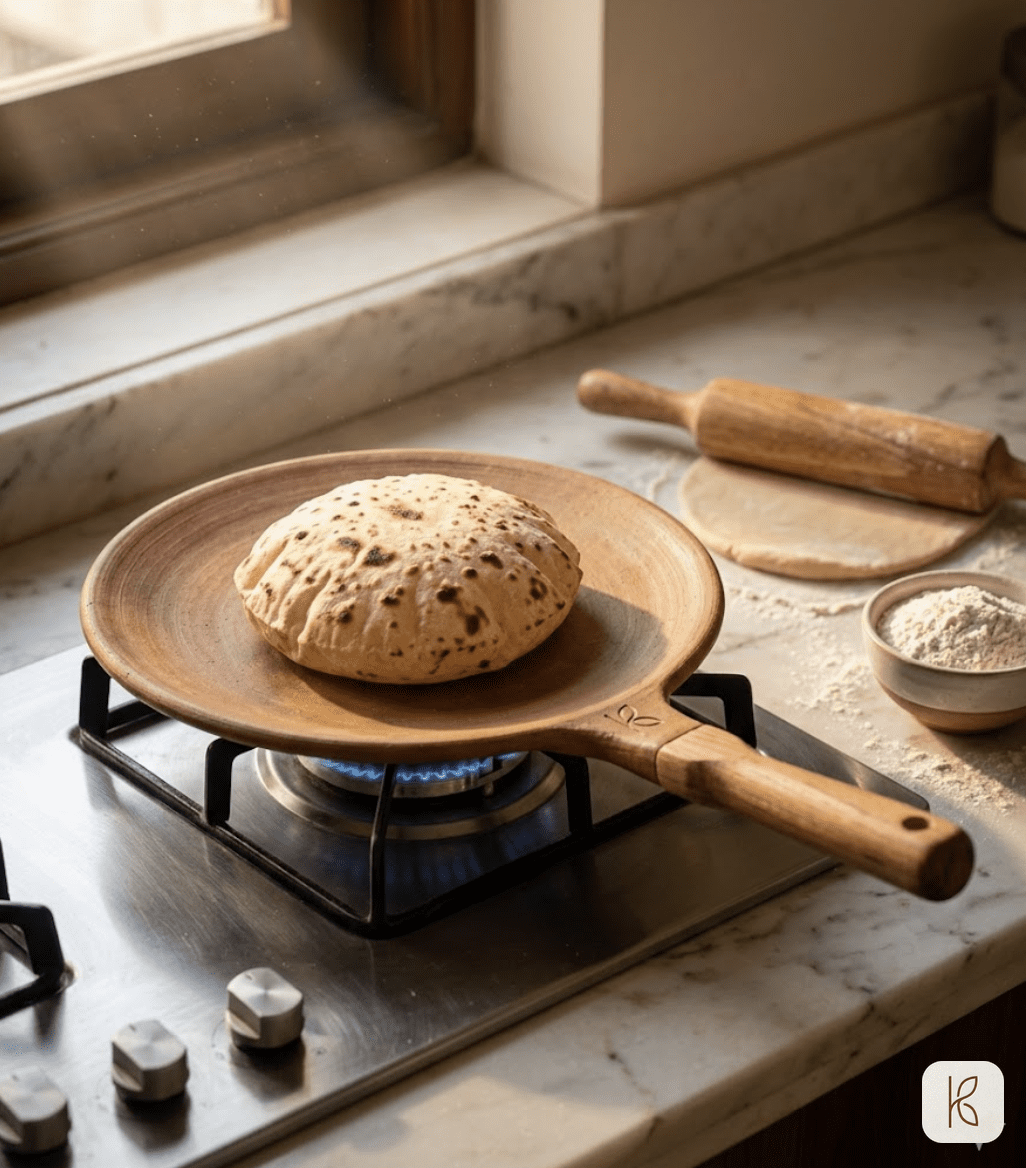
- Even Browning by Material Science: Clay’s lower thermal conductivity prevents the hot-spot browning that gives some rotis a burned side and a pale side. Heat distributes slowly and evenly. Maillard browning (colour and flavour) develops at the same rate across the full 10-inch surface.
- XRF + ICP-OES Certified: Batch QR on handle.
- Induction Ready: Steel adapter disc included. Tested on 5 Indian induction brands.
- Pre-Seasoned: Three flaxseed oil cycles before dispatch. First use: wash, cook.
About the Material
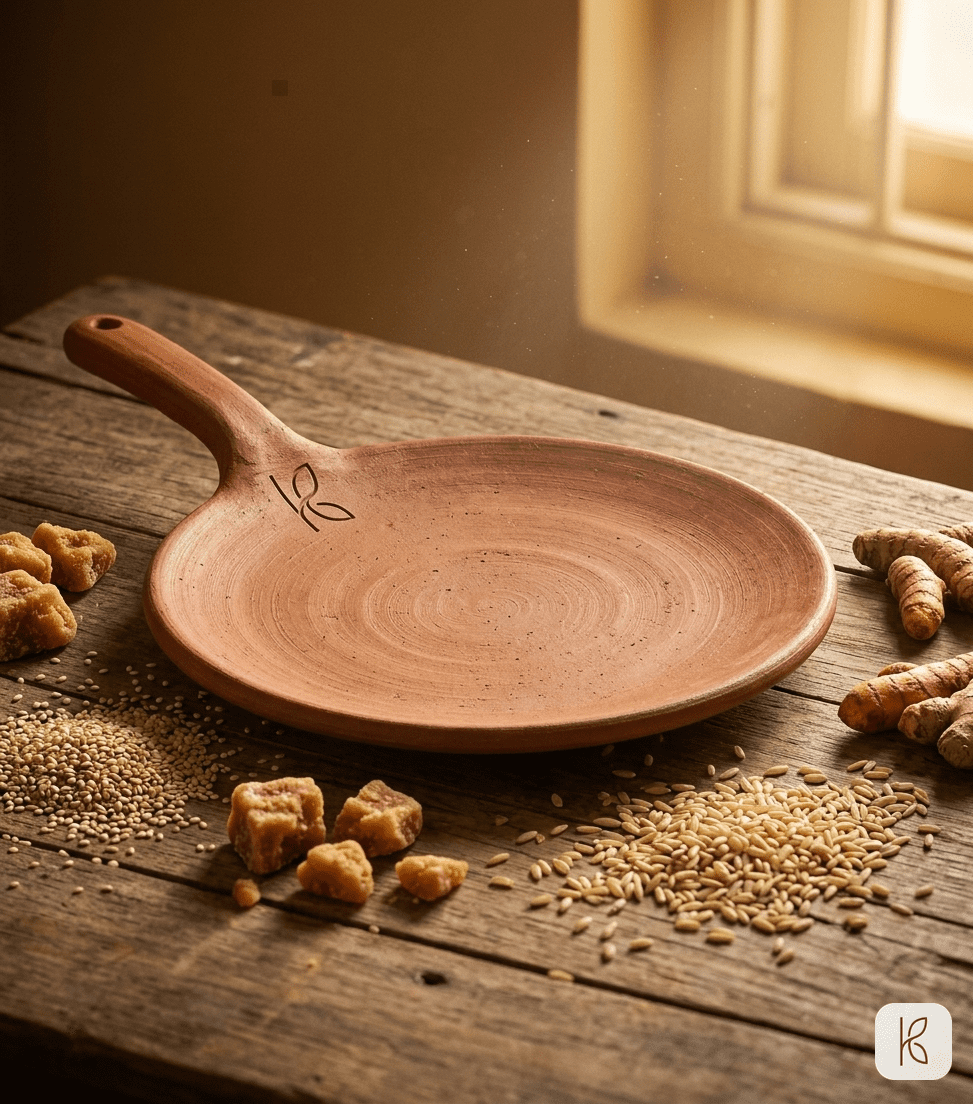
The tawa is the most intimate piece of cookware in an Indian home. It is on the flame twice a day, sometimes three times. Every roti passes through it. If your tawa is non-stick and coated, every roti your family has eaten has been made on a surface that degrades with heat and releases particles at the temperatures you routinely cook at. Our tawa uses the same chamotte-reinforced terracotta as the handi and kadhai. The ±0.5mm flatness specification requires careful kiln loading — the 10-inch disc must be supported uniformly during firing to prevent warping. We check every piece.
The Science
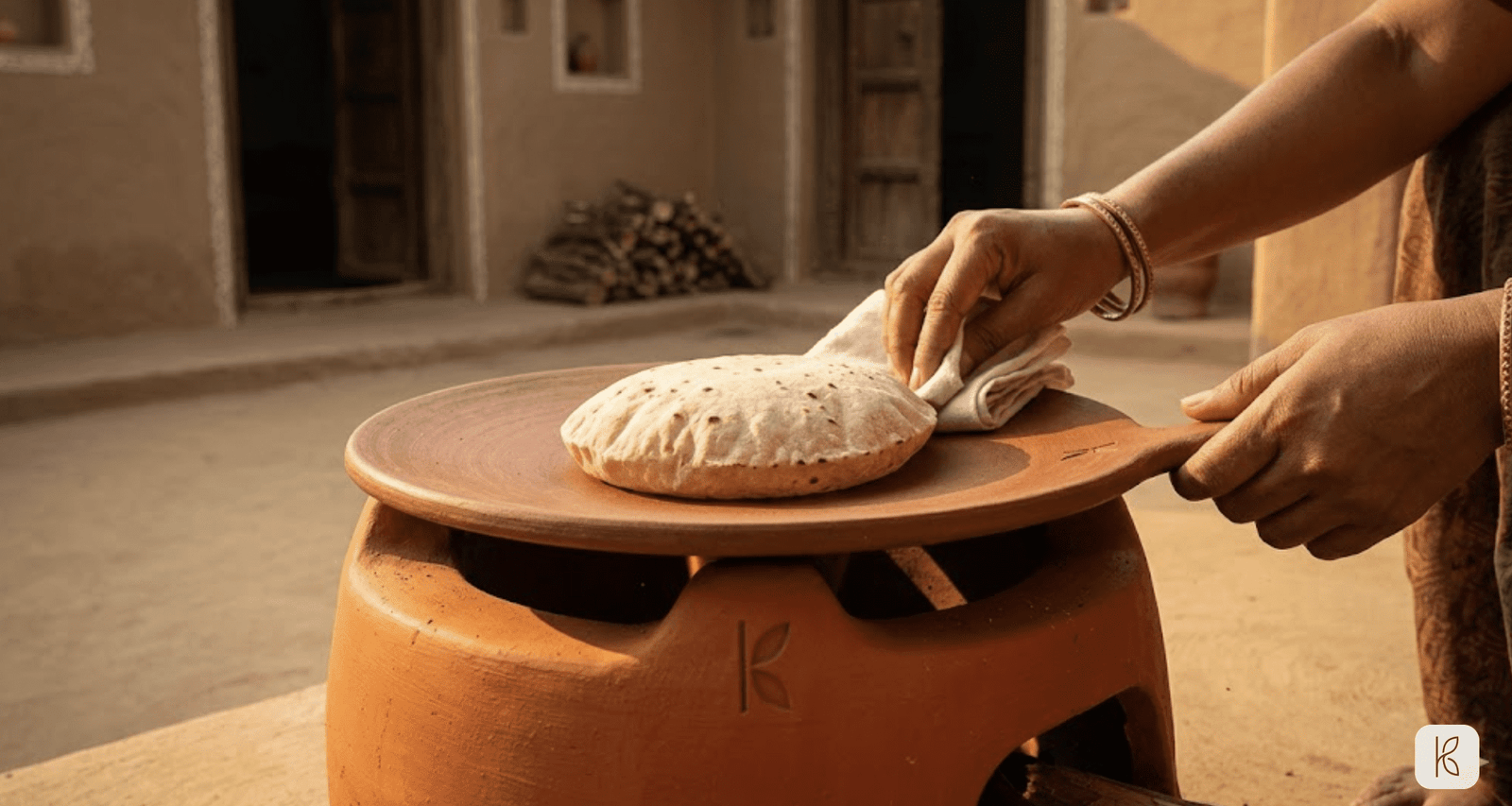
The clay tawa’s advantage over iron for roti-making comes down to temperature recovery. When you place a cold roti on a hot iron tawa, the iron’s temperature drops instantly and then recovers sharply — creating a 30-second window of uneven cooking as the iron races back to temperature. Clay’s lower thermal diffusivity means the temperature drops more gradually and recovers more gradually, giving the roti time to set evenly before the surface reheats. Fewer hot-spot burns. More consistent puffing.
Safety & Certification Standards
| XRF Analysis — Clay Source | Heavy metal screening on raw clay before production begins |
| ICP-OES — Finished Product | Parts-per-billion accuracy. Actual migration into food simulants tested |
| NABL-Accredited Laboratory | Internationally recognised test facility |
| FSSAI Food Contact Compliance | Meets India’s legal food safety standards for cookware |
| Per-Batch QR Report | Your batch. Your numbers. Published before dispatch. Scan and read it yourself. |
Lab Test Results
| Compound | Klayvi Result | FSSAI Safe Limit |
|---|---|---|
| Lead (Pb) | ≤ 2.1 ppm | 90 ppm |
| Cadmium (Cd) | ≤ 0.3 ppm | 0.5 ppm |
| Arsenic (As) | ≤ 0.4 ppm | 2.0 ppm |
| Mercury (Hg) | Not detected | 0.5 ppm |
| PTFE / PFOA / PFAS | Not present | Zero tolerance |
Caring for Your Klayvi
| 1 — First Use | Rinse with plain water. Cook something water-based (dal, rice water) for first 2–3 uses. |
| 2 — Daily Clean | Use Klayvi Wash Care (pH 6–8) or a sisal scrubber with warm water. Never standard dish soap — its pH 9–11 strips the seasoning. |
| 3 — After Wash | Dry completely on low flame for 2 minutes. Never store damp. |
| 4 — Monthly | Apply 4–5 drops of cold-pressed flaxseed oil. Heat on medium-low until it just smokes at the edges (~4 min). Cool. Wipe. |
| 5 — Never | Dishwasher · Microwave · Submerging overnight · Chemical detergents · Cold water on a hot pot |
What’s in the Box
- Bio-Active Tawa 10 inch (pre-seasoned)
- Steel induction adapter disc
- Flatness certification card
- Artisan provenance card
- Clay Care Passport
- Batch QR card
Frequently Asked Questions
Q: My roti is sticking to the clay tawa.
Normal in the first 3–4 uses. The flaxseed seasoning layer needs additional heat cycling to fully bond to the clay surface. Cook 3–4 plain chapatis (with a light oil wipe) to build the layer. By use 5, most rotis release with ease.
Q: Can I make dosa on the 10-inch tawa?
Yes, but it’s on the smaller side for a full dosa spread. Small, thick-style dosas work well. For standard thin dosas, the 12-inch or 14-inch gives a better spreading surface. My roti is browning unevenly — more at one edge. Most likely cause: the tawa is not level on the burner, or the burner ring is off-centre to the tawa. Use the heat diffuser disc between the burner and tawa to eliminate ring-concentrated heat.
Q: Can I put the tawa directly on the gas flame (off the ring)?
The traditional method of direct flame for puffing rotis works with clay tawa — but do it carefully. Lift the tawa by the handle, hold it 3–4 cm above the flame, rotate slightly. The clay retains enough heat from the tawa session to puff the roti quickly. Do not leave it on direct flame longer than 30 seconds.
Q: The tawa feels rough. Is that normal?
Yes. The cooking surface is natural terracotta at Ra ≤4µm roughness — you can feel it, especially in the first few uses. This roughness diminishes progressively as the seasoning layer builds up and fills the micro-pores. By use 10, most customers describe the surface as “smooth” relative to the early sessions.
Q: How do I store the tawa?
Vertically, in the cotton muslin pouch provided, in a dry cabinet. Do not stack other objects on top of the tawa — the flat profile makes it a convenient shelf surface, but weight on the clay disc can eventually affect the ±0.5mm flatness over time.
Related products
-
Out of Stock

-
Out of Stock
-
Out of Stock


Reviews
There are no reviews yet.