
Clay Thali – 12 inch
Out of StockThe most complete meal in India. On the most considered vessel.
Terracotta Clay · 12 inch · SKU: KL-SW-001
₹799.00
| Material | Terracotta Clay |
|---|---|
| Size / Capacity | 12 inch |
| Induction Ready | NO |
| XRF Tested | NO |
| Sub-Category | Thali |
The most complete meal in India. On the most considered vessel.
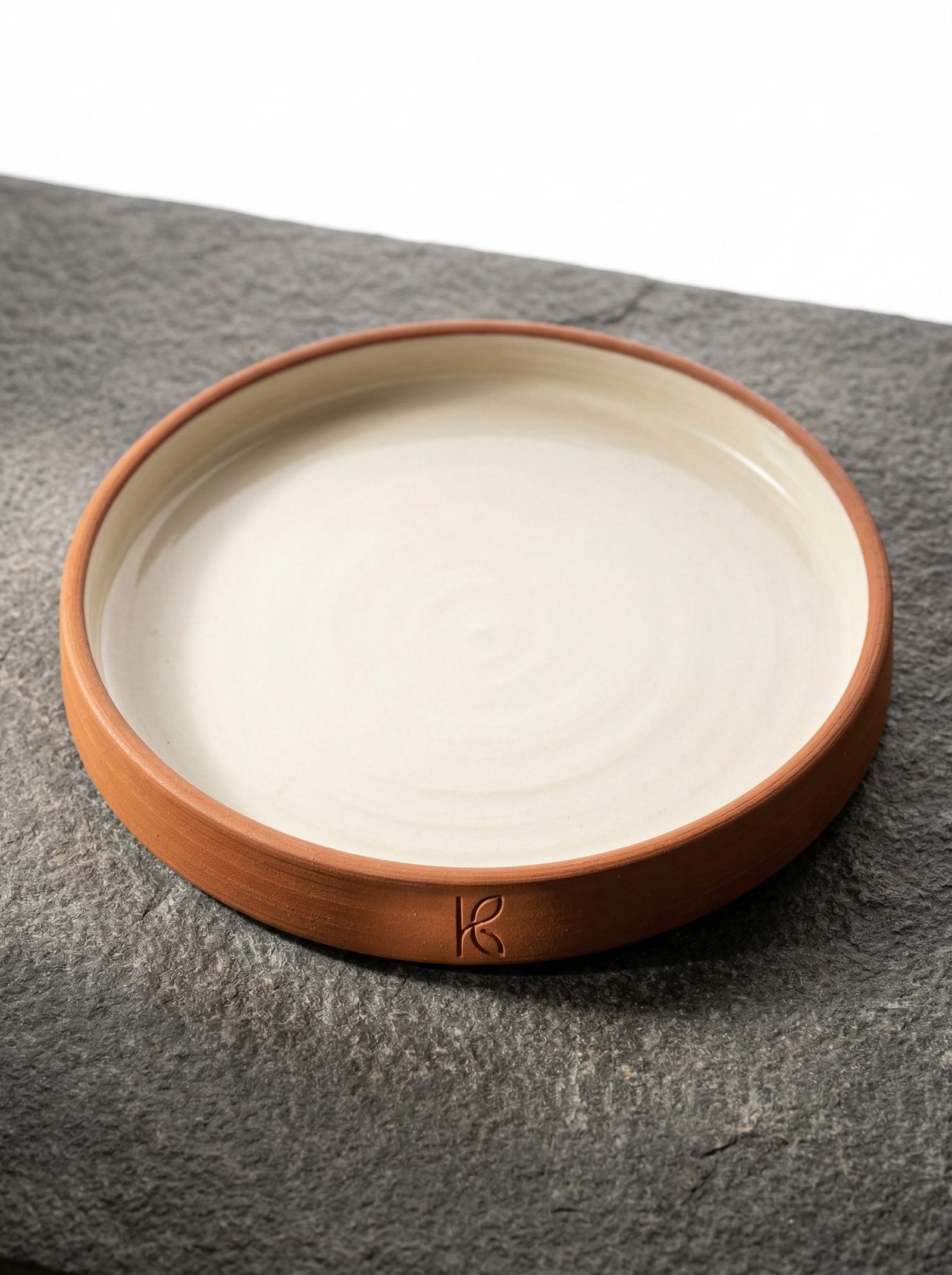
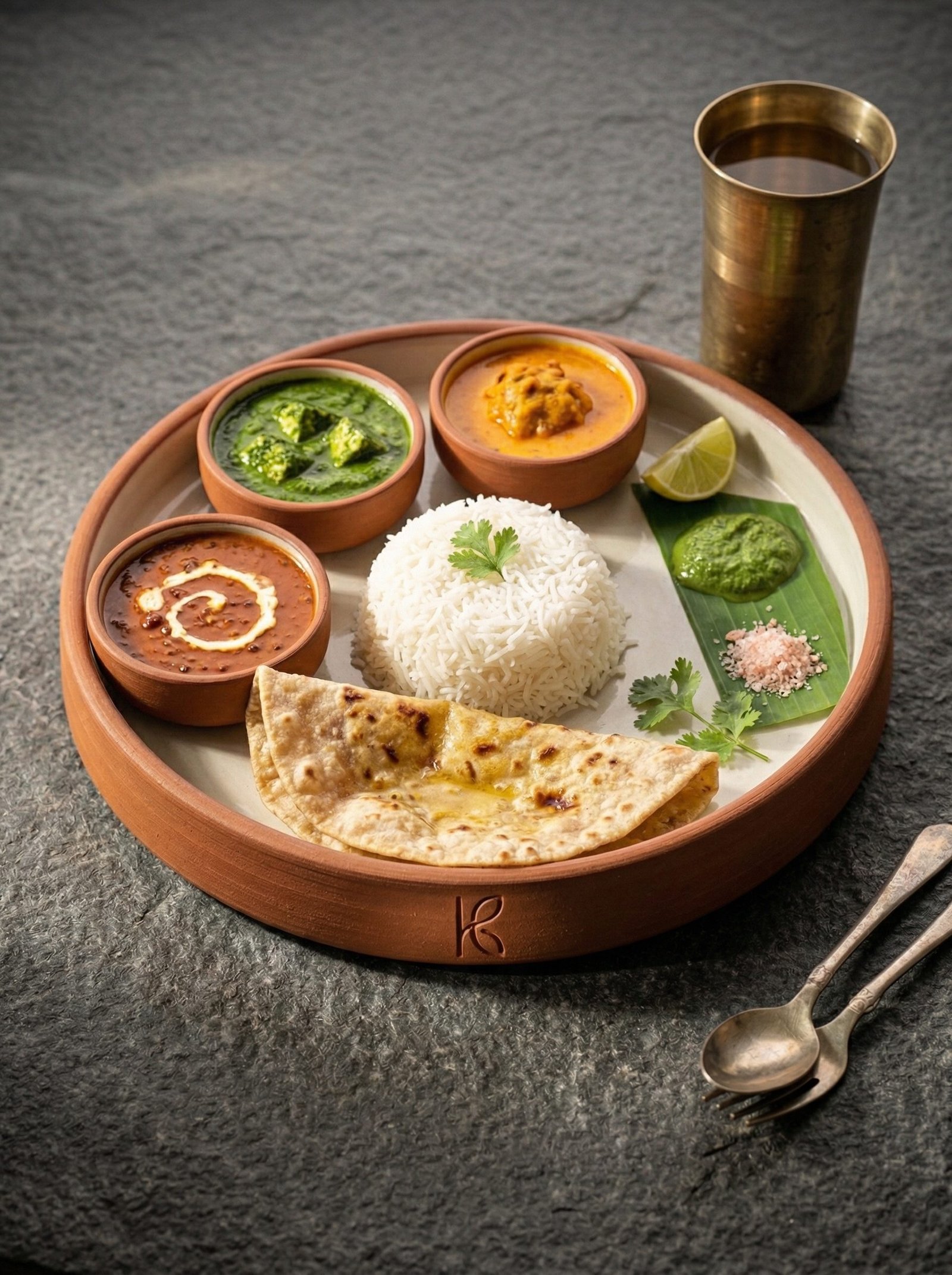
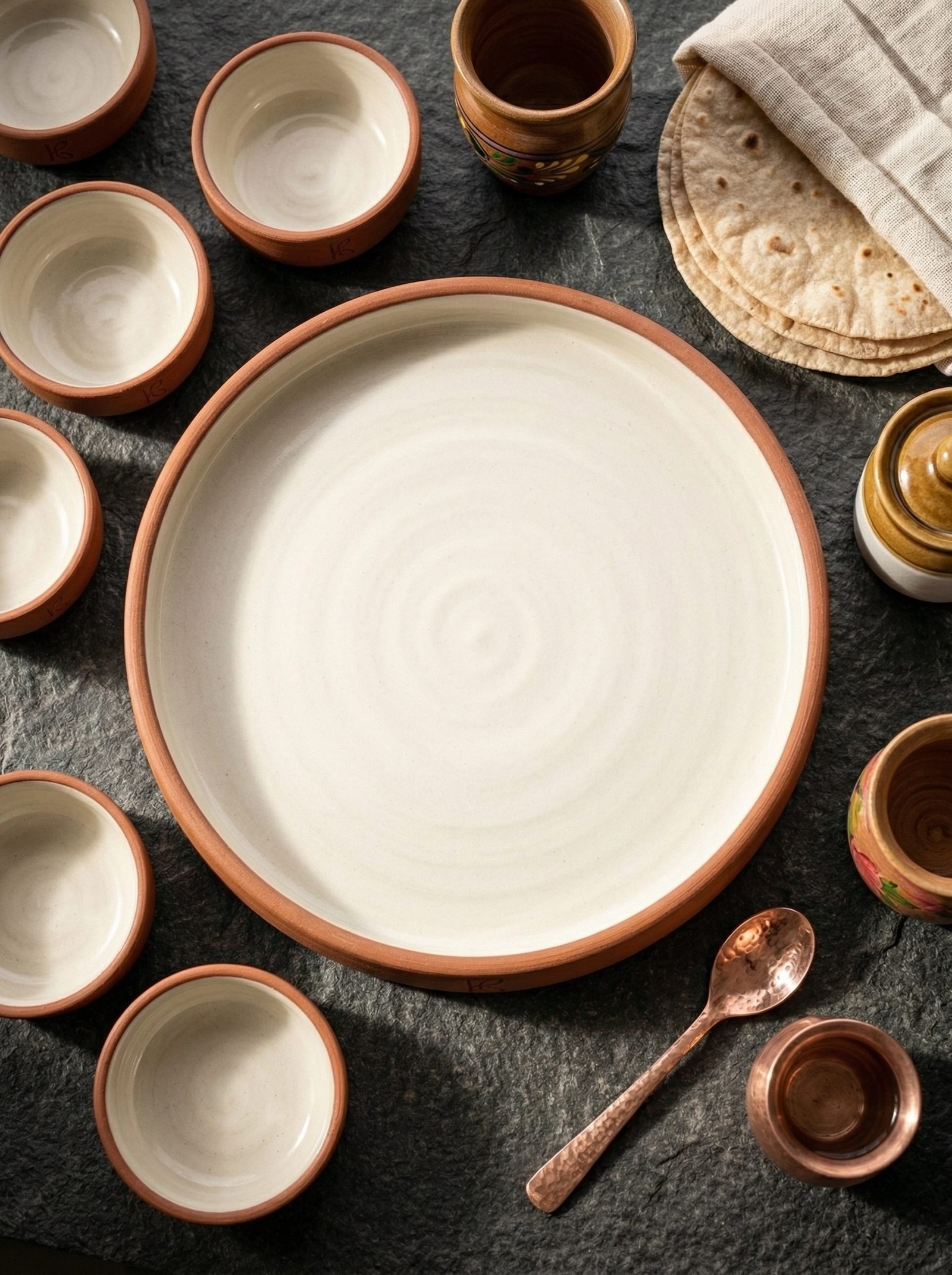
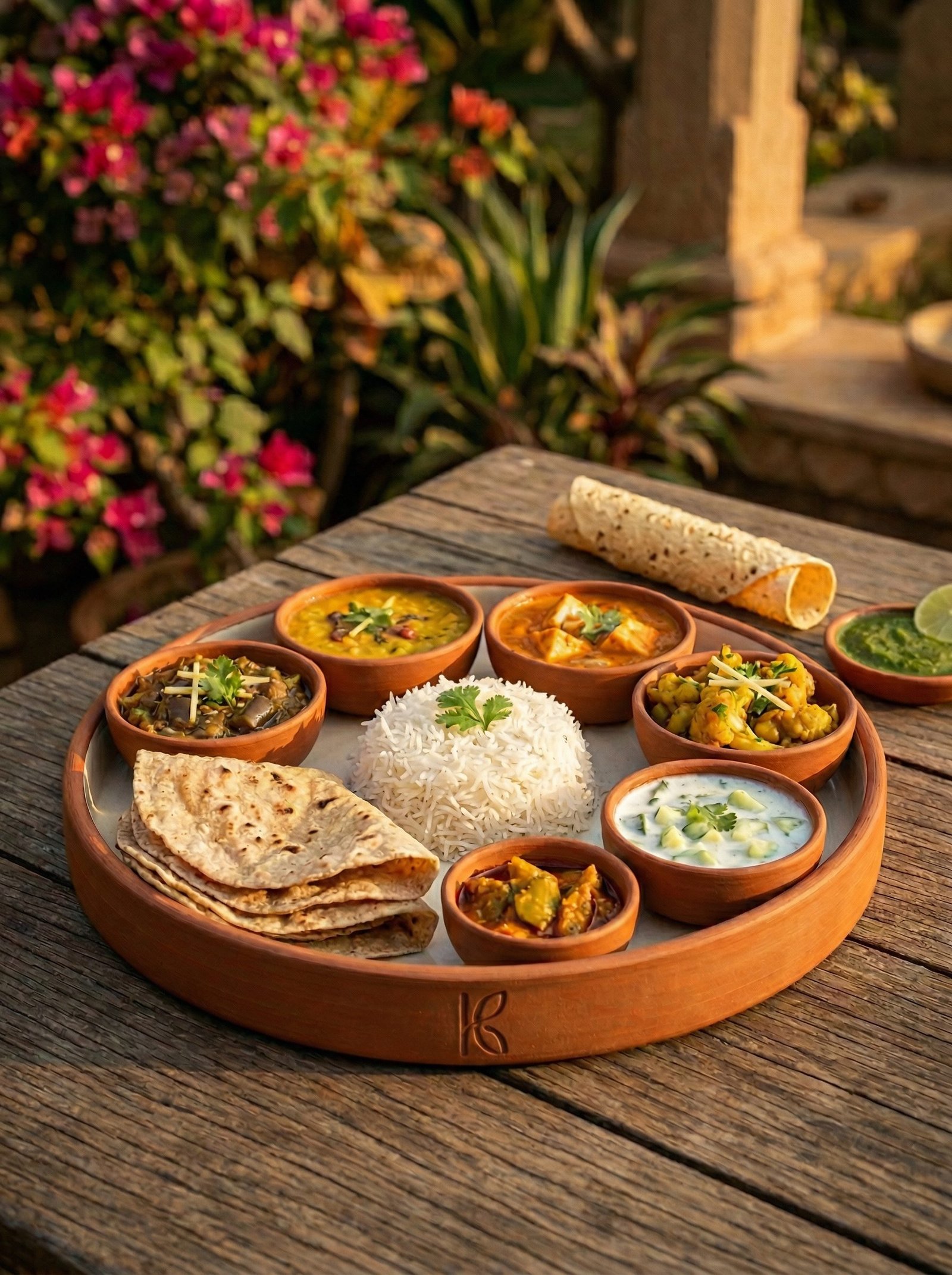
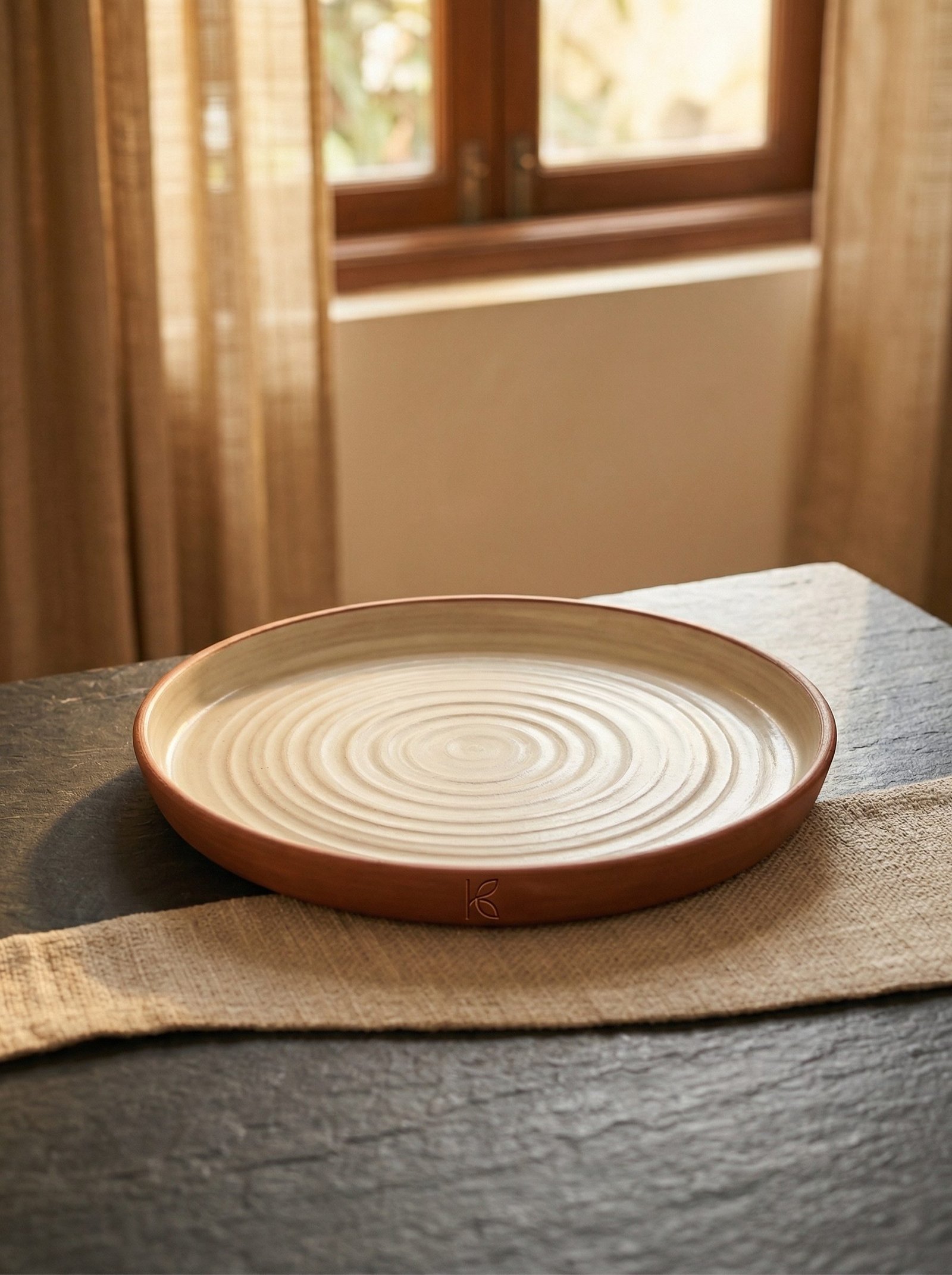
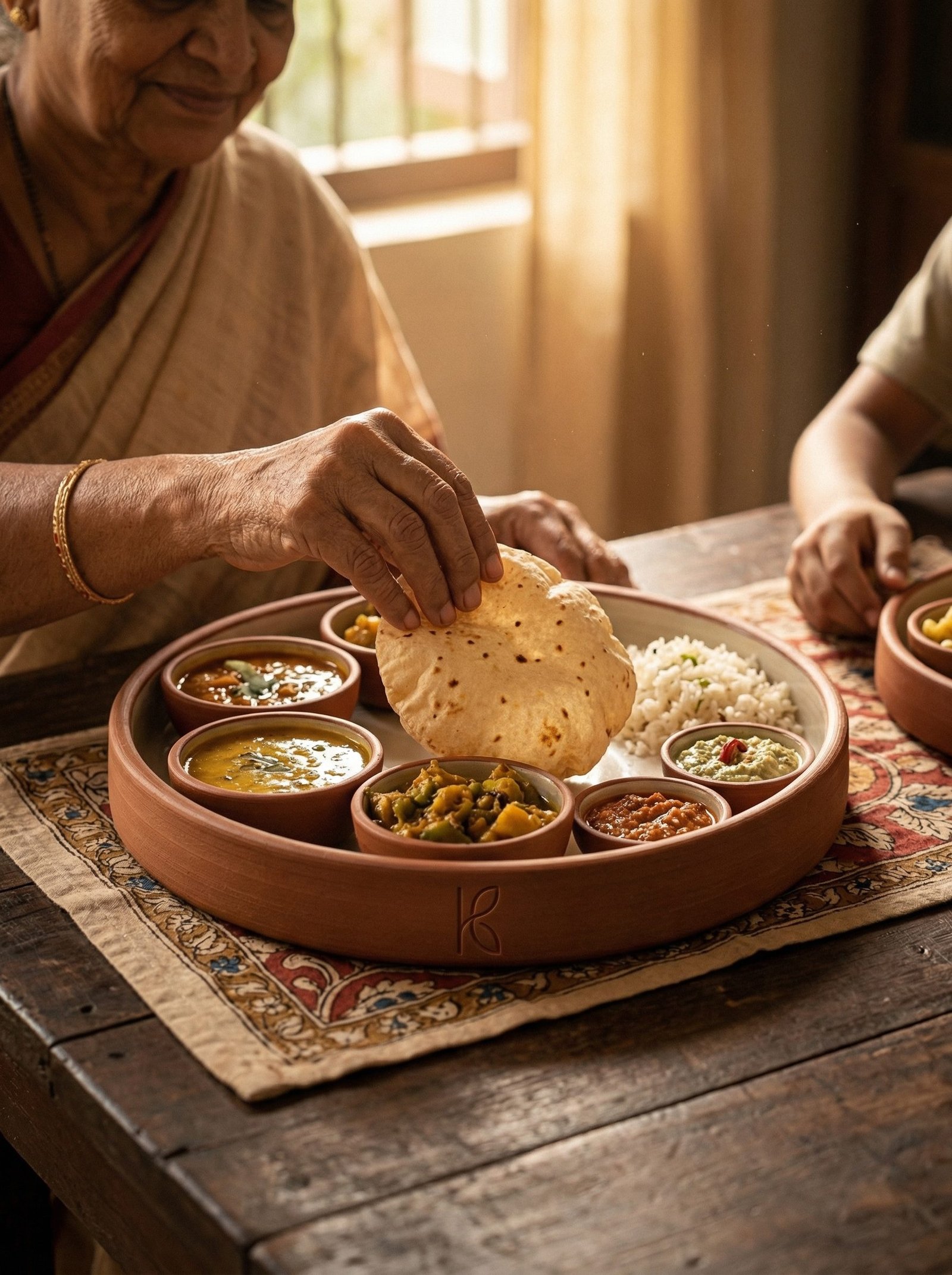
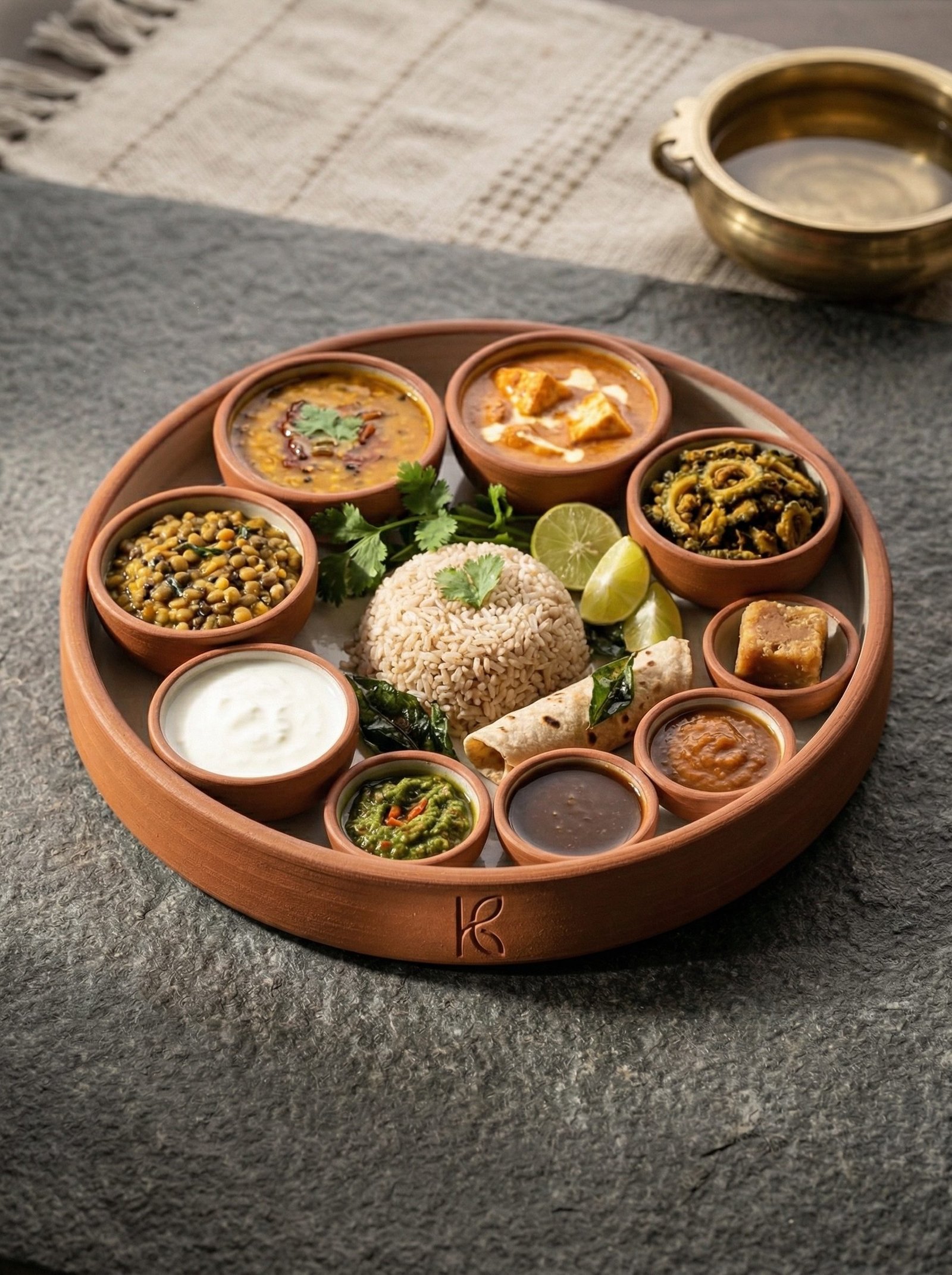
A 12-inch flat round thali with a raised rim border, smooth Bone Kaolin cream interior eating surface, and natural terracotta exterior. XRF-certified. The Bone Kaolin interior is non-reactive with all Indian food chemistry — tamarind at pH 3, dal makhani at pH 6.5, pickle at pH 2.5, ghee at neutral. This is the plate for the full Indian meal: dal, sabzi, rice, roti, pickle, papad, arranged in the tradition of the six-taste Ayurvedic thali.
Key Features & Benefits
- Bone Kaolin Interior — Food Looks Better: The cream-white interior makes the colours of Indian food more vivid than they appear against steel, melamine, or plain terracotta. Deep red dal. Bright green methi. Golden rice. Each colour is more itself against pale Bone Kaolin.
- Heat Retention Through the Meal: A clay thali keeps food warm for 15–20 minutes longer than a steel thali. The last roti arrives at a table where the dal is still hot, not room temperature.
- Raised Rim — The Thali System: The raised border keeps the multiple dishes in their zones on the thali. The 12-inch diameter provides enough surface area for the traditional six-dish Ayurvedic meal arrangement without crowding.
- XRF Certified: Batch QR on base.
- Complete Meal Surface: 12 inches: sufficient for rice at centre, dal and two sabzis in the three o’clock through nine o’clock zone, roti layered, pickle and papad at six o’clock. The complete Indian plate.
- Non-Reactive Across All pH: The Bone Kaolin glaze creates a sealed, completely inert surface. No interaction between the clay and any food chemistry.
About the Material
The thali is not just a plate. It is a system. The round form allows the traditional Ayurvedic meal arrangement — sweet at upper right, salty at centre, bitter and astringent at periphery — so each bite engages a different flavour. The raised rim keeps the accompaniments from running into each other. The 12-inch diameter is exactly right for one person’s complete meal without crowding. The Bone Kaolin glaze is applied in two stages: bisque fire of the clay body at 850°C, then glaze application and a second firing at 750°C to set the glaze without over-firing the clay body. This two-stage process is why the interior is perfectly smooth while the exterior retains the natural terracotta character of a single firing.
The Science
The vessel affects the meal before the first bite. Sensory science has established that the weight, texture, and temperature of a dining vessel influence flavour perception measurably. A heavy clay thali (approximately 450–500g) held in one hand during the traditional Indian floor-seated dining position communicates weight and substance that affects the perceived quality of the food. The warm terracotta exterior and the pale interior create a visual environment that makes Indian food look intentionally presented rather than assembled.
Safety & Certification Standards
| XRF Analysis — Clay Source | Heavy metal screening on raw clay before production begins |
| ICP-OES — Finished Product | Parts-per-billion accuracy. Actual migration into food simulants tested |
| NABL-Accredited Laboratory | Internationally recognised test facility |
| FSSAI Food Contact Compliance | Meets India’s legal food safety standards |
| Per-Batch QR Report | Your batch. Your numbers. Published before dispatch. Scan and read it yourself. |
Lab Test Results
| Compound | Klayvi Result | FSSAI Safe Limit |
|---|---|---|
| Lead (Pb) | ≤ 2.1 ppm | 90 ppm |
| Cadmium (Cd) | ≤ 0.3 ppm | 0.5 ppm |
| Arsenic (As) | ≤ 0.4 ppm | 2.0 ppm |
| Mercury (Hg) | Not detected | 0.5 ppm |
| PTFE / PFOA / PFAS | Not present | Zero tolerance |
Caring for Your Klayvi
| 1 — First Use | Rinse with plain water. Cook something water-based for first 2–3 uses. |
| 2 — Daily Clean | Klayvi Wash Care (pH 6–8) or sisal scrubber + warm water. Never standard dish soap — its pH 9–11 destroys the seasoning layer. |
| 3 — After Wash | Dry completely on low flame for 2 minutes. Never store damp. |
| 4 — Monthly | Apply 4–5 drops cold-pressed flaxseed oil. Heat on medium-low until just smoking (~4 min). Cool and wipe. |
| 5 — Never | Dishwasher · Microwave · Overnight soaking · Chemical detergents · Cold water on a hot vessel |
What’s in the Box
- Clay Thali 12 inch (Bone Kaolin interior)
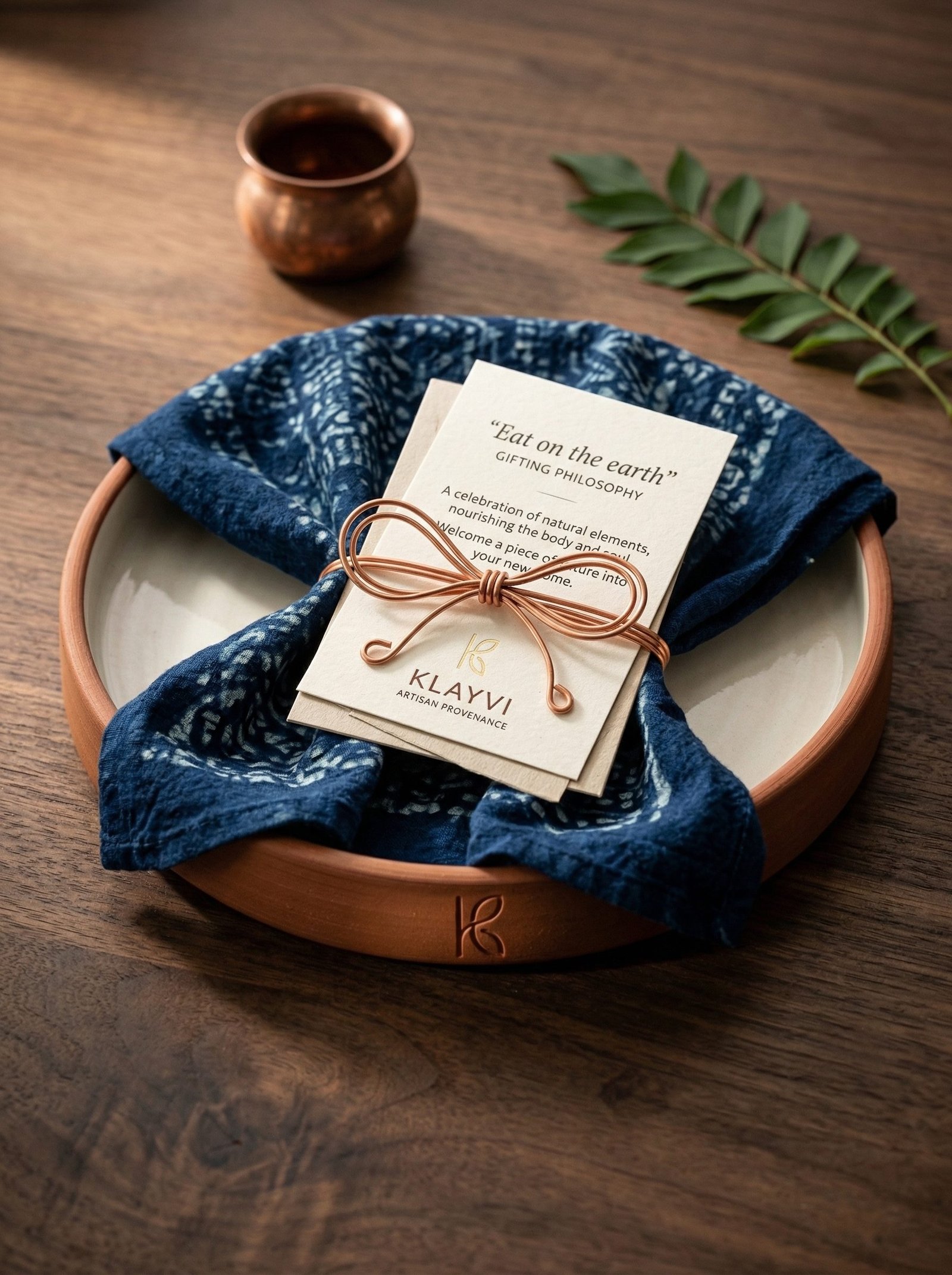
- Artisan provenance card
- Cotton muslin storage wrap
- Clay Care Passport
- Batch QR card
Frequently Asked Questions
Q: Can I use the clay thali as a regular plate for every meal?
Yes — the Bone Kaolin interior is designed for daily use. It cleans easily, retains heat well, and improves the meal experience consistently. The more it is used, the more the exterior develops its characteristic patina.
Q: Can I eat off the Bone Kaolin interior without worry about the glaze?
Yes. The Bone Kaolin glaze is a food-safe mineral glaze, not a composite chemical mixture. It is completely inert with all food. The XRF test covers the glaze surface as well as the clay body.
Q: Can I put the thali in a microwave?
No. Clay is not microwave-safe. For reheating food already on the thali, use a low gas flame or oven (up to 200°C) briefly. The clay thali in a conventional oven for 3–4 minutes at 150°C is an effective reheating method.
Q: The Bone Kaolin interior has a slight yellow tone in some areas. Is that normal?
Yes — natural kiln colour variation. Bone Kaolin fires to cream-to-ivory depending on the precise kiln temperature at that point in the load. Some yellowish variation is the kiln’s signature. It is not a defect and does not affect food safety.
Q: Is the thali heavy to hold for floor dining?
The clay thali weighs approximately 450–500g. Traditional thali holding involves a flat-palm support under the thali rather than gripping the rim. At 500g, this is comfortable for the duration of a meal.
Q: What is the best way to store the thali?
Vertically, in the cotton muslin storage wrap, in a dry cabinet. If stacking with other thalis, place a sheet of cotton muslin or the storage wrap between each plate to prevent rim-to-surface chipping.
Related products
-
Out of Stock

-
Out of Stock
-
Out of Stock

Reviews
There are no reviews yet.