
Clay Ghee Pot – 250 ml
Out of StockGhee stored in clay. The Ayurvedic prescription. Now lab-certified.
Terracotta Clay · 250 ml · SKU: KL-SP-003
₹349.00
| Material | Terracotta Clay |
|---|---|
| Size / Capacity | 250 ml |
| Induction Ready | NO |
| XRF Tested | NO |
| Sub-Category | Ghee Pot |
Ghee stored in clay. The Ayurvedic prescription. Now lab-certified.
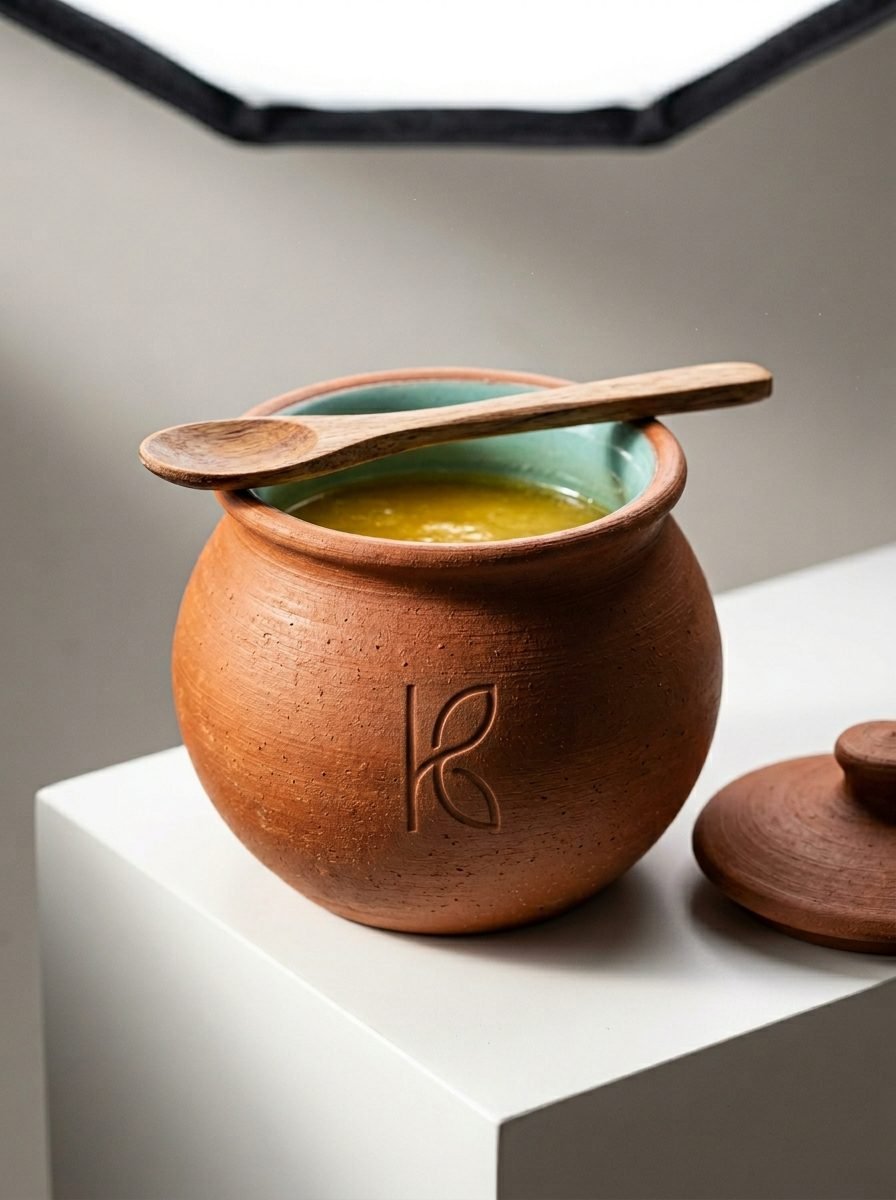
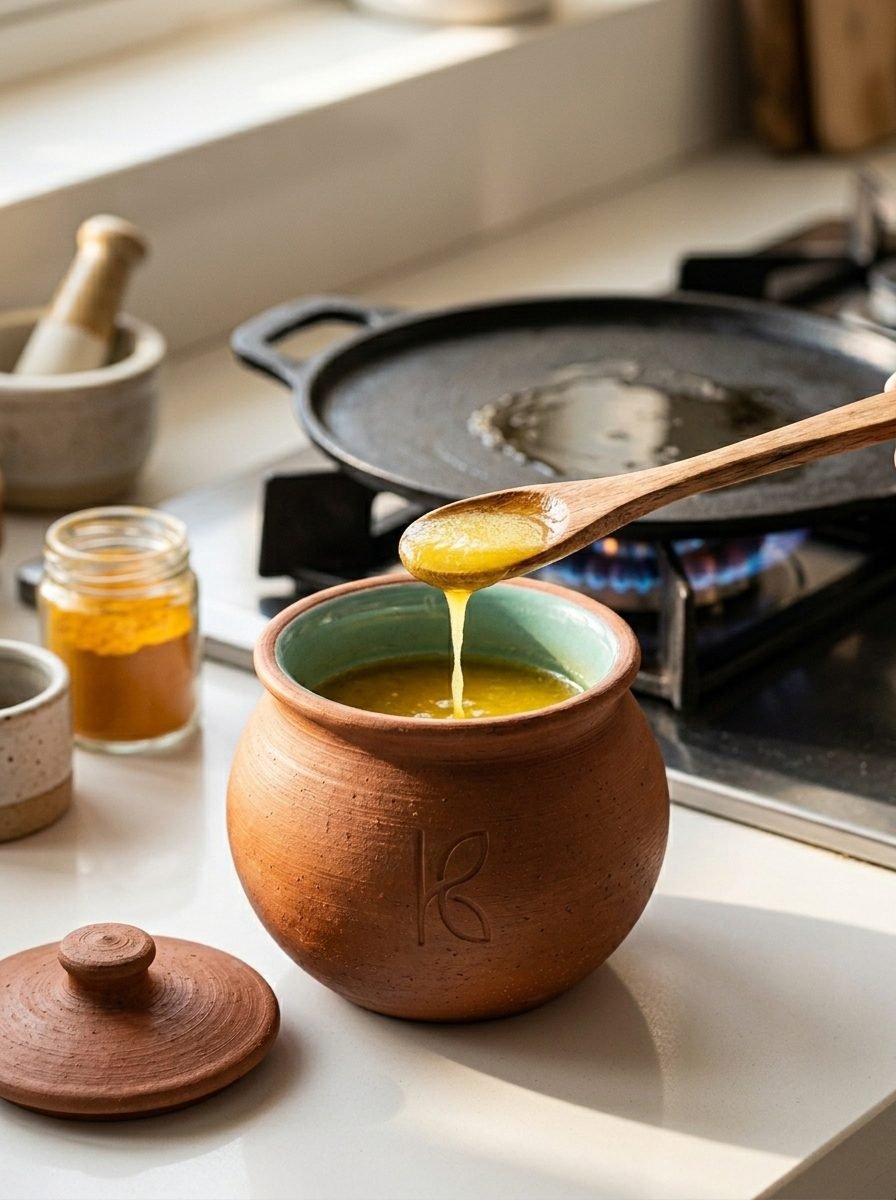
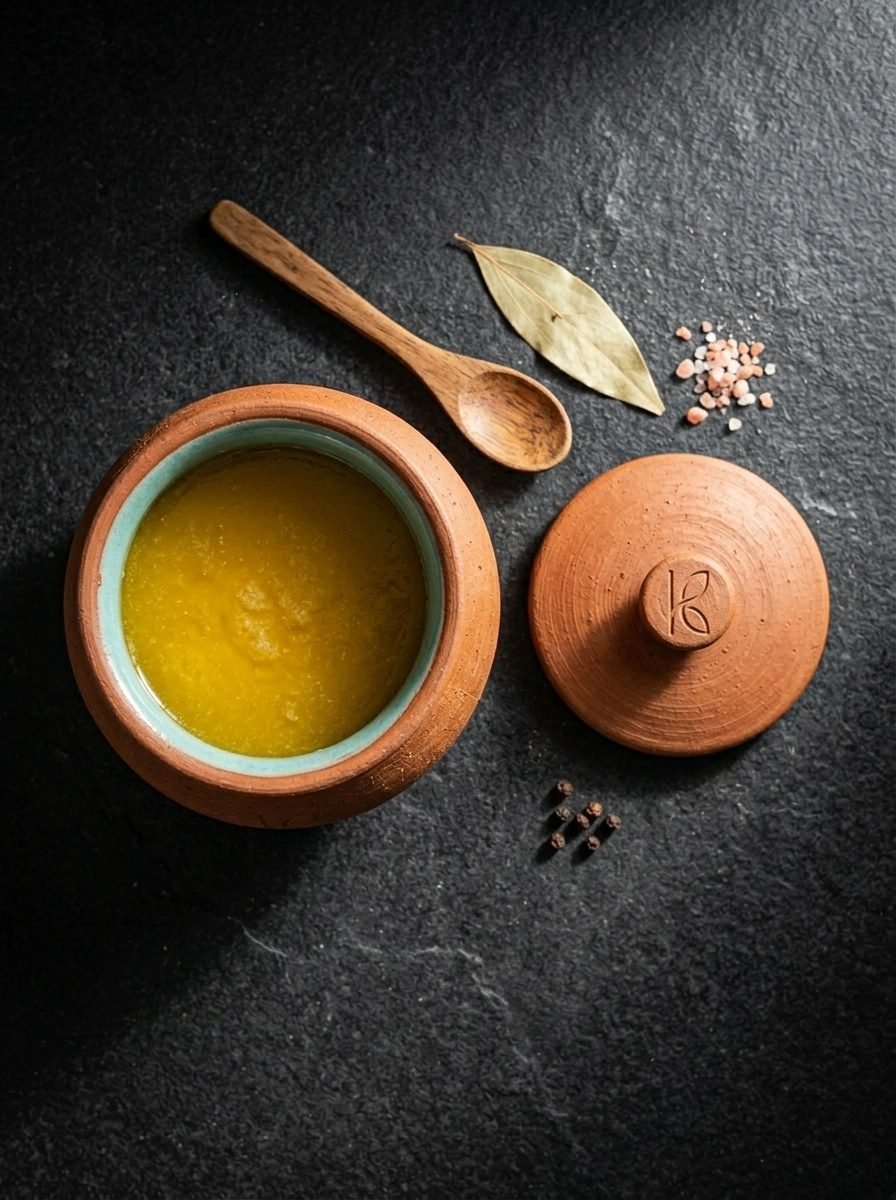
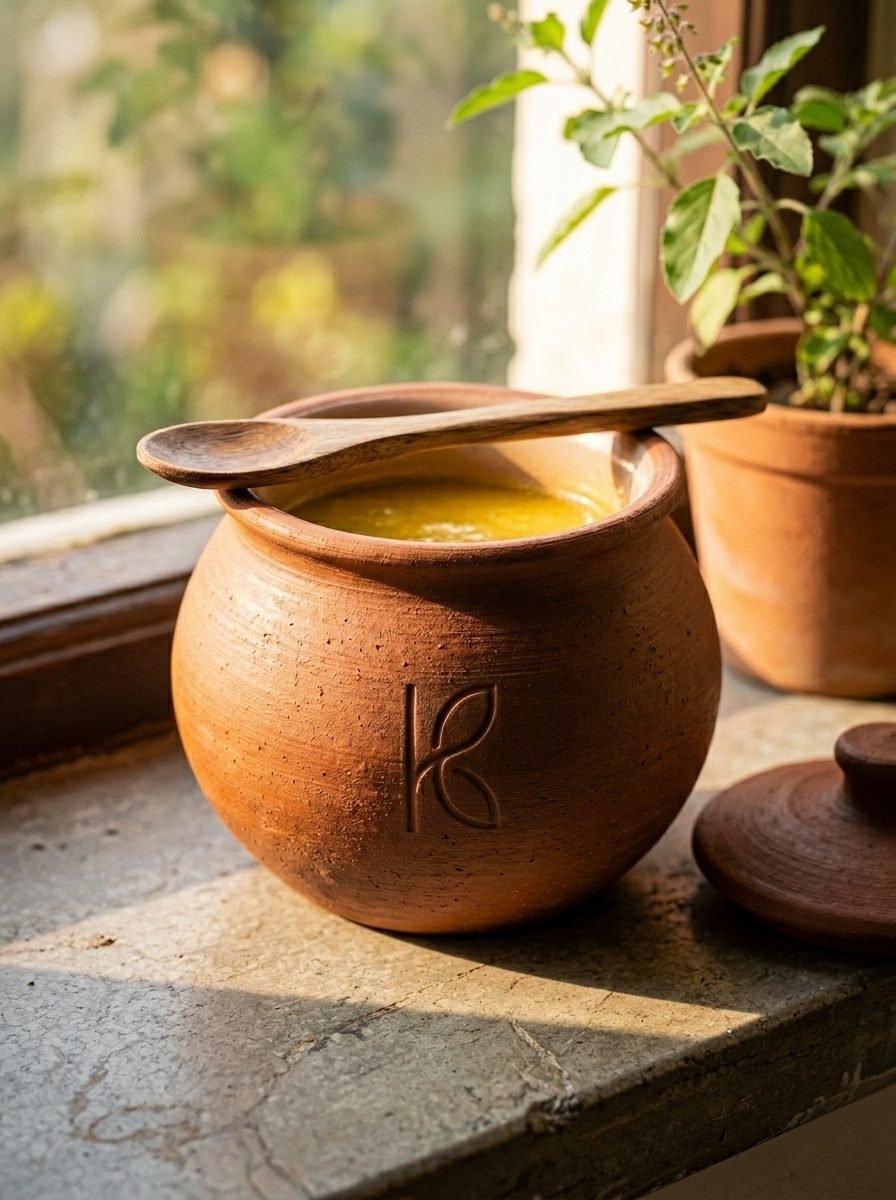
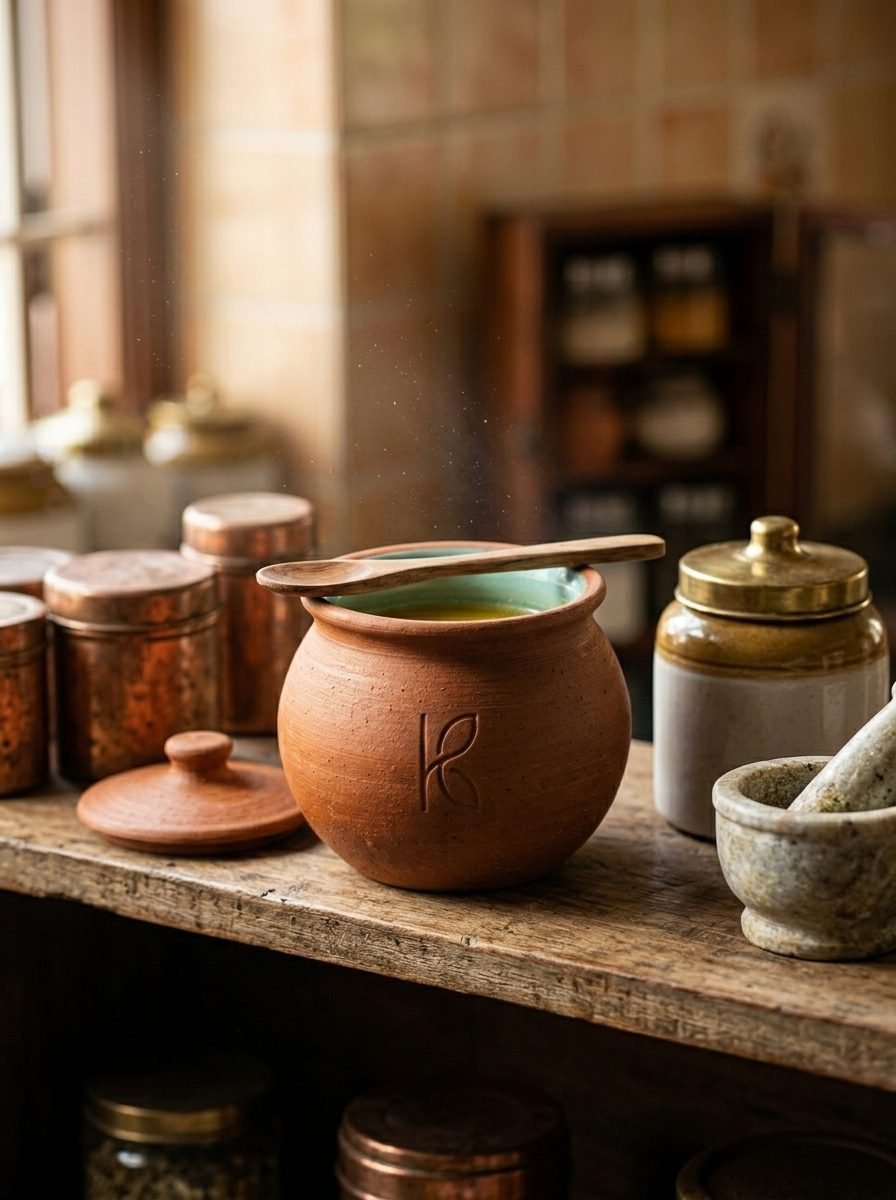
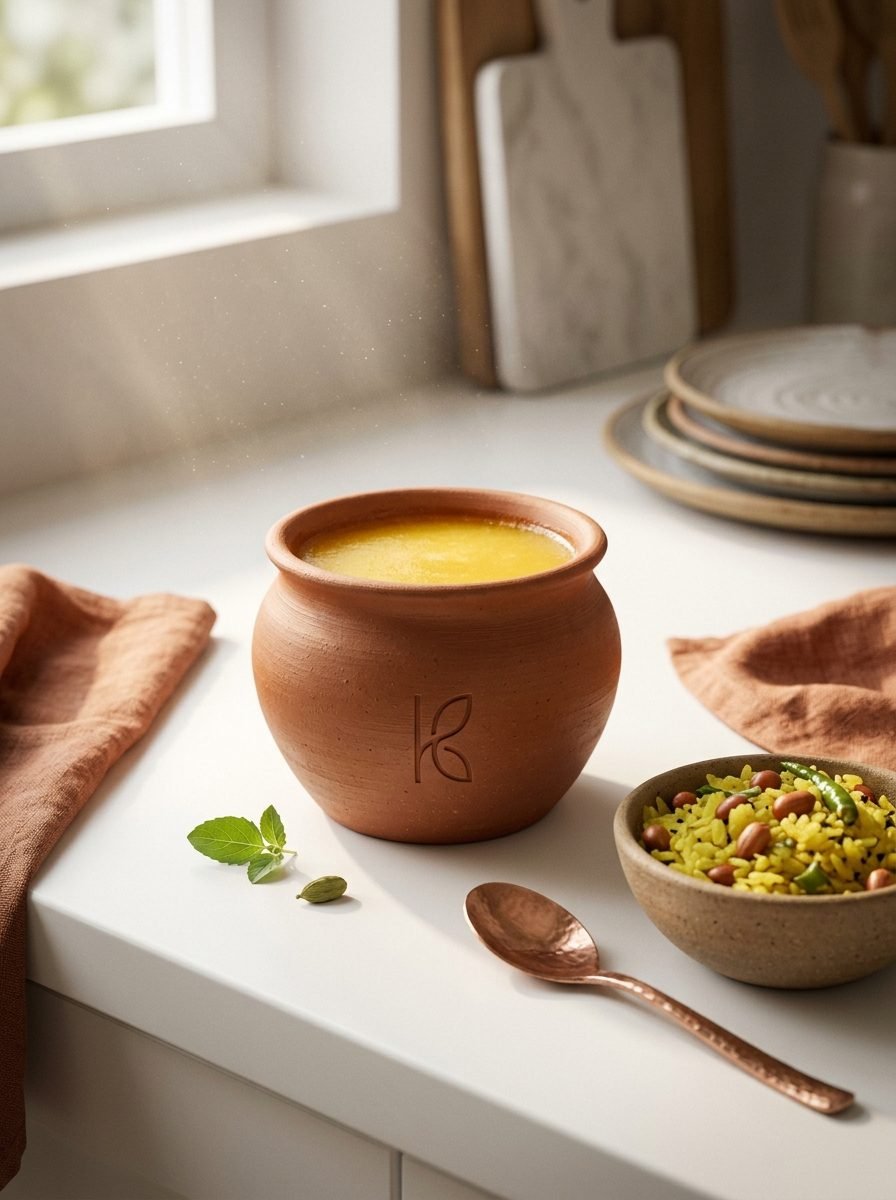
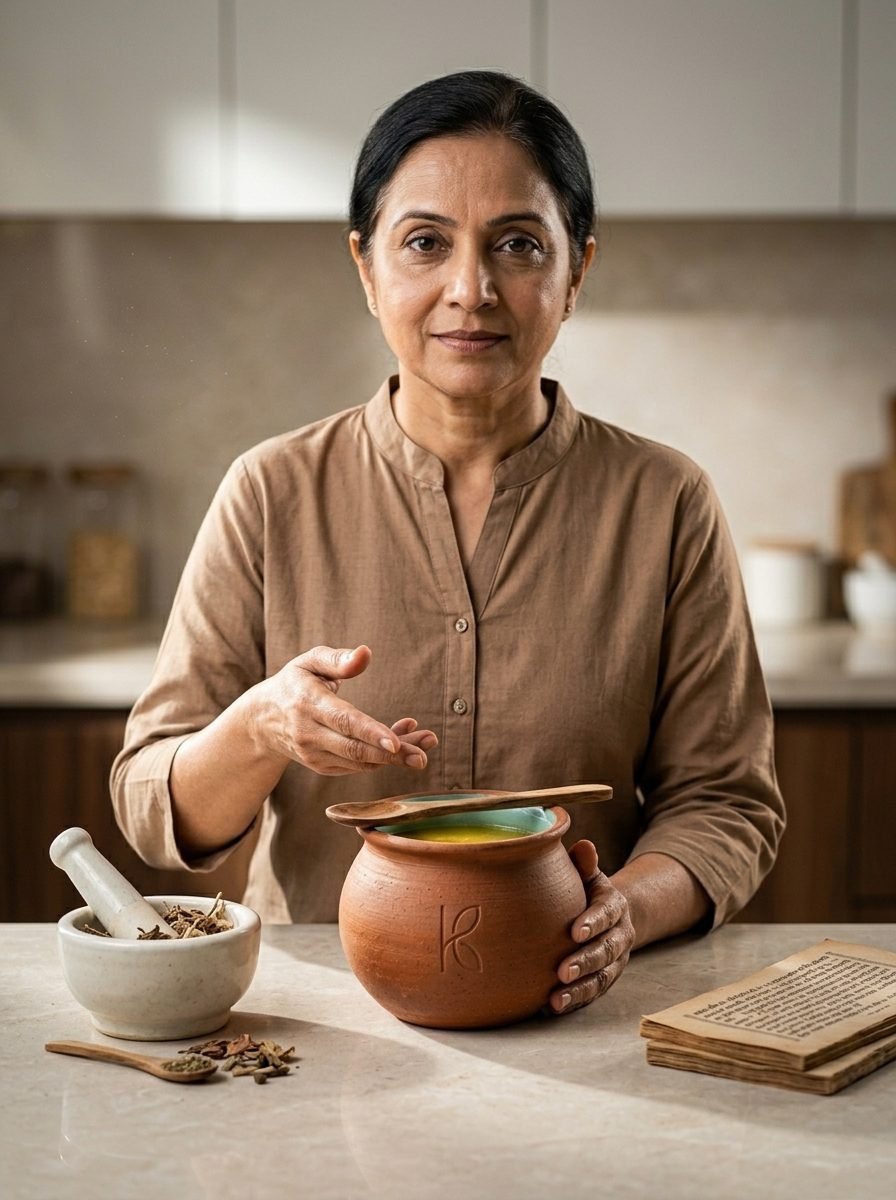
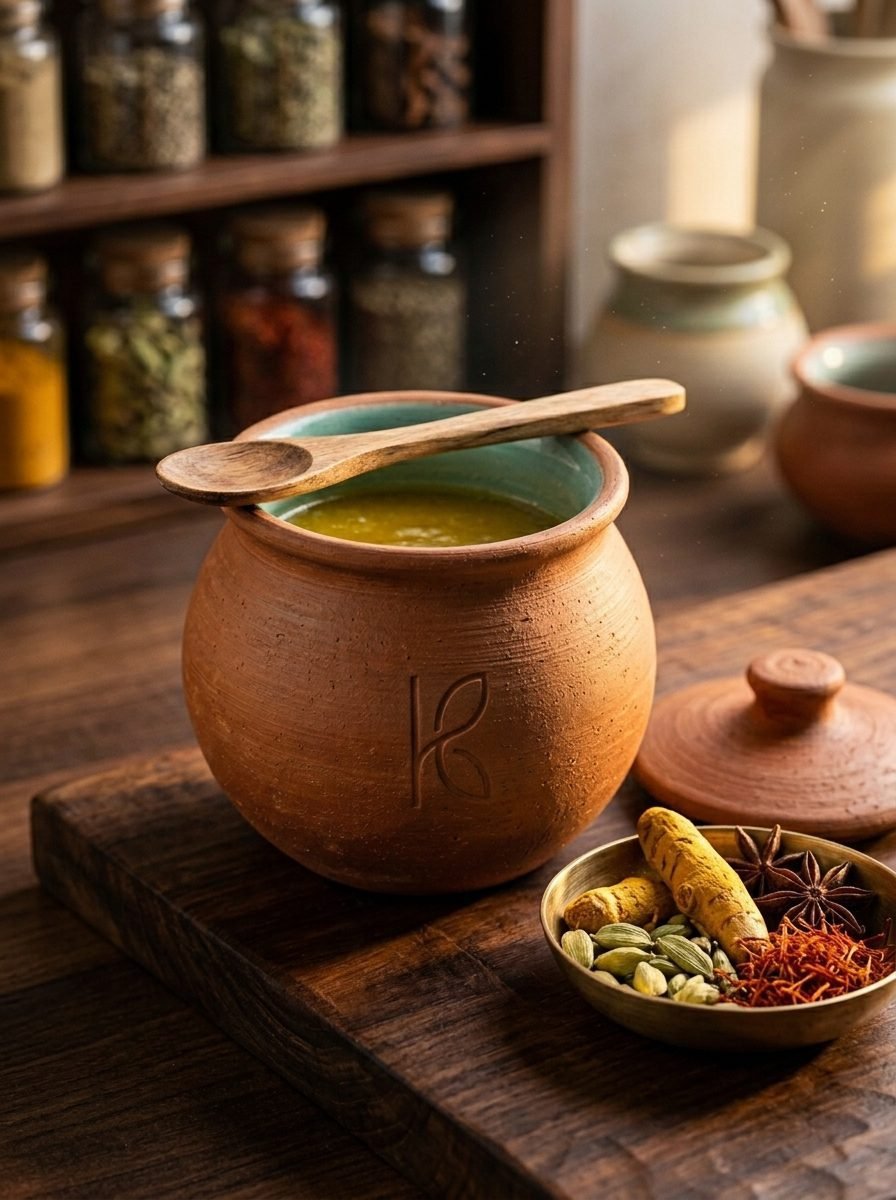
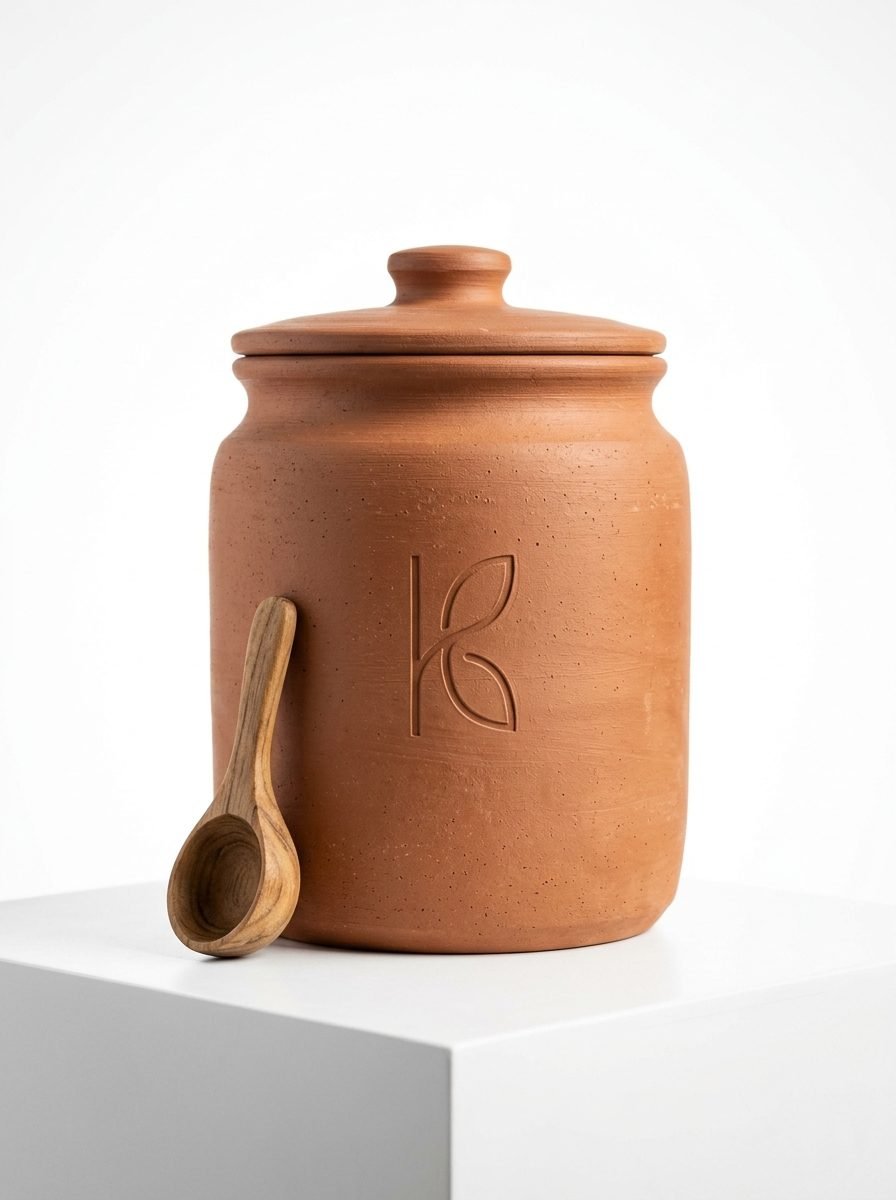
A small, wide-mouthed clay pot for ghee storage, with a fitted clay lid. 250ml — the right quantity for a household using ghee daily for 1–2 weeks. Ayurvedic texts since Charaka Samhita (200 BCE) specifically prescribe clay as the correct vessel for storing and ageing medicinal ghee. We cannot make health claims. We can say that clay is completely non-reactive with ghee — unlike metal tins (metallic taste over time) or plastic (contamination with plasticisers over time). The chemistry is clear.
Key Features & Benefits
- Non-Reactive With Ghee: Ghee is a saturated fat with very low water activity and high stability. It does not react with clay. It does react with metal over time through slow oxidation that produces off-flavours in stored ghee. It also reacts with plastic compounds, which are fat-soluble and gradually enter ghee through lipid bilayer contact.
- Wide 6cm Mouth: Ghee at temperatures below 20°C is solid. The wide mouth allows easy spooning at any temperature without tipping or mess.
- Clay Lid Prevents Air Contact: The fitted clay lid prevents dust and ambient air from reaching the ghee surface. Traditional practitioners often add a thin layer of salt water above the ghee before lidding — the salt acts as a secondary preservative, and the clay lid seals the system.
- 250ml Is the Practical Daily Size: Enough ghee for 1–2 weeks of daily cooking for a family of four. Large enough to be worth keeping on the counter. Small enough that the ghee is never stored so long it can go rancid.
- XRF Certified: Even for non-cooked storage, every clay vessel that holds food is XRF-verified.
- Counter-Worthy Design: A well-made clay ghee pot on the kitchen counter communicates the intentionality of the kitchen. It is an object worth having in view.
About the Material
Charaka Samhita, one of the foundational Ayurvedic texts written approximately 200 BCE, specifies clay as the correct vessel for storing and ageing medicinal ghee. The reasoning given — in prescientific language — is that clay is “cool by nature, purifying, and adds to the qualities of ghee.” Modern materials science confirms the empirical observation: clay is inert with respect to saturated fat. The ghee is stored. That is all. No chemistry, no contamination, no off-flavours. The ghee pot is intentionally unglazed on the interior. Ghee does not require the Aqua-Lock glaze because it is not liquid in the way water is — at room temperature, it is semisolid and does not migrate through unglazed clay pores. The unglazed interior means the clay can contribute its natural mineral character to the ghee over extended storage. The Science Ghee is one of the most chemically stable foods that exists — its combination of high saturated fat content, low water activity (below 0.06), and natural antioxidants (vitamin E, beta-carotene) makes it extremely resistant to rancidity. The primary enemy of stored ghee is not time but reactivity with the container. Metal tins (the traditional commercial ghee container) slowly contribute iron ions to the ghee over months. Plastic containers contribute plasticisers. Clay contributes nothing negative and, over extended storage, may contribute trace alkaline minerals that some Ayurvedic practitioners believe improves the quality of aged ghee.
Safety & Certification Standards
| XRF Analysis — Clay Source | Heavy metal screening on raw clay before production begins |
| ICP-OES — Finished Product | Parts-per-billion accuracy. Actual migration into food simulants tested |
| NABL-Accredited Laboratory | Internationally recognised test facility |
| FSSAI Food Contact Compliance | Meets India’s legal food safety standards |
| Per-Batch QR Report | Your batch. Your numbers. Published before dispatch. |
Lab Test Results
| Compound | Klayvi Result | FSSAI Safe Limit |
|---|---|---|
| Lead (Pb) | ≤ 2.1 ppm | 90 ppm |
| Cadmium (Cd) | ≤ 0.3 ppm | 0.5 ppm |
| Arsenic (As) | ≤ 0.4 ppm | 2.0 ppm |
| Mercury (Hg) | Not detected | 0.5 ppm |
| PTFE / PFOA / PFAS | Not present | Zero tolerance |
Caring for Your Klayvi
| 1 — First Use | Rinse with plain water. No soap on first use. |
| 2 — Daily Clean | Klayvi Wash Care (pH 6–8) or sisal scrubber + warm water. Never standard dish soap (pH 9–11). |
| 3 — After Wash | Dry completely — on low flame for cookware, air-dry for storage and decor. |
| 4 — Monthly | Apply 4–5 drops cold-pressed flaxseed oil to cooking surfaces. Heat medium-low, cool, wipe. |
| 5 — Never | Dishwasher · Microwave · Chemical detergents · Overnight soaking · Cold water on a hot vessel |
What’s in the Box
- Clay Ghee Pot 250ml with fitted clay lid
- Artisan provenance card
- Batch QR card
Frequently Asked Questions
Q: How long does ghee keep in the clay pot?
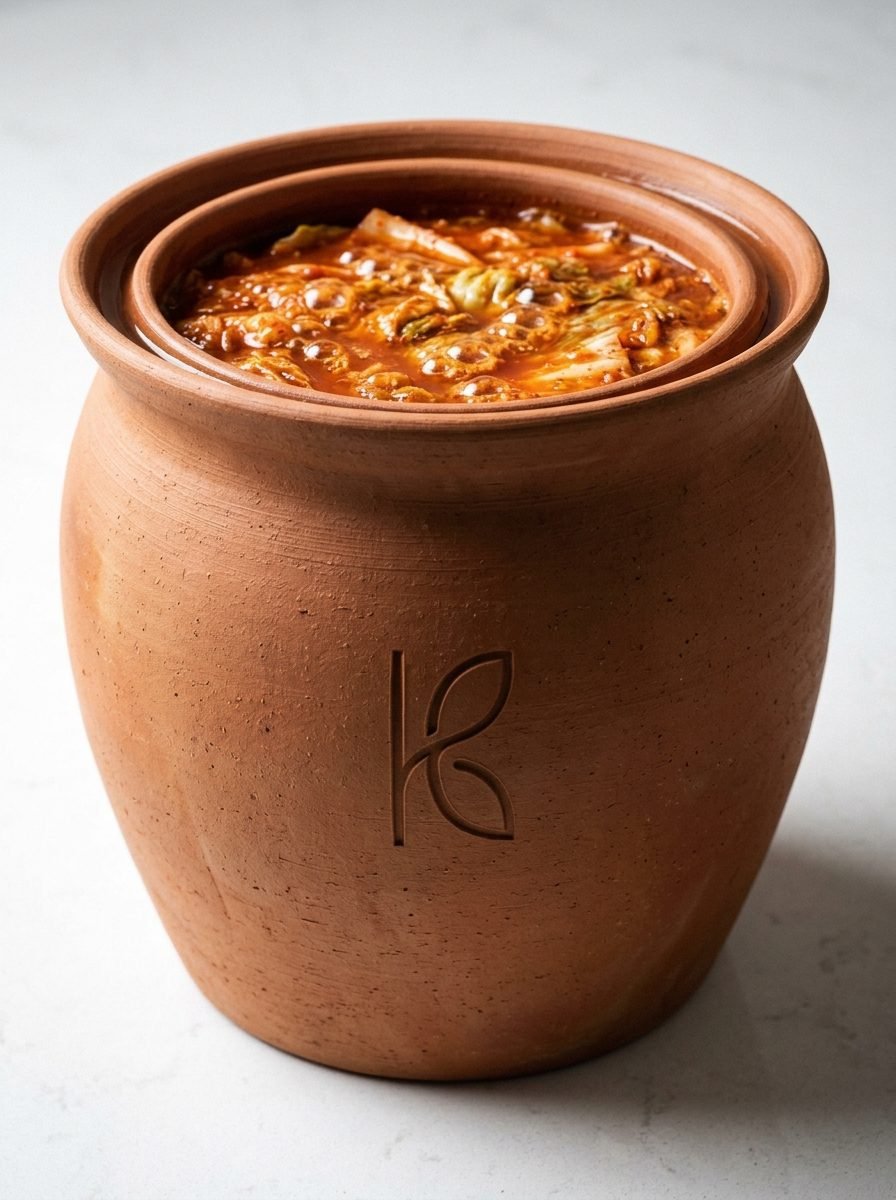
At room temperature in a cool kitchen (below 28°C): 3–6 months easily. Traditionally made ghee (cooked until water content is completely removed) in a clay pot, sealed with a salt layer: 12–18 months. Commercially available ghee (which has slightly higher water content) in a clay pot at room temperature: 2–3 months. Refrigerating extends all these timelines indefinitely.
Q: Can I make ghee directly in the clay pot?
No — the ghee pot is a storage vessel. Make ghee in the sauce pan series (KL-CK-016/017), which is designed for direct heat use. Once the ghee is made and cooled slightly (not too hot — let it reach 45–50°C), pour into the clay ghee pot.
Q: My ghee has solidified completely in the clay pot in winter. How do I get it out?
Place the clay pot in a warm spot (near the stove, in a sunny kitchen window) for 15–20 minutes. Ghee softens at 28–30°C. Never heat the clay ghee pot on a flame to melt the ghee — the temperature differential is too rapid. Gentle ambient warming is the correct method.
Q: Does the clay pot change the colour of the ghee?
Slightly, over extended storage (3+ months), the ghee in contact with the unglazed clay interior may develop a very slightly amber tone from mineral interaction. This is not spoilage and does not affect flavour negatively — traditionally aged ghee in clay is valued precisely for this mineral enrichment.
Q: Can I store coconut oil in the clay ghee pot?
Yes — coconut oil is a saturated fat with similar chemical properties to ghee. It is non-reactive with clay. The same storage times and care apply.
Q: What is the best way to store the empty ghee pot between fills?
Wipe the interior with a dry cloth. Leave the lid off in an airy spot for 24 hours. Replace the lid and store. The ghee residue in the clay pores is the pot’s seasoning — do not scrub it out. Each successive fill of ghee builds a richer, more conditioned interior surface.
Related products
-
Out of Stock

-
Out of Stock
-
Out of Stock

Reviews
There are no reviews yet.