
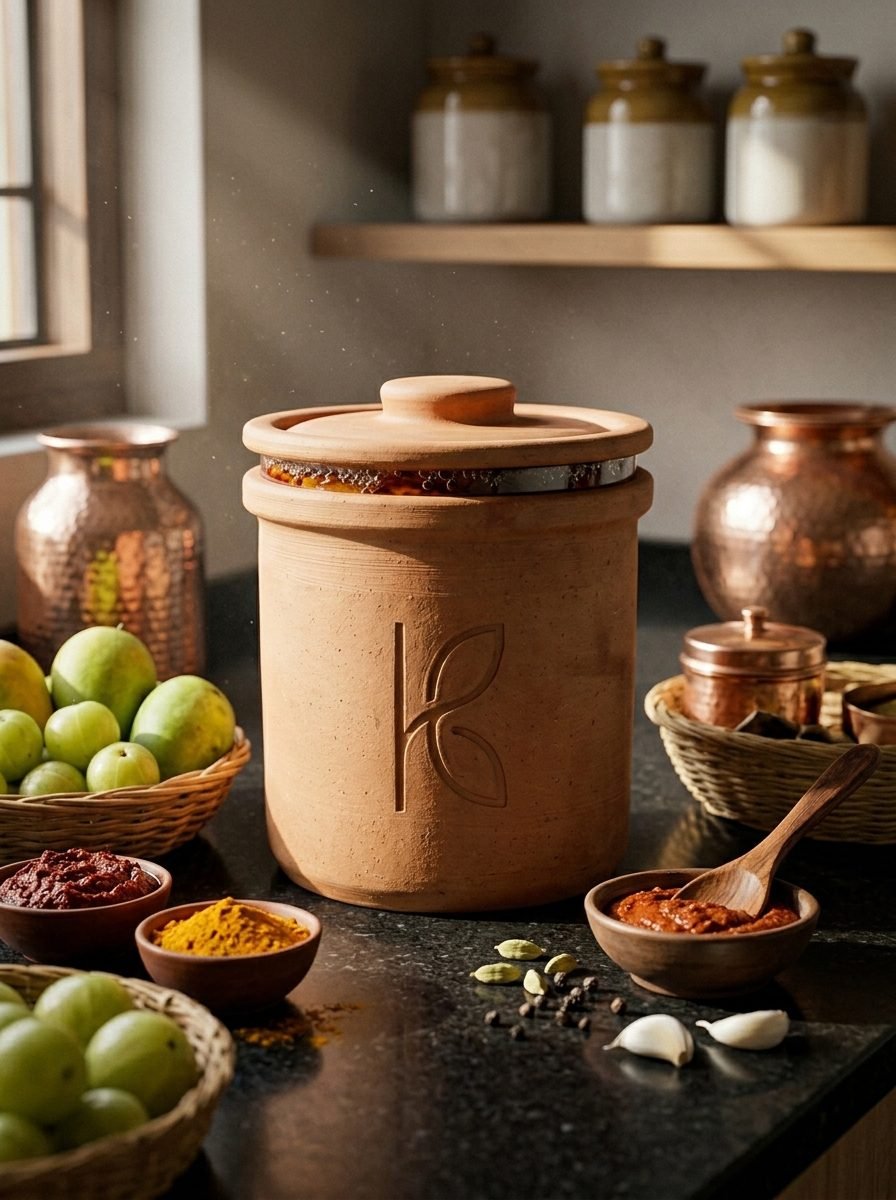
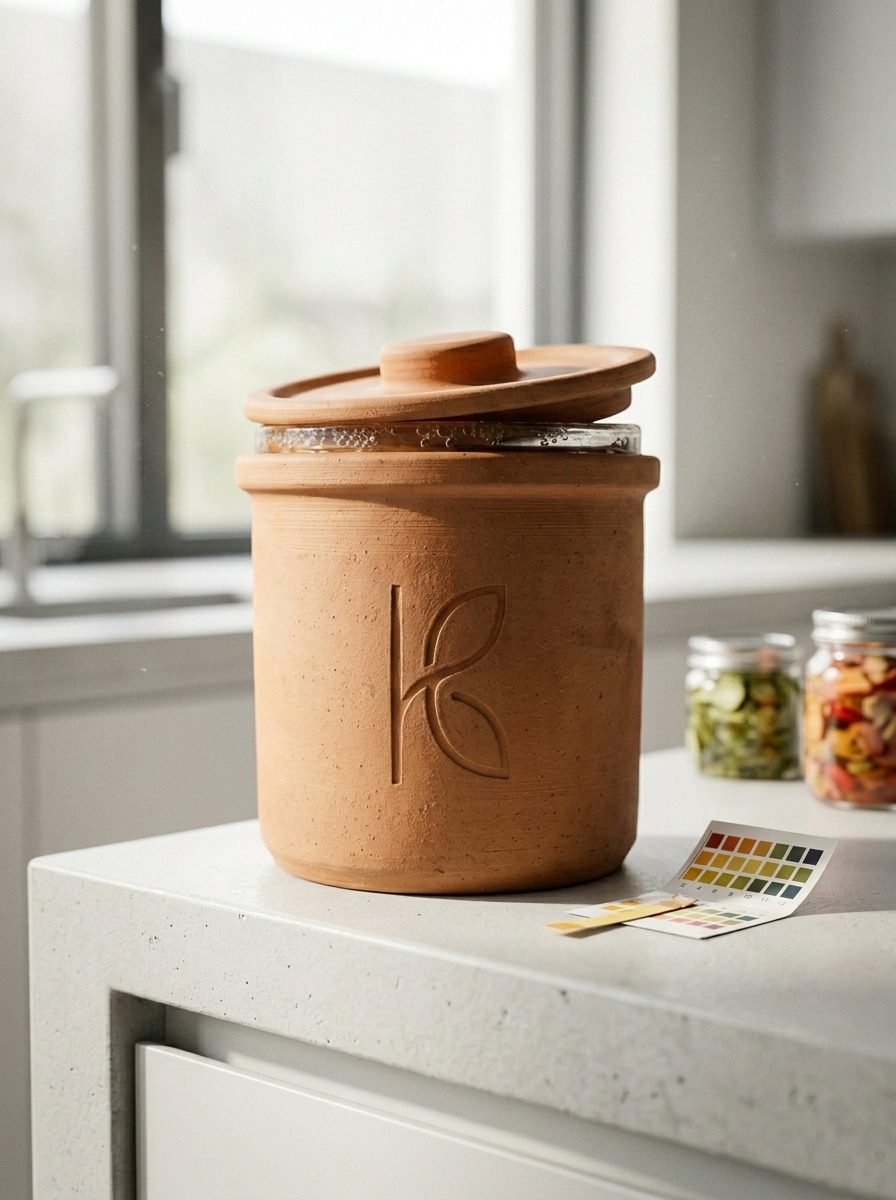
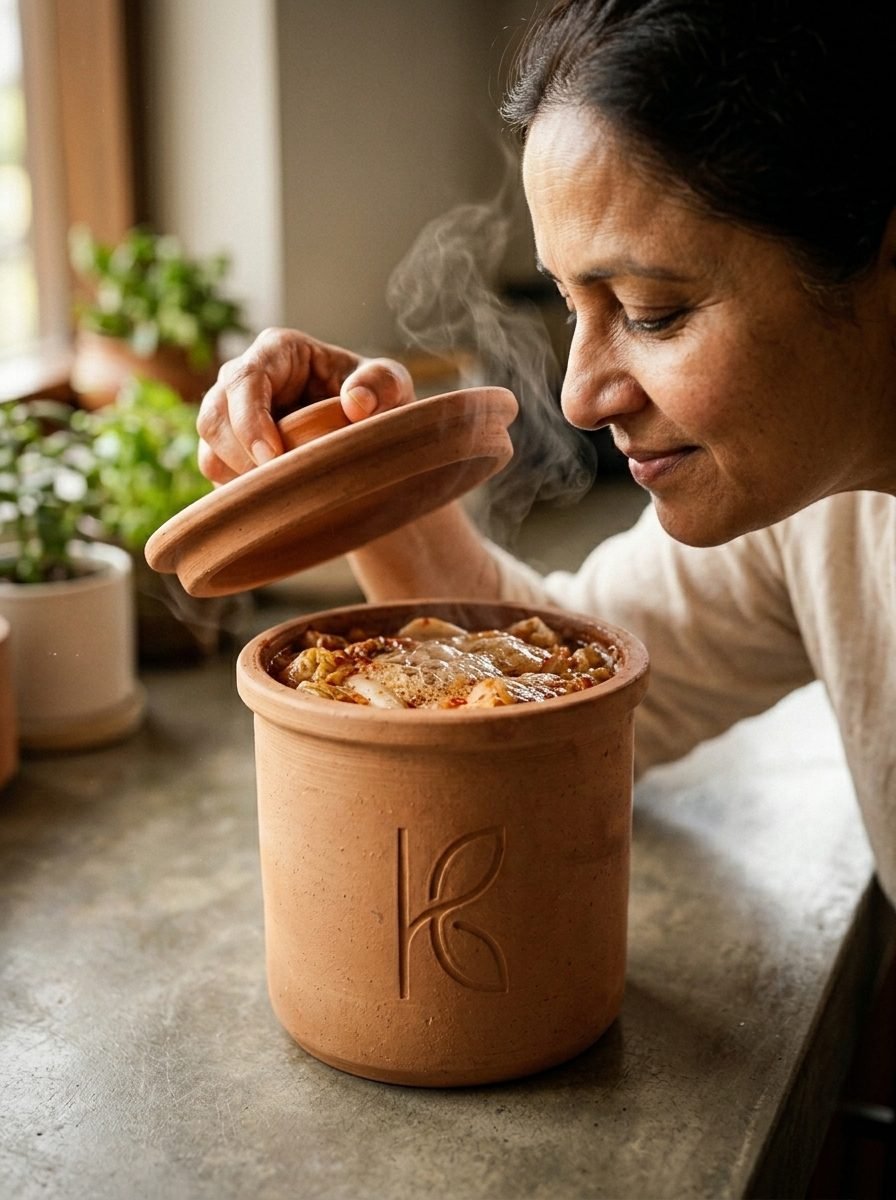
Clay Fermentation Crock – 1 L
Out of StockKanji. Kimchi. Lacto-ferments. Clay was fermenting before the word
Terracotta Clay · 1 Litre · SKU: KL-SP-007
₹1,099.00
| Material | Terracotta Clay |
|---|---|
| Size / Capacity | 1 Litre |
| Induction Ready | NO |
| XRF Tested | NO |
| Sub-Category | Fermentation Jar |
Kanji. Kimchi. Lacto-ferments. Clay was fermenting before the word
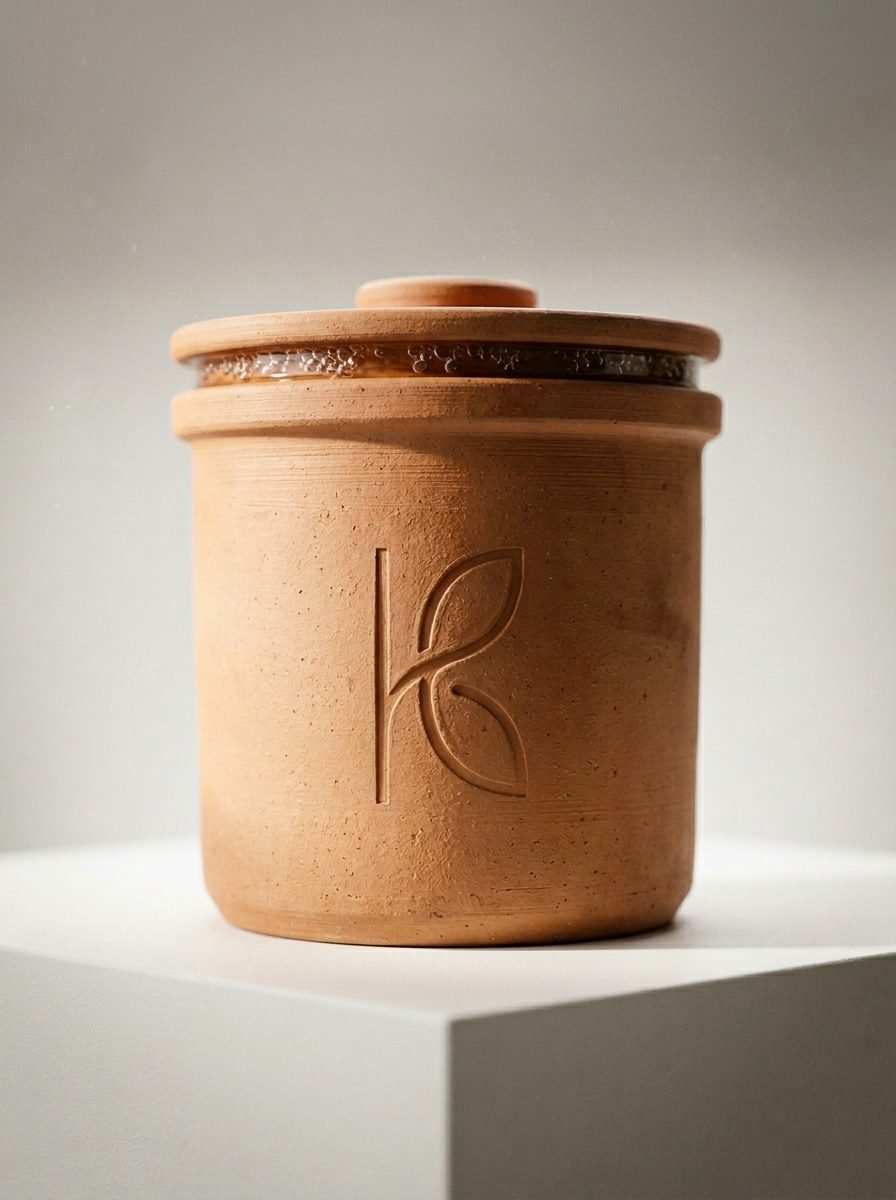
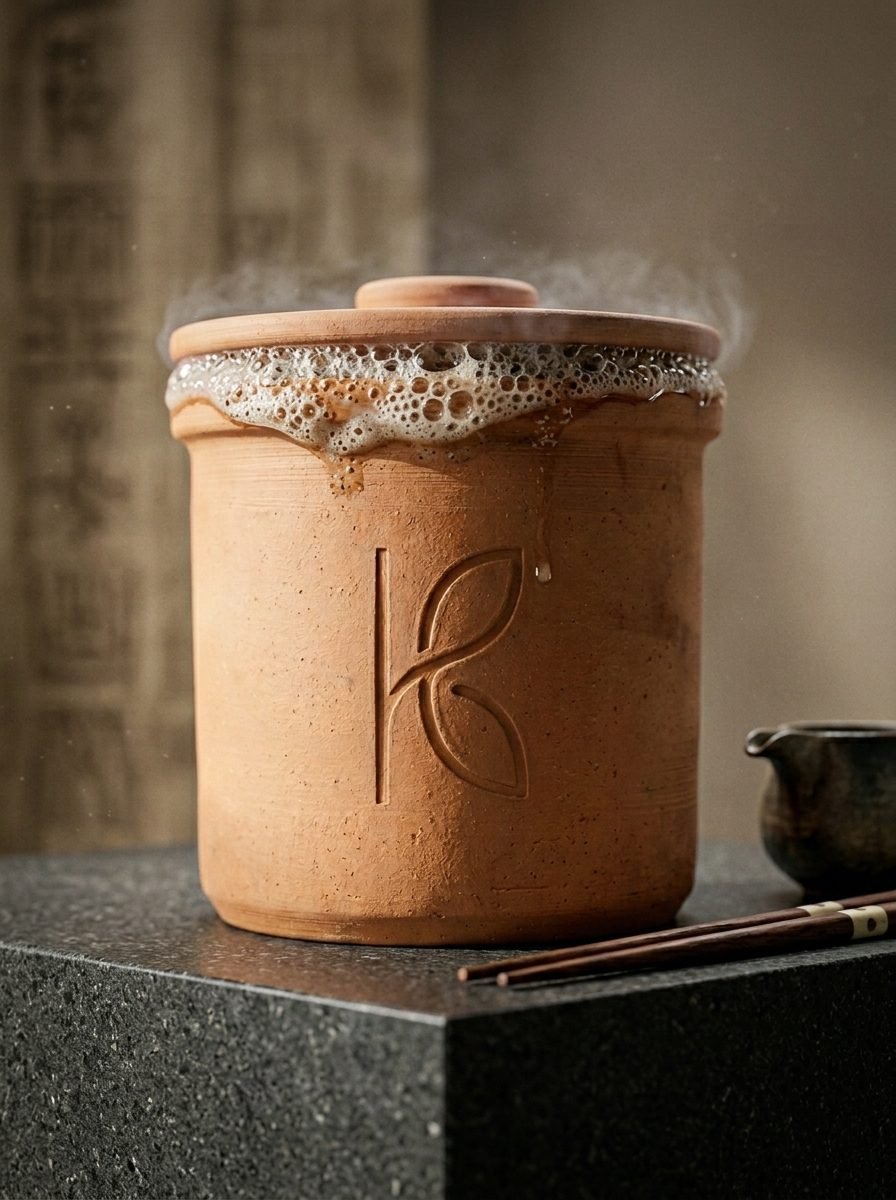
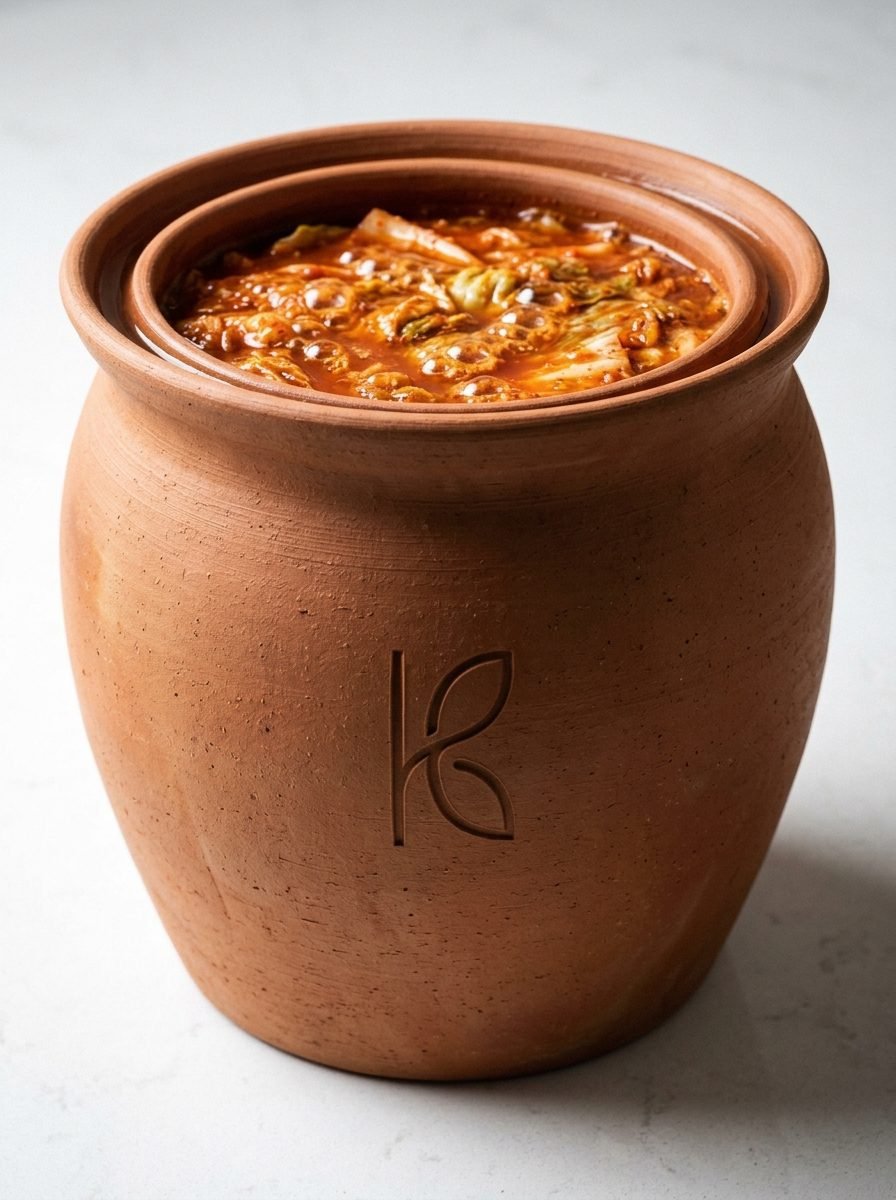
existed. A tall cylindrical clay fermentation crock with a water-seal lid system: the lid sits in a rim channel filled with water, creating an anaerobic seal that allows carbon dioxide to escape while preventing oxygen from entering. 1L capacity. XRF-certified. The vessel for kanji, kimchi, sauerkraut, lacto-fermented vegetables, or any anaerobic fermentation project. Clay’s thermal mass maintains temperature stability that plastic and glass cannot match.
Key Features & Benefits
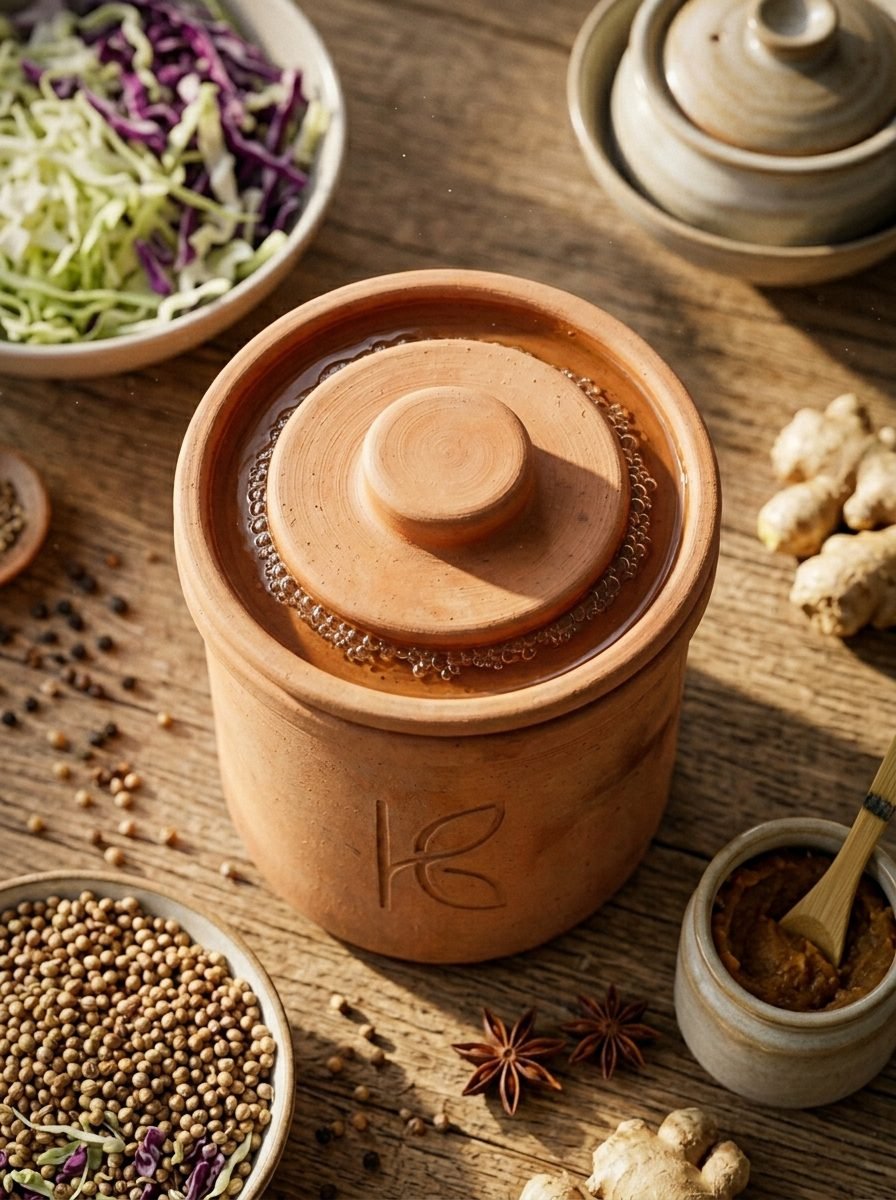
- Water-Seal Lid — Anaerobic Without Compromise: The lid sits in a channel that is filled with water. CO2 produced by fermentation bubbles up through the water and escapes. Oxygen cannot travel inward against the CO2 pressure. The water seal maintains perfect anaerobic conditions without mechanical valves, rubber gaskets, or plastic airlocks — all of which have failure modes.
- Clay Thermal Mass for Stable Fermentation: Fermentation proceeds most consistently at stable temperatures — 18–24°C for most lacto-fermentations. Clay’s thermal mass means the crock temperature changes slowly as ambient temperature changes, creating a more stable fermentation environment than glass or plastic, which immediately equilibrate with ambient temperature.
- Zero Plastic in the Fermentation Environment: Lactic acid fermentation produces an acidic (pH 3–4) environment over time. Acidic food in contact with plastic over extended periods accelerates plasticiser migration. Clay is completely non-reactive with fermentation acids — the clay’s alkalinity actually moderates the fermentation environment beneficially.
- Mineral Contribution to Lacto Cultures: Lactobacillus bacteria require calcium and magnesium as metabolic cofactors. The clay’s slight mineral ionisation into the fermentation liquid provides these in trace amounts — potentially supporting a more robust fermentation culture.
- XRF Certified — Acid-Tolerant Verification: The ICP-OES migration test for fermentation crocks uses a pH 3.0 acetic acid simulant — more acidic than most fermentation environments — at cooking temperatures. Our result: ≤0.04 ppm lead migration. FSSAI limit: 90 ppm.
- 1L Perfect for Kanji and Small Batches: Enough kanji for 2–3 people for 2–3 days. Small sauerkraut batches. Single-vegetable lacto-ferments at the right scale for household testing and rotation.
About the Material
The water-seal fermentation crock is one of the most elegant engineering solutions in food preservation. The principle is simple: fermentation produces CO2. CO2 must exit the vessel or pressure builds, potentially causing overflow or container failure. But oxygen cannot enter, or the beneficial anaerobic bacteria (Lactobacillus) die and unwanted aerobic organisms (mould) take over. The water-seal lid solves this perfectly: CO2 bubbles up through the water in the rim channel and escapes. Oxygen cannot travel inward against the CO2 outflow pressure. The water acts as a one-way valve. This system has been used in traditional clay fermentation crocks across many cultures for thousands of years. Our version adds XRF certification and the Klayvi standard for clay quality. The Science Kanji — the traditional North Indian fermented drink made from black carrots, beetroot, mustard seeds, and water — is one of the oldest documented probiotic foods in Indian cuisine. The Lactobacillus species responsible for kanji fermentation thrive in the 18–22°C range. The clay crock’s thermal buffering maintains this temperature range significantly longer than glass or plastic as the kitchen temperature fluctuates between day and night. The result: a more complete, more consistent fermentation and a more probiotic-rich kanji.
Safety & Certification Standards
| XRF Analysis — Clay Source | Heavy metal screening on raw clay before production begins |
| ICP-OES — Finished Product | Parts-per-billion accuracy. Actual migration into food simulants tested |
| NABL-Accredited Laboratory | Internationally recognised test facility |
| FSSAI Food Contact Compliance | Meets India’s legal food safety standards |
| Per-Batch QR Report | Your batch. Your numbers. Published before dispatch. |
Lab Test Results
| Compound | Klayvi Result | FSSAI Safe Limit |
|---|---|---|
| Lead (Pb) | ≤ 2.1 ppm | 90 ppm |
| Cadmium (Cd) | ≤ 0.3 ppm | 0.5 ppm |
| Arsenic (As) | ≤ 0.4 ppm | 2.0 ppm |
| Mercury (Hg) | Not detected | 0.5 ppm |
| PTFE / PFOA / PFAS | Not present | Zero tolerance |
Caring for Your Klayvi
| 1 — First Use | Rinse with plain water. No soap on first use. |
| 2 — Daily Clean | Klayvi Wash Care (pH 6–8) or sisal scrubber + warm water. Never standard dish soap (pH 9–11). |
| 3 — After Wash | Dry completely — on low flame for cookware, air-dry for storage and decor. |
| 4 — Monthly | Apply 4–5 drops cold-pressed flaxseed oil to cooking surfaces. Heat medium-low, cool, wipe. |
| 5 — Never | Dishwasher · Microwave · Chemical detergents · Overnight soaking · Cold water on a hot vessel |
What’s in the Box
- Clay Fermentation Crock 1L with water-seal lid system
- Fermentation guide (kanji, sauerkraut, mixed vegetable protocols)
- Artisan provenance card
- Batch QR card
Frequently Asked Questions
Q: How do I start a kanji batch in this crock?
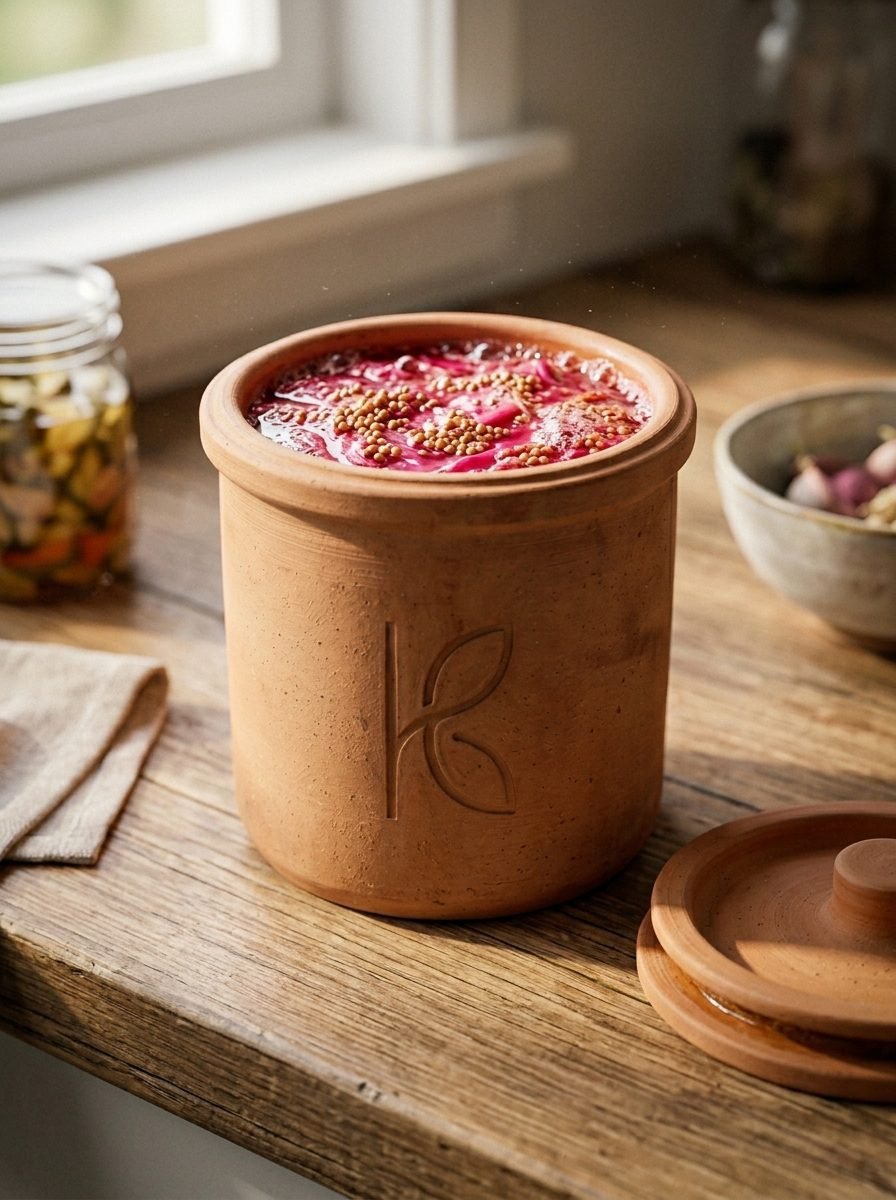
Ingredients: 2 medium black carrots (julienned), 1 small beetroot (julienned), 1 tbsp yellow mustard seeds, 1 tsp black salt, 1 tsp regular salt, 800ml water. Method: add all to the crock, stir, fill the water-seal channel, place lid in channel. Store at 20–25°C. Ready in 3–5 days in summer, 7–10 days in winter. Taste daily after day 3 — when it is pleasantly sour and tangy, it is ready.
Q: How often do I refill the water-seal channel?
Check daily. The water in the channel evaporates slowly, especially in dry winter conditions. Top up with plain water whenever the water level drops below the lid rim. A dry water-seal channel exposes the ferment to air — the most common cause of surface mould on home ferments.
Q: There is white mould on the surface of my ferment. Is it ruined?
White mould (Kahm yeast — technically a yeast, not a mould) is very common on lacto-ferments and is not harmful. Skim it off with a clean spoon and check that the water-seal channel is properly filled. The ferment below the surface is safe if it smells pleasantly sour. If the mould is coloured (pink, green, black) or the smell is unpleasant: discard and restart.
Q: Can I use the 1L crock for making vinegar?
Yes — apple scrap vinegar, coconut vinegar, or any fruit vinegar requires an aerobic first phase (convert sugars to alcohol) and an anaerobic second phase (convert alcohol to acetic acid). The water-seal lid is appropriate for the second phase. For the first aerobic phase, remove the lid and cover with a cloth.
Q: How do I clean the water-seal channel?
After each fermentation batch: empty the crock completely. Remove the lid. Fill the channel with warm water, let stand 10 minutes, drain. Scrub the channel interior with a small brush. Rinse. Dry completely before the next batch.
Q: Is the 1L crock suitable for making kimchi?
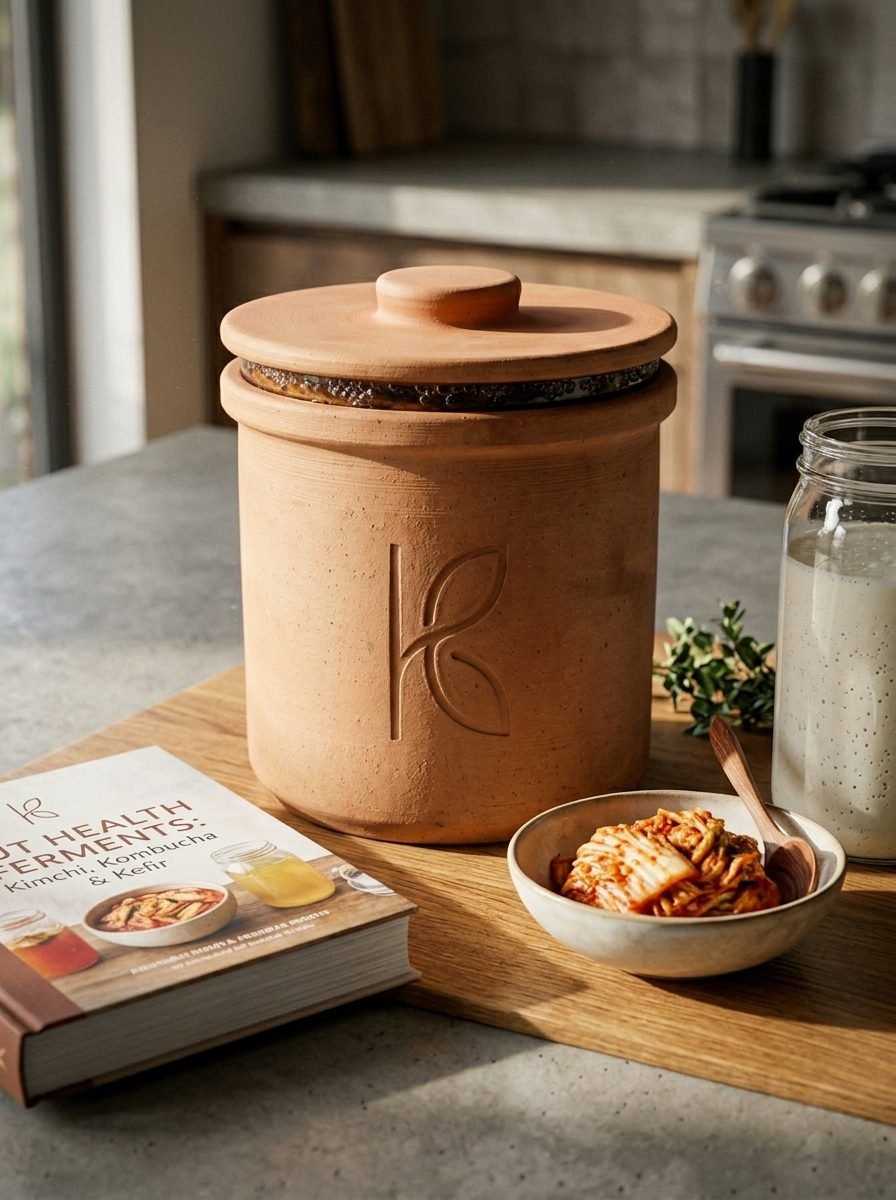
Yes — Korean kimchi is a lacto-fermented vegetable preparation very similar in process to Indian pickle. Pack the seasoned kimchi into the crock tightly (leave 3–4cm headspace for CO2 expansion), fill the water-seal, leave at room temperature for 1–3 days for active fermentation, then transfer to a cool spot for extended fermentation.
Related products
-
Out of Stock

-
Out of Stock
-
Out of Stock

Reviews
There are no reviews yet.