
Clay Grain Storage Jar – 1 kg
Out of StockYour pantry is full of plastic containers. One of them should be clay.
Terracotta Clay · 1 kg capacity · SKU: KL-SP-001
₹499.00
| Material | Terracotta Clay |
|---|---|
| Size / Capacity | 1 kg capacity |
| Induction Ready | NO |
| XRF Tested | NO |
| Sub-Category | Grain Jar |
Your pantry is full of plastic containers. One of them should be clay.
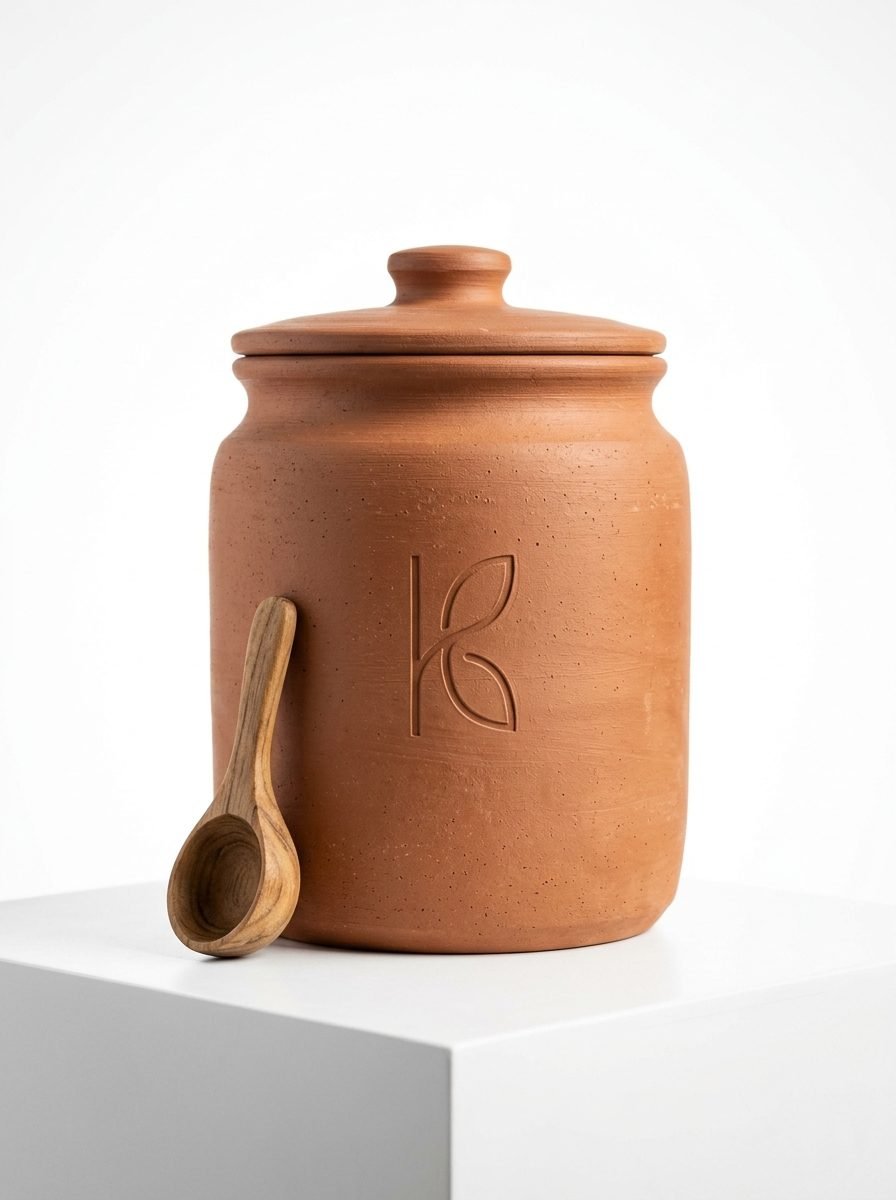
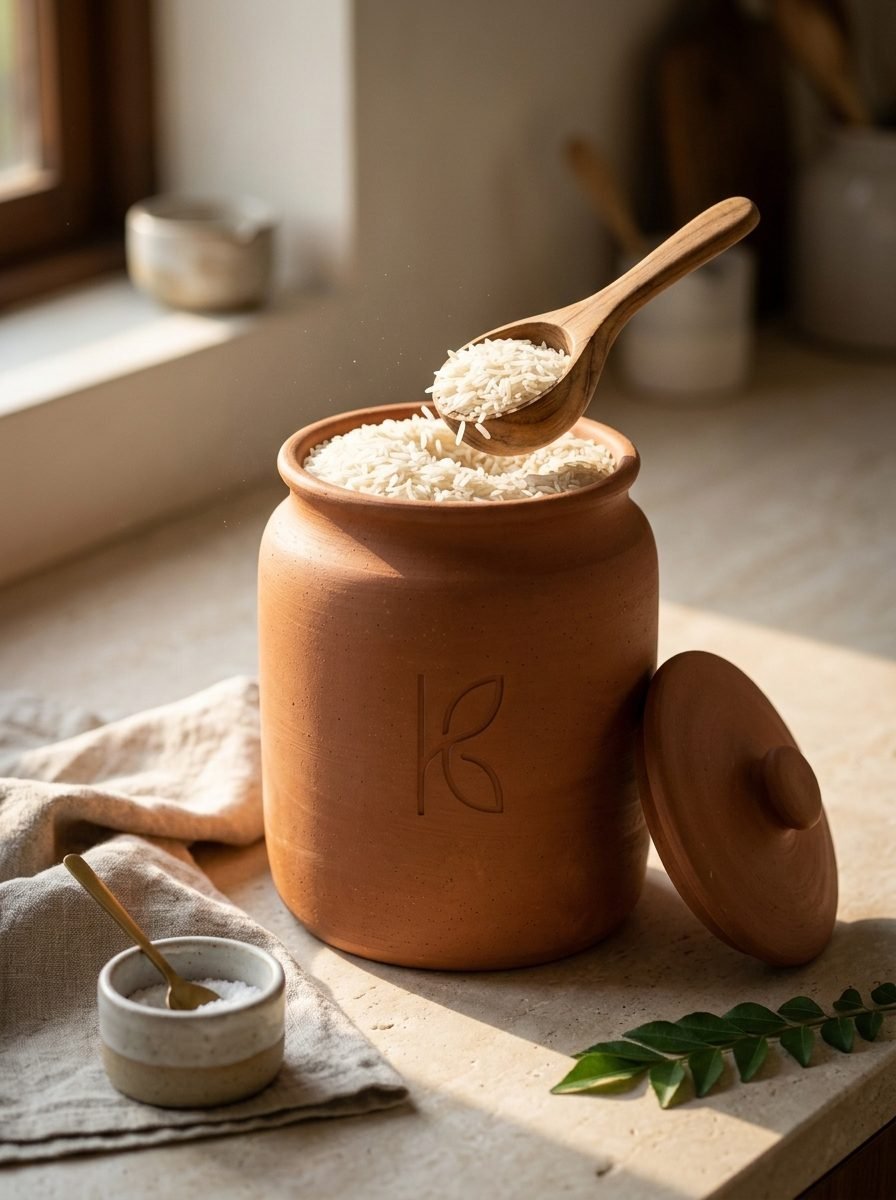
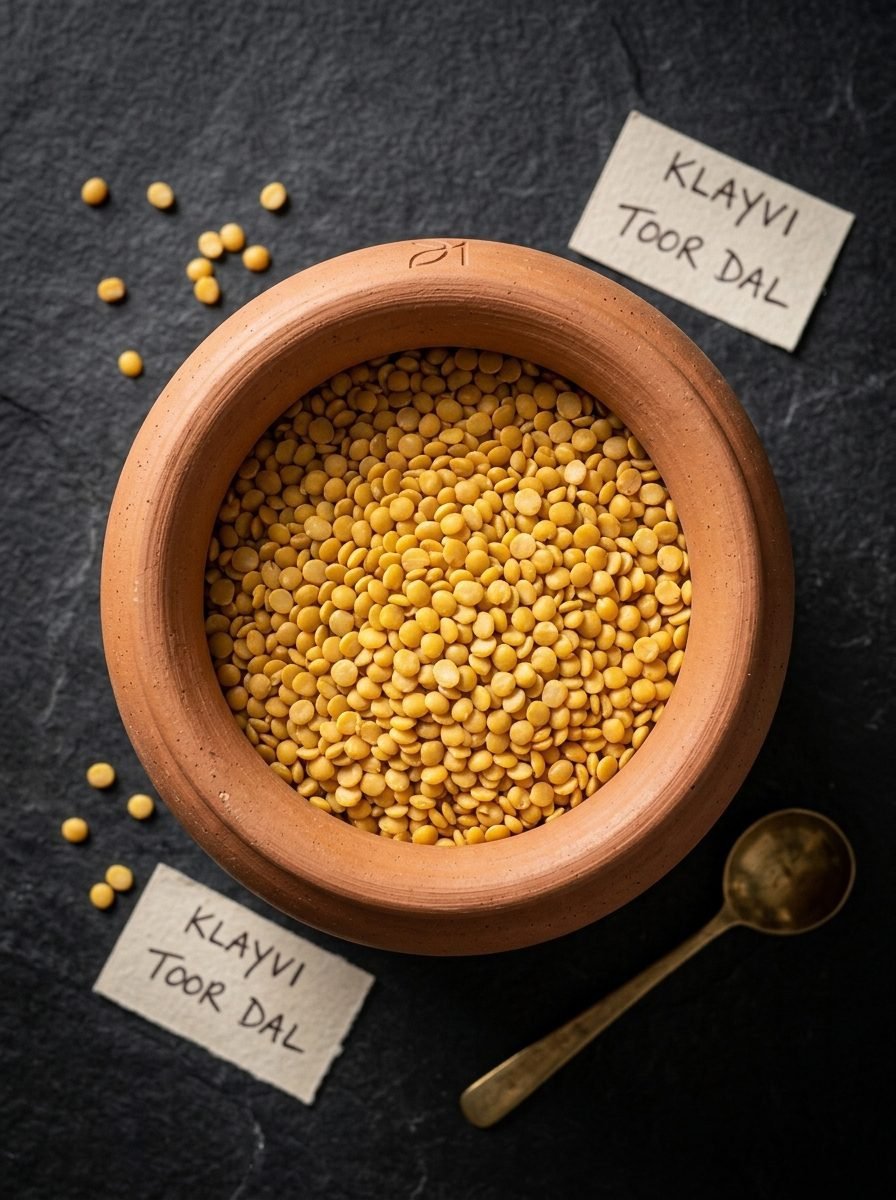
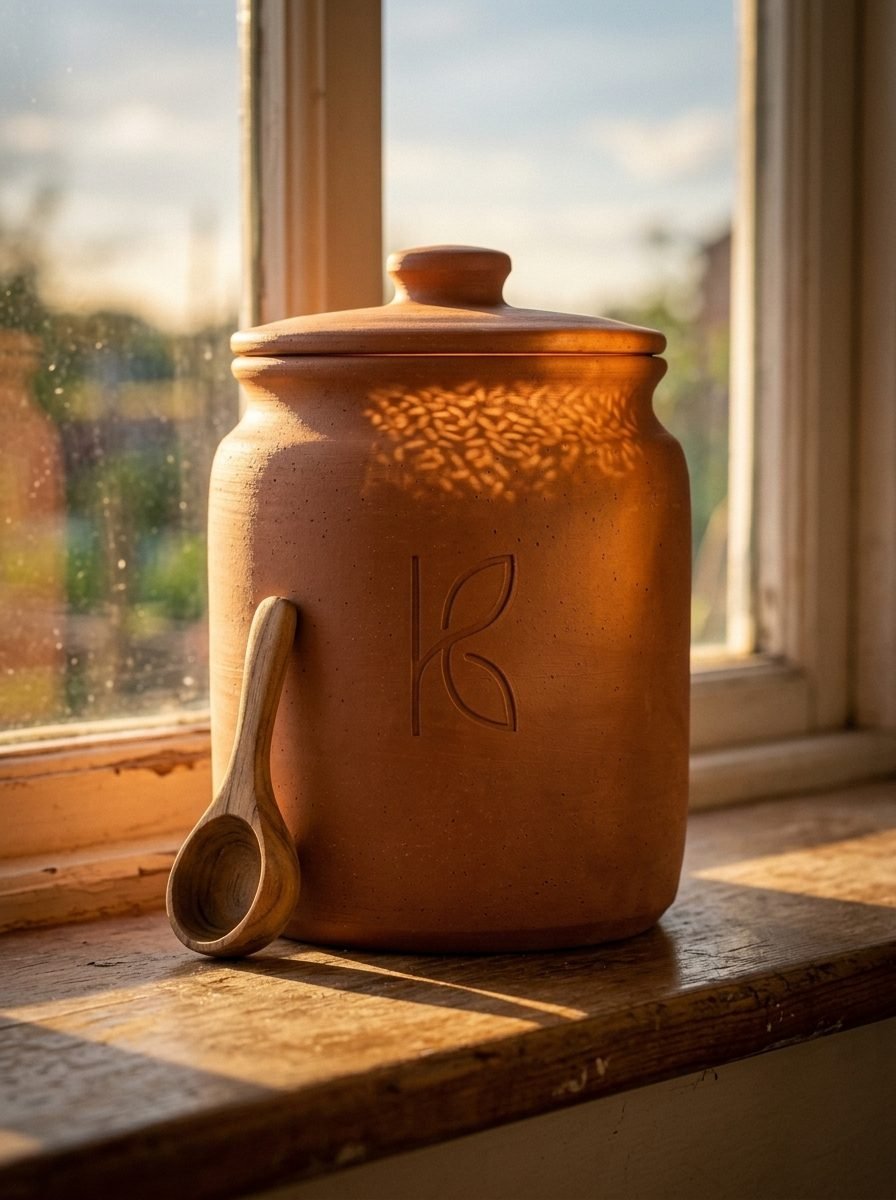
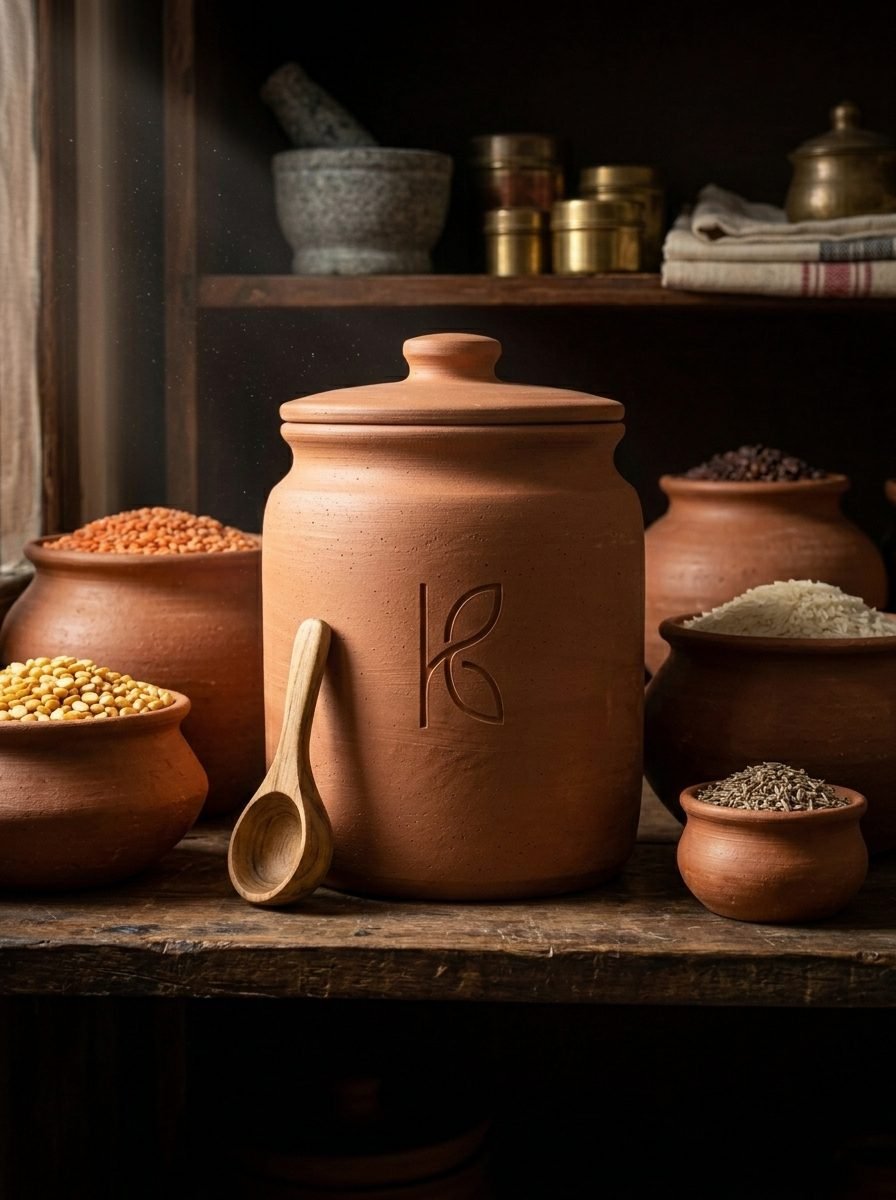
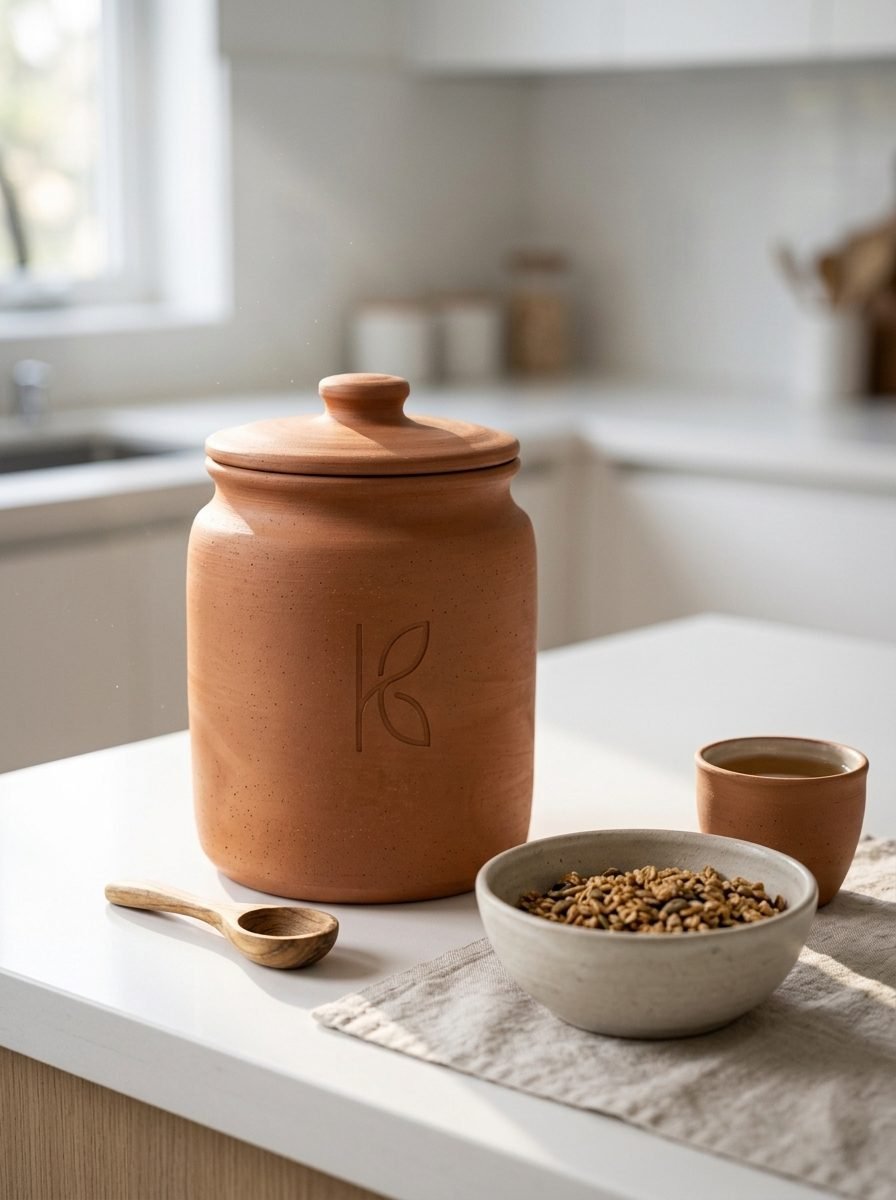
A wide cylindrical clay storage jar with a fitted clay lid for storing dry grains — rice, lentils, atta, chickpeas, or any dry pantry staple. 1kg capacity. XRF-certified. The breathable clay walls regulate humidity, preventing the moisture accumulation that causes grain to clump or mould in sealed plastic containers, while preventing the excessive dryness that makes grains stale and brittle. Plastic containers seal completely. Clay containers breathe. For dry grain storage, breathing is exactly what is needed.
Key Features & Benefits
- Humidity Regulation Through Clay Porosity: Dry grains have an optimal moisture content of 12–14%. Too high: clumping, mould risk. Too low: stale texture. Clay walls absorb excess moisture from grain stored with slightly elevated moisture content and slowly release it if ambient humidity drops. Clay is a passive humidity regulator. No plastic container can do this.
- Zero Plastic Contact: The entire 1kg of your daily grain in permanent contact with certified clay rather than petroleum-derived container walls. The grain chemistry is preserved, not contaminated.
- Clay Lid — Breathable, Not Airtight: The fitted clay lid allows slow gas exchange with ambient air — preventing the accumulation of off-flavours from grain respiration that sealed plastic containers produce. Properly breathing grain storage is what traditional Indian households understood before plastic existed.
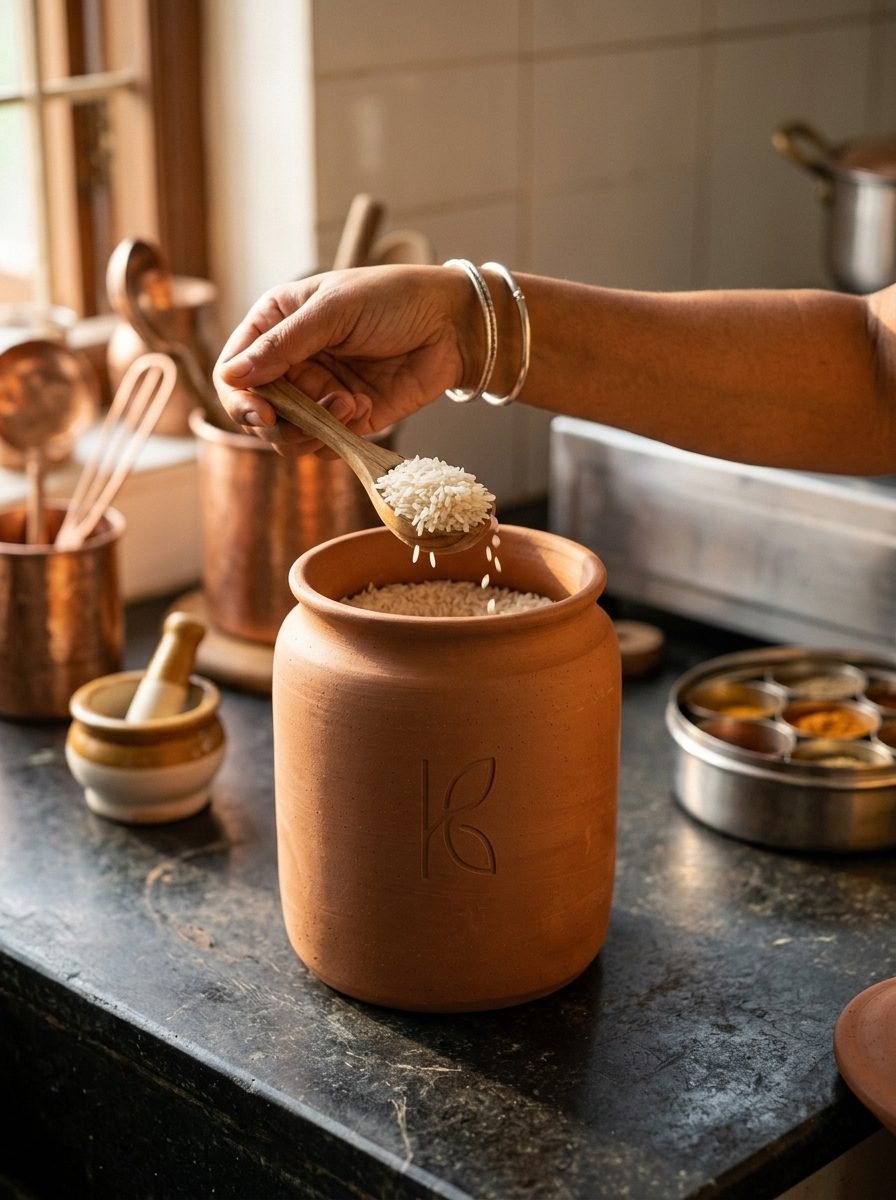
- Wide Mouth for Easy Scooping: The 7cm mouth diameter accommodates a standard 250ml measuring cup with room for scooping without grain spilling over the rim.
- XRF Certified: Batch QR on base.
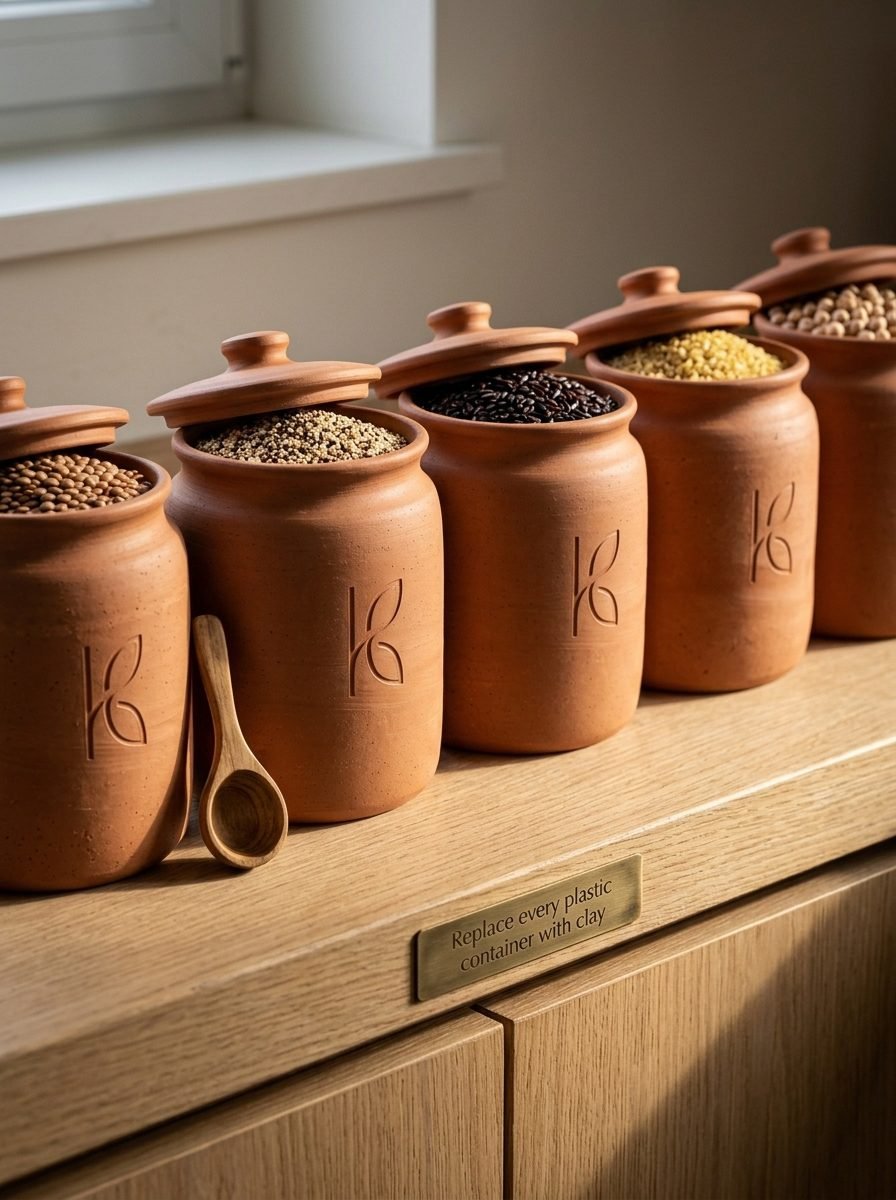
- Part of the Zero-Plastic Kitchen: The grain jar family (1kg, 3kg) pairs with the ghee pot, honey jar, and masala dani to create a complete plastic-free dry kitchen storage system.
About the Material
Traditional Indian clay grain storage — the martaban, the mathka, the surahi for smaller quantities — was abandoned in the 20th century in favour of the convenience of airtight plastic. The trade-off was not understood at the time: airtight plastic sealed in humidity fluctuations rather than buffering them, and introduced the plastic-material chemistry that we now understand is problematic for long-term food contact. At 1kg capacity, this jar fits the standard quantity of atta available in most small miller bags, or a 1kg packet of basmati rice, or a generous supply of any lentil variety. The jar is substantial — approximately 500g empty — and feels like it belongs on a kitchen counter permanently rather than being moved constantly. The Science Grain storage science identifies three factors that determine long-term grain quality: moisture content, temperature stability, and gas exchange with the environment. Clay manages all three: moisture through porosity, temperature through thermal mass, and gas exchange through the breathing walls. Sealed plastic containers actively fail the gas exchange requirement, allowing the buildup of CO2 from grain respiration that, over months, produces subtle off-flavours in stored grain. The traditional Indian preference for clay grain storage was not superstition — it was empirical knowledge of these storage dynamics.
Safety & Certification Standards
| XRF Analysis — Clay Source | Heavy metal screening on raw clay before production begins |
| ICP-OES — Finished Product | Parts-per-billion accuracy. Actual migration into food simulants tested |
| NABL-Accredited Laboratory | Internationally recognised test facility |
| FSSAI Food Contact Compliance | Meets India’s legal food safety standards |
| Per-Batch QR Report | Your batch. Your numbers. Published before dispatch. |
Lab Test Results
| Compound | Klayvi Result | FSSAI Safe Limit |
|---|---|---|
| Lead (Pb) | ≤ 2.1 ppm | 90 ppm |
| Cadmium (Cd) | ≤ 0.3 ppm | 0.5 ppm |
| Arsenic (As) | ≤ 0.4 ppm | 2.0 ppm |
| Mercury (Hg) | Not detected | 0.5 ppm |
| PTFE / PFOA / PFAS | Not present | Zero tolerance |
Caring for Your Klayvi
| 1 — First Use | Rinse with plain water. No soap on first use. |
| 2 — Daily Clean | Klayvi Wash Care (pH 6–8) or sisal scrubber + warm water. Never standard dish soap (pH 9–11). |
| 3 — After Wash | Dry completely — on low flame for cookware, air-dry for storage and decor. |
| 4 — Monthly | Apply 4–5 drops cold-pressed flaxseed oil to cooking surfaces. Heat medium-low, cool, wipe. |
| 5 — Never | Dishwasher · Microwave · Chemical detergents · Overnight soaking · Cold water on a hot vessel |
What’s in the Box
- Clay Grain Jar 1kg with fitted clay lid
- Artisan provenance card
- Storage guide card
- Batch QR card
Frequently Asked Questions
Q: How do I prepare the new jar for grain storage?
Rinse with warm water. Let air-dry completely for 24 hours before first fill. This saturates the clay walls and establishes the moisture buffering baseline. Never fill a completely dry new clay jar with grain immediately — the dry clay may absorb moisture from the grain in the first week, slightly drying the batch.
Q: Can I store different grains in the same jar sequentially?
Yes — rice then lentils, lentils then atta: the clay does not retain grain flavour between uses in any significant way. Empty, brush clean with a dry sisal brush, air-dry for 24 hours, refill. A very mild previous-grain aroma may persist in the first batch after switching — this dissipates.
Q: My atta is clumping slightly in the clay jar. What is happening?
Clumping in a clay jar most commonly means the jar was filled with atta that already had elevated moisture content (common with fresh-milled atta). The clay is buffering correctly but was given more moisture than it can immediately regulate. Solution: empty the jar, dry the atta briefly in a low oven (50°C, 10 minutes), re-pack.
Q: Does the clay affect the taste of the stored grain?
Very slightly in the first 3–5 fills — a mild mineral note that most people describe as neutral-to-pleasant. By fill 5, the clay walls are conditioned and the mineral contribution to dry grain taste is undetectable. Unlike with liquid storage, the mineral exchange between dry grain and clay walls is very limited.
Q: Can insects get into the clay grain jar?
The clay lid provides protection equivalent to any non-hermetic lid — it keeps out moths and larger pantry insects that require a gap to enter. For weevils (which can be present in grain before packing): the clay environment does not provide any specific deterrent. A bay leaf in each jar is the traditional Indian weevil deterrent and works in clay jars as well as any other container.
Q: How long does grain stay fresh in a clay jar?
Atta: 3–4 weeks at room temperature (same as plastic, but with better flavour preservation). Rice: 6–12 months (the clay’s humidity regulation genuinely improves on plastic for long-term rice storage). Lentils: 6–12 months. Whole spices: 12–18 months (longest benefit from clay breathability).
Related products
-
Out of Stock

-
Out of Stock
-
Out of Stock

Reviews
There are no reviews yet.