
Clay Sprouter – 1-Chamber
Out of StockGrow the most nutritious food in your kitchen in 48 hours. In clay.
Terracotta Clay · 1 chamber · SKU: KL-SP-005
₹499.00
| Material | Terracotta Clay |
|---|---|
| Size / Capacity | 1 chamber |
| Induction Ready | NO |
| XRF Tested | NO |
| Sub-Category | Sprout Maker |
Grow the most nutritious food in your kitchen in 48 hours. In clay.
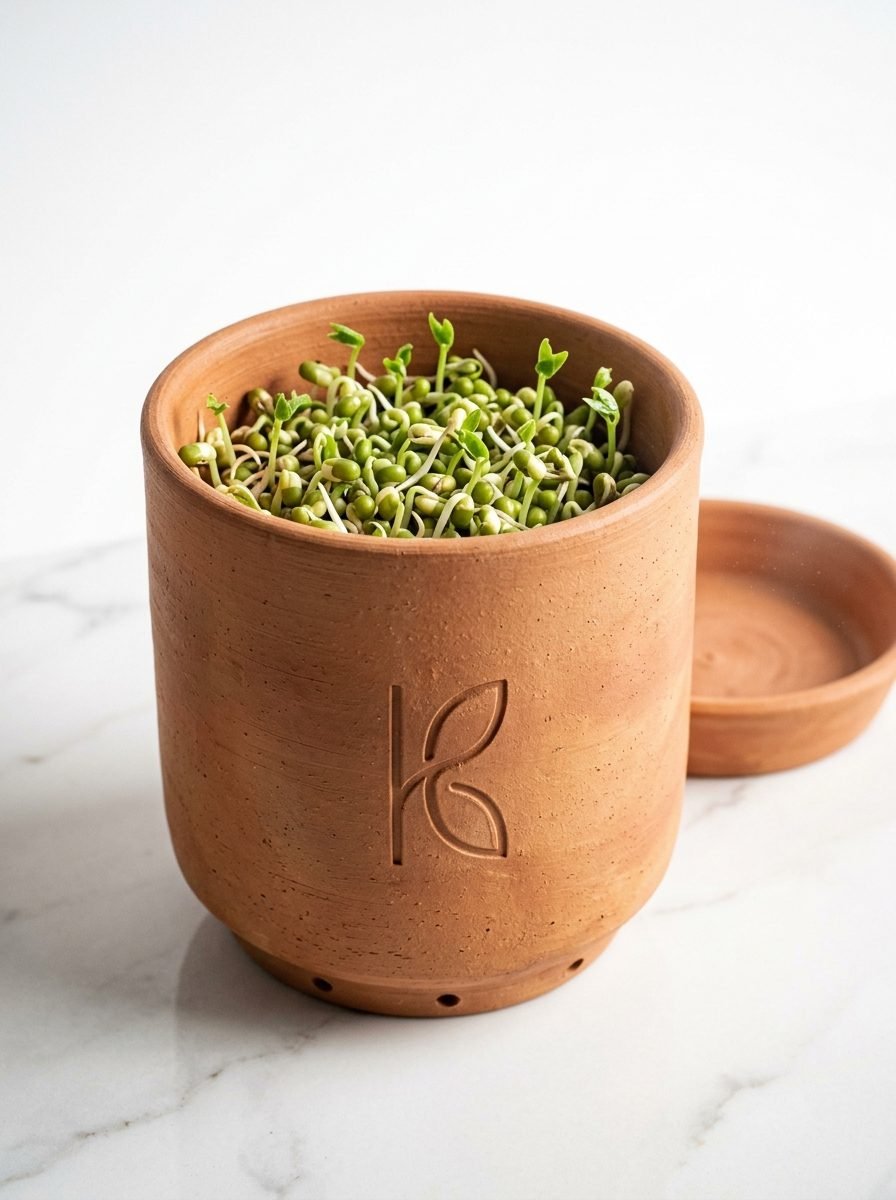
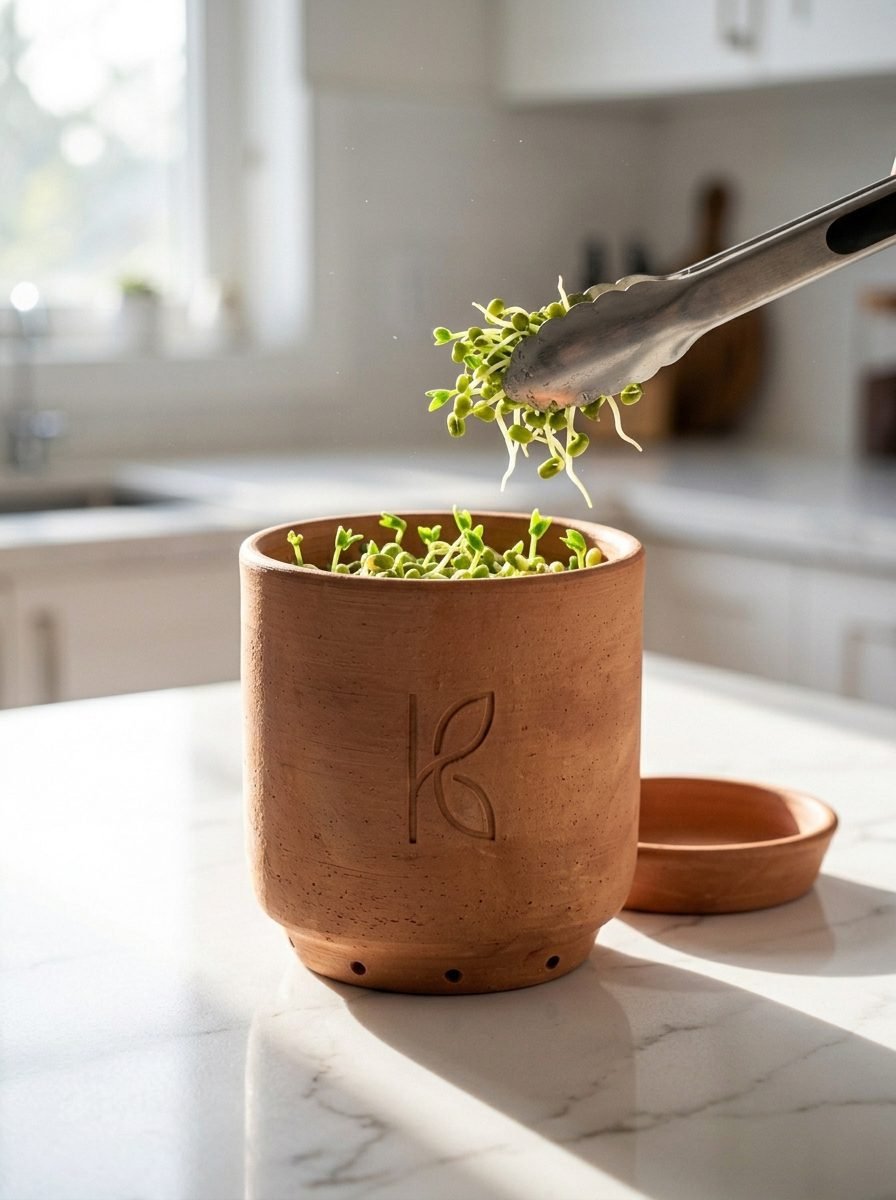
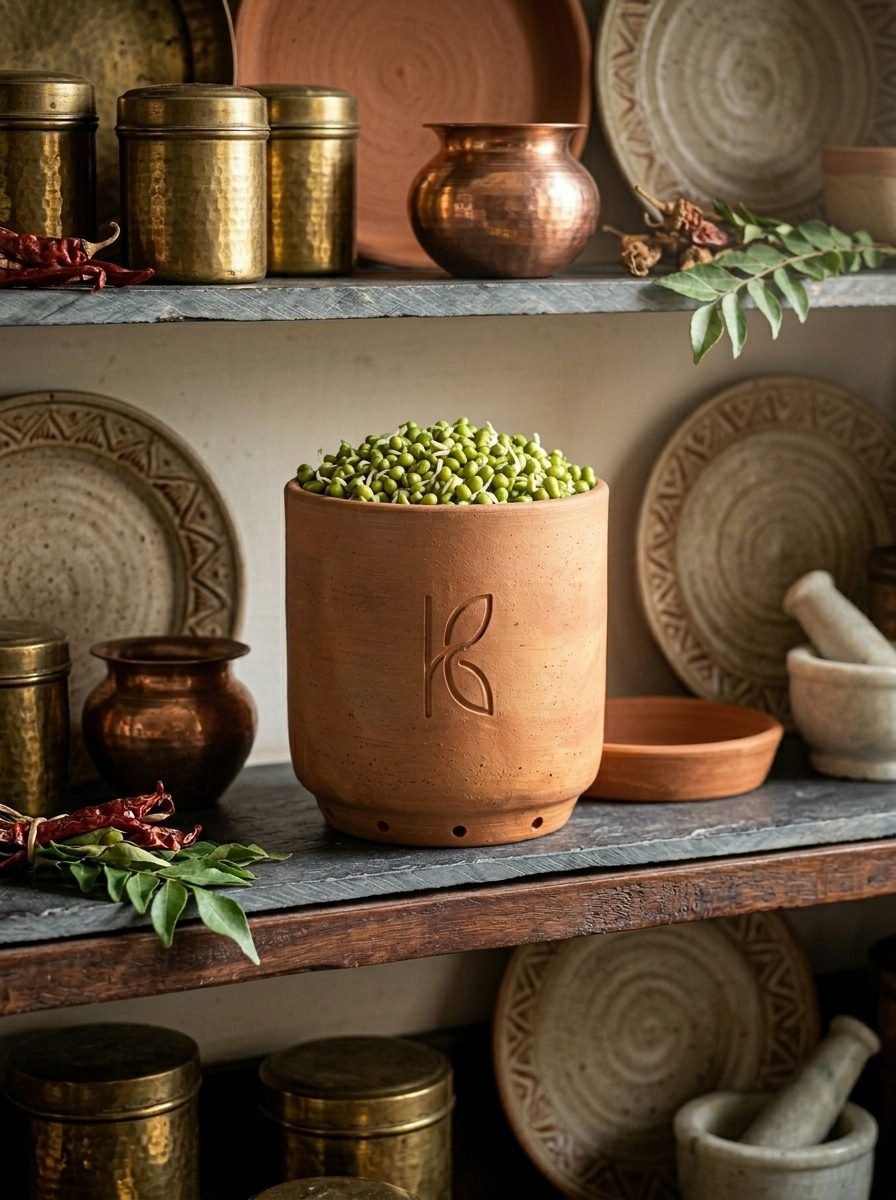
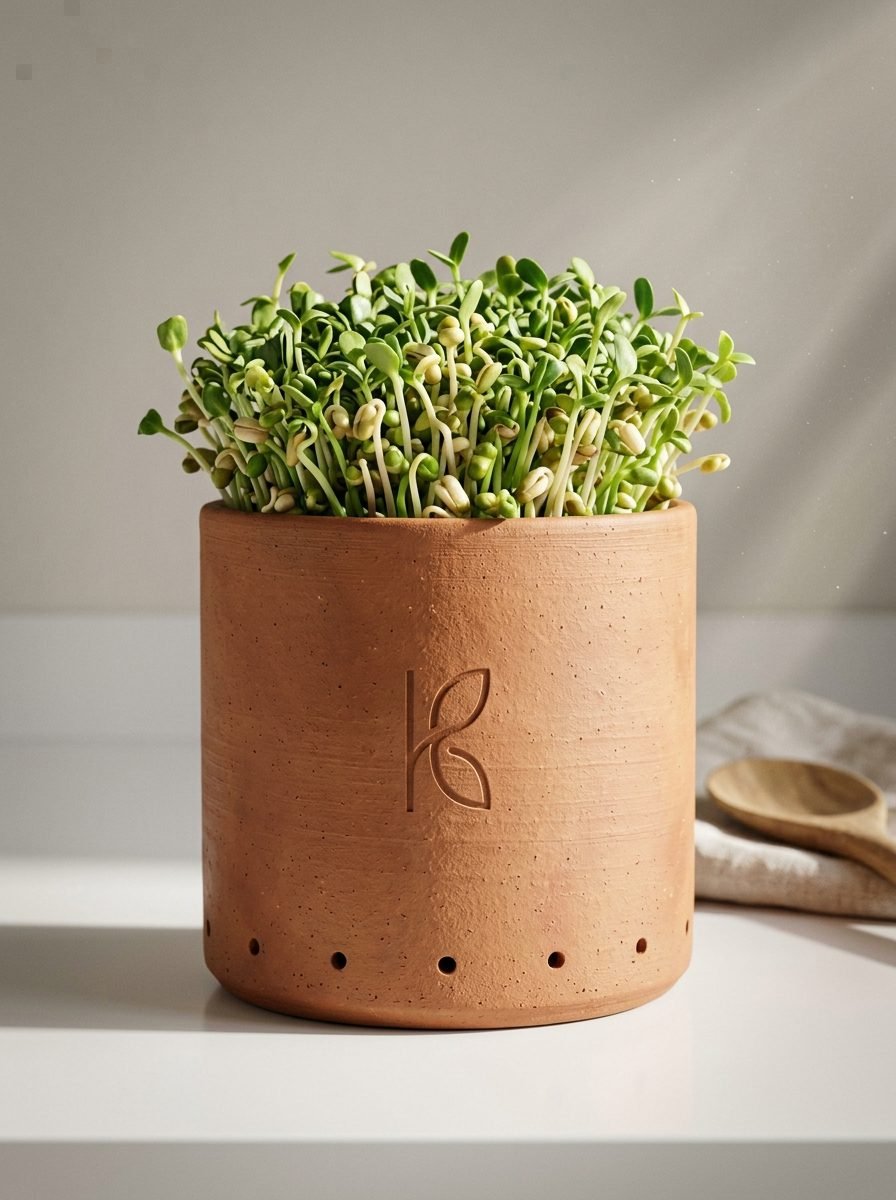
A cylindrical clay sprouting vessel with 4mm drainage holes spaced evenly at the base, designed for rinsing and draining sprouting legumes during the 24–72 hour sprouting cycle. 1-chamber. Cork water collection tray included. Clay’s natural breathability maintains the humid-but-not-wet environment that sprouting requires — the most common reason for failed sprouts is excessive moisture, which sealed plastic sprouters cannot address. Clay can and
Key Features & Benefits
- Clay Breathability Prevents Rot: The single most common sprouting failure is rot from excess moisture. Sealed plastic sprouters cannot release the moisture they absorb from the wet sprout mass. Clay walls absorb excess moisture from the wet sprouts after each rinsing and slowly release it to the surrounding air, maintaining humidity without pooling. Clay makes sprouting consistently successful in a way that plastic cannot.
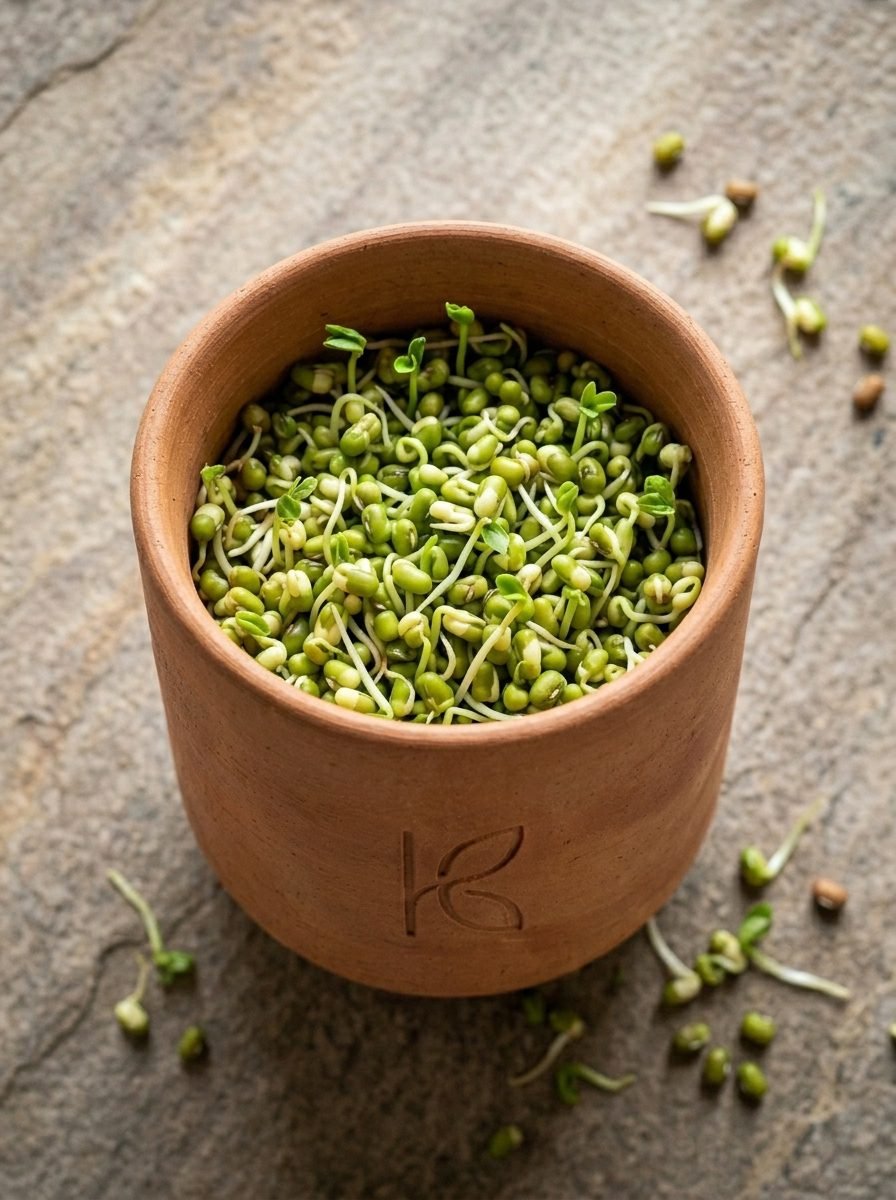
- Nutrition at Peak Harvest: Moong bean sprouts at the 48-hour mark are, calorie for calorie, among the most nutritionally dense foods you can eat. Sprouting increases iron bioavailability by 47%, B-vitamin content by 200–400%, and vitamin C (absent in unsprouted beans) appears within 24 hours of germination.
- Drainage Holes Precisely Sized: 4mm holes allow complete drainage of rinsing water without soil or grain pushing through. The holes are positioned evenly around the base circumference to ensure no water pools at any point.
- Cork Collection Tray: Catches drainage water without allowing the pot to sit in standing water (which would cause root rot at the base of the sprout mass).
- XRF Certified: Sprouts are in direct contact with the clay. Every Klayvi sprout vessel is XRF-verified.
- Continuous Harvest with the 3-Chamber: The 1-chamber produces a batch every 48–72 hours. For daily harvest, the 3-Chamber Sprouter (KL-SP-006) allows staggered batches.
About the Material
The clay sprouting vessel is designed around a specific functional requirement: maintaining humid-but-not-wet conditions for 48–72 continuous hours without active monitoring. Sealed plastic sprouters require the user to drain and manage moisture actively. The clay vessel passively manages moisture through its walls, making the sprouting process significantly more forgiving of the timing variations of daily life. The 4mm drainage holes are bored through the clay body after throwing and before firing — they are integral to the clay structure, not added afterward. The fired clay around each hole creates a smooth, non-sharp edge that does not damage delicate sprouting roots as they grow down toward the base. The Science A 2018 study in Food Chemistry found that sprouting increased iron bioavailability of mung beans by 47% compared to unsprouted beans. The mechanism: the sprouting process activates phytase enzymes that break down phytic acid — the primary compound that binds dietary iron and prevents its absorption. As the sprout germinates, phytic acid content decreases and free, bioavailable iron increases. The 48–72 hour sprouting window is precisely when this enzymatic transformation peaks. The clay sprouting vessel, by maintaining ideal moisture conditions without requiring constant intervention, makes it practical to reliably hit this nutritional peak window.
Safety & Certification Standards
| XRF Analysis — Clay Source | Heavy metal screening on raw clay before production begins |
| ICP-OES — Finished Product | Parts-per-billion accuracy. Actual migration into food simulants tested |
| NABL-Accredited Laboratory | Internationally recognised test facility |
| FSSAI Food Contact Compliance | Meets India’s legal food safety standards |
| Per-Batch QR Report | Your batch. Your numbers. Published before dispatch. |
Lab Test Results
| Compound | Klayvi Result | FSSAI Safe Limit |
|---|---|---|
| Lead (Pb) | ≤ 2.1 ppm | 90 ppm |
| Cadmium (Cd) | ≤ 0.3 ppm | 0.5 ppm |
| Arsenic (As) | ≤ 0.4 ppm | 2.0 ppm |
| Mercury (Hg) | Not detected | 0.5 ppm |
| PTFE / PFOA / PFAS | Not present | Zero tolerance |
Caring for Your Klayvi
| 1 — First Use | Rinse with plain water. No soap on first use. |
| 2 — Daily Clean | Klayvi Wash Care (pH 6–8) or sisal scrubber + warm water. Never standard dish soap (pH 9–11). |
| 3 — After Wash | Dry completely — on low flame for cookware, air-dry for storage and decor. |
| 4 — Monthly | Apply 4–5 drops cold-pressed flaxseed oil to cooking surfaces. Heat medium-low, cool, wipe. |
| 5 — Never | Dishwasher · Microwave · Chemical detergents · Overnight soaking · Cold water on a hot vessel |
What’s in the Box
- Clay Sprouter 1-Chamber with drainage holes
- Cork water collection tray
- Sprouting guide card (protocol + timing for 6 common sproutables)
- Artisan provenance card
- Batch QR card
Frequently Asked Questions
Q: What can I sprout in this vessel?
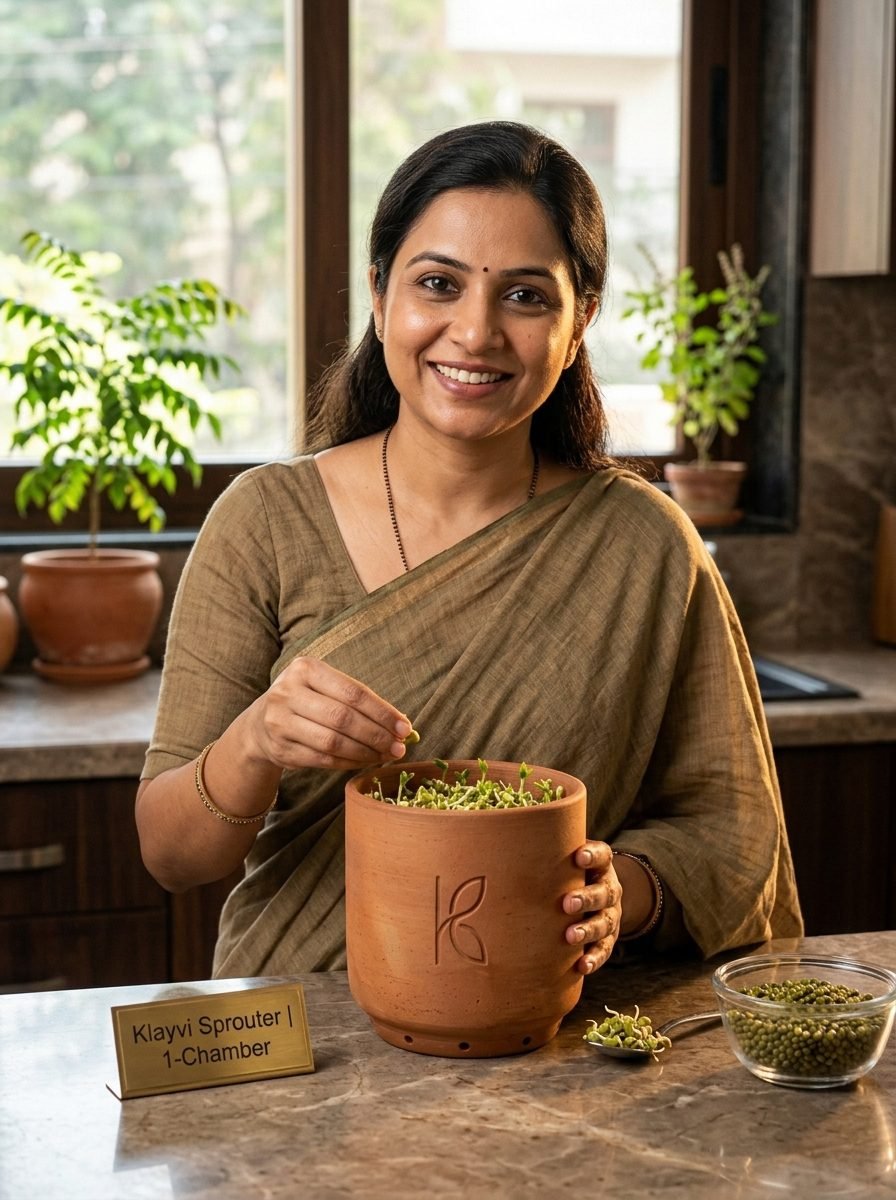
Moong (green gram): 36–48 hours to 2cm white sprouts, ready to eat. Fenugreek (methi): 36–48 hours, more bitter but very nutritious. Chickpeas: 48–72 hours, satisfying crunch. Mixed lentils: 48 hours. Radish seeds: 36 hours, peppery and nutrient-dense. Wheat berries: 48–72 hours. See the sprouting guide card for exact protocols.
Q: My sprouts smell slightly fermented. Is that a problem?
A mild slightly sour smell is normal in the final 12 hours of the sprouting cycle as lactic acid bacteria (naturally present on bean skins) become active. This smell should be faint and pleasant, not unpleasant. If the smell is strongly off or the sprouts show discolouration: the batch has gone bad, likely from insufficient rinsing (every 12 hours minimum) or temperatures above 35°C. Start fresh.
Q: How do I clean the clay sprouter after each batch?
Empty. Rinse under warm running water through the drainage holes. Turn upside down to drain completely. Allow to air-dry for 4–6 hours before the next batch. Do not use soap. Do not immerse in standing water. Sun-drying for 2 hours between batches is ideal.
Q: Can I sprout two varieties simultaneously in the 1-chamber?
Yes — compatible varieties can be mixed (moong + fenugreek, or moong + radish seeds). Use varieties with similar sprouting times so the batch is ready together. The 3-chamber sprouter allows separate varieties per chamber, which is preferable for variety-specific timing control.
Q: The sprouting holes are getting blocked with root growth. What do I do?
As sprouts mature, fine root hairs can grow into the drainage holes. After the batch is harvested, soak the sprouter in warm water for 10 minutes, then use a thin brush or a toothpick to clear the holes. Rinse through. The clay body around the holes is robust — gentle mechanical clearing will not damage it.
Q: Should I keep the sprouter in sunlight or shade?
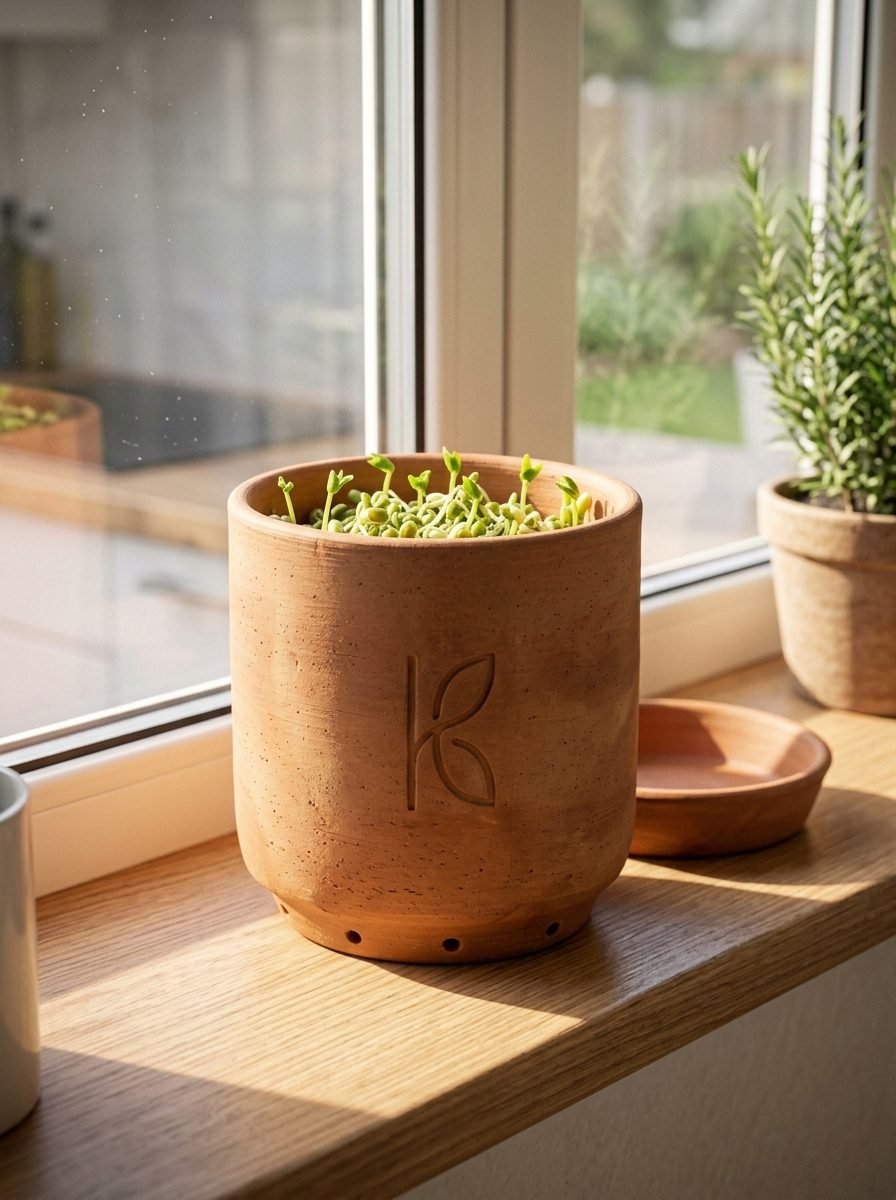
Shade for sprouting. Sprouts grow best away from direct sunlight, which heats the vessel and the sprout mass above the ideal 20–28°C range. A kitchen counter away from direct sun, or a cupboard with the door ajar for air circulation, is ideal.
Related products
-
Out of Stock

-
Out of Stock
-
Out of Stock


Reviews
There are no reviews yet.